




Abstract
Being adjudicated for a sex offense carries significant social, legal, and penal implications that are almost unparalleled and adolescents are no exception to this differential treatment by the justice system. This highlights the relevance of providing criminal career information concerning future offending among adolescents who have a record for a sex offense as they age and become adults. Based on prospective longitudinal data collected from a sample of male adolescents enrolled in the Pathways to Desistance study (n = 1170), negative binomial regression models are conducted to investigate the relationship between having a juvenile record for a sex offense and the frequency of general offending in early adulthood (i.e., 18 years old and over). Results show that adolescents who have perpetrated a sex offense have significantly lower levels of involvement in offending during early adulthood, whether based on official or self-reported data. Findings are discussed in terms of policy and theoretical implications.
Keywords
Being adjudicated for a sex offense carries significant social, legal, and penal implications that are almost unparalleled and adolescents are no exception to this differential treatment by the justice system (Letourneau, 2021). For some decades now, adolescents who have perpetrated a sex offense (APSO) are subjected to punitive measures derived from the criminal justice system’s response toward adult sex offending in the United States (e.g., sex offender registration and notification (SORN) laws), which is in stark contrast with the previous orientation from the juvenile justice system that considered their developmental features (Zimring, 2004). Studies showed that being convicted of a sex offense is associated with negative consequences later in life (e.g., difficulties related to work and education; Kruttschnitt et al., 2000; Tewksbury, 2005) that can create barriers to the desistance process (Göbbels et al., 2012). Given the adult-like measures toward sex offending in adolescence and their impact on offending, providing more information concerning the continuity of offending behavior over time among APSO represents an important aspect toward a better understanding of the potential impact of being officially labelled by the juvenile justice system for a sex offense. However, few criminal career studies investigated the continuity of general offending from one developmental period to another among APSO who may be subjected to these measures from the juvenile justice system. Research on the criminal careers of justice-involved adolescents with an APSO status has been slow to emerge (e.g., Butler & Seto, 2002; van Wijk et al., 2007; Zimring et al., 2007), but it has gained momentum in recent years (e.g., Carpentier & Proulx, 2011; Fanniff et al., 2017; Lussier & Blokland, 2014; Lussier et al., 2012; McCuish et al., 2015). The focus of prior research has been to examine the continuity of sexual offending between adolescence and adulthood (e.g., Reingle, 2012; Zimring et al., 2007; 2009). While this focus is important, other research has also shown that the offending behavior of these justice-involved adolescents is not limited to sexual offending (see Caldwell, 2010) and extents to other nonsexual antisocial and criminal behaviors (e.g., Cale et al., 2016; Lussier et al., 2012; McCuish et al., 2015; van Wijk et al., 2007).
This raises the question as to whether the issue of continuity with this offending subgroup should be broadened to examine the continuity of offending more generally speaking. Recent research has been focused on testing the continuity assumption of sexual offending (Lussier & Blokland, 2014; Zimring et al., 2009) but this focus might have come with a cost – i.e., we still don’t know much about continuity in criminal behavior in early adulthood for APSO. For example, recently, Reale et al. (2020) using Canadian data, showed that a history of sex offending in adolescence was not related to differential adult offending outcomes further stressing the importance of broadening the study of continuity for this offending subgroup. Most of these studies are conducted outside the United States (e.g., Cale et al., 2016; Lussier et al., 2012; McCuish et al., 2016; Piquero, Farrington, et al., 2012; Reale et al., 2020; van den Berg et al., 2017) where the legal response to APSO is quite different and more directly aligned with youth justice principles that promotes rehabilitation and reintegration objectives. Furthermore, American studies examining criminal career patterns have been conducted on retrospective data (Letourneau et al., 2009) or on older samples before the shift from the justice system toward an adult-like response to sexual offending (e.g., Zimring et al., 2009). More recent studies did not distinguish offending between adolescence and adulthood, blurring the lines as to the extent of the continuity of offending across this important developmental transition (e.g., Fanniff et al., 2017). Therefore, it remains relevant to further investigate to what extent having an official record for sex offense during adolescence within the current sociolegal context in the United States can inform about the continuity of general offending at a later developmental period, that is when these adolescents age and become adults. For this purpose, the current study relies on a strategy rooted in the criminal career approach (Blumstein et al., 1986; DeLisi & Piquero, 2011; Piquero, 2008) to examine if having a record for a sex offense in adolescence informs about the continuity of offending in early adulthood.
Literature Review
The criminal career paradigm has greatly contributed to the understanding and description of offending behavior. Research on criminal careers showed particular interest in the longitudinal sequence of offending through time, especially as an individual age (e.g., Blumstein et al., 1986; Uggen & Piliavin, 1998). By investigating how offending unfolds over the life course, criminal career studies can provide a wide range of information regarding various parameters, such as the onset, specialization, frequency, persistence and desistance of offending over time (e.g., DeLisi & Piquero, 2011; Piquero et al., 2003). Consistent empirical observations in regard to these parameters allowed researchers to formulate conclusions concerning offending and its sequence through life. For example, findings showed a link between the age of onset and subsequent offending over the life course. In fact, it was noted that an early age of onset is associated with long-term and frequent offending (e.g., Farrington et al., 2003; LeBlanc & Frechette, 1989). Furthermore, findings showed a significant but far from perfect relationship between past and future offending (e.g., Paternoster et al., 1997), revealing, among other things, an association between the frequency of offending in adolescence and the frequency of offending in adulthood (e.g., Paternoster et al., 2001). Criminal career research can also guide policy development for crime prevention purposes (Piquero et al., 2003). For several decades now, the potential contribution of empirical knowledge of criminal careers for the improvement of the decision-making process within the criminal justice system have been highlighted, from the police officers’ decision to arrest an individual, to the sentencing and release decision; these decisions are being rather based on the decision makers’ experience with offenders (Blumstein & Cohen, 1987; Piquero, Hawkins et al., 2012). In that context, the study of the continuity of offending across the periods of adolescence and adulthood becomes paramount for APSO given that it marks a period during which desistance from crimes tends to occur (e.g., Bushway et al., 2003).
Adolescents Who Have Perpetrated a Sex Offense and the Criminal Career Approach
In spite of the interest toward criminal careers and associated parameters in the criminological literature, attention has rarely been given to individuals who exhibit specific forms of offending behavior, such as sexual offending (Lussier, 2005; Piquero et al., 2012). Criminal career research mostly relied on samples of general offenders, or even excluded individuals who committed a sex offense from their samples (e.g., see Blokland & van der Geest, 2015; Harris, 2014). It has been assumed for some time that APSO represent a distinct and unique group among justice-involved adolescent offenders in need of specialized youth justice interventions to prevent sexual recidivism (e.g., Blanchard et al., 2006; Burton et al., 1997; Marshall et al., 1993; Yoder et al., 2018). As a result, researchers have been concerned about the impact of youth justice interventions, mostly in the form of specialized treatment programs, on sexual recidivism rates (e.g., McCann & Lussier, 2008; Caldwell, 2010). These studies showed that, on average, not only sexual recidivism rates were low, general recidivism rates were four or five times higher (e.g., Caldwell, 2010). Furthermore, several of these recidivism studies did not provide much information about the developmental period covered by the follow-up (e.g., early/late adolescence, emerging adulthood) (e.g., Aebi et al., 2014; Gretton et al., 2001). Consequently, there was very little knowledge on APSO and their offending, particularly as they age into a subsequent developmental period and become adults. The shift toward more adult-like dispositions were based on assumptions rather than scientific observations about these young persons growing up (Letourneau & Miner, 2005; Zimring, 2004). These incorrect assumptions about the continuity of offending were supported by clinical observations from another period based on very small samples of adult offenders in clinical settings who had started their sexual offending during adolescence (e.g., Longo & Groth, 1983).
More recent prospective longitudinal studies conducted on APSO and their offending later in life have since provided relevant insight regarding the unfolding of the offending behavior of this population over the life course (e.g., Nisbet et al., 2004; Zimring et al., 2007). Of importance, studies endorsing a criminal career-inspired approach have examined how sexual as well as non-sexual offending occurs over time among APSO (e.g., McCuish et al., 2015; Zimring et al., 2007). These more recent studies did not limit their examination to the presence/absence of recidivism over a short follow-up period, rather investigating the longitudinal sequence of offending before and after these adolescents’ adjudication for sex offenses. Studies in that regard allowed to note the rare occurrence of continuity in sexual offending from adolescence to adulthood (e.g., Fanniff et al., 2017; Caldwell, 2010; Piquero, Farrington, et al., 2012; Sipe et al., 1998; van den Berg et al., 2017; Zimring et al., 2009), while highlighting that continuity in offending in adulthood is mainly non-sexual in nature rather than sexual for this population (e.g., Lussier & Blokland, 2014; Nisbet et al., 2004; Vandiver, 2006). These observations drew attention to the importance of examining offending in general among APSO and not limiting the investigation to sexual offending. For example, by examining offending trajectories among a sample of male adolescents convicted for a sex offense in the Netherlands, Lussier et al. (2012) identified two distinct trajectories across adolescence and adulthood, namely the adolescent-limited and the high-rate slow desisters, which differ in several ways, such as the onset and the desistance of sex offending. Moreover, persistence of non-sexual offending in adulthood was observed among both trajectories, suggesting that even though youth desisted from sexual offending over time, they can persist in other forms of offending after entering the adulthood period. Another study conducted by McCuish et al. (2015) provided many details regarding APSO and their offending pathways over time. In this study involving a sample of male adolescents from Canada selected within open and secure custody settings, comparisons on antisocial behavior pathways were carried out between a group of adolescents who have committed a sex offense and a group of adolescents who have committed non-sexual offenses. The findings highlighted similarities between the two groups who both exhibited various pathways of antisocial behavior over time.
More recently, Fanniff et al. (2017) examined offending outcomes among male adolescents from the Pathways to Desistance study who were charged for a felony sex offense at baseline. Results from prospective longitudinal data based on rearrests collected over a 7-year follow-up extending from mid-adolescence to early adulthood showed a very high general recidivism rate (about 77%) which included a low rate of sexual recidivism (close to 8%). The APSO status was not a predictor of re-arrest rate during the follow-up period, which extended across adolescence and early adulthood. These results somewhat contrast with past literature regarding sexual offending in adolescence suggesting that sexual offending represented the pinnacle of the escalation and aggravation of a pattern of life course antisocial behavior (e.g., Boutwell et al., 2013; Elliott et al., 1986; Loeber & Stouthamer-Loeber, 1998; Moffitt, 1993). The representation of sexual offending as a distinctive particularity of a life-course pattern of antisocial behavior might have been overstated. More recent studies highlighted the heterogeneity of offending trajectories among APSO, stressing that not all APSO will exhibit a life-persistent and chronic offending as they age and enter the adulthood period; some adolescents rather showing an adolescence-limited trajectory of offending (e.g., Cale et al., 2016; Lussier et al., 2012; McCuish et al., 2016). The follow-up period in Fanniff et al. (2017) covering late adolescence and early adulthood may have confounded the results given that recidivism rates tend to be higher during adolescence than adulthood (e.g., McCuish et al., 2015), possibly as a result of the dynamic changes associated with this developmental period (e.g., McCuish et al., 2020). It is unclear from these findings whether young persons with an APSO status continue to be involved in criminal behaviors once they reached adulthood at the same rate as those without such a status and whether the APSO status, and if associated legal dispositions impact these youths in such a way that it could negatively impact early adult life outcomes.
It is worth mentioning that, although findings generally suggest that APSO rarely persist in sexual offending over the life course, the juvenile justice system continues to consider this population as exhibiting a long-term high-risk for the community, responding to their actions as if having a juvenile record for a sex offense automatically indicates that they are future adult sex offenders (Chaffin, 2008; Letourneau & Miner, 2005). Since the 1990s, the American sociolegal response toward sexual offending in adolescence has moved toward stiff and adult-like punitive measures (e.g., sex offender registration and notification Laws) focusing on public safety while putting far behind objectives of rehabilitation and reintegration that were previously at the core of the juvenile justice system (e.g., Zimring, 2004). These measures are aimed at objectives in terms of deterrence (e.g., increased costs associated with such crimes), and surveillance (e.g., informal and formal source of control using public notification and registries). These measures also rely on information control, such as informing the public about a person’s criminal history. Not only these concerns for deterrence, risk management and control do not meet the APSO’s needs in terms of rehabilitation (Chaffin, 2008; Harris et al., 2016; Letourneau et al., 2010) or their developmental characteristics (e.g., Najdowski et al., 2016), they can become potential sources of harms for these adolescents with long-term consequences (Letourneau, 2021). These particular measures also have an impact on the unfolding of their criminal career and experiences within the justice system. For example, in a study conducted among adolescents registered for a sex offense, it was noted that registration among youth increases the likelihood of new charges (Letourneau et al., 2009). This represents another element that emphasizes the relevance of examining criminal careers specifically among APSO in order to document the continuity of their offending once they have reached adulthood (i.e., 18 years old and over) while considering the current sociolegal context in the United States.
Aim of the Study
The current study explores the issue of continuity more broadly by examining the continuity of general offending in adulthood for APSO. This approach is warranted by various observations stemming from empirical research showing that the offending of APSO is not limited to sexual offending (e.g., McCuish et al., 2016). Overall, past findings regarding criminal careers of APSO definitely raise questions about the juvenile justice system’s response toward sexual offending in adolescence while highlighting that sexual recidivism is far from being a common outcome among this population. In fact, the findings showed that if there is recidivism, it will generally be non-sexual in nature. Although previous studies on criminal careers of APSO provided important knowledge concerning their sequence of offending over the life course that demonstrates highly theoretical and practical relevance, it appears relevant to clarify other elements in this matter. At the moment, more information concerning APSO and the continuity of their offending later in life is still needed, such as whether having a juvenile record for a sex offense in the current American context characterized by a particular response from the juvenile justice system toward sexual offending is associated with different levels of involvement in offending once they reached the developmental period of early adulthood. For this purpose, the current study consists of a prospective longitudinal examination of the offending outcomes among APSO once they have reached early adulthood (i.e., 18 years old and over).
More exactly, this study relies on data from the Pathways to Desistance (PTD) study (see Mulvey et al., 2004) in order to investigate the possible effect of a juvenile record for a sex offense 1 on later offending in early adulthood, that is specifically from the age of 18 and over. To further examine to what extent the impact of a juvenile record for a sex offense on adult offending outcomes differs across justice-involved adolescents, interaction effects were tested for a series of criminal career parameters and sociodemographic characteristics (e.g., Piquero & Brame, 2008). This examination is critical and timely given concerns about racial/ethnic disparities and perception of legitimacy toward the criminal justice system (e.g., Rocque, 2011). The sample from the PTD study is composed of adolescents who have been adjudicated for a serious offense, allowing thus to conduct comparisons between APSO and adolescents non-perpetrator of a sex offense (ANSO) in regard to their general offending in early adulthood. Data from the PTD study covers various dimensions related to the offending behavior over time, which allows controlling for different criminal career parameters in the present study while examining the possible effect of a juvenile record for a sex offense on later involvement in offending during early adulthood. Overall, the nature of the PTD study data shows many relevant features that promote a rigorous ground for the investigation of the adult offending outcomes among APSO. Additionally, the current study contrasts with most previous research by the attention directed toward two offending outcomes in early adulthood, that is (a) the frequency of self-reported offending, and (b) the total number of arrests using criminal justice data. Official data on offending is partly reflective of the criminal justice system response to crime (Kazemian, 2007; Nagin et al., 1995). While official data potentially reflects the experience of these adolescents within the justice system or the sociolegal response toward sexual offending, self-reported data provides information on subsequent offending that resulted or not in a new contact with criminal authorities and/or the justice system. The particular measures from the juvenile justice system to which APSO are subjected to constitute an important element to consider for the purpose of this examination. Indeed, these measures and their potential impact associated with a greater level of surveillance and punitiveness can exert an influence in the estimation of criminal career parameters. Given this aspect, it seems particularly relevant to investigate adult offending outcomes by distinguishing between official and self-reported data.
Method
Sample
Descriptive information about the sample (n = 1170).
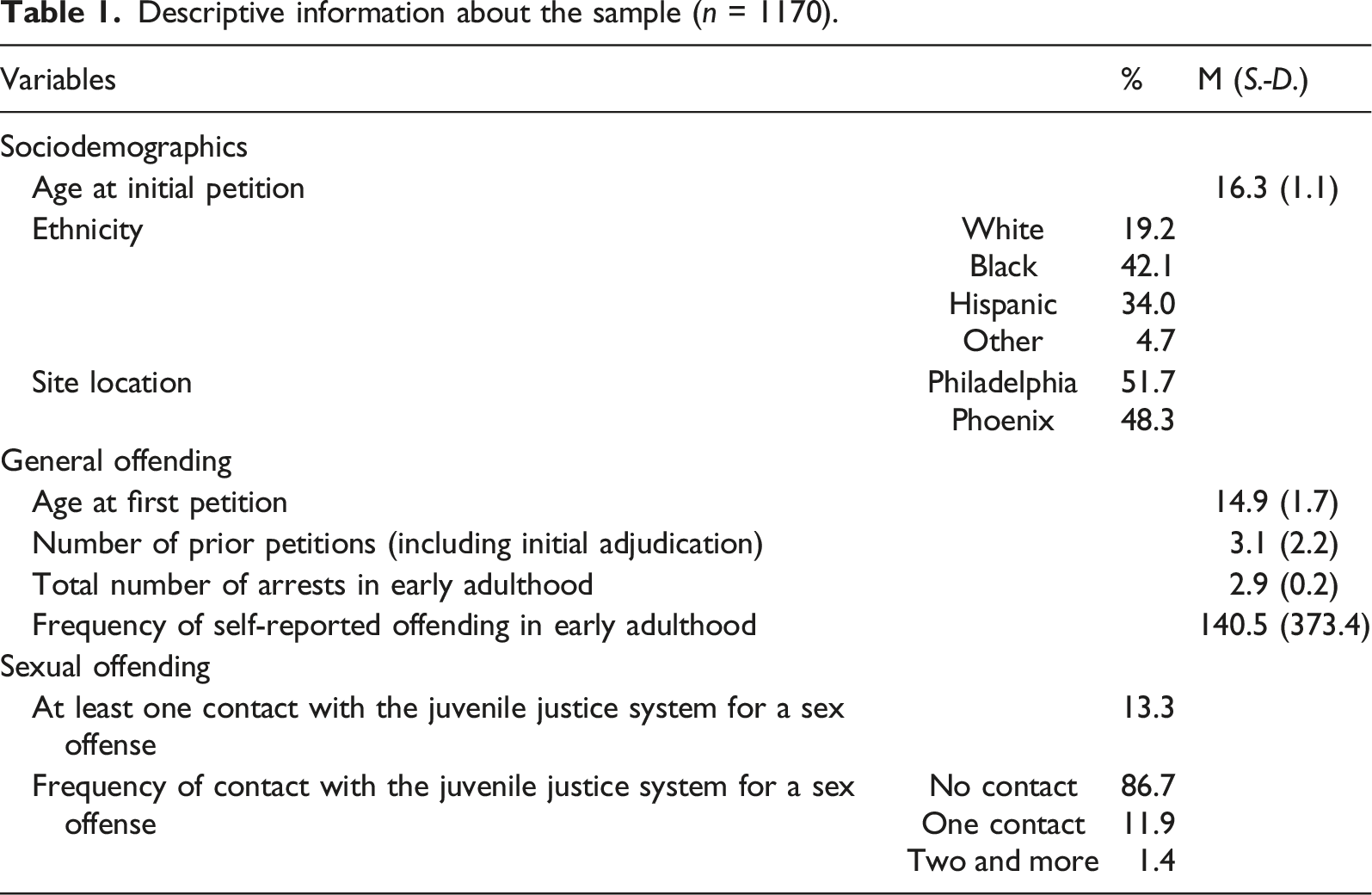
Preliminary bivariate analyses were conducted to compare participants who have a juvenile record for a sex offense with those who did not have a juvenile record for a sex offense in order to provide further details on the sample. First, mean comparisons were conducted between APSO and ANSO regarding offending characteristics in adolescence and offending outcomes in early adulthood (see Supplemental Table A). Results revealed only one significant difference between the two groups, that is, APSO spent on average a higher number of days in institutional settings during adolescence when compared to ANSO (t = -2.94, p < .01). Additional analyses were conducted in order to investigate the probabilities that a self-reported offense leads to an arrest in early adulthood and whether these probabilities differ between APSO and ANSO. To do so, a ratio variable was computed with the frequency of self-reported offending behavior and the total number of official arrests in early adulthood. This was examined given past research findings showing that being officially identified by the juvenile justice system in adolescence for a sex offense is associated with increased odds of new charges (e.g., Letourneau et al., 2009). Results in this regard indicated that there was no significant difference between the two groups, suggesting that the probability that offending involvement will lead to an arrest in early adulthood was similar for both groups. By focusing particularly on the early adulthood period, the current findings contrast with past studies, suggesting that the probability of being arrested does not differ between APSO and ANSO when they reach adulthood. Second, participants were compared on sociodemographic characteristics by conducting chi-square analyses and results showed significant differences (see Supplemental Table B). In fact, a greater proportion of participants who have a juvenile record for a sex offense were Black (X2 = 10.12, p < .01), and were selected in Philadelphia (X2 = 4.51, p < .05). In contrast, a greater proportion of participants who never had a juvenile record for a sex offense were Hispanic (X2 = 9.60, p < .01).
Procedure
The PTD study’s data collection procedure relied primarily on computer-assisted interviews with participants. These interviews were conducted by trained interviewers and took place at the adolescent’s residence, in public places (e.g., library), or at the residential facility where the adolescent was staying at the time of the interview. Confidentiality was ensured through protection measures provided by the Department of Justice. As the research design is prospective longitudinal in nature, several waves of interviews were conducted during the follow-up period across adolescence and early adulthood (i.e., about 7 years). Following the initial interview, follow-up interviews were conducted at 6-month intervals for the first 3 years, and annually for subsequent years. In other words, an initial interview was held with the adolescents after their enrollment in the study, followed by several follow-up interviews at the 6th, 12th, 18th, 24th, 30th, 36th, 48th, 60th, 72nd, and 84th months. In addition to the self-reported information collected through interviews, official data were also collected. In this regard, official data on offending were collected from the Federal Bureau of Investigation (FBI) and court records, covering both adolescence and early adulthood periods. Because of the current focus being placed on the early adulthood period, a particular attention is directed toward the age defining the legal status of adulthood in the United States, that is 18 years old and over. Therefore, data collected before and through the follow-up period was analyzed based on the age of the participants at each interview to determine if they had reached adulthood or not.
Measures
Data from the PTD study relate to various domains across adolescence and early adulthood. Considering the aim of the current study, the emphasis is directed on variables indicative of a juvenile record for a sex offense, and variables related to offending behavior in early adulthood. Moreover, the current study also considers variables that may impact the offending outcomes, that is sociodemographics, exposure time, time in institutional settings, as well as criminal career-related variables that have been identified in past studies as exerting an influence on criminal careers parameters such as frequency and continuity of offending over time (e.g., age of onset; Farrington et al., 2003).
Sociodemographics
Variables related to sociodemographic characteristics of participants are used as control variables. First, a variable referring to the study site where the adolescents were sampled (i.e., 1 = Philadelphia; 2 = Phoenix) is included, allowing to control for contrasting policies and practices across the two selection sites of the PTD study (Mulvey & Schubert, 2014). Considering the legal context surrounding the sampling procedures appears relevant given the particular interest of the current study regarding APSO identified through official data from the juvenile justice system. Philadelphia and Phoenix are characterized by contrasting policies and practices that may also be reflected in the response toward sexual offending among adolescents. In fact, these two sites tend to differ in their legal dispositions aimed at adolescents who have committed a sex offense 2 ; the State of Arizona exhibiting a more punitive approach than the State of Pennsylvania which constitutes a pioneer in juvenile rights and the importance of a juvenile justice system that is distinct from the adult system (Trivits & Reppucci, 2002). Even though the examination of the impact of a component of the SORN laws is not the purpose of the current study, it is necessary to control for this element due to a possible influence on criminal career parameters.
Second, a variable is included regarding the participants’ ethnicity (i.e., 1 = White; 2 = Black; 3 = Hispanic; 4 = Other). For the purpose of statistical analyses, this variable is further divided into two dichotomous variables related to the participants’ ethnicity, that is Black (i.e., 1 = Yes; 0 = No), and Hispanic (i.e., 1 = Yes; 0 = No). Studies have highlighted the over-representation of Blacks and Hispanics in the correctional system, and that these differences based on ethnicity may result in part from the differential treatment of the justice system and law enforcement toward minority groups (Piquero, 2015). Studies have also stressed that these differences are persistent across the life course (e.g., Gilman et al., 2014). The study site selection and the ethnicity thus represent characteristics that are invariant over time and that can have an impact on an individual’s experiences throughout life, including experiences with the justice system and offending outcomes. It is therefore necessary to control for the potential effect of these sociodemographic characteristics.
Offending Outcomes
Two offending outcomes are examined, that is the total number of self-reported offending and arrests in early adulthood. These outcomes allow to capture the level of involvement in offending in early adulthood in regard to one specific criminal career dimension among APSO in comparison to ANSO, namely the frequency of offending. This way, it is possible to determine if APSO are involved in a different number of offenses than ANSO as they enter another developmental period and become adults. First, the frequency of self-reported offending in early adulthood is examined. This outcome is measured with an adapted version of the Self-Reported Offending (SRO; Huizinga et al., 1991) used for the PTD study. Data collected through this instrument allows for individual and combined documentation of 22 different forms of offending behavior (e.g., vandalism, theft, assault, etc.) across the follow-up period. Given the high frequency of drug-related offending behaviors that may generate biased results (e.g., Monahan et al., 2009), a measure of self-reported offending excluding drug-related offenses were used. For the present study, frequency scores are used, that is the total number of single offenses committed as reported by participants at each follow-up interview. A variable was then created by using a computing procedure representing the frequency of self-reported offending during early adulthood. This variable thus corresponds to the sum of offending behaviors reported at each wave with the condition that the participant was 18 years old and over at that time. The second outcome of interest is the total number of arrests in early adulthood. This element is examined based on official arrest records from the FBI. The number of arrests was available for each follow-up wave. A variable was then created for the purpose of the current study; this variable consisting of the sum of arrests in adulthood recorded during each follow-up wave with the condition that the participant was 18 years old and over at that time.
Independent Variable
The main independent variable of interest is the presence of a juvenile record for a sex offense. To determine if a participant had a record for a sex offense during adolescence, prior petitions, initial adjudication, as well as new arrests that occurred while the participant was under 18 years old were screened. A dichotomous variable was then created to indicate the presence or absence of a juvenile record for a sex offense (i.e., 0 = absence; 1 = presence). This procedure led to the identification of 156 participants who had a record for a sex offense before the age of 18, which constitutes the group of APSO.
Institutionalization Time
Past studies endorsing a criminal career approach stressed the influence of time spent in institutional settings on future offending (e.g., Mulvey & Schubert, 2012; Sampson & Laub, 1993). For example, findings suggest that experiencing sanctions that involve institutional time during adolescence is associated with an increase likelihood of future offending (e.g., Henggeler & Schoenwald, 2011). Accounting for institutionalization time appears even more relevant when it comes to studying APSO, given their likelihood of being exposed to strict measures from the justice system including long-term or indeterminate detention, and court-ordered participation in a residential treatment program (Letourneau & Caldwell, 2013; Zimring et al., 2009). Based on these elements, the proportion of time spent in institutional settings during adolescence is considered in the current study. In this regard, a variable was created by computing the total number of days during the follow-up that each participant spent in 10 different settings with or without community access (e.g., drugs and/or alcohol, psychiatric, shelter, jail and/or prison, detention center, contracted residential mental health, etc.) before 18 years old. The mean number of days spent in settings during adolescence for the sample is 254.09 (SD = 237.61).
Age at First Petition
Past empirical findings showed an association between the age of onset and subsequent offending. More exactly, it was noted that an earlier age at the time of the onset of offending is related to a later offending characterized by a greater number of offenses (e.g., Farrington et al., 2003; Loeber & LeBlanc, 1990). Based on this observation, a variable referring to the age at the first petition to court was added in the analyses in order to control for the influence of the age of onset on subsequent offending. In this regard, the mean age of the sample at first prior petition is 14.85 (SD = 1.67).
Frequency of Offending in Adolescence
Past studies' findings also showed the effect of past offending behavior on future offending behavior (e.g., Paternoster et al., 1997), highlighting particularly the influence of adolescence offending on adulthood offending (e.g., Sampson & Laub, 1993). In order to control for this effect, a variable was created by computing the total number of prior petitions and new arrests that occurred during the follow-up period with the condition that the participant was under 18 years old at that time. This variable thus refers to the frequency of offending during adolescence and informs on participants’ past offending behaviors before they reached early adulthood. The mean number of offending behaviors during adolescence of the sample based on official records is 3.59 (SD = 2.44).
Exposure Time
The present study controls for the exposure time, that is the time a participant is at risk of committing a new offense. Accounting for exposure time allows to consider that the opportunity to commit an offense varies from one participant to another over time. Adjusting for exposure time while conducting statistical analyses is important given its influence on results and deriving conclusions regarding offending behavior over time (e.g., Piquero et al., 2001). Therefore, a variable was computed using the total number of days that each participant spent in the community (i.e., not in secure settings without any community access) during early adulthood. In this regard, the mean number of days in the community during early adulthood is 1335.67 (SD = 576.46).
Analytical Strategy
Considering the features of the outcome variables, a series of generalized linear models were conducted. This constitutes a flexible approach that allows for a non-normal distribution in the dependent variable (Coxe et al., 2013). More exactly, the negative binomial regression was used in order to account for the overdispersion characterizing the variance of both outcome variables (e.g., Hilbe, 2011). For each outcome of interest, the models included a dichotomous indicator of a juvenile record for a sex offense. These models were also adjusted by adding different continuous covariates (i.e., the total number of days spent in all settings during adolescence, the age at the time of the first petition, and the total number of arrests in adolescence), as well as sociodemographic control variables (i.e., ethnicity, and study site selection). Moreover, an exposure variable (i.e., the total number of days spent in the community during early adulthood) was incorporated in each model by using the offset option in order to control for the differential time at risk among participants. The incidence rate ratio (IRR) for every variable in the models were reported, allowing to interpret the impact of each independent variable included in the models in terms of how the likelihood of the outcome being present is increased (IRR >1) or decreased (IRR <1) by these independent variables.
Results
Sex Offending in Adolescence and Offending in Early Adulthood
Series of negative binomial regression models were conducted to investigate the association between a juvenile record for a sex offense and offending outcomes in early adulthood. Distinct regression models adjusted for exposure time were conducted for the two offending outcomes examined in the current study, that is the frequency of self-reported offending and the total number of arrests in adulthood. 3 Given that participants were not all the same age at the beginning of the follow-up, which results in different lengths of follow-up during early adulthood among participants, negative binomial regressions were first conducted with a variable referring to the age at baseline in order to control for the number of waves in adulthood. There was no significant difference noted in the results.
Self-Reported Offending in Early Adulthood
Negative Binomial Regression Models for the Frequency of Self-Reported Offending During Early Adulthood.
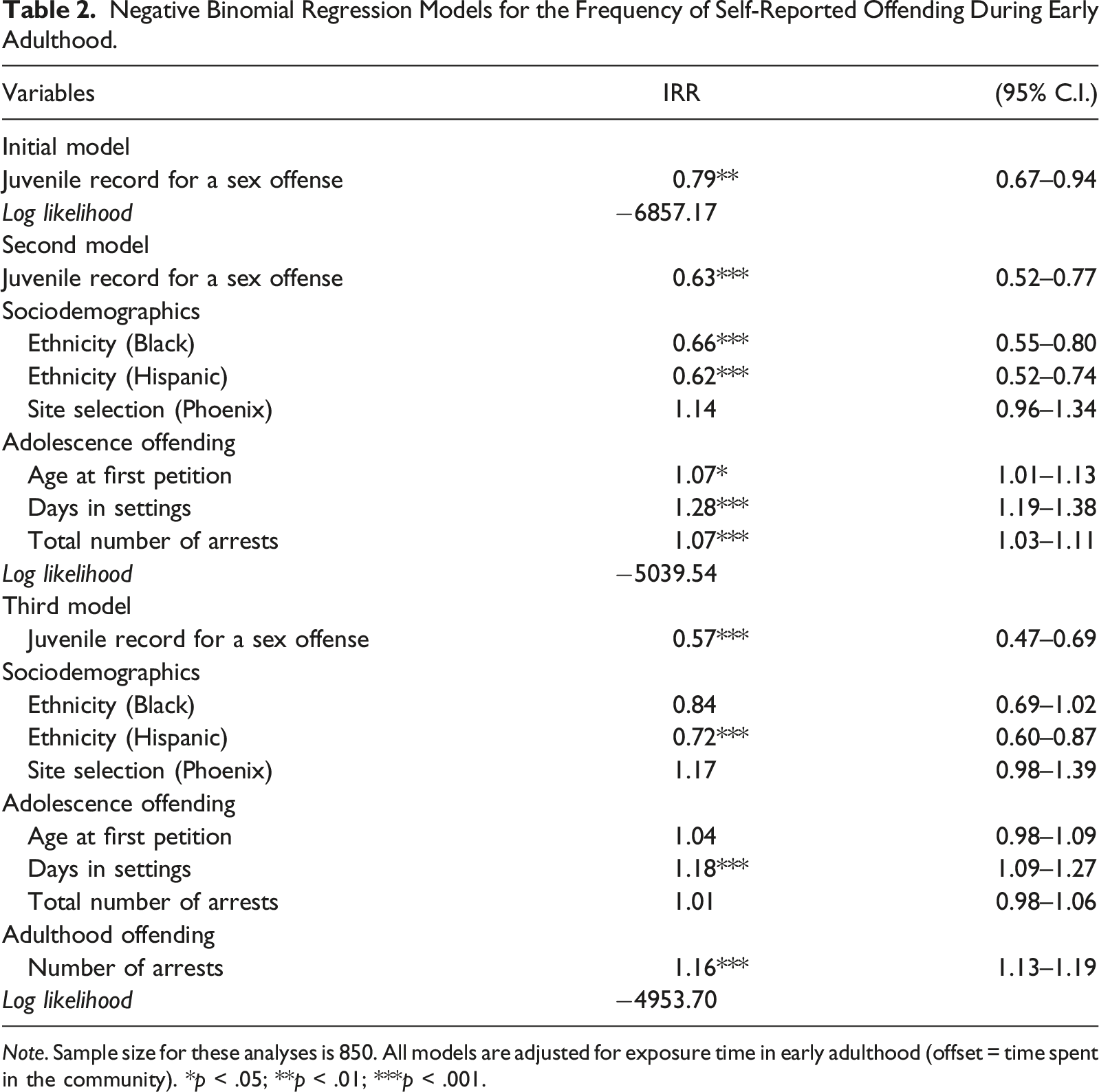
Note. Sample size for these analyses is 850. All models are adjusted for exposure time in early adulthood (offset = time spent in the community). *p < .05; **p < .01; ***p < .001.
In order to control for the number of contacts with the criminal justice system in adulthood, a third model was conducted while adding the variable referring to the number of arrests in early adulthood. This allows to control for the possibility that APSO show a lower frequency of self-reported offending in early adulthood because they have more contacts with the criminal justice system. In this third model, the presence of a juvenile record for a sex offense remained significantly associated with a lower frequency of self-reported offending in early adulthood (IRR = 0.57, p < .001). In contrast, three variables were no longer significant, namely the ethnicity (Black), the age at first petition, and the total number of arrests in adolescence. Finally, the number of arrests in early adulthood was significantly associated with a higher frequency of self-reported offending (IRR = 1.16, p < .001).
Arrests in Early Adulthood
Negative Binomial Regression Models for the Number of Arrests During Early Adulthood.
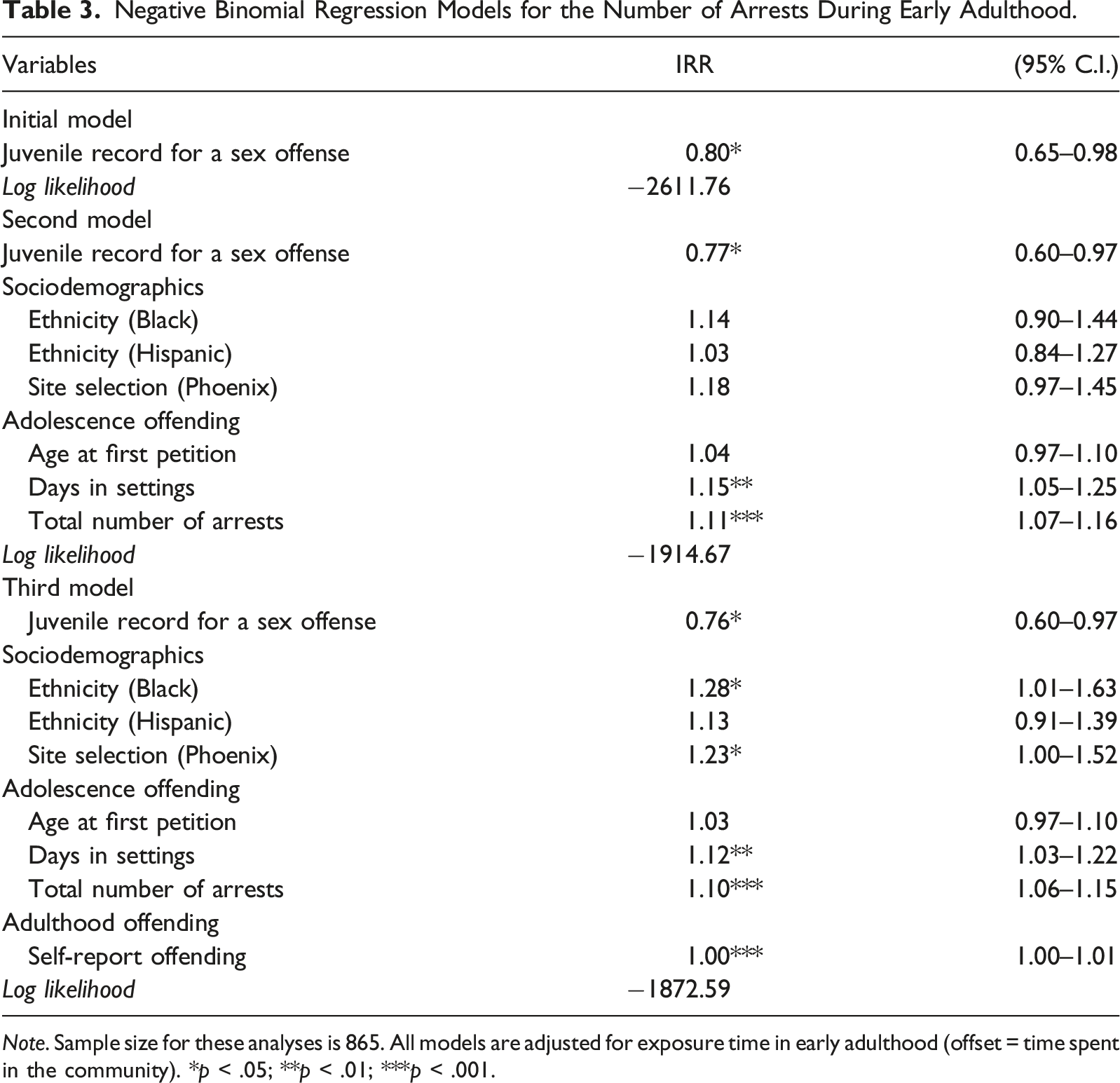
Note. Sample size for these analyses is 865. All models are adjusted for exposure time in early adulthood (offset = time spent in the community). *p < .05; **p < .01; ***p < .001.
Moreover, a third model was conducted in order to control for the frequency of self-reported offending in early adulthood. This strategy allows to control for the actual level of offending activity in early adulthood irrespective of the detection by the criminal justice system. In this model, having a juvenile record for a sex offense remained significantly associated with a lower number of arrests in early adulthood (IRR = 0.76, p < .05). Two variables were now significant, that is the ethnicity (i.e., Black; IRR = 1.28, p < .05), and the site selection (i.e., Phoenix; IRR = 1.23, p < .05), who were both associated with a greater number of arrests in early adulthood. Finally, the frequency of self-reported offending was significantly associated with a greater number of arrests in early adulthood (IRR = 1.00, p < .001).
Interaction Effects
Interaction Effects Between the Presence of a Juvenile Record for a Sex Offense and Other Independent Variables.
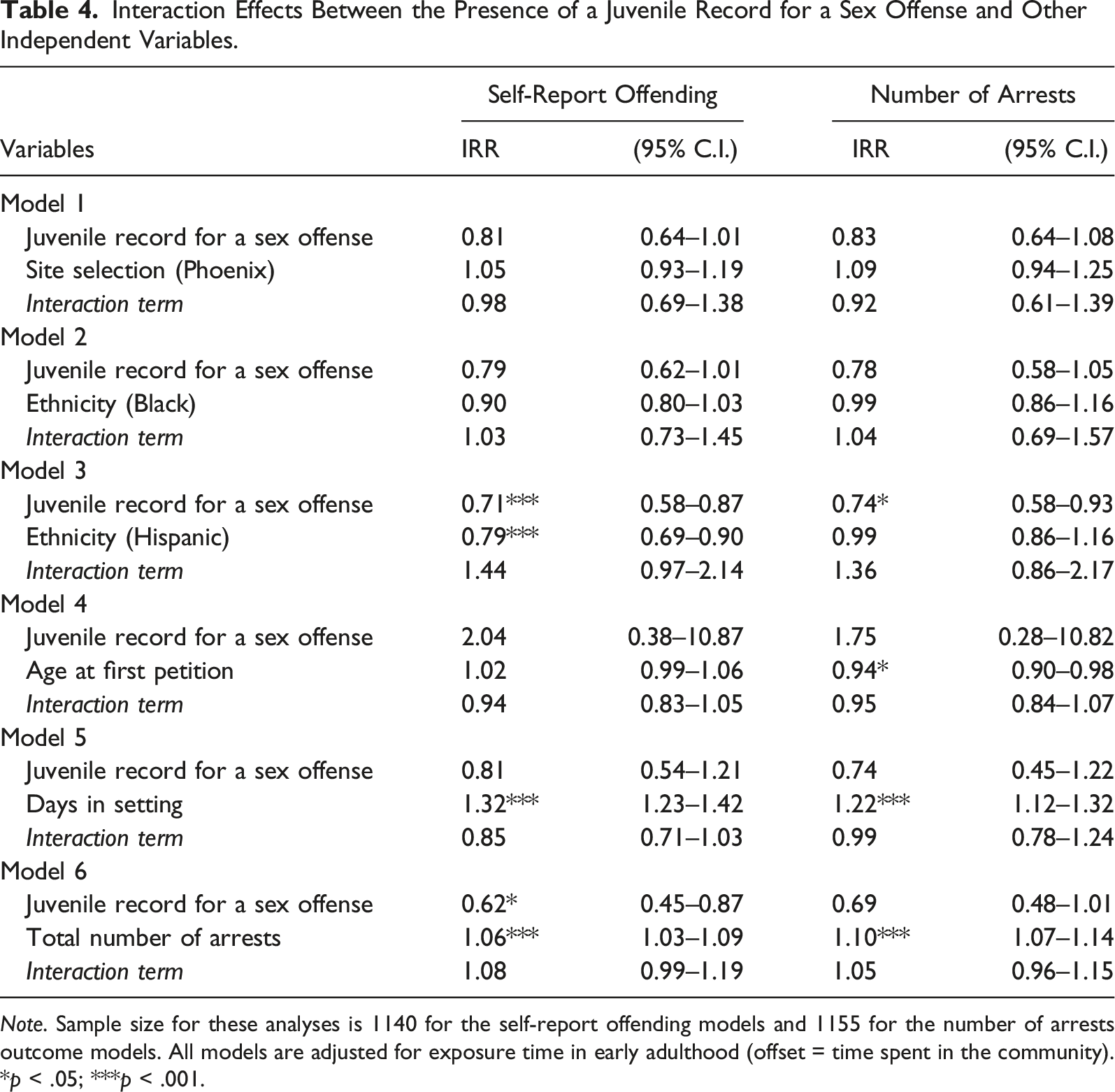
Note. Sample size for these analyses is 1140 for the self-report offending models and 1155 for the number of arrests outcome models. All models are adjusted for exposure time in early adulthood (offset = time spent in the community). *p < .05; ***p < .001.
Discussion
The aim of the current study was to examine if having a juvenile record for a sex offense within the current sociolegal context in the United States is associated with differential outcomes in terms of continuity of offending in a subsequent developmental period, that is in early adulthood. Results show that the presence of a juvenile record for a sex offense in adolescence was associated with lower frequencies of offending during early adulthood, whether based on official or self-reported data. More precisely, findings reveal that in a sample composed of adolescents who have all been adjudicated for a serious crime and among which high rates of recidivism were noted in past studies (e.g., Brame et al., 2018), adolescents who have perpetrated a sex offense and were detected by the juvenile justice system for an offense of this nature exhibit a significantly lower level of involvement in offending during early adulthood.
The current results can also be compared with findings from a study conducted by Fanniff et al. (2017) on adolescents enrolled in the PTD study. It is important here to reiterate that the current study contrasts with the study conducted by Fanniff et al. (2017) in terms of the follow-up period during which the recidivism was examined. Whereas Fanniff et al. (2017) presented combined recidivism rates for the periods of adolescence and early adulthood, the current study focused on the continuity of offending in early adulthood. In other words, the follow-up period to examine the continuity of offending in the current study only began when the adolescents reached 18 years old. This aligns with the criminal career approach and its concern for the unfolding of offending over time, and more specifically from one developmental period to another (Farrington, 1992). That being said, it is possible to note some distinctions between the current findings and the results obtained in Fanniff et al. (2017). While it was noted by Fanniff et al. (2017) that APSO and ANSO did not differ on general recidivism over the follow-up period extending from mid-adolescence to early adulthood, the current findings show that APSO have committed a significantly lower number of offenses when focusing on the developmental period of early adulthood.
These results are informative as they suggest that as they age, young persons with an APSO status depart from other young persons involved in serious and violent offending. In fact, the comparison of the current findings with those from Fanniff et al. (2017) suggests that APSO and ANSO share similarities regarding their offending during the adolescence period, but that these similarities fade once they reach adulthood. From a developmental perspective, this could indicate that more adolescents from the APSO group follow an adolescence-limited trajectory of offending in comparison to youths from the ANSO group included in the PTD study. Moreover, the different results between the current study and the study conducted by Fanniff et al. (2017) highlight the importance of distinguishing offending across developmental periods rather than examining an aggregate measure of offending that could mask the dynamic aspect of offending over time. This finding is also not consistent with previous observations (see also, Reale et al., 2020) which might suggest some cautious about the unfolding of criminal careers across jurisdictions. The current study findings could also denote that young offenders with an APSO status might have distinct intervention needs when compared to those involved in other forms of serious offense. It could indicate that some APSO have intervention needs specific to the context of adolescence, such as the familial environment and their own experience of neglect and abuse (e.g., Barra et al., 2018; Chouinard-Thivierge et al., 2022; Lussier et al., 2019). Another possible hypothesis is that a significant proportion of APSO could be more receptive to desistance-focused interventions that contribute to reducing the offending over time (e.g., Farrall & Maruna, 2004; Menon & Cheung, 2018).
Overall, the current findings have important implications. Indeed, it provides information on the criminal careers among APSO over time, more especially as they become adults. Even more important, findings from the current study provide relevant information regarding what the presence of a record for a sex offense in adolescence means for subsequent offending as these adolescents enter the following developmental period of early adulthood. It is worth mentioning here that for the majority of the APSO, the reason why they were included in a sample of adolescents adjudicated for a serious offense is based on the presence of a sex offense (i.e., felony sexual offense or sexual misdemeanor). Given the significant distinctions in terms of offending outcomes in early adulthood showing lower frequency among APSO, it is possible to wonder whether APSO present a distinct profile than the adolescents who engage in other types of serious offending. Further research in this matter is clearly needed in order to better understand this aspect of the current findings, such as investigating if criminogenic factors could be involved in the differential offending outcomes between APSO and ANSO, or also if having a juvenile record for a sex offense leads to other differential outcomes in adulthood (e.g., related to the social context; quality of friendship, social support, employment, neighborhood conditions, etc.).
Based on the results, having a juvenile record for a sex offense does lead to differential offending outcomes in early adulthood, specifically lower levels of offending as measured with official and self-reported data. From a criminal career perspective, this suggests that the adolescence-onset of sex offending is not indicative of a life-course persistent offending in adulthood. Criminal career studies demonstrated that some dimensions such as the age of onset and the frequency of past offending have an influence on the future offending; an earlier age of onset and a higher frequency of past offending increasing the future levels of offending. The current study adds to previous findings on criminal careers by providing knowledge regarding the effect of adolescence sex offending over time, showing that the presence of a juvenile record for a sex offense is associated with lower levels of offending at a later developmental period, that is in early adulthood. Even though it could have been falsely presumed in the past that having a juvenile record for a sex offense, namely an offense considered to be serious and which triggers a strong reaction from the public and the juvenile justice system (e.g., Stevenson et al., 2015; Titus, 2010), constitutes an indicator of chronic offending over the life-course (e.g., see Tracy et al., 1990), the current findings rather show the opposite. A parallel can be made here with the findings from Lussier et al. (2012) study, which highlighted the lack of synchronicity in the development of sexual and non-sexual offending among APSO; suggesting that the onset of sexual offending occurring in adolescence does not necessarily represent the sign of a frequent and persistent offending at a later time point in life. Moreover, while past studies showed that APSO are more likely to persist in non-sexual offending than in sex offending through life (e.g., Lussier & Blokland, 2014; Nisbet et al., 2004; Vandiver, 2006), the current findings go further by demonstrating that the adulthood offending of APSO is likely to be less frequent than among ANSO. Conceiving adolescence-onset of sexual offending as a benchmark to identify youth at risk of a long-term and highly frequent offending now seems to be inappropriate based on the current findings.
In addition to the theoretical implications of the present findings in terms of knowledge regarding APSO and their criminal careers, it is important to interpret these findings while considering the legal context surrounding this phenomenon. In fact, while APSO are being subjected to more restrictive and rigid measures from the juvenile justice system, findings from the current study rather showed that the evolution of the offending of these adolescents as they age is characterized by a lower frequency in early adulthood than adolescents who never had a juvenile record for a sex offense. The juvenile justice system seems to be characterized by an imbalance between the risk that most of APSO represent even into adulthood and the official response to their behavior (Caldwell, 2010; Caldwell & Dickinson, 2009; Letourneau, 2021). Indeed, almost all APSO must carry the label of “risk” even though findings show that not only their rates of sexual recidivism over time are low (Fanniff et al., 2017; Hargreaves & Francis, 2014), but they are also not the ones who will manifest criminal careers characterized by a high frequency of general offending in adulthood. Despite this, the juvenile justice system continues to endorse a particularly punitive and controlling approach towards APSO as if they are on a long-term and highly frequent path of offending.
Problems with this orientation from the juvenile justice system were highlighted in other studies. For example, based on their prospective longitudinal investigation of the offending patterns of APSO, Zimring et al. (2007) emphasized the lack of specialization in sexual offending among these adolescents as they age into adulthood, thereby leading to the wrong classification of a great proportion of them (i.e., about 90%) as showing a long-term risk of sexual recidivism over time. Findings from the current study also align with past studies by showing that in a sample composed of adolescents adjudicated for a serious offense, APSO exhibited lower levers of offending over time, whether based on official of self-reported data. In other words, not only APSO rarely persist in sexual offending over the life-course, but they also display a less frequent general offending in early adulthood. Many concerns began to emerge regarding this erroneous classification of APSO by the juvenile justice system, such as the negative effect on the rehabilitation and the desistance process, as well as social exclusion and stigmatization effect (e.g., Caldwell, 2010; Chaffin, 2008; Human Rights Watch, 2013). This clearly calls for a change of perception and a review of the response toward sexual offending in adolescence in terms of policies and intervention.
Limitations and Future Directions
While the contributory nature of the criminal career approach used in the current study helps enhance knowledge regarding APSO, some methodological limitations should be discussed. First, analyses were based on data collected among adolescents who were adjudicated for a serious offense in two cities situated in the United States (i.e., Phoenix, AZ; and Philadelphia, PA). Findings thus deal only with the influence of the juvenile justice system in these two locations and may reflect specific legal context, meaning that they are not completely generalizable. Second, the identification of the group of APSO was based only on official data and, given that sex offenses are not always officially reported, this means that some adolescents in the ANSO group might have perpetrated a sex offense without ever having been detected for this offense by the juvenile justice system. This highlights the relevancy of conducting research on sexual offending while using other types of information than only relying on official data in order to acquire a nuanced picture. This strategy was not available in the current study, because the self-reported offending measure was not specifically designed to screen for sex offenses. However, identifying APSO with official data concurred with the aim of the current study, that is investigating if having a juvenile record for a sex offense leads to differential offending outcomes in early adulthood. Third, we had no detailed information regarding whether these records were expunged or pled down for some of these justice-involved adolescents who had a juvenile record for a sex offense. This constitutes a relevant element to consider in future research regarding the effect of being officially identified for a sex offense in adolescence on adult offending outcomes in order to better capture the relationship between sexual offending in adolescence and the sociolegal response toward this phenomenon. This appears even more relevant knowing that between-state variations exist in that regard (Wieder, 2015). Fourth, because the PTD study was not elaborated specifically to investigate APSO and their offending over time, variables regarding the particular response of the juvenile justice system toward sexual offending in adolescence (e.g., sex offender registration and public notification) were not available. Further prospective longitudinal investigation of the criminal careers of APSO accounting for the potential effect through life of the legal response toward sexual offending in adolescence would be very relevant in the future in order to acquire a detailed picture of this phenomenon and the influences involved. Nevertheless, the PTD study data showed great richness of information to allow for a rigorous examination of what is to be expected following the perpetration of a sex offense in adolescence as these adolescents age into early adulthood.
Supplemental Material
Supplemental Material - The Adult Offending Outcomes of Adolescents Who Have Perpetrated a Sex Offense: Is Sexual Offending in Adolescence Indicative of Things to Come?
Supplemental Material for The Adult Offending Outcomes of Adolescents Who Have Perpetrated a Sex Offense: Is Sexual Offending in Adolescence Indicative of Things to Come? by Stéphanie Chouinard-Thivierge, Patrick Lussier, and Yanick Charette in Youth Violence and Juvenile Justice
Footnotes
Declaration of Conflicting Interests
The author(s) declared no potential conflicts of interest with respect to the research, authorship, and/or publication of this article.
Funding
The author(s) received no financial support for the research, authorship, and/or publication of this article.

Supplemental Material
Supplemental material for this article is available online.
Notes
Author biographies
References
Supplementary Material
Please find the following supplemental material available below.
For Open Access articles published under a Creative Commons License, all supplemental material carries the same license as the article it is associated with.
For non-Open Access articles published, all supplemental material carries a non-exclusive license, and permission requests for re-use of supplemental material or any part of supplemental material shall be sent directly to the copyright owner as specified in the copyright notice associated with the article.
