



Abstract
Parents of children with autism spectrum disorder (ASD) experience stress, potentially affecting parenting and child outcomes. The roles of psychological flexibility and parental reflective functioning in coping strategies of parents of children with ASD are not fully understood. The study aims to examine differences in psychological flexibility, parental reflective functioning, parental self-efficacy, and coping strategies among parents of children with ASD and children with typical development (TD), while considering gender differences. In addition, it seeks to explore whether parental efficacy mediates the association between psychological flexibility, parental reflective functioning, and coping. The sample was comprised of 210 Israeli parents, with 86 having children with ASD and 124 having children with TD. A moderation analysis was conducted to investigate the moderation model. Parents of children with ASD demonstrated lower psychological flexibility, parental self-efficacy, and support-seeking coping strategies and higher proactive and disengagement coping strategies. Mothers reported higher parental reflective functioning and proactive and support-seeking coping strategies than fathers. In parents of children with ASD, parental self-efficacy mediated the association between parental reflective functioning and proactive coping strategies. Policymakers should advance intervention to enhance parental reflective functioning and parental self-efficacy for parents of children with ASD, with a special focus on fathers.
Keywords
Introduction
The Diagnostic and Statistical Manual of Mental Disorders, Fifth Edition, Text Revision (DSM-5-TR) defines autism spectrum disorders (ASD) as difficulties in communication skills and stereotypical and repetitive behaviors (American Psychiatric Association, 2022). According to the Centers for Disease Control and Prevention (CDC, 2023), 1 in 36 children born in the United States has been identified with ASD. The parenting experience of parents of children with ASD includes stress (Scherer et al., 2019), with that said it also includes positive aspects such as growth, benefit finding, positive appraisal, and positive perceptions (Meleady et al., 2020). Despite the positive aspects, the stress experienced by parents of children with ASD can lead to less positive, even harsh, parenting and subsequent negative outcomes for children with ASD (Fang et al., 2023; van Esch et al., 2018). In addition, the parenting experience for parents of children with ASD appears to vary significantly between mothers and fathers (Vernhet et al., 2022).
Both psychological flexibility and parental reflective functioning have been established as factors linked to positive parenting outcomes (Menashe-Grinberg et al., 2022; Nijssens et al., 2018) and can be enhanced through interventions (Doorley et al., 2020; Lo & Wong, 2022). Yet, to the best of our knowledge, the contribution of these factors has not been examined in the context of the coping strategies of parents of children with ASD. Since both psychological flexibility and parental reflective functioning can be beneficial and improved, the current study aims to examine their contribution to coping strategies among parents of children with ASD. In addition, the study investigates whether parental self-efficacy can mediate the correlation among psychological flexibility, parental reflective functioning, and coping strategies. These aspects are examined in comparison to parents of children with typical development (TD), as well as in a comparison between mothers and fathers.
Coping Strategies
Folkman and Lazarus (1980) defined coping as a behavioral or cognitive attempt to control, handle, and reduce inner conflict and stress. Coping strategies refer to the way people try to reduce the negative impact of dealing with the adversities they face. For parents of children with ASD, applying proactive coping strategies can be beneficial for alleviating stress, maintaining psychological well-being, and being more involved in the life of the child with ASD (Lai & Oei, 2014; Vernhet et al., 2019). Finding social support and rethinking expectations are also effective coping strategies for parents of children with ASD (Lai & Oei, 2014; Zhou & Yi, 2014). However, parents of children with ASD also tend toward avoidance and disengagement, which may result from a lack of understanding of the condition of ASD (Shilubane & Mazibuko, 2020). The data on coping strategies for parents of children with disabilities, including parents of children with ASD, are mixed. Some studies suggest that fathers tend to use more proactive coping strategies, while others suggest that mothers are more likely to pursue proactive coping strategies (Al-Yagon, 2015; Behrani & Shah, 2016). Fathers more often turn to avoidance coping strategies than mothers (Vernhet et al., 2019).
Psychological Flexibility
Psychological flexibility is the ability to tackle challenges with an open mind, manage stress, shift perspective, adapt, and act in line with our values. The need to address the matters that cause challenges in our lives is drawn from the understanding that the issues causing us the most discomfort are often those that are most important to us (Cherry et al., 2021; S. Hayes, 2019; Kashdan, 2010). Psychological flexibility is associated with enhanced psychological health and well-being (Gloster et al., 2017), while psychological inflexibility is correlated with stress, depression, anxiety, insomnia, and poorer mental health (Hernández-López et al., 2021).
Psychological flexibility helps parents maintain good parenting practices by considering their relationship with their child and navigating emotions and thoughts (Burke & Moore, 2015). Higher psychological flexibility is linked to better problem-solving in parenthood, while psychological inflexibility can hinder the child’s development (Brassell et al., 2016; Flujas-Contreras et al., 2023). To the best of our knowledge, the correlation between psychological flexibility and coping strategies has not been studied in parents of children with ASD.
Among parents of children with ASD, low psychological flexibility of mothers is correlated with anxiety, depression, and stress (Kulasinghe et al., 2021). Psychological inflexibility is also negatively correlated with treatment adherence of parents of children with ASD (Moreno Méndez et al., 2020). There is a scarcity of research addressing the role of gender among parents of children with ASD in the context of psychological flexibility. In fact, Gur and Reich (2023) suggested a future study of the psychological flexibility of parents of children with disabilities in the context of gender, specific disabilities, and parental functioning.
Parental Reflective Functioning
Reflective functioning is based on theory of mind and recognizes that individuals can understand that others may have different perspectives and intentions than their own (Fonagy et al., 1991). Parental reflective functioning is grounded in attachment theory, emphasizing that the parent-child relationship is a key element in the development of the child (Ainsworth et al., 1978; Fonagy et al., 1991). Parental reflective functioning is the parent’s ability to understand and process their child’s psychological needs and perspective. Parental reflective functioning is linked to better parent-child relationships and understanding distressed children (Menashe-Grinberg et al., 2022; Rutherford et al., 2015). Maternal reflective functioning is associated with better emotional regulation (Nijssens et al., 2018).
Regarding parental reflective functioning for parents of children with ASD, Slade (2009) highlights the complexity of their situation. Parents often struggle to understand their child’s inner world due to the communication difficulties associated with ASD. However, the child’s development significantly depends on the parents’ ability to grasp this inner world. The data on parental reflective functioning of parents of children with ASD are limited and conflicting. One study found that parents with both ASD and TD children reported higher reflective functioning toward their child with ASD (Enav et al., 2023). However, another study found that mothers of children with ASD reported higher pre-mentalization, indicating difficulty in understanding the child (Henrikson, 2023). In the broader field of parents of children with disabilities, increased parental reflective functioning is linked to the use of more proactive coping strategies (Gur et al., 2023), but to the best of our knowledge, this has not been examined specifically in the context of parents of children with ASD.
Concerning parental reflective functioning and gender, mothers of children with TD report higher parental reflective functioning than fathers (Pazzagli et al., 2018), but such a study in the context of parents of children with ASD is lacking. Here too, Gur et al. (2023) recommended that future studies investigate gender as a possible variable in the parental reflective functioning of parents of children with disabilities.
Parental Self-Efficacy
Bandura (1982) defined parental self-efficacy as the individual’s belief in their own abilities. Parental self-efficacy refers to not only the parent’s belief but also their own ability to function as a good parent. Parental self-efficacy is associated with positive parenting practices and positive results for children (Bloomfield & Kendall, 2012; Enebrink et al., 2015).
Parents of children with ASD have reported lower parental self-efficacy than parents of children with TD (Karst & Van Hecke, 2012). For parents of children with ASD, parental self-efficacy is associated with mental health (Sartor et al., 2023). Studies on the general population have found that mothers report higher parental self-efficacy than fathers (Salo et al., 2022), but here too, to the best of our knowledge, the issue of gender and self-efficacy has not been examined among parents of children with ASD.
Parental self-efficacy can also have a mediating role in parental psychological states and parental functioning (Albanese et al., 2019). In the context of ASD, parental self-efficacy has been studied as a mediator between child behavior and parental stress and social support (e.g., Lu et al., 2021; Stephenson et al., 2023), although not as a mediator in the coping strategies of parents of children with ASD.
The present study had three aims. The first was to examine whether differences exist in psychological flexibility, parental reflective functioning, parental self-efficacy, and coping strategies between parents of children with ASD and parents of children with TD, and according to parents’ gender. We hypothesized that parents of children with ASD would demonstrate lower psychological flexibility, less proactive coping, and more avoidant coping than parents of TD children (Emerson, 2021; Shilubane & Mazibuko, 2020). In addition, we expected fathers of children with ASD to report less-proactive and more-avoidant coping strategies (Al-Yagon, 2015; Vernhet et al., 2019), while mothers in both groups were hypothesized to score higher on parental reflective functioning and self-efficacy (Pazzagli et al., 2018; Salo et al., 2022). The second aim was to examine whether associations exist among psychological flexibility, parental reflective functioning, parental self-efficacy, and coping strategies. We hypothesized positive correlations between psychological flexibility, parental reflective functioning, and parental self-efficacy with proactive and support-seeking coping strategies, and negative associations with avoidance and disengagement coping strategies (Rutherford et al., 2015; Tindle et al., 2022). The third aim was to examine whether psychological flexibility and parental reflective functioning contribute to the coping strategies of parents of children with ASD and the possible mediating role of parental self-efficacy. We hypothesized that parental self-efficacy mediates the relationships between psychological flexibility and parental reflective functioning with coping strategies based on previous research showing associations between psychological flexibility, parental reflective functioning, and parental self-efficacy (Burke & Moore, 2015; Gordo et al., 2020), as well as links between self-efficacy and coping strategies (Mete, 2021).
Method
Participants
The study included 210 Israeli parents of children between the ages of 6 and 14 years. This age range was selected as children’s behavioral manifestations and parental experiences vary significantly across developmental stages (Graziosi & Perry, 2023; Lane et al., 2022; Varela et al., 2020). Focusing on this specific age group allows for a more targeted understanding of parental experiences within this demographic. Of the 210 participants, 86 (41%) were self-reported parents of children with ASD, and 124 (59%) were parents of children with TD. The participants were all Jewish, the country’s major ethnic group. The ages of participants ranged from 27 to 61 years (M = 39.2, SD = 6.3). Of the parents of children with ASD, 60 (28.5%) were mothers, and 26 (12.4%) were fathers; of the parents of children with TD, 76 (36.1%) were mothers, and 48 (22.8%) were fathers. The mean and SD of the ages of the fathers were M = 38.4 and SD = 6.8, and the mean and SD of the ages of the mothers were M = 39.6 and SD = 5.9. No significant differences were found between the ages of the fathers and mothers (t(208) = 1.33, p = .184; t(208) = .39, p = .693; Table 1 presents the background characteristics of the participants). The parents of children with ASD were asked an additional question regarding the educational setting of their child. Twenty-five parents (29.1%) indicated that their child is educated in a special education school, 28 parents (32.6%) indicated that their child was educated in a special education class in a regular school, and 31 parents (36%) indicated that their child was educated in a regular class.
Participants’ Background Characteristics by Group (N = 210).
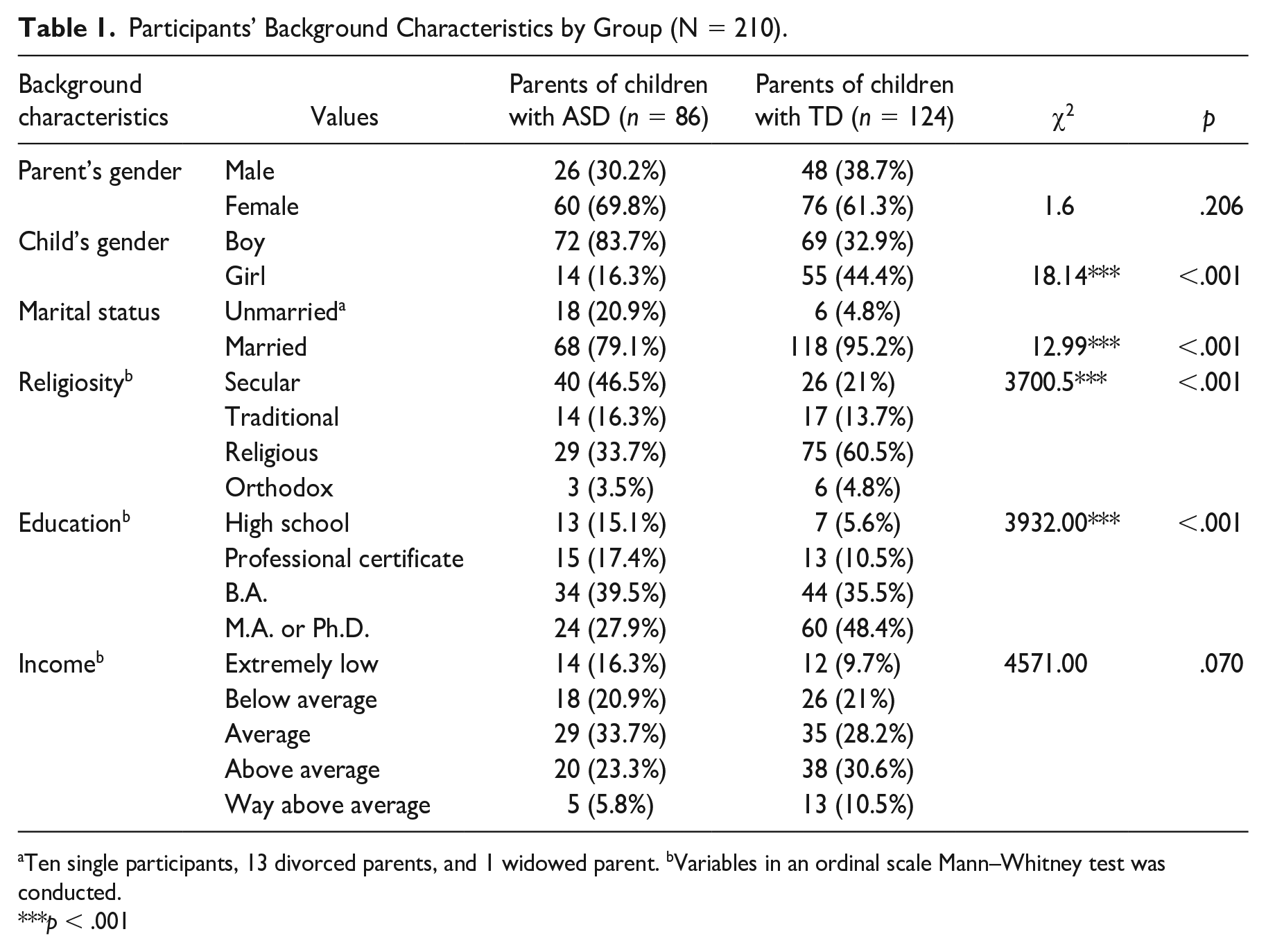
Ten single participants, 13 divorced parents, and 1 widowed parent. bVariables in an ordinal scale Mann–Whitney test was conducted.
p < .001
Participants were recruited using purposive sampling, which means that participants with specific characteristics are targeted for recruitment (Etikan et al., 2015). Questionnaires in Hebrew were distributed using social media, including Facebook and WhatsApp groups of parents of children with disabilities in general and groups of parents of children with ASD in particular. These included Facebook groups such as “The Community of Parents of Children with Autism” and “Parents Talk Online.” Since the number of individuals who received the questionnaire link is unknown, the response rate cannot be determined.
Measurements
Demographic Questionnaire
The demographic questionnaire included questions about both parents and children. Parental demographics included gender, age, income, number of children, and marital status. Child demographics included gender, age, and if the child was diagnosed with ASD, a question about the type of educational setting the child was in (e.g., special education school, special education class, regular class).
Psy-Flex
The Psy-Flex (Gloster et al., 2021) aims to assess psychological flexibility. This measurement includes six items and is a one-factor self-report questionnaire. Items are ranked on a 6-point Likert-type scale (1 = very rarely to 6 = very often). Higher summed scores represent greater psychological flexibility. This measurement has been validated in Hebrew (Gur et al., 2024). In this study, the Psy-Flex showed good internal reliability of α = .77.
Parental Reflective Functioning Questionnaire
The Parental Reflective Functioning Questionnaire (PRFQ; Luyten et al., 2017) aims to assess parental reflective functioning. This measurement includes 18 items. Items address three subscales: pre-mentalization, certainty about mental states, and interest and curiosity in mental states. Items are ranked on a 7-point Likert-type scale (1 = strongly disagree to 7 = strongly agree). The pre-mentalization subscale is reverse scored in the total score. The Hebrew version of this scale displayed high reliability in a previous study (Gur et al., 2023); in the current study, the measurement showed good internal reliability α = .73.
Parenting Sense of Competence
The Parenting Sense of Competence (PSOC; Gibaud-Wallston & Wandersman, 1978) aims to assess parental self-efficacy. This measurement includes 17 items that represent two subscales: efficacy and satisfaction. Items are ranked on a 6-point Likert-type scale (1 = strongly disagree to 6 = strongly agree). Items 2, 3, 4, 5, 8, 9, 12, 14, and 16 are reverse scored. Higher total scores for each subscale represent greater efficacy and satisfaction, and a high total score for both subscales represents high general parental self-efficacy. This questionnaire has been used and validated in Hebrew (Ilsar, 2011). In this study, the PSOC showed good internal reliability of α = .83 (α = .82 and α = .72 for efficacy and satisfaction subscales, respectively).
Multidimensional Coping Inventory
The Multidimensional Coping Inventory (Brief COPE; Carver, 1997) aims to assess participants’ coping strategies. This measurement includes 30 items ranked on a 4-point Likert-type scale (1 = I have not been doing this at all to 4 = I have been doing this a lot). We conducted an exploratory factor analysis in accordance with the BRIF COPE guide, which yielded 10 factors. Second-order factor analysis yielded four types of coping strategies: proactive, support-seeking, avoidance, and disengagement coping. A high score for each coping strategy indicates high use of the specific type of coping strategies. The results of the factor analysis in this study are similar to previous findings in the context of parents of children with severe disabilities. Gur et al. (2023) re-categorized coping strategies into four groups: proactivity, support-seeking, disengagement, and avoidance. In Hebrew, this measurement has shown a high level of reliability (Plivazky, 2009). In the current study, three subscales showed high reliability, while one showed a medium reliability score (proactive α = .74, support-seeking α = .83, avoidance α = .67, disengagement α = .60).
Procedure
The first author conducted the study as part of the master’s degree requirements, under the supervision of the second and last authors. The study was approved by an institutional review board. All measurement translations were validated in Hebrew in previous studies, and their reliability was established in the current study. Measures were completed through an online survey using Qualtrics software. It is important to note that all response fields were required, and therefore, there are no missing values in the data. Surveys were anonymous, and participants were informed that their participation was optional and that they may stop participating at any time and without any repercussions. Each participant signed an informed consent agreement before participation. Participants answered the questionnaires voluntarily with no compensation offered. Parents who participated in the current research were clarified that it is important to truthfully report their responses regarding the questions asked.
Statistical Analyses
Before examining the study aims, Shapiro-Wilk tests were conducted to examine whether the study measures deviated significantly from normal distribution. Since the results indicated that the study measures deviated significantly from normal distribution, both parametric analyses and bootstrapping techniques to assess the significance of the multivariate effects were conducted. The bootstrapping technique involves resampling techniques that do not rely on distributional assumptions. Since the results of the parametric analyses matched the results of the bootstrapping technique analyses, only the results of the parametric analyses are presented.
Two-way ANOVAs were conducted to examine the first research question regarding the differences in the study measures by group and parent’s gender. The independent variables were group and parent’s gender. The dependent variables were psychological flexibility, parental reflective functioning, parental self-efficacy, and coping strategies. The sample size was determined a priori using G*Power software. For conducting the two-way (2 × 2) MANOVA, a minimum sample size of 197 was required (small effect size = .06, α error = .05, power = 0.8). Pearson correlation analyses were conducted to examine our second research question about the correlations between psychological flexibility and parental reflective functioning (the independent variables) and parental self-efficacy (the mediator variable) scores and the four coping strategies (dependent variables). Finally, a mediation analysis using PROCESS was performed to examine our third research question on the mediational role of parental self-efficacy in the relationship between the psychological flexibility and parental reflective functioning and the four coping strategies (A. F. Hayes, 2018, Model 4).
Results
Differences in Study Variables by Parent Group and Gender
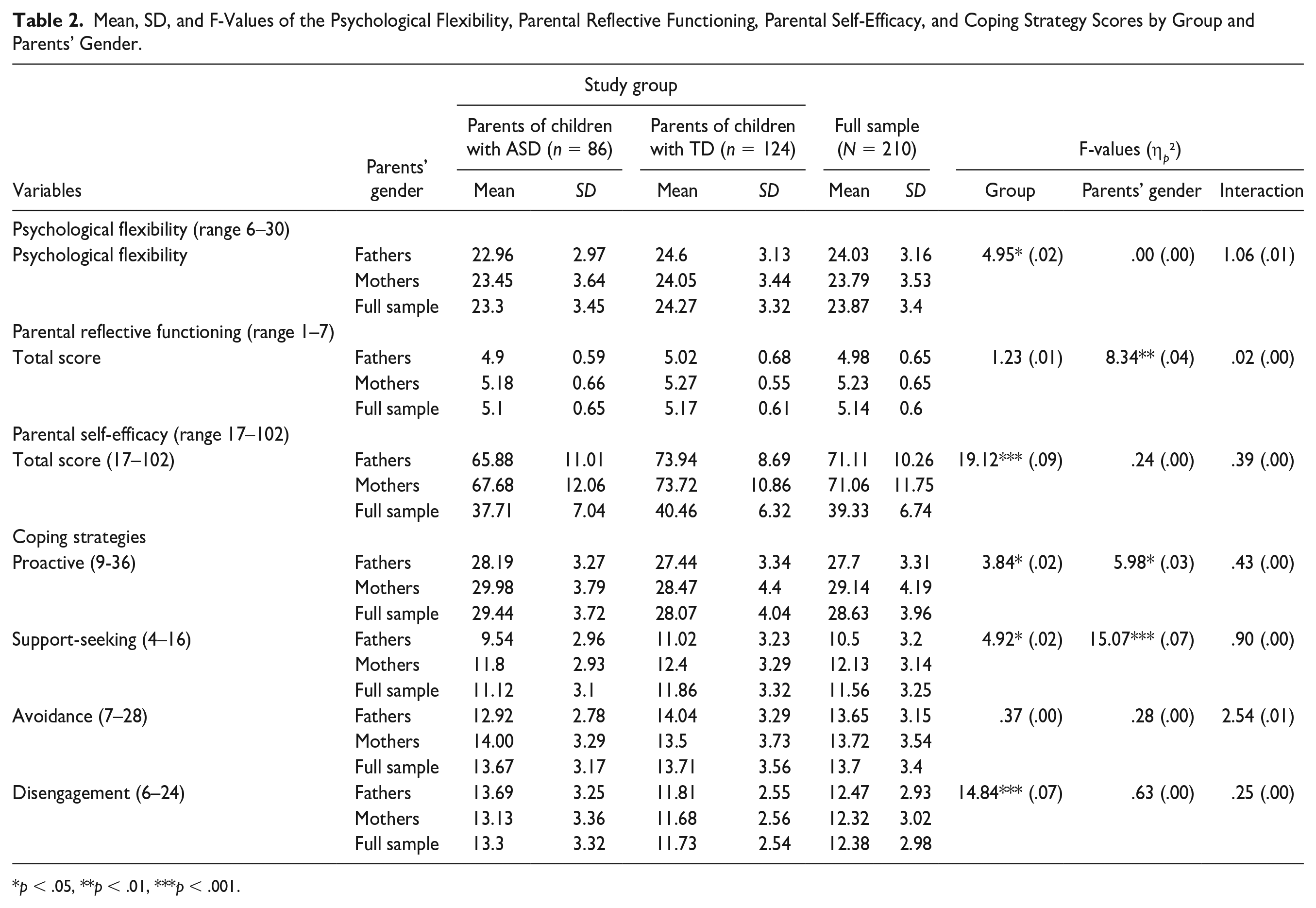
The results of the two-way ANOVAs conducted for each questionnaire separately indicated that although scores were small, there was a significant main effect of group for the psychological flexibility and parental self-efficacy scores, and for proactive, support-seeking, and disengagement coping strategies. Parents of children with TD reported higher psychological flexibility, parental self-efficacy, and use of support-seeking coping strategies and lower use of disengagement coping strategies, supporting our hypothesis. Parents of children with ASD reported higher scores in the proactive coping strategies, contradicting our hypothesis.
Similarly, the results indicated a significant main effect of parent’s gender for the parental reflective functioning scores and proactive and support-seeking coping strategies. Mothers scored higher than fathers did in all measures, supporting our hypothesis. Finally, no interaction of group and parent’s gender was found for any of the study measures, indicating that the pattern of parent’s gender differences did not vary significantly between the two study groups (Table 2).
Mean, SD, and F-Values of the Psychological Flexibility, Parental Reflective Functioning, Parental Self-Efficacy, and Coping Strategy Scores by Group and Parents’ Gender.
p < .05, **p < .01, ***p < .001.
Correlations Between Psychological Flexibility, Parental Reflective Functioning, Parental Self-Efficacy, and Coping Strategies
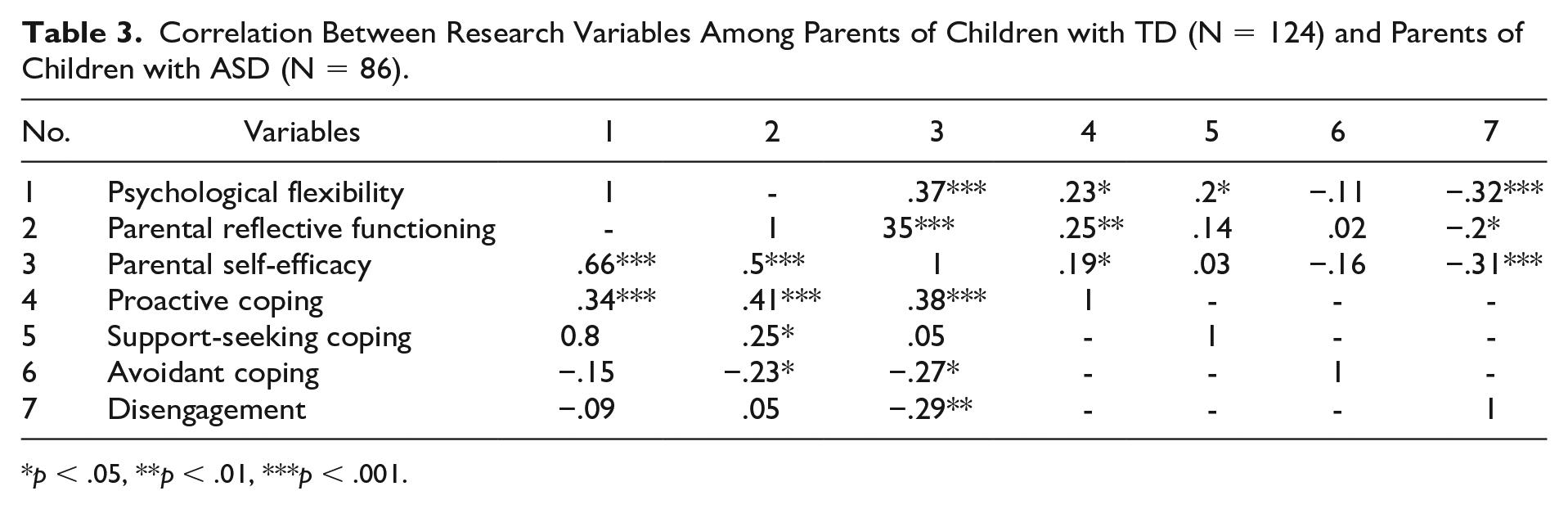
The results of the Pearson correlation analyses indicated that in accordance with our hypothesis, the psychological flexibility, parental reflective functioning, and parental self-efficacy scores were positively correlated with proactive coping strategies in both groups of parents.
Positive correlations were found between both psychological flexibility and reflective functioning, and parental self-efficacy, in both groups. Concerning avoidance and disengagement coping strategies, negative correlations with parental reflective functioning and parental self-efficacy were found in both parent groups, compatible with our hypothesis. Negative correlations were also found among disengagement coping strategies, parental self-efficacy, and parental reflective functioning among parents of children with TD. Finally, disengagement coping strategies were negatively correlated with the psychological flexibility score only among parents of children with TD. It should be noted that all correlation coefficients did not differ significantly between the two parent groups (all Fisher r-to-z transformation indicated no significant values), indicating that the correlation patterns were similar (see Table 3). Correlations between research variables among parents of children with TD are presented at the top of the table, and those for parents of children with ASD are presented at the bottom.
Correlation Between Research Variables Among Parents of Children with TD (N = 124) and Parents of Children with ASD (N = 86).
p < .05, **p < .01, ***p < .001.
The result of the Pearson correlation analyses indicated that in accordance with our hypothesis, the psychological flexibility and the parental reflective functioning scores were positively correlated with the parental self-efficacy in both parent groups (Table 3).
Parental Self-Efficacy as a Mediation Variable
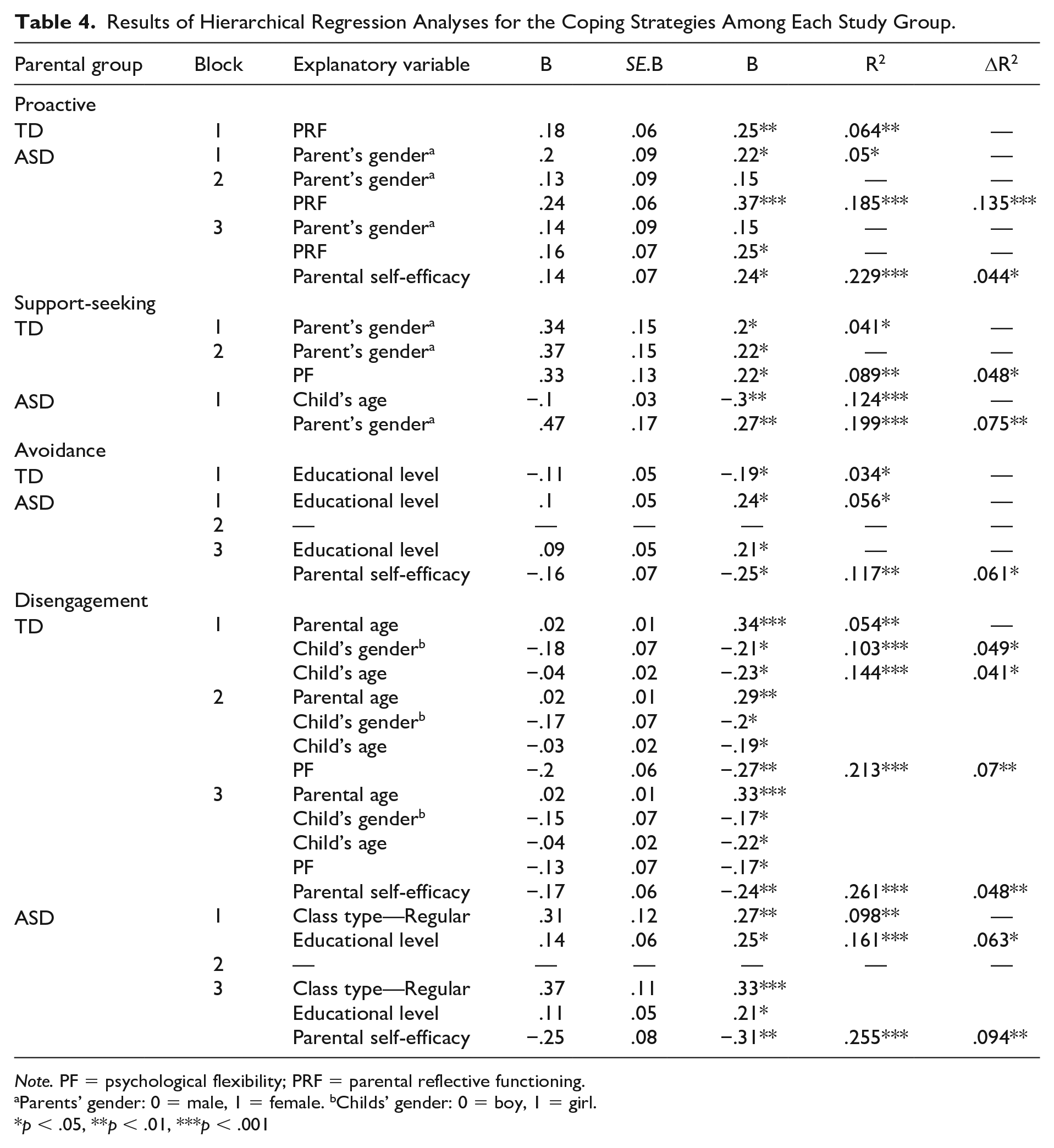
Hierarchical regression analyses were first conducted for each coping strategy prior to examining the third research question relating to the mediational role of parental self-efficacy in the relationship between psychological flexibility and parental reflective functioning and the four coping strategies. The background characteristics were entered in the first block of the regression in a stepwise manner. Thus, only background characteristics that contributed significantly to the explained variance (EPV) were entered into the regression model. The entry order of the variables was in accordance with their level of contribution. Table 1 displays some background characteristics in which the two parent groups differed: child’s gender, marital status, religiosity, and education. These variables were entered in the first block only for the mean of controlling for their potential effect on parental coping strategies. The psychological flexibility and parental reflective functioning scores (the independent variables) were entered in the second step of the regression model. These variables were entered only in the second block to examine their contribution beyond the background characteristics that were taken as covariate variables in the first block. The parental self-efficacy measure was entered only in the third block to examine whether this variable offered a unique contribution to the EPV of the four coping strategies beyond the psychological flexibility and parental self-efficacy scores. Prior to presenting the results of the regression analyses, we conducted variable inflation factor (VIF) analyses to identify multicollinearity among predictor variables in the regression models. In all analyses, the VIF values were lower than 2, indicating low multicollinearity (Table 4).
Results of Hierarchical Regression Analyses for the Coping Strategies Among Each Study Group.
Note. PF = psychological flexibility; PRF = parental reflective functioning.
Parents’ gender: 0 = male, 1 = female. bChilds’ gender: 0 = boy, 1 = girl.
p < .05, **p < .01, ***p < .001
As can be seen in Table 4, the results were as follows:
Proactive Coping Strategy
The parental reflective functioning score had a significant contribution to the EPV of these coping strategies in both parent groups. The positive β coefficients indicate that higher parental reflective functioning scores correspond to higher proactive coping strategy scores. Parental self-efficacy contributed beyond the parental reflective functioning score only among the parents of children with ASD. Mediation analysis using PROCESS was performed to examine whether parental self-efficacy served as a mediation variable in the association between parental reflective functioning and proactive coping strategy scores among parents of children with ASD (A. F. Hayes, 2018, Model 4). The mediation analysis results indicated that indeed, parental self-efficacy served as a mediating variable in the association between parental reflective functioning and proactive coping strategy scores (95% CI = [.017, .255]) among parents of children with ASD (Figure 1).
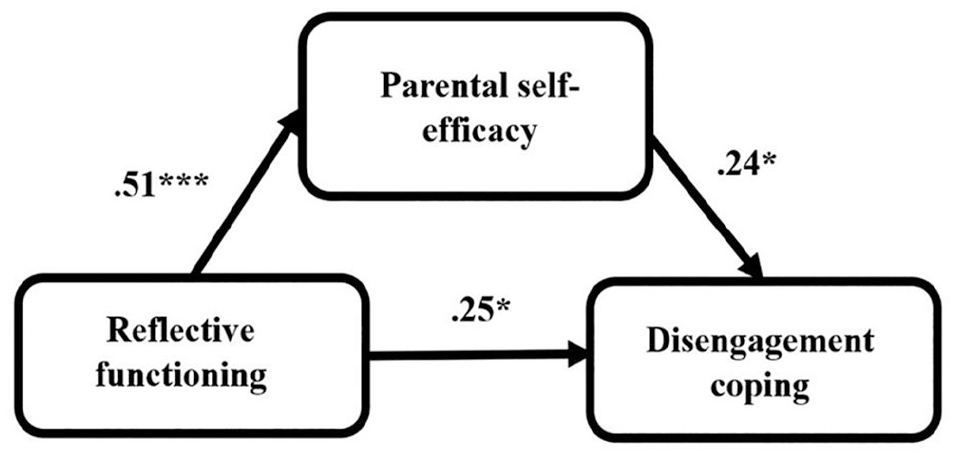
Moderation Model: Parental Self-Efficacy as a Mediating Variable Between Parental Reflective Functioning and Proactive Coping Strategies Controlling Over the Gender of Parents of Children With ASD.
Support-Seeking Coping Strategy
The psychological flexibility score showed a significant contribution to the EPV of this coping strategy only among parents of children with TD. The positive β coefficient indicated that the higher the psychological flexibility score, the higher the proactive coping strategy score.
Avoidance Coping Strategy
The results indicated that in both parent groups, no significant contribution was found for the psychological flexibility and parental reflective functioning scores. Significant contributions were found only for the background characteristic “educational level” in the two parent groups. A significant contribution of parental self-efficacy to the EPV of this coping strategy was found only among parents of children with ASD. The negative β coefficient indicates that the higher the parental self-efficacy score, the lower the avoidance coping strategy score.
Disengagement Coping Strategy
A significant contribution of parental self-efficacy to the EPV of this coping strategy was found for parents of children with ASD in the third block of the regression but not for psychological flexibility or parental reflective functioning scores, which were entered in the second block. The negative β coefficient indicates that the higher the parental self-efficacy score, the lower the disengagement coping strategy score.
For parents of children with TD, the psychological flexibility score significantly contributed to the EPV of these coping strategies. The negative β coefficient indicates that the higher the psychological flexibility score, the lower the disengagement coping strategy score. Moreover, parental self-efficacy contributed to the EPV of the disengagement coping strategy beyond the psychological flexibility score in the third block of the regression. Mediation analysis using PROCESS was performed to examine whether parental self-efficacy served as a mediating variable in the association between parental reflective functioning and the disengagement coping strategy scores among parents of children with TD (A. F. Hayes, 2018, Model 4). The mediation analysis results indicated that indeed, parental self-efficacy serves as a mediating variable in the association between psychological flexibility and the disengagement coping strategy scores (95% CI = [−.176, −.026]) among parents of children with TD (Figure 2).
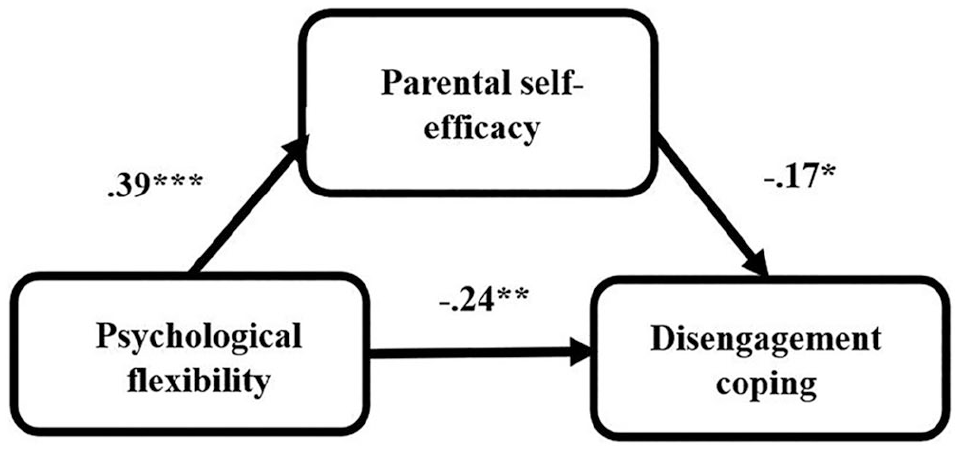
Moderation Model: Parental Self-Efficacy as a Mediating Variable Between Psychological Flexibility and the Disengagement Coping Strategies Controlling Over the Parental Age, Childs’ Gender, and Childs’ Age Among Parents of Children With TD.
Discussion
Differences Between Parents of Children with ASD and Children with TD
In comparison to parents of children with TD, although differences were not pronounced and both parent groups reported scores near the top of the scale, parents of children with ASD reported lower psychological flexibility and parental self-efficacy, less use of support-seeking coping strategies, and greater use of disengagement coping strategies. These findings corroborated our hypothesis. They also may be explained by Hobfoll’s (1989) Conservation of Resources theory, according to which people are motivated to protect existing resources and gain new ones. Resources include material objects, personal characteristics such as skills and knowledge, conditions such as job security, and energy resources such as time. One of the principles of the conservation of resources theory is that people with fewer resources are at a higher risk of losing resources (Hobfoll et al., 2018). Parents of children with ASD are at risk of preservation and gain of resources due to two adverse situations: Stigmatization surrounding ASD leads to a lack of social resources (Liao et al., 2019), and higher economic burden represents the loss of objective and conditional resources (Liao & Li, 2020). In addition, parents’ psychological resources are reduced due to the stressors of managing the challenging behaviors of their children (Stephenson et al., 2023; Walsh et al., 2013), such as aggression, inflexibility, and sensory difficulties (D’Cruz et al., 2013; Hill et al., 2014). Additional resources such as psychological flexibility and parental self-efficacy may also be compromised in this situation.
Although the differences were marginal between the two parent groups and both reported scores near the top of the range, parents of children with ASD reported a higher use of proactive coping strategies than parents of children with TD. This finding, which contradicts our hypothesis, may be attributed to the Conservation of Resources theory, which refers to the dynamic balance between losing resources and gaining new ones. When individuals experience a loss of resources, they will either attempt to halt the resource loss or find new resources to replace the ones lost (Hobfoll, 1989). For instance, individuals who experience a psychological disadvantage of stress may emerge from stressful situations with new coping strategies in an attempt to better handle future stressors (Hobfoll et al., 2018). Thus, parents of children with ASD may develop proactive coping strategies to better handle their loss of psychological and social resources.
No significant differences were found between parents of children with ASD and parents of children with TD in parental reflective functioning. These findings may be explained by attachment theory where reflective functioning is linked to secure attachment (Fonagy et al., 1991). Attachment theory emphasizes the importance of the relationship between the primary caregiver and the child, and secure attachment refers to a relationship in which children feel safe with their caregiver and perceive them as dependable (Ainsworth et al., 1978; Bowlby, 1982; Ezquerro, 2016). According to Fonagy et al. (1991), secure attachment is dependent on parents’ sensitivity and their ability to understand their child’s inner world, which emanates from parents’ reflective functioning. Surprisingly, several studies have shown that parents of children with ASD and parents of children with TD report similar attachment with their children (Chandler & Dissanayake, 2014; Giannotti & de Falco, 2021). This may be interpreted as similar parental reflective functioning.
The Effect of Gender
In the current study, mothers reported higher parental reflective functioning and greater use of proactive and support-seeking coping strategies than fathers, supporting our hypothesis. Again, this may be explained by attachment theory; parental reflective functioning results in the secure attachment that mothers tend to develop with their children more than fathers (Pinquart, 2022). Attachment in its initial stages during infancy primarily revolves and is dependent on child-mother interaction (Ainsworth et al., 1978; Bowlby, 1982; Ezquerro, 2016). Since attachment mainly revolves around mothers in the early stages of life, it can be expected that the parental reflective functioning of mothers would also be higher than that of fathers. No significant differences were found between mothers and fathers in psychological flexibility and parental self-efficacy, nor in avoidance coping strategies and disengagement coping strategies, contradictory to our hypothesis. These findings may be attributed to the role theory, which maintains that differences in behavior between genders are affected and explained by social expectations. Therefore, people tend to behave as expected by society, and women and men take on traditional gender roles (Biddle, 1986; Eagly & Wood, 2012). In the Israeli context, it seems religion plays a key role in people’s attitudes toward gender and family roles, with religion explaining more conservative perceptions regarding gender and family roles (Lavie et al., 2022). Felsten (1998) suggested that differences between genders will decline as social changes dispel traditional gender roles. Role theory may also explain why no differences were found in parental self-efficacy between mothers and fathers. Sociocultural changes have been altering the role of fatherhood so that today’s fathers take a more active role in their children’s lives than they did in past generations (Banchefsky & Park, 2016; Offer & Kaplan, 2021). This phenomenon may minimize the disparity between mothers’ and fathers’ sense of parental self-efficacy.
The Contribution of Psychological Flexibility and Parental Reflective Functioning to Coping Strategies: The Mediating Role of Parental Self-Efficacy
The findings revealed two mediation models, one for each group of parents. For parents of children with ASD, parental reflective functioning contributed to parental self-efficacy, which in turn contributed to a higher use of proactive coping strategies. For parents of children with TD, psychological flexibility contributed to parental self-efficacy, which in turn contributed to a lower level of disengagement coping strategies. Bandura (1982) explains that self-efficacy can be an agent for a person’s psychological and emotional state and positively affect their performance. Since self-efficacy is affected by an individual’s psychological resources, it stands to reason that psychological flexibility and parental reflective functioning would positively affect parental self-efficacy. Likewise, parental self-efficacy affects coping strategies since people tend to cope in a way that fits their sense of efficacy (Bandura, 1982). From the current results, parental reflective functioning seems to contribute to the coping strategies of parents of children with ASD through parental self-efficacy, while psychological flexibility contributes to parents of children with TD through parental self-efficacy. Perhaps for parents of children with ASD, understanding ASD and their child is associated with higher parental confidence (Farmer & Reupert, 2013). By definition, ASD involves communication difficulties that can cause parents to struggle to communicate with their children, and this may be due to the children’s hardship to speak or echolalia (Ping, 2024). As a result of children’s difficulty, parents may turn to non-verbal communication such as physical contact (Ku et al., 2019). Since the ability to understand one’s child is challenging, parental self-efficacy may depend on their reflective functioning, which involves the ability to understand their child. For parents of children with TD, the ability to understand their child may be less challenging since TD children may have a higher ability to share their inner world with their parents. Therefore, their sense of parental self-efficacy may lean more on psychological flexibility, a more general factor of resilience (Bryan et al., 2015; Gentili et al., 2019).
Limitations and Recommendations for Future Research
Limitations of this study include the non-random sampling method, potentially limiting result generalizability. The cross-sectional design prevents establishing causality between variables and long-term trends. The recruitment strategy precluded determining response rates. In addition, the low-reliability score of the disengagement scale in the Brief COPE measurement suggests caution in interpreting related findings.
Future research should investigate the contributions of psychological flexibility, parental reflective functioning, and parental self-efficacy to additional factors beneficial to children with ASD and their parents, such as parental resilience and involvement in therapy. We also recommend that future studies should focus on the psychological flexibility and parental reflective functioning of Israeli parents of children with ASD, taking into account the varying levels of religiosity and ethnicity within the Israeli population. These factors may influence the results, as they may affect perceptions regarding both role theory and the parenting experience of having a child with ASD (Faciane, 2015; Lavie et al., 2022). In addition, to fully understand how these findings compare to the experiences of families from other racial and ethnical groups, future research should include cross-cultural comparisons. This would help identify which aspects of parenting children with ASD are universal and which are more culturally specific to the Israeli context. Likewise, we recommend the model of this study be duplicated and examined on additional populations of parents of children with disabilities, such as parents of children with cerebral palsy and parents of children with intellectual disabilities.
Practical Implications
Policymakers should work to develop comprehensive support programs that address psychological flexibility, reflective functioning, self-efficacy, and coping strategies. In addition, policymakers should enhance awareness about the importance of these psychological constructs in parenting children with ASD.
Practitioners should develop interventions to enhance psychological flexibility and parental reflective functioning, as these are linked to more adaptive coping strategies. For example, ACT-based interventions have been established as useful in enhancing the psychological flexibility of parents of children with ASD (Fung et al., 2018; Hahs et al., 2019). ACT-based interventions focus on changing the context of people’s psychological experiences. This involves accepting the experience, being attuned to it, understanding that many challenges to our psychological state are connected to the things we value most, and committing to take action to work toward these values (S. Hayes, 2019). Likewise, interventions focused on enhancing the effective functioning of parents of children with disabilities can also be beneficial. For example, Gur et al. (2023) examined an intervention involving dyadic therapy provided to parents and their children with disabilities by an emotional therapist. The therapy focused on addressing the difficult experiences of both parents and children, providing a sense of validation, and promoting growth. Practitioners should develop interventions focusing on building parental self-efficacy, especially for parents of children with ASD. This self-efficacy mediates the relationship between reflective functioning and proactive coping. Interventions targeting the improvement of parental self-efficacy for parents of children with ASD are effective (Hohlfeld et al., 2018). Finally, practitioners should tailor support differently for mothers and fathers, given the gender differences in coping strategies and parental reflective functioning.
Parents of children with ASD should engage in activities that promote psychological flexibility and reflective functioning, such as mindfulness practices or parenting interventions (Barlow et al., 2021; Marais et al., 2020). Parents should also seek support to enhance self-efficacy, as it plays a crucial role in adopting more adaptive coping strategies. Likewise, parents should be aware that proactive coping strategies can be beneficial and work on developing these skills.
The suggestions detailed earlier should gain more emphasis regarding fathers of children with ASD since our findings indicate that fathers are at increased risk of lower parental reflective functioning. The contribution of interventions to the parental functioning of fathers of children with ASD was established in previous research studies (Rankin et al., 2019), and we suggest that fathers of children with ASD should be targeted specifically for interventions to increase psychological flexibility and parental reflective functioning.
Footnotes
Data Availability Statement
Data are available upon reasonable request
Declaration of Conflicting Interests
The author(s) declared no potential conflicts of interest with respect to the research, authorship, and/or publication of this article.
Funding
The author(s) received no financial support for the research, authorship, and/or publication of this article.

Editor-in-Charge: Fred Spooner