



Abstract
Siblings are important in the lives of individuals with an intellectual disability and pervasive support needs; however, adults’ experiences of the things they do with or for their siblings with pervasive support needs remain underexplored. This study examined positive and challenging aspects of their roles related to their siblings. An online questionnaire was completed by 55 adults whose siblings had pervasive support needs. An inductive approach was used to thematically analyze open-ended questions about their experiences. The respondents described rewarding experiences of being with their siblings, combined with a sense of care and responsibility, and noted how their experiences were affected by their siblings’ support needs. “Being of service” was experienced as both rewarding and as a demanding responsibility. Collaboration with family members and health care professionals was another overarching theme. Our findings highlighted the valuable mutual contributions of siblings in each other’s life when one of them has pervasive support needs. Understanding adults’ experiences relating to their siblings who have pervasive support needs enables service providers to facilitate their contact and support. In addition, these findings can provide input for government agencies and organizations that provide support for people with disabilities by increasing awareness about siblings’ perspectives.
Adults are often closely involved with their siblings with an intellectual disability (Bigby et al., 2014; Burke et al., 2015; Rossetti & Hall, 2015). This involvement comes with valuable experiences such as the feeling of joy adults experience when they spend time with their siblings (Rossetti & Hall, 2015). Some adults mention they enjoy bonding with their sibling, and they delight in their sibling’s personality. Furthermore, they enjoy watching their sibling grow and “blossom,” becoming more independent over time (Burke et al., 2015). However, they may also experience challenges (Lee & Burke, 2018). There may be conflicts and a lack of open communication with parents (Davys et al., 2015; Lee & Burke, 2018). Adult offspring have reported feeling concerned about their aging parents and about the effect of aging on their siblings with intellectual disability. They worry about who will take over caregiving roles if they face age- or health-related issues. Moreover, navigating the health care system and working with and building positive relationships with health care professionals can be challenging (Lee & Burke, 2018). At an emotional level, some individuals mentioned feelings of guilt (Davys et al., 2015; Harland & Cuskelly, 2000; Rossetti & Hall, 2015; Shivers, 2019) and/or frustration and stress (Rossetti & Hall, 2015).
The experiences of individuals whose siblings have an intellectual disability may differ according to their siblings’ support needs. These support needs may be pervasive (Schalock et al., 2021). The focus of this study is on siblings of individuals with intellectual disability and intensive and specialized support needs. These individuals require 24-hour support relating to all aspects of their lives (Nakken & Vlaskamp, 2007). Motor disabilities, sensory impairments, and health problems such as constipation and epilepsy are common (Nakken & Vlaskamp, 2007; Van Timmeren et al., 2017). Furthermore, these individuals mostly express themselves nonverbally, for example, through various sounds, facial expressions, or distinctive movements (Van der Putten et al., 2017).
Adult siblings of people with such pervasive support needs have been included in recent studies about roles (Hall & Rossetti, 2017; Rossetti et al., 2018), the relationships between siblings (Doody et al., 2010; Rossetti & Hall, 2015; Seltzer et al., 1991), and future care (Kruithof et al., 2021). However, the support needs were not specified in some studies on adult siblings (e.g., Bigby, 1998; Bigby et al., 2014; Burke et al., 2015; Davys et al., 2015; Shivers, 2019; Smith et al., 2013), or the number of siblings of individuals with an intellectual disability and pervasive support needs was limited (Avieli, 2019). Hall and Rossetti (2017) provided a description of adult siblings’ roles. In their study, 19% of the participants (n = 15) had a sibling with an intellectual disability and pervasive support needs. The roles identified included those of a sibling, caregiver, friend, advocate, legal representative, leisure planner, and informal service coordinator (Hall & Rossetti, 2017). It has also been found that adult siblings may provide communication and personal development support (Harland & Cuskelly, 2000) and respite for parents (Burke et al., 2015; Harland & Cuskelly, 2000). The support needs of an individual can affect the type of roles that their siblings take on. Siblings of individuals with an intellectual and developmental disability and extensive or pervasive support needs are reportedly more likely to assume a leisure planning role compared with those of individuals with less intensive support needs (Rossetti et al., 2018). It is also likely that the specific support needs of their sibling will have an impact on how adults experience these roles.
However, there is a paucity of studies on the experiences of adult siblings in general and of individuals with pervasive support needs specifically. Knowledge about sibling experiences is of particular importance as society moves toward a more systemic approach to persons with support needs. For example, this is reflected in the emerging concept of Family Quality of Life (Luitwieler et al., 2021). Moreover, formal and informal support networks are increasingly expected to work together in providing support to an individual. This may be even more the case in coming years, as staff shortages in care are expected to increase (Helder, 2022). Siblings have been found to constitute an important part of the often limited informal social networks of individuals with pervasive support needs (Kamstra et al., 2014) and may play an important role in their support. Their involvement may be even more relevant when the roles fulfilled by aging parents decreases and ultimately stops when parents pass away. As collaboration between formal and informal care may be strengthened by greater knowledge about sibling roles and experiences, we aimed to contribute to the existing knowledge base on siblings’ roles by focusing explicitly on the adult siblings of individuals with pervasive support needs and their experiences in the roles that they fulfill.
This qualitative phenomenological study thus describes adult siblings’ experiences of these roles from their own perspective. We sought to answer the following research question: How do adults experience the roles they fulfill in relation to their siblings with pervasive support needs? A description of the positive experiences and challenges of adult siblings may increase awareness of sibling experiences among service providers and policy makers.
Method
Prior to commencing this study, we obtained ethical approval from the Hanze University of Applied Sciences Groningen’s Ethical Review Board (approval number: heac.2020.018). This study was part of a larger online survey about adult siblings of individuals with pervasive support needs. The current study aimed to illuminate the experiences of adult siblings related to their roles in the lives of their siblings with pervasive support needs. To improve readability, the term “participants” or “respondent” was used throughout this study to refer to the individuals without pervasive support needs. Their siblings were referred to as individuals with pervasive support needs.
Participants and Recruitment
Study participants were recruited through special interest groups in intellectual disabilities in the Netherlands, as well as via social media. In addition, we requested eight organizations supporting people with intellectual disabilities to disseminate information about this research project. The organizations we contacted provide day care, ambulatory support, and residential care in group homes or larger facilities. Information was also shared by an academic collaborative center dedicated to persons with pervasive support needs (www.aw-emb.nl) in the Netherlands, and participants could forward the survey to other individuals whose siblings had pervasive support needs.
Individuals who signed up received information about the research project, the informed consent procedure, and their rights (notably the right to refrain from answering questions that made them uncomfortable and the right to withdraw from the study). No financial incentive was provided. They also received a link to the online survey hosted on Qualtrics, a secure survey platform. Upon commencing the online survey participants could tick a box indicating their agreement. Responses were anonymous; however, participants were given the option to provide their email address if they were interested in participating in a future interview study. These email addresses were stored in a separate data file. Responses to the online survey were received between November 2020 and May 2021.
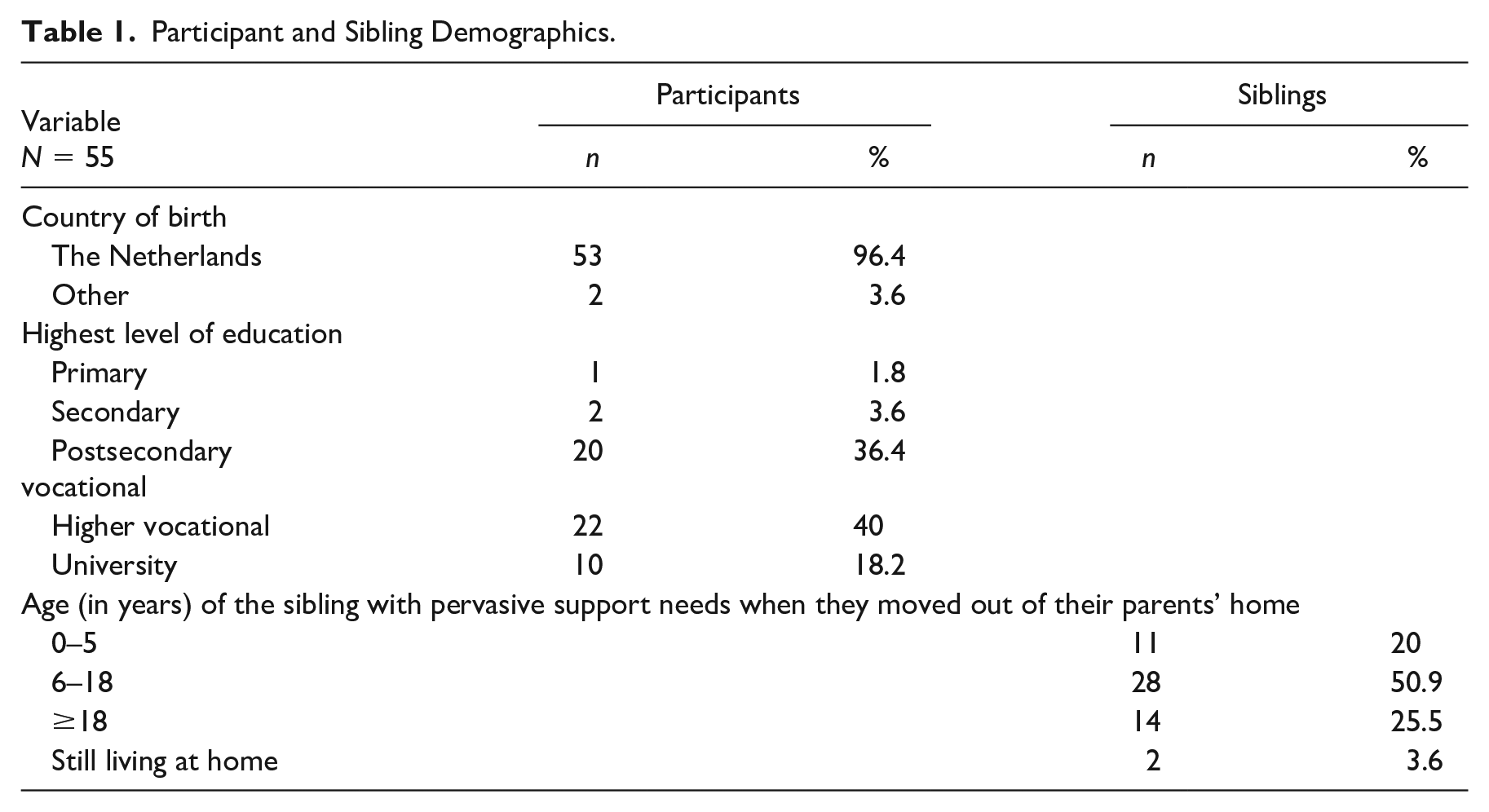
This study’s inclusion criteria were siblings of individuals with an intellectual disability and pervasive support needs greater than 30 years of age. To determine whether their siblings had pervasive support needs, a description based on Nakken and Vlaskamp (2007) and Van der Putten et al. (2017) was provided (see Appendix). A total of 79 siblings expressed interest and signed up for the survey, of whom 61 met the inclusion criteria. We received three responses that only included background information and three participants did not answer any of the open-ended questions about their experiences. Therefore, we omitted their responses from the analysis. The responses of the remaining 55 participants were included. The mean age of the participants, of whom 78.2% were female, was 50.3 years (SD = 12.3 years). The mean age of siblings with pervasive support needs was 49.7 years (SD = 11.1); of these siblings, 67.3% were female, and 94.5% were receiving residential care. One sibling was living with their parents, another was receiving residential care but spent weekends and holidays at home, and a third was living with their parents and was cared for by the participant (their adult sibling) 4 days a week. Table 1 presents an overview of the main characteristics of the participants and their siblings.
Participant and Sibling Demographics.
Data Collection
This study is part of a wider project targeting adult siblings of people with pervasive support needs. Within this project, we designed a survey covering the following topics.
Amount of Support
Respondents were asked to give a score on a 10-point scale about the degree to which they supported their siblings with pervasive support needs and how they experienced providing support (light task to heavy responsibility). We also asked respondents to describe their relationships with their siblings with pervasive support needs.
Roles and Shared Roles
Participants were asked which of 12 pre-identified roles, they fulfilled: caregiver, friend, advocate, legal representative, sibling, leisure planner, informal service coordinator (Hall & Rossetti, 2017), communication support, personal development support (Harland & Cuskelly, 2000), providing respite for parents (Burke et al., 2015; Harland & Cuskelly, 2000), “other,” and “no role.” For each role, an example was provided (see Appendix). It was also possible to select multiple roles. In addition, participants were asked how they fulfilled each of the selected roles and if other people fulfilled the same role in their siblings’ lives. As the survey was carried out during the COVID-19 pandemic in 2020–2021, we asked respondents whether the adopted measures relating to COVID-19 affected the fulfillment of their roles.
Experiences
For each of the selected roles, two questions were asked: What do you find nice, pleasant, or valuable? What challenges or difficulties do you experience? There was no limit on the amount of text that participants could type in the text box.
Review of the Survey
The initial survey was reviewed by one brother and two sisters of a person with an intellectual disability. The three siblings, who provided feedback by email, all reported that they enjoyed completing the survey. In light of the feedback received, we made the following changes to the survey. First, the option to report “other health issues” was added to the section on background information. Second, an estimation of the time taken to complete the survey was added. Third, an item on the amount of support was reframed as two separate questions: one related to the amount of support and the second to how they experienced providing this support (as light task or heavy responsibility). Fourth, an option to share the survey link by email was added to facilitate snowball sampling. Finally, a few language-related changes were made.
For this study, we analyzed and reported on the experiences. This topic was analyzed separately, as the richness of the data warranted an extensive qualitative analysis. The appendix provides an overview of the survey instructions and the survey questions, which were analyzed in this study.
Data Analysis
Positionality
The PhD project of the first author is embedded in an Academic Collaborative Center dedicated to persons with pervasive support needs with the aim of improving the quality of life of these persons and their families. As a behavioral scientist, the first author was trained from a development-oriented vision (Nakken & Vlaskamp, 2007; Van der Putten et al., 2017). Furthermore, the author’s understanding about the research topic was derived from prior experiences of working in a group home for individuals of whom some had pervasive support needs. During the study the author had no employment within the care for individuals with support needs, nor any personal connection to the participants.
The second, fourth, and last authors are senior researchers, and all part of the Academic Collaborative Center dedicated to persons with pervasive support needs. The fourth author is professor and chair of this center and cofounder of the development-oriented vision based on which all research takes place within the center. The last author has a professional background as a physiotherapist, working with individuals with pervasive support needs. Her research focus is on participation and health of individuals with pervasive support needs. The second author has expertise regarding the experiences and support of families of individuals with pervasive support needs. The third author is a clinical epidemiologist and emeritus professor in allied health care with long term experience in frailty research in different populations.
Thematic Analysis
We applied thematic analysis (Braun & Clarke, 2006) to evaluate two open-ended questions on how respondents experienced their roles. We used an inductive approach and coded the answers to the open-ended questions assigning a new code for each new topic or merging it with an existing code. Data were coded sentence by sentence. Multiple codes were applied when multiple topics were present in the same sentence. One code was applied to multiple sentences when subsequent sentences addressed the same topic. The first author coded all the surveys. During this process, she met regularly with the co-authors to discuss the overall coding process as well as specific questions and dilemmas. Examples of these issues included the homogeneity of responses attributed to a certain code, whether a code should be split into two separate codes, and how codes were related to one another. Codes relating to text provided by less than 10% of the participants were excluded. By grouping, merging, comparing, and renaming the codes, we created a coding frame comprising 32 codes. Most were not associated with a specific role; rather, they recurred across various roles. Therefore, we identified six overarching themes to organize the aspects mentioned by participants. These themes were (a) being together as a rewarding experience combined with a sense of care and responsibility; (b) being together as an experience that is affected by support needs; (c) being of service as a rewarding experience; (d) being of service as a demanding responsibility; (e) collaborating with others; and (f) fulfilling roles in the life of a sibling: general comments.
The first two themes covered participants’ experiences of contact with their siblings. The third and fourth theme focused on doing things for their siblings. The fifth theme covered experiences of providing care and support together with others. The final theme centered on the participants’ general remarks about the roles they fulfilled. Within this theme, codes were used when a comment referred to the role as a whole, for example, “I really enjoy this role,” or “I find it hard.” The codes were illustrated with quotations translated into English by a professional translation service.
Frequencies of Roles and Codes
We calculated the percentage of participants fulfilling different roles and the number of participants who answered the two subsequent questions. For each code, we calculated the number and percentage of participants who mentioned the code to determine whether an experience was more or less common. In addition, we identified the roles to which at least 15% of the quotes could be attributed.
Trustworthiness
We worked on the trustworthiness of our results by staying as close as possible to the answers of the participants during the analysis. We analyzed the reliability of the coding to assess whether our coding frame was robust and to promote a systematic and transparent coding process (O’Connor & Joffe, 2020). We calculated both inter-rater and intra-rater reliability. To confirm inter-rater reliability, we randomly selected 20% of the surveys (n = 11). The first author selected the quotations and assigned one of the 32 codes to each quotation. Thereafter, a student assistant from the Department of Inclusive and Special Needs Education at the University of Groningen coded the same quotations after receiving the coding frame and detailed instructions. Cohen’s κ was run to determine agreement between the two coders. The level of agreement was κ = .81 (p < .001), 95% CI (0.73, 0.89). To confirm intra-rater agreement, the first author coded the same data extracts twice at intervals of 2 weeks, using the same data set as for the inter-rater reliability calculation. The level of agreement was κ = .91 (p < .001), 95% CI (0.86, 0.97). In addition, we increased the transparency of our coding process by including information about code frequencies.
Results
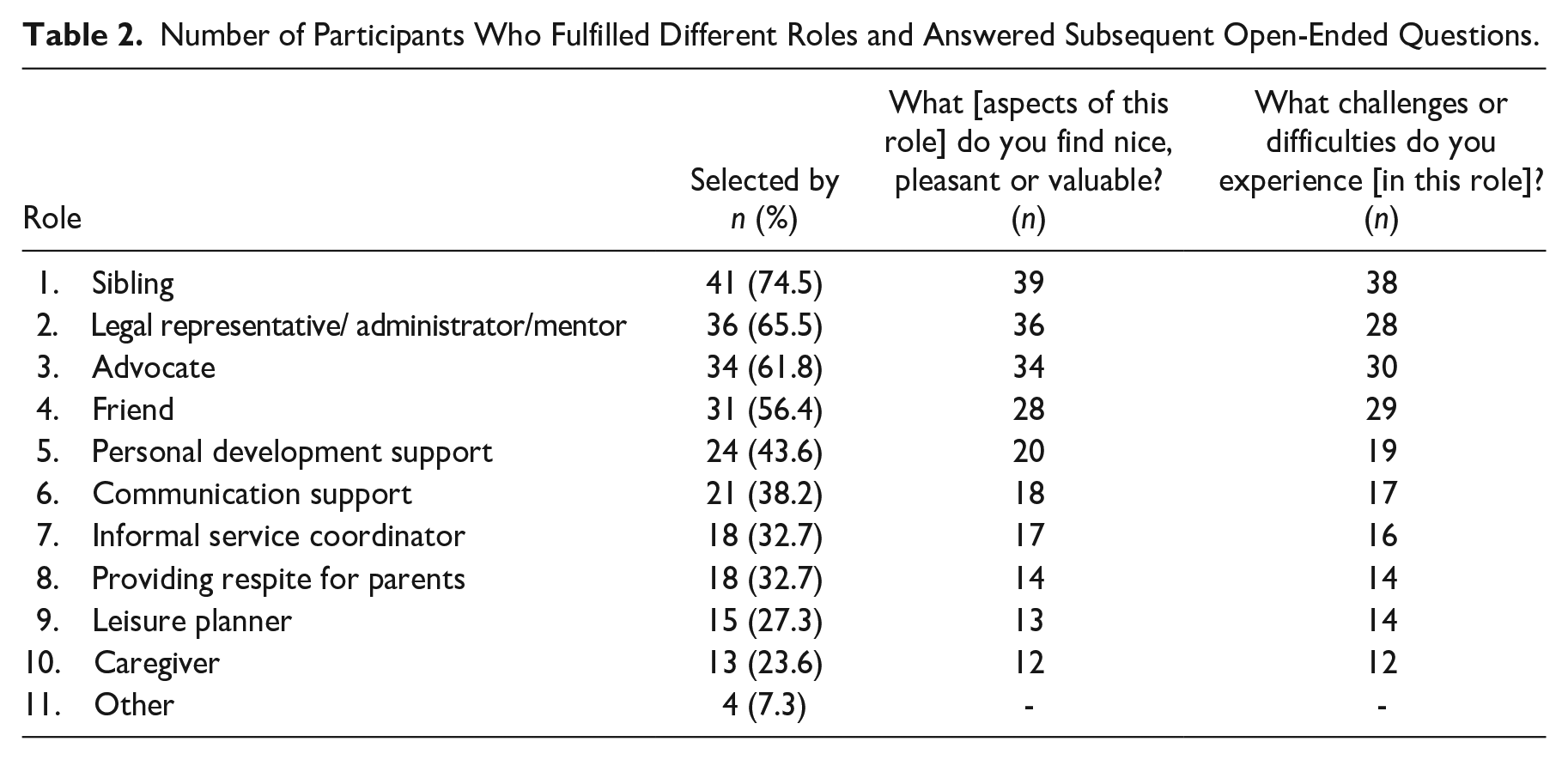
The 55 participants fulfilled between 1 and 10 roles per person, with a mean of 4.6 roles. Table 2 shows the percentage of participants fulfilling different roles and the number of participants who answered the two subsequent questions. In total, 55 participants jointly provided 448 answers. Answers ranged between a single word or punctuation mark and 317 words, with an average of 24.5 words per answer. Table 3 presents a description of the codes and the frequencies of their occurrence. The following sections present the themes derived from the qualitative analysis.
Number of Participants Who Fulfilled Different Roles and Answered Subsequent Open-Ended Questions.
Themes, Codes, Descriptions, and Frequencies.
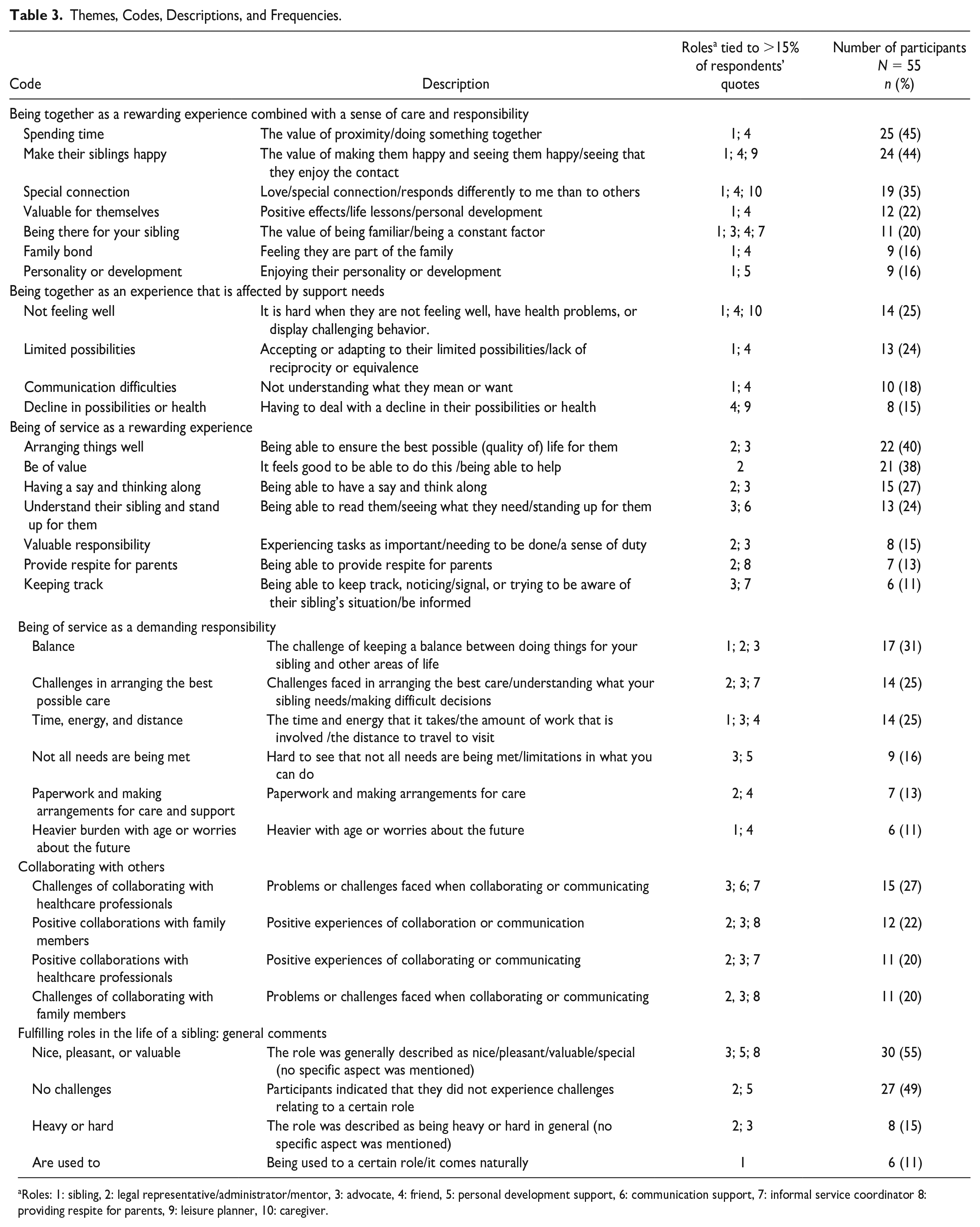
Roles: 1: sibling, 2: legal representative/administrator/mentor, 3: advocate, 4: friend, 5: personal development support, 6: communication support, 7: informal service coordinator 8: providing respite for parents, 9: leisure planner, 10: caregiver.
Being Together as a Rewarding Experience Combined With a Sense of Care and Responsibility
For many respondents, being together with their siblings was a rewarding experience in various ways, often combined with a sense of care and responsibility. Reflections on this theme were often associated with the roles of sibling and friend. Many respondents perceived value in spending time with their siblings. For example, Participant 63 wrote about the role of friend as follows: “Just experiencing nice moments together; it’s different from what you might do with a sister who doesn’t have her disabilities, but that doesn’t make the experience any less valuable.”
Another participant commented on the role of caregiver as follows:
I like giving her something to eat and drink. This brings me into contact with her and lets us do something together. Giving her a massage is also nice. It puts her in a special mood, so that she LETS me touch her. It’s nice to do “something” with her. (Participant 10)
A sense of caring and responsibility for their siblings was apparent in the way participants reported caring about how their siblings were feeling. Many participants described how valuable it was to them to make their siblings happy or to see their siblings enjoying the contact with them. For example, Participant 28 made the following comment on the role of friend: “It’s nice to see her enjoy herself, to see her being zen and looking around with a big smile.”
Participants also described the love and special connection shared with their siblings. Some of them wrote about the reciprocity in the contact they had with their siblings, mentioning not only the love they expressed but also the love they received in return. The connection could also be experienced as being deeper than with others. Many siblings emphasized how unique their bonds were, distinguishing them from those with the support staff. They experienced a special bond as a result of growing up together or understanding each other in a special way. For example, when describing the role of sibling, Participant 41 mentioned that they shared a special language: “It’s really special. Precisely because we can’t talk with each other, a different language emerges. This makes the ties much deeper than with an ordinary sibling.”
Some participants described enjoying the personality or development of their siblings. For example, Participant 39 described the role of friend as follows: “It’s nice to see how he manages in this world and how he sometimes keeps rediscovering the world.”
Another participant wrote about their role as a sibling:
Aside from the question of roles, I think he has a beautiful personality. He is pure, resilient, and strong. He has integrity and a will of his own—and he definitely makes it known. He also has a sense of humor and likes to make jokes. I am proud of him. I’ve learned so many life lessons from him. I admire him regularly, and I am grateful to him. (Participant 43)
As in the previous example, various siblings described roles—or aspects of them—as special, beautiful, nice or valuable for themselves, thereby emphasizing the reciprocity of their relationship. Writing about the sibling role, Participant 48 stated, “It’s definitely valuable. She is teaching me to take life as it comes. She is such a strong woman!”
Finally, when describing being together as a valuable experience, some participants mentioned the family bond, emphasizing that their siblings were part of the family. They referred, for example, to growing up together or engaging in activities as a family. Participants also described the value of being there for your sibling, being familiar, or being a constant factor in their life, thus reflecting a sense of responsibility for their siblings. Writing about her role as a friend, Participant 14 noted that it was “very valuable. I’m glad that I can offer him a safe haven.”
Being Together as an Experience That Is Affected by Support Needs
As described in the first theme, being together fosters a variety of valuable experiences. However, for participants in this study, the experience of being together could be affected by the support needs of their siblings, for example with regard to communication, health and wellbeing. Participants described how communication difficulties sometimes made it hard for them to understand their siblings, share experiences with them, or know what they wanted or liked. Participant 37 commented on the sibling role: “The fact that we can’t ever really talk; I really experienced this after my children were born. She loved it but we weren’t able to talk about it like adults.”
Participant 20 made the following comment about the caregiver role: “It is incredibly difficult not to be able to see whether he likes what I’m doing.”
Participants also described how it hurt to see their siblings not feeling well and being unable to help. Some mentioned that their siblings with pervasive support needs could be strong, and this could lead to problems when they resisted or were angry. Another concerning factor was their often-fragile health. For example, one participant wrote about the communication support role, noting how the vulnerable health made life unpredictable:
In terms of health, I also find it difficult that we can’t ask her directly if she is in pain and where [it hurts]. Her health has to be measured according to parameters like temperature and behavior. If these things start heading south, it sets off a whole chain of medical care. This makes life with her unpredictable because her health and condition are just so volatile. (Participant 12)
The above example reveals challenges related to health problems. In addition, this example reveals problems in communication, as the respondent was unable to ask their sibling directly if she was in pain. Also associated with the support needs of their sibling, some participants spoke of how hard it was to accept or adapt to their siblings’ limited possibilities and the associated lack of reciprocity or equivalence. In the example below, a participant commented on the role of leisure planner:
She is very limited. The activities are very similar to each other, and she is enjoying herself less and less in her old age. I have to look really, really hard to be able to see her enjoying anything. I never hear “Thank you.” Never. The gratitude comes in the form of the small moments of enjoyment, which I think I can observe. But even that is completely wrapped up in MY total adjustment to her. (Participant 10)
Finally, a decline in possibilities or health of their siblings was also mentioned by some participants.
Being of Service as a Rewarding Experience
This theme covered experiences related to respondents doing things for their siblings as opposed to doing things together. Being able to help their siblings could be valuable in itself, as expressed by some respondents, who wrote that it felt good to be of value, or to be able to help. Others viewed this as a valuable responsibility, emphasizing that they fulfilled roles that were important or needed to be done. In addition, many participants wrote that they valued being able to contribute to arranging things well. For example, they wanted to ensure that their siblings felt well, received good and loving care, had a nice place to live in, or—as one participant mentioned, referring to the role of legal representative/administrator/mentor—that their finances were managed in ways that optimized their quality of life. Specifically, Participant 24 stated, “With a view to the future, I try to approach money matters very carefully so that they can continue to do everything that matters to them—to offer the best possible quality of life.”
Participants found it rewarding to be able to use their knowledge about their siblings to arrange things optimally and to translate their siblings’ needs for care professionals. They stated that they could understand their sibling, read them, see what they need, and stand up for them. For example, some commented on their role as an advocate:
That I can let her be who she is and can indicate what she needs. (Participant 37)
It’s nice to be able to do that. I’m actually a translator for my brother who is not able to indicate that. Looking at what I would consider important for myself and for my children, this certainly applies to my brother as well. (Participant 23)
Having a say and thinking along about ways of supporting their siblings was valued by respondents both in relation to health care professionals and other family members. In addition, some participants mentioned they were keeping track, noticing, or trying to be aware of their siblings’ situation. For some participants, the ability to provide respite for parents was seen as another benefit of their roles relating to their siblings.
Being of Service as a Demanding Responsibility
This theme covered the demanding aspects of doing things for your sibling. Arranging the best possible care is not an easy task, and many respondents indicated that this could be difficult at times, for example, when they had to make difficult decisions. They had to deal with the reality, and observed that sometimes not all [of their siblings’] needs are being met. One participant explained the role of personal development support as follows:
In theory, quite a bit should be possible, but money and time are two major limiting factors in terms of care. I would ideally like to hire someone to come and sing with her twice a week, someone to drive her to a safe and warm hot tub every week, caregivers who are also medically trained, a more “homely” living environment in terms of furnishings. I would buy a van in which I could take her with me in the front seat in her wheelchair, and so on. Although it’s sometimes a shame, it’s also an accepted fact. (Participant 12)
Supportive roles could be difficult to enact at times given the amount of work entailed as well as factors such as time, energy, and distance. Roles could also be emotionally demanding. For example, Participant 10 described the role of friend as follows: “After visiting, I really have to recover. I often feel tired and a bit run-down.”
Striking a balance between doing things for their siblings and engaging in other aspects of life posed a challenge for many participants. Writing about the role of leisure planner, Participant 38 stated, “It takes a lot of time to be there for her, now that I’m also working.”
In addition, paperwork and making arrangements for care and support could be demanding. For example, in response to the question about challenging aspects relating to the role of friend, Participant 38 wrote: “. . . and [I] always get mail, any staffing or organizational changes; I’ve gotten lazy about reading all of that information.”
In addition, some participants observed that providing care becomes a heavier burden with age or they expressed their worries about the future. For example, Participant 20 expressed concern about who would take over her role of providing respite for her parents if she was unable to do so. “It’s a tough job for me to take care of him [Brother] and to take care of her [Mother]. And what happens if I’m not able to? Will my husband or children take over?”
While various challenges were mentioned, almost half of the participants indicated that they experienced no challenges relating to one or more of the roles they fulfilled. This is most frequently mentioned with regard to the legal representative/administrator/mentor role and the role of supporting personal development.
Collaborating With Others
This theme covered experiences related to providing support together with others. When fulfilling their roles, participants collaborated with health care professionals or family members. Participants frequently mentioned challenges of collaborating with health care professionals, including problems of communication, the incompetence of some health care professionals, and organizational aspects, such as personnel policies and workloads. One participant described the problems he experienced in the role of caregiver as follows:
The lack of skill or understanding on the part of the institution’s staff in some situations, like when they forget to change her or give her medicine. This is a source of tension in the communication, because I would rather not become angry at the staff, for fear that they will not care for my sister as well if I’m not there. (Participant 16)
In addition, in response to questions about the role of leisure planner, this participant described how hard it was for him to have to leave his sibling at the residential facility: “To leave her at the institution again—I know she will get hardly any attention due to understaffing.”
With reference to the role of communication support, another participant described problems communicating with health care professionals:
It’s really annoying to notice that they’re not addressing something or that they’re not telling the whole truth. The care workers sometimes present things as more positive than they actually are. My brother can’t tell us. Do the care workers think that they’re “fooling me” or do they just not want to cause me any extra concern? I notice how it’s going with my brother anyway. I can see it in his eyes in a second. (Participant 41)
The frequent changes of staff were mentioned by various participants. Some of them felt that they would have to invest heavily in maintaining a relationship with health care professionals. One participant commented as follows on the role of advocate:
Communication with care professionals takes a great deal of energy and attention. The manner in which you give feedback determines whether it will be received as criticism or as a positive contribution. It also depends on the personalities of the care professionals. It requires considerable investment. Due to the time pressure that they experience, in combination with staff turnover, I am having to invest more and more in these relationships. (Participant 43)
However, positive collaborations with health care professionals were a source of pleasant or valuable experiences, as revealed in the comment of Participant 9 about the role of communication support: “The contact with the care workers is quite positive, and it gives a sense of satisfaction to know that they are listening.”
Collaborating with family members also entailed experiences that were both valuable and challenging. Participant 8 wrote about challenges of collaborating with family when asked about the role of personal development support: “I try to involve my sisters in as many things as possible, but it’s hard. My eldest sister tends to dislike everything, the care, my actions.”
Another participant mentioned the positive collaborations with family members when asked about her role as advocate:
My youngest sister is the curator. I have input as well, and we both take action if we think that our sister is in need of attention. It’s not hard for me at all. I am very happy to do it. This might also be because we are doing everything in mutual consultation, and therefore with shared responsibility. (Participant 18)
Discussion
The aim of this qualitative study was to describe the experiences of adults related to the roles they fulfill in the lives of their siblings with pervasive support needs. In recent decades, there has been a call to move away from a predominantly negative narrative about the impact a person with an intellectual disability has on their family (Hastings, 2016; Hastings & Taunt, 2002). As noted by Avieli (2019), siblings’ experiences cannot be characterized as primarily difficult or easy; rather, they are ongoing experiences in which burdensome roles and uplifting experiences are intertwined. The findings of our study highlight a rich variety of both valuable and challenging experiences relating to the roles that adult siblings fulfilled. Most adults with pervasive support needs in the Netherlands receive care and support in residential facilities (Vereniging Gehandicaptenzorg Nederland, 2019) in group homes. These group homes can be located within a community setting or be part of larger institutions with shared facilities such as gardens and leisure facilities. Typically, residents have their own bedroom and share a living room with the other group home members. These residential services offer a wide range of possibilities for support and employ qualified health care workers. However, the provision of support is also under pressure due to staff shortages and increased workload (Wagenaar & Coenders, 2021). The experiences of the participants in this study were linked to this specific cultural and historical context. This context is important since it implies that professionals take on a significant part of the care and support of their sibling.
In the first overarching theme identified by this study, being together was described as a rewarding experience that was combined with a sense of care and responsibility. Simultaneously, in the second overarching theme, being together was described as an experience that was affected by support needs. Sibling experiences were multifaceted and different aspects of the experience of being together were often present simultaneously. Spending time together, making their siblings happy, and the special connection they shared with their siblings were often described as “nice,” “pleasant,” or “valuable” aspects of the roles that they fulfilled. This finding is in accordance with those of studies on siblings’ childhood experiences indicating that children enjoy spending time with their siblings with intellectual and multiple disabilities and pervasive support needs (Luijkx et al., 2016). Bigby et al. (2014) reported similar positive experiences among siblings; participants in their study described close and highly-valued relationships with their siblings and were dedicated to ensuring the best possible life for them. The involvement of adult siblings may not only add value to the lives of their siblings with pervasive support needs but may also add value to their own lives. Some respondents specifically mentioned the positive influence that their siblings with pervasive support needs have on their lives. Again, this finding accords with those of previous studies, namely that individuals with an intellectual disability bring joy and enrich the lives of their siblings (Davys et al., 2015).
Prior studies have shown that factors commonly affecting individuals with pervasive support needs could pose barriers that hamper a close relationship, thereby influencing siblings’ experiences. Social interaction and communication possibilities (Rossetti & Hall, 2015) have been mentioned as factors that could impact the relationship between siblings. A less warm relationship has been reported between siblings when one has an intellectual disability compared with the relationship between siblings in which neither has a disability, especially when the support needs are extensive or pervasive (Doody et al., 2010). However, Smith et al. (2013) found that the communication status of the sibling with a developmental disability had no effect on different aspects of the sibling relationship, such as warmth, closeness, conflicts, or rivalry. Some participants in the current study did indeed mention that they experienced communication difficulties when interacting with their sibling. Others described how they came to understand their sibling in a special non-verbal way and spoke of a strong emotional connection with their siblings. Participants’ experiences of having to adapt to their siblings’ limited possibilities, as well as their concerns about the declining health of their siblings, were connected with their siblings’ intensive support needs. However, many other experiences mentioned were similar to those reported in previous studies by respondents whose siblings had less intensive support needs. They included, for example, dealing with challenging behavior (Burke et al., 2015; Harland & Cuskelly, 2000; Rossetti & Hall, 2015) and striking a balance with other aspects of their lives (Rossetti & Hall, 2015). Some rewards associated with caregiving, such as watching their sibling becoming independent (Burke et al., 2015), were predictably less prominent in our data because of the siblings’ pervasive support needs. However, this situation did not seem to result in less positive experiences; instead, other aspects, such as being able to make their siblings happy or the shared experience of love were found rewarding.
The third and fourth overarching themes showed that many respondents found that being of service by doing things for their siblings was both a rewarding experience as well as a demanding responsibility. They strived to arrange the best possible care and support for their siblings, share their ideas, and stand up for their siblings’ needs according to their personal knowledge about them. These findings endorse those of Bigby (1998), who found that while few siblings were the primary long-term caregivers after taking over their parents’ roles, the majority oversaw their siblings’ well-being. It is notable that almost half of the participants in our study specifically noted that they experienced no challenges when fulfilling one or more of their roles. Feelings of guilt, which were frequently reported in previous studies (Davys et al., 2015; Harland & Cuskelly, 2000; Rossetti & Hall, 2015; Shivers, 2019), were not explicitly mentioned even once by the participants in our study in response to questions about positive or challenging aspects of their roles. This finding is particularly striking, as having a sibling with lower levels of functional abilities is reportedly associated with a greater degree of self-reported guilt (Shivers, 2019). Challenges may be linked to feelings of guilt; however, since this is not explicitly mentioned, other explanations are also possible such as feelings of sadness or worry. The reasons for these differences in the degrees of guilt that respondents reported are unclear. They may be attributed to how the questions were framed, differences in methods of data analysis, or the extent of participants’ involvement. It is also possible that the siblings of individuals with pervasive support needs feel a sense of competence and importance because of the roles they play in their siblings’ lives and their ability to understand or communicate with their siblings. Other explanations may lie in differences in how the caregiving responsibility is experienced according to how care and support are organized in various countries, or there may be cultural differences in whether and how feelings are expressed. These findings highlight the importance of including siblings with varying degrees of involvement and of diverse cultural backgrounds in future research.
Collaboration with others was identified as the fifth overarching theme in our study. In this respect, our findings showed that strong collaboration between siblings and health care professionals fosters positive experiences. However, strikingly, one in four siblings described challenges entailed in collaborating with health care professionals. These challenges could impact sibling involvement, for example, by reducing their visits to the care facility. Some respondents expressed concern that conflicts between health care professionals and themselves could lead to unsatisfactory support for their siblings. Previous studies reported that health care professionals view individuals’ knowledge about their siblings as a positive aspect of collaborating with them (Burke et al., 2017); however, conflicts may influence the extent to which individuals are able to share this knowledge about their siblings with health care professionals, thereby reducing the quality of support.
Limitations of the Study
This study adds to the existing literature by providing a comprehensive overview of the positive experiences and challenges of adult siblings of people with pervasive support needs. However, there were some limitations that may have affected its findings.
First, the sample was not representative of all adult siblings of individuals with an intellectual disability and pervasive support needs. Given that we disseminated the survey to interest groups and health care organizations, it may have covered a greater proportion of adults who are closely involved in caring for and supporting their siblings. These groups and organizations could be primarily in contact with the most involved siblings, and it is likely that those who chose to participate in the study were also those who were more involved. Female participants were overrepresented in this study, which could have influenced its findings, as the sisters of individuals with an intellectual disability are reported to be more involved in caregiving, provide more companionship, and experience stronger positive affect compared with their brothers (Orsmond & Mailick Seltzer, 2000). Furthermore, we did not include a question about the socioeconomic status of the participants, and cultural diversity was limited within the study sample. This lack of diversity makes it difficult to generalize the findings. How care is organized in different countries may also affect the generalizability of our findings. In this study, the majority of individuals with pervasive support needs moved out of home before the age of 18. Sibling experiences may be different in countries where most individuals with pervasive support needs live with their parents and siblings until they reach adulthood and where less services are available.
In this study, we analyzed open-ended survey responses rather than interviews, which is more common in qualitative research. As a result, we did not have the opportunity to ask follow-up questions and the answers may not have the depth that interviews would allow. In addition, the anonymity of responses meant we were unable to check the credibility of the results with the participants. However, the qualitative analyses conducted for this study provided a broad overview of different sibling experiences, and we were able to ascertain whether an experience was broadly shared or more personal according to the percentage of respondents who wrote the coded text.
Implications for Future Research
Future studies could include more individuals belonging to the following categories: brothers of people with pervasive support needs, siblings who are less involved, individuals from different cultural backgrounds, and siblings who grew up in the same home throughout childhood to assess the generalizability of our findings. Replication in countries where services are not well-funded are warranted since experiences may differ substantially when less services are available.
In our survey, siblings were asked to describe their current situations; however, their experiences were likely influenced by their varying life circumstances. Therefore, a natural progression of this work would entail analyzing how roles and experiences change during different phases of life.
Another area for future research could be incorporating the perspectives of individuals with pervasive support needs regarding the contact they have with their siblings. In previous studies, the focus has mostly been on the siblings without a disability (Rossetti et al., 2020). For example, the perspectives of individuals with pervasive support needs could be included by observing whether there are differences in how these individuals respond to their siblings, or to others, and how their moods are affected by their siblings’ visits.
Our findings highlight the importance of improving collaborations between health care professionals and siblings. This topic merits further investigation through the inclusion of the perspectives of health care professionals on how they experience and value collaboration with the siblings of people with pervasive support needs. Such research could provide valuable inputs for interventions or policies aimed at improving collaboration.
Implications for Practice
Previous studies indicate that some parents are hesitant about involving their children without a disability in the care of those with a disability (Griffiths & Unger, 1994) because they want the former to have “a normal childhood” and the possibility of leading their own lives (Kruithof et al., 2021). However, the findings of this study suggest the roles fulfilled by siblings entail various positive aspects or benefits. These findings may help to foster open dialogues between parents and the siblings of individuals with pervasive support needs about roles and responsibilities. Acknowledging differences in parents’ and siblings’ experiences and talking openly about the wishes and worries of all family members pertaining to the current and future situations could prove valuable.
The commitment demonstrated by adult siblings highlights the need for health care professionals to acknowledge siblings as significant in the lives of people with pervasive support needs. Therefore, it is important that health care professionals stay connected with siblings and talk about their experiences, even when parents are the main contact persons. Since most adults with pervasive support needs in the Netherlands live in a group home, health care professionals can assume a central role in facilitating sibling contact, re-establishing contact, and supporting siblings. The frequently mentioned challenges related to collaboration with health care professionals highlight the need to strengthen collaboration between professionals and the siblings of individuals with pervasive support needs. Finally, individuals with pervasive support needs who have no siblings also require special attention because they may lack a special person in their lives, who in addition to their parents, knows them very well and stands up for them.
In sum, our findings provide insight into the experiences of adults whose siblings have pervasive support needs. We identified overarching themes to organize the aspects mentioned by participants. Being together was described as a rewarding experience and combined with a sense of care and responsibility. In addition, participants described how the experience of being together was affected by the support needs of their sibling. Being of service was described as both a rewarding experience and as a demanding responsibility. Collaboration with family members and health care professionals was another overarching theme. The findings revealed how the lives of adult siblings are enriched through their connection when one of them has pervasive support needs, thereby foregrounding the importance of recognizing and supporting the sibling bond throughout life. This study contributes to the field by increasing the awareness of siblings’ perspectives among health care professionals and policy makers.
Footnotes
Appendix
Survey Instructions and Questions.
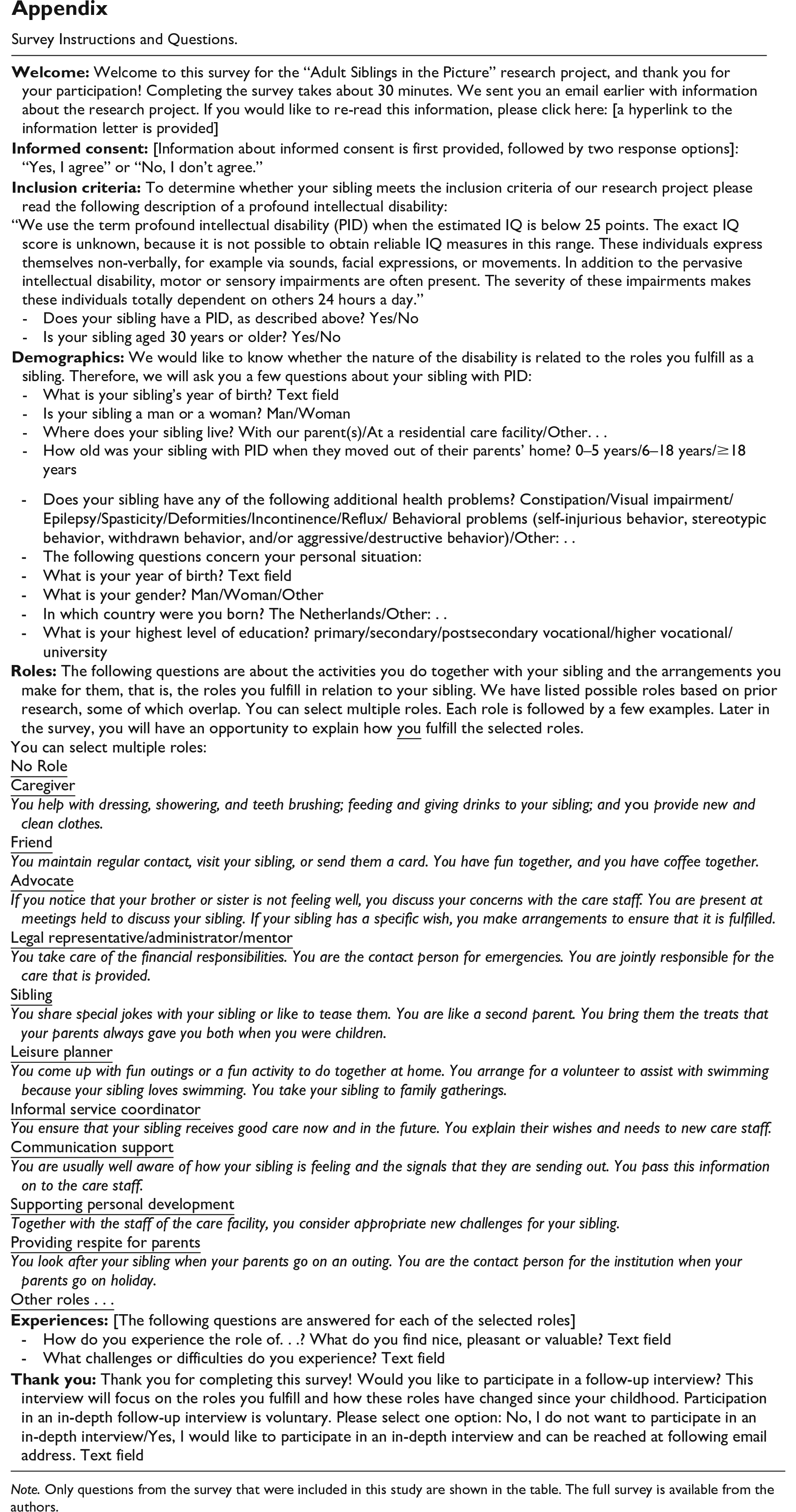
“We use the term profound intellectual disability (PID) when the estimated IQ is below 25 points. The exact IQ score is unknown, because it is not possible to obtain reliable IQ measures in this range. These individuals express themselves non-verbally, for example via sounds, facial expressions, or movements. In addition to the pervasive intellectual disability, motor or sensory impairments are often present. The severity of these impairments makes these individuals totally dependent on others 24 hours a day.” - Does your sibling have a PID, as described above? Yes/No - Is your sibling aged 30 years or older? Yes/No |
- What is your sibling’s year of birth? Text field - Is your sibling a man or a woman? Man/Woman - Where does your sibling live? With our parent(s)/At a residential care facility/Other. . . - How old was your sibling with PID when they moved out of their parents’ home? 0–5 years/6–18 years/≥18 years |
| - Does your sibling have any of the following additional health problems? Constipation/Visual impairment/Epilepsy/Spasticity/Deformities/Incontinence/Reflux/ Behavioral problems (self-injurious behavior, stereotypic behavior, withdrawn behavior, and/or aggressive/destructive behavior)/Other: . . - The following questions concern your personal situation: - What is your year of birth? Text field - What is your gender? Man/Woman/Other - In which country were you born? The Netherlands/Other: . . - What is your highest level of education? primary/secondary/postsecondary vocational/higher vocational/university You can select multiple roles: You help with dressing, showering, and teeth brushing; feeding and giving drinks to your sibling; and you provide new and clean clothes. You maintain regular contact, visit your sibling, or send them a card. You have fun together, and you have coffee together. If you notice that your brother or sister is not feeling well, you discuss your concerns with the care staff. You are present at meetings held to discuss your sibling. If your sibling has a specific wish, you make arrangements to ensure that it is fulfilled. You take care of the financial responsibilities. You are the contact person for emergencies. You are jointly responsible for the care that is provided. You share special jokes with your sibling or like to tease them. You are like a second parent. You bring them the treats that your parents always gave you both when you were children. You come up with fun outings or a fun activity to do together at home. You arrange for a volunteer to assist with swimming because your sibling loves swimming. You take your sibling to family gatherings. You ensure that your sibling receives good care now and in the future. You explain their wishes and needs to new care staff. You are usually well aware of how your sibling is feeling and the signals that they are sending out. You pass this information on to the care staff. Together with the staff of the care facility, you consider appropriate new challenges for your sibling. You look after your sibling when your parents go on an outing. You are the contact person for the institution when your parents go on holiday. |
- How do you experience the role of. . .? What do you find nice, pleasant or valuable? Text field - What challenges or difficulties do you experience? Text field |
Note. Only questions from the survey that were included in this study are shown in the table. The full survey is available from the authors.
Acknowledgements
The authors acknowledge and thank the participants in this study. The authors also thank Martien Rienstra for her assistance with the preparation and distribution of the survey.
Declaration of Conflicting Interests
The author(s) declared no potential conflicts of interest with respect to the research, authorship, and/or publication of this article.
Funding
The author(s) disclosed receipt of the following financial support for the research, authorship, and/or publication of this article: This study was funded by ZonMw (the Netherlands Organization for Health Research and Development) through its Academische Werkplaatsen Verstandelijke Beperkingen Program (grant number: 641001104).

Editor-in-Charge: Zach Rosetti