



Abstract
This study investigates the impact of in-person professional development (PD) with ongoing emailed practice-based feedback (EPF) on teacher correct implementation of a multicomponent shared reading intervention for students with extensive support needs (ESN) embedded within general education (GE) instruction within three multiple baseline across skills designs. Skills within the shared reading intervention included (a) student engagement, reinforcement, and redirection, (b) planned questioning with wait time and error correction, and (c) in the moment data collection. A functional relation between PD with EPF package and teacher correct implementation of the multicomponent shared reading intervention was established for all three teachers. Teachers reported the experience was positive and felt comfortable delivering the small group shared reading intervention. No negative impact on student comprehension occurred. Findings show general and special educators can embed individualized shared reading using modified grade-level books and collect data on literacy skills for students with ESN in GE instruction with fidelity. This successfully implemented specialized instruction and data collection on the individualized educational goals of students with ESN provides more evidence that GE settings are an effective location for individualized service delivery and progress monitoring. Further implications for research and practice are shared.
Keywords
A literacy-rich environment, instruction based in the general education (GE) curriculum, and responsive peer communication partners are aspects of the GE setting that can support development of literacy skills for all students (Toews & Kurth, 2019; Ruppar et al., 2018). The Individuals with Disabilities Education Improvement Act mandates all students must access and make progress in the GE curriculum within the least restrictive environment, including students with extensive support needs (ESN). Students with ESN make up the 1% of students with low-incidence disabilities (i.e., intellectual disability, multiple disabilities, autism spectrum disorders, and deaf-blindness) who qualify to take their state alternate assessment (Taub et al., 2017). They are two times more likely to receive instruction in separate special education settings (Morningstar et al., 2017) and are 10 times less likely to receive literacy instruction in these separate settings (Ruppar et al., 2018). Knowledge of effective literacy instructional strategies for students with ESN has advanced, such as the use of shared story reading (Toews et al., 2021; Hudson & Test, 2011) and adapted grade-level books (Kurth & Keegan, 2014) to support literacy skill acquisition in GE settings (e.g., Courtade et al., 2013; Ruppar et al., 2017).
Despite research evidence and legal support for literacy instruction in GE settings for students with ESN, teachers lack knowledge and comfort with literacy instructional strategies and supports for students with ESN (Matzen et al., 2010; Ruppar et al., 2011). This lack of knowledge, coupled with limited teacher training (Zagona et al., 2021) act as barriers to literacy instruction. Limited opportunities for applied practice to support students with ESN during teacher preparation programs for both general and special educators (Kurth et al., 2020) also limit teacher knowledge. Yet, knowledge to adapt academic materials and integrate individualized supports into GE settings is necessary to ensure students with ESN make progress toward their goals (Kurth et al., 2020). However, teachers report not knowing how to make academic curricula accessible to students with ESN (Matzen et al., 2010; Saloviita, 2015).
Supporting Educators
One way to increase teacher confidence in inclusive literacy instruction is the provision of professional development (PD; Zagona et al., 2017). A PD cycle of skill introduction, deliberate practice in a natural context, and practice-based feedback (PF) that repeats over time facilitates teacher skill acquisition (Toews & Zagona., 2022; Gersten et al., 2010). PD practices that occur over multiple days, weeks, or months and include consultation or coaching are more effective than single-dose PD (Flint et al., 2011). Ongoing PD targeting evidence-based inclusive practices beyond 1-day training can reduce barriers to students accessing an inclusive education and increase teacher confidence in providing inclusive literacy instruction (Turnbull & Turnbull, 2020).
Practice-based coaching is one PD method that supports a recurring implementation and feedback cycle, in which a teacher receives PD on a new skill, performs that skill in the classroom under the observation of a coach, then receives PF on their use of the new skill (Barton et al., 2016). PF is an evidence-based practice for supporting teachers to implement new instructional practices (Fallon et al., 2015). Emailed practice-based feedback (EPF; Barton et al., 2016) has resulted in improvements in pre-service (Schles & Robertson, 2019) and in-service (Gage et al., 2018) implementation of new strategies in preschool (Brock & Beaman-Diglia, 2018) and elementary (Cuticelli et al., 2016) classrooms. The use of email to deliver PF increases the feasibility and sustainability of this support practice of because coaches and teachers do not need to find a mutually available time to meet.
Shared Reading
Shared reading is a literacy intervention with a moderate base of evidence supporting student engagement with literature, vocabulary knowledge, and comprehension that needs further research on its use within GE settings (Hudson & Test, 2011; Toews et al., 2021). Shared reading is a text-based interaction between a reader and listener in which the reader presents the text and pauses intermittently to engage the listener through discussion, question and response, or physical interaction (Hudson & Test, 2011). Emerging research indicates shared reading can be implemented effectively by teachers in GE settings that include students with ESN in whole group (Courtade et al., 2013) and one-on-one instruction (Ruppar et al., 2017). Although this research is promising, no studies have investigated teacher-implemented shared reading for students with ESN in small group instruction in GE settings, a common shared reading delivery grouping (Hudson & Test, 2011; Toews et al., 2021).
Several skills related to inclusive shared reading are necessary to achieve positive student outcomes. Three essential skills are: (a) engaging students in the literacy lesson (Toews et al., 2021), (b) using planned questioning with wait time and error correction (e.g., Ruppar et al., 2017), and (c) collecting data on student response to book-based questions (Good et al., 2001). Student engagement with books, including visual contact, physical book manipulation, and commenting on book content, are all skills that have been targeted through shared reading for students with ESN (e.g., Browder et al., 2006, 2007). Engagement is one of the most common literacy skills taught with shared reading (Toews et al., 2021). Task analyses with planned questions, break down the steps of complex tasks that include multiple dependent steps, and support teachers to know how to illicit participation of students with ESN (Browder et al., 2007; McConomy et al., 2022). Provision of a consistent wait time after asking a question with error correction is a planned questioning structure that has been embedded in shared reading to support student acquisition of literacy skills (e.g., Alison et al., 2017; Ruppar et al., 2017). Finally, the use of data to plan instruction is linked to increases in academic skills of students with ESN (Jimenez et al., 2012).
Purpose and Research Questions
Despite these known effective practices, additional research is needed to identify if PD with EPF can support general and special educators to implement shared reading interventions for students with ESN in small group settings within GE classrooms (Toews & Kurth, 2019). The purpose of this study was to evaluate the effectiveness of PD with ongoing EPF to support educators in implementing the three critical aforementioned skills during small group shared reading in inclusive elementary GE classrooms: (a) promoting engagement, (b) planned questioning with wait time and error correction, and (c) data collection. The research questions that guided this study included:
Does PD with EPF improve teacher implementation of a multicomponent shared reading intervention for students with ESN during small group reading in GE classrooms?
To what extent do teachers report PD and EPF were effective in supporting them to implement shared reading and improve access of students with ESN to literacy instruction in the GE setting?
Method
Recruitment and Inclusion
Following university institutional review board (IRB), district, and school principal project approval, educators at one suburban elementary school in the Midwest region of the United States identified students who met the following inclusion criteria: (a) have a moderate to severe intellectual disability (ID) as identified by individualized educational program (IEP) eligibility label of ID, multiple disabilities, autism; or deaf-blindness and teacher report of extensive needs for support to access academic content, (b) attends a GE class or would be permitted to attend a GE class during literacy rotations at least three times per week, (c) did not miss more than one school day per month, and (d) the general or special educator was willing to participate in the study. Educators received project consent from the parents of three students, then completed a student demographic survey, including information about student support needs related to literacy, communication, and behavior.
One educator per student was selected to participate in the project. The general educator was selected when both the general and special educator volunteered to participate. Inclusion criteria for educators included: (a) held a valid professional teaching credential, (b) committed to facilitating literacy rotations three times per week for the duration of the study, and (c) committed to attending three PD sessions and receiving EPF. Three student and teacher dyads ultimately participated. Teacher demographic information can be found in Table 1. PD and EPF were delivered by the first author, a doctoral student with 5 years of experience teaching students with ESN in inclusive elementary school classrooms.
Teacher and Student Participant Demographics.
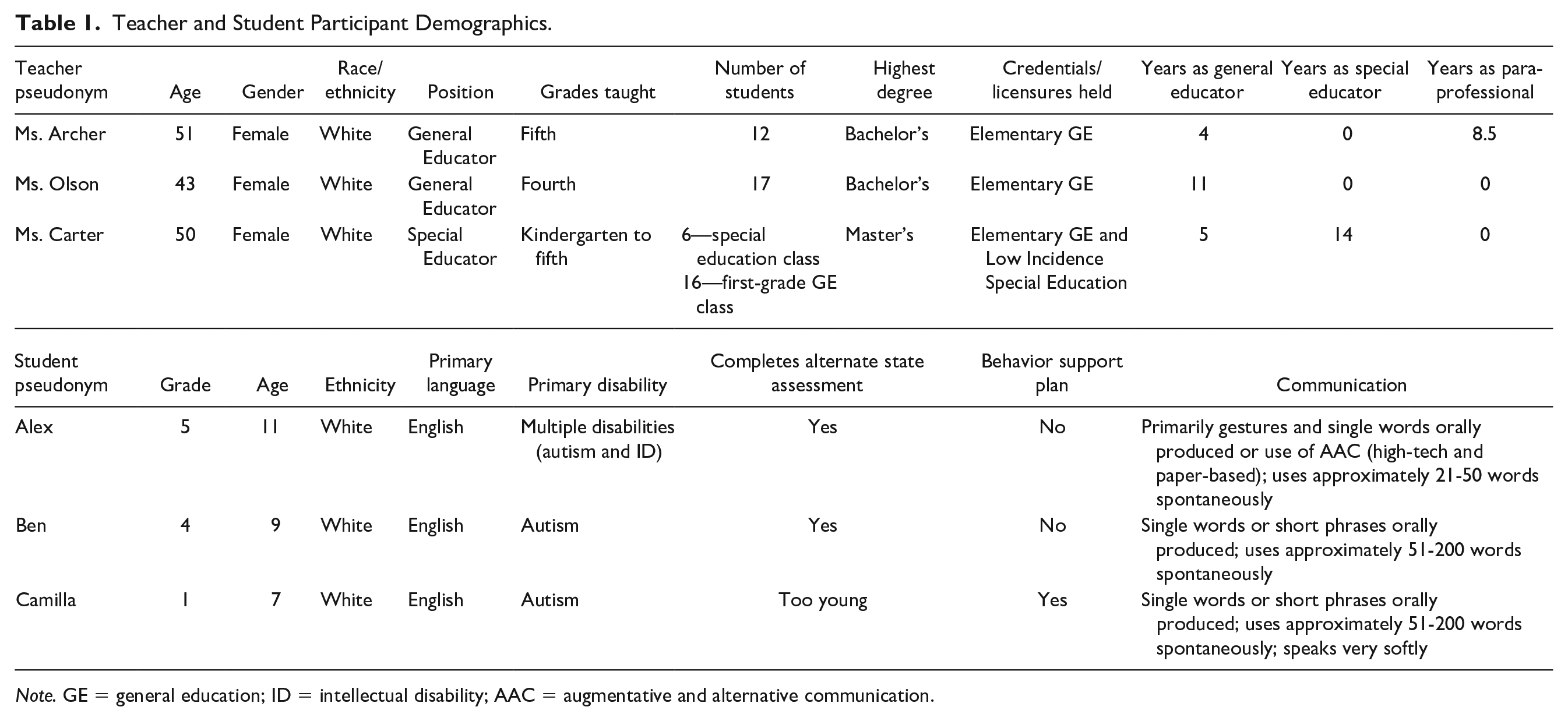
Note. GE = general education; ID = intellectual disability; AAC = augmentative and alternative communication.
Educator and Student Dyads
Dyad 1
Ms. Archer, a fifth-grade general educator with 4 years of teaching experience, delivered shared reading lessons to a group of five students, including four students without an identified disability and Alex, a student with ESN. Nine non-participating students and zero additional adults were present during all literacy center rotation activities. Ms. Archer had not received pre- or in-service PD on inclusive education but had supported students with ESN in GE settings during literacy instruction in a previous position.
Alex was a fifth-grade, white, male student with autism and severe ID. He received special education services within a separate special education classroom for most of the school day. He did not attend any academic instructional time in the GE classroom prior to this study. Alex had a spontaneous vocabulary of approximately 21 to 51 words. Alex’s special educator reported that he followed a functional curriculum and, for that reason, did not frequently participate in book-based lessons at school. Alex receptively identified all letters and matched some letters to their sounds. He did not have a literacy goal in his IEP but had a pre-vocational goal related to answering questions about his daily schedule through the selection of text supported images. To access grade-level books during the study, he required the addition of a pre-reading sheet with two picture supported concepts with two descriptor sentences each; a picture supported single-sentence repetitive text line added to each page with a pre-recorded switch to enable Alex to read the repetitive line aloud; four picture-supported concept sentences added into the grade-level book; and multiple-choice comprehension questions with three one-word and picture supported response options in which the two distractors were familiar words unrelated to the answer.
Dyad 2
Ms. Olson, a fourth-grade general educator with 11 years of teaching experience, delivered shared reading to a group of five students, including four students without an identified disability and Ben, a student with ESN. Twelve non-participating students and zero other adults were present during all sessions completing other literacy center rotation activities. Ms. Olson had not received any formal pre- or in-service PD on inclusive service delivery but had supported students with ESN in specials (music, art) and science with her class. She had never supported students with ESN during literacy instruction in the GE setting prior to the study.
Ben was a fourth-grade, white, male student with autism and moderate ID. He received services within a special education classroom for most of the school day. Prior to the study, Ben attended Ms. Olson’s class during academic periods 1 hr a day (15-min silent reading and 45-min science or social studies). Ben had a spontaneous vocabulary of approximately 51 to 200 words. He read at a late first-grade level and had a literacy goal within his IEP to answer “wh” comprehension questions. An alternative special education curriculum, Unique Learning Systems (News 2 You, 2014), served as Ben’s primary literacy curriculum.
To access grade-level books during the study, he required the addition of a pre-reading sheet with three to four picture supported concepts with one or two descriptor sentences each; a picture supported single-sentence repetitive text line added to each page; four, one to two sentence, picture-supported adapted text sections from the pre-reading review added into the grade-level book; and multiple-choice comprehension questions with three, one- to three-word text options.
Dyad 3
Ms. Carter, a special educator with 14 years special and 5 years GE teaching experience, delivered shared lessons in Ms. Smith’s first-grade GE classroom to four students (three students without an identified disability and Camilla, a student with ESN). Twelve non-participating students and Ms. Smith were present during all sessions completing other literacy center activities. Ms. Carter had received pre-service PD in inclusive practices. She supported students with ESN in literacy instruction within the special and GE settings daily prior to participation.
Camilla was a first-grade, white, female student with autism and moderate ID. She received services within a separate special education classroom for most of the school day. Prior to the study, she attended Ms. Smith’s first-grade GE class during academic instruction for 15 min a day during partner reading. Camilla had a spontaneous vocabulary of approximately 51 to 200 words. Unique Learning Systems also served as Camilla’s primary literacy curricula. She had literacy-related IEP goals to expressively identify upper and lowercase letters and identify the main idea. Camilla expressively identified most uppercase letters and read some sight words. To access grade-level books during the study, she required the addition of a pre-reading review sheet with three to four sentences on focal concepts supported by pictures; a single-sentence repetitive text line added to each page, four separate focal concept sentences added into the grade-level book as captions to existing pictures; and multiple-choice comprehension questions with three one-word response option in which the two distractors are familiar words unrelated to the answer.
Setting
All participants were at the same public elementary school in a suburb of a large Midwestern city. The school had a student population of 306 students; 36.9% qualified for free or reduced-price lunch. The majority of students were white (70.3%), followed by Hispanic (17.6%), then two or more ethnicities (5.2%). All three student participants attended a centralized autism program at this school, which was not their neighborhood school.
Materials
Modified Literacy Materials
Books
The non-fiction books used in this study were selected from grade-level curricula or resources that were already used by each teacher. Each teacher chose the books that were used for the study. A list of all books used and the questions provided for each book can be found on Open Science Framework (OSF; https://bit.ly/3hF4vNs). Modifications were added by scanning and printing books on 432 mm by 279 mm paper, then gluing modifications into the blank margins. The length and complexity of modified text sections and comprehension questions were identified using a systematic process to ensure books were appropriately challenging for each student, as described in the “Procedures” section. Modified books had consistent components across all participants, which included modified text sections, repetitive text lines, embedded comprehension questions, a pre-reading concept review sheet, and individualized response options on questions. These specific types of modifications were selected because they had been identified as common during shared reading interventions in a recent literature review by Toews et al. (2021). Examples of all aspects of the modified books for each participant can be obtained at OSF (https://bit.ly/3hF4vNs).
The modifications used in this study were intended to supplement the typical grade-level book rather than replace it. These modifications were used to teach key vocabulary and concepts before reading and provide accessible descriptions of important content while reading each book. Modified books included a repetitive text line that appeared at least three times and three or four modified text sections were added to highlight key ideas or vocabulary. This line was written at a level the student could read independently or memorize. Ms. Archer was provided with a recordable voice output switch for Alex to read each repetitive text line. The pre-reading concept sheet contained two to four images, and each of the modified text sections appeared within the book. Part of the engagement step of the shared reading intervention was the teacher drawing student attention to each of the modifications to support use of these comprehension tools.
Comprehension Questions and Response Options
All questions were multiple-choice and required students to recall information that was explicitly in the text. Students were provided with response options that were adapted to support book comprehension. The process for determining question and response option complexity and structure is described in the procedures. Questions did not require inferential or strategic thinking. Ben received a one-page comprehension response sheet with five multiple-choice questions. Each of the multiple-choice options were one-to-three words and all were related or feasible answers. Camilla received five multiple-choice comprehension questions with three options that were embedded directly within the modified book. Each of the three multiple-choice options was one or two words with one related distractor and one unrelated word. Response options for Alex consisted of five 215.9 mm by 279 mm sheets containing the comprehension question and three answer options listed as text with a supporting image. The correct answer and image were identical to those found in the modified book. The two distractor answers and images were selected from a list of words Alex had shown mastery of identifying receptively. Each book and accompanying lesson plans took approximately 1.5 hr to prepare and assemble.
Lesson Plans
The first author provided teachers with three lesson plans, representing content for the three repeated reads of each book 1 to 3 days prior to the shared reading lessons. Lesson plans were printed on one double-sided 215.9 by 279 mm paper. A full lesson plan from the final phase of the study for Ms. Carter and Camilla can be obtained on OSF (https://bit.ly/3hF4vNs). Lesson plan format was consistent across all participants. The front page included the small group lesson content for all students in the shared reading group. The first lesson for each book focused on vocabulary, the second on non-fiction book features, and the third on comprehension (e.g., giving all students opportunities to express their comprehension of the book through discussion and response to questions). The small group lessons included the grade-level standard covered, ideas for how the teacher could introduce the topics to engage the students, as well as suggested stop points in the book with questions or conversation starters. The small group lesson plan was provided to teachers in all phases of the study, including baseline. Grade-level vocabulary and comprehension questions were retrieved from teachers guide materials available for each book.
The back of the lesson plan provided guidance for the teacher on implementation of the shared reading intervention for the student with ESN. This part of the lesson plan had three sections: (a) engagement, redirection, and reinforcement, (b) planned questioning with wait time and error correction, and (c) data collection. The organization of the lesson plan was created based on prior literacy intervention conducted with students with ESN in inclusive classrooms (Ruppar et al., 2017). Each of the aforementioned sections aligned with the three tiers of instruction in the experimental design.
PD Materials
Materials for each of the three PD sessions included: (a) PowerPoints describing shared reading instruction components, (b) video examples of the targeted skills, and (c) practice lesson plans and books. The three PowerPoints covered three shared reading instructional skills: (a) engagement, redirection, and reinforcement, (b) planned questioning with wait time and error correction, and (c) data collection. A sample of each of the three PD PowerPoint presentations can be obtained on OSF (https://bit.ly/3hF4vNs).
Experimental Design
This study utilized three separate multiple baseline across teaching skills designs (Gast et al., 2018; one for each teacher-student dyad) to evaluate the effect of PD with ongoing EPF on teacher correct implementation of shared reading intervention in small group literacy centers in GE classrooms. This design was selected for its feasibility in typical school settings and the prevalence of this design in the extant research on shared reading (Toews et al., 2021). This design allowed for an experimental evaluation of the impact of PD combined with ongoing EPF as an intervention package on each of the three shared reading instructional skills with each teacher.
Within this design, skills were presented through PD with ongoing EPF in the following order: (a) engagement, redirection, and reinforcement, (b) planned questioning with wait time and error correction, and (c) data collection. Three baseline data points were collected for each skill. When baseline data were stable for the first skill (engagement, redirection, and reinforcement), intervention (PD with ongoing PF) was introduced for the first skill and the remaining two skills stayed in baseline. When teacher fidelity was 80% or higher for at least two consecutive days, the first skill was considered mastered and intervention began for the next skill (planned questioning with wait time and error correction). When fidelity reached 80% or higher for two consecutive days for skill 2, intervention for skill 3 began. Once skill 3 was mastered, teachers entered the maintenance phase and did not receive EPF. A functional relation between PD with EPF and teacher correct implementation of the shared reading intervention occurred when teachers met at least 80% correct implementation in each skill for two consecutive days using a structured visual analysis protocol (Ledford et al., 2017).
Response Definitions and Measurement
The dependent variable was teacher correct implementation of three independent shared reading skills: (a) engagement, redirection, and reinforcement, (b) planned questioning with wait time and error correction, and (c) data collection. Operational definitions of each skill are found in Table 2 and data collection forms can be obtained on OSF (https://bit.ly/3hF4vNs). Each skill was a tier on the multiple baseline design; a brief description of each skill is described below.
Operational Definitions of Shared Reading Skills and Examples.
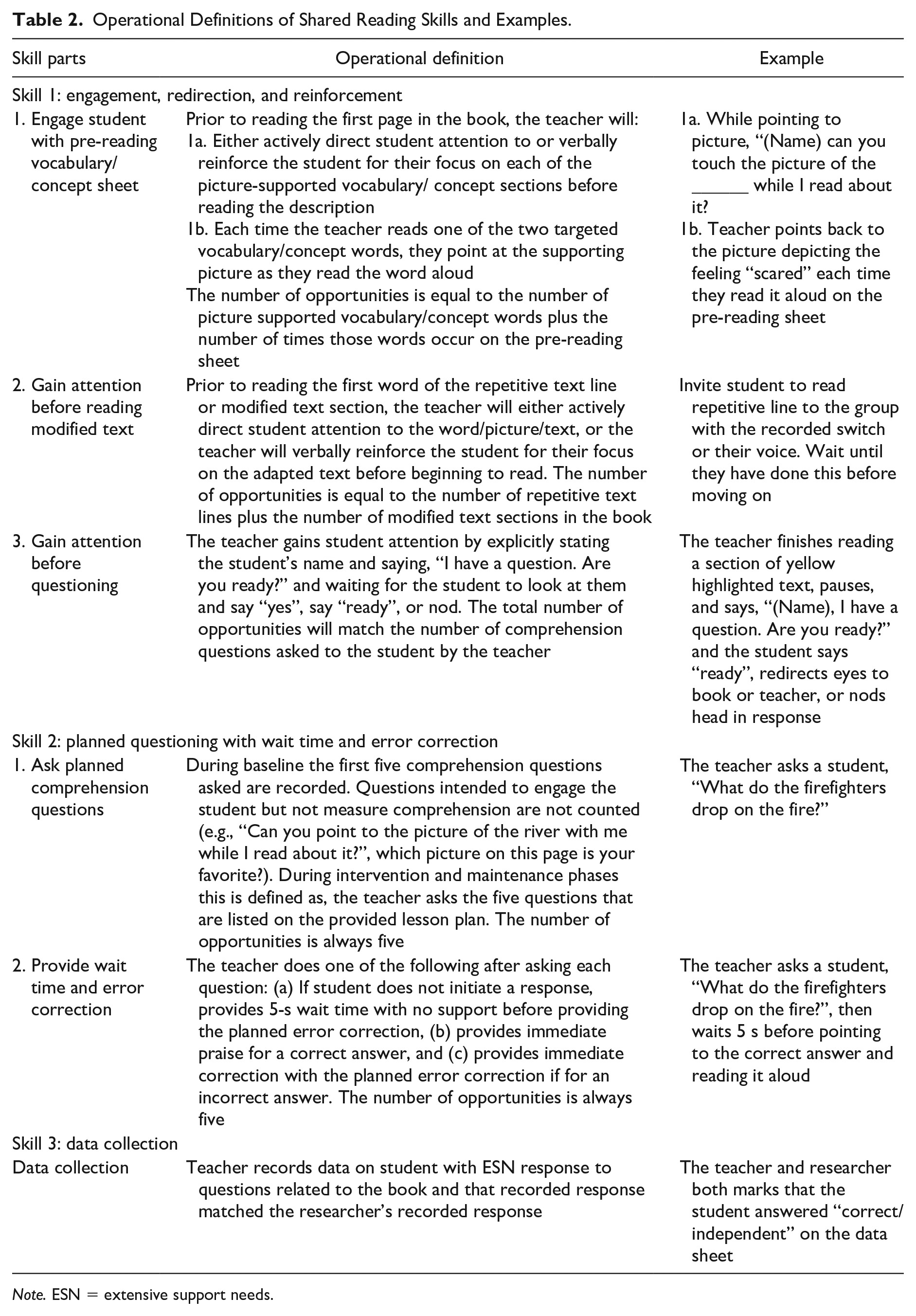
Note. ESN = extensive support needs.
The first skill, engagement, redirection, and reinforcement, required teachers to actively engaged students with ESN with the modified text and comprehension questions. Correct implementation was split into three distinct opportunity groups: (a) pre-reading concept sheet, (b) modified text sections and repetitive text lines, and (c) gaining student attention before asking a comprehension question. For the teachers to correctly implement this skill, they needed to use engagement strategies until the students moved their eyes to the book from a different location, touched the modified text section, picture, or pre-reading concept sheet, verbally or physically indicated they were ready to read or answer a question.
The second skill, planned questioning with wait time and error correction, ensured teacher use of consistent planned supports for access during shared reading. This procedure mirrored procedures used in the work of Ruppar et al. (2017) to provide a single time to provide error correction or praise, rather than a hierarchical system of prompts that variably changed contingent on student responding, for students with ESN in inclusive classrooms. A set wait time was chosen to facilitate easy integration into small group instruction where the teacher may not have time to support the student through least to most prompting. One planned question section was created for each book that contained five comprehension questions, their location within the book, and a reminder to provide 5-s wait time. The consistent planned error correction for all three participants was the verbal cue “It’s (answer)” coupled with the gestural of pointing to the correct answer on the response option sheet. Correct responding resulted in verbal praise (e.g., “Yes, That’s right,” “Great job!”) with optional physical praise (i.e., high 5); incorrect or no responses resulted in delivery of the consistent planned error correction. Teachers received the planned question section as part of their lesson plan after they participated in the second PD.
The third skill, data collection, supported teachers to collect progress monitoring data on student individualized goals within the GE setting. Accurate teacher implementation of data collection occurred when the teacher marked the correct student response on the planned question section and their mark matched the researcher mark. Student responses were correct if answered accurately and independently within 5 s of the initial cue. Responses were incorrect if the student gave an inaccurate response, failed to respond within 5 s, or the teacher provided any level of prompt after the initial cue. Student correct response data were also collected to ensure the intervention was not detrimental to student comprehension.
Procedures
Selecting Text Modifications, Questions, and Response Options
A systematic process was necessary to identify the appropriate difficulty level of questions, along with the types and intensity of modifications required for each student to access grade-level non-fiction books. The systematic process is described to follow and outlined in more detail in Toews et al. (In Press). A flowchart outlining the process can be obtained on OSF (https://bit.ly/3hF4vNs). Pre-study reading sessions lasted 20 to 30 min, and the number of sessions necessary to identify an effective level of support was 19 for Alex, seven for Ben, and six for Camilla.
First, a non-modified grade-level non-fiction books with grade-level oral response comprehension questions was read. After reading the grade-level book and asking grade-level questions that were available for each book from ReadingA-Z.com, the criteria for addition of increased modification was the occurrence of no response to two consecutive questions or incorrect response to five consecutive questions. The researcher provided increments of more intense book modification, more simplified questions (e.g., remove requirement of inferential thinking, reducing the amount of text read before asking the question), and different response mode options until the student consistently answered most but not all of the questions after the first read. In addition, the researcher trialed different engagement, redirection, and reinforcement strategies during these pre-reading sessions to reduce the risk of incorrect responding due to disengagement with the content (e.g., asking student to point to adapted text section while it is read, then asking a comprehension question immediately after). Supports identified through this process were used for the duration of the study. Videos of the researcher using each shared reading skill with each student to be used during PD for educators were also created during these pre-study sessions.
Baseline
During baseline, teachers received a folder with 3 days of grade-level standards aligned lesson materials at least 24 hr prior to expected implementation. Each folder contained six identical modified grade-level non-fiction books and three small group lesson plans. Baseline lesson plans did not include any information on specific engagement points or planned questions with wait time and error correction. Teachers were told to conduct the group as they typically would, with no guidance or feedback on their performance. These procedures replicated those used by Ruppar et al. (2017) that provided modified materials to educators without training or support. Furthermore, ethically asking a student with ESN to be present during an instructional activity without any reasonably provided accommodations, such as modified books would not align with what is happening in “typical practice” as students are legally required to have access to accommodations to access the general curriculum. Thus, baseline sessions included modified books and general plans. The modified books and overall lesson plans that did not include guidance on instructional procedures taught in PD/EPF intervention as per Ruppar et al. (2017) procedures, should be considered control variables as they were present in all conditions. Sessions began when the teacher distributed the book and ended when the discussion or questions about the last page of the book had ended. The duration of the baseline phase for each skill was dependent on the time to a stable initial baseline for the first skill and time to reach mastery criteria skills 2 and 3.
PD with EPF Intervention Package
Teachers received a packaged PD and EPF intervention that included skill instruction and continued EPF to support teacher implementation of the multicomponent literacy instruction. A package of PD and EPF was selected, rather providing only PD and waiting to see whether teachers needed EPF, given the overwhelming evidence that PD alone without a feedback component does not result in changed teacher behavior (see reviews by Brock & Carter, 2017; Brock et al., 2017; Flint et al., 2011), the well-documented effectiveness of PF as a part of coaching (see Kraft et al., 2018 for a meta-analysis), and the well-documented cost of ineffective PD (Jacob & McGovern, 2015). Furthermore, explorations of educator implementation of systematic instruction with students with ESN in segregated, one-on-one settings have demonstrated PD of skill instruction alone is insufficient for acquisition of instructional procedures (e.g., Ledford et al., 2018), thus, we packaged our intervention to include PD with EPF.
Only one skill was covered in each PD session and each PD occurred immediately prior to the teacher entering the intervention phase for each of the three targeted skills. Each session followed the same structure: (a) Skill introduction PowerPoint, (b) videos of the researcher demonstrating the skill with the student participant in their individual dyad, and (3) shared reading role-playing between the teacher and researcher. Role-playing occurred until the teacher achieved 80% or higher correct implementation of the targeted skill across two lessons. This marked the beginning of the intervention phase for the targeted skill. Each teacher participated in three PD sessions with an average duration of 62 min 35 s (range: 27 min–101 min 57 s). The longest PD on average was for skill 1, with an average of 80 min 47 s (range: 65 min 21 s–100 min 57 s). This session included a general introduction to the practice of shared reading, which was not included in skills 2 and 3 PD. PD for skill 2 averaged 68 min 23 s (range: 46 min 43 s–83 min 53 s) and 38 min 34 s for skill 3 (range: 27 min–57 min 44 s).
The first author reviewed videos of each shared reading session and delivered EPF within 48 hr and prior to the next lesson to teachers during the intervention phase until maintenance. Teachers needed to confirm receipt of the email prior to their next shared reading session. On the few occasions that teachers did not respond to the EPF by email before the day of their next session, the first author visited them before school started, asked them to read the email and responded to any questions they had. When teachers responded to EPF with questions, their questions were answered via email or in person before their next session occurred. EPF was only provided for skills addressed in their specific intervention tier. Each email followed the same format: (a) two positive statements about the shared reading session, (b) a statement of the correct implementation score for each skill in the implementation phase with a description of any steps the teacher missed, (c) explicit guidance on how to improve implementation in the next session, and (d) a closing in which the teacher is thanked for their participation. Email formats were derived from prior EPF literature for changing educator performance (Gomez et al., 2021). The full deidentified text of all EPF for each teacher can be found on OSF (https://bit.ly/3hF4vNs).
Maintenance
Maintenance procedures mirrored those of skill 3 intervention phase without the daily provision of EPF. EPF was removed in this phase to investigate if teachers had maintained shared reading skills without supportive feedback. Maintenance sessions were completed immediately after skill 3 was mastered and again 1 month later.
Frequency and Duration
Teachers were asked to implement the shared reading lessons 3 days per week for the duration of the study. Lessons were designed to fit within the typical rotation time for each class. Center rotations were approximately 30 min in Ms. Archer’s class, 25 min in Ms. Olson’s class, and 20 min in Ms. Carter’s class. The total number of sessions competed by each participant and average session length varied by teacher. Ms. Archer completed 13 sessions that had an average length of 22 min 40 s (range: 11 min 0 s–37 min 14 s). Ms. Olson completed 20 sessions that had an average length of 20 min 58 s (range: 15 min 11 s–28 min 11 s). Ms. Carter completed 14 sessions that had an average length of 18 min 13 s (range: 13 min 3 s–23 min 1 s).
Reliability and Fidelity Measurement
A second trained rater independently collected data on teacher skill implementation and student responses via video; secondary observer data were collected in 36% of total sessions across teachers (38% Ms. Archer, 35% Ms. Olson, and 36% Ms. Carter) and conditions (36% skills baseline, 40% skill 1, 33% skill 2, 33% skill 3, and 38% maintenance). Reliability was estimated by calculating point-by-point inter-observer agreement (IOA) using the following formula (agreements/[agreements + disagreements] × 100]). The mean overall IOA for skill implementation across all teachers, phases, and skills was 97.4% (range: 90.6%-100%). IOA was calculated for each teacher separately with Ms. Archer at 98.7% (range: 96.5%-100%), Ms. Olson at 97.2% (range: 93.1%-100%), and Ms. Carter at 96.4% (range: 90.6%-100%). Overall IOA for student responses was 95.8%. IOA was also calculated for each student separately, with Alex at 100%, Ben at 100%, and Camilla at 85.7% (range: 60%-100%). Disagreement on Camilla’s responses was most often related to difficulty in hearing her soft speaking voice. Consensus was met on all disagreements and is reflected in the reported data. A sample shared reading implementation checklist in available on OSF (https://bit.ly/3hF4vNs).
Procedural fidelity data were collected in 30% of all PD sessions and 39% of all EPF emails (40% for Ms. Archer, 33% for Ms. Olson, and 44% for Ms. Carter) using direct, systematic, observational recording via video or email with a trial-based behavioral checklist (available at: https://bit.ly/3hF4vNs). Procedural fidelity of researcher-coach implementer behaviors across all conditions and participants was 100%.
Social Validity
Following the completion of the study, teachers completed a social validity survey and in-person interview to investigate the extent to which each teacher felt the PD and EPF left them prepared to continue providing the intervention and if it was meaningful to student learning. Survey and interview questions can be obtained on OSF (https://bit.ly/3hF4vNs).
Results
Educator Implementation
Ms. Archer
Graphed data for Ms. Archer’s correct implementation of shared reading skills are presented in Figure 1. Ms. Archer did not display any engagement behaviors during baseline. When PD and EPF intervention were initiated, correct implementation immediately increased to 80% and continued an increasing trend to 100% correct implementation. As intervention continued, data became variable during session 9 (65% correct implementation) but returned to 100% correct implementation the following session. Ms. Archer mastered engagement, redirection, and reinforcement behaviors in three sessions.
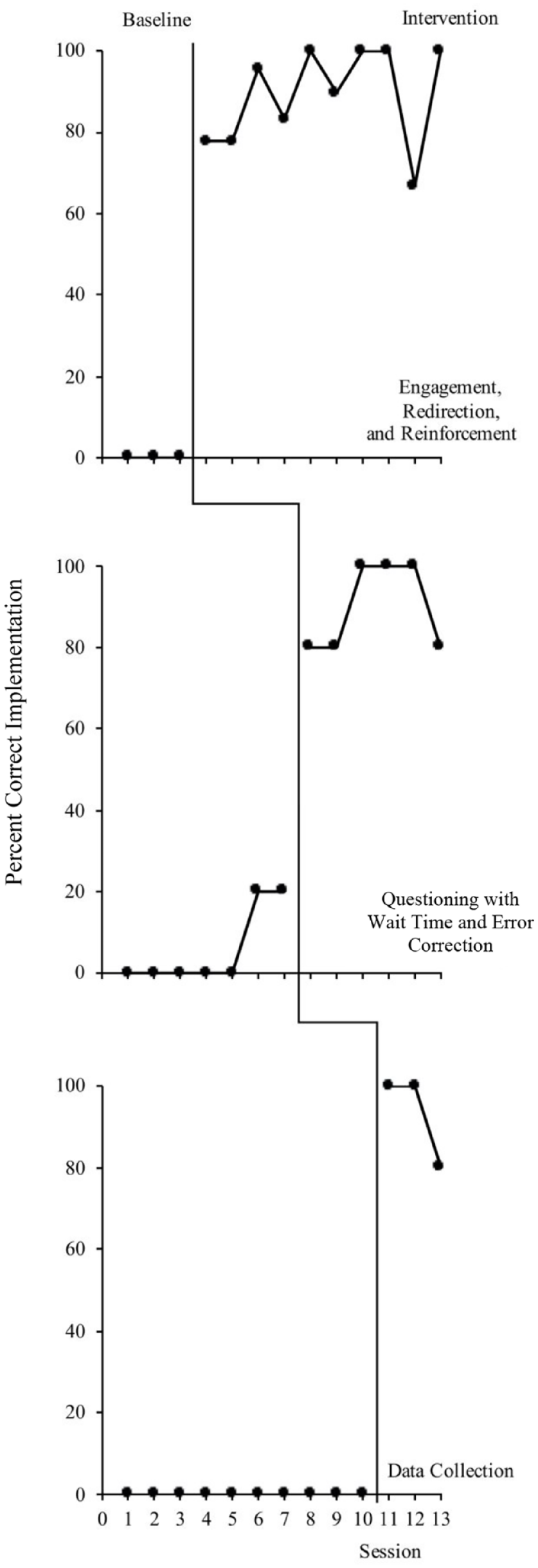
Correct Implementation Results for Ms. Archer.
Planned questioning with wait time and error correction behaviors were stable at 0% correct implementation, then increased to 20% correct implementation when intervention was initiated in the first tier. However, when PD with EPF intervention were initiated, correct implementation immediately increased to 80% and remained high and stable between 80% and 100% correct implementation. Ms. Archer mastered the planned questioning with wait time and error correction behaviors in three sessions.
Data collection behaviors were stable at 0% correct implementation in baseline. When PD with EPF intervention was initiated, correct implementation immediately increased to 100% for two sessions and 80% for the third session. A functional relation between PD with EPF and teacher implementation of a multicomponent shared reading intervention was established due to immediate and consistent increases in teacher correct implementation only after PD with EPF intervention was initiated. Maintenance data were not collected for Ms. Archer due to school closures resulting from COVID-19.
Ms. Olson
Graphed data for Ms. Olson’s correct implementation of shared reading skills are presented in Figure 2. Ms. Olson initially displayed 0 engagement behaviors followed by an increasing trend that stabilized with her engaging Ben in 40% of the expected opportunities during baseline. When PD with EPF intervention was initiated, correct implementation immediately increased to 80% and continued an increasing trend to 100% correct. As intervention continued, data remained above 80% throughout the intervention phase. Ms. Olson mastered engagement, redirection, and reinforcement behaviors in three sessions.
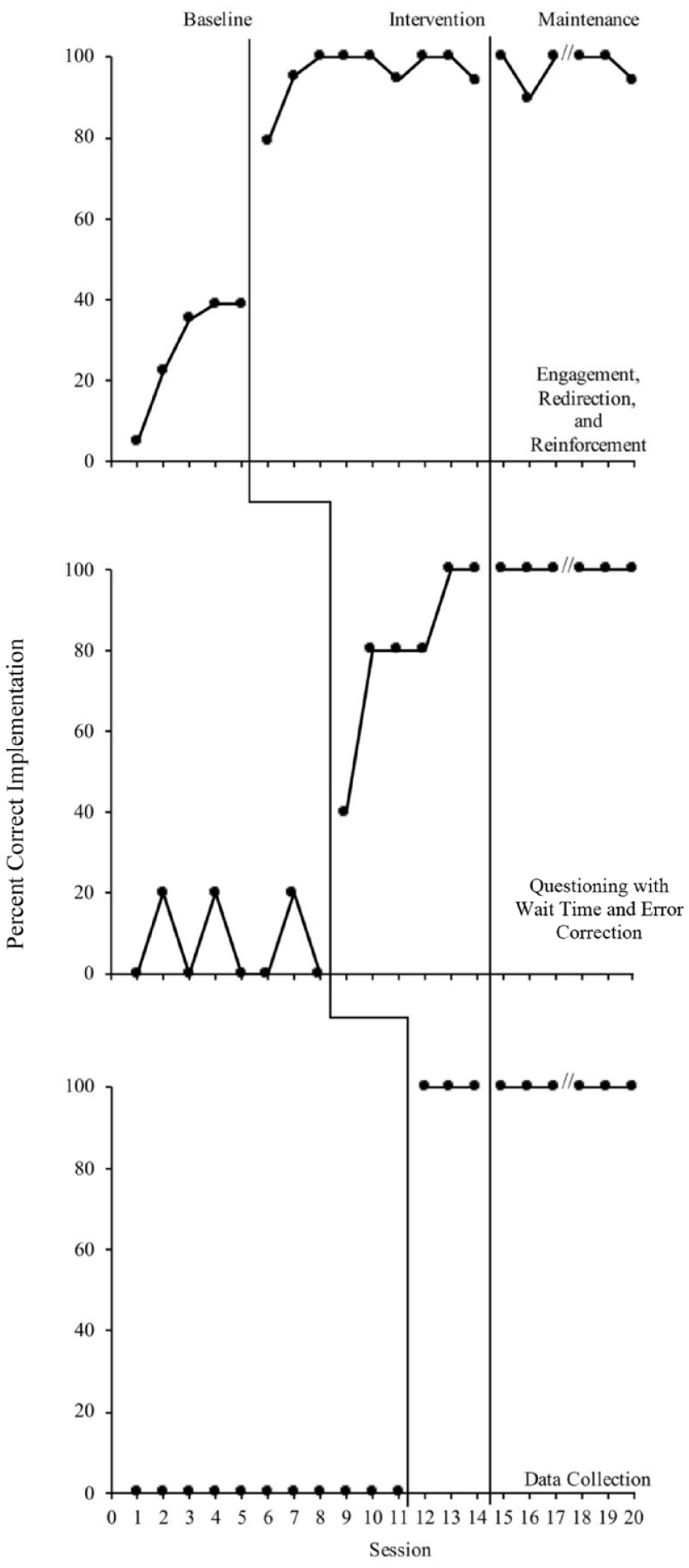
Correct Implementation Results for Ms. Olson.
Planned questioning with wait time and error correction behaviors were stable between 0% and 20% correct implementation during baseline. When PD with EPF intervention were initiated, correct responding immediately increased to 40%, and then continued to increase to 80% after the first EPF, then continuing to increase to 100 by session 13—mastery occurred in three sessions.
Data collection behaviors were stable at 0% correct implementation during baseline. When PD with EPF intervention was initiated, correct implementation immediately increased to 100% and remained stable. A functional relation between PD with EPF and teacher implementation of a multicomponent shared reading intervention was established due to immediate and consistent increases in teacher correct responding only after PD with EPF intervention was initiated. Maintenance data remained at 90% or above at 1 week and 1 month after removal of EPF intervention for all behaviors.
Ms. Carter
Graphed data for Ms. Carter’s correct implementation of shared reading behaviors are presented in Figure 3. Ms. Carter’s use of engagement strategies was stable between 0% and 20% correct implementation during baseline. When PD with EPF intervention were initiated, correct implementation immediately increased to 80% and continued an increasing trend to 100% correct implementation. Data remained stable between 90% and 100% correct implementation—the skill was mastered in three sessions.
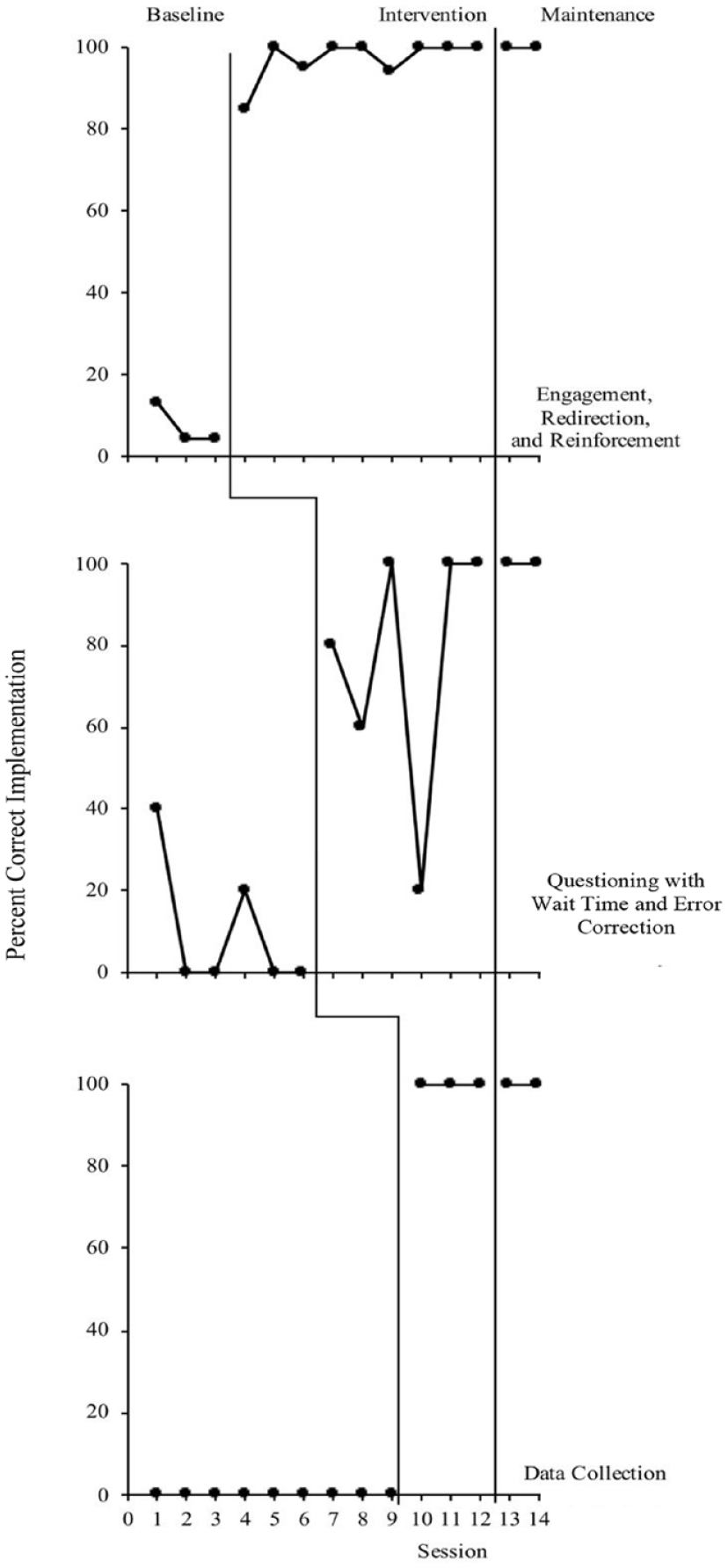
Correct Implementation Results for Ms. Carter.
Planned questioning with wait time and error correction behaviors were at 40% correct implementation in the first baseline session, then decreased to 0% and stabilized between 0% and 20% correct for the remainder of baseline. When PD with EPF intervention were initiated for planned questioning with wait time and error correction behaviors, correct implementation immediately increased to 80% then became variable until stabilizing at 100% in session 11. During session 10, Ms. Carter did not provide explicit praise when Camilla answered a question correctly in four of five opportunities. Although she had delivered explicit praise previously in this session, she responded to Camilla’s correct responses by saying, “She pointed to (answer),” to the peers in the group. Coaching was provided in the EPF to remind Ms. Carter to give Camilla immediate, explicit reinforcement after a correct response. Following EPF, Ms. Carter’s correct implementation returned to 100% and remained stable. Ms. Carter mastered planned questioning with wait time and error correction in six sessions.
Data collection behaviors were stable at 0% during baseline. When PD and EPF were initiated, correct implementation immediately increased to 100% and remained stable. A functional relation between PD with EPF and teacher implementation of a multicomponent shared reading intervention was established due to immediate and consistent increases in teacher correct responding only after PD with EPF intervention was initiated. Ms. Carter displayed 100% correct implementation of all three skills during 2 days of immediate maintenance—COVID-19 closure prevented delayed maintenance data collection.
Student Response Accuracy
Student response accuracy data were collected to ensure the shared reading intervention did not negatively impact student comprehension of grade-level non-fiction books. Data indicate that students answered fewer comprehension questions correctly before their teachers received intervention on the use of a planned questioning with wait time and error correction. Small group shared reading did not negatively impact student comprehension. Descriptively, student comprehension improved with the introduction of pre-planned questions with individualized response options compared when teachers asked unplanned questions without response options. The comprehension question accuracy for each student during each session can be obtained on OSF (https://bit.ly/3hF4vNs). No experimental conclusions can be drawn from these data.
Social Validity
All educators were contacted after participation in the study to assess social validity. Due to school closures associated with COVID-19, Ms. Archer did not complete the survey or interview; Ms. Carter only participated in the survey. Educators agreed or strongly agreed that small group shared reading was effective in supporting access to GE curriculum for students with ESN. They also reported enjoying leading the lessons, would use the strategies in the future, and recommend the strategies to other educators. No educator felt the shared reading intervention negatively impacted the learning of typically developing students. Interview responses echoed positive perceptions of small group shared reading with embedded supports for students with ESN. Educators felt that the amount of PD and EPF were adequate in supporting them to acquire the skills they needed to sustain the creation of materials and implementation of shared reading in their classes. All practices were identified as particularly important. Ms. Olson felt the most important support for her implementation was “getting that feedback right away. So [she] could work with [Ben] the next day without lots of days in between.” Educators disagreed or slightly disagreed that they “would have the time needed to create the materials for this type of intervention.” Ms. Archer shared that she would need support from the special education teacher to prepare the modified materials to implement the shared reading lessons.
Discussion
The impact of PD and EPF on teacher correct implementation of a multicomponent shared reading intervention was investigated in this study; a functional relation between PD and EPF and teacher correct implementation of the multicomponent shared reading intervention was established for all teachers. Teacher participants reported PD and EPF left them feeling comfortable delivering small group shared reading for students with and without disabilities.
This study adds to research on the use of shared reading to support literacy instruction in GE settings (e.g., Toews et al., In Press); Courtade et al., 2013; Ruppar et al., 2017) by demonstrating both general and special educators can embed individualized supports within shared reading using modified grade-level books for students with ESN. All teachers were able to integrate data collection on comprehension questions that targeted individual student support needs during typically occurring instruction. These findings confirm that progress toward individualized academic goals for students with ESN can be facilitated and monitored within GE settings and demonstrate a special education placement was not necessary for teachers to support and track the academic progress of students with ESN.
Teachers in this study reported the EPF was integral to their mastery of new skills, and all showed increases in correct implementation with ongoing EPF. These findings are supported by research that indicates single-dose PD without continuing support through practices, such as EPF are often inadequate for teachers to integrate new skills into their practice with fidelity (Flint et al., 2011). Given a recent literature review identifying EPF as an evidence-based practice for increasing teacher intervention fidelity included only two studies that utilized EPF (Fallon et al., 2015), these findings add to the small base of research on the utility of e EPF. In addition, the use and effectiveness of a PD package with guided content delivery and EPF are extended to support the implementation of inclusive practices for students with ESN.
Limitations and Implications for Research
During the study, the COVID-19 pandemic began, and all schools closed during data collection. Consequently, Ms. Archer and Carter were not able to complete a maintenance phase, and social validity measures were incomplete; therefore, conclusions regarding the maintenance of implementation of shared reading and teacher perceptions of the PD with EPF package utility are limited and should be explored in future studies. This study involved teachers reading the same short story with small groups of students three times. Although this was an existing practice at the school where the study occurred, it is a structure that may not be common in other schools. Replication with whole groups of students and single reads of passages, short books, or chapters would increase knowledge of how this intervention may be applied.
Another limitation is the PD, EPF, and lesson materials were researcher prepared rather than prepared by teachers themselves or delivered by other school staff. This limits the applicability of findings to schools without access to an outside researcher. Future research should investigate how teachers can incorporate and sustain shared reading interventions. Collaborative, teacher-led PD with embedded EPF is one way to support new strategies, such as shared reading (Toews & Zagona., 2022). For example, the Lesson Study PD structure in which teachers watch each other conduct lessons before providing immediate performance feedback, then collaboratively plan, make goals, observe one another, and provide feedback within their collaborative groups (Gersten et al., 2010), may support teacher creation of accessible instructional materials and implementation of shared reading in GE settings.
Finally, we cannot experimentally tease out if the PD, EPF, or combination of PD and EPF were the active ingredients of our training procedures used during intervention. Given the necessity for components of performance feedback beyond traditional PD to improve teacher instructional practices (Brock et al., 2017; Brock & Carter, 2017), we do not feel this distinction is necessary for applying the findings of this study to future practice. However, future research studies should explore the active ingredients required in in-service PD, training, and coaching to change teacher instructional practices during literacy instruction in GE classrooms.
Implications for Practice
Teachers can implement shared reading with high-fidelity in small group instruction after participation in PD and EPF. These findings, coupled with evidence showing students with ESN can access individualized comprehension goals through shared reading of modified books in GE settings (Ruppar et al., 2017; Toews et al., 2021), suggest that shared reading is not only feasible but may also support student progress toward individualized literacy goals. Due to the feasibility of embedded individualized instruction and data collection within GE settings, pre- and in-service PD should focus on the development and mastery of such inclusive practices.
A commonly cited barrier to the implementation of literacy instruction for students with ESN in GE settings is lack of knowledge of effective instructional strategies (Matzen et al., 2010; Ruppar et al., 2011). Special education and GE teacher preparation programs should ensure teachers have knowledge of how to embed planned instruction and supports for students with ESN within GE content instruction through practices, such as shared reading. It is particularly important that assignments and fieldwork require the implementation of practices, such as shared reading with students with ESN in GE settings, collaborative practices that facilitate inclusive service delivery, and material modification to increase student access to academic content to facilitate teacher candidate access to EPF from university faculty. A repetitive loop of PD, practice, and PF are essential to facilitate teacher implementation of instructional strategies with fidelity (Yates et al., 2020). Without feedback, teachers may internalize ineffective modifications (Ericsson et al., 1993). PD and EPF processes used in this study are effective in supporting teachers to master new skills (Barton et al., 2016).
Based on teacher concerns related to the time required to prepare materials, school administrators should provide teachers time to collaboratively plan and create the materials for students with ESN to access the GE curriculum; both are required to create modified books (Kurth & Keegan, 2014). Unfortunately, many teachers report lack of collaborative planning time (Saloviita, 2015). Collaborative planning time facilitates sharing expertise between general and special educators to maximize student access to instruction (Murawski & Hughes, 2009).
Footnotes
Declaration of Conflicting Interests
The author(s) declared no potential conflicts of interest with respect to the research, authorship, and/or publication of this article.
Funding
The author(s) received no financial support for the research, authorship, and/or publication of this article.

Editor-in-Charge: Jenny Root