




Abstract
Purpose
Violence against women is defined as any act that results in physical, sexual, and psychological harm to women (The United Nations (UN), 2018). In this context, intimate partner violence (IPV) refers to acts that cause physical, sexual, and psychological harm, as well as controlling and aggressive behaviors occurring within intimate relationships (Sardinha et al., 2022). The World Health Organization [WHO (2021)] reported that globally, one in three women aged 15 and older has experienced violence from a male partner or sexual violence from someone other than their partner at least once in their lifetime.
Additionally, children tend to experience abuse within their homes at the hands of caregivers, and as they reach adulthood, they are more likely to suffer domestic violence (Guedes et al., 2016), perpetuating the cycle of violence against women. Recent data from Honduras indicate that physical abuse ranks among the most prevalent adverse childhood experiences (ACEs) reported by Honduran adults. On average, women reported a higher cumulative number of ACEs compared to men and were significantly more likely to disclose experiences of sexual violence during childhood (Landa-Blanco et al., 2024).
Violence against women manifests in various forms, including psychological violence, physical violence, sexual violence, economic violence, and digital violence. Psychological violence is defined as any emotional manipulation, restrictions on social interactions, and verbal abuse that includes insults and derogatory comments (Abdullah et al., 2023; Azevedo & da Silva, 2023; Yooshing, 2023). Beyond psychological harm, violence against women also frequently escalates into physical aggression. Physical violence encompasses acts that can cause bodily harm to the victim, such as being pushed, slapped, punched, or threatened with a gun or knife (Joy et al., 2023). Closely related to physical aggression, sexual violence refers to non-consensual sexual acts, often involving coercion or force, and may include humiliating or degrading sexual behavior (WHO, 2005). The WHO (2021) indicated that by 2018, in the Latin America and Caribbean region, approximately 25% of women had experienced physical and/or sexual violence from an intimate partner.
In addition to these forms of abuse, economic violence represents another mechanism of control in abusive relationships. Economic violence is characterized by controlling behaviors exerted by the abuser over financial resources, including refusal to contribute to household expenses, thereby creating complete economic dependency for meeting basic needs (Namatovu et al., 2018; Yau et al., 2019). Furthermore, as technology reshapes modern life, violence against women has expanded into virtual spaces. Violence against women in digital spaces constitutes a violation of women's digital rights; this form of violence often results in women withdrawing from virtual environments, adversely impacting their social well-being (Sobieraj, 2020).
For victims, seeking help is a way to break the cycle of violence. However, several factors impede victims from seeking assistance at the initial moment. A systematic review of the barriers and facilitators to help-seeking behaviors among women in South Asia living in high-income countries found that due to patriarchal cultural norms, women tended to feel insecure, powerless, submissive, and lacking in decision-making agency, which hindered their ability to seek help in cases of violence (Sultana et al., 2023). A recent systematic review studied barriers to formal support services for women experiencing IPV in Latin American countries and identified multiple obstacles to seeking help. The primary barriers included personal beliefs, feelings of shame, fear of not being believed, concerns about judgment, and perceived lack of support from family and friends. Furthermore, structural barriers such as limited accessibility, inadequate services, untrained personnel, and legal or policy shortcomings were documented. These compounded challenges result in persistently low rates of formal help-seeking behavior among affected women (Carney, 2024). Formal help-seeking among Latinas can be hindered by intersecting challenges rooted in cultural norms, structural inequities, and logistical barriers. Cultural beliefs discouraging assistance-seeking outside their communities often deter women from accessing external support; these barriers are compounded by systemic obstacles such as fear of stigmatization, financial constraints, and physical inaccessibility of services—particularly when specialized resources are unavailable in their geographic area (Alvarez & Fedock, 2018). Together, these factors impede Latinas’ ability to obtain necessary and culturally competent care.
Nevertheless, research conducted in low- and middle-income countries (LMICs) has shown that women with disabilities are two to four times more likely to experience intimate partner violence compared to women without disabilities. Additionally, individuals with any form of disability are 1.5 times more likely to suffer violence from a partner or another person compared to those without disabilities (Scolese et al., 2020). The WHO (2024) indicates that violence against women with disabilities is not limited to physical and sexual violence, it also includes forms of emotional and psychological abuse that have significant repercussions.
It is essential to understand the context in which violence against women occurs to comprehend the dynamics of power and control. Honduras, a lower-middle-income country, has positioned itself among the most violent nations in the world (Landa-Blanco et al., 2020). In this regard, the Observatory of Violence (2024) reported 7,677 deaths in 2023, cases of injuries inflicted by intimate partners or former partners reached 2,223, while violence perpetrated by partners or ex-partners affected 100 girls and adolescents aged 12 to 17 years. In terms of reported sexual offenses, there were 1,795 cases, of which 87.5% involved women.
Violence against women in Honduras is a public health issue that systematically impacts the population. Similarly, violence against women with disabilities has been a group that has received less attention in studies on gender-based violence. Disability refers to a physical, mental, or emotional impairment resulting from physical, mental, intellectual, or sensory deficiencies, as well as injuries or illnesses, that substantially limits one or more major life activities and hinders full and effective participation in society on an equal basis with others (Chapman et al., 2024; Oermann, 2016). The paucity of research on the experiences and consequences of violence against women with disabilities in Honduras signals a critical need for comprehensive analyses that illuminate their specific social and structural realities.
This study aimed to compare the prevalence and probabilities of different forms of violence reported during childhood, in the past 12 months, and throughout life, as well as help-seeking behaviors and reporting of violence among women and girls over 15 years old in Honduras, comparing those with disabilities to those without. For this study, data from the First National Specialized Survey on Violence Against Women and Girls Aged 15 and Older (ENESVMN in Spanish) conducted in 2022 by the National Institute of Statistics of Honduras (INE, 2023) were utilized to provide valuable insights into the prevalence of violence against women with disabilities in Honduras.
Materials and Methods
Study Design
This study employed a quantitative, descriptive, non-experimental, cross-sectional analysis to examine secondary data sources, utilizing available information from the 2022 ENESVMN. The survey was conducted from November 8 to December 15, 2022, and was carried out by the Ministry of Security, the National Youth Institute, the Presidential Program Ciudad Mujer, the University Institute for Democracy, Peace, and Security (IUDPAS in Spanish), the Ministry of Social Development (SEDESOL in Spanish), the Office of the Secretary of State for Women's Affairs (SEMUJER in Spanish), and the United Nations Development Programme (UNDP in Spanish) (Instituto Nacional de Estadística [INE], 2023). The digitized questionnaires from the ENESVMN 2022 were used, targeting women aged 15 and older. The technical reports and database are publicly available and can be found on the website of the National Institute of Statistics of Honduras (INE in Spanish, 2023).
Participants
The ENESVMN employed a stratified probabilistic sampling method in three stages to ensure the sample's representativeness and accuracy. The sampling frame was constructed using census tracts, small geographic units listed in the updated census cartography. Ten municipalities of interest were identified in the stratification process, and the frame was organized to include both urban and rural samples from these municipalities. Sample selection was conducted independently within each stratum, and the sample size was calculated to estimate rates with an acceptable margin of error and a 95% confidence level. Sampling units were defined at three levels: census tracts, households, and eligible women.
The sample size for the survey was 7,200 women and girls aged 15 years or older, with a response rate of 82.8%, resulting in a total of 5,962 completed surveys. For this study, all 5,962 valid surveys were utilized. However, missing values for each analysis variable were excluded to avoid potential overestimations in prevalence rates and odds ratios. Consequently, sample sizes varied by variable, ranging from 5,803 cases (e.g., total violence throughout life) to a minimum of 191 cases (e.g., digital violence in the last 12 months), see Table 1.
Total Analyzed Sample and Missing Cases by Variable.
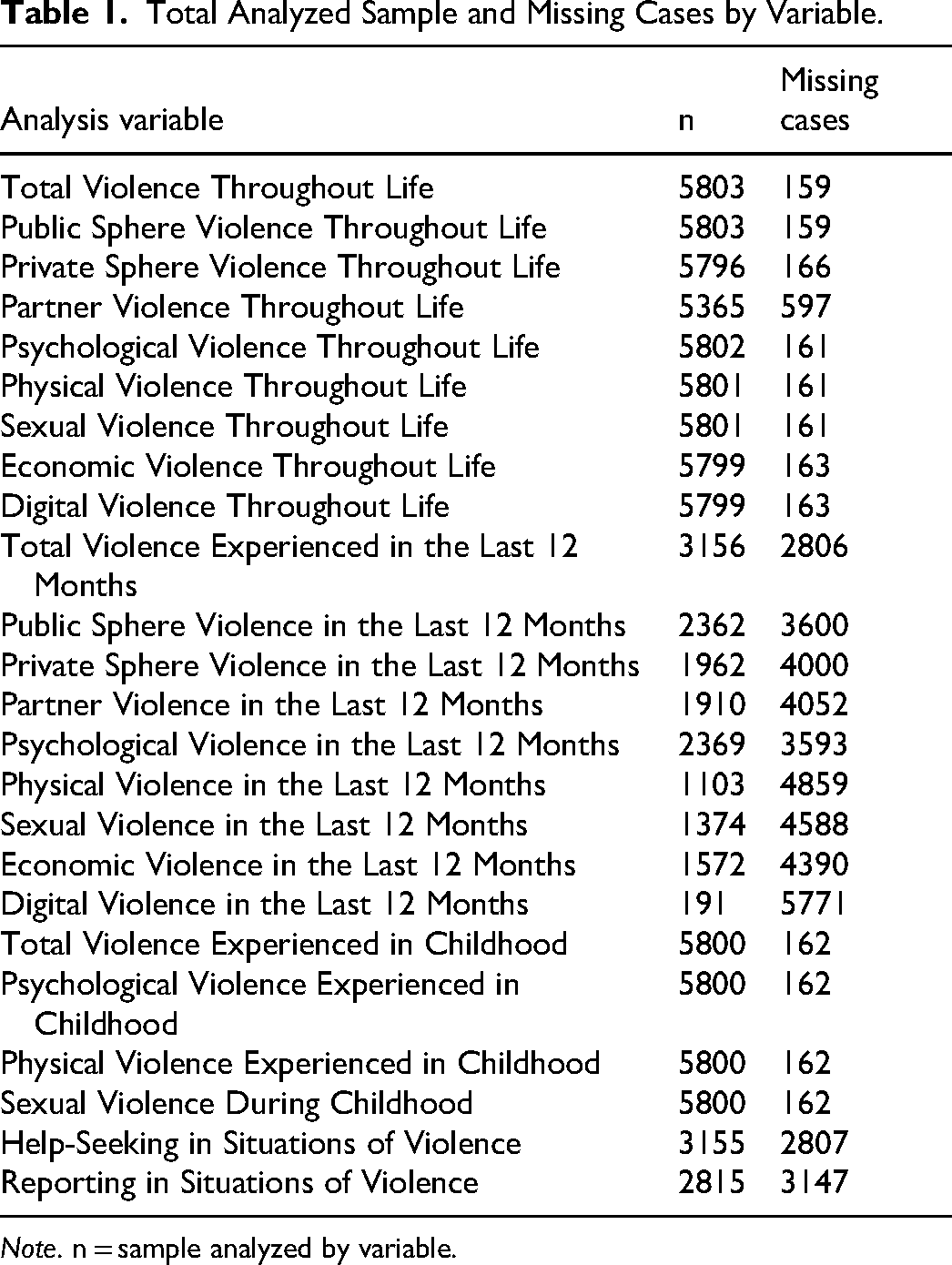
Note. n = sample analyzed by variable.
Data Collection Techniques
The questionnaire designed to gather information on violence experienced by women and girls in Honduras was adapted to reflect the country's context while ensuring international comparability. This instrument consisted of a series of closed and multiple-choice questions. Data was collected through verbal questionnaires administered in a door-to-door format to women aged 15 years or older, who provided self-reported information.
Variables
Disability Status
A binary variable (1 = yes, 0 = no) indicating whether women reported having any type of disability. The survey inquired about difficulties in the following areas: (1) mobility or walking, (2) using hands or arms, (3) requiring glasses, (4) hearing, even with the use of hearing aids, (5) speaking, (6) intellectual or mental impairments, (7) self-care, and (8) other disabilities.
Exposure to Violence
The survey assessed women's experiences as victims of violence, with each type coded categorically to indicate whether the respondent experienced it (1 = victim, 0 = not a victim). The survey covers victimization during childhood, within the past 12 months, and across their lifetime. Childhood victimization includes exposure to psychological childhood violence, physical childhood violence, sexual childhood violence, and total childhood violence. Types of childhood victimization were defined based on any self-reported experience of violence before the age of 15. Additionally, the survey captures women's experiences of various types of violence reported over two timeframes: within the past 12 months and throughout their lifetime. The categories measured include total violence, as well as public sphere violence, private sphere violence, partner violence, psychological violence, physical violence, sexual violence, economic/property violence, and digital violence. Total violence—measured both over the past 12 months and across the lifespan—was defined as the experience of any form of violence by women and was coded as a dichotomous variable, indicating whether or not the participant had experienced at least one type of violence.
Help-Seeking Behaviors
Women who sought help in response to situations of violence. Women were asked whether they had sought help in situations of violence occurring in various contexts, such as the workplace, educational settings, the community, or within intimate relationships. Any affirmative response was coded as 1; otherwise, it was coded as 0.
Reporting
Women who reported incidents of violence to an authority. Women were asked whether they had reported situations of violence occurring in various contexts, such as the workplace, educational settings, the community, or within intimate relationships. Any affirmative response was coded as 1; otherwise, it was coded as 0.
Data Analysis
A descriptive and comparative analysis was conducted. First, prevalences with their respective confidence intervals were calculated for the estimates of each group (with and without disabilities), which facilitated the calculation of odds ratios (OR) and their corresponding 95% confidence intervals (95% CI). Odds ratios provide information on the likelihood of an event occurring in one group compared to another (Kadane, 2022). The odds ratios allowed for the assessment of whether the magnitude of probability between disability status and experiences of different types of violence was significant; in this study, the association between disability status and the risk of experiencing violence was measured, where an OR greater than one indicated that women and girls aged 15 years and older with disabilities had a higher likelihood of having experienced violence. The chi-square test (χ²) was also utilized to determine whether the differences were statistically significant. All statistical analyses were tested using a significance p-value threshold of <0.05. The data were analyzed using Statistical Package for the Social Sciences (SPSS v.25) and OpenEpi (IBM, 2024; Sullivan et al., 2009).
Ethical Considerations
In the case of this study, which involved secondary analysis, ethical approval from a review board was not required. However, the primary protocol of the ENESVMN received the necessary ethical approvals, along with ethical considerations regarding the collection and storage of data. For the participation of adolescent girls aged 15 to 18 in the survey, informed consent was obtained from their parents or guardians, along with the assent of the adolescents themselves, in compliance with ethical research protocols concerning children and adolescents. More information on this matter can be found in the report provided by the National Institute of Statistics (INE, 2023).
Results
Childhood Violence Experienced
Women and girls with disabilities reported a higher prevalence of childhood violence compared to those without disabilities (without disabilities = 19.8% [n = 4673], with disabilities = 24.6% [n = 1127]), with this difference being statistically significant (OR = 1.249, p < 0.001). This suggests that women with disabilities are more likely to have experienced violence during childhood.
In terms of specific types of childhood violence, women with disabilities were more likely to have experienced psychological violence (OR = 1.163, p = 0.033) and physical violence (OR = 1.422, p < 0.001) compared to those without disabilities. Table 2 provides a detailed overview of the prevalences, probabilities, and significance levels related to childhood violence.
Prevalences and Odds for Women with and Without Disabilities of Violence Experienced During Childhood.
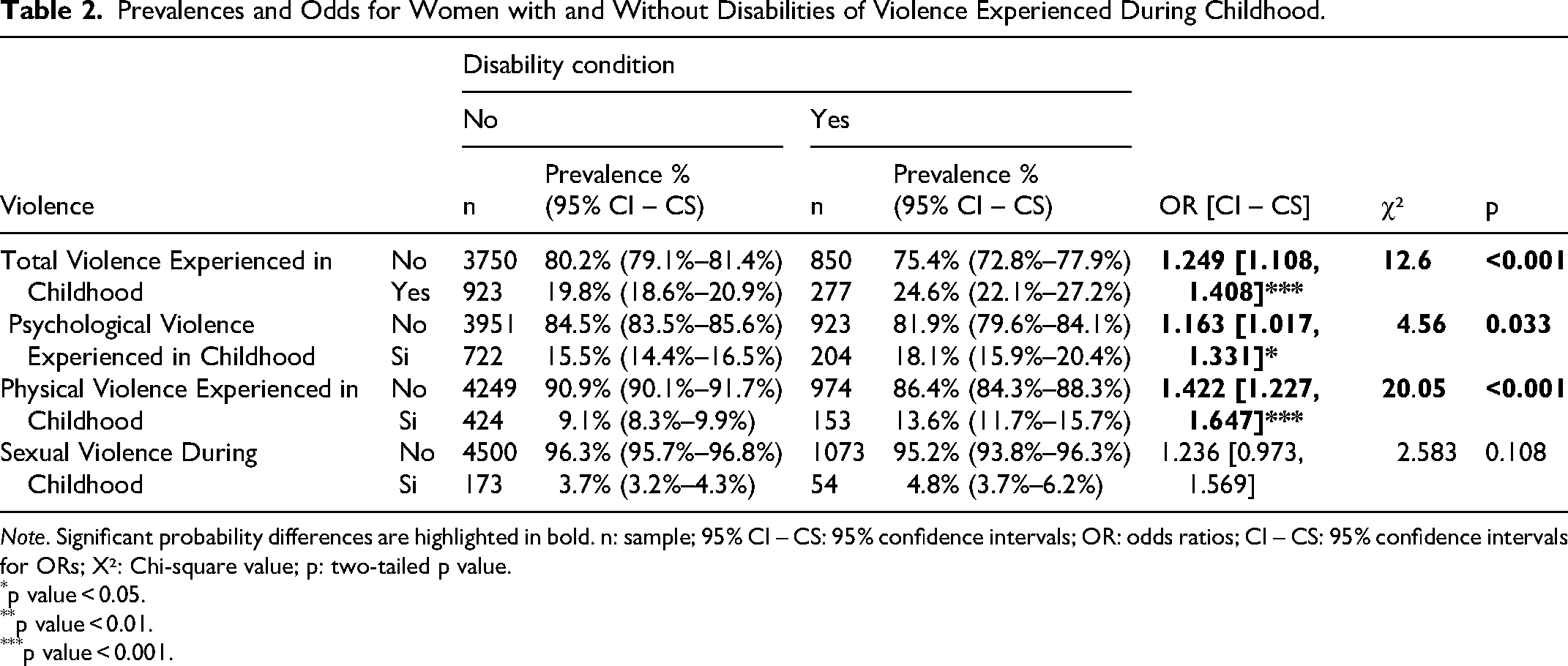
Note. Significant probability differences are highlighted in bold. n: sample; 95% CI – CS: 95% confidence intervals; OR: odds ratios; CI – CS: 95% confidence intervals for ORs; X²: Chi-square value; p: two-tailed p value.
p value < 0.05.
p value < 0.01.
p value < 0.001.
Violence in the Last 12 Months
In the past 12 months, women without disabilities reported a higher prevalence of violence compared to women with disabilities (without disabilities = 45.5% [n = 2513], with disabilities = 33.9% [n = 643]). This difference was statistically significant (OR = 0.677, p < 0.001). This indicates that women and girls aged 15 and older without disabilities are at a greater likelihood of experiencing violence during this period.
In terms of the context of violence, women with disabilities reported a lower prevalence of violence in the public sphere compared to those without disabilities. The public sphere refers to spaces outside the home where women participate, including workplaces, educational institutions, and community settings. Specifically, 34.1% of women without disabilities (n = 1910) reported experiencing violence in the public sphere, compared to 27.2% of women with disabilities (n = 452). This difference was statistically significant (OR = 0.766, p = 0.006). In the private sphere, which refers to the interior of a home, family environments, and cohabitation spaces with a partner, women with disabilities also reported a lower prevalence of violence than those without disabilities (without disabilities = 45.2% [n = 1516], with disabilities = 29.1% [n = 446]), with this difference being statistically significant (OR = 0.579, p < 0.001), indicating that women without disabilities have a significantly higher likelihood of experiencing violence in the private sphere.
Regarding specific types of violence, significant differences were found in partner violence (OR = 0.571, p < 0.001), psychological violence (OR = 0.594, p < 0.001), sexual violence (OR = 0.707, p = 0.005), and economic violence (OR = 0.680, p = 0.001). These differences indicate that women and girls without disabilities are at a considerably higher risk of experiencing these forms of violence in the past 12 months compared to women with disabilities. Table 3 provides detailed findings on violence in the last 12 months.
Prevalence and Odds ratios of Violence Against Women with and Without Disabilities in the Last 12 Months.
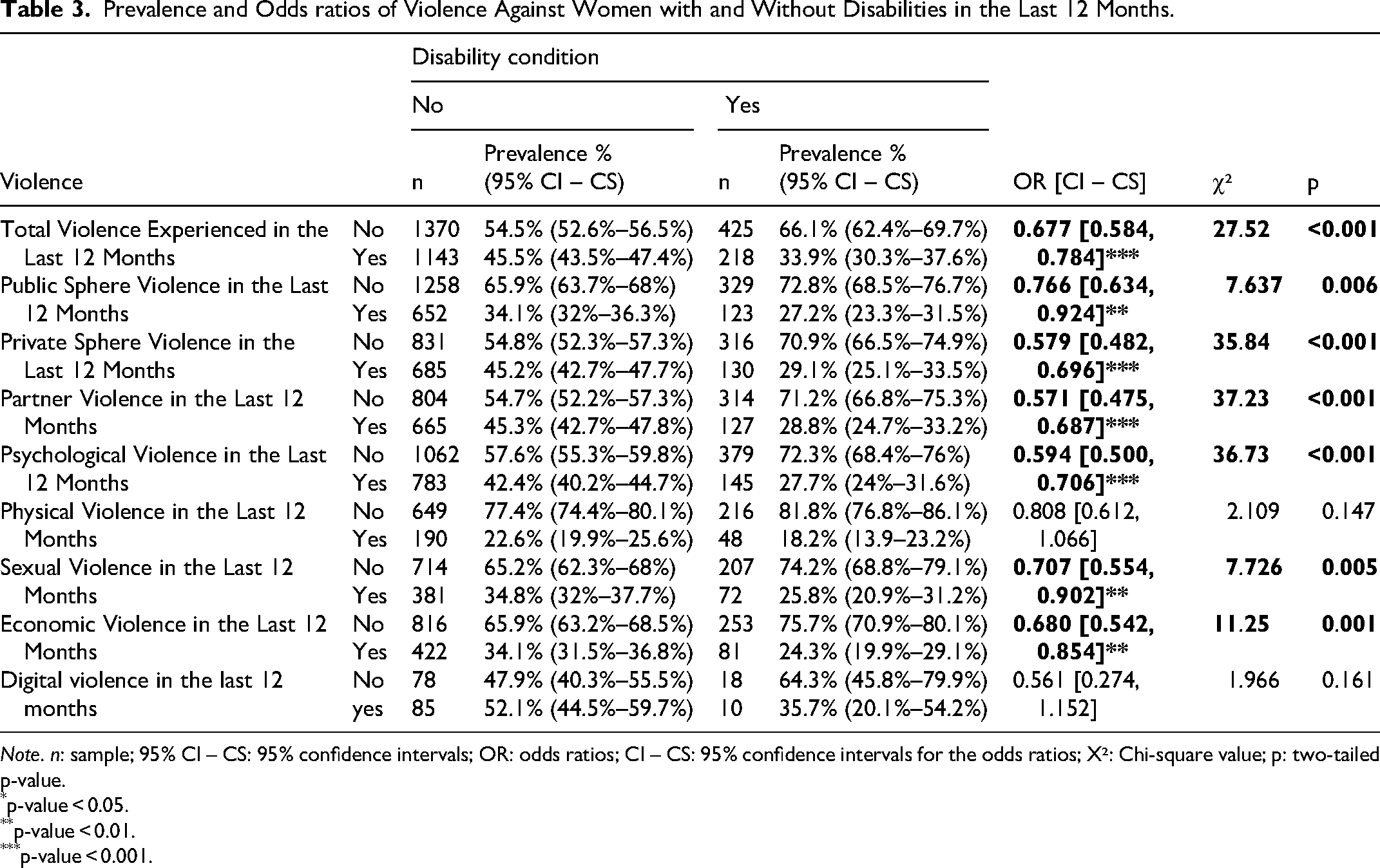
Note. n: sample; 95% CI – CS: 95% confidence intervals; OR: odds ratios; CI – CS: 95% confidence intervals for the odds ratios; X²: Chi-square value; p: two-tailed p-value.
p-value < 0.05.
p-value < 0.01.
p-value < 0.001.
Prevalence of Lifetime Violence
The analysis of the lifetime violence variable demonstrates that, in both groups of women and girls aged over fifteen, violence has been experienced by the majority, with a greater prevalence in the group with disabilities (without disabilities = 53.7% [n = 4676], with disabilities = 57.1% [n = 1127]). This difference is statistically significant (OR = 1.114, p = 0.049), indicating that women and girls aged 15 years and older with disabilities have a higher probability of experiencing violence throughout their lives.
In terms of the contexts in which violence occurs, 32.5% (n = 4671) of women and girls over the age of 15 without disabilities reported experiencing violence in the private sphere, compared to 39.6% (n = 1125) of those with disabilities. This difference is statistically significant (OR = 1.284, p < 0.001), indicating that women and girls with disabilities are at a higher risk of experiencing violence in the private sphere.
The findings reveal significant differences in the lifetime experiences of violence between women with and without disabilities. Women with disabilities reported higher rates across all types of violence: 40.4% had experienced violence from a current or former partner, compared to 34.4% of women without disabilities (OR = 1.225, p < 0.001). Psychological violence affected 46.5% of women with disabilities, versus 39.5% of those without (OR = 1.259, p < 0.001). Physical violence was reported by 23.4% of women with disabilities, compared to 18% of those without (OR = 1.303, p < 0.001). Economic violence was experienced by 29.6% of women with disabilities, compared to 26.5% of women without (OR = 1.133, p = 0.037). Overall, these differences highlight a significantly higher risk of lifetime violence for women with disabilities (see Table 4).
Prevalence and Odds ratios of Violence Against Women with and Without Disabilities Over Lifetime Violence.
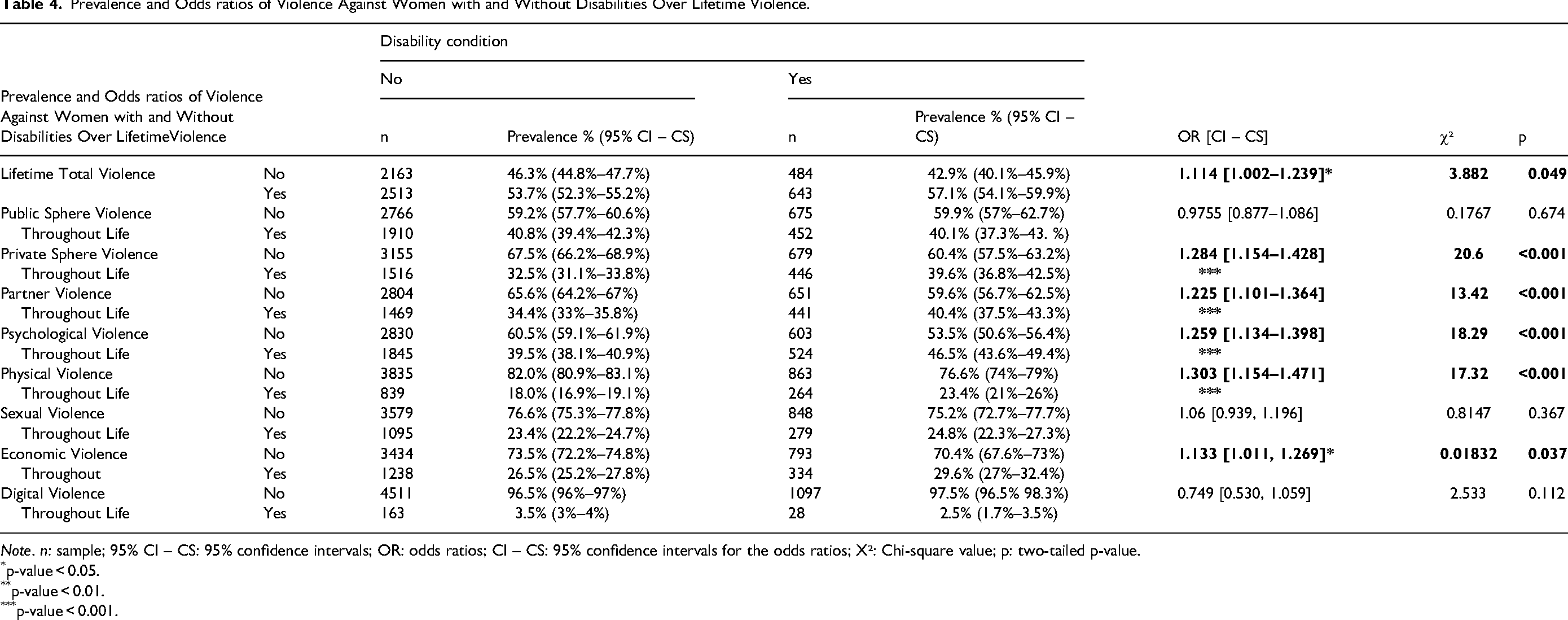
Note. n: sample; 95% CI – CS: 95% confidence intervals; OR: odds ratios; CI – CS: 95% confidence intervals for the odds ratios; X²: Chi-square value; p: two-tailed p-value.
p-value < 0.05.
p-value < 0.01.
p-value < 0.001.
Help-Seeking Behaviors and Reporting Incidents of Violence
Regarding help-seeking, women with disabilities report a higher prevalence compared to women without disabilities (without disabilities = 11.1% [n = 2512], with disabilities = 14.3% [n = 643]), with this difference being statistically significant (OR = 1.249, p = 0.032), indicating that women with disabilities have a greater likelihood of seeking help in situations of violence.
On the other hand, women with disabilities also have a higher prevalence of reporting incidents of violence compared to women without disabilities (without disabilities = 3.8% [n = 2288], with disabilities = 4.7% [n = 527]); however, this difference is not statistically significant (OR = 1.202, p = 0.383). Table 5 provides a detailed overview of the prevalences, probabilities, and significance levels related to help-seeking and reporting in violent situations.
Prevalences and Odds ratios for Women with and Without Disabilities who Sought Help and Reported an Experience of Violence.
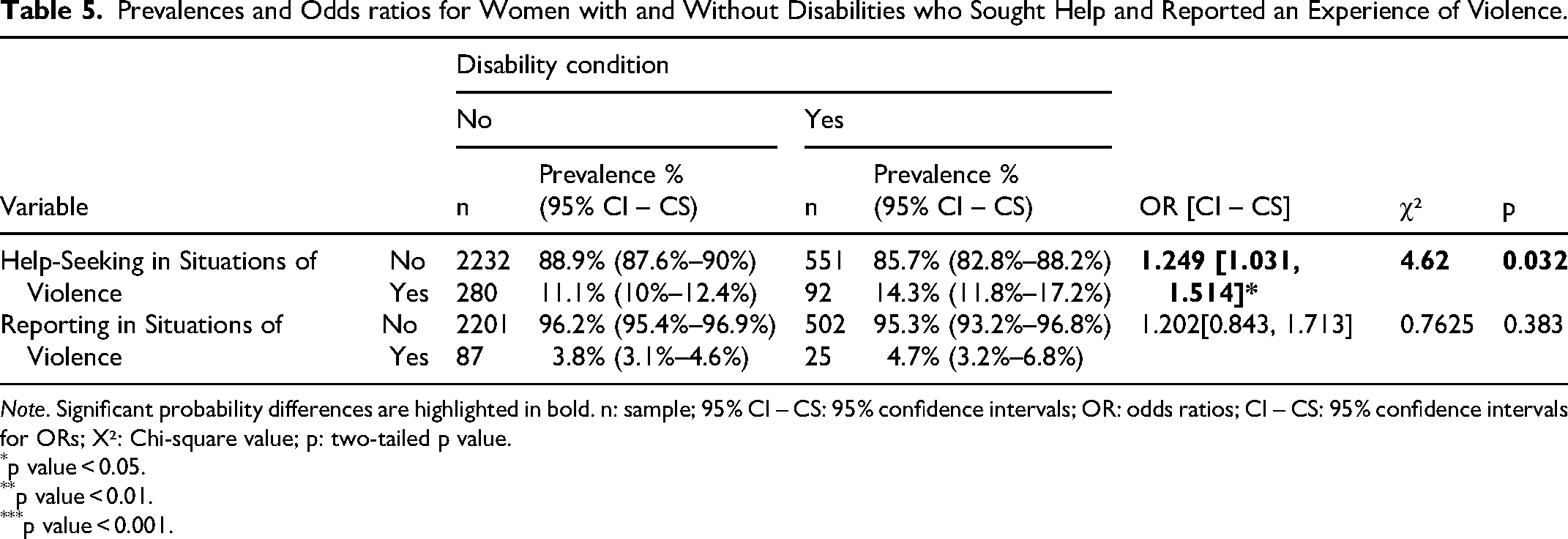
Note. Significant probability differences are highlighted in bold. n: sample; 95% CI – CS: 95% confidence intervals; OR: odds ratios; CI – CS: 95% confidence intervals for ORs; X²: Chi-square value; p: two-tailed p value.
p value < 0.05.
p value < 0.01.
p value < 0.001.
Discussion
This study compared the prevalences of different forms of violence during childhood, in the past 12 months, and experienced over a lifetime, as well as the likelihood of seeking help and reporting incidents of violence among women and girls aged 15 years and older in Honduras, comparing those with disabilities to those without. The findings indicate that women and girls aged 15 years and older with disabilities exhibit a higher prevalence and probability of experiencing violence during childhood and throughout their lives. In contrast, women and girls aged 15 years and older without any form of disability tend to report a higher prevalence and risk of experiencing violence in the past 12 months. Additionally, women and girls aged 15 years and older with disabilities show higher probabilities of seeking help in situations of violence.
This study indicated that in Honduras, women with disabilities are more likely to experience violence during childhood. Disabled women are more prone to exposure to physical and psychological violence during their early years. Physical violence often begins in childhood, perpetrated by family members (Shah et al., 2016). The psychological violence experienced in childhood by disabled women manifests through bullying, social exclusion, and violent language, leading to emotional stress and long-term psychological effects (King & Chittleborough, 2022). As for the types of violence experienced by women with disabilities in the last 12 months, lower prevalences are observed across all types of violence compared to those without disabilities.
On the other hand, women with disabilities are more vulnerable to experiencing violence throughout their lives. Within the framework of intersectionality, being a woman and having a disability imposes unique challenges and forms of domination that create complexities for individuals who are victims of oppression and violence (Haider, 2019). Women with disabilities not only face barriers to inclusion, autonomy, social visibility, and the fulfillment of their rights, but they are also more exposed than the general population to experiencing violence due to their profiles (Gutiérrez et al., 2024).
Women with disabilities are more likely to suffer violence in the private sphere due to factors such as physical dependence and social isolation resulting from discrimination, which leads to abusive power dynamics. Structural limitations and barriers expose women with disabilities to violence in private settings perpetrated by their partners, family members, and primary caregivers, further intensified by their reliance on others for support and assistance (Anyango et al., 2023; Chirwa et al., 2020).
This study found that the prevalence of intimate partner violence over a lifetime is higher for women with disabilities in all cases. Structural barriers and limited access to protective services exacerbate their risk of prolonged exposure to abuse. Feelings of being “broken” reflect internalized oppression stemming from systemic marginalization (Zamora Arenas et al., 2023). Perpetrators actively exploit these vulnerabilities, reinforcing cycles of control and revictimization in the relationship. Similarly, psychological violence is disproportionately prevalent among disabled women, a disparity rooted in cultural norms that devalue their autonomy and normalize emotional abuse (Fithri & Ulfah, 2022; Goulden et al., 2023). Physical violence perpetrated against disabled women is more frequent and probable, aligning with findings from other studies (Muster, 2021). In relation to economic violence, women with disabilities more frequently experience subordination of their resources. Perpetrators seek to control their partner's financial resources and exert power over them, impeding their autonomy and creating situations of dependence and vulnerability (Zamora Arenas et al., 2023). These findings reveal how intersecting systems of gender-based discrimination contribute to environments where perpetrators operate with impunity and survivors face layered and persistent barriers to safety.
Within the framework of this study, it was found that disabled women are more likely to seek help in situations of violence, indicating that women with disabilities have a stable support network from which to request assistance. Seeking help depends on multiple factors, such as fear of revictimization and limited knowledge of available support resources (González-Alonso et al., 2023). However, women with disabilities demonstrate a trait of resilience that empowers them to seek help (Aguillard et al., 2022).
Future research should further explore the underlying factors contributing to the heightened vulnerability of women with disabilities to violence, mainly focusing on the intersectionality of disability with other socio-demographic variables such as age, socioeconomic status, and geographic location. Longitudinal studies could provide deeper insights into the long-term effects of violence on women with disabilities and how these experiences influence their mental health, well-being, and access to support services. Additionally, future studies should expand their scope to incorporate qualitative methodologies, focusing on the help-seeking processes and systemic barriers faced by women with disabilities who are survivors of violence. By centering their lived experiences, such studies can holistically elucidate the structural, cultural, and institutional obstacles these women identify as most salient. This approach is critical for designing targeted, intersectional interventions that address their unique needs and dismantle systemic inequities.
Future studies should also explore the role of social stigma and cultural attitudes toward disability in shaping the experiences of violence among this group, as well as the impact of disability-specific services in addressing these issues. Also, research on how violence and disability intersect within the public and private spheres would provide additional insight into survivor experiences, particularly in understanding violence within the home compared to public forms of violence such as ableism, discrimination, and accessibility barriers.
The limitations of this study include the lack of complex survey design variables for making population inferences; the use of secondary data, which limited the ability to control for the variable of interest; for the most part, the different indicators of violence had a large amount of missing data; and the absence of a breakdown by type of disability. Finally, since the survey was administered door-to-door, participants may have faced limitations in being fully open and honest in their responses, as they were likely in the presence of a caregiver, family member, support network, or even a potential abuser.
Conclusion
Honduran women and girls aged 15 years and older with disabilities are vulnerable to experiencing violence, beginning in childhood and persisting throughout their lives. Disability increases the risk of violence, particularly in private spaces, where power dynamics and dependency are established, normalizing violence as a form of care. This study underscores the importance of resilience in breaking the cycle of violence, highlighting that women with disabilities are more likely to seek help. This emphasizes the necessity of creating safe and supportive environments that foster interventions and educate society to reduce the stigma that contributes to vulnerability to violence.
Footnotes

Ethical Approval and Informed Consent Statements
In the case of this study, which involved secondary analysis, ethical approval from a review board was not required. More information on this matter can be found in the report provided by the National Institute of Statistics (INE, 2023).
Funding
The authors received no financial support for the research, authorship, and/or publication of this article.
Declaration of Conflicting Interests
The authors declared no potential conflicts of interest with respect to the research, authorship, and/or publication of this article.