




Abstract
Latinx youth face increased risk for behavioral health concerns and experience obstacles accessing behavioral health services yet remain underrepresented in behavioral health research. Since the COVID-19 pandemic, there has been a shift toward virtual research methods, but little is known about how virtual methods may affect research participation among Latinx youth and families. This study explored the facilitators and barriers to virtual research participation among Latinx families living in low-socioeconomic status (SES) contexts. Seven parents and six adolescents participated in qualitative interviews. The interviews were analyzed to identify codes, categories, and broader themes. Findings identified several facilitators to virtual research participation, including having a clear virtual protocol, using video to simulate in-person interactions, and participants’ perceptions of virtual research as safe and convenient. Barriers to virtual participation included limited technology literacy and access, online safety concerns, and technical difficulties. To promote virtual research engagement for Latinx families living in low-SES contexts, researchers should ensure accessibility and security of virtual platforms, emphasize online safety procedures, and attend to participants’ access and preferences when developing virtual protocols. Future studies should assess the effectiveness of implementing specific strategies to enhance Latinx participation in virtual behavioral health research.
Introduction
The COVID-19 pandemic prompted unprecedented disruptions across various aspects of behavioral health, including research methods and clinical practices. With social distancing guidelines in place to mitigate the spread of the virus, face-to-face research became increasingly challenging to conduct safely, and many behavioral health researchers shifted to virtual research methods (Lourenco & Tasimi, 2020). The transition to virtual research has become part of a broader trend toward adopting more flexible, accessible, and cost-effective research approaches that has continued beyond the immediate need to reduce in-person contact during the pandemic (Steinhilber et al., 2023). Although there are many benefits to virtual research, including flexible scheduling, minimized travel expenses, and improved access to interprofessional collaboration (Howlett, 2022; Keen et al., 2022), there are also challenges for researchers and participants, such as learning to navigate new platforms and potential ethical dilemmas (Newman et al., 2021; Silva et al., 2021). While virtual approaches may enhance research participation for some families (Kannan et al., 2019), families from marginalized or low-socioeconomic status (low-SES) backgrounds may encounter additional barriers (Jang et al., 2018). For low-SES Latinx 1 families, virtual modalities may enhance the accessibility of research (Iglesias et al., 2022; Rodriquez & Pérez-Stable, 2017), but barriers may remain, such as virtual research materials that are not suitable for participants with lower levels of literacy (Rodriquez & Pérez-Stable, 2017).
Latinx youth are at increased risk for behavioral health problems such as mood disorders (Merikangas et al., 2010) and suicidality (Kann et al., 2014) compared to their non-Latinx peers. Additionally, Latinx individuals from low-SES and Spanish-speaking backgrounds may face unique challenges in accessing services (Lopez et al., 2008). As the largest ethnic minority group in the United States (U.S. Census Bureau, 2023), it is crucial to conduct behavioral health research with Latinx youth. Unfortunately, challenges in engaging Latinx families have resulted in their underrepresentation in research (George et al., 2014). This underrepresentation may be due to numerous barriers to study participation affecting low-SES, minoritized populations, including time constraints, language differences, distrust, fear of deportation, and limited knowledge of research opportunities (Ceballos et al., 2014; George et al., 2014; Haack et al., 2014). However, when researchers use culturally responsive engagement strategies, Latinx individuals are just as willing to participate in research as White individuals (Wallington et al., 2012; Wendler et al., 2006). Virtual research modalities offer an opportunity to address some of the barriers Latinx families may face in research participation and support their engagement in research.
To date, the literature on youth engagement in research has concentrated on parents/caregivers rather than youth or families as a whole (Robinson et al., 2016). However, involving youths’ perspectives on research participation is essential, as youth can contribute to decision-making and family dynamics that may impact participation (Caldwell et al., 2003; Shilling & Young, 2009). Further, in Latinx families the cultural value of familismo (dedication, commitment, and loyalty to family) may shape the decision-making process and the role that youth play in families’ research engagement. For these reasons, both youth and caregivers’ experiences should be included to more fully understand the factors that influence Latinx families’ research participation.
This study aimed to examine the facilitators, barriers, and perceptions of Latinx families regarding virtual research participation using in-depth qualitative interviews with parents and children. We report findings along with recommendations for how to incorporate facilitators and address barriers to engage Latinx families in virtual research.
Methods
Participants
Participants included in this study were six adolescents and seven parents (see Table 1) who participated in qualitative interviews about virtual research participation. Participants were recruited from a larger pool of families (n = 129) who participated in a three-wave longitudinal study focusing on bilingual language development and mental health in low-SES Latinx youth. The original study's eligibility criteria were: (1) the child was 10 to 15 years old and their parent was ≥18 years old at the start of the study; (2) the child was proficient in both English and Spanish; and (3) the child identified as Latinx/Hispanic. Only one parent and one child from each family were allowed to participate. Due to these criteria, our sample represents a specific subset of Latinx youth who were bilingual and may have been higher in biculturalism, Latinx ethnic identity, and Latinx cultural values compared to non-bilingual or English-dominant Latinx youth.
Participant Demographic Characteristics.
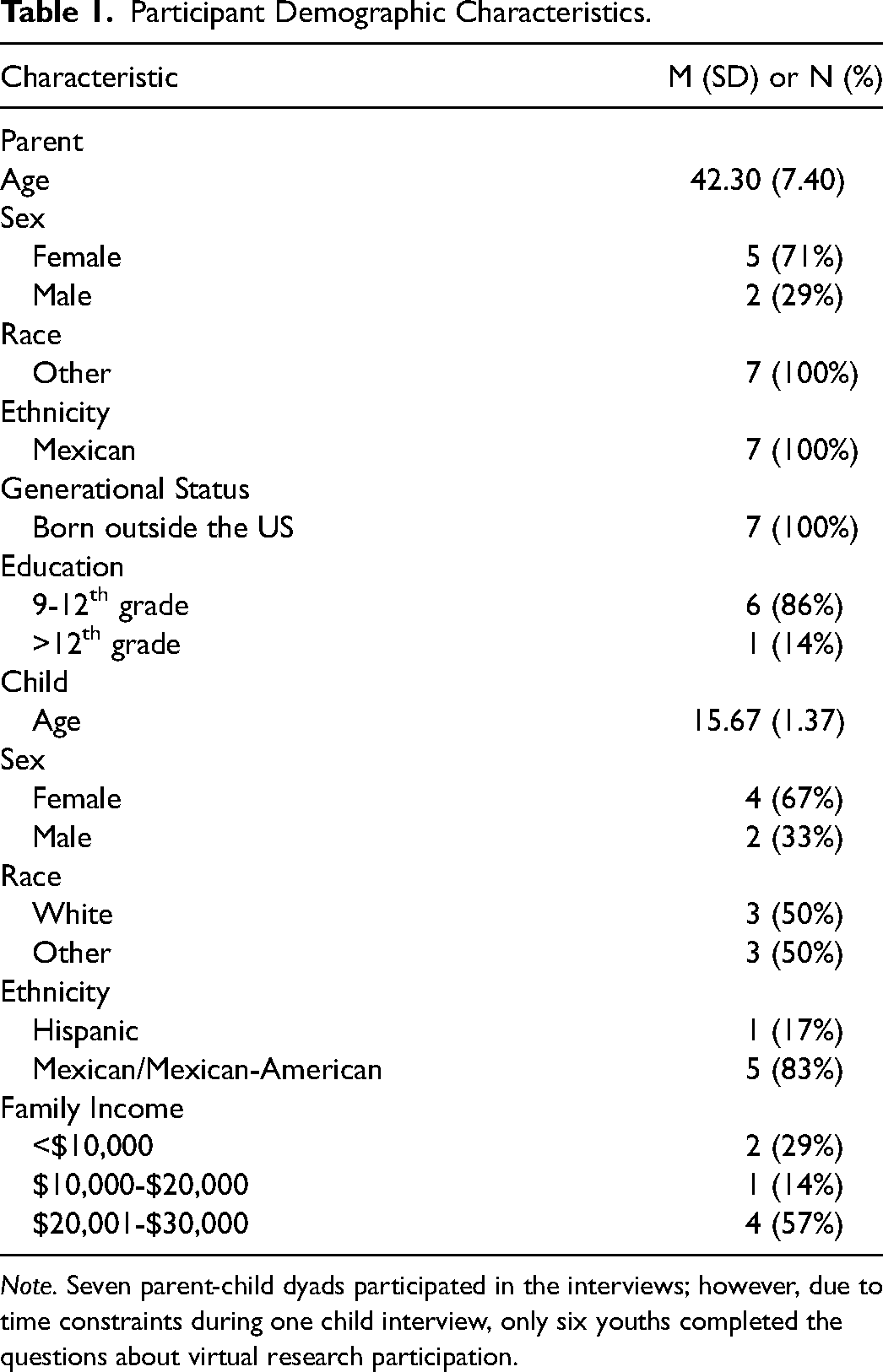
Note. Seven parent-child dyads participated in the interviews; however, due to time constraints during one child interview, only six youths completed the questions about virtual research participation.
Procedure
The longitudinal study recruited families from local charter schools in and around Austin, Texas with a high percentage of low-SES Latinx students (see Ocegueda et al., 2024 for information on the school characteristics and recruitment approach), as well as community events and local hubs (e.g., food trucks). From this pool of 129 families, we identified twelve families to invite for participation in qualitative interviews about barriers to research participation. Using consecutive sampling, we selected twelve families who provided detailed feedback on the longitudinal study's satisfaction survey or in conversation with research assistants. When identifying these 12 families we attended to other characteristics (i.e., father-child dyads and those who missed time points or endorsed items related to suicidality in the longitudinal study) in an attempt to include a diverse representation of experiences; however, these characteristics were not specific criteria for inclusion. Of the twelve families invited, all completed interviews. Of those twelve families, seven families (7 parents and 6 youth) 2 were asked supplemental questions related to participation in virtual research and are included in the current analysis (see Figure 1 for a depiction of the recruitment approach and source of the sample). The supplemental questions were added to the interview guide mid-way through the study because the COVID-19 pandemic started and many research studies shifted to virtual modalities, which inspired our team to learn more about virtual research engagement for Latinx families.
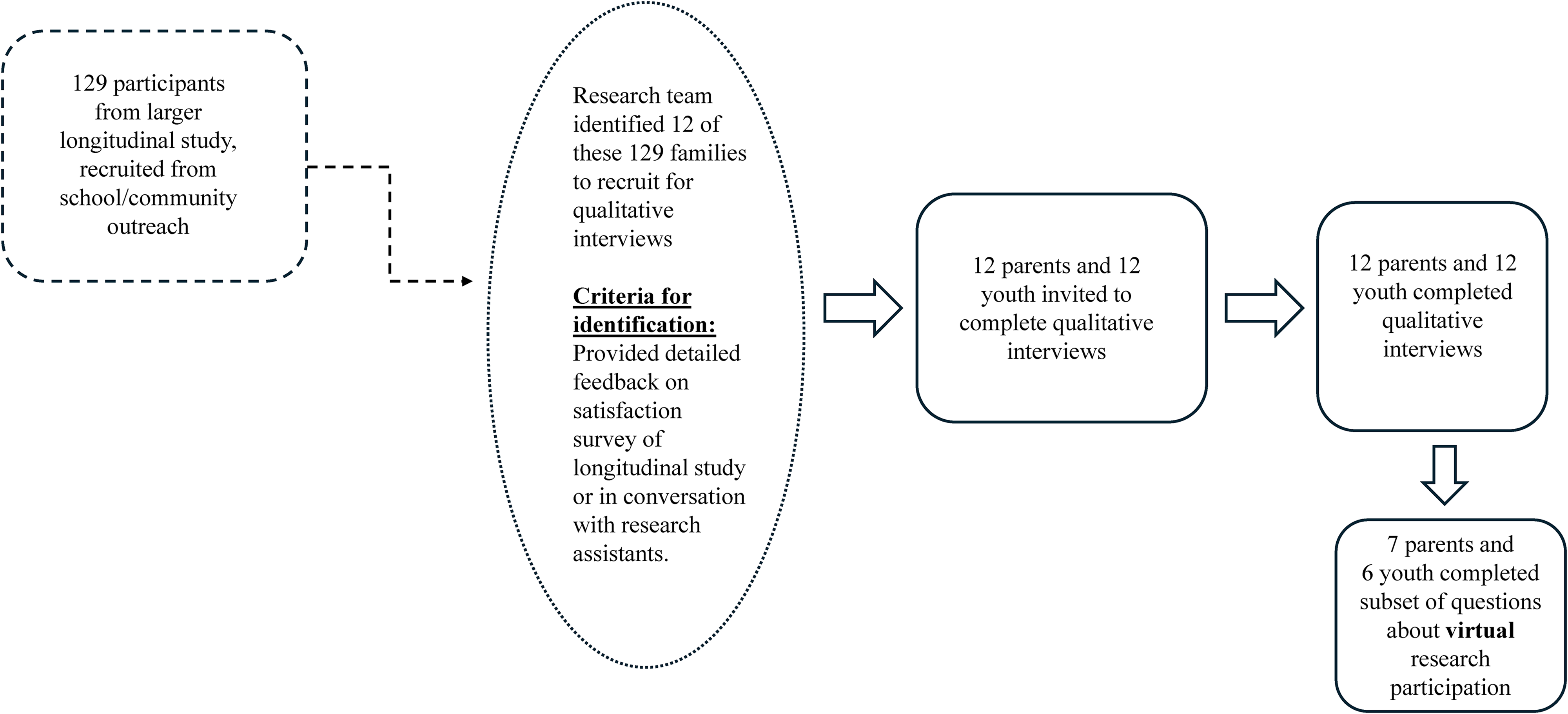
Recruitment approach and source of the sample.
After obtaining written consent from parent and child via DocuSign, research assistants conducted interviews in English or Spanish, depending on individual participant preference. Research assistants were doctoral or masters students in a school psychology graduate program. They participated in an interactive training session on conducting qualitative research with the principal investigator, and received ongoing training and feedback from the principal investigator in weekly meetings throughout the duration of the project.
We used a semi-structured interview guide with open-ended questions (see supplemental file for interview questions). Two research assistants interviewed each participant (one leading the interview, one primarily note-taking), with parent and child interviews being conducted separately. The interviews were conducted via secure phone or video call and were audio or video recorded. On average, parent interviews lasted approximately 1 h, while child interviews lasted 45 min. All participants received a $20 e-gift card for their participation. We reached 95% saturation after completing the interviews with five dyads (five youth and five parents), meaning that interview data from the sixth and seventh dyad did not contribute more than 5% new information in the development of codes (Guest et al., 2020). The study was approved by the authors’ University Institutional Review Board.
Data Analysis
We analyzed interview data using a general inductive approach. Interview responses were coded without using pre-existing codes to fit the data (Thomas, 2006). The same research assistants who conducted interviews transcribed interview recordings verbatim and used Microsoft Excel to segment and label the interview text with codes. To ensure inter-coder agreement, each research assistant independently coded interviews. Then, we performed inter-coder agreement checks as a team until reaching consensus on categories, codes, and subcodes (Brown et al., 2002; Morrow, 2005; Rolfe, 2006). We used a coding matrix to compare themes across interviews, in which each code was assigned a column, and interview responses were listed in the corresponding rows. The research team examined and related themes within each participant before comparing themes across participants to explore the impact of internal and external factors on the participants’ perspectives.
Results
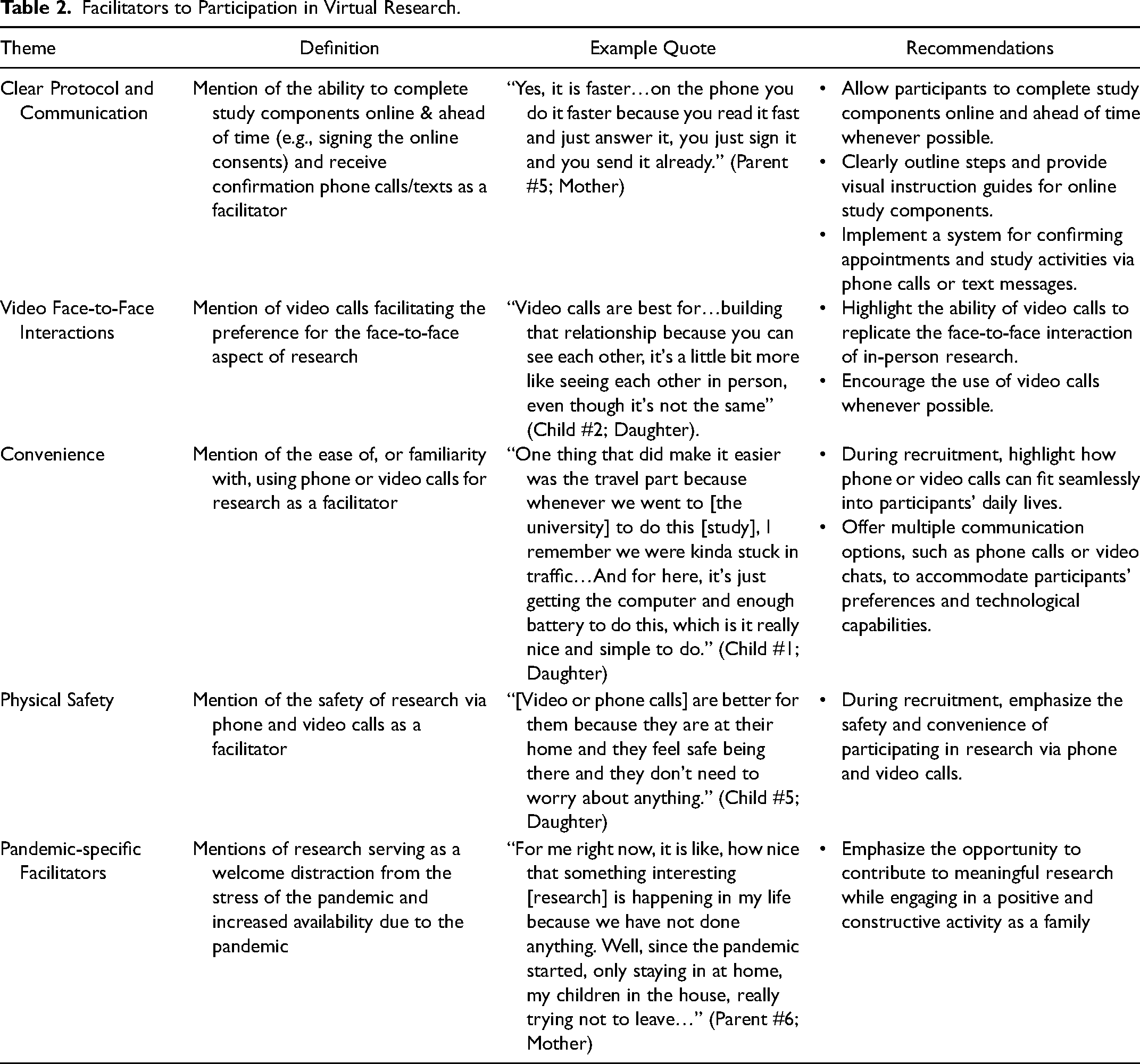
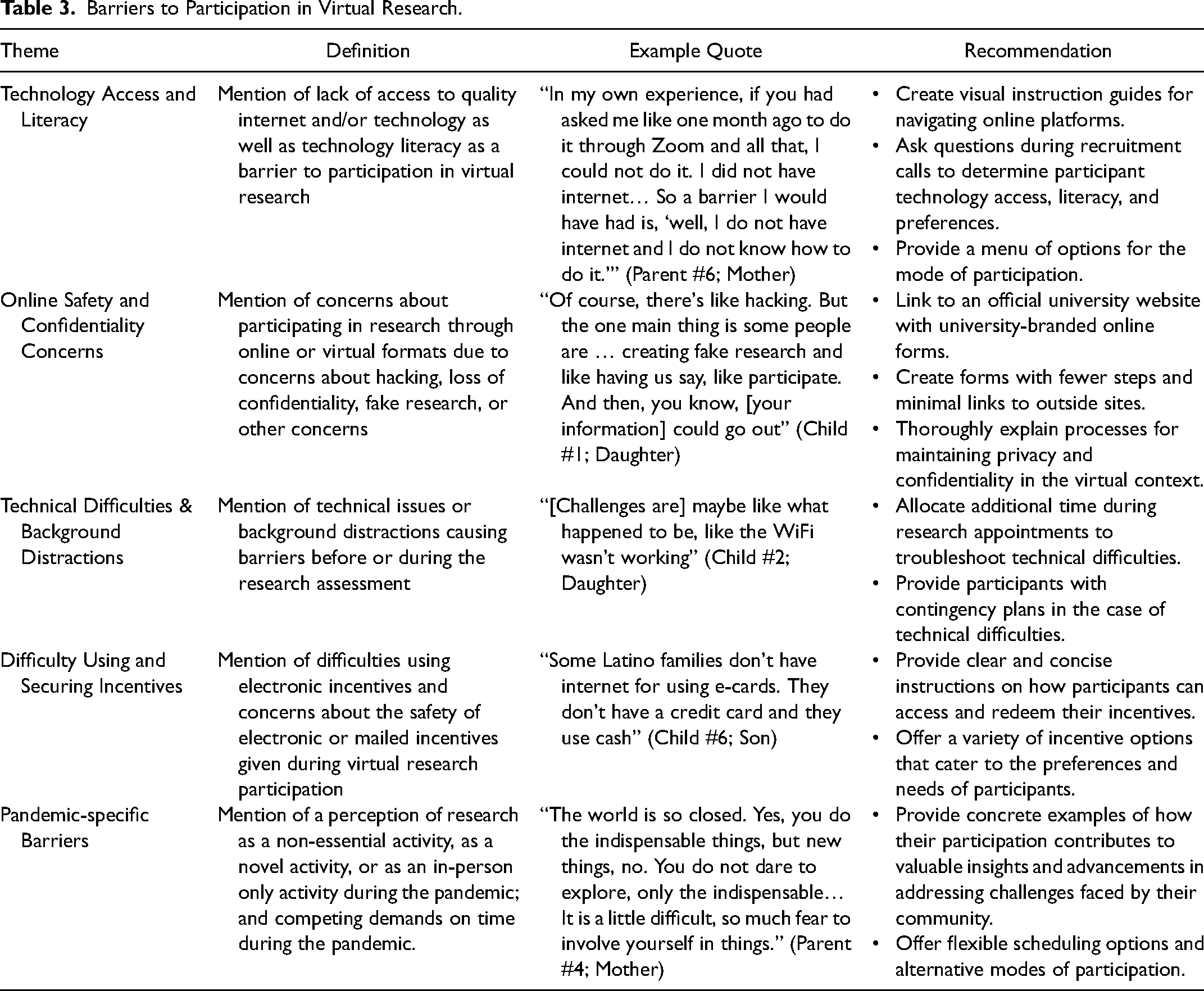
Two major categories emerged from the interviews related to Latinx families’ virtual research participation: (1) facilitators to participation, and (2) barriers to participation. Within each category, several themes were identified. These themes and related quotes are described below. Definitions and selected quotes, as well as recommendations for researchers related to each theme, can be found in Tables 2 and 3.
Facilitators to Participation in Virtual Research.
Barriers to Participation in Virtual Research.
Facilitators to Participation
Clear protocol and communication
Our virtual research protocol utilized an online consent form on DocuSign, and we provided instructions with visual aids for using DocuSign and Zoom video conferencing software. Parents appreciated the ease and clarity of the virtual consent process and the opportunity to review materials in advance. Parents also expressed gratitude for the opportunity to communicate with the research team via phone or text before participating in the study.
Video face-to-face interactions
Many families preferred the face-to-face interactions involved with in-person research. Thus, video calls facilitated participation by incorporating face-to-face communication. Additionally, one parent with hearing difficulties mentioned that she wished she had a working camera to do a video call because it would have improved her understanding, suggesting that video technology may also facilitate participation for individuals with disabilities.
Convenience
Families appreciated the convenience of participating in research virtually. One child mentioned that virtual research increases one's availability to participate because “video call or call… can be at any time, you can just find a time to sit down” (Child #4; Son). However, participants also noted the distinction between convenience and preference; although virtual participation was easier, in-person research was preferred by most. One mother expressed that participating over the phone was more accessible but also stated, “Well, it's always better to see the person… Doing everything online I can’t greet, get close to a person. Doing like Facetime…what's the fun in that?” (Parent #3; Mother). Similarly, her child expressed, “It's a bit easier [over the phone], but probably much better in person” (Child #3; Daughter).
Physical safety
Participants mentioned that virtual research participation was safer. One mother said, “I do not have any fear because I know that you, for one's safety, are doing [research] virtually or by phone” (Parent #5; Mother). Additionally, an adolescent mentioned feeling “a little bit off” about participating in research until he found out it was through video call. Although safety was referenced primarily about COVID-19, it is also relevant beyond the pandemic. Virtual research participation can offer protection against various hazards, such as avoiding the need to travel through unsafe neighborhoods or bad weather conditions and minimizing the likelihood of transportation accidents.
Pandemic-specific facilitators
Families noted that study participation offered a distraction from the stress or boredom caused by the pandemic. One mother said participating in research during the pandemic makes “one feel good because [it] is like ‘oh, how nice to do something different than to be thinking about COVID” (Parent #6; Mother). Similarly, an adolescent talked about research as an activity to help with boredom, saying, “Because I was bored, I would have something to do just because I’m not a homebody” (Child #4; Son). Some families also experienced increased availability due to the pandemic. One mother said that she “would not have any obstacle [to research participation] because right now, more than anything, one has time because there is not much [to do]” (Parent #4; Mother).
Barriers to Participation
Technology access and literacy
Most participants discussed barriers to accessing the internet and technology and low technology literacy. One father laughed, saying, “The first thing is how to learn to turn on the computer” (Parent #1; Father). A child stated, “Some families may not afford Wi-Fi or sometimes can barely afford a phone, and some families barely have nothing. They barely have stuff, and they got [it] for free through COVID” (Child #6; Son). Notably, some families only had temporary internet access due to subsidized resources provided during the pandemic. Some participants also mentioned that even with access to the internet, slow Wi-Fi and older devices limited their access. Additionally, many parents lacked personal emails, which limited their access to the DocuSign consent forms.
Online safety and confidentiality concerns
Three participants’ biggest concerns about virtual research were hacking, loss of confidentiality, and “fake research.” See Table 2 for an example from a child participant who articulated specific worries regarding online safety. In the context of these concerns, participants indicated that forms with fewer steps and minimal links to outside sites appeared more safe and credible.
Technical difficulties & background distractions
Participants mentioned technical difficulties and background distractions as barriers. One son said it was difficult to participate in virtual research because “sometimes the house isn’t silent because everyone is home” (Child #4; Son). Indeed, in multiple interviews, the researchers and participants had difficulties hearing each other due to background distractions, such as conversations between family members. Additionally, three families had trouble connecting to their video call and needed to switch to a phone call to complete the interview.
Difficulty using and securing incentives
Families shared concerns that mailed incentives would be stolen or sent to the wrong person. One daughter said mailing gift cards “is probably not the best idea… because what if you accidentally don’t send it to the right person or someone opens the wrong mailbox and takes it” (Child #3; Daughter). Additionally, some parents mentioned not having the technology to use e-gift cards and being unable to use gift cards within a cash economy, which is common for Latinx families. When asked about e-gift cards, a mother responded, “I do not know the use of gift cards… To be honest, I have not been accustomed to using much technology at all. It's all been cash” (Parent #4; Mother).
Pandemic-Specific barriers
Competing demands on time were reported as a barrier to research participation in general. COVID-related challenges increased competing demands for some families (e.g., pandemic-related uncertainty in school and work schedules). Additionally, some parents mentioned they only wanted to do essential activities and did not see participating in research as essential.
Discussion
Our results suggest the need to provide technological assistance to engage low-SES Latinx families in virtual research. Many participants indicated that a lack of internet access and difficulty using technology were barriers to accessing virtual research. However, using virtual research methods appears to be a facilitator for other families due to convenience and safety. Our findings are hypothesis-generating in relation to the role of cultural values in Latinx families’ research engagement, which is an important area for future exploration. The findings suggest that flexibility and accommodations in response to technological barriers may increase the participation Latinx families from low-SES backgrounds and be congruent with the Latinx cultural value of personalismo (valuing warm interpersonal relationships) by adapting to each family's needs (Kelley et al., 2020). Additionally, some participants expressed that engaging in the study virtually made scheduling easier and allowed them to participate from any location, effectively addressing competing work demands which were identified as a barrier to participation in previous literature (Calderón et al., 2006; Sheridan et al., 2020). Thus, virtual approaches to research may help Latinx families feel safe and comfortable with the research process, which may be consistent with families’ values of confianza (Añez et al., 2008).
Recommendations for Engaging Latinx Families in Virtual Research
Identify and reduce the impact of potential barriers to participation
Researchers should identify barriers through discussion with families or preliminary data analyses from existing participants. For example, our study identified barriers, including technical issues, concerns about online security, and competing demands. By identifying these barriers, our research team could create visual instruction guides (e.g., using Zoom and DocuSign, creating an email address) or request remote access to participants’ computers to troubleshoot technical issues. An example of a visual guide for using Zoom is located here: https://drive.google.com/file/d/1DKwHSF1MmRIoszqhtnrIbmuu4XDB19lQ/view?usp = sharing. The Barriers to Treatment Participation Scale (Kazdin et al., 1997) and the Protocol for Responding to and Assessing Patients’ Assets, Risks, and Experiences (PRAPARE; National Association of Community Health Centers, 2016) are examples of tools that can be used to help identify barriers to participation.
Consider both access and preference
Having a menu of options for the mode of participation can ensure families can participate comfortably. Our research team asked families questions during recruitment calls to determine their technology access, literacy, and preferences. Although some participants met the requirements to conduct a video interview, they chose to participate over the phone due to personal preference for ease of use. Others were interviewed on the phone due to technological difficulties but would have preferred a video call or face-to-face contact. Therefore, researchers should consider both technological capabilities and personal preferences when determining the mode of participation. Additionally, many families had a preferred method of contact (e.g., text versus phone call), which facilitated communication with our research team. We found that being flexible and open to multiple contact modalities helped to contact participants effectively. Therefore, we recommend assessing technology access, literacy, and preferences in advance and allowing additional time during research appointments to troubleshoot technological difficulties.
Refine recruitment and scheduling strategies
In our study, families were less likely to cancel their appointments when the parent and child both participated in the recruitment call. The presence of both parent and child facilitated scheduling a mutually convenient time and obtaining their email addresses for DocuSign consent and assent forms more efficiently. To ensure both parent and child participation, researchers can encourage the parent to include the child in the call before scheduling. Afternoon and weekend calls may be preferable for reaching both parents and children.
Emphasize the safety of virtual participation
To address participants’ concerns about the safety of online research, researchers could link to an official university website with university-branded online forms to counter perceptions of virtual research as unsafe. Also, forms with fewer steps and minimal links to outside sites may appear more credible. To ensure security, researchers should thoroughly explain processes for maintaining privacy and confidentiality in the virtual context, including how video and audio recordings are stored on a secure platform. Video calls can also be password-protected to demonstrate that meeting links are secure. Regarding concerns about the safety of e-gift cards, researchers should ensure that cash incentives are available for participants who prefer to receive cash. Additionally, the use of payment apps rather than an e-gift card may reduce concerns about the security and accessibility of payments.
Be flexible and ready to troubleshoot
Many participants in our research study encountered technological concerns, like buffering during video calls or difficulty hearing on phone calls. This required our flexibility and additional time when using virtual meeting platforms. To deal with technical issues, researchers should remain adaptable (e.g., switch from Zoom to a phone call when needed). Technology challenges can also be addressed and planned for ahead of study visits, such as providing participants with contingency plans. For example, researchers could create a guide for participants that includes instructions for what to do if a video call is disrupted, and provide an alternate contact number to call if needed.
Offer families connections to resources
Many families also stated that they and other members of the Latinx community faced various challenges that could interfere with the engagement of low-SES Latinx families in research. Some families struggled to find time to complete interviews due to the lack of coordination between work and school schedules. Additionally, participants noted that they or others in the community experienced employment strain and economic hardships, especially undocumented individuals who were ineligible for government aid. Several participants recommended that researchers serve as liaisons to resources for the Latinx community. Researchers should build relationships with Latinx communities and aim to offer support for Latinx families seeking resources. This support can include providing a resource sheet during study visits, listing low-cost health services in the area, and indicating which resources are accessible for Spanish-speaking families. Similarly, researchers can provide families with regular newsletters that cater to the expressed needs of families.
Strengths and Limitations
This study had several strengths. Firstly, it focused on low-SES Latinx families and adolescents, a demographic often overlooked in the research engagement literature (Mendelson et al., 2020; Villarruel et al., 2006). Our results identify specific barriers and facilitators that are important to consider when working with this population, especially as virtual research methods become increasingly common. Moreover, the study incorporated youth perspectives, while previous research has primarily focused on parental perspectives (Robinson et al., 2016).
Despite these strengths, the present results are constrained by the lack of diversity in the sample. All participants were from low-SES backgrounds, identified as Mexican-origin, and identified their race as White or Other. Consequently, the findings do not fully represent Latinx families. Further, we did not ask about the role of Latinx cultural values in families’ perceptions of virtual research. Future research would benefit from a more detailed exploration and measurement of cultural values (e.g., confianza, personalismo) in relation to attitudes and behaviors about virtual research participation. Additionally, youth in the study were all bilingual, and therefore may have been higher in biculturalism, as well as Latinx ethnic identity and cultural values. While these youth may have been uniquely suited to provide insight into the process of research participation due to a high level of biculturalism (e.g., being able to take the perspective of each culture in regards to research participation), they may not have experienced barriers that would have affected youth who were either less or more acculturated to the U.S., and therefore we may not have been able to identify those barriers as readily. Moreover, the families in this study were already more likely to participate in research, given that they had all enrolled in a larger longitudinal study. These families may not have encountered the barriers that non-participating families faced. Therefore, it is likely that we did not capture the full range of barriers to participation.
Conclusion
As research increasingly embraces virtual platforms, it becomes more important to consider both facilitators and barriers to ensure the inclusion of Latinx participants in research. Our findings highlight the importance of providing technological assistance and flexibility to support research engagement among low-SES Latinx families, although findings do not necessarily generalize to all Latinx families, including those of higher SES backgrounds. By accommodating individual needs and preferences and actively taking steps to ensure participant safety in virtual research settings, researchers can foster trust and engagement with research within the Latinx community. Future studies should assess the effectiveness of these specific strategies to enhance Latinx families’ participation in virtual research and examine how findings generalize to broader populations with quantitative and mixed method designs.
Supplemental Material
sj-docx-1-hci-10.1177_15404153241296498 - Supplemental material for “What's the fun in That?”: Latinx Families’ Facilitators and Barriers to Virtual Research Participation
Supplemental material, sj-docx-1-hci-10.1177_15404153241296498 for “What's the fun in That?”: Latinx Families’ Facilitators and Barriers to Virtual Research Participation by Catherine Esperanza, Ana Sofia Ocegueda, Anneli Garcia, Janie Contreras-Muñoz and Erin M. Rodríguez in Hispanic Health Care International
Footnotes
Funding
The authors disclosed receipt of the following financial support for the research, authorship, and/or publication of this article: This research was supported by grants from the National Institute of Child Health and Human Development (R03 HD087648-01) and the National Institute on Minority Health and Health Disparities (R01 MD014145-01). The research team would like to thank all the families, community leaders, and organizations who generously gave their time and experience in support of this research.
Declaration of conflicting interests
The authors declared no potential conflicts of interest with respect to the research, authorship, and/or publication of this article.

Supplemental material
Supplemental material for this article is available online.
Notes
References
Supplementary Material
Please find the following supplemental material available below.
For Open Access articles published under a Creative Commons License, all supplemental material carries the same license as the article it is associated with.
For non-Open Access articles published, all supplemental material carries a non-exclusive license, and permission requests for re-use of supplemental material or any part of supplemental material shall be sent directly to the copyright owner as specified in the copyright notice associated with the article.
