




Abstract
Purpose
The coronavirus disease 2019 (COVID-19) pandemic has been considered the greatest threat since the great World War II and the largest global disaster of this century (Naseer et al., 2023). The pandemic has led to illness, despair, and deaths throughout the globe. COVID-19 is caused by the severe acute respiratory syndrome coronavirus 2 virus, and it is an extremely contagious airborne disease (Centers for Disease Control and Prevention [CDC], 2021). Around the world, it is estimated that between January 2020 through September 2023 there were approximately 6.9 million deaths due to COVID-19 (World Health Organization [WHO], 2023). According to the CDC (2022), Latinx persons have a higher chance of dying from COVID-19 than white individuals and are 2.3 times more likely to be hospitalized due to this disease. This pandemic has caused unprecedented times and continues to affect our daily lives.
As a result of the COVID-19 pandemic, we witnessed the cracks in our healthcare system which caused critical devastation. Nurses have been among the individuals that have been greatly affected by the COVID-19 pandemic. Nurses serve on the front lines of healthcare and have been considered the most trusted profession for two decades in a row (Brenan, 2023). During the pandemic, nurses risked their own lives by caring for patients diagnosed with COVID-19 when there was limited knowledge about the virus limited protective equipment. Nurses have been affected in ways that will continue to haunt them for years to come and the mental health of nurses during the COVID-19 pandemic has taken a great toll (Wu, 2020).
Latinx and African-American healthcare workers with comorbidities and working in high-risk areas were found to be at the greatest risk of contracting COVID-19 (Jain, 2020). Nurses witnessed an extraordinary number of deaths related to this pandemic (LoGiudice & Bartos, 2021). They witnessed patients dying alone or how the shortage of beds and supplies determined who would be treated (Beall, 2020). These traumatic experiences will be carried by nurses forever and their stories will be shared throughout time (Wu, 2020).
Latinx nurses have been among the many frontline workers through this pandemic but have been the most underrepresented in the nursing field (Cuellar & Archuletta, 2020). There are about 3 million nurses in the United States and only 5.4% identify of Latino descent (Cheshire et al., 2020). Latinx nurses contribute substantially to the care of United States populations and provide culturally competent care (Gunderson, 2022). Latinx nurses are also underrepresented in research (Cuellar, 2020). Latinx nurses’ perspectives and experiences are valuable and unique, therefore research on the COVID-19 pandemic should also include this population. To the best of our knowledge, to date, there is not a known published study that has exclusively examined the qualitative experiences of Latinx nurses provided patient care during the initial COVID-19 pandemic response.
Webber-Ritchey et al. 2020 publication describing qualitative research during COVID-19 with diverse populations emphasized the importance of inclusivity as the pandemic has disproportionally affected communities of color in negative manners. It is critical to have a diverse research population to better address health disparities that exist in communities of color (Webber-Ritchey et al., 2021). Therefore, to address the gap in the literature of studies focused solely on Latinx nurses, this study intentionally gives voice and highlights the experiences of Latinx nurses during the first wave of the COVID-19 pandemic.
Methods
Study Design
A qualitative descriptive study design explored the experiences of 20 Latinx nurses during the first wave of the COVID-19 pandemic from May to September 2020. This is a subgroup of participants from an original study with 100 nurses from across the United States reflecting on their experiences during the first wave of the COVID-19 pandemic (redacted citation). This subgroup analysis focuses on the 20 self-identified Latinx nurses from the original sample of 100 study participants.
Qualitative data analysis involves looking at the research data in hopes of finding common patterns, themes, or concepts (Kim & Liu, 2017). Then researchers interpret and give meaning to these research findings. Qualitative data analysis can be a creative and time-consuming process that involves analyzing the research data, and coding and categorizing the data (Kim & Liu, 2017). The presentation of the analyzed data in this sub-study is arranged in a themes/subthemes manner. Data saturation was met in the original study of 100 participants and weekly research team meetings discussed recruitment and data collected from the interviews as they were completed. Interviewed were transcribed as completed and reviewed for preliminary findings by the original study PI on an ongoing basis. Thematic findings indicating data saturation among this substudy sample were visible by interview 16 with four further interviews completed for confirmation. Robust sampling of Latinx nurses practicing in a variety of clinical settings and geographical locations was consciously addressed during data collection in this subgroup of 20 Latinx nurses. During thematic analysis, general consensus was achieved with each theme demonstrating strong face validity.
Participants
A subgroup of 20 Latinx nurses living in the United States were included in this study. In the original study, 100 nurses from diverse backgrounds, were recruited for these interviews using social media, professional nursing networks, and snowball sampling techniques. To qualify for the study, participants must have provided care to COVID-19 patients in the United States during the first wave of the pandemic. The individual interviews were conducted by co-investigators via phone and consisted of asking the participants a series of open-ended questions focused on asking the nurses about their experiences from the start of the pandemic forward, nursing and organizational leadership, and what COVID-19 meant for the future of nursing (redacted citation). The participants received remuneration in the form of a digital $50 Amazon gift card for their time. The interviews were conducted from May to September 2020, and they were recorded and transcribed. The interviews were all conducted in English. For this sub-study, the transcripts of the 20 Latinx nurse interviews were analyzed by five researchers, including two from the original study team (E.A. and S.S.).
Ethical Consideration
This study was deemed as nonhuman subject research by the DePaul University Institutional Review Board (IRB) on September 23, 2022. This indicated that the study did not need formal IRB approval. All interview data was kept confidential and stored securely. All participant identifiers were kept anonymous and replaced by numbers. The parent study was approved by IRB under protocol #SS041620NUR.
Data Analysis
According to Attride-Stirling (2001), thematic networks resemble web-like illustrations that provide a summary of the main themes found in the text. Thematic network analysis seeks to find themes buried in the research in a simple and clear manner. According to Attride-Stirling (2001), the analysis stage includes coding the material, identifying themes, constructing thematic networks, describing, and summarizing the thematic networks, and finally interpreting any patterns. Data analysis included reading the 20 de-identified transcripts of the Latinx nurses repeatedly to find and derive common themes throughout all the data. The five research team members read through all the transcripts and formed their own preliminary thematic networks individually. The five research team members then met to discuss each of the individual thematic network that they formed from reviewing the transcripts. From there, common themes were identified that were unique to this subset of Latinx nurses. The two researchers from the original study assisted with the identification of themes that were solely present in the transcripts of these 20 Latinx nurses. A final thematic network was formed with input from all five research team members and general consensus was reached. The authors then collaborated as a group on defining each of these five themes.
Dedoose cloud-based software was utilized for the digital coding of the interview data and to identify descriptive quotes that illustrated each unique theme. The 20 de-identified transcripts were uploaded to Dedoose. Formal coding of the interview data was conducted by the primary investigator utilizing the Dedoose cloud-based software. The primary investigator utilized Dedoose to excerpt quotes that highlighted the themes identified by all five research members. The quotes were then further analyzed by three of the authors (S.S., E.A., and J.S.). The final quotes were chosen by these authors that best described the themes. From these three authors, two were researchers from the original study. The quotations were then shared with entire team for feedback on the selections. Finally, demographic characteristics of the 20 sub-study participants were tabulated using Microsoft Excel and SPSS 27.
Results
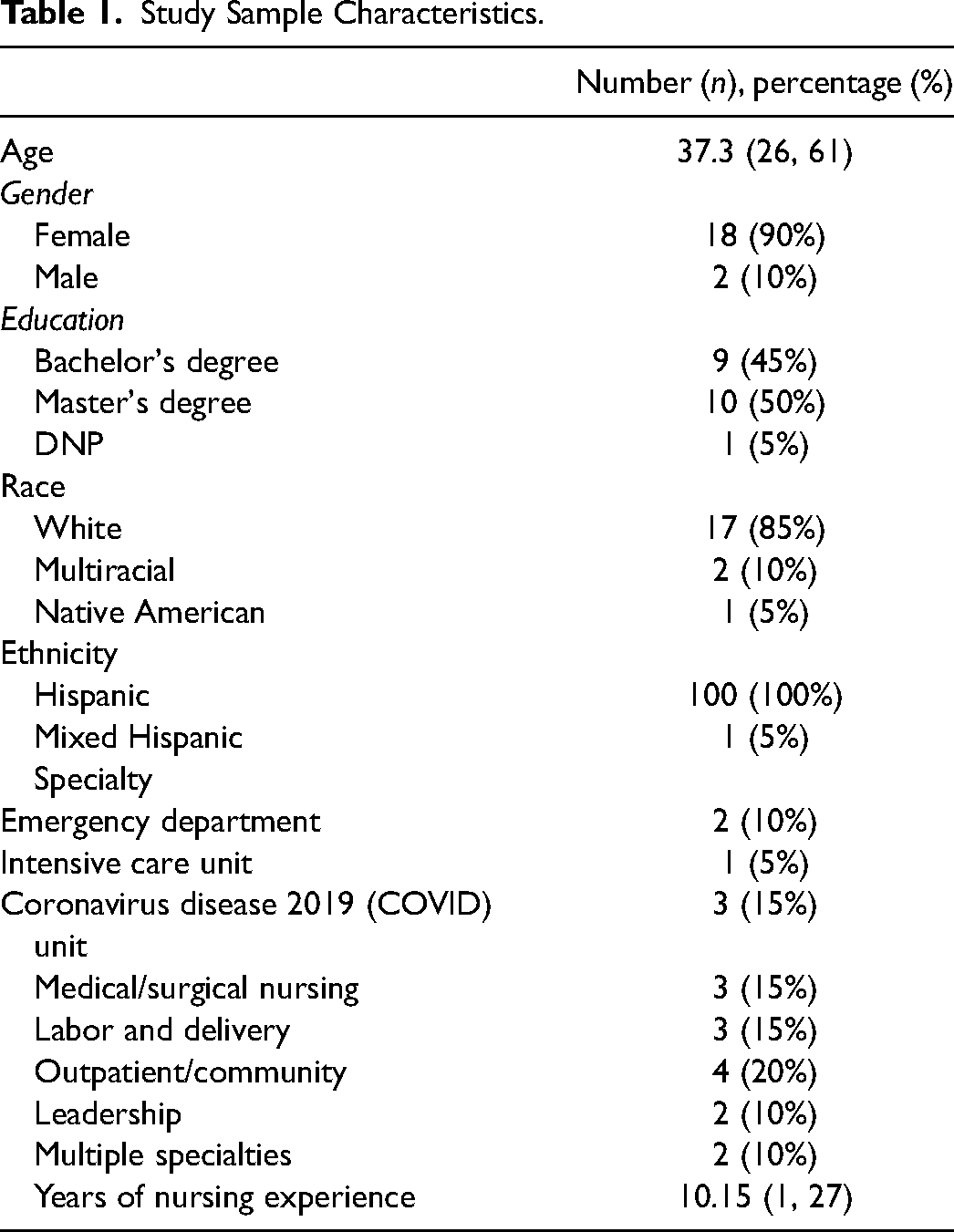
The participants of this study worked during the first wave of the COVID-19 pandemic ranging from May 2020 to September 2020. As seen in Table 1, the 20 Latinx participants identified as different races including White (n = 17, 85%), Multiracial (n = 2, 10%), and Native American (n = 1, 5%). There was a greater number of the study participants identified as female (n = 18, 90%) versus male (n = 2, 10%). The participants had different educational backgrounds ranging from a bachelor's degree (n = 9, 45%), a master's degree (n = 10, 50%), or a doctoral degree (n = 1, 5%). These study participants also had different areas of specialty in nursing. Most of the participants worked on a specific unit throughout a hospital setting. Some of the inpatient units that the study participants worked on included medical/surgical (n = 3, 15%), COVID (n = 3, 15%), labor and delivery (n = 3, 15%), emergency department (n = 2, 10%), and the intensive care unit (n = 1, 5%). The participants also worked in leadership roles (n = 2, 10%) or in the outpatient/community setting (n = 4, 20%). The remaining participants answered as working in multiple specialties of nursing (n = 2, 10%). These participants were interviewed across the United States and from different places of employment. The participants ranged from ages of 26–61 years of age with a mean age of 37.3 years of age. The participants years of experience ranged from 1 to 27 years with a mean of 10.15 years of experience.
Study Sample Characteristics.
Thematic Findings
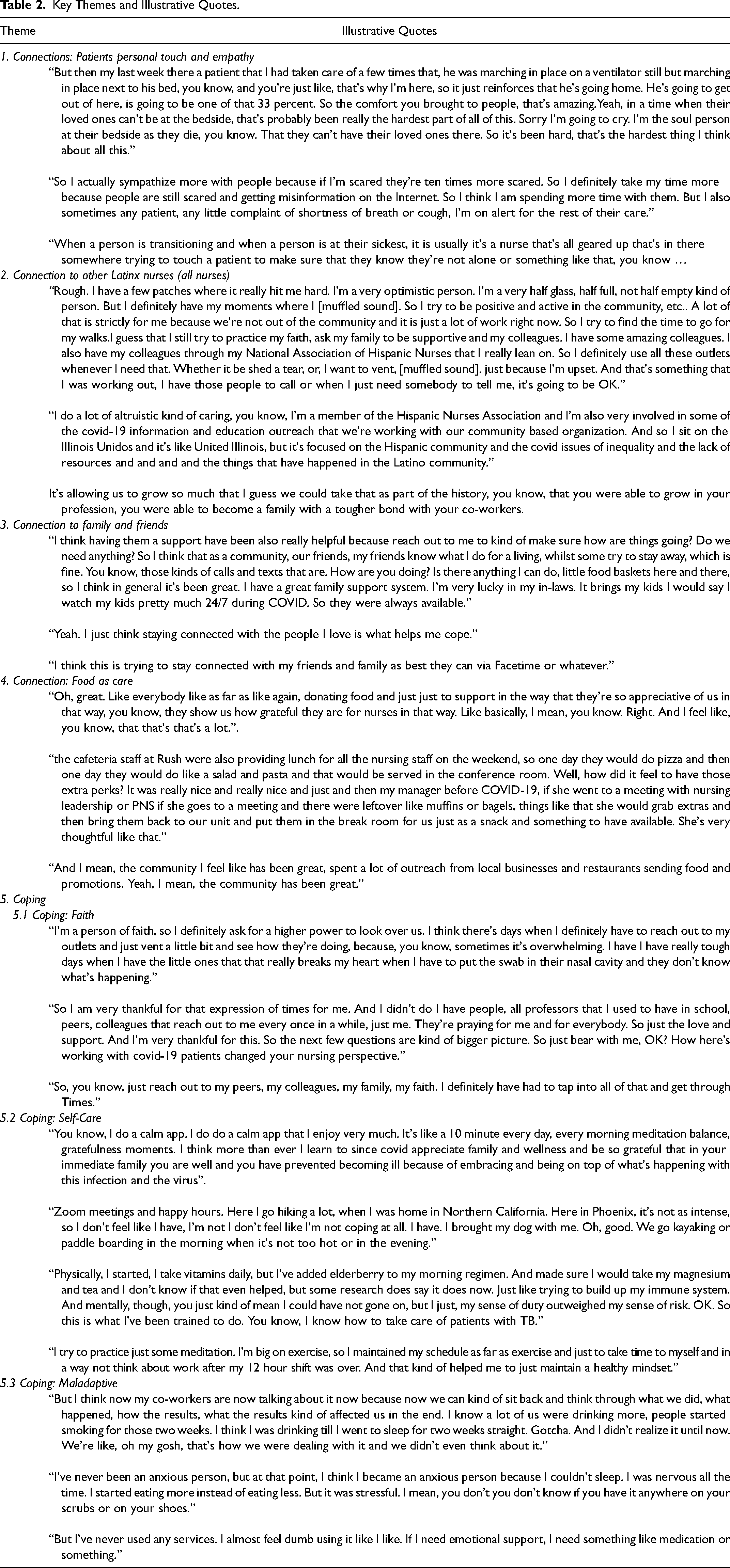
This qualitative descriptive analysis of the experiences of Latinx nurses providing patient care during the first wave of the COVID-19 pandemic revealed five major themes: (1) Connection to patients’ personal touch and empathy, (2) connection to Latinx nurses, (3) connection to family and friends, (4) connection to food as care, and (5) coping (Figure 1). The analysis of the coping theme also found that participants discussed the subthemes of (5.1) faith, (5.2) maladaptive behaviors, and (5.3) self-care activities. Illustrative quotes for each of the themes found in this study can be found in Table 2.
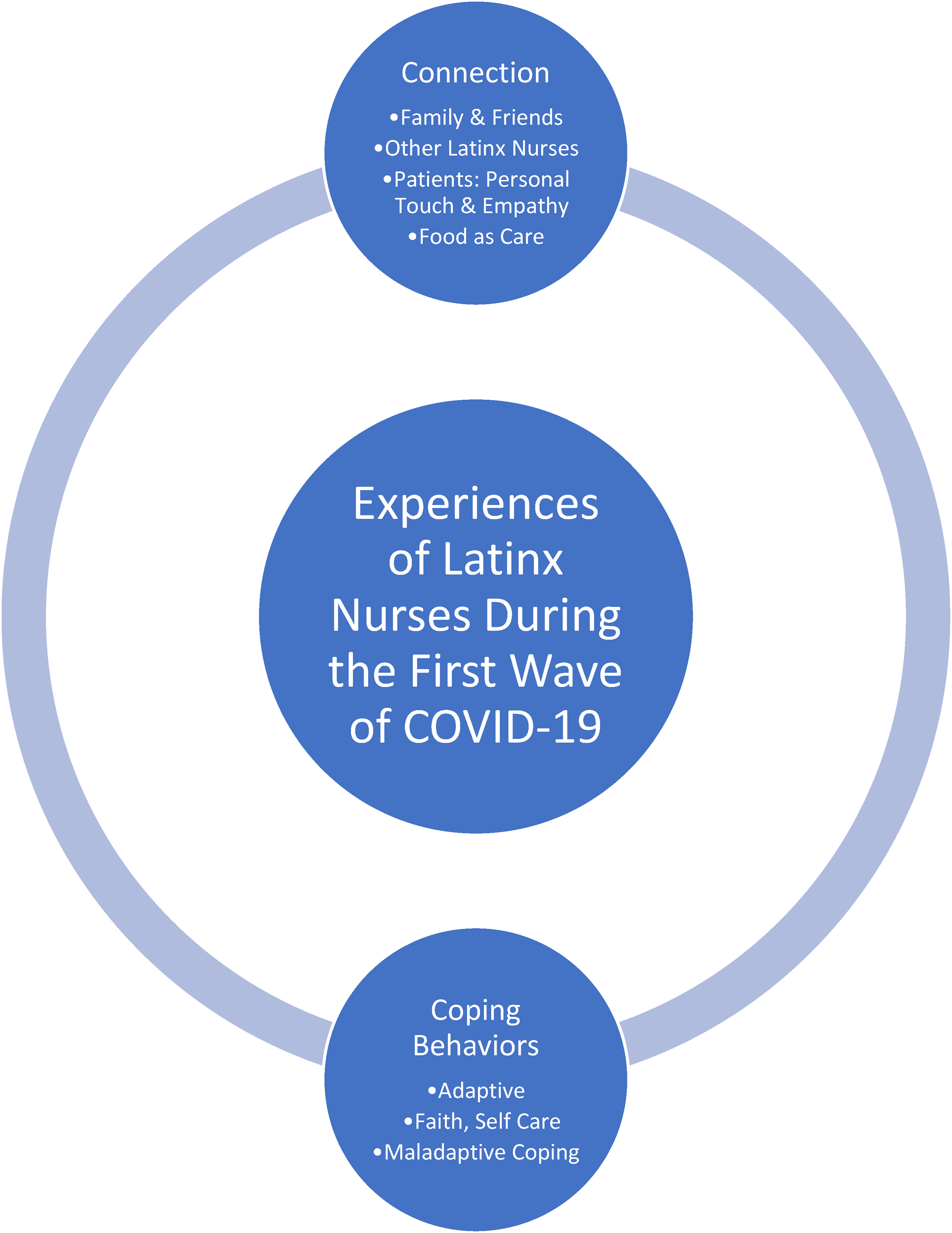
Conceptual framework of the experiences of latinx nurses during coronavirus disease 2019 (COVID-19).
Key Themes and Illustrative Quotes.
Theme 1: Connections: Patients Personal Touch and Empathy
The theme of connections is defined as forming a bond with other individuals. Most study participants described empathy and personal touch with patients when providing care to them during the first wave of the COVID-19 pandemic. The chaos that the COVID-19 pandemic caused created an environment where nurses could not provide the care they were used to providing to each patient. One participant shared, But then my last week there a patient that I had taken care of a few times that, he was marching in place on a ventilator still but marching in place next to his bed, you know, and you're just like, that's why I'm here, so it just reinforces that he's going home. He's going to get out of here, is going to be one of that 33 percent. So, the comfort you brought to people, that's amazing. Yeah, in a time when their loved ones can't be at the bedside, that's probably been really the hardest part of all of this. Sorry I’m going to cry. I’m the soul person at their bedside as they die, you know. That they can't have their loved ones there. So, it's been hard, that's the hardest thing I think about all this.
Participants voiced the importance of providing patient's personal touch and empathy in their nursing care.
Theme 2: Connection to Other Latinx Nurses (all nurses)
The study participants also reported a connection to other Latinx nurses as a theme. [Most] participants mentioned that they had to rely on each other as support systems during a time of uncertainty that came with the first wave of the COVID-19 pandemic and connected with their shared experiences. One participant shared, I have a few patches where it really hit me hard. I'm a very optimistic person. I'm a very half glass, half full, not half empty kind of person … So, I try to be positive and active in the community, etc. A lot of that is strictly for me because we're not out of the community and it is just a lot of work right now. So, I try to find the time to go for my walks. I guess that I still try to practice my faith, ask my family to be supportive and my colleagues. I have some amazing colleagues. I also have my colleagues through my National Association of Hispanic Nurses that I really lean on. So, I definitely use all these outlets whenever I need that. Whether it be shed a tear, or I want to vent … just because I'm upset. And that's something that I was working out, I have those people to call or when I just need somebody to tell me, it's going to be OK.
Study participants echoed the importance of remaining connected to each other during this difficult time. Study participants valued their Latinx colleagues in this time.
Theme 3: Connection to Family and Friends
The third theme identified was the connection to family and friends. Study participants described different forms of this connection during the first wave of the COVID-19 pandemic, which also was hard to maintain during a time of the unknown. One of the participants that was interviewed described it as, I think having them as support have been also really helpful because reach out to me to kind of make sure how are things going? Do we need anything? So, I think that as a community, our friends, my friends know what I do for a living, whilst some try to stay away, which is fine. You know, those kinds of calls and texts that are: “How are you doing? Is there anything I can do”, little food baskets here and there, so I think in general it's been great. I have a great family support system. I'm very lucky in my in-laws. It brings my kids I would say I watch my kids pretty much 24/7 during COVID. So, they were always available.
Study participants discussed how staying connected to friends and family helped them to get through the first wave of the COVID-19 pandemic.
Theme 4: Connection: Food as Care
Study participants described food as care as one of the themes from this data analysis. The participants discussed situations in which they received food from a loved one, the workplace, or the community. The study participants shared how they appreciated these efforts greatly. One participant shared the following, Oh, great. Like everybody like as far as like again, donating food and just to support in the way that they're so appreciative of us in that way, you know, they show us how grateful they are for nurses in that way. Like basically, I mean, you know. Right. And I feel like, you know, that that's a lot.
Theme 5: Coping
Coping was identified as a theme throughout the transcripts. Coping included subthemes of faith, self-care, and maladaptive strategies. The participants of the study mentioned coping in these different ways.
Subtheme 5.1 Coping: Faith
Study participants reported the importance of faith as a way of coping with the first wave of the COVID-19 pandemic. Faith was identified as a subtheme in the transcripts. One participant shared, I'm a person of faith, so I definitely ask for a higher power to look over us. I think there's days when I definitely have to reach out to my outlets and just vent a little bit and see how they're doing, because, you know, sometimes it's overwhelming. I have I have really tough days when I have the little ones that that really breaks my heart when I have to put the swab in their nasal cavity, and they don't know what's happening.
Subtheme 5.2 Coping: Self-care
The participants largely discussed self-care as a part of coping methods they utilized throughout this time. Self-care involved doing things that helped distract or boost the mood of the participants. Self-care activities involved practicing mindfulness, exercising, spending time outdoors, taking care of one's health, and even pets. A participant of the study shared, You know, I do a calm app. I do a calm app that I enjoy very much. It's like a 10 min every day, every morning meditation balance, gratefulness moments. I think more than ever I learn to since covid appreciate family and wellness and be so grateful that in your immediate family you are well, and you have prevented becoming ill because of embracing and being on top of what's happening with this infection and the virus.
Subtheme 5.3 Coping: Maladaptive
Study participants also shared maladaptive coping methods that they engaged in during the first wave of the COVID-19 pandemic. Coping behaviors can be positive or negative. The participants shared negative coping methods that the COVID-19 pandemic caused them. Maladaptive coping involved anxiety, insomnia, and even resorting to drinking alcohol. One participant shared, I've never been an anxious person, but at that point, I think I became an anxious person because I couldn't sleep. I was nervous all the time. I started eating more instead of eating less. But it was stressful. I mean, you don't you don't know if you have it anywhere on your scrubs or on your shoes.
But I think now my co-workers are now talking about it now because now we can kind of sit back and think through what we did, what happened, how the results, what the results kind of affected us in the end. I know a lot of us were drinking more, people started smoking for those two weeks. I think I was drinking till I went to sleep for two weeks straight. Gotcha. And I didn't realize it until now. We're like, oh my gosh, that's how we were dealing with it, and we didn't even think about it.
Along with positive coping mechanisms, there were also methods of maladaptive coping that a few participants engaged including insomnia, drinking, and smoking. It is not a surprise that maladaptive coping occurred among study participants during a traumatic time in history.
Discussion
This paper's purpose was to examine the qualitative experiences of Latinx nurses during only the first wave of the COVID-19 pandemic. The findings of the analyzed transcripts provided a thematic network with 5 main themes among Latinx participants. These themes and subthemes included: Patients’ Personal Touch and Empathy, Connection to other Latinx nurses, Connection to Family and Friends, Food as Care, Coping: Faith, Coping: Self-Care, and Coping: Maladaptive.
Latinx individuals are often known to have an ingrained sense of empathy that helps them strive for success and motivate other individuals (Canaday, 2021). Empathy has been defined as the ability to understand the feelings and emotions of another individual (Zhou et al., 2019). Personal touch is also an important aspect of patient care. Touch can convey reassurance, empathy, love, sadness, compassion, and comfort to patients (American Medical Association Victoria [AMA Victoria, 2022). Connecting with patients via personal touch and empathy among the participants consisted of being present during a time when patients faced critical situations. According to Difiore (2019), creating meaningful connections with patients helps with improving patient outcomes and patients feeling safe during a time when they are most vulnerable. In the United States, Latinx individuals hold the cultural values of personal engagement (personalismo) and friendliness highly and they see these as essential to help them bond with other individuals (Floríndez et al., 2020).
According to the literature, nurses during COVID-19 faced unprecedented situations. Nurses faced grueling circumstances during this time. According to Simonovich et al. (2022), nurses on the frontlines of this pandemic faced psychological and physical demands during this first wave of the COVID-19 pandemic. Latinx participants felt a connection to each other due to their shared experiences during this time.
Latinx individuals are more likely to engage in unhealthy behaviors compared to the White population (Rodriquez et al., 2018). The Latinx population is affected by depression at a much larger rate compared to White individuals (Rodriquez et al., 2018). Latinx participants at baseline are more at risk of maladaptive coping than their White counterparts. This study focuses on the experiences of Latinx nurses during the first wave of COVID-19 throughout the United States with participants describing some maladaptive coping strategies during this time. This included the participants engaging in drinking, smoking, and not getting adequate sleep. At baseline, Latinx culture usually has a higher rate of being abstinent from alcohol compared to non-Hispanic Whites, but the pandemic has caused this to change (Gonzales, 2022).
There are many ways that an individual may show gratitude toward another person. It can be anything from a tiny gesture to a large displace of affection. According to Hamburg et al. (2014), food offering can be used to show affection towards people, to express religious beliefs, and even to show hospitality to complete strangers. In the Latinx culture, food is seen as a unique core value that defines this population and brings a sense of connection to their roots, their loved ones, and their traditions (Vaamonde, 2023). During the COVID-19 pandemic, the study participants expressed how different people offered them food as a form of showing that they appreciated the nurses. According to Perez (2010), in the Latinx culture, there is a saying that goes “Comida y familia es lo que se necesita en la vida,” which translates into “Food and family is what you need in life.” Meals are ways of bringing people together in Hispanic communities and expressively serve as a social facilitator for the rekindling of ties, and reaffirmation of belonging to a group like the Latinx community (Perez, 2010). The participants in this study truly valued the food that was given to them throughout the pandemic and highlighted how food is seen as an aspect of showing care towards anyone. According to Perez (2010), Latinx households see offering food as offering a piece of their home. Within the Latinx culture, food is always seen as an important way to demonstrate love and care for others.
For Hispanics and Latinos, religion and spirituality are integral parts of their culture (Brintz et al., 2017). The APA (2023) defines faith as the trust and belief in a God or a spiritual force that will respond to prayers, will win over any evil, and sets standards of behavior for how one should behave in life. According to Brintz et al. (2017), For Latinxs, God is an active force in their daily life and religion is very important to them. Religion and spirituality play crucial parts in the lives of Latinxs. Research shows that when Latinxs must cope with life's adversities, religion and spirituality play a factor in how they go about these experiences (Brintz et al., 2017).
While these interviews capture the narrative experience of the 20 nurses, we recognize this is not the experience of all Latinx nurses who provided care to patients while in a pandemic. The themes of the study were not shared with the participants. Participants were not informed ahead of time that the data would be looked at as subsets as well including that of just Latinx participants. This allowed for validity and for personal bias to be left out of the study. An additional limitation is that the nature of this study relied upon self-report data collected during a stressful period. As such, the participants may have had a hard time recalling every detail of their experiences. Although this study had its limitations, the findings are valuable. The narrative experiences of these Latinx nurses who worked throughout the nation and in some of the most critically affected areas, can be used for future research to better the experiences of Latinx nurses during a critical time in history.
Future research should consider interviewing different Latinx geographical areas and focus on experiences during subsequent waves of the COVID-19 pandemic. The themes found among these 20 participants were unique to the Latinx culture. These themes show the importance of diversity in the workplace. During the pandemic, nurses of different backgrounds and cultures have relentlessly been at the frontline. Cultural values should be implemented to ensure a workplace environment that promotes inclusivity, diversity, and equality.
Future research can also be used to ask for better resources at the state and national levels for all nurses. Programs highlighting mental health resources could be helpful to improve well-being in nurses providing patient care throughout the pandemic and other future periods of crisis. The nursing shortage was extremely evident during the pandemic (Tolksdorf et al., 2022). Nurses of all backgrounds were leaving the field due to fear, anxiety or even feeling poorly prepared (Tolksdorf et al., 2022).
Conclusion
The health care field was changing day by day as it tried to combat the COVID-19 disease. The experiences of the Latinx participants during this time are truly some of the most special in looking back at such uncertainty during this era. Their experience fills an important gap in history. This is a brave group of nurses who provided care during the first wave of COVID-19 during a time that also affected minorities disproportionally.
According to Hill and Artiga (2022), during the COVID-19 pandemic Hispanic, Black, and American Indian have had higher rates of positive COVID-19 cases and death compared to that of White individuals. The pandemic has brought turmoil in all aspects of life. Frontline health care workers, such as the Latinx participants of this study, have demonstrated resilience in a time of utter global destruction. This group of Latinx participants collectively shared how stressful their experiences as frontline workers were during the first wave of COVID-19.
Nurses are essential workers that had to continue their role of caring for other individuals. Nurses faced critical nursing shortage and dealt with a world that was not capable of handling the start of this pandemic (Tolksdorf et al., 2022). Latinx nurses faced some of the most traumatic times with some even leaving the nursing field due to their experience. This should be alarming to our leaders and policies should focus on how the lives of nurses can be improved with better resources to promote their retention.
Footnotes
Acknowledgments
The principal investigator would like to acknowledge the constant support of family, friends, colleagues, and her beloved dog Alex. Thank you as well to her mentors for their help and advice through this journey. This could not have been done without them. Thank you to the nurses who shared their experiences on the frontlines during the pandemic and to those who are still working today.
Declaration of conflicting interests
The authors declared no potential conflicts of interest with respect to the research, authorship, and/or publication of this article.
Funding
The authors disclosed receipt of the following financial support for the research, authorship, and/or publication of this article: Thank you to the Illinois Nurses Foundation, the Zeta Sigma Chapter of Sigma Theta Tau International, and the DePaul University College of Science & Health and School of Nursing for funding this research.
