



Abstract
Children with sensory processing challenges (SPCs) present occupational performance limitations across environments. However, little is known about children’s perspectives. Client-centered pediatric occupational therapy must be informed by a child-focused approach in research. This study explored the lived experience of school-age children with SPCs in a real-life context. A qualitative study design with interpretive phenomenology as the methodological framework was utilized. Five children with SPCs (aged 7–12) participated in photo-elicitation interviews. An inductive, iterative data analysis was conducted. Five themes were identified: The (hidden) struggle in doing; The struggle to persist in doing; Doing with others and belonging: Can I belong?; Needing extra support in their school learning; and Making, building, creating: when I am in charge. Children with SPCs experience hidden difficulties. Key aspects to consider are children’s awareness of their own needs, their emotional well-being, sense of belonging, and active inclusion in the implementation of school support.
Plain Language Summary
Children with sensory processing challenges (SPCs) may perceive and react to sensory stimuli differently than most peers (i.e., their body position and movement, what they touch, smell, taste, hear, or see). In any of these senses, they may be hypo- or hyper-sensitive, and/or may have trouble discriminating sensations, perceiving where their body is in space, and planning and executing motor actions. These children have difficulties doing activities at home, school, or other places. They can also have problems with social interaction and relationships. However, little is known about children’s own experiences from their own perspectives. Learning about children’s own motives and incorporating these in therapy services is important for effective and meaningful interventions and outcomes. Five participants aged 7–12 years took photographs of activities that they normally do in their daily routines. The first author interviewed each participant individually, using their photographs to prompt and guide the conversations. She audio-recorded all interviews and wrote out the content word for word. The content was then analyzed through reading, interpretive writing, and categorizing, according to a research method used to help understand situations through the anecdotes that the participants share during the interviews. This study found that the participants feel that they/others do not understand their difficulties; give a lot of importance to people with whom they do activities; and prefer school support that they find helpful and feel comfortable with. Therefore, children may benefit from further knowledge and understanding of their difficulties. Play and social interaction should be considered important parts of children’s therapy assessment and intervention, and children’s voices incorporated in the implementation of school support. Moreover, children’s experiences of sustained lack of progress may impact their emotional well-being, which deserves further research.
Introduction
Sensory processing challenges (SPCs), also known as sensory integrative dysfunction, refer to a decreased ability to process and integrate sensation, which may lead to difficulty producing appropriate actions, interfering with learning and behavior (Bundy & Lane, 2020). Children with SPCs can experience barriers to participation regardless of a condition or clinical diagnosis (Dunn et al., 2016).
From a young age, children show motivation to engage in occupations, such as self-care, school activities (Davis & Polatajko, 2013) and play as a fundamental occupation in childhood (Lynch et al., 2018). Childhood occupations need to be considered within the physical and sociocultural environments in which they occur (Lynch et al., 2016). Fisher (2013) defines occupational performance as a transaction between individual factors, task and environment demands, and sociocultural influences. Moreover, research has suggested that sensory processing may not necessarily solely reside within the individual child but likely reflect the transaction of the child, activity, and context (Dunn et al., 2016).
Research utilizing standardized measures of occupation, such as the Participation in Childhood Occupations Questionnaire (PICO-Q), revealed significant differences between children with SPCs and their typically developing (TD) counterparts (Hertzog et al., 2019). SPCs may negatively impact children’s frequency of participation in leisure activities (Brady & Brown, 2023). Conversely, well-developed sensory processing abilities have been associated with increased participation in a variety of games and sports, enjoyment, and frequency of participation (Matthews et al., 2021). Cosbey et al. (2012) investigated play behaviors and sensory processing and found that the complexity and social aspects of play may be affected in children with SPCs. More recent research found that children with SPCs presented impairments in social functioning and increased conflict with their peer-playmates, as compared to TD children (John et al., 2022).
In addition to occupational performance and participation limitations, SPCs can have a potential impact on children’s mental health. The cross-sectional study by McMahon et al. (2019) provided preliminary evidence of the long-term psychological impact of childhood SPCs. They found significant associations between SPCs in childhood and the risk of anxiety disorders in adulthood.
Research focused on caregivers of children with SPCs has provided further insight into difficulties experienced on a family level. In the study by Fletcher and colleagues (2019), caregivers identified environmental triggers, specific locations, their own ability to implement management strategies, and specific sensory issues as challenges. Allen et al. (2025) found that mothers of children with SPCs experienced important challenges in participating in daily occupations, often characterized by seeking support from minor to extreme levels.
Despite these relevant understandings, and emphasis on children’s views in health care practices (L. Whiting et al., 2013), children’s own experiences remain highly under-researched. C. C. Whiting et al. (2023) investigated teachers’ and children’s experiences from participating in an occupational therapy and sensory integration intervention and how this supported their participation in school. While children were actively involved in sharing their views of the intervention, research that allows a more in-depth understanding of children’s own lived experiences of daily occupations across different contexts is needed.
Client-centered pediatric occupational therapy must be informed by a child-focused approach in research to incorporate children’s views in practice (Bowden et al., 2018). Despite the growing recognition of children’s voices, decision-making in pediatric occupational therapy services remains primarily between adult professionals and caregivers (O’Connor et al., 2021). However, exploring and understanding children’s own goals, motives, experiences, and the contexts they live in may be an essential factor for effective and meaningful intervention outcomes (Costa et al., 2017). Furthermore, including children themselves in research is crucial. This approach aligns with Article 12 of The United Nations Convention on The Rights of The Child (United Nations International Children’s Emergency Fund United Kingdom [UNICEF UK], 1989), which highlights adults’ obligation to enable children to contribute their views on all matters affecting them.
To the researchers’ knowledge, this is the first qualitative study that investigates the lived experience of children with SPCs and poses the following research question: How do school-aged children with SPCs experience the performance of day-to-day occupations in their real-life contexts?
Method
Design
Phenomenological research can reveal a deeper understanding of people’s experience of everyday occupations, and what matters to them within their occupationally contextualized lives (Wright St-Clair, 2015). This study followed the interpretive stream of phenomenology, in which a part of the phenomenon is seen through the participants’ anecdotes of their lived experiences (Wright St-Clair, 2015).
This study employed photo-elicitation interviews (PEIs), a method of visual data collection combined with an interview process. It is a means to elicit children’s voices in research and is best used within a broader methodological framework, such as phenomenology (Phelan & Kinsella, 2011). Previous studies have demonstrated successful use of PEI in health care research with school-age children as young as 5 years old (Coussens et al., 2020; Vänskä et al., 2020; L. Whiting et al., 2013). PEI promotes children’s active involvement (Vänskä et al., 2020). Moreover, it is enjoyable and developmentally appropriate for school-age children, can empower and value children’s contribution, and can lead to understanding unique aspects of children’s lives that may not come up in regular conversation (Phelan & Kinsella, 2011; L. Whiting et al., 2013).
All authors’ backgrounds contributed to the study design and the research. The first author has extensive experience in pediatric occupational therapy, a postgraduate research master’s degree in occupational therapy, and international postgraduate training and certification in sensory integration. The second author has long-standing experience in pediatric occupational therapy, education and research, and the development of inclusive school practices in diverse contexts. The third author is a professor and a senior researcher in interventions for children and adolescents, play, participation, and inclusion. She is a teacher in occupational therapy and has long-standing experience in pediatric occupational therapy.
Participants
Purposive sampling was used to ensure participants had experience of the phenomenon of interest (Wright St-Clair, 2015). Recruitment was done in partnership with two pediatric therapy practices in the southeast of England. Consistent with the need to adequately characterize the sample in research with children with SPCs (Pfeiffer et al., 2018), inclusion and exclusion criteria were applied (Table 1).
Inclusion and Exclusion Criteria.
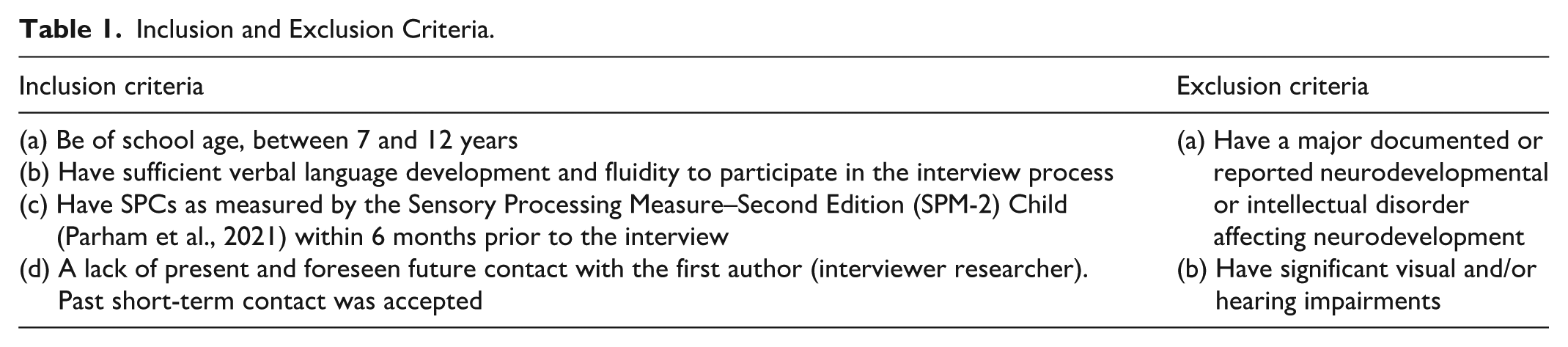
The Sensory Processing Measure–Second Edition (SPM-2) Child is a frequently utilized parent report questionnaire to measure SPCs (Parham et al., 2021). It is psychometrically sound and valid for the participants’ age group. Two participants had additional diagnoses (i.e., dyslexia and global developmental delay). Due to their high frequency in practice, it was considered that exclusion could lead to a non-realistic and excessively limited sample of children with SPCs.
Following ethical approval of the study, potential participants were sent comprehensive written information sheets. Additional ethical considerations regarding research with children were incorporated, including child-friendly information sheets and informed assent forms. Twenty-five families were contacted by clinic staff, and five agreed to participate. Follow-up recruitment emails were sent by the first author, and written informed consent from parents and assent from participants were obtained before each interview. A reasonably heterogeneous sample (Table 2) enabled the presence of different voices, which may have unveiled a greater diversity of meanings, deepening the understanding of the participants’ lived experiences (Wright St-Clair, 2008).
Overview of Participants.
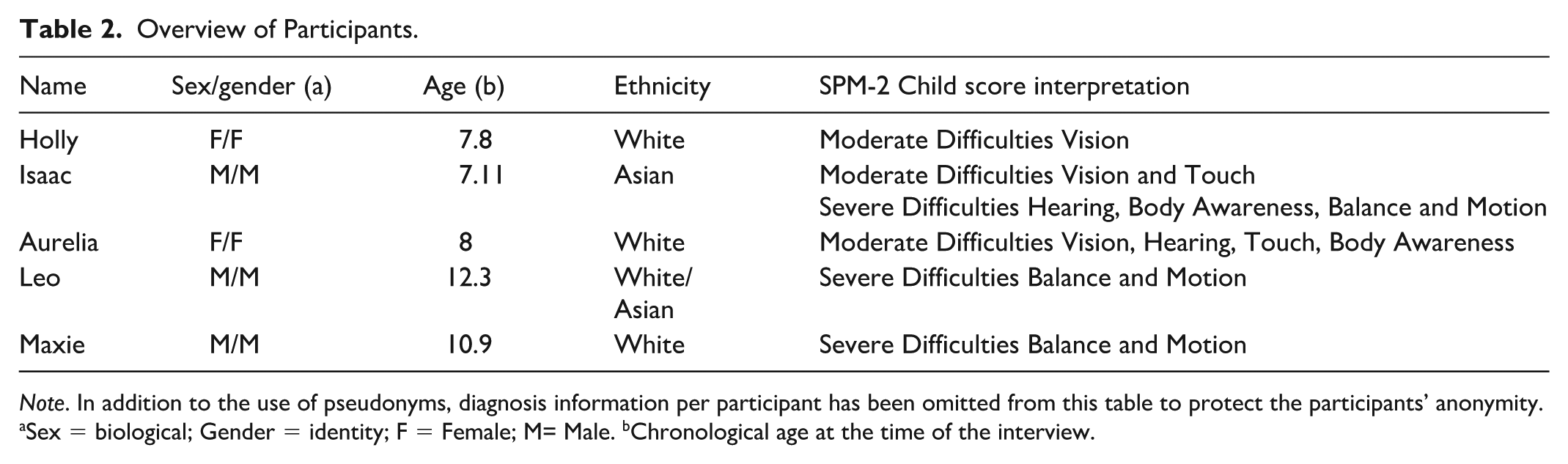
Note. In addition to the use of pseudonyms, diagnosis information per participant has been omitted from this table to protect the participants’ anonymity.
Sex = biological; Gender = identity; F = Female; M= Male. bChronological age at the time of the interview.
Data Collection
The first author conducted all meetings and interviews. An initial meeting was conducted with each family at their home or therapy clinic to clarify the study procedures, researcher’s role, confidentiality through anonymization, and to address participants’ questions. Participants were reminded of their right to withdraw at any time without consequences.
Participants were asked to take 10–15 photographs of various occupations in their lives and given a child-friendly information sheet. They used their parents’ phones or tablets to take photos. Parents sent them to the researcher via email utilizing the encrypted software Egress. Building rapport and spending time to get to know the children is paramount in undertaking PEI (Phelan & Kinsella, 2011). Therefore, participants played an activity of their choice with the researcher at the end of the first meeting.
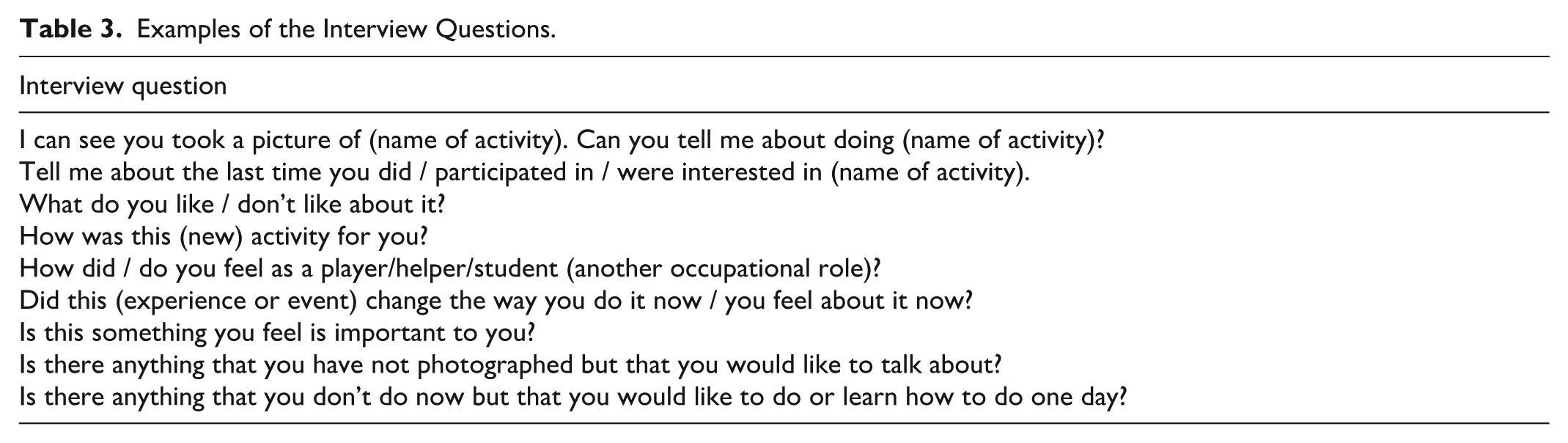
One-to-one, face-to-face interviews took place at the participants’ home or therapy clinic. Participants joined alone while their parents waited within reach (e.g., nearby room) allowing children to talk freely while feeling safe. A flexible approach was used to prevent unintentional disclosure of information (Phelan & Kinsella, 2011). Thus, participants could decide in which order to talk about the photographs, withdraw any, or not talk about them. Children were also given the choice to display their photographs on the researchers’ laptop, or their own devices (e.g., parents’ phone, tablet). In addition, participants engaged in other activities meanwhile as needed (e.g., drawing, eating a snack). Interviews followed an interview guide with semi-structured questions (Table 3), adapted to participants’ level of comprehension. Interview questions did not refer to SPCs explicitly because the study focus was on occupational performance. Moreover, participants may not have been necessarily aware of their SPCs. Interviews were audio-recorded and lasted between 55 min and 1 hr 12 min. Participants provided a total of 50 photographs. The researcher completed a reflective diary after each interview, which further contributed to the data analysis and transparency of the interpretations.
Examples of the Interview Questions.
Data Analysis
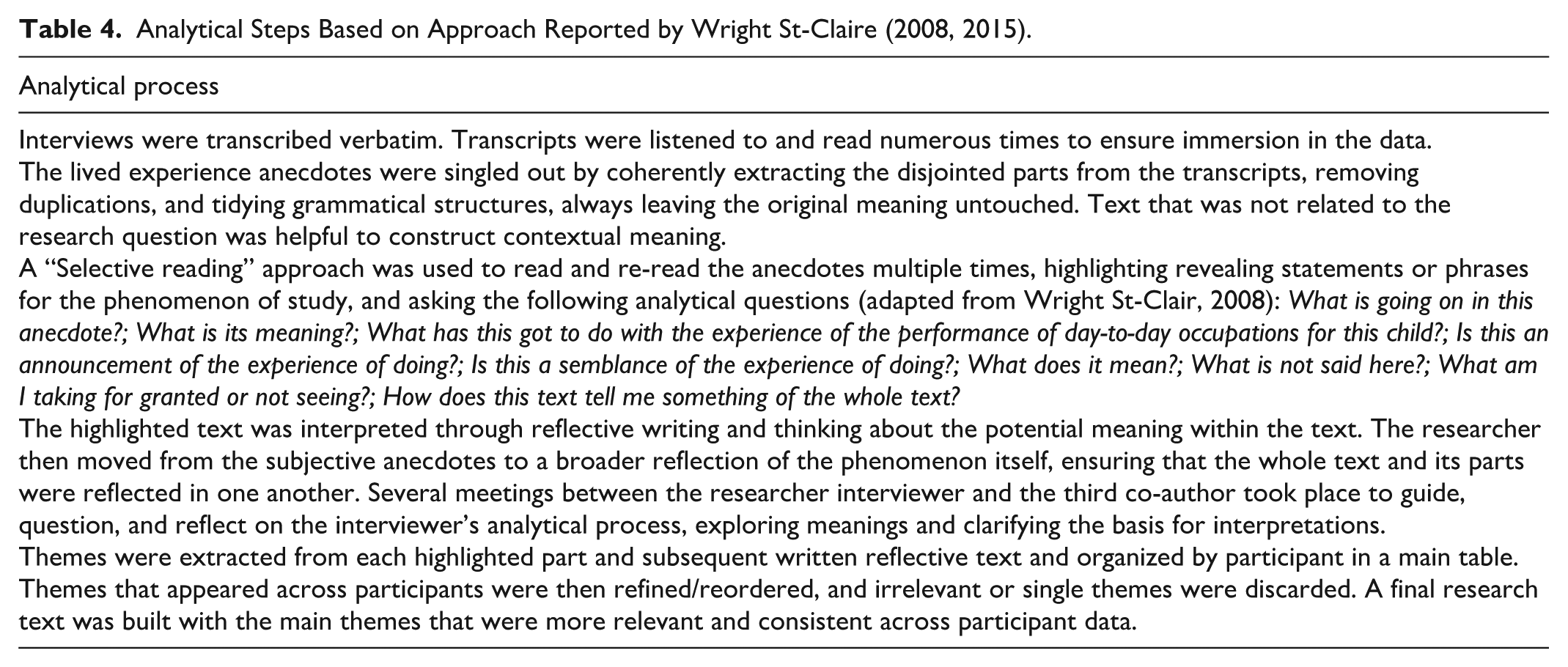
Data analysis followed the analysis steps of interpretive phenomenology (Wright St-Clair, 2008, 2015; as described in Table 4) and was performed by the researcher interviewer. The analysis was inductive and iterative, beginning with and continuing parallel to data collection, one informing the other (Wright St-Clair, 2015). Visual data were not analyzed separately in a systematic way; however, they provided information on the types of occupations and contexts discussed with the participants.
Analytical Steps Based on Approach Reported by Wright St-Claire (2008, 2015).
Trustworthiness was ensured through several criteria requisite of interpretive phenomenology (Wright St-Clair, 2015): a 1-hr pre-understanding interview with a fellow master’s student about the first author’s background and interest in the study topic prior to collecting data, to enhance reflection; using a reflective diary alongside the interviews to track observations and ideas and gain a deeper understanding of the participants’ experiences; participant inclusion and exclusion criteria that evidence adequate experience of the phenomenon being studied; and an iterative analysis that informed subsequent interviews. Moreover, a peer debriefing process with an experienced researcher (the third author) was carried out to explore meanings and clarify the basis for interpretations.
Results
The analysis identified five overarching themes: (1) The (hidden) struggle in doing; (2) The struggle to persist in doing; (3) Doing with others and belonging: can I belong?; (4) Needing extra support in school learning; and (5) Making, building, creating: when I am in charge. Most photographs related to play and leisure occupations. A few included academic learning and a self-care task. Photograph samples are alphabetically labeled in Figure 1.
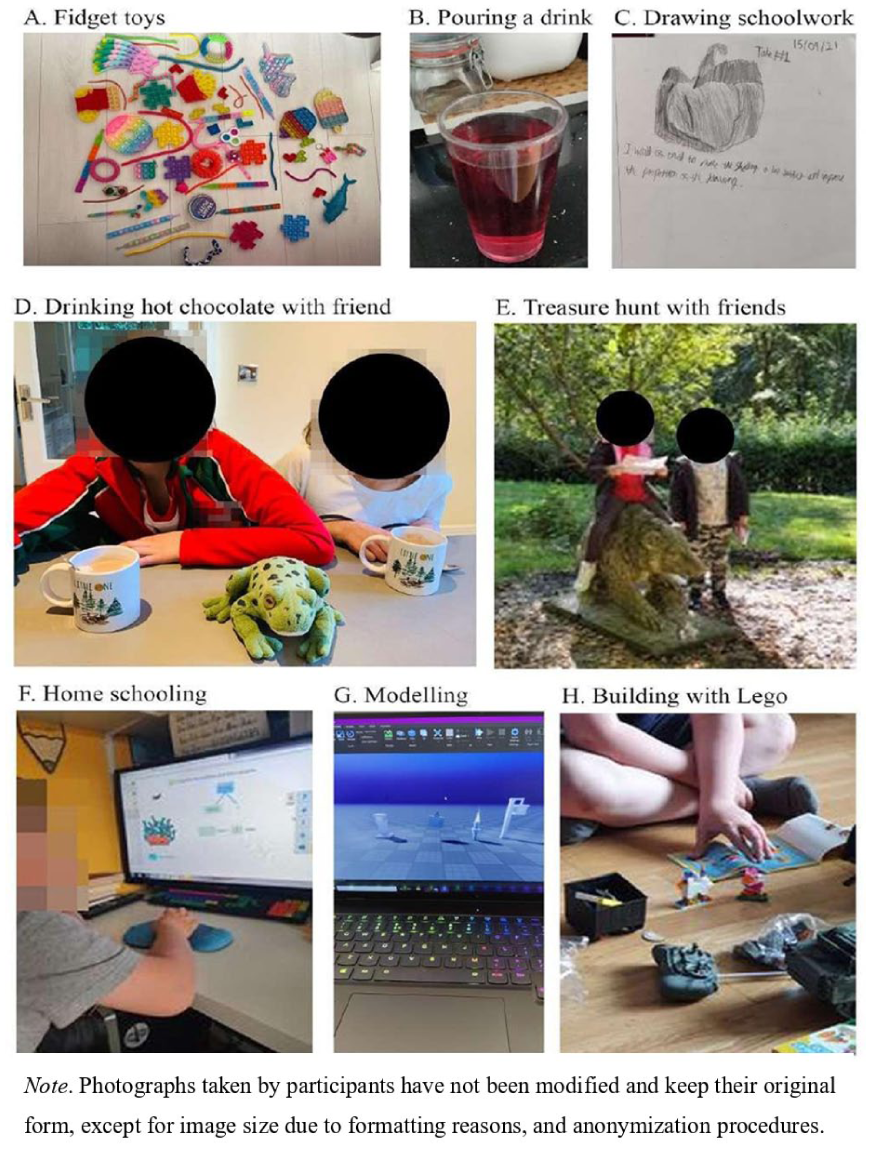
Samples of Photographs From Participants.
The (Hidden) Struggle in Doing
All participants’ accounts captured a struggle in doing childhood occupations and how this may pass unnoticed by people in their surroundings. Participants were able to do many tasks independently. However, they also encountered substantial difficulties and did not always feel understood by others. Therein this phenomenon becomes hidden. Participants’ struggle was not always an obvious fact, leading to children’s performance being judged differently to how they felt about the situation: Sometimes it was just hard to listen to my teacher [name] because she speaks really loudly and sometimes it just blocks my ears. (. . .) I kind of couldn’t hear well (. . .) that’s why I keep getting the attention for not listening. (Maxie)
Participants experienced a mind-body disconnection in doing, such as Maxie’s ears getting blocked when trying to listen in class. Similar examples were echoed by other participants. While Isaac expressed his difficulties with the task, Holly reflected on the use of her fidget toys (Photograph A), as being helpful to her: You know what sketch means, it means uh, without doing [with] the pencil so hard, but doing it softer. I find that really hard! (. . .) I reaaally want to learn it (. . .) I do get [it] in my mind but I find it tricky. (Isaac) (. . .) I have a fidget card at school (. . .) it kind of helps you with your mind because, if you have a “pop it,” and like, it keeps your fingers distracted cause you can just pop it . . . (Holly)
Another important dimension of children’s struggle in doing was its extent to various types of occupation, ranging from a simple self-care task to more complex school-based activities. For instance, Leo took a photograph of a neat glass with liquid (Photograph B), to talk about his experience in pouring a drink: It’s difficult to do simple tasks like pouring a glass of squash (. . .) So uhm, I was really thirsty (. . .) I had this glass I think and then, when I tried to pour it, it went, like it missed it, and it went all over like here. (Leo)
The Struggle to Persist in Doing
Participants’ accounts revealed their need to persist in practicing for longer to learn some occupations. Children’s journey toward mastering their abilities led to multiple experiences that could shape their ultimate occupational engagement. Sometimes, despite a demanding learning process, persistence could lead to success and a sense of pride and achievement. Maxi, for example, shared his progress in swimming, an activity he had struggled with considerably. Children could also experience progress without feeling fully capable. Leo explained to still lack confidence in situations like pouring boiling water, despite his improved ability to pour a drink after persistent practice.
Although children generally persisted, they could feel defeated by the lack of tangible progress, which could turn into withdrawal, resulting in a sense of tiredness and surrendering. Leo mirrored these feelings when talking about his drawing schoolwork (Photograph C): I can’t really get better at it. I would like to learn more about it, but I actually can’t. (. . .) I tried like, a lot. But now I kind of just give up. (Leo)
After prolonged exposure to challenging occupations without improvement, participants expressed a strong sense of despair, particularly when they had no option to discontinue, as Aurelia with her handwriting schoolwork. Similarly, Isaac questioned the usefulness of the occupation: I hate it (. . .) [My last English lesson was] like any other one it was horrible, it was writing. (Aurelia) And why was sketching even made? Why was [it] even made when we already had drawing? (Isaac)
Doing With Others and Belonging: Can I Belong?
All participants emphasized the importance of engaging in activities with peers and friends, perceiving it as an intrinsic aspect of their doing. The meaning of the occupation per se could diminish, while the with whom it is done added significant value. Aurelia’s words reflected this when talking about her friend (Photograph D): Well, we were drinking hot chocolate (. . .) Half of my life I do with her (. . .) I have a whole chart of stuff I did (. . .) I just mark every time I see her. (Aurelia)
Moreover, children may naturally perceive themselves as able to play an activity if shared with a friend, like Maxie described (Photograph E): I love doing treasure hunts with my friends. (. . .) I could do it by myself because my friend Clara helped me find where the places are, where the things are. . . (Maxie)
Participants also perceived themselves as doing and being in school with others. Having this possibility was a source of joy and enthusiasm. On the contrary, lacking such an opportunity led to a sense of emptiness: (. . .) I miss my friends a lot (. . .) leaving school for until now was tricky because I knew I wasn’t seeing my friends in school anymore. (Maxie)
Access to shared play activities was vital for children’s sense of belonging. Several participants discussed their school breaks, and some could engage in play without their difficulties impacting their participation. Consequently, their sense of doing and belonging felt routine: I play with friends from my class (. . .) Stuck In The Mud, It, and Cops And Robbers. So yeah, that’s what I play (. . .) I like all of them. (Holly)
However, this sense of belonging faded when they couldn’t engage with others. Fragile emotions, such as deep sadness, often laid below the surface for some children: Everybody was playing football like, and I really wanted to get into it (. . .) I felt really left out, I didn’t have many friends (. . .) because all of them just went to play what they wanted, and I was just kind of left behind because I couldn’t really do it (. . .) I couldn’t fit in. (Leo)
Needing Extra Support in School Learning
Participants revealed extra support in their school learning as central to them, describing their school experience as either supported or hindered. Children welcomed help strategies they could resort to. Some participants gave insights on how they engage with strategies at school: I actually forgot my fidget today to bring to school, but luckily I always in my pencil case I have Blu Tack, back up Blu Tack if I don’t remember my fidgets. (Holly)
Participants’ difficulties could affect their academic output, leading to a sense of misunderstanding and unfairness, and creating a mismatch between the external consequences and children’s actual ability and willingness to perform. However, extra support, meaningful to the child, could lead to improved satisfaction and reveal the child’s true potential: So, before school was really difficult (. . .) I got, I think, one of the best CAT scores in the entire year group (. . .) and because my handwriting was so bad, they thought I was incapable, they moved me down (. . .) then I got my laptop and started writing really good things, I got top marks in everything and I got moved back up. (Leo)
However, implementing adaptation strategies did not always result in feeling supported. Frustration arose when a strategy lacked meaning for the child, leading to perceptions of school days as inconvenient and pointless. Maxie illustrated this when he shared a photo of himself homeschooling. (Photograph F): I used to go to a school (. . .) they kept on pulling me out of the lessons for stupid clubs, like toast club, what, what kind of club is that? (. . .) It’s like, we just sit in chairs and eat toast. I mean, what’s the point of that? (Maxie)
Making, Building, Creating: When I Am in Charge
Participants expressed a need for self-sufficiency, feeling fulfilled when creating something independently. Their inner drive to make, build, or create allowed them to take charge of their activities. A search for autonomy was evident, particularly in examples of play and leisure. For instance, creating something on their own often led to a sense of accomplishment and pride (Photographs G and H): Yeah [I did this modelling] completely by myself. (. . .) It makes me feel good about myself like it feels like I’ve actually done something that I can be proud of. (Leo) [I feel] good, proud of myself (. . .) I did the Lego all by myself yesterday. (Maxie)
Furthermore, the process itself of creating something was enough to bring satisfaction to some children, regardless of the output. In Isaac’s words: I built that chair, but I don’t have it anymore. I mean, it collapsed! (. . .) [I felt] great, I liked it, fun. (Isaac)
In addition, having unlimited possibilities at hand was highly valued by some participants. Aurelia described her satisfaction when playing Minecraft because the game allows her to build anything and does not stop her from anything. Leo shared a similar sentiment about animation, stating that he enjoys it because it’s fun and offers limitless possibilities.
Discussion
This study explored how school-age children with SPCs experience their occupational performance through the lens of children’s own views as the research participants. Situating research within children’s daily environments is vital when studying aspects of childhood occupation (Lynch et al., 2016). This article illustrates the existence of participation problems in real-life contexts from the children’s perspectives. Participants gave importance to their ability to perform and participate in activities. This aligns with the research findings presented by Costa et al. (2017), indicating that children’s self-chosen goals for occupational therapy focused on specific activities and participation, in contrast to goals set by their parents and teachers, which often emphasized body functions.
This study reveals a sense of hidden difficulties in children’s experience. Participants experienced difficulties that were not clearly understood by themselves or others. Despite lacking noticeable impairments to most others, they described having difficulty following the teacher’s instructions or writing, among other activities. Moreover, their performance often did not reflect their true potential and was consequently misjudged, such as being seen as having lower academic capability. As indicated by Fletcher et al. (2019), for many children, SPCs are not associated with other conditions, which leads to their participation patterns not being easily predicted or understood using disability literature to guide thinking. Moreover, participants demonstrated good awareness of their functional difficulties, although not of their SPCs. Thus, these findings suggest that enhancing children’s understanding of their SPCs could empower them by increasing their awareness of their needs.
This study highlights that while some children feel supported in their school learning, others can feel hindered by a lack of support or strategies they find useful. One participant described his primary school experience as difficult due to inadequate support for his handwriting difficulties. Another, currently home-schooled, expressed frustration over being taken to clubs during lesson hours at his former school, which he felt was unhelpful for his learning. Recent research suggests that school settings labeled as inclusive do not always foster a sense of inclusion for children with special needs (Reeves et al., 2022). However, Article 24 of The United Nations Convention on the Rights of Persons with Disability (United Nations [UN], 2008) states the right to inclusive education at all levels, regardless of age, without discrimination and based on equal opportunity. By focusing on the children’s views, this study identified feelings of discontentment, which emphasizes the need to actively involve children in the decision-making processes concerning their participation at school. This becomes crucial when considering that intervention goals set by children tend to differ from those set by their parents or teachers (Costa et al., 2017). Moreover, as argued by Costa et al. (2017), acknowledgement, consideration, and addressing of children’s own goals in therapy follows The United Nations Convention on Children’s Rights (UNICEF UK, 1989) and implements in practice a client-centered approach with younger clients.
This study found that long exposure to an occupation and sustained effort to do it could lead to improved ability and feelings of success in some children. However, others did not experience improved ability despite persistent practice. These participants’ accounts evoked difficult feelings such as withdrawal, hopelessness, and despair, and some even questioned the usefulness of the occupation. These findings highlight an important aspect of children’s emotional well-being and therefore deserve further research. Following the proposed definition of emotional well-being by Park et al. (2023), this multidimensional and complex composite encompasses how positive an individual feels generally and about life overall, as well as the emotional quality of momentary and everyday experiences. Although the authors recognize that high levels of emotional well-being do not imply a lack of negative feelings, it is imperative to better understand the extent of the negative feelings experienced by children with SPCs in relation to their participation problems. Future studies could employ a longitudinal design that allows hearing from children with SPCs in relation to their participation struggles at various stages in their lives. Systematically investigating children’s experiences in the long term could elucidate the evolution of their participation problems and potentially contribute to more effective interventions or the prevention of increasing mental health problems. Mental health, as defined by The World Health Organization (WHO, 2025), refers to “a state of mental well-being that enables people to cope with the stresses of life, realize their abilities, learn well and work well, and contribute to their community.” Previous research has supported an association between SPCs in childhood and future anxiety through difficulties managing distress (McMahon et al., 2019). As stated by the National Institute of Mental Health (NIH, 2024), mental health is more than the absence of a mental illness, and it includes emotional, psychological, and social well-being. In accordance with this, our study adds that there is an important connection between the participants’ participation problems and aspects of their emotional well-being, which need to be further investigated.
Children’s struggle to persist in doing also resonates with an occupational development perspective. Davis and Polatajko (2013) refer to occupational development as the progressive changes in competence to do daily occupations. Some children in our study did not improve their competence regardless of regular practice. This led to a lack of motivation and a risk to stop engaging in certain occupations. While experiencing success may be considered a paramount factor to pursue further engagement, other factors may need to be accounted for and further investigated, to give full support to children who face difficulties in developing their occupational competence. In a TD sample, Wiseman and colleagues (2005) suggested opportunities, resources, motivations, and parental views and values as reasons for children’s occupational engagement. Further research exploring links between occupational competence and engagement in children with SPCs could help understand a full array of mechanisms that may hinder or promote children’s engagement in daily occupations.
In line with previous research exploring the participation of children with disabilities (Vänskä et al., 2020), findings reflected the significant value of social aspects of doing, such as friendship and a sense of belonging. In this study, belonging through play participation with others emerged as a strong topic for children’s emotional well-being, further supporting previous research highlighting the need to embrace participation in play with others and belonging as aims in pediatric occupational therapy practice (Costa et al., 2017; Lynch et al., 2018). Considering that social functioning and interactions with peer-playmates may be affected in children with SPCs (John et al., 2022), it is paramount to study this aspect further.
Limitations and Future Directions
Two therapy practices proved insufficient for the recruitment of children with SPCs excluding major developmental diagnosis. Future research needs to expand recruitment to broader networks. Given the small sample size and the qualitative nature of the study, the results cannot be generalized to the broader population of children with SPCs. However, the sample provided a rich amount of data consisting of 50 photographs and 6 hr of interviews.
However, this study design enabled children’s voices to be heard and provided unique insights into their occupational lives in a real-life context. Findings raise the issue of children experiencing participation problems; interventions thus need to aim at improving children’s occupational performance in a real-life context. In addition, understanding their difficulties may empower children by helping them recognize their own needs. Occupational therapists with knowledge of sensory processing can contribute to this greatly. It is essential to incorporate children’s views in decision-making processes regarding the implementation of support at school and play participation and belonging should be included as therapy aims.
Future studies focusing on social participation interventions could contribute to more complete services for children with SPCs. Moreover, hearing from the child with SPCs at various stages in their lives could potentially contribute to the prevention of increased mental health issues. From an occupational development perspective, this study highlights the importance of further research exploring links between occupational competence and engagement in children with SPCs.
Conclusion
This is the first qualitative study to date that explores the lived experience of occupational performance of school-age children with SPCs. SPCs are experienced as hidden, and children may benefit from further knowledge and understanding of their difficulties. Children’s experiences of progressive changes in their competence to do daily occupations may play an important role in children’s occupational engagement and their emotional well-being, and therefore, this area deserves further research. Children significantly value play occupations with peers, friendship, and a sense of belonging; thus, play and social participation should be considered an important part of children’s assessment and intervention goals. Finally, incorporating children’s voices in the implementation of school support is crucial to enable children to feel supported.
Footnotes
Acknowledgements
We would like to thank all the children who took part in this research project, and their families, for their time and valuable contribution.

Ethical Considerations
Ethical approval was obtained from the Reading Independent Ethics Committee in England, following referral from the U.K. Health Research Authority (approval number: 21/RIEC/2910).
Consent to Participate
Written informed assent and consent to participate in the study were obtained from all research participants and their parents, respectively. All photographs included in this manuscript have prior written informed assent/consent for their use in publications, from the research participants and their parents.
Consent for Publication
Written informed consent about the use of anonymized quotes in research reports or publications were obtained from all participants’ parents.
Author Credentials
I.H.D.R. is a pediatric occupational therapist with a postgraduate research master’s degree in occupational therapy and international postgraduate training and certification in sensory integration.
D.K.-R. is a professor, researcher, and teacher in occupational therapy with clinical experience in pediatric occupational therapy.
C.S. is a professor, researcher, and manager of a therapeutic center with a professional background in pediatric occupational therapy.
Funding
The authors received no financial support for the research, authorship, and/or publication of this article.
Declaration of Conflicting Interests
The authors declared no potential conflicts of interest with respect to the research, authorship, and/or publication of this article.
Data Availability Statement
The authors declare that the interview transcripts and photographs will not be available due to a lack of consent from the research participants to share these data publicly and the sensitive nature of the research.
Positionality Statement
The authors of this manuscript identify as cisgender, female, occupational therapists, who are currently able-bodied. We align with societies associated with the Global South and North and are all highly educated, with two of us in high education roles and one in a clinical practice role. Collectively, we share a commitment to enabling the participation of all children in society in an inclusive manner.
Patient and Public Involvement Data
This study was a master’s thesis project where it is not common to have intensive involvement from the public/clients. During the development, progress, and reporting of the submitted research, Patient and Public involvement in the research was:
• Included in the conduct of the research (i.e., participants took, selected, and/or chose photographs which were then used in the interview process).
• Included in the reporting of the research (i.e., a lay summary of the findings was provided to the participants—using a child-friendly version—and to their parents).
Additional Information
This research was carried out in partial fulfillment of the requirements of obtaining the degree of the European Master of Science in Occupational Therapy.