



Abstract
A limited understanding of trends in occupational therapy (OT) research publications exists. This study aimed to evaluate trends in OT research publications, in PubMed (2001–2020), compared to physiotherapy and rehabilitation. A method of secondary analysis of publication trends in the PubMed database was used. Medical subject headings for OT, physiotherapy, and rehabilitation were combined with search filters (e.g., population age, study design, and OT practice area). Linear regressions were computed to analyze changes in yearly growth. OT research publications increased by 5.86 per year and comprised less than 2.5% of rehabilitation research publications yearly. Knowledge synthesis was the predominant OT study design (2.94% yearly increase; p < .001). Intellectual/cognitive conditions and emergent practice areas in OT research publications increased over time (both p = .007). OT research publications were relatively evenly distributed across population age. OT research publications are increasing over time but lag relative to physiotherapy and rehabilitation broadly. Our findings may inform future OT research priorities.
Plain Language Summary
Occupational therapy (OT) is a health care field that helps individuals and communities do what they need to, want to, and would like to do. Occupational therapy services may be provided to people with emotional concerns, brain disorders, or physical health concerns. To date, we do not fully know what types of OT research studies are published in PubMed, a database of health-related research publications. Nor do we know what people or groups are included in these studies, or how the methods and topics of these research papers change over time. We conducted this study to better understand how OT research papers change over time. We also wanted to know how OT research papers changed compared to physiotherapy and rehabilitation research papers. To do this, we looked at the trends in each of OT, physiotherapy, and rehabilitation research papers from 2001 to 2020. In our study, we found that each year, there are six more OT research papers than the year before. Although OT research papers are growing by six per year, physiotherapy research papers are growing by 173 per year and rehabilitation papers are growing by 292 per year. So, OT papers make up a small number of rehabilitation-related publications. OT research papers are relatively evenly distributed across age ranges (<18, 18–65, >65 years). However, physiotherapy and rehabilitation have more papers in the 18- to 65-year age group than in the younger or older age groups. In the past, OT research focused on children and individuals and groups with physical health needs, such as for their bones or muscles. In recent years, more OT research papers address other issues, such as people who have some difficulties with their brain. Our research helped to understand the landscape of OT.
Occupational therapy (OT) is a health profession that “enables people to achieve health, well-being and life satisfaction through participation” (p.207) (Creek, 2006). OT practices include working with individuals across their lifespans and with arrays of health conditions (e.g., neurological, mental health, cognitive, intellectual, and musculoskeletal). Given the broad scope of OT, OT research publications span the fields of OT, occupational science, disability studies, rehabilitation, education, and others. Over a 25-year period, more than 5,000 OT research publications in more than 800 journals were represented (Brown et al., 2018).
Health-related research publications are increasing each year (Folha et al., 2019; Jesus & Colquhoun, 2018; Jesus et al., 2022; Jesus, Gianola, et al., 2020; Mackenzie et al., 2024; Sau & Nayak, 2022). Specific to clinical health research, publications are increasing by ~10% annually (Zhao et al., 2022). The rise in health-related research publications extends to the rehabilitation field (Folha et al., 2019; Jesus, 2016; Jesus & Colquhoun, 2018; Jesus et al., 2022; Jesus, Gianola, et al., 2020; Mackenzie et al., 2024; Sau & Nayak, 2022). This increase in rehabilitation publications is logical given the increased need for rehabilitation services, including OT, across health conditions worldwide (Cieza et al., 2020; Gupta et al., 2011; Kamenov et al., 2019). Accordingly, we need to understand the research trends in OT specifically, as a distinct group of publications within broader health and clinical health fields.
Bibliometric, scientometric, and publication analysis studies compare trends related to health research. Bibliometric studies can inform us of the number of research publications, the types of research publications, and can provide direction for future research practices and funding (Mackenzie et al., 2024). Case reports or case series (28%) and randomized clinical trials ([RCTs] 24%) are the most common primary study designs in health-related research (Zhao et al., 2022), and narrative reviews (71%) and systematic reviews (15%) are the most common secondary study designs in clinical research (Zhao et al., 2022). The rates of systematic review publications are increasing over time across health fields (Decullier et al., 2017; Folha et al., 2019; Fontelo & Liu, 2018; Jesus, 2016; Jesus, Gianola, et al., 2020; Zhao et al., 2022). Despite some fields, such as physiotherapy (PT) and rehabilitation, reporting increases in RCTs over time (Jesus, 2016; Jesus, Gianola, et al., 2020),. RCTs are growing at a slower rate than pragmatic clinical trials and observational studies (e.g., cross-sectional, cohort) (Zhao et al., 2022). The slower growth of RCT publications may be partially attributed to their high operational costs (Martin et al., 2017). In addition, funding for research is one of the most critical factors for productivity, and funding is often required for experimental studies, such as RCTs, but funding may not be necessary for knowledge synthesis study designs. MoreoverFurthermore, funded research is associated with a 7% increase in research publications (Jacob & Lefgren, 2011; Wahid et al., 2021). Thus, understanding the funding rate for publications is also important tofor understanding the overall trend in research publications.
Since the 1990s, OT research publications have increased over time, with a 7% annual growth from 2001 to 2020 (Brown et al., 2018; Sau & Nayak, 2022). However, OT research publications are fewer than research publications in other health fields (Decullier et al., 2017). In addition, OT publications were found to have a higher proportion of descriptive and observational studies (43%–55%) compared to PT and rehabilitation, and a lower proportion of clinical trials and interventional studies (25%–30%) compared to PT (60%) (Decullier et al., 2017; Folha et al., 2019; Jesus, 2016; Jesus, Gianola, et al., 2020; Mackenzie et al., 2024).
To date, much of the OT-related bibliometric, scientometric, and publication analysis studies focused on citation indexes, authors’ countries, and the journals where studies are published (Brown & Gutman, 2019; Brown et al., 2018; Decullier et al., 2017; MacDermid et al., 2015; Sau & Nayak, 2022). When conducting their search strategies, most articles focused on free-text words (e.g., OT, occupational therapists) used in the title, abstract, and keywords (Brown et al., 2018; Decullier et al., 2017; Folha et al., 2019; Sau & Nayak, 2022), and not search terms systematically indexed in scientific databases, weakening the study design. Also, many studies focused solely on the OT field and did not compare findings related to health fields (e.g., PT, rehabilitation) (Brown et al., 2018; Folha et al., 2019; Sau & Nayak, 2022). Consequently, we are unaware of how the absolute growth of OT research publications compares to trends in research publications in similar fields. Moreover, there continues to be a paucity of research that explores the trends related to OT research publications by study design, population ages, practice areas, or rates of funded research. A comprehensive understanding of these trends could direct attention to funding priorities for OT, programs of research for investigators, and help us learn and understand how the OT profession has developed over time. Therefore, the objective of this study was to analyze trends in OT research publications indexed in PubMed over time and to compare OT research publication trends in relation to PT and rehabilitation. Our study questions are as follows:
1. How is the volume of OT research publications indexed in PubMed evolving over time when compared to (i.e., in percentage of) PT research publications and rehabilitation research publications?
Sub-questions: How do these comparative values evolve over time regarding the distribution per:
a. Study type: knowledge synthesis (e.g., systematic reviews, scoping reviews), clinical trials (e.g., randomized, non-randomized), evaluation studies (e.g., controlled before-and-after, feasibility study), and observational and qualitative studies (e.g., cohort, cross-sectional, validation, qualitative);
b. Funding rates: rates of studies reporting funding support versus not;
c. Target population lifespan: (i.e., pediatric age [< 18 years], working-age adults [18–65 years], and aged [> 65 years]).
2. How are OT research publication trends in PubMed distributed over time per practice area (i.e., pediatrics, adult mental health and substance abuse, adult physical rehabilitation, adult intellectual disabilities and neurocognitive disorders, and adult emergent or other practice areas)?
Method
Study Design
We conducted a secondary, comparative analysis of publication trends. We used the PubMed database to compare OT research publications relative to PT and rehabilitation research publications from 2001 to 2020. We used public domain data for this study, and thus institutional review board approval was not required.
PubMed
PubMed (n.d., https://pubmed.ncbi.nlm.nih.gov) is a biomedical and life science database. PubMed (n.d.) includes a broad spectrum of health domain publications, including public health, health management, disability studies, in addition to biological and life science subject areas. PubMed is limited in its scope as it often does not encompass all health-related publications. Notably, publications related to health education are not often indexed in the PubMed database. Although many OT journals are indexed in PubMed (n.d.), including The American Journal of Occupational Therapy, Canadian Journal of Occupational Therapy, and Occupational Therapy Journal of Research, not all OT journals are indexed in PubMed, such as the British Journal of Occupational Therapy and The Open Journal of Occupational Therapy. Given the scope is to analyze publication trends in OT research publications indexed in PubMed, we recognize we are limited to only those publications indexed in PubMed for OT, PT, and rehabilitation.
Search Strategy
The PubMed (n.d.) database (https://pubmed.ncbi.nlm.nih.gov/) was searched to identify and extract the research publications included in this study. Each article in PubMed is indexed using a systematic process of indexation terms, which was previously conducted by humans and currently uses machine learning to automate the indexation process (“Frequently Asked Questions about Indexing for MEDLINE,” n.d.; PubMed, n.d.). PubMed’s (n.d.) indexation process classifies articles independent of the keyword search terms selected by the articles’ authors.
Specific to this study, we developed and used search filters that combined Medical Subject Headings (MeSH), which were searched as “Major” search terms. The PubMed indexation process not only assigns MeSH terms to each article but also identifies which MeSH terms are most applicable and relevant to the article (“Frequently Asked Questions about Indexing for MEDLINE,” n.d.). Therefore, the decision to use “Major” search terms aimed to retrieve articles solely focused on the given topic. For the OT variable, the OT MeSH term was assigned as a “Major” MeSH term as we wanted to analyze OT-focused literature. Therefore, we excluded articles that merely related to, or partly involved OT. The same approach was used for the comparator fields (i.e., PT, rehabilitation). The “Major” identifier was used for all variables except for population age descriptors and for the variables related to pediatrics for the OT practice area search terms.
The search filters for the main variable (OT) or comparators (PT, rehabilitation) were combined using the Boolean operator “AND” and/or “NOT” with other search filters. Combining the main and comparator variables (i.e., OT, PT, rehabilitation) with the other variables (e.g., funded research, research publications) allowed for the development of comprehensive search strings to answer our research questions. Supplementary Table S1 describes the variables, and Supplementary Data File 1 provides the search filters used for each string. The definitions for each variable in Supplementary Table S1 were based on similar studies in the health and rehabilitation fields (Jesus, Gianola, et al., 2020; Jesus, Hoenig, & Landry, 2020) and were reviewed by the research team. Following the pilot search, the research team discussed the findings, revised the search strings (e.g., excluded the non-sensitive “activities of daily living” from the rehabilitation comparator field), and reached consensus for the final search strategy.
Data Collection
The search strings were piloted in January 2024 and finalized in April 2024. In the pilot, we refined the search terms (e.g., using MeSH terms for the age-group filters) and the years for inclusion (i.e., revising the 20-year search to remove initial years with residual numbers of publications). After the pilot, the range of publications was selected to be January 1, 2001 to December 31, 2020 to capture 20 years. Although it is commonly understood that PubMed indexing can take up to 2 years to complete following publication, we noticed in the pilot (initial search years 2002–2021) the number of studies indexed in 2021 was consistently less than the values of 2020, likely reflecting a delay in indexation, rather than an actual effect of the data. Thus, we reset our search criteria to 2001–2020. Similarly, for the “funded research” variable, our initial search detected a large drop in the number of publications identified from 2015 to 2016 for all scientific fields. However, research publications with declared funding were stable both before and after 2015–2016. The drop in declared funding is likely attributable to a change in the PubMed indexation tree or process. Thus, it is not an accurate representation of the data pattern over the 20-year period. Consequently, we restricted our data collection and analysis of the funding search to 2001–2015.
Data Extraction and Analysis
The total number of publications for each variable and for each year from 2001 to 2020 was exported from PubMed and imported into Microsoft Excel (v. 16.7; Microsoft Corporation, Redmond, WA) (see Supplementary Data File 2). Within each extraction, the yearly number of publications was recorded. Then, we computed the yearly percentages for each variable of interest. For example, we computed the percentage of OT research publications relative to rehabilitation research publications (OT research publications/rehabilitation research publications = %OT within rehabilitation). Of note, as the first research question aimed to describe the relative change of OT research publications, PT and rehabilitation are used solely as comparators. In alignment with the second research question, the data to be analyzed focused solely on the OT field (i.e., OT practice areas), and thus no comparators were used.
Descriptive statistics (means) and linear regression models were computed for each search string in yearly percentage values to compare the relative growth in research publications over time. We reported the goodness of fit (R2), the slope of the regression line (rate of additional publications per year), and p-values (significance p < .05). Linear regressions are represented graphically; trend lines accompany the yearly percentage of publications for each search in each accompanying figure.
Results
The results are organized by our study questions.
Volume and Yearly Growth of OT Research Publications Compared to PT and Rehabilitation
From 2001 to 2020, there were 135,949 studies indexed to each of OT (1,577), PT (40,103), and rehabilitation (94,269). Supplementary Figure S1 details the yearly publications for OT. OT publications increased from 39 in 2001 to 144 in 2020, a 269% growth, with a linear increase in 5.86 additional publications per year (R2 = .90, p < .001). Supplementary Figure S2 contextualizes the yearly growth of OT research publications relative to PT and rehabilitation. PT publications increased from 546 in 2001 to 3,365 in 2020 (516% growth; R2 = .98, p < .001), and rehabilitation research publications rose from 1,730 in 2001 to 6,345 in 2020 (267% growth; R2 = .94, p < .001).
Figure 1 shows the evolving OT research publications as a percentage of PT and rehabilitation research. The percentage of OT research publications relative to rehabilitation research publications did not significantly change from 2001 to 2020 (R2 = .03, p = .44), with OT research publications comprising less than 2.5% of rehabilitation publications. The percentage of OT research publications compared with PT research publications showed a slight significant decline from 7% to ~4% over the 20-year period (annual growth rate: −0.12% points, R2 = .42, p = .002).
1a. Distribution of OT Research Publications by Study Design and Compared With PT and Rehabilitation
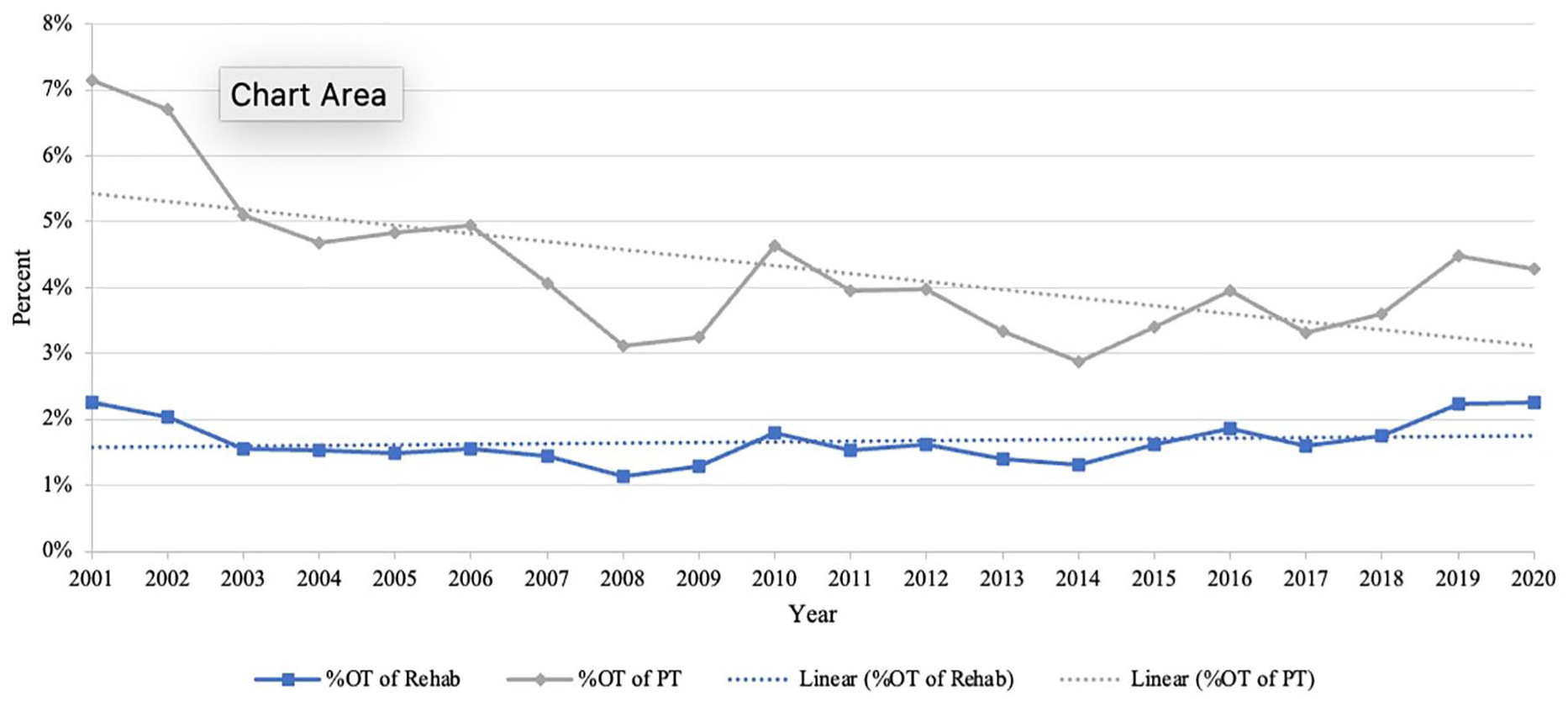
Yearly Percentage of OT Research Publications From 2001 to 2020.
Figure 2 shows the distribution of OT research publications by study design from 2001 to 2020. Knowledge synthesis was OT’s most common study design in 2020, comprising 45% of research publications. Knowledge synthesis study designs increased from 7.69% in 2001 to 45.14% in 2020 for OT, indicating a 1.93%-point annual increase (R2 = .79, p < .001). The growth of knowledge synthesis studies was higher for OT than for PT (annual growth rate: 1.02% points, R2 = .92, p < .001) and rehabilitation (annual growth rate: 1.16% points, R2 = .93, p < .001) (Supplementary Figure S2). For OT, the proportion of observation and qualitative study designs significantly increased from 15.38% to 20.14% (annual growth rate: 0.71% points, R2 = .46, p = .001) over the 20-year period. PT and rehabilitation also grew significantly (PT annual growth rate: 0.30% points, R2 = .67, p < .001; rehabilitation annual growth rate: 0.33% points, R2 = .61, p < .001), albeit at a lower annual growth rate.
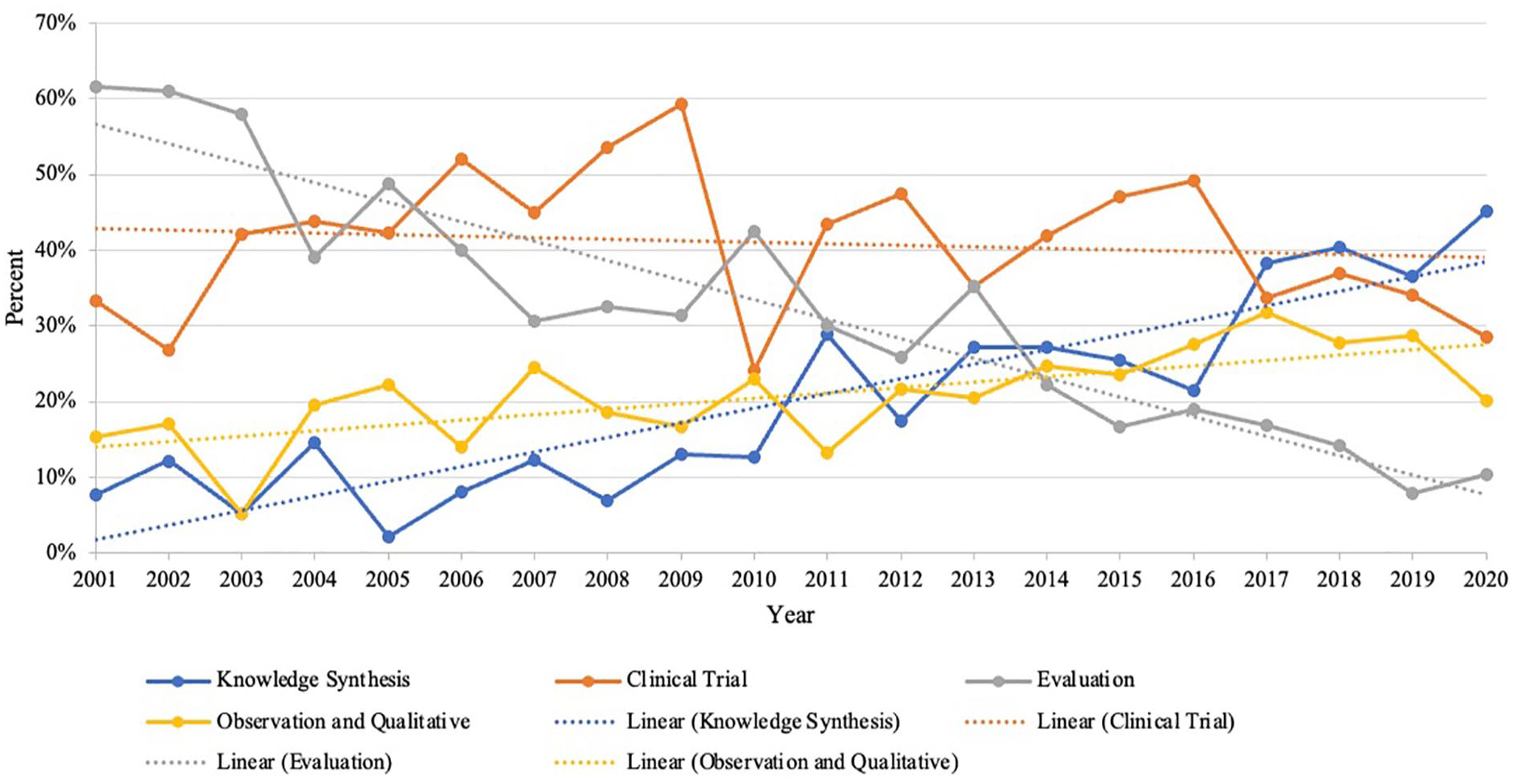
OT Research Publications by Study Design Type.
The proportion of evaluation studies significantly declined over time for all fields. From 2001 to 2002, OT evaluation publications declined from 61.54% to 10.42% (annual growth rate: −2.58% points, R2 = .88, p < .001), PT from 40.66% to 10.40% (annual growth rate: −1.80% points, R2 = .94, p < .001), and rehabilitation from 53.93% to 12.01% (annual growth rate: −2.45% points, R2 = .96, p < .001) (Supplementary Figure S3). Clinical trial studies did not change in the proportion of published studies for OT (M: 40%, R2 = .02, p = .58) or PT (M: 68%, R2 = .15, p = .09), but there was a small, significant growth for rehabilitation (48.44% in 2001 to 51.36% in 2020, R2 = .24, p = .03).
1b. OT Research Publications and Declared Funding, Compared With PT and Rehabilitation
Figure 3 shows that all three health care fields (OT, PT, and Rehab) had similar yearly rates of publications that reported funding support, around 55% of published articles. However, for OT, there was a marked yearly variation and no significant change from 2001 to 2015 (R2 = .0002, p = .96). A significant, positive change in funded publications was observed for both PT (annual growth rate: 0.47% points, R2 = .56, p = .001) and rehabilitation (annual growth rate: 0.43% points, R2 = .64, p < .001).
1c. Distribution of OT Research Publications by Population Age and Compared With PT and Rehabilitation
Figure 4 shows that OT research publications did not significantly change in population age distribution from 2001 to 2020 (pediatrics: R2 = .05, p = .33; working age: R2 = .05, p = .36; aged: R2 = .06, p = .29). In 2020, 26.39% of OT research publications were for pediatrics, 29.17% for aged, and 37.50% for working age, demonstrating a relatively balanced distribution of OT research publications across target populations.
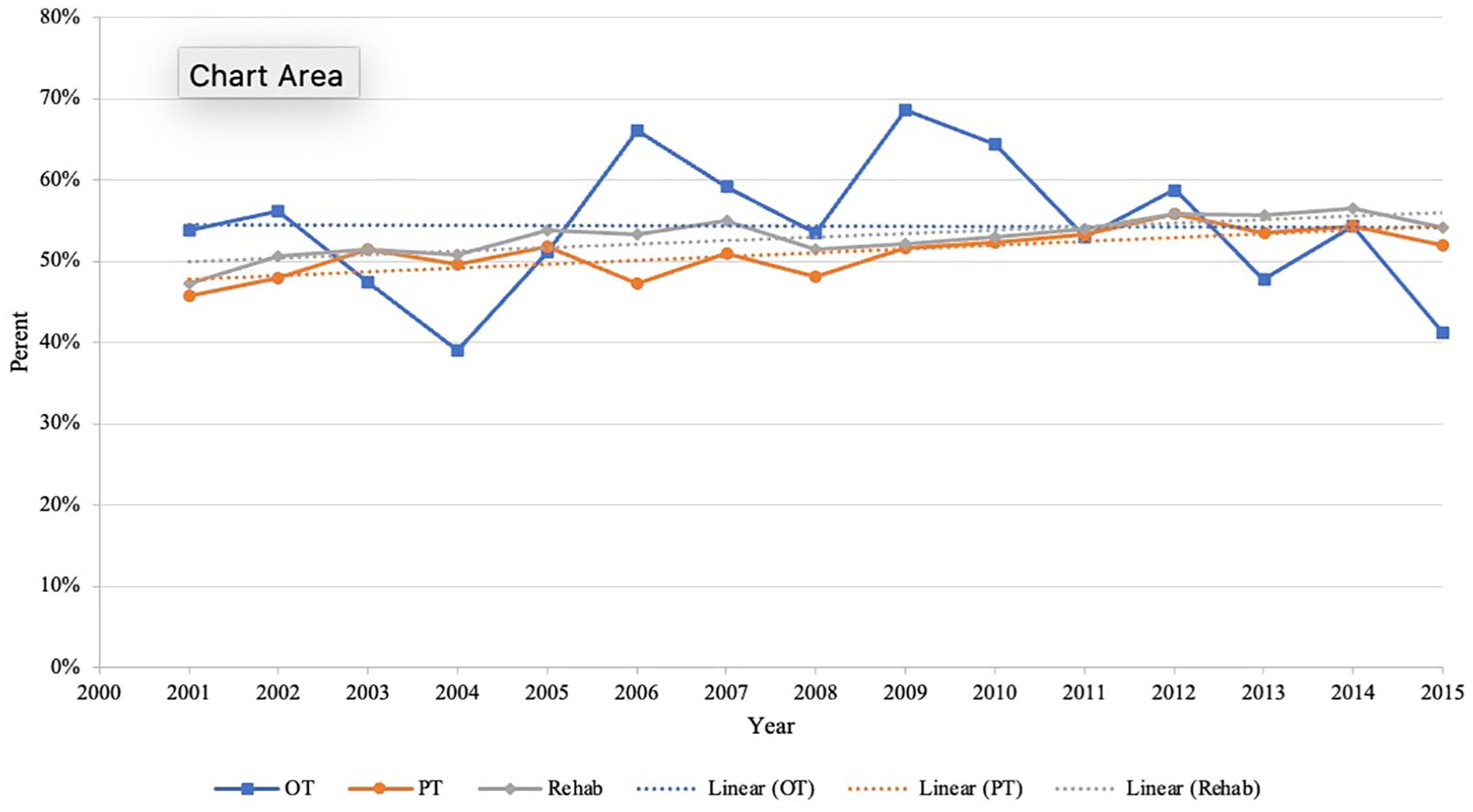
Percentage of Research Publications that Declared Funding Support From 2001 to 2015.
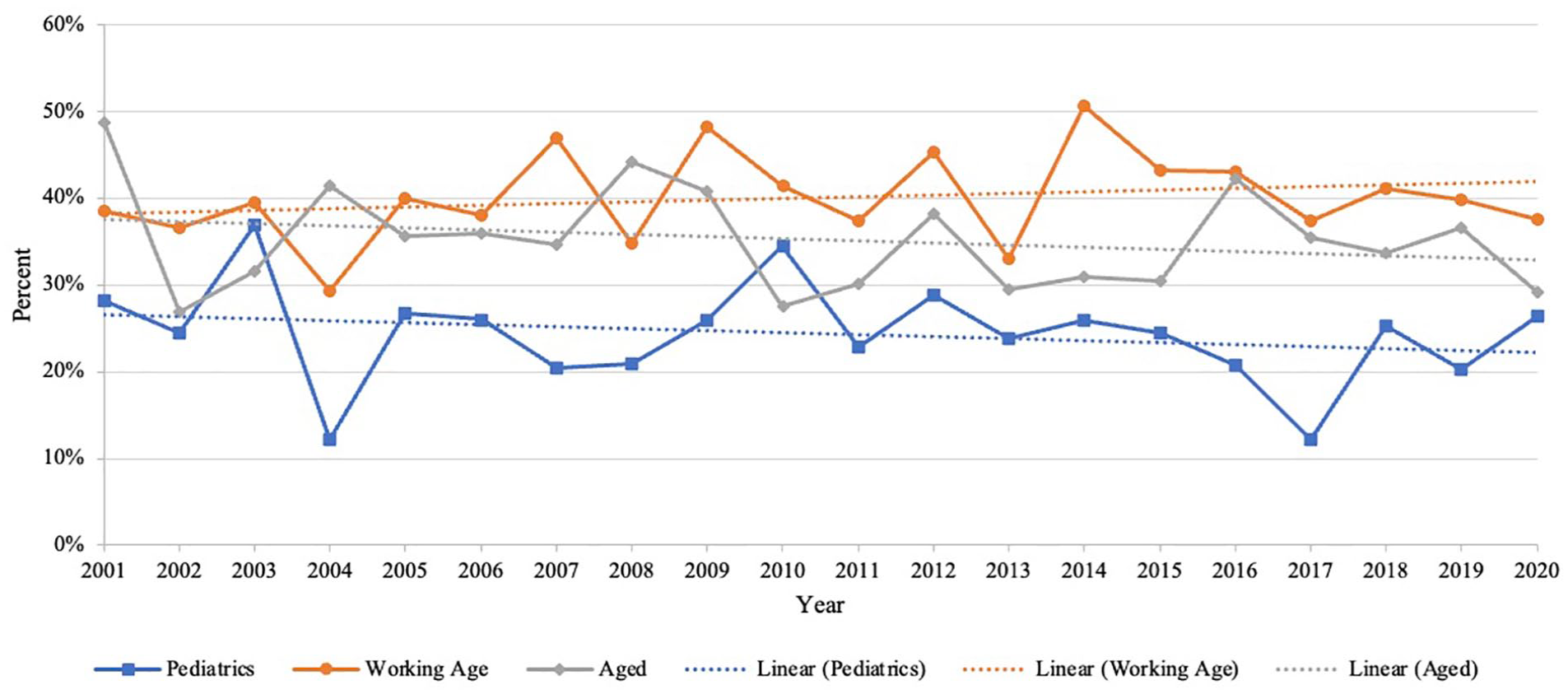
OT Publications by Population Age.
The distribution of OT research publications by population age is dissimilar relative to the comparators. Supplementary Figure S4 shows the working age group had greater preponderance for both PT and rehabilitation research publications (i.e., >50% for every year). Both PT (annual growth rate: 0.36% points, R2 = .24, p = .03) and rehabilitation (annual growth rate: 0.38% points, R2 = .30, p = .01) research publications grew significantly within the working age group over the 20 years. On the flip side, the pediatric age group decreased significantly for both PT (annual growth rate: −0.12% points, R2 = .21, p = .04) and rehabilitation (annual growth rate: −0.25% points, R2 = .56, p < .001) research publications. No significant trends were observed for either PT or rehabilitation research publications for aged populations.
Distribution of OT Research Publications by Practice Area
From 2001 to 2020, OT research publications predominantly focused on adult physical rehabilitation (24%–45%) and pediatrics (12%–37%), with the yearly variation in these percentage values being reflected into a non-significant change in the time trend for the 20-year period (R2 = .006, p = .75 and R2 = .08, p = .22, respectively). Both adult intellectual disabilities and neurocognitive disorders and adult emergent and other health conditions research publications increased significantly over the 20-year period (annual growth rate: 0.44% points, R2 = .34, p = .007; annual growth rate: 0.33% points, R2 = .34, p = .007, respectively). No significant trend was observed for the adult mental health and substance abuse practice area (R2 = .03, p = .49) research publications, with publications varying by year (see Figure 5).
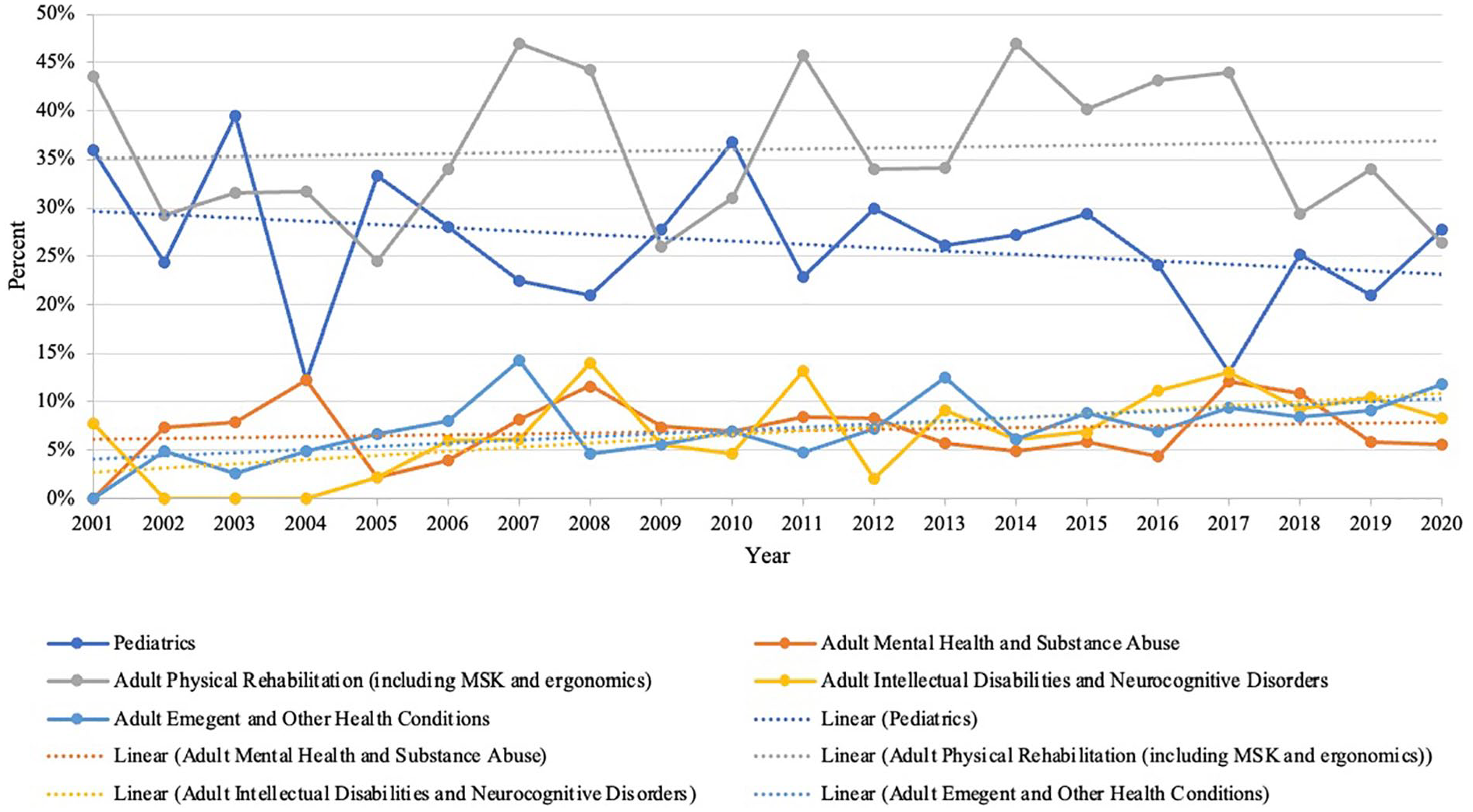
OT Research Publications by Practice Area.
Discussion
This study described the trends in OT research publications from 2001 to 2020, compared with PT and rehabilitation research publications. Our results show OT research publications are growing over time at a rate similar to rehabilitation research publications, but much slower than PT research publications. OT research publications grew linearly and significantly, with an increase in 5.86 publications per year. OT research publications comprised less than 2.5% of all yearly rehabilitation research publications, with no significant change over 20 years. Relative to PT research publications, OT research publications significantly declined from 7% to ~4% over the 20-year period.
For the distribution per study design, we found knowledge synthesis study designs increased significantly in relative percentage over time for OT, PT, and rehabilitation, which is aligned with previous studies (Colquhoun et al., 2020; Jesus, 2016; Zhao et al., 2022). However, the relative growth trend was more pronounced for OT. In 2020, >45% of OT research publications were knowledge syntheses; this is higher than prior reports for OT (~15%–20%) (Decullier et al., 2017; Folha et al., 2019) and was higher than what we observed for both PT (25%) and rehabilitation (26%). Our observed differences compared with other studies may be attributed to the search inclusion criteria. We included many types of knowledge syntheses (except narrative reviews) into a comprehensive search filter, whereas prior studies have examined systematic reviews in isolation or separated knowledge synthesis studies by subgroups (e.g., scoping review, systematic review) (Folha et al., 2019; Jesus, 2016). Alternatively, prior studies used earlier years for inclusion, and thus may not have fully captured the increasing trend of knowledge synthesis studies in OT. As knowledge syntheses may be more financially viable for researchers to complete, given they often do not require compensation (e.g., participant expenses, research coordinators, medical team) or other high costs (e.g., equipment, assessment tools, ethics approvals; Martin et al., 2017), they may be more feasible for researchers to conduct.
However, we found the percentage of OT evaluative publications declined over time, while that of clinical trials remained the same. This brings to question what studies are being synthesized in the OT field—is the field synthesizing the same study designs repeatedly, or is the field synthesizing designs that are not evaluative or trials? A recent Delphi study identified research priorities for OT practice and found that the effectiveness of OT interventions was a key priority worldwide (Mackenzie et al., 2017). Evaluative studies declining over time (and clinical trial study designs remaining relatively constant at 40%) contrasts with the research priorities identified by OTs (Mackenzie et al., 2017). Accordingly, there may be a gap in what research OTs want and what studies OT researchers can feasibly conduct. To address OT priorities outlined in the Delphi study, OT researchers could build capacity with OT clinicians to develop research proposals and carry out effectiveness studies in their clinical settings. Increased attention to OT research priorities may result in more evidence-based research studies, a greater use of experimental designs, and a broader inclusion of health conditions across the lifespan. An alternative explanation could be OT research publications that use evaluative methodologies are indexed in databases outside of PubMed (e.g., British Journal of Occupational Therapy), or may be related to OT research that is focused more on education or sociocultural determinants, and less focused on health and biomedical topics.
Interestingly, we found OT research publications had a higher proportion of observational and qualitative studies (21%) when compared with PT (4%) and rehabilitation (14%), similar to the previous reports (Decullier et al., 2017; Folha et al., 2019). This may be partially attributed to OT’s research agendas and priorities, including the focus on meaningful engagement, participation, collaboration, and client-centered practice (Mackenzie et al., 2017; Vessby & Kjellberg, 2010; Watson et al., 2021; World Federation of Occupational Therapists, 2024). The holistic scope of OT practice may lead to research entailing more cross-sectional survey studies and qualitative studies where lived experiences, individual’s perspectives, and life stories are explored.
We found that declared funding rates (~50%) were similar across OT, PT, and rehabilitation. Research publications with declared funding significantly increased over time for PT and rehabilitation, albeit marginally. In turn, the percentage of OT research publications reporting funding showed no significant change, possibly due to the higher yearly variation. The increase in funding for PT research publications is similar to the findings reported by (Jesus, Gianola, Castellini, Colquhoun and Brooks, 2020). Increased funding over time may be associated with the high percentage of clinical trials in PT, which often require funding for study operations (Martin et al., 2017). Despite similar funding rates for all three health fields, OT research publications comprise a small fraction of rehabilitation research, which may, in part, be explained by less funded research. As funding is associated with research publications (Jacob & Lefgren, 2011; Wahid et al., 2021), the OT field may require more funding to close the overall volume gap and the volume of experimental study designs.
Regarding population age groups, OT research publications showed a relatively balanced distribution across population ages over time. OT’s philosophy, to promote meaningful occupation, is true across the lifespan (Gupta et al., 2017); thus, it is unsurprising that research publications were distributed across age groups. In contrast, PT patients tend to be of working age (Ravensberg et al., 2005), and thus congruent with our findings. Furthermore, working age comprises the largest proportion (ages 18–65 years) of the three age groupings, so it is more likely that more clinical work, and thus more research, is conducted on this age group. Given an aging population and declining birth rates, future research resources may be needed for the aged population group, and less so in pediatrics.
Per practice area, OT research publications largely focused on more traditional areas of OT practice: (a) adult physical rehabilitation, which includes musculoskeletal health and neurological conditions, and (b) pediatrics. We observed an increase in OT research publications related to (a) adult intellectual and neurocognitive disorders and (b) adult emergent and other health conditions. Adult intellectual and neurocognitive disorders included dementia, a growing concern across health care, largely attributed to the aging population (Brayne & Miller, 2017; Frankish & Horton, 2017; Ghosh et al., 2024). The increased public health concern and awareness to dementia may have contributed to the increase in publications over time. In addition, physical rehabilitation and pediatrics may lend themselves more to biomedical or health research publications, and thus may be more likely to be indexed in PubMed, compared to OT research publications which not only encompass health-related fields but also include sociocultural determinants of health, social justice, education, and other health adjacent research. Thus, OT research publications may be indexed in databases that are not specifically health-focused or biomedical (i.e., PubMed). Furthermore, emergent health trends (e.g., women’s health, cardiovascular health, LGBTQ2A++) may have provided opportunities for new avenues of research exploration. Thus, intuitively, it would be expected that the number of publications in this category would increase.
Finally, the limited percentage of all OT research publications each year, when compared to PT and rehabilitation research publications, may be understood in the light of the following hypothesized factors. First, few programs offer research-based (i.e., Doctor of Philosophy) graduate student training associated with OT departments. Consequently, OT faculties may have a smaller proportion of doctoral-level and research-focused faculty. Furthermore, OT programs may lack research funding or resources for OT-focused research (Harvison & American Occupational Therapy Association, 2022; Man et al., 2019; Thomas et al., 2016). Second, OT research may intersect more with other fields (e.g., social justice, education, disability theory, psychology) and thus may be indexed in journals more relevant to these topics and not in a health-related journal indexed by PubMed. In our study, the inclusion criteria (i.e., use of major indexation terms) specified research publications focused on (beyond related to) OT, PT, or rehabilitation. Similarly, OT research may focus on environmental determinants or client populations (e.g., understanding their lived experiences or occupations), without an explicit mention (e.g., in the title, abstract, or keywords) of OT practice. Occupational therapists conducting OT-focused or OT-related research may need to ensure the titles, abstracts, or keywords explicitly include OT as a term for the research to be accurately indexed. Indexation accuracy supports the identification, dissemination, and use of OT research, which further informs OT science and practice. However, scientific databases could develop more comprehensive indexation terms for OT research. Both labeling and indexing OT research may enable OT clinicians and researchers to gain easier access to OT research.
Limitations
Our study findings should be interpreted while considering the limitations. First, we only identified studies published in journals that are indexed in PubMed. Some OT journals (e.g., British Journal of Occupational Therapy) are not currently indexed in PubMed. Hence, our results may be understood as the OT research publication trends in PubMed, not OT research publications overall, even though PubMed is a key, public domain and large health database.
Also, OT research may be published in journals that transcend the health sector (e.g., education, social justice), and hence not indexed in PubMed by the matter of scope. This may be further compounded as much of the PT literature is health-focused, and thus may be more likely than OT to be indexed in a health-focused database, such as PubMed. Rehabilitation is a broad field encompassing OT, PT, speech–language pathology, and other health-related rehabilitation areas of focus. Thus, our comparison only encompasses the type of literature the PubMed database indexes (i.e., health-focused) and does not account for the more holistic applications of OT research beyond health. Ergo, we may be making a comparison between a larger proportion of PT and rehabilitation research publications to a smaller proportion of OT research publications consequent to PubMed’s indexing process. So, our use of PubMed as the scientific database to understand OT research publications may have limited our inclusion of OT articles indexed in non-health journals. Therefore, we might have underrepresented the extent of OT research publications. Moreover, our analyses could not fairly include the data for more recent years and trends due to indexation features (e.g., indexation delay). Furthermore, PT is a common comparator for OT; however, there may be other professions or health fields (e.g., speech–language pathology, psychology, and kinesiology) that may be useful comparators for OT, which could be explored in future. Finally, although we accounted for the number and rate of publications over time, we did not assess the quality of research publications. Future research could explore the trends in OT research publications from a variety of databases to better capture the broad field of OT research.
Conclusion
OT research publications are increasing each year. Although growing, OT research publications encompass less than 2.5% of rehabilitation research publications. Only a small number of OT research publications used experimental designs, which is an identified priority area of OT research, and an avenue for future OT research exploration. Our results suggest the need for a more intentional labeling and comprehensive indexation of OT research publications, so OT research can be identified by clinicians and other researchers in their target database searches. Overall, our findings may inform future OT research, OT practices, and funding priorities.
Supplemental Material
sj-docx-1-otj-10.1177_15394492241292438 – Supplemental material for Occupational Therapy Research Publications From 2001 to 2020 in PubMed: Trends and Comparative Analysis with Physiotherapy and Rehabilitation
Supplemental material, sj-docx-1-otj-10.1177_15394492241292438 for Occupational Therapy Research Publications From 2001 to 2020 in PubMed: Trends and Comparative Analysis with Physiotherapy and Rehabilitation by Heather A. Shepherd, Tiago S. Jesus, Emily Nalder, Armaghan Dabbagh and Heather Colquhoun in OTJR: Occupational Therapy Journal of Research
Supplemental Material
sj-docx-2-otj-10.1177_15394492241292438 – Supplemental material for Occupational Therapy Research Publications From 2001 to 2020 in PubMed: Trends and Comparative Analysis with Physiotherapy and Rehabilitation
Supplemental material, sj-docx-2-otj-10.1177_15394492241292438 for Occupational Therapy Research Publications From 2001 to 2020 in PubMed: Trends and Comparative Analysis with Physiotherapy and Rehabilitation by Heather A. Shepherd, Tiago S. Jesus, Emily Nalder, Armaghan Dabbagh and Heather Colquhoun in OTJR: Occupational Therapy Journal of Research
Supplemental Material
sj-xlsx-3-otj-10.1177_15394492241292438 – Supplemental material for Occupational Therapy Research Publications From 2001 to 2020 in PubMed: Trends and Comparative Analysis with Physiotherapy and Rehabilitation
Supplemental material, sj-xlsx-3-otj-10.1177_15394492241292438 for Occupational Therapy Research Publications From 2001 to 2020 in PubMed: Trends and Comparative Analysis with Physiotherapy and Rehabilitation by Heather A. Shepherd, Tiago S. Jesus, Emily Nalder, Armaghan Dabbagh and Heather Colquhoun in OTJR: Occupational Therapy Journal of Research
Supplemental Material
sj-xlsx-4-otj-10.1177_15394492241292438 – Supplemental material for Occupational Therapy Research Publications From 2001 to 2020 in PubMed: Trends and Comparative Analysis with Physiotherapy and Rehabilitation
Supplemental material, sj-xlsx-4-otj-10.1177_15394492241292438 for Occupational Therapy Research Publications From 2001 to 2020 in PubMed: Trends and Comparative Analysis with Physiotherapy and Rehabilitation by Heather A. Shepherd, Tiago S. Jesus, Emily Nalder, Armaghan Dabbagh and Heather Colquhoun in OTJR: Occupational Therapy Journal of Research
Footnotes
Author Contributions
H.A.S., T.S.J., E.N., and H.C. conceptualized and designed the study. H.A.S. completed the data collection, analysis, and drafted the manuscript with support and mentorship from T.S.J. All authors critically reviewed and revised the final manuscript.
Data Availability Statement
Data relevant to this work are provided in the attached Supplementary Files. All data were obtained from the PubMed database.
Declaration of Conflicting Interests
The author(s) declared no potential conflicts of interest with respect to the research, authorship, and/or publication of this article.
Funding
The author(s) received no financial support for the research, authorship, and/or publication of this article.
Ethical Approval
We used public domain data for this study, and thus institutional review board approval was not required and there are no ethical concerns.

Supplemental Material
Supplemental material for this article is available online.
References
Supplementary Material
Please find the following supplemental material available below.
For Open Access articles published under a Creative Commons License, all supplemental material carries the same license as the article it is associated with.
For non-Open Access articles published, all supplemental material carries a non-exclusive license, and permission requests for re-use of supplemental material or any part of supplemental material shall be sent directly to the copyright owner as specified in the copyright notice associated with the article.
