




Abstract
The Person–Environment–Occupation–Performance (PEOP) Model is one of several occupation-based models in occupational therapy. The model describes the transactional nature of person, environment, and occupation factors that support performance (doing), participation (engagement), and well-being (health and quality of life). The purpose of this study was to explore the extent and nature of evidence on the PEOP Model. We used a scoping review to identify and analyze journal articles that used the PEOP Model as a framework for study. The PRISMA extension for scoping reviews (PRISMA-ScR) criteria were used to develop the research methods. We found 109 articles that adopted the PEOP Model as an organizing framework. The studies reviewed represent the breadth of occupational therapy practice and the transactional nature of person, environment, occupation, and performance in the PEOP Model. The PEOP Model is a useful international framework for research and practice across populations, conditions, life circumstances, settings, and areas of practice.
Plain Language Summary
Background and Purpose: The Person–Environment–Occupation–Performance (PEOP) Model was developed to guide occupational therapy practice. The PEOP Model summarizes all the factors that support or limit our involvement in everyday living. By everyday living, we mean all the things we do to take care of ourselves, maintain our health and home, connect with friends and family, engage in meaningful activities, and support ourselves and our community through work and volunteering. The purpose of this study was to summarize the reasons why and the extent to which the PEOP Model was used in research and practice.
Method: We searched five databases to identify published articles that used the PEOP Model. Then, we analyzed our findings from peer-reviewed journals and peer-reviewed practice publications using a recommended process called a scoping review. We summarized how often the PEOP Model was used and the way in which it was used.
Findings: We found the PEOP Model was used in more than 100 published articles. The PEOP Model has been used to study everyday living for different populations, life circumstances, countries, and communities. Authors found the PEOP Model was helpful for identifying what was important to individuals and determining things that were helpful and barriers to everyday living.
Conclusion: Authors described the PEOP Model as a useful tool in their research methods and analyses. Occupational therapy professionals may find the PEOP Model helpful in current and innovative areas of practice to help people achieve their goals related to everyday living.
Keywords
Introduction
Conceptual models are used to inform occupational therapy practice and research. A model provides a visual image of constructs and complex relationships to help practitioners gather relevant information and frame problems that may benefit by occupational therapy services (Baum et al., 2005). In the 1980s, occupation-based models were emerging to emphasize our historical roots on occupations as means and ends. The Person–Environment–Occupation–Performance (PEOP) Model was one of these evolving person–environment–occupation (PEO) models. All PEO models emphasize client-centeredness, ecological approaches, and complex interactions among biological, psychological, and social factors.
The PEOP Model was developed to provide a clear and comprehensive summary of the factors and relationships that contribute to the occupational therapy lens on human performance, participation, and well-being (Baum et al., 2015). It is a top-down, systems model relevant for different clients, settings, and life situations. The PEOP Model depicts the transactional nature among a narrative, person (intrinsic) factors, environment (extrinsic) factors, occupations, and performance (doing) to support participation (engagement) and well-being (health and quality of life); (Baum et al., 2015). The PEOP Occupational Therapy Process supports application of the PEOP Model to clients as individuals, families, groups, organizations, communities, and populations (Bass et al., 2015). Four versions of the PEOP Model have been introduced over the last four decades to emphasize occupational performance and organize the evolving body of knowledge from multiple disciplines (Baum & Christiansen, 2005; Baum et al., 2015, 2020; Christiansen & Baum, 1991, 1997a, 1997b). The central idea that transcends these versions is the emphasis on performance as the outcome of the interaction of person, environment, and occupation (Bass et al., 2017).
Although the PEOP Model is identified as a primary occupational therapy practice model, there has not been a comprehensive analysis of the historical and current use of the model for its four versions. Some studies have completed scoping reviews on specific topics using the PEOP Model as an organizing framework for analysis (Conn et al., 2019; Kersten et al., 2020). However, there has not been any reviews of research on the PEOP Model itself. The longevity of the model and its four versions afford an opportunity to determine how it has been used to move our profession’s focus beyond biomedical problems that need to be fixed to occupational performance and larger sociocultural issues.
Scoping reviews have been proposed as an appropriate methodology to examine the extent, range and nature of research activity . . ., to determine the value of undertaking a systematic review . . ., to summarize and disseminate findings . . ., and to identify research gaps in the existing literature . . . (Arksey & O’Malley, 2005, p. 21)
We selected a scoping review approach to determine the nature and extent of the evidence using the PEOP Model across populations, settings, and domains of occupational therapy practice. This approach was chosen to evaluate the contributions of the model in shaping the profession’s focus on occupation and its place in larger sociocultural and ecological approaches.
Method
Research Design
We used a scoping review approach for this study. The steps outlined in Arksey and O’Malley’s article (2005) were followed, including (a) identify a research question, (b) identify relevant studies, (c) select relevant studies, (d) chart the data, and (e) collate, summarize, and report results. In addition, recommendations by Levac et al. (2010) for strengthening the quality of scoping reviews and the PRISMA extension for scoping reviews (PRISMA-ScR; Page et al., 2021; Tricco et al., 2018) were integrated into the process (see Supplemental Table 5).
Research Question and Objective
Two primary questions guided this scoping review study:
Identifying Relevant Studies
A university librarian completed an initial search of databases and provided the team with the terms to replicate and extend the results. “Person-Environment-Occupation-Performance” and “PEOP” model were entered in the following search engines: CINAHL, PubMed, PsycInfo, OT Search, and Google Scholar. The citation function in CINAHL and Google Scholar was used to identify additional articles that cited the primary chapters authored by the developers of the model (Bass et al., 2015, 2017; Baum & Christiansen, 2005; Baum et al., 2005, 2015, 2020; Christiansen & Baum, 1991, 1997b; Christiansen et al., 2011). The Publish or Perish software was used to obtain initial metrics on publication years, citation years, papers, citations, citations per year, citations per paper, and authors per paper. The initial search was conducted from June 2021 through February 2022 by two of the authors. References from this search were exported into an Excel Spreadsheet and organized by database. In February 2023, an additional search was conducted by the same two authors to identify articles published after the initial search.
Study Selection
The following inclusion criteria were used to select articles for review: (a) any article using the term “Person-Environment-Occupation-Performance” or “PEOP” model in the body of the document, (b) written in English, and (c) primary research study (clinical trial, qualitative, psychometric study, cross-sectional, program evaluation, case methods, descriptive, mixed methods, intervention studies, secondary analysis, feasibility study, longitudinal), review of research study (systematic review, scoping review, literature review, meta-analysis), or discussion (guideline, conceptual paper, position paper, theoretical article, program development) article. Our initial search yielded 951 articles using the identified keywords. From the list of 951 articles, 184 were removed for being a duplicate and 202 were removed for other reasons (English version not available, textbook chapter, or being an original source on PEOP Model). A review of the 565 remaining articles was completed with 214 articles eliminated from further review for being gray literature. The reports sought for retrieval included 351 articles with 20 articles not retrieved. The remaining 331 articles were then analyzed, with 222 articles excluded for not focusing on the PEOP Model or other reasons. The final analysis for the scoping review was based on 109 journal articles (peer-reviewed journal articles and peer-reviewed practice publications). The screening process for each article included a review of the abstract, a search for the model in the manuscript, and an examination of the reference list. The PRISMA 2020 flowchart for study selection is depicted in Figure 1. The PRISMA-ScR checklist is summarized in Supplemental Table 5.
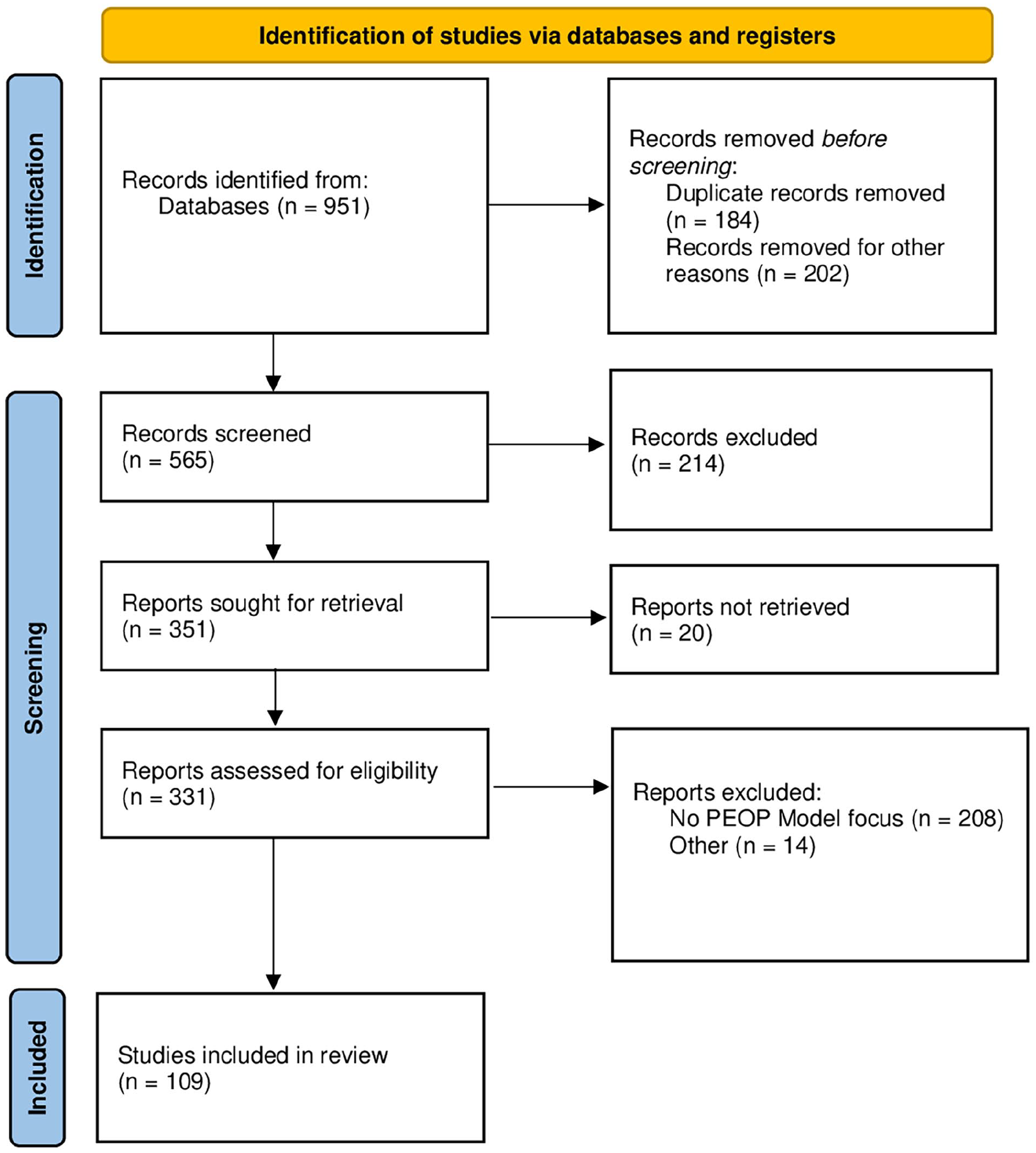
PRISMA 2020 Flow Diagram Used for the Scoping Review.
Charting the Data
Two team members met weekly to chart the data from the articles. The recommendations by Levac et al. (2010) to strengthen charting the data were followed. One Excel spreadsheet was used to chart the extent of the characteristics in the journal articles addressing the PEOP Model. The categories were the PEOP edition, the number of words discussing PEOP (Scammell et al., 2016), the type of article (primary research, review of research, discussion), age group (lifespan, children, youth, adult, older adult), race/ethnicity, conditions (physical conditions, cognitive, mental, and behavioral conditions, populations, general), 10 categories of occupations from the Occupational Therapy Practice Framework–Fourth Edition (OTPF-4; American Occupational Therapy Association [AOTA], 2020), setting of the study (community, clinical, general), geographic location of the study (United States, international), type of client (individual, organization, population, general), and source of publication (American Occupational Therapy Association, other American occupational therapy [OT] journals, international OT journals, non-OT journals). Individual spreadsheets were used to chart the articles from each database. We extracted the peer-reviewed publications, eliminated redundancies, and entered references in a master spreadsheet. The master spreadsheet was used to analyze selected characteristics for each article. A detailed summary of each characteristic was recorded in one comprehensive spreadsheet. Standard categories were then created for some characteristics to organize the presentation of results.
A second Excel spreadsheet was created to chart the nature of the evidence in the journal articles with one hundred or more words addressing the PEOP Model. This approach was modeled after a scoping review that addressed the nature of the literature on the CO-OP model (Houldin et al., 2018). Data extracted by three team members included the description and discussion of (a) person factors, (b) environment factors, (c) occupations, (d) performance, (e) assumptions, (f) PEOP Occupational Therapy Process or situational analysis, (g) narrative, and (h) general information about the study and PEOP Model. These two Excel spreadsheets captured the extent (frequency) and nature (how described) of the discussion on the PEOP Model. As the focus of a scoping review is to understand the extent and nature of the evidence, we did not conduct critical appraisals of the quality of the research articles.
Collating, Summarizing, and Reporting Results
For Question 1, tables and pie charts were created to collate, summarize, and report the results for the data in the spreadsheets. The focus of categorization was to map the most prevalent characteristics, so we completed a frequency analysis of the data. The results were cross-checked for accuracy by two team members. For Question 2, three team members used an iterative process to develop themes that described the nature of the evidence (Scammell, 2016). We developed guiding questions and a data-charting form and piloted the process for five articles to ensure consistency in ratings. We used broad questions on the form to guide our discussions on descriptions and variation in descriptions of the PEOP Model in articles. We reviewed, discussed, and cross-checked the representation of the PEOP Model as noted in the data-charting spreadsheet and articles during weekly team meetings. We identified themes from a content analysis and discussion of the final spreadsheet and supporting articles that summarized the transactional nature of person, environment, and occupation factors as related to occupational performance, participation, and well-being and how the evidence applied and extended the PEOP Model to distinct and innovative areas of research and practice.
Results
Extent of the Literature on the PEOP Model
What is the extent of the literature on the PEOP Model in terms of the characteristics of populations, types of clients, conditions, occupations, geographic areas, settings, type and year of publication, type of article and research, and edition of the model?
General characteristics of 109 journal articles on the PEOP Model are summarized in Tables 1 and 2. Articles citing the PEOP Model increased steadily over the last 20 years with 44% of the articles published since 2020. Version 3 (2005) and version 4 (2015) were cited at similar levels. The majority of articles described the PEOP Model using ≥100 words (59%), were primary research and reviews of research studies (80%), and were set in community settings (75%). Quantitative (31%) and qualitative and case methods (24%) were the predominant primary research designs. Although the authors of the PEOP Model reside in the United States, 38% of the studies were international (n = 19 countries/geographic locations) and 22% of the publications were in international OT journals (n = 9 journals). Studies using the PEOP Model were also published in 21 non-occupational therapy journals.
Summary of Individual Articles Using the PEOP Model.
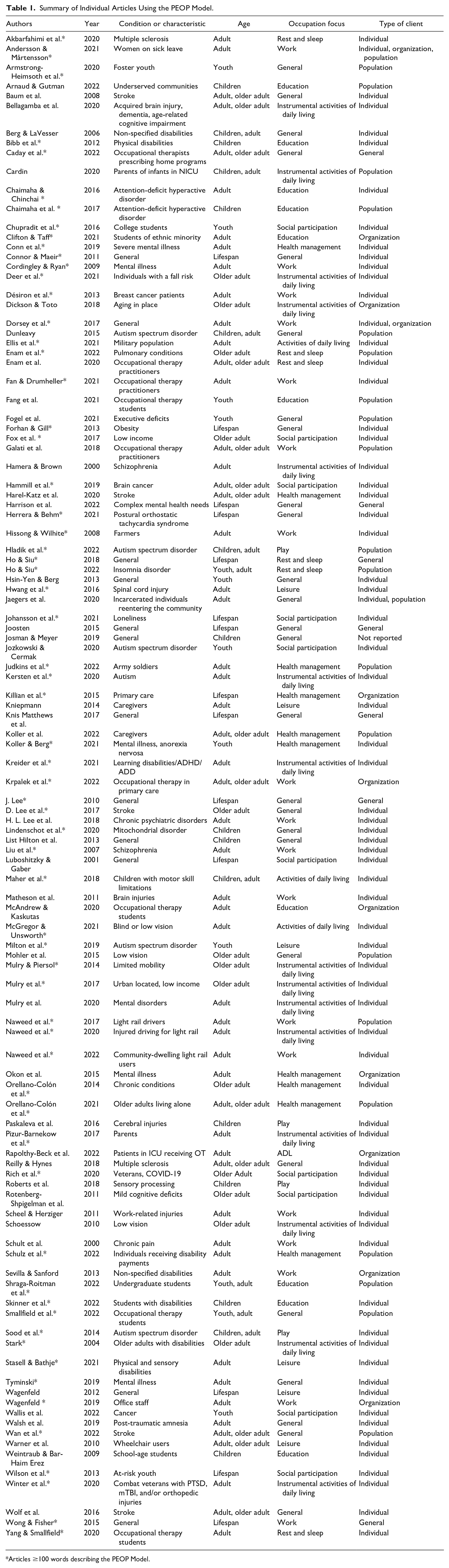
Articles ≥100 words describing the PEOP Model.
General Characteristics of Publications Using the PEOP Model (n = 109).
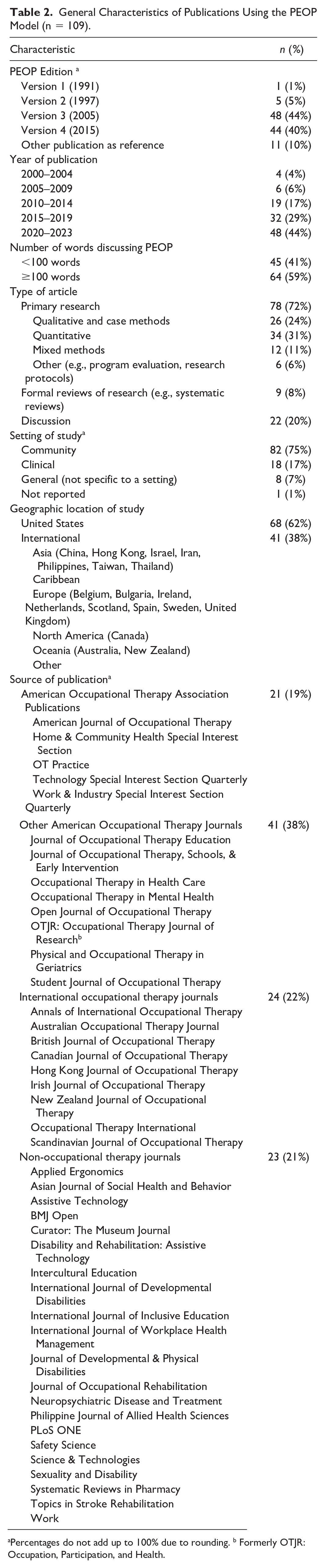
Percentages do not add up to 100% due to rounding. b Formerly OTJR: Occupation, Participation, and Health.
Characteristics of target populations and occupations are summarized in Table 3. The PEOP Model has been used for target populations of all ages and conditions. Almost one third of the articles had target populations representing the lifespan (13%) or more than one age group (19%). One half of the studies focused on individuals with physical (e.g., cancer, arthritis, osteoporosis; 25%) or cognitive and behavioral (e.g., mental illness, learning disabilities, dementia; 25%) conditions. The other half of the studies focused on general populations (12%) or populations with other defined characteristics (e.g., practitioners, college students, incarcerated individuals; 39%). Although the majority of studies focused on clients as individuals (62%), 27% of the studies described organizations or populations. The occupations of interest included a broad array of OTPF-4 categories, including work (16%), instrumental activities of daily living (15%), social participation (10%), education (10%), and health management (11%).
Characteristics of Target Populations and Occupations (n = 109).
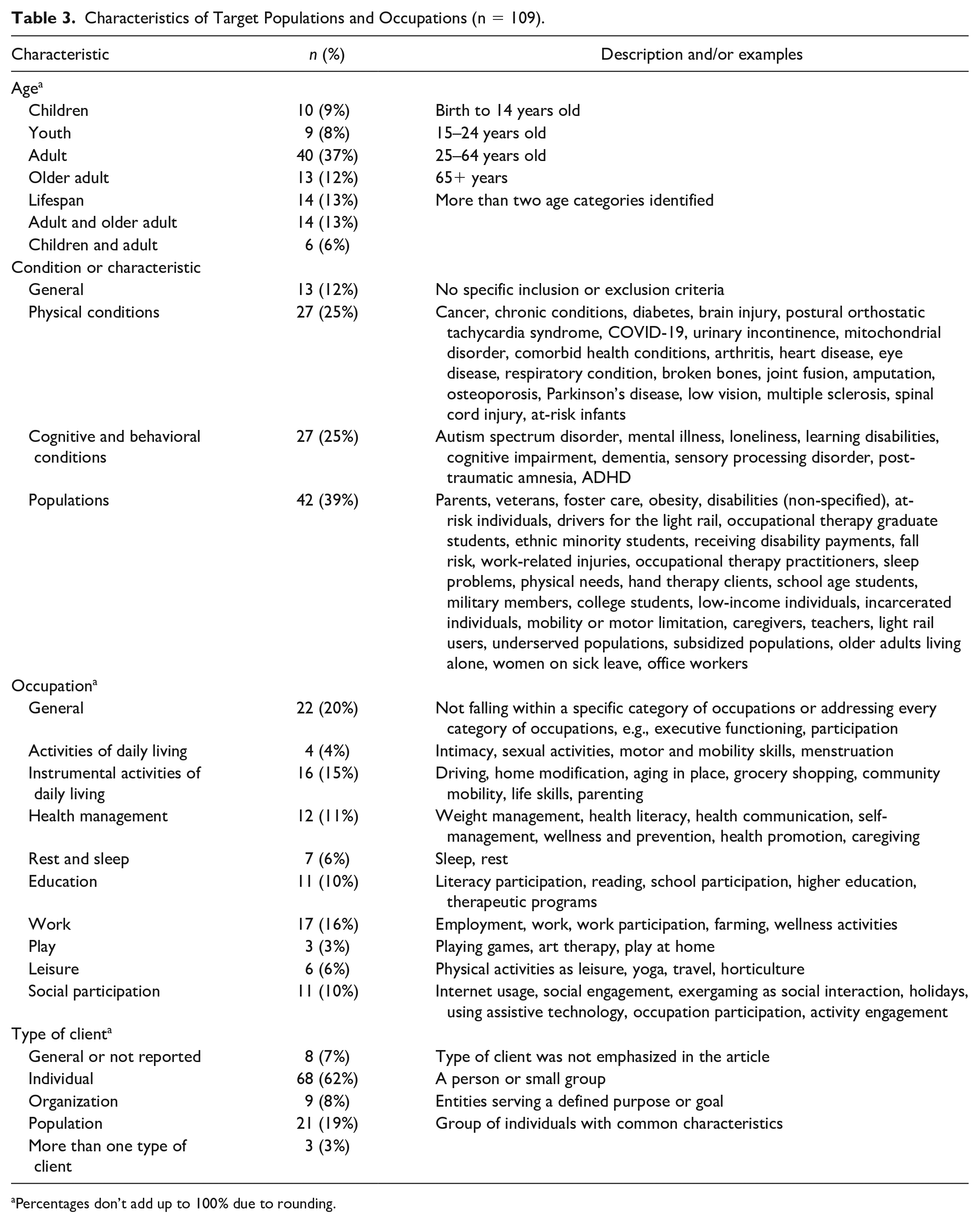
Percentages don’t add up to 100% due to rounding.
Nature of the Literature on the PEOP Model
What is the nature of the literature that adopts the PEOP Model to (a) study the transactional nature of person, environment, and occupation to support performance and participation, and (b) apply and extend the PEOP Model to distinct and innovative areas of research and practice?
Sixty-four articles described the application of the PEOP Model using ≥100 words. Seven themes captured the nature of the literature through the iterative process used by the team. Three themes illustrate the application of the PEOP Model for describing the transactional nature of person, environment, and occupation factors as related to performance, participation, and well-being: (a) Comprehensive and Organizing Framework for Research and (b) Emphasizing Environmental Influences on Performance, and (c) Interplay Among Occupation, Performance, and Participation. Three themes depict how the PEOP Model was applied and extended to distinct and innovative areas of practice: (d) Broader Perspectives on Occupations, Performance, Participation, and Well-Being, (e) Application of the PEOP Model in Interventions, and (f) Adapting the PEOP Model for Research and Practice. One theme highlights comparisons of the PEOP Model to other occupation-based models: (g) Relationship between PEOP and Other Occupation-Based Models.
Comprehensive and Organizing Framework for Research
Comprehensive occupational therapy models enable researchers to examine complex components and relationships among factors that are relevant to occupational therapy. A comprehensive application of the PEOP Model was noted in many studies (n = 44), meaning the articles directly or indirectly discussed assumptions along with person, environment, occupation, and performance factors. Qualitative (n = 13), mixed methods (n = 9), case studies (n = 5), and reviews of research (n = 2) studies provided the most direct and comprehensive use of the PEOP Model. For example, a case series study conducted interviews of farmers with conditions or disabilities to explore all aspects of farming (Hissong & Wilhite, 2008). A mixed-method design used observations, interviews, and surveys to identify PEOP factors associated with injuries in light rail drivers (Naweed et al., 2020). Ho and Siu (2018) used the PRISMA systematic review process to identify and organize sleep management approaches by the PEOP factors. The PEOP Model was also introduced as a framework to organize the components of social prescribing programs for loneliness (Johansson et al., 2021).
Emphasizing Environmental Influences on Performance
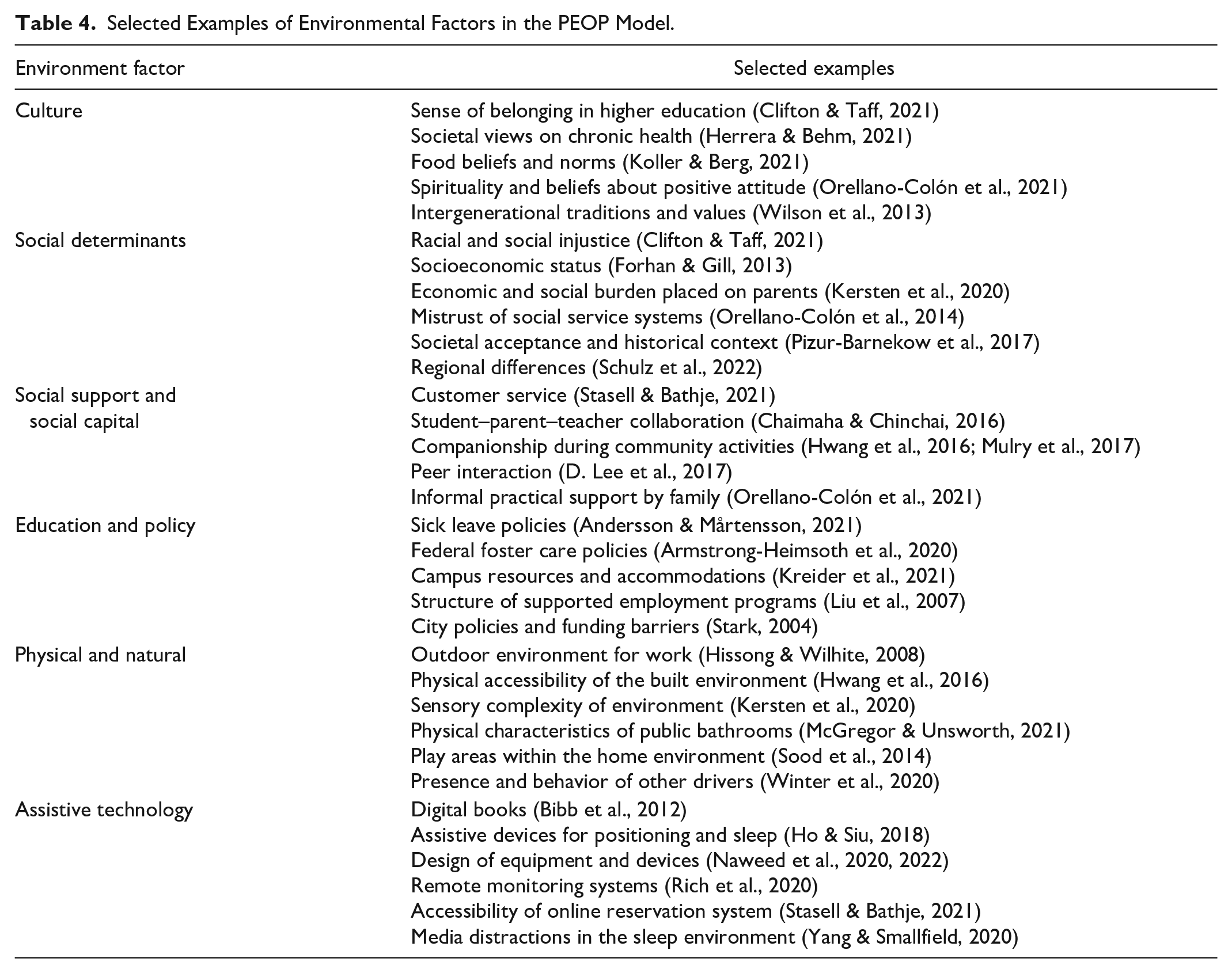
The PEOP Model was chosen as an appropriate framework for exploring environmental influences on performance and participation. For example, a qualitative study explored environmental factors (physical, virtual, and social) associated with hotel experiences of individuals with disabilities, including physical characteristics of the hotel room and accessibility of the online reservation process (Stasell & Bathje, 2021). A narrative review of postural orthostatic tachycardia syndrome (POTS) explored multiple environmental barriers on performance, including policy, physical and natural environment, assistive technology, social environment, and culture (Herrera & Behm, 2021). An intervention study focused on removing environmental barriers (physical environment and assistive technology) in older adults’ homes and reported improved satisfaction and performance of residents (Stark, 2004). A program evaluation identified environmental factors in a museum that supported accessibility and inclusion for children on the autism spectrum (Hladik et al., 2022). Table 4 provides selected examples of other characteristics associated with each of the environmental factors in the PEOP Model.
Selected Examples of Environmental Factors in the PEOP Model.
Interplay Among Occupation, Performance, and Participation
Studies often used the PEOP Model to articulate occupation as separate from performance or participation. Some studies explored a broad array of occupations while others focused more narrowly on activities and tasks within an occupation category. The PEOP Model was also used as a framework for investigating occupations not commonly addressed in occupational therapy research, including sleep (Akbarfahimi et al., 2020; Enam et al., 2022; Fan & Drumheller, 2021; Yang & Smallfield, 2020), work (Désiron et al., 2013; Dorsey et al., 2017; Herrera & Behm, 2021; Liu et al., 2007; Naweed et al., 2022), self-management and health management (Herrera & Behm, 2021; D. Lee et al., 2017; Orellano-Colón et al., 2021), and community mobility (Kersten et al., 2020; Mulry et al., 2017).
There was variation in the ways in which performance and participation was described. Some studies captured the characteristics of performance or participation for a specific occupation or condition. For example, performance aspects of menstrual hygiene management for women who were blind or had low vision included positioning sanitary pads and selecting sanitary items in a supermarket (McGregor & Unsworth, 2021). A scoping review of occupational therapy interventions to address weight gain and obesity in people with mental illness identified performance and participation in health promoting occupations as central to changing person factors (Conn et al., 2019). A discussion article described the complex executive performance requirements of instrumental activities of daily living and social participation (Connor & Maeir, 2011). For children with significant disabilities, social and academic inclusion were proposed as meaningful aspects of participation (Skinner et al., 2022). In forensic occupational therapy, performance risk areas were noted as self-harm, negative social behaviors, and violence (Cordingley & Ryan, 2009). A qualitative study of individuals with brain cancer explored aspects of participation that are not typically addressed by occupational therapy (e.g., end-of-life planning, meaningful social participation; Hammill et al., 2019).
Broader Perspectives on Occupations, Performance, Participation, and Well-Being
The PEOP Model provided a framework for investigations of populations that need a stronger voice in occupational therapy research. For example, articles highlighted international perspectives from Iran (Akbarfahimi et al., 2020), Sweden (Andersson & Mårtensson, 2021; Johansson et al., 2021), Thailand (Chaimaha & Chinchai, 2016; Chaimaha et al., 2017; Chupradit et al., 2021), Australia/New Zealand (Maher et al., 2018; Wilson et al., 2013), Philippines (Caday et al., 2022), China (Wan et al., 2022), and the United Kingdom (Cordingley & Ryan, 2009; Maher et al., 2018). Black, Indigenous, and People of Color (BIPOC) perspectives were obtained in studies of underrepresented college students (Clifton & Taff, 2021; Shraga-Roitman et al., 2022), aging Puerto Ricans (Orellano-Colón et al., 2014, 2021), African American fathers (Pizur-Barnekow et al., 2017), and African Americans with disabilities (Schulz et al., 2022). Narratives of other voices that have not been emphasized in the literature were examined, including children (Lindenschot et al., 2020; Milton et al., 2019), foster care youth (Armstrong-Heimsoth et al., 2020), farmers (Hissong, 2008), military personnel (Judkins et al., 2022), college students (Kreider et al., 2021; Smallfield et al., 2022), urban-dwelling low-income populations (Mulry et al., 2017), and intergenerational mentors (Wilson et al., 2013).
Some studies addressed broader perspectives on occupation that inform future directions for practice. Studies on eating disorders and weight management examined specific occupations that should be considered in assessment and intervention (Conn et al., 2019; Forhan & Gill, 2013; Koller & Berg, 2021). The PEOP Model was proposed as an approach to guide the occupational therapy process in several studies related to sleep (Akbarfahimi et al., 2020; Enam et al., 2022; Fan & Drumheller, 2021; Ho & Siu, 2018; Yang & Smallfield, 2020). The role of occupational therapy in higher education was explored using the PEOP Model (Chupradit et al., 2021; Clifton & Taff, 2021). New directions in self-management programs and primary care used the PEOP Model as an organizing framework (Killian et al., 2015; Krpalek et al., 2022; D. Lee et al., 2017; McGregor & Unsworth, 2021; Orellano-Colón et al., 2021; Wan et al., 2022). Recent studies have articulated the occupational therapy contributions to newer areas of inquiry including light rail drivers (Naweed et al., 2020, 2022), loneliness (Johansson et al., 2021), travel for individuals with disabilities (Stasell & Bathje, 2021), supported employment programs (Liu et al., 2007), and sexuality and intimacy (Ellis et al., 2021).
Application of the PEOP Model in Interventions
Application of the PEOP Model in occupational therapy interventions was demonstrated in clinical trials, mixed methods, case studies, pilot studies, and conceptual articles. Case studies provided rich descriptions of how the PEOP Model was used to guide evaluation and intervention in complex cases. A case series study of veterans with COVID-19 illustrated how occupational therapists addressed person and environment factors in a complex acute care setting to support occupational performance (Rich et al., 2020). Another case series study described an Occupational Therapy Sexuality and Intimacy (OTSI) program for non-commissioned military officers to address the multiple person and environment factors influencing performance in sexual and intimate activities (Ellis et al., 2021). A case study of an intervention combining the Transtheoretical Model and the PEOP Model for an individual with serious mental illness illustrated how goals for behavior change may be achieved (Tyminski, 2019).
Some studies examined the effectiveness of occupational therapy interventions based on the PEOP Model. A pilot randomized clinical trial compared a care-as-usual (CAU) sleep intervention with a CAU plus PEOP-based intervention for individuals with multiple sclerosis (Akbarfahimi et al., 2020). They found the addition of the PEOP-based intervention improved sleep quality and quality of life and decreased fatigue. A mixed-methods, single-group pretest-posttest of Let’s Go, a community mobility program for urban-dwelling, low-income older adults, found significant improvement in participation and autonomy at program end and follow-up (Mulry et al., 2017). A quasi-experimental pilot study of an Improving Participation After Stroke Self-Management Program (IPASS) group based on the PEOP Model found significant changes in community integration and perceived recovery compared with the control group (D. Lee et al., 2017). A pre-test, post-test effectiveness study of an occupational therapy home modification intervention found that older adults with disabilities improved occupational performance and satisfaction with performance (Stark, 2004). These studies provide preliminary evidence of the benefits in using the PEOP Model to guide development and implementation of occupational therapy interventions.
Some studies used the PEOP Occupational Therapy Process to describe the narratives, assessments/evaluations, interventions, and outcomes of an OT process. A case study design documented the use of the Process as part of a collaboration with Agriability to provide services to four farmers who had injuries or illnesses that threatened to end their participation in farming (Hissong & Wilhite, 2008). The Process began with an occupational profile (similar to the narrative in the PEOP Model) and included environmental modifications and changes in farming habits and routines to support performance. The outcome of this collaboration supported role identity for the farmers, resumption of a farming livelihood, and balance in farm activities. The PEOP Occupational Therapy Process was also used to capture the relationships among the narrative, person and environment factors, and performance, participation, and well-being related to community mobility and driving for autistic people (Kersten et al., 2020).
Adapting the PEOP Model for Research and Practice
A number of articles included the visual image of the PEOP Model or an adapted image to organize methods or analyses. The 2015 PEOP Model was incorporated in several articles. A revised model was proposed to convey the influence of person, environment, and occupation factors on veterans’ post deployment driving (Winter et al., 2020). A modified image of the model illustrated a pathway to guide practitioners in using social prescribing programs for individuals who experience loneliness (Johansson et al., 2021). A simplified version of the model was used to identify the most frequently used self-management strategies by Puerto Rican older men who had disabilities (Orellano-Colón et al., 2021).
Most studies that included an image of the PEOP Model chose the 2005 (3rd) version. A scoping review study on Canadian and American literature adapted the model to summarize the conceptual focus of occupational therapy research on obesity (Forhan & Gill, 2013). The figure noted that of the 27 articles in the review, only four articles addressed all major components of the model. A narrative review of literature on POTS adapted the model to illustrate the complex factors and interactions that contributed to deconditioning for individuals with this condition (Herrera & Behm, 2021). A conceptual framework on sleep management depicted three levels of the model for occupational therapy interventions: person, environment, and occupation that either support or limit sleep function (Ho & Siu, 2018). A case series used the model to provide specific examples of person and environment factors influencing performance while recovering from COVID-19 (Rich et al., 2020). The model was adapted to identify specific person and environment factors associated with injuries in light rail drivers (Naweed et al., 2020). In a qualitative study of older male mentors’ perceptions of an intergenerational mentoring program, the figure was used to organize key findings from focus groups and interviews (Wilson et al., 2013). The image of the model was used in a comparison of occupation-focused models that support practice (Wong & Fisher, 2015). In all of these studies, the key attributes of the model were retained to address person, environment, occupation, and performance.
Relationships of the PEOP Model to Other Occupation-Based Models
Comparison of the PEOP Model to other occupation-based models was seen in six review and discussion articles. The most common models compared with the PEOP Model were the Model of Human Occupation (MOHO) Model (n = 5), the Canadian Model of Performance and Engagement (CMOP-E; n = 3), The Transtheoretical Model (TTM; n = 2), Ecology of Human Performance (EHP; n = 1), Occupation Adaptation (OA; n = 1), and the Health Belief Model (n = 1). Comparisons among these models were found in studies of behavioral change (Tyminski, 2019), primary care practice (Killian et al., 2015), work participation (Dorsey et al., 2017), home instruction programs (Caday et al., 2022), and breast cancer rehabilitation (Désiron et al., 2013). Examples of distinct characteristics associated with the PEOP Model included its client-centered approach, a unique view of client perspectives, equal focus on person and environment factors, and emphasis on performance and participation. Two articles reviewed evidence linked to occupation-focused practice models and outlined the use of these models in practice (Lee, 2010; Wong & Fisher, 2015). When compared with other occupation-focused models, the PEOP model was noted for its application to a wide range of populations, use in guiding the process of assessment and evaluation, utilization with individuals, organizations, and communities, simplified view of the occupational therapy process, and identification of enablers and barriers.
Discussion
There is growing emphasis on the importance of occupation-based models in occupational therapy practice. This scoping review summarizes applications of the PEOP Model in research, practice, and education.
Extent of the Literature on the PEOP Model
The extent of the literature indicates the PEOP Model has broad applications for providing an occupational therapy lens for research questions, educational strategies, and practice focus. Although many peer-reviewed journals do not require identification of a conceptual framework, authors selected the PEOP Model as a foundation for research methods and analyses in 109 journal articles. Approximately 44% of these articles were published since 2020 and 40% of the citations focused on Version 4 (2015) of the PEOP Model. Most of the articles were research studies (80%); however, the Model was also used to organize summaries of the body of knowledge in current and innovative areas of practice. Although the majority of articles were in American journals (57%), almost half of the articles were found in international occupational therapy journals (22%) and non-occupational therapy journals (21%). This scoping review highlighted findings in journal articles, but it was interesting to note that the search process yielded 214 non-journal sources, including reports, dissertations, conference proceedings, and textbook chapters.
The primary constructs or factors in the PEOP Model are aligned with occupational therapy and ICF terminology and flexible to support applications across populations, settings, conditions, occupations, and areas of practice. Performance and participation in meaningful occupations are important for individuals of all ages, cultures, conditions, and life circumstances. Authors chose the PEOP Model as the framework for target populations having a broad age range (32%) and characteristics not commonly investigated in occupational therapy research (39%). Earlier versions of the PEOP Model focused on the client as an individual. The third and fourth version of the Model offers an important tool for scholars who want to bring occupational therapy perspectives to organizations and populations. Although the majority of the articles focused on the client as an individual, there were some studies that investigated the client as an organization (Killian et al., 2015; Sevilla & Sanford, 2013) or population (e.g., Schulz et al., 2022; Smallfield et al., 2022). These studies support an expanded definition of client-centered practice with 28% of the studies identifying client as beyond the individual.
Nature of the Literature on the PEOP Model
The central features of the PEOP Model emphasize adopting a systems perspective, focusing on occupational performance, valuing collaboration, and supporting client-centered practice (Baum et al., 2015). These characteristics were evident in many of the themes used to summarize the nature of the literature on the PEOP Model.
The PEOP Model is a systems model in that it conveys the relationships among all the person, environment, and occupation factors that affect the function of the system as a whole in terms of performance, participation, and well-being. In established and innovative areas of occupational therapy research, the PEOP Model offered an accessible and comprehensive systems model for organizing and analyzing the complex factors that influence performance and participation. The transactional or reciprocal interaction of both general and specific factors was explored in many studies (e.g., Ellis et al., 2021; Naweed et al., 2022). Some investigators incorporated the PEOP Model into several of their published studies (Chaimaha & Chinchai, 2016; Chaimaha et al., 2017; Enam et al., 2020, 2022; Ho & Siu, 2018, 2022; Koller & Berg, 2021; Koller et al., 2022; Mulry et al., 2014, 2017, 2020; Naweed et al., 2017, 2020, 2022; Orellano-Colón et al., 2014, 2021; Wagenfeld, 2012; Wagenfeld et al., 2019).
The systems perspective of the PEOP Model appears to be particularly helpful in advancing an occupational therapy lens for community and societal areas of practice. Studies in newer areas of inquiry were found in both occupational therapy and non-occupational therapy journals. Innovative perspectives explored populations (women on sick leave: for example, Andersson & Mårtensson, 2021; foster care youth: Armstrong-Heimsoth et al., 2020), occupations (sleep: for example, Akbarfahimi et al., 2020; internet usage: for example, Chupradit et al., 2021), and settings (forensic settings: for example, Cordingley & Ryan, 2009; social prescribing programs: for example, Johansson et al., 2021) that are not typically addressed by occupational therapy. Thus, this model may provide a comprehensive approach for investigating a new area.
In the PEOP Model, performance is defined as the doing of meaningful activities, tasks, and roles to support participation and well-being (Baum et al., 2015). Performance is influenced by the interactions between person and environment factors for given occupations. This emphasis on performance enabled investigators to explore performance as a distinct entity for the occupations chosen for study. Research methods included observations, interviews, focus groups, surveys, and objective measures to describe the performance aspects of occupations and influencing factors (e.g., Maher et al., 2018; McGregor & Unsworth, 2021; Winter et al., 2020). Some articles also examined participation in valued family, community, and societal roles (e.g., Dorsey et al., 2017; Skinner et al., 2022; Wolf et al., 2016), but the distinction between performance and participation constructs appears to need further development. The need for further refinement in the definitions and measurement of these two constructs has been discussed in recent literature (Imms et al., 2016; Mulligan, 2017).
The PEOP systems perspective reminds us that environment factors are critical to consider along with the person’s capacity. The Model embraces disability and health inequity views that highlight the environment as a central feature of health. Studies summarized in this scoping review reinforce the idea that supports and barriers in the environment influence levels of disability and health status. The importance of specific environment factors was noted, including extrinsic characteristics of the culture (e.g., Clifton & Taff, 2021), social determinants (e.g., Kersten et al., 2020), social support and capital (e.g., Hwang et al., 2016), education and policy (e.g., Andersson & Mårtensson, 2021), physical and natural (Sood et al., 2014), and assistive technology (Ho & Siu, 2018).
The PEOP Model emphasizes collaboration and client-centered approaches. In the PEOP Model and PEOP Occupational Therapy Process, the narrative fosters collaboration and elicits key information regarding clients’ life stories. Qualitative methods and case studies provided rich descriptions of narratives, including perceptions, meanings, choices, attitudes, motivations, needs, and goals (Baum et al., 2015). These approaches were particularly helpful in exploring perspectives that are often not highlighted in occupational therapy research. For example, interviews or focus groups were used to obtain narratives from African American fathers (Pizur-Barnekow et al., 2017), Puerto Rican older adults (Orellano-Colón et al., 2014), and urban-dwelling, low-income older adults (Mulry et al., 2017). The emphasis on the narrative may have contributed to the selection of the PEOP Model in these studies.
Implications for Research and Practice
In practice, research, and education, there is growing emphasis on the importance of using models to guide our approaches. This scoping review found the PEOP Model is helpful in organizing the growing body of knowledge regarding occupations and performance at individual, population, and organization levels. These studies enhance our understanding of environment factors and broader definitions of the client. In research, the PEOP Model is useful for framing questions and guiding methods and analyses. The PEOP Model also provides a lens for the practitioner through the occupational therapy process and emphasizes innovative approaches, collaboration, systems perspectives, and performance of meaningful occupations that support participation and well-being.
Limitations
Several limitations were noted in this scoping review. Our research team discussed all articles until there was consensus on decisions related to inclusion and classification. Classifying the categories of interest in some articles was challenging especially when the description was limited. A few studies were inaccurate in their description, application, or citations of the model. We also focused on the main constructs in the name of the model and did not address the larger constructs of well-being and quality of life. Some articles used an older version of the model even though the most recent version should have been readily available. For the second question, we included articles that described the PEOP Model in 100 or more words and this approach may have resulted in missed evidence in the process. In this scoping review, we wanted to explore the full extent and nature of the evidence and so did not limit our studies to certain designs or publications. Thus, we did not ascribe ratings of overall quality to the articles included in this review.
Future Directions for the PEOP Model
The Model has evolved over its four versions to include the growing knowledge that supports occupational therapy. The findings from this scoping review provide direction for the next version of the model. Many aspects of the PEOP Model are already effectively applied as intended. However, these articles highlight some aspects of the model that would benefit by updating or clarifying, including (a) distinctions among occupations, performance, and participation; (b) expansion of client to include families and groups; (c) identification of emerging constructs that address environmental factors related to disability and health inequity; (d) emphasis on clients’ narrative as central to the PEOP occupational therapy process; and (e) articulation of the key constructs in relation to health, well-being, and quality of life.
Conclusion
This scoping review examined the extent and nature of the evidence on the PEOP Model. The extent of the literature supports international application of the PEOP Model across populations, occupations, conditions, life circumstances, settings, and areas of practice. The nature of the literature on the PEOP Model suggests it is a comprehensive model that provides direction for researchers as they frame questions and methods in their studies. The studies in this scoping review provide practitioners with rich examples that illustrate how to apply the PEOP Model across broad areas of practice.
Supplemental Material
sj-docx-1-otj-10.1177_15394492241238951 – Supplemental material for Application of the Person–Environment–Occupation–Performance Model: A Scoping Review
Supplemental material, sj-docx-1-otj-10.1177_15394492241238951 for Application of the Person–Environment–Occupation–Performance Model: A Scoping Review by Julie D. Bass, Josephine K. Marchant, Stephanie L. de Sam Lazaro and Carolyn M. Baum in OTJR: Occupational Therapy Journal of Research
Supplemental Material
sj-docx-2-otj-10.1177_15394492241238951 – Supplemental material for Application of the Person–Environment–Occupation–Performance Model: A Scoping Review
Supplemental material, sj-docx-2-otj-10.1177_15394492241238951 for Application of the Person–Environment–Occupation–Performance Model: A Scoping Review by Julie D. Bass, Josephine K. Marchant, Stephanie L. de Sam Lazaro and Carolyn M. Baum in OTJR: Occupational Therapy Journal of Research
Supplemental Material
sj-docx-3-otj-10.1177_15394492241238951 – Supplemental material for Application of the Person–Environment–Occupation–Performance Model: A Scoping Review
Supplemental material, sj-docx-3-otj-10.1177_15394492241238951 for Application of the Person–Environment–Occupation–Performance Model: A Scoping Review by Julie D. Bass, Josephine K. Marchant, Stephanie L. de Sam Lazaro and Carolyn M. Baum in OTJR: Occupational Therapy Journal of Research
Footnotes
Acknowledgements
Cynthia Graham, MA, MLIS, Assistant Professor and Librarian, St. Catherine University, supported initial database searches for literature.
Authors’ Note
Dr. Bass, Dr. de Sam Lazaro, and Dr. Baum are associate editors for the special issue. Ms. Marchant is an assistant editor for the special issue.
Declaration of Conflicting Interests
The author(s) declared no potential conflicts of interest with respect to the research, authorship, and/or publication of this article.
Ethical Approval and Patient Consent
This scoping review paper did not include any human subjects. The Institutional Review Board at St. Catherine University was consulted and determined that IRB approval was not required.
Funding
The author(s) disclosed receipt of the following financial support for the research, authorship, and/or publication of this article: A GHR Foundation Grant supported a graduate traineeship for Josephine K. Marchant.

Supplemental Material
Supplemental material for this article is available online.
References
Supplementary Material
Please find the following supplemental material available below.
For Open Access articles published under a Creative Commons License, all supplemental material carries the same license as the article it is associated with.
For non-Open Access articles published, all supplemental material carries a non-exclusive license, and permission requests for re-use of supplemental material or any part of supplemental material shall be sent directly to the copyright owner as specified in the copyright notice associated with the article.
