



Abstract
The Smart Cities Collaborative aims to mitigate transportation challenges and inequities with new approaches and technologies (e.g., ridesharing). Therefore, assessing community transportation needs is essential. The team explored the travel behaviors, challenges, and/or opportunities among low- and high-socioeconomic status (SES) communities. Using Community-Based Participatory Research principles, four focus groups were conducted to investigate residents’ behaviors and experiences with transportation availability, accessibility, affordability, acceptability, and adaptability. Focus groups were recorded, transcribed, and verified before thematic and content data analysis. Participants with low SES (n = 11) discussed user-friendliness, uncleanliness, and bus accessibility challenges. Comparatively, the participants with high SES (n = 12) discussed traffic congestion and parking. Both communities had concerns about safety and limited bus services and routes. Alternatively, opportunities included a convenient fixed-route shuttle. All groups stated the bus fare was affordable unless multiple fares or rideshare were needed. Findings provide valuable insight when developing equitable transportation recommendations.
Introduction
In 2018, Gainesville, Florida, was selected as part of the Smart Cities Collaborative, an initiative that “addresses transportation inequities with new approaches and technologies” (Woods, 2018, para. 2). Historically, transportation inequities (e.g., affordable and reliable transportation) have existed between socioeconomically different communities and perpetuate unequal access to employment, education, and/or basic daily needs (e.g., health care; Golub et al., 2013; Karner & Marcantonio, 2018; Litman, 2022). Researchers at the University of Florida (UF), City of Gainesville officials, and community stakeholders explored ways to enhance transportation equity and develop transportation recommendations. Before making recommendations, the team conducted a needs assessment via focus groups in two diverse communities, that is, Duval Heights and Haile Plantation in Gainesville, Florida. Guided by a Community-Based Participatory Research approach (CBPR; Israel et al., 1998) and The Beverly Foundation’s 5 A’s for Senior-Friendly Transportation framework (The Beverly Foundation, 2010), the team sought to understand the travel behaviors, challenges, and opportunities that residents experience with Gainesville’s transportation system.
Background
Gainesville, Florida, is the epicenter for education (i.e., UF), health care (i.e., UF Health Shands hospital), cultural events, and athletics in North Central Florida (City of Gainesville, 2021). According to the 2018 U.S. Census, Gainesville had 133,997 residents, with a median age of 26.1 and a median household income of US$37,264. The three largest race and ethnic groups were White (non-Hispanic) (56%), Black or African American (21%), and White (Hispanic) or Latino (9%; U.S. Census Bureau, 2018).
Historically, East Gainesville, including Duval Heights, has one of the largest minority populations whose incomes are below the federal poverty line compared with surrounding communities (Florida Housing Coalition, 2017). Access to essential services, such as health care or groceries, is limited in East Gainesville due to the lack of transportation and limited commercial businesses (Alachua County Community Health Advisory Steering Committee, 2016). Moreover, residents who do not own personal vehicles often use public transit to access the broader community (City of Gainesville, 2019).
According to the Regional Transit System (RTS) Development Plan (City of Gainesville, 2019), the bus system had limited-service times and routes and inadequately served East Gainesville. To improve public transit, the city employed on-demand vans to bring riders to and from their home to a central bus transfer station during non-peak hours (e.g., early mornings or after 6 p.m.; City of Gainesville, 2019). Although the on-demand vans were found convenient, weaknesses still included inadequate hours of operation, and frequency and range of services provided (Steiner et al., 2021). While the city made efforts to enhance East Gainesville’s transportation, limitations with routes and service times still existed and may contribute to a transportation disparity.
In contrast, the residents of Haile Plantation, located on the West side of Gainesville, are educated, with 60% being White non-Hispanic (U.S. Census Bureau, 2018). Household income levels are twice as high for White non-Hispanic families (US$51,740) compared with Black/African American families, such as those in East Gainesville ($26,561; University of Florida, 2018). Haile Plantation residents often rely on personal vehicle use and face challenges with traffic during rush hours. In addition, this community is served by two RTS bus routes (City of Gainesville, 2019). Although both communities have differing socioeconomic properties, transportation limitations exist, illustrating the need to improve transportation services. The team used CBPR principles to assess residents’ and stakeholders’ experiences in these communities to understand the transportation system’s current challenges and opportunities.
Community-Based Participatory Research
CBPR is a methodology that promotes collaboration between community, organizational, and academic partners in all aspects of a research process (Israel et al., 1998). Community members are equal and active partners. The uses of CBPR combine knowledge and action for social change to improve community health and eliminate health disparities.
The application of CBPR principles has been limited within the transportation field. Existing literature suggests that CBPR is an effective method to facilitate change and enhance transportation (Brooks-Cleator et al., 2019). Community partners guide the study design, process, and implementation to ensure the representation of the population. In addition, the Florida Department of Transportation’s Public Involvement Handbook (Florida Department of Transportation [FDOT], 2021) provides techniques for transportation agencies to include community members through all phases of the transportation decision-making process. For example, transportation stakeholders may engage the public in group meetings and/or outreach. Public engagement may improve a transportation system’s efficiency by implementing changes that meet a community’s needs and desires, increase public acceptance of projects, create a sense of community, and enhance credibility and trust among agencies and the community. Aligning with similar methods, the team used some CBPR principles in conjunction with a transportation criterion (i.e., Beverly Foundation’s 5 A’s of Senior-Friendly Transportation, next described) to conceptualize factors related to transportation use.
The 5 A’s of Senior Friendly Transportation
The Beverly Foundation (2010) developed the 5 A’s of Senior Friendly Transportation to assess seniors’ community-based transportation options. Each of the 5 A’s is next discussed. Availability is the presence or absence of transportation when needed (e.g., weekends). Acceptability is transportation that meets the rider’s expectations for convenience, safety, and cleanliness. Accessibility is transportation that can be reached and used (e.g., bus stop within walking distance from a storefront). Affordability is the expense required to use transit. Adaptability is modifying transportation to meet the riders’ needs (e.g., accommodate a wheelchair). While the 5 A’s of Senior Friendly Transportation is focused on older adults, it has gained importance in community mobility and is recognized at national, state, and local levels (Womack & Silverstein, 2012). Therefore, the team used this criterion to assess Gainesville residents’ transportation challenges and opportunities.
In addition to considering factors outlined in the 5 A’s of Senior Friendly Transportation, the team considered societal impacts on transportation use, for example, the role of transportation for residents during the global pandemic Coronavirus (COVID-19). The COVID-19 pandemic began while conducting this study and may have impacted Gainesville residents’ experiences and perceptions regarding the transportation system.
Impacts of COVID-19
The COVID-19 pandemic changed aspects of transportation systems. Social distancing policies profoundly impacted travel behavior at the national, state, and city levels. In larger cities, like New York, stay-at-home orders decreased ridership on public transit by 87% but increased the use of individual travel devices (e.g., bike-share; Eby, 2020). In Florida, statewide traffic dropped by 47.5% during COVID-19 compared with 2019 (Parr et al., 2020). Locally, the Gainesville RTS decreased ridership by 50%, with reduced routes and increased cleaning procedures (City of Gainesville, 2021). Stay-at-home orders, closure of activities, fear of the virus, or a combination of all the above may cause travel demand reduction. Moreover, with the decreased availability or use of public transit, residents may rely on other transportation modes, like personal vehicles (Circella & Dominguez-Faus, 2020). The potential shifts in transportation, such as those experienced with COVID-19, need consideration when conducting a needs assessment for the City of Gainesville transportation system.
Rationale and Significance
Transportation technological innovations, such as autonomous shared mobility services, were recently introduced to Gainesville. More advanced transportation technology may be implemented in future years and provide opportunities to help mitigate transportation challenges (e.g., limited bus routes). Limited transportation research includes CBPR principles, but community engagement and application of CBPR throughout the assessment, planning, and implementation processes may be beneficial. Therefore, the team assessed the current transportation behaviors, challenges, and opportunities that Gainesville residents experience to make informed transportation recommendations.
Purpose
The team conducted focus groups to understand Duval Heights and Haile Plantation residents’ lived experiences and perceptions regarding the Gainesville transportation system. The following research questions guided the team: For adults residing in Duval Heights or Haile Plantation, what are the experiences and perceptions of their current travel behaviors (e.g., where they travel), and what challenges and opportunities are associated with transportation use (e.g., availability, accessibility, acceptability, and adaptability)?
Method
Ethics and Institutional Review Board Approval
The University of Florida Institutional Review Board (IRB) approved this study.
Study Design
The team used a qualitative study design, utilizing focus groups.
Participants
Recruitment
Participants were recruited using purposive sampling (Patton, 2014). Team members presented study information and distributed flyers at churches, community centers, and libraries. Online sources, such as homeowner associations’ email lists and social media postings, were utilized. Moreover, snowball sampling occurred, where recruited participants told their peers about the study and enrolled (Goodman, 1961). The graduate student screened individuals using a pre-determined screening script.
Eligibility Criteria
Eligibility requirements included individuals that were aged 16 years and older; could read, write, and speak English; used any mode of transportation to access their community; resided in the Duval Heights or Haile Plantation communities for a minimum of a year. Haile Plantation residents needed internet and Zoom (video and speaker) to participate in the focus groups online to maintain COVID-19 social distancing guidelines. Individuals who did not meet the criteria were excluded from the study.
Sample Size
The focus groups included 23 participants (Duval Heights Group 1, n = 5; Duval Heights Group 2, n = 6; Haile Plantation Group 1, n = 6; Haile Plantation Group 2, n = 6).
Procedure
Development of the Community Advisory Board
To align with CBPR principles, the team invited representatives, such as church ministers or community advocates, from Duval Heights and Haile Plantation to serve on advisory boards. Advisory board members guided the development of the focus group design and questions to ensure relevance to their respective communities.
Development of Focus Group Questions
The team developed a focus group guide to inquire about participants’ opinions and experiences regarding transportation behaviors, challenges, and opportunities. After presenting the questions to the advisory boards and receiving feedback, the verbiage and structure of the focus group questions were revised.
Focus Group Location
Prior to the COVID-19 pandemic, two Duval Heights focus groups were held in a community center located on a bus route in East Gainesville. Adhering to COVID-19 social distancing precautions, the team submitted IRB revisions to adapt the two in-person Haile Plantation focus groups to an online format, utilizing the University’s secure subscription to Zoom videoconferencing.
Focus Groups
The graduate student offered Zoom training prior to the Haile Plantation focus groups for participants unfamiliar with Zoom features. After completing the informed consent and demographic questionnaires and discussing ground rules, the moderator used a focus group guide to facilitate a 60-min discussion with participants. Each focus group lasted approximately 90 min and included six to eight participants, a moderator, at least one advisory board member, and a graduate student. To conclude the groups, the moderator debriefed by thanking the participants for their participation and discussing the project’s next steps (McNallie, 2017). Participants from both communities received a US$30 payment card funded by FDOT.
Data Collection
Each focus group was voice-recorded using a handheld recorder and Zoom audio recording. The audio recordings, demographic questionnaires, and informed consents were stored in a secure, password-protected file or locked cabinet at UF. No personal identifiers were collected to protect participants’ privacy. In addition, the graduate student took field notes, aiding in interpreting inaudible recordings.
Data Management
Following each focus group, two graduate students conducted the first round of focus group transcription. Then, the graduate student, who was present at each focus group, completed each transcript’s second review to ensure completeness and accuracy. Transcripts were transferred to NVivo Qualitative Data Analysis software (QSR International Pty Ltd. Version 12, 2018).
Data Analysis
Data from the demographic questionnaires were entered into SPSS 25.0 and analyzed using descriptive statistics—frequency and central tendency. The graduate student conducting the analysis was previously trained in NVivo software and employed thematic and content analysis on each transcript. Using a deductive approach (Braun & Clarke, 2012), the thematic analysis involved identifying and coding participant quotes using established themes from the 5 A’s of Senior Friendly Transportation. The content analysis included coding and counting participants’ specific experiences, such as limited late-night bus service. The team used an iterative process to review and discuss the analysis, provide internal feedback, and recode data based on team consensus. Furthermore, the advisory board members reviewed and provided input on the focus group results to verify and validate the results. The advisory board members expanded on recommendations made by focus group participants, such as enhancing communication among transportation agencies and users through websites, social media, phone applications, or printed materials. Recommending specific communication methods to transportation agencies may improve the implementation of transportation changes.
Results
Demographics for the Duval Heights Focus Groups
Table 1 indicates the Duval Heights focus groups included 11 participants (seven female, three male, one declined to state) between 25 and 75 years old (Mage=60.1, SD = 12.62, Mdnage= 61.5, Modeage = 59 and 73. The team also collected participants’ transportation demographics and inquired if participants were satisfied with their transportation. Most participants stated they were dissatisfied with the current transportation system. Comments regarding satisfaction or dissatisfaction with the transportation system are reflected in the focus group findings below.
Demographics of the Duval Heights Focus Group Participants (N = 11).
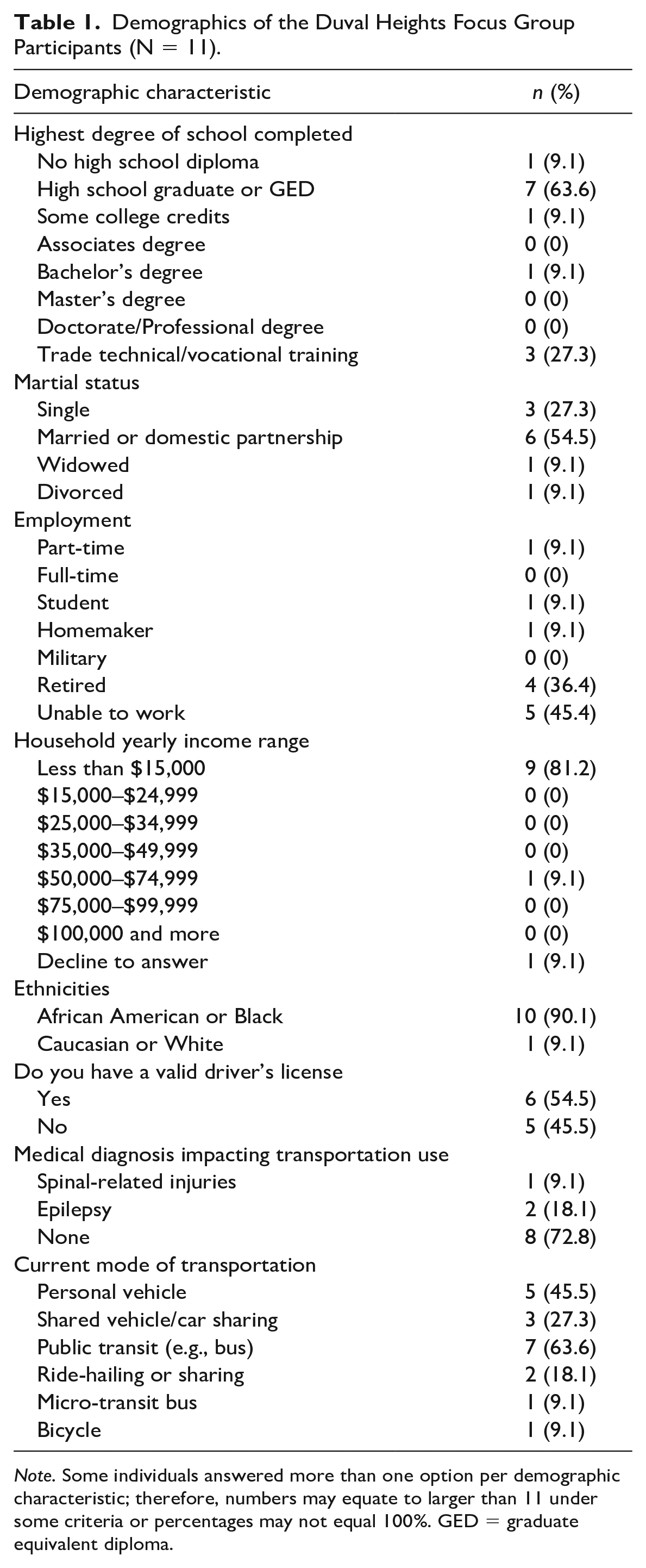
Note. Some individuals answered more than one option per demographic characteristic; therefore, numbers may equate to larger than 11 under some criteria or percentages may not equal 100%. GED = graduate equivalent diploma.
Duval Heights Focus Group Findings
The Duval Heights focus groups’ findings are summarized below and organized by the 5 A’s of Senior Friendly Transportation (The Beverly Foundation, 2010).
Acceptability
Participants discussed transportation acceptability, such as safety, cleanliness, and user-friendly bus stops and buses. Distracted drivers and the lack of streetlights and security measures at the bus stops heightened participants’ anxiety and concern while traveling at night. A participant described, “I had one [rider] almost steal something from me right in front of the bus driver. The bus driver did nothing, and I even asked him to call the police.” In addition, participants commented that bus drivers may not accommodate riders who need extra time or assistance, as exemplified by this quotation: . . .there was a medical emergency on the bus, and they [bus driver and riders] had to wait for an emergency vehicle to come. . . But, the people [riders] was saying, could you call another bus to get us? The driver was very rude.
Transportation systems’ safety, cleanliness, and user-friendliness impacted participants’ ridership.
Availability
While discussing transportation availability, participants explained that limited weekend, late-night services, and bus routes in East Gainesville were barriers to employment, education, and leisure opportunities. For example, a participant stated, “I am so afraid of getting a weekend job because I would barely be able to get home.” Public transportation was unreliable, as stated by a participant: . . . you couldn’t catch it [buses] on the weekend from the Downtown and after 5 [PM] you are stuck Downtown. It’s very difficult to catch the bus from the East side of town [Duval Heights] to go to the West side for things that you want to do.
Therefore, transportation availability challenges may impact participants’ community engagement, such as pursuing education, employment, or leisure opportunities.
Accessibility
Participants discussed transportation accessibility, specifically public transit. Bus stops were often inaccessible from major shopping centers, and the inability to store bikes on the bus was a barrier for participants using multiple transit modes. For example, one participant stated, Once they are full [the bus bike racks], you’re not allowed to bring your bike on the bus . . . so you’re left off riding somewhere . . . It really sucks.
Participants stated that the limitations of accessing the bus stops and the buses’ inability to accommodate multiple bikes impacted participants’ travel behaviors.
Affordability
Participants discussed the positive and negative aspects of transportation affordability. The daily public bus fare ($3) was feasible, but the price was too high when considering family needs and multiple bus fares. One participant stated, “most of us don’t even think about it [traveling across town] unless you got a car . . . and a lot of the things that go on across town that we could afford . . . we can’t go . . . we can’t take our children . . .”
Alternative modes of transportation, such as ride-hailing, were not affordable. Therefore, public transit costs may impact community engagement among individuals or families whose incomes are below the federal poverty line compared to participants who can afford public and private transportation.
Adaptability
Participants had concerns about the adaptability of public transportation. Bus stop designs (e.g., no benches or shade) and bus configurations (e.g., inadequate space to store durable medical equipment) created a challenge for participants, especially those with medical conditions or disabilities. Specialty services, like paratransit, were unreliable and inconvenient for users. One participant explained their experience with paratransit. “My bicycle is far more reliable, even with a flat tire, than they [paratransit] are. I gave up on them [paratransit] immediately after it took them [paratransit] three hours to show up after the designated time.” Participants expressed that public transportation, specifically paratransit, lacks timeliness, reliability, and ease of use, making it challenging to access their community.
Demographics for the Haile Plantation Focus Groups
Table 2 indicates that the Haile Plantation focus groups included 12 participants (five female and seven male) between 25 and 75 years old; Mage=53.1 years, SD= 11.92, Mdnage= 53, Modeage= 66. The team collected participant transportation-specific demographics. Many participants stated they were satisfied with their transportation. However, one participant said they were not satisfied, due to a lack of safety with biking, walking, and roadway design (e.g., bottlenecks). Additional comments regarding participants’ satisfaction or dissatisfaction with the current transportation system are reflected below.
Demographics of the Haile Plantation Focus Group Participants (N = 12).
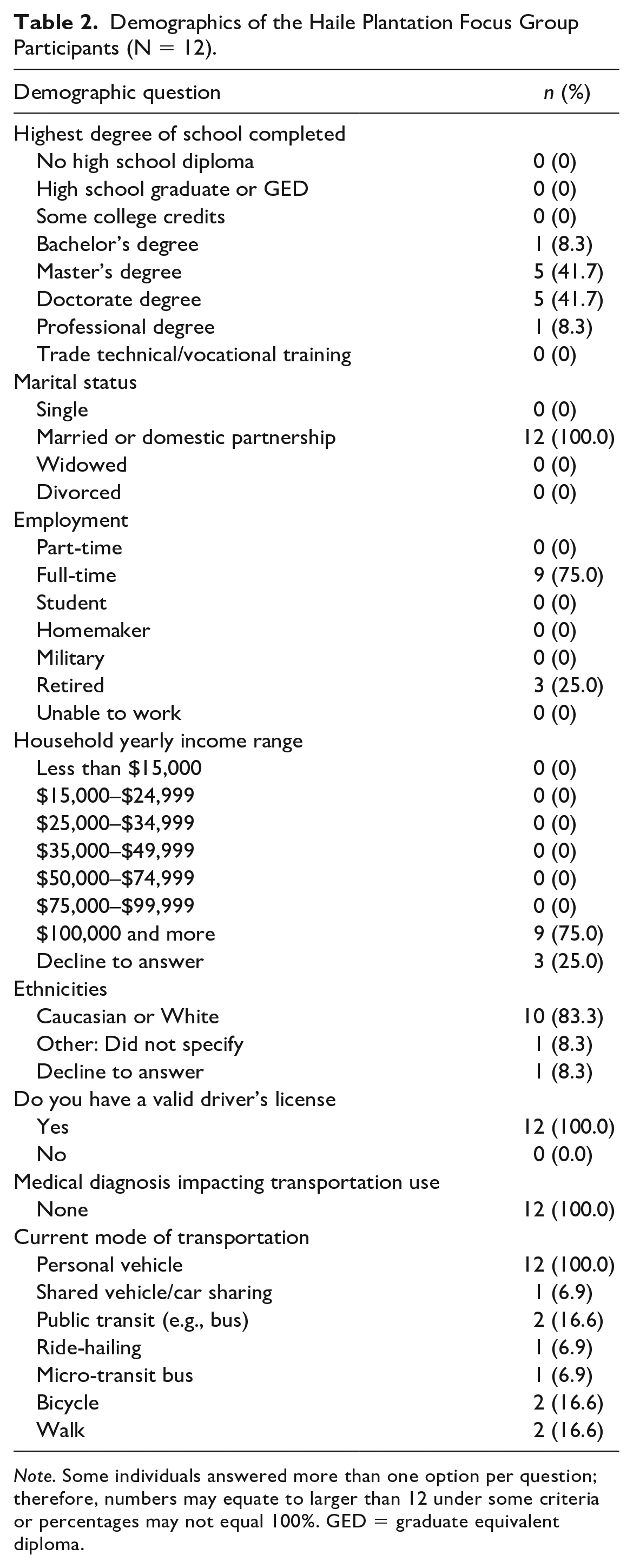
Note. Some individuals answered more than one option per question; therefore, numbers may equate to larger than 12 under some criteria or percentages may not equal 100%. GED = graduate equivalent diploma.
Haile Plantation Focus Group Findings
The Haile Plantation focus groups’ findings are summarized below and organized by the Five A’s of Senior Friendly Transportation.
Acceptability
Topics regarding transportation acceptability included the safety of using personal vehicles, biking, and running on the roadways. Participants stated that driving a personal vehicle was safe, except during rush hours (7–8 a.m. and 4–5 p.m.) or community events like football games. Those who enjoy biking and running expressed that the limited road space was a safety concern. One participant explained, “I do not feel safe outside my vehicle on Archer Road [high traffic roadway] . . . or in-between suburban and commercial spaces. Vehicles are going much faster, and there is no protection with you outside the vehicle . . . I do feel safe inside my car almost everywhere.”
In addition, elevated traffic flow was a barrier for participants accessing the community or traveling to work, except for participants with flexible schedules, such as retired participants. Some participants avoided increased traffic during rush hours or weekends by adjusting their employment and leisure schedules. Therefore, participants expressed transportation challenges using multimodal transit during high-traffic times, impacting their daily schedules.
Availability
Participants discussed the negative and positive aspects of transportation availability. Participants stated that using the fixed-route bus from Haile Plantation to the University eased their daily commute. The use of the public bus was a barrier due to limited running times and routes, as exemplified by the quote: I would like to take transportation [public bus] more often, but I don’t feel comfortable being able to predict if I will arrive somewhere on time. I don’t find it easy to see where the buses are, when they’re going to get someplace, and how to find the route.
Although the fixed-route bus was described as available, challenges, such as unreliable arrival times and limited routes, existed for participants relying on public buses to access the community.
Accessibility
Participants also discussed the negative and positive aspects of transportation accessibility. The fixed-route bus stop was convenient and easy to access. Some participants had difficulty parking, and others with flexible schedules were not impacted. Parking issues influenced participants to use other transit modes, such as ride-hailing services. One participant explained, “. . . it is not the transportation of getting somewhere, it is the parking once you get there that restricts it for me. Parking is somewhat limited in a lot of places.” A participant who relocated from Miami to Gainesville had a different opinion and stated, “I feel like my travel is less restricted here [Gainesville] because there is an abundance of parking.” Therefore, some participants may be more inclined to drive personal vehicles to engage in their community if more parking was available, yet others do not consider parking a transportation limitation.
Affordability
Less commonly discussed, participants stated that alternative modes of transportation, such as ride-hailing services, were not financially feasible daily or weekly. One participant described her or his experience as “My wife/husband, and I take Ubers home from downtown. . . but it is about 25 to 30 dollars [for a single trip]. I would go downtown more if it weren’t 60 dollars round trip.” If alternative transportation had reduced costs, participants may utilize ride-hailing or shared mobility services to access their community.
Adaptability
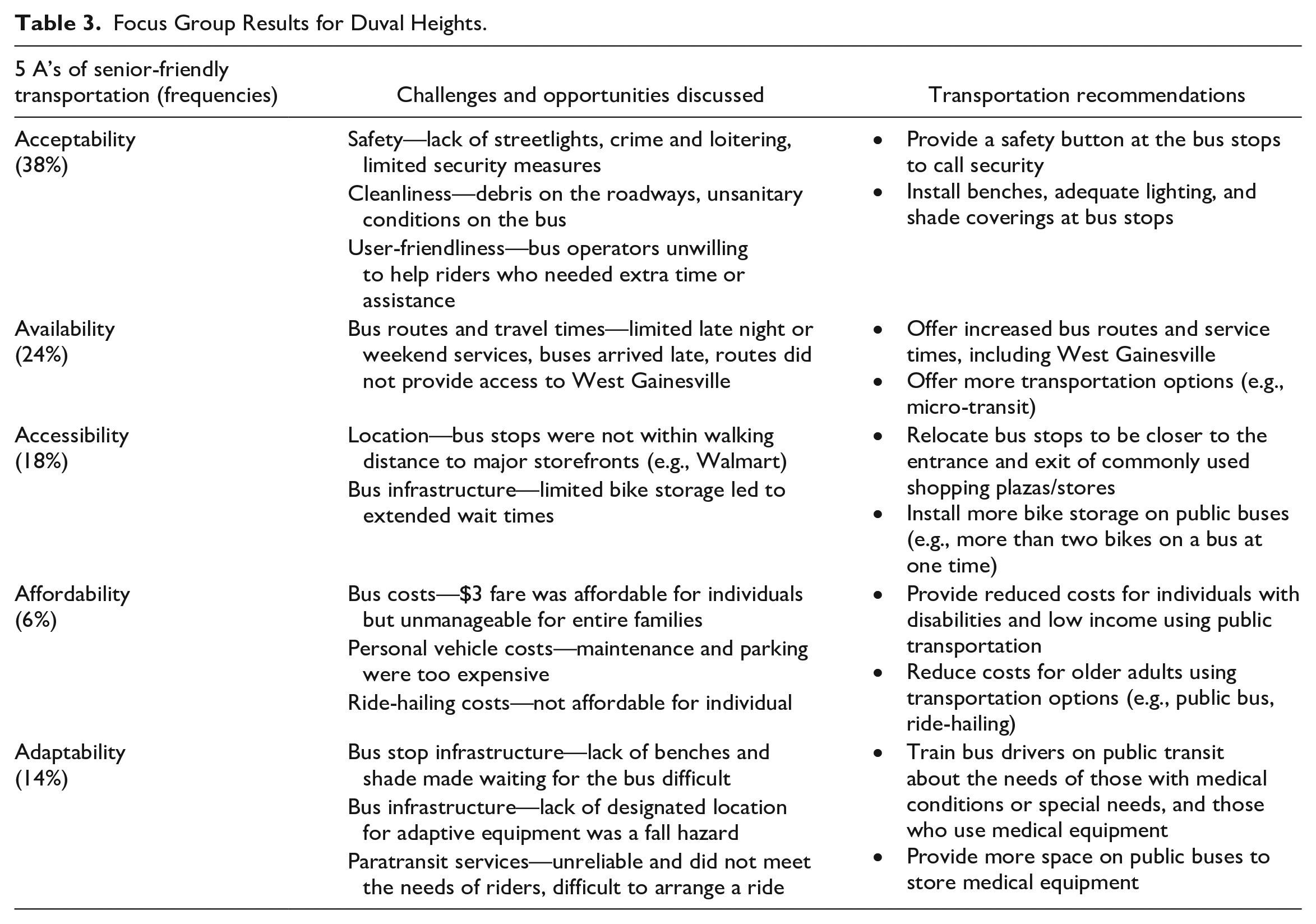
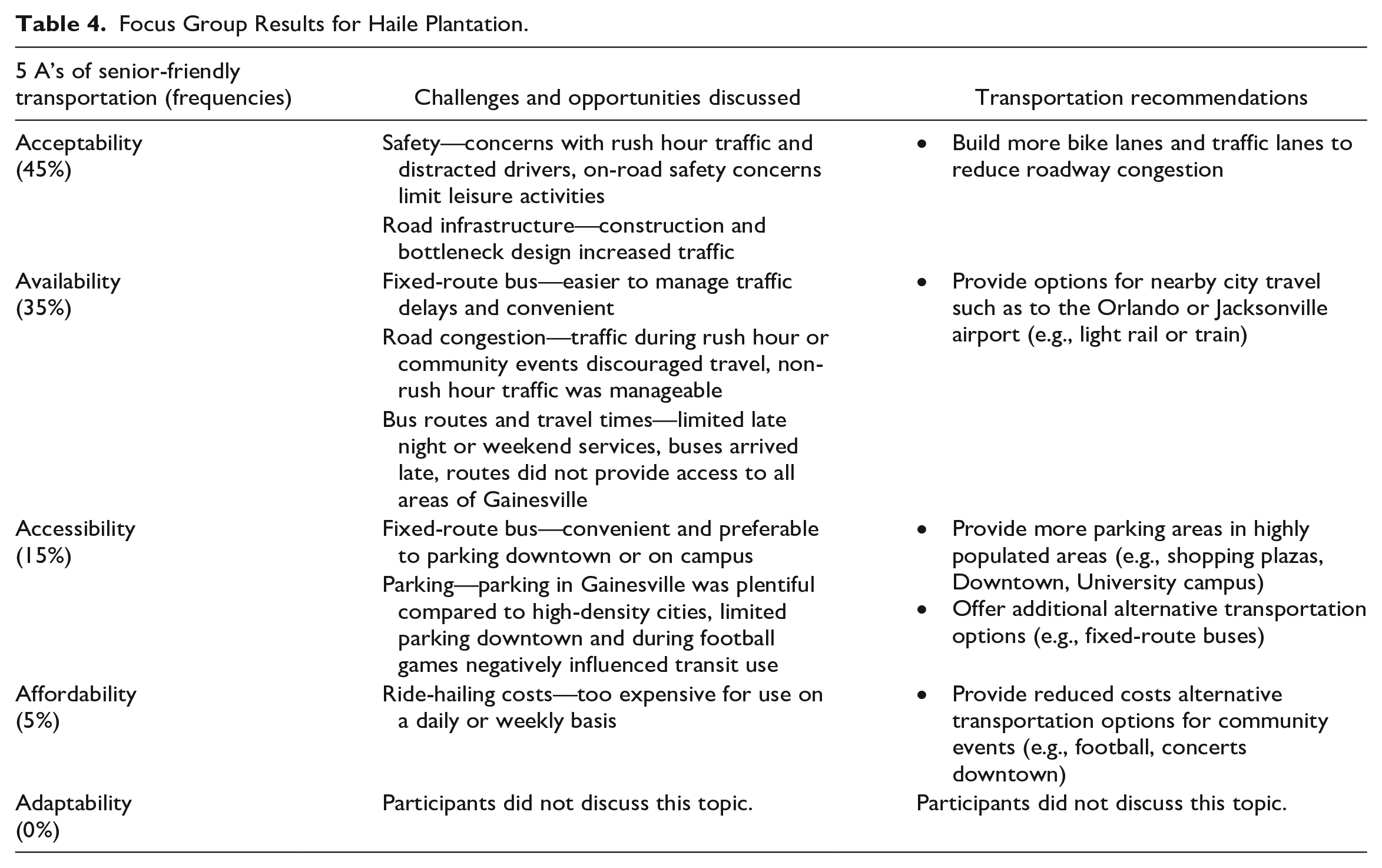
The participants of the Haile Plantation focus groups did not discuss adaptability. In summary, the focus group discussions provided valuable insight into transportation-related experiences. Tables 3 and 4 provide an overview of the challenges and opportunities expressed by the participants and their recommendations to enhance community transportation. In addition, the frequencies (percentage) of discussion regarding the 5 A’s of Senior Friendly Transportation are outlined in Tables 3 and 4.
Focus Group Results for Duval Heights.
Focus Group Results for Haile Plantation.
Discussion
The team explored Gainesville residents’ experiences and perceptions regarding the challenges and opportunities with transportation availability, accessibility, affordability, acceptability, and adaptability—although this was not discussed among Haile Plantation residents. Focus group participants provided valuable insight into the factors influencing transportation in their neighborhoods.
Findings indicated that the Duval Heights participants mainly discussed public transportation and the challenges for the medically disadvantaged. In contrast, the Haile Plantation participants discussed personal vehicle use and the fixed-route bus to access their community. Participants stated concerns regarding safety and cleanliness at bus stations and buses. Abenoza et al. (2017) found that travel safety perceptions are among the most important travel satisfaction determinants. Literature indicates that sociodemographic characteristics (e.g., ethnicity, income level) impact travel safety perceptions (Cats et al., 2015), supporting the heightened safety concerns among Duval Heights residents. Additional safety concerns, such as COVID-19, may add increased barriers like decreased travel routes and service times (De Vos, 2020). The impacts of limited-service times and routes were discussed in all focus groups. The Duval Heights focus group participants discussed their concerns about using public transportation, including paratransit. Paralleled with Bezyak et al. (2017) and the National Council on Disability (2015), participants with disabilities or those with family members with a disability stated that public transportation did not get riders where they needed to go promptly and found stops inaccessible.
Conversely, the Haile Plantation focus group participants had concerns with high traffic while using personal vehicles. Many participants utilized the fixed-route bus to escape the frustration of traffic. Concas et al. (2011) found that fixed-route services have multiple benefits: reduced travel delays, improved reliability, improved traffic safety, reduced air pollution, and possible positive impacts on the state’s economy. Using a fixed-route bus or alternative transportation may offer solutions to other communities facing transportation disparities, such as Duval Heights. All focus group discussions provided insight into participants’ day-to-day experiences with transportation in their community. The participants’ travel behaviors, challenges, and opportunities will inform the recommendations for implementing technologies in Gainesville’s transportation system.
Limitations
Although the team recruited six to eight participants for each focus group, some participants did not show up, resulting in a smaller sample than anticipated. The COVID-19 social distancing precautions required the focus groups to be re-formatted from in-person (Duval Heights) to online (Haile Plantation). Therefore, Haile Plantation participants were recruited via online instead of face-to-face, and the inclusion criteria were narrowed to include only residents with Zoom access. Although participants were offered a short training, online video conferencing may have impacted the rapport and dynamic among participants.
Strengths
To align with CBPR approaches and strengthen the study, the team collaborated with community members by developing the Community Advisory Board. Although Kitzinger and Barbour (1999) advised 8 to 12 participants per focus group, the team aimed to provide more discussion time and did not anticipate reaching saturation; therefore, smaller groups of six to eight participants were recruited. Additional strengths include the use of an accessible location and a private space among the Duval Heights focus groups.
Relevance of Findings
Adequate transportation is necessary for access to employment, education, food, health care, leisure, and other components that contribute to the quality of life (Health Research & Educational Trust, 2017). Occupational therapists focus on enabling participation and are well-positioned to help individuals continue engaging within their communities by exploring, strategizing, and advocating for client transportation-related challenges and opportunities. Rehabilitation science researchers, policymakers, and other stakeholders may use the participants’ lived experiences to inform planning and implementation processes to promote equitable and sustainable transportation systems. Traditional methods for public involvement, such as public hearings, are inadequate and limit the impact the public may have in transportation decision-making (National Academies of Sciences, Engineering, and Medicine, 2012). Public engagement is a complex process, and no single approach will work for all communities. Cultural and socio-economic characteristics should be considered to facilitate meaningful public involvement. Therefore, advisory boards were used to build trust and credibility between communities and transportation stakeholders. Historically, the public’s involvement in transportation decision-making has been focused on underserved populations. With emerging transportation technologies, agencies may benefit from promoting public involvement in all community areas and consider multiple modes, such as autonomous shared mobility services, when planning transportation.
Next Steps
The focus group discussions provided information on the similarities (e.g., safety) and differences (e.g., heavy traffic) between Duval Heights and Haile Plantation participants. Further insights regarding commonly used transit modes, transportation concerns of the two communities, and typical travel behaviors are needed from a larger number of residents. Therefore, the team used the focus group findings to construct a survey to further assess the two communities’ transportation challenges and opportunities.
Conclusion
The team captured the experiences regarding transportation challenges, and opportunities of Duval Heights and Haile Plantation residents. Utilizing CBPR principles and engaging with the public (e.g., advisory groups), the team gathered data that may not be obtained in other public settings (e.g., public hearings) or by examining city-wide data. The results provide researchers, planners, and other stakeholders with insight into the community residents’ everyday lived experiences regarding transportation use. The participants’ experiences indicate current challenges in the transportation system that may be considered when developing equitable and sustainable transportation recommendations.
Footnotes
Declaration of Conflicting Interests
The author(s) declared no potential conflicts of interest with respect to the research, authorship, and/or publication of this article.
Funding
The author(s) disclosed receipt of the following financial support for the research, authorship, and/or publication of this article: The authors acknowledge the financial support provided by the Florida Department of Transportation (Grant: AWD06263).
Research Ethics
The ethical approval for this study was obtained from the University of Florida’s Institutional Review Board (IRB-02) (Study ID: IRB201902444).
