



Abstract
One notable outcome of the COVID-19 pandemic was the increased availability of online learning opportunities for higher education students. Despite the increased access and flexibility, few studies have examined the impact of Latin* students’ academic outcomes. Using a mixed-methods design, this study utilized administrative and focus group data from students enrolled in a Hispanic-Serving Institution (HSI) to examine the educational outcomes and experiences of Latin* undergraduates. Findings suggest that the impact was especially acute for Latina students, who opted to complete courses online rather than in-person, enrolled in fewer credits, and experienced lower grade point averages compared to other female students.
Over the past decade, Latin* 1 enrollment in higher education increased by nearly 50%, from 2.4 million students in 2009 to 3.5 million students in 2019—thus, representing the fastest-growing student demographic in the United States. This trajectory aligns with broader U.S. demographic shifts, with the Latin* population growing sixfold from 9.6 million in 1970 to 62.1 million in 2020. Accordingly, the Latin* population represents the second-largest racial or ethnic group at 19%, after White Americans (Funk & Lopez, 2022).
Congruent with these demographic changes, higher education scholars have developed theoretical frameworks and evidence to advance our understanding of the Latin* college student experience. First, Latin* students’ retention and degree completion rates differ significantly compared to other racial and ethnic groups (Gavino & Akinlade, 2021). Hence, while Latin* student enrollment has expanded significantly, their number of degrees completed must accelerate in order to achieve parity with their peers (Gándara & Contreras, 2009).
Moving beyond traditional markers of student success (i.e., college retention and completion rates), scholars have described the historical and cultural contexts that shape the educational experiences of Latin* students in higher education, such as the systemic barriers and institutional climates impeding higher rates of Latin* retention and degree attainment (Turner & Garcia, 2005). Importantly, researchers have further identified individual-level variables associated with Latin* outcomes in college; these include, for example, sense of belonging (Hurtado & Carter, 1997), familial income or Pell-eligibility (O’Connell, 2023), first generation in their family to attend college (Saunders & Serna, 2004), and immigration status (Ryan & Ream, 2016).
The COVID-19 pandemic exacerbated factors impacting Latin* students’ educational experiences at both systematic and individual levels. Systematically, Latin* students faced heightened challenges due to the “digital divide,” which refers to gaps in access to learning and educational resources due to disparities in access to technology, internet connectivity, and digital literacy skills among low-income and marginalized communities (Bell et al., 2022). During the COVID-19 pandemic, the digital divide intensified and disproportionately affected Latin* students’ ability to engage meaningfully and effectively in remote learning (Golden et al., 2023). Additionally, economic instability and limited access to healthcare resources within Latin* communities contributed to increased stress and uncertainty, further hindering Latin* students’ capacity to engage in their education and achieve academic success (Bulman & Fairlie, 2022). Latin* students also faced unique individual challenges such as language barriers, immigration status concerns, and increased familial responsibilities. These difficulties were worsened by pandemic-induced disruptions to academic and social support systems (Vazquez & Cortina, 2023). Furthermore, the pandemic magnified pre-existing mental health challenges, such as depression and anxiety, due to heightened stressors related to health, finances, and academic uncertainties (Castañeda et al., 2024; Enriquez et al., 2023).
The present study therefore examines Latin* students’ overall academic success, as measured by course enrollment patterns and their subsequent academic performance (i.e., grade point average), at a Hispanic-Serving Research Institution (HSRI), an HSI classified as R1 or doctoral-granting with high research activity (Marin & Aguilar-Smith, 2023), during the COVID-19 pandemic. Notably, the COVID-19 pandemic provided an unusual opportunity to track student success metrics across online and in-person undergraduate course options; and to compare academic outcomes across key student identities such as gender, first-generation status, income level, and major. Throughout the nearly 2-years pandemic, the University of California, along with colleges and universities across the United States, provided one-time emergency financial support, free laptops, and wireless internet access to ensure continued access to instruction. To better understand the potential impact of these forms of assistance, we employed a mixed-method design to address the following research questions:
(1) What differences, if any, were observed in terms of number and format of academic credits enrolled (i.e., total number of credits per academic term, online and in-person courses), number of academic credits completed, and grade point averages among Latin* students and their peers?
(2) What factors may have contributed to differential patterns of Latin* student success, as measured by number and format of academic credits enrolled, number of academic credits completed, and grade point averages?
Latin* Student Success
The national college completion agenda requires the full participation of Latin* students. To meet this goal, educational institutions must demonstrate equitable outcomes across all racial/ethnic groups and income levels. Accordingly, high schools and universities have been called upon to support Latin* students, increase college readiness and enrollment, improve transfer rates from 2-years community colleges to 4-years institutions, and advance their overall retention and graduation rates across all majors (Castellanos & Gloria, 2007; Núñez & Bowers, 2011). The Department of Education’s program to support HSIs, advocacy from organizations such as Excelencia in Education and the Hispanic Association of Colleges and Universities, as well as community-based outreach and interventions, have helped to bolster Latin* student enrollment by over 1 million students in less than 10 years, that is, from 2.4 million in 2009 to 3.5 million in 2019 (National Center for Education Statistics, 2021).
Across postsecondary education settings in the United States, 28% of Latin* adults have earned an associate degree or higher, as compared to 48% of White adults (U.S. Census Bureau, 2023). At the same time, higher education institutions vary widely in regard to their commitment to Latin* student success, as demonstrated by the racial/ethnic demographics among students, staff, and faculty; institutional identity (e.g., HSIs vs. Predominantly White Institutions, comprehensive vs. research universities, and private vs. public institutions); commitment to Hispanic “servingness”; state-level public investments; private philanthropy; and overall rates of student success, that is, retention and graduation rates (Marin & Aguilar-Smith, 2023).
Given this broad array of institutional commitments toward Latin* student success, the federal advocacy group, Excelencia in Education, created the “Seal of Excelencia” to recognize colleges and universities for providing institutional leadership, tracking student metrics, implementing academic support programs, and eliminating equity gaps among Latin* students (Excelencia in Education, 2023). These exemplary HSIs include a range of 2-years community colleges, comprehensive universities, and research institutions located mostly in regions with higher proportions of Latin* populations, such as Texas (39%), California (39%), Arizona (32%), and Florida (26%), as compared to the national-level proportion of 19% (Excelencia in Education, 2023). Importantly, institutions designated with the “Seal” have explicitly demonstrated a commitment to accelerating student success beyond passively enrolling more Latin* students resulting from demographic shifts in the U.S. population (Torres & Zerquera, 2012).
Online Learning and Latin* Student Success
The nascent literature on online learning in higher education has yielded two general sets of findings. First, the availability and overall quality of online learning has grown substantially over the past two decades, coinciding with the expansion of the internet and substantial improvements in educational technology and pedagogy (Park & Shea, 2020). However, the second set of emergent research in online learning has demonstrated that computer-based instruction has been associated with less positive student outcomes, including, for example, lower grades, retention rates, degree attainment, and career trajectories (Bird et al., 2022). Recent studies have further indicated equity gaps in online education regarding underrepresented minority students, including Latin* students (Tate & Warschauer, 2022), with in-person courses yielding higher rates of completion and better academic performance, as compared to their online versions.
COVID-19 and Latin* Student Success
Despite the decades-long growth in Latin* student enrollment across U.S. higher education, the COVID-19 pandemic halted this upward trajectory. In just 2 years, Latin* student enrollment dropped by approximately 7%, with the most significant loss occurring across community colleges (García-Louis et al., 2022; Villatoro et al., 2022). Additionally, learning loss, which accrued in K-12 settings, may have resulted in less-prepared Latin* students entering their first year in college (Lara et al., 2021). The challenges Latin* students faced as they entered college during COVID-19 were compounded by and intertwined with the broader inequities experienced by marginalized communities during the COVID-19 pandemic, which include healthcare disparities, limited access to support services, food insecurity, and housing insecurity (Kim et al., 2021; Martinez et al., 2023; Puente, 2022).
As previously noted, the COVID-19 pandemic provided a rare set of conditions to track student success metrics across online and in-person undergraduate course options; and to compare academic outcomes across key student characteristics such as gender, first-generation status, income level, and major. At the same time, colleges and universities provided additional support, such as internet access, to facilitate students’ continuing academic progress.
Methods
Hispanic-Serving Institutional Context
Data for this study originates from our home institution, the University of California, Riverside (UCR). As the first Hispanic-Serving Institution in the University of California system, UCR has been recognized for eliminating or reducing graduation gaps across racial/ethnic groups, income levels, and first-generation status (Matute, 2022; U.S. News & World Reports, 2024).
In 2013, the institution became a founding member of the University Innovation Alliance, a coalition of public research universities committed to increasing the number of low-income and racial/ethnic minority students across the country. In concert with this goal, UCR increased 4-years graduation rates by more than 20% points (44% for the Fall 2008 cohort, as compared to 65% for the Fall 2018 cohort) while continuing to serve a population of undergraduates who are first-generation (51%), Pell-eligible (45%), and underrepresented minority students (41%) who were slightly below the overall graduation rate of 65.3% (UCR, 2023).
UCR obtained the Seal of Excelencia in 2021 by demonstrating evidence that supports the increased enrollment and academic success of Latin* students (Excelencia in Education, 2023). Additionally, UCR joined the Alliance of Hispanic-Serving Research Universities (HSRU) as an inaugural member. HSRU is an association of universities that are both Hispanic-Serving and in the top 5% of universities in the United States (HSRU, 2024). The 23 member institutions have set an ambitious goal to double the number of Latin* doctoral students and, thus, increase the proportion of Latin* faculty across the United States. Given UCR’s success and interest in supporting Latin* student success, the institution provided an appropriate location and setting to engage in the study of Latin* student success during the pandemic. For our study, we specifically examined UCR undergraduates enrolled in the Fall 2021 quarter, of which 35% are Latin*, 52% are female, 48% are Pell-recipients, and 55% are first-generation college students.
Research Design Overview
Multiple methods were used in this study (see, for example, Tashakkori & Teddlie, 2010). We were specifically guided by the work of the Mixed Method Working Group (MMWG; Weiss et al., 2019a) that called for mixed methods “in the service of broad and significant research questions in education” (p. 4). The MMWG described mixed methods as: encompassing broad uses of research concepts, theories, designs, and methods drawn from a wide range of disciplines, intellectual traditions, and research paradigms; as dynamic and integrated uses of methods that complement one another as they unfold over time and across levels and scales of a system; as guides to more comprehensive studies; as ways to collect, analyze, and integrate data creatively; and as ways to interpret and disseminate results to a wide range of audiences. (Weiss et al., 2019a, p. 4)
Since the MMWG examples of the application of mixed methods (Weiss et al., 2019b), mixed methods have been applied to multiple areas of research, including research in Lain* higher education (see, for example, Garcia et al., 2017).
Quantitative analyses allowed us to consider Latin* student success in terms of long-term trends and differences in course-taking behaviors relative to other students at the same HSI. The identification of this broader issue started with institutional researchers’ analysis of trends in student enrollments during COVID-19. One issue identified across all students was overall lower credit loads. Based upon this trend among all UCR undergraduate students, this study specifically conducted quantitative analyses of Latin* students, as compared to other UCR students, regarding their course enrollment behaviors, that is, number of units enrolled and in-person versus remote courses in Fall 2021 during the pandemic. Based on results from the quantitative analyses, qualitative analyses were conducted to better understand the choices Latin* students made about their course-taking behaviors.
As the MMWG (Weiss et al., 2019a) pointed out, “a key feature of effective mixed-methods research is the ability to organize–integrate, coordinate, or juxtapose–the findings from different methods” (p. 6). The research team met regularly to discuss findings from the quantitative analyses and literature related to Latin* student success. The team included members with different methodological perspectives and positions within the institution. The team also included members who focus specifically on Latin* student success in their research and practice.
Given this mixed-method, multidisciplinary research team, our discussions led to a variety of possible next steps including gathering additional data to include in the quantitative analyses and the design of an interview protocol. After exploring these different possibilities, the research team decided to interview Latinas to better understand the findings from the quantitative analyses.
Quantitative Analysis
Our study initially began with a quantitative analysis of course enrollment behaviors (i.e., number and type of units) and academic outcomes (i.e., number of units completed and grade point averages) for Latin* students, as compared to other students. We used basic descriptive statistics and linear regression to investigate our first research question. That is, what differences, if any, were observed in terms of number and format of academic credits enrolled (i.e., total number of credits per academic term, online and in-person courses), number of academic credits completed, and grade point averages among Latin* students and their peers?
The variables used in the quantitative analyses were obtained from administrative databases maintained by the university. The dataset did not include any sensitive information, such as names or social security numbers. Instead, a de-identified dataset with a unique identification number for each student was provided to the research team for analysis. The dataset included information about course-taking behavior, including: the number of credits completed, the number of online credit units, and overall grade point average. The dataset included 22,679 undergraduates who were enrolled in the Fall 2021 quarter.
We purposefully focused on data from Fall 2021 because, after 18 months of 100% online learning, this institution was open for in-person classes in the Fall 2021 quarter. Starting Fall 2021, all students had a choice of courses either in-person or online. This provided an opportunity to better understand Latin* choices to enroll in greater or fewer online courses and to consider the impact of their choices on outcomes such as the number of credits earned each quarter and overall grade point average at the end of the Spring 2022 quarter. Additionally, we examined student demographic information, average credit hours attempted and earned, and grade point average from Fall 2019.
Gender
We considered a dichotomous variable for sex at birth (Female/Male) and another variable for gender identity that included eight categories: Female/Woman, Genderqueer/Gender Non-Conforming, I prefer not to say, Male/Man, Nonbinary, Not listed, Not specified, Trans Female/Trans Woman, Trans Male/Trans Man. Across both of these variables, we included students who identified as Female or Male; and Female/Woman or Male/Man. We created a dichotomous variable for gender that is based on the identified sex and gender identity variable selection made by each student. We chose to create a dichotomous variable based on both practical and statistical advantages, such as improving the interpretability of results, facilitating straightforward comparisons between Latin* students and all other students, and maintaining consistency with prior research, which allows for cross-study comparisons to be made. We recognize the ideological problems of this entrenched binary. However, for this quantitative design, the sample size for other groups were too small to include in the analysis. We encourage future researchers to conduct qualitative studies to further capture the experiences of these smaller but vulnerable populations. There were 11,706 females (53%) and 10,287 males (47%) who were enrolled in the Fall 2021 quarter.
Race/Ethnicity
We created a dichotomous variable to compare Latin* students to all other students. Originally, there were nine categories for race/ethnicity in the dataset: Asian, Black, Hispanic, International, Native American, Not specified, Pacific Islander, Two or more races, and White. We coded any student who selected “Hispanic” as Latin* and coded any student who selected “Asian,” “Black,” “Native American,” “Pacific Islander,” and “White” as Other. We excluded students who did not specify their ethnicity, specified two or more races, or selected “International.” The exclusion of students who did not specify their ethnicity, specified multiple races, or identified as “International” enables the comparison groups to be relatively homogeneous in terms of racial and ethnic identity, which ensures the alignment of our quantitative analysis to our research objectives by increasing the clarity of comparison of Latin* students to students from other racial and ethnic backgrounds.
First Generation
We used a dichotomous variable for whether the undergraduate was the first in their families to attend college or not. More specifically, a student was considered first generation if neither parent or guardian graduated with a 4-years degree or higher in the United States. In Fall 2019, 57% of students were considered first generation.
Pell Recipient
We used a dichotomous variable as an income indicator based on whether the student received a Federal Pell Grant or not. The award amount varies, but eligibility is based on the information students provided on their Free Application for Federal Student Aid (FAFSA). Undergraduates need to be enrolled at least half-time (6–8.5 units) to qualify for a Pell Grant. The Pell Grant is canceled for undergraduates enrolled less than half of the time. To receive the maximum amount of the Pell Grant, students must be enrolled in at least 12 units each quarter.
Class Level
The administrative data categorized students as freshmen, sophomores, juniors, or seniors based on the number of credits they earned in the Fall 2019 quarter. Seniors (36%) comprised the highest percentage of students in this sample compared to juniors (26%), sophomores (19%) and freshmen (20%).
College
At this institution, students select one of six undergraduate colleges or schools (Business; Education; Engineering; Humanities, Arts and Social Sciences; Natural and Agricultural Sciences, and Public Policy). Student selection in the Fall 2021 was used to create a variable of their affiliation. We did not account for students changing majors throughout the year. It was not likely that students transferred from college majors with greater online options (humanities, education, business) to majors with fewer online options (engineering, science, math). Notably, half of the Latin* students (52%) were enrolled in the College of Humanities, Arts and Social Sciences, UCR’s largest college. The college variable provided a way of accounting for the number of online course options that students had available to them. We also ran the analyses separately for each of the colleges and found similar results, so we reported the results for the analyses with all of the colleges combined, using college enrollment as a covariate.
High School Grade Point Average
To provide a crude indicator of prior achievement, we included a high school grade point average. The average high school grade point average for all Latin* undergraduates was 3.85 (SD = 0.31), and for other undergraduates was 3.81 (SD = 0.32).
Qualitative Data Collection and Analysis
Upon completion of the quantitative analyses, we designed an interview protocol for semi-structured focus groups to address the second research question about potential factors contributing to differential outcomes. Participants for the focus groups were recruited via email with the following eligibility criteria: undergraduate student (any grade level), gender = women, gender identity = woman (cisgender), and ethnicity = Hispanic or Latin*. Students must have been enrolled in courses during Fall 2021, Winter 2022, and Spring 2022.
All eligible participants were sent a recruitment email from the Assistant Director of Chicano Student Programs and co-chair of the Hispanic-Serving Institution (HSI) Committee at the University of California, Riverside. The email invited students to participate in a virtual focus group discussion on UCR Latina, Chicana, and Hispanic female student successes and challenges during (and beyond) the pandemic. It offered as an incentive that those who participated would receive a $20 gift card redeemable for campus purchases (including food) after completing the focus group. Interested students completed an online Qualtrics form to indicate their interest in participating. The research team then contacted individuals directly via email to confirm their participation and scheduled their participation in the virtual focus group. Three focus groups were conducted via Zoom during the summer and fall of 2022. All participants identified as women and Latin*. Two were sophomores, four were juniors, and three were seniors at the time of the focus groups. The first two groups included women who took the minimum or just above the number of credits to maintain financial aid (12 units) in Spring 2022. The final focus group included two women who completed 15 units or higher; of note, 15 units is considered the necessary course load in order to graduate within 4 years.
During the focus groups, participants were invited to use their cameras and microphones and to change their display names for more privacy. The semi-structured protocol included questions about their decision-making process regarding how many units to complete and which modality to undertake (i.e., in-person or online) during Fall 2021, Winter 2022, and Spring 2022. Other questions allowed the researchers to interrogate the perceived differences between in-person and online instruction, responsibilities outside of coursework, specific challenges during the pandemic, and factors contributing to academic success. The interviews were recorded and transcribed utilizing Zoom technical capabilities.
Data from the transcripts were analyzed using a grounded theory approach, allowing common themes to emerge from the responses (Bryant & Charmaz, 2007; Strauss & Corbin, 1990). The researchers reviewed the transcripts independently and then met as a group to discuss their initial thoughts. The research team identified several themes that were then refined to include more structured codes. The research team subsequently returned to the transcripts to test whether this coding system would work. After several meetings, the research team was satisfied with the coding of the transcripts. Finally, two members of the research team coded all of the transcripts jointly.
Although all members of the research team were involved in discussing the need for the qualitative data collection, only three members of the research team conducted the focus groups and coded the qualitative data. These research team members have direct experiences working with Latinas and brought content and methodological experience. All three researchers have PhDs in education: Two are White scholars and practitioners who have worked for more than a decade in diverse and Latin*-serving educational spaces, and one Chicana/Latina scholar with expertise in historical and multidimensional frameworks for Latin* “servingness.” Building on these diverse experiences and positionalities, the research team also developed experience working together on other campus-wide projects. They were familiar with each other’s experiences and strengths and were comfortable openly discussing different perspectives (Braun & Clarke, 2022).
Results
Latin* applications to this institution have steadily increased. In Fall 2014, for example, there were 9,652 applications from Latinas and in Fall 2021, there were 16,255 applications from Latinas. The number of Latin* students who were admitted to this institution has also steadily increased. In Fall 2014, there were 4,746 Latina applicants who were admitted and in Fall 2021, there were 9,856 Latina applicants admitted. Overall, the actual number of Latin* students who enrolled and graduated within 4 years in this institution also increased.
While the percentage of undergraduate degrees awarded within 4 years has increased, the time to complete a Bachelor’s degree was a concern expressed by the administration. Among Latin* students who started in Fall 2017, the 4-years graduation rate was 61%, and the 6-years graduation rate was 73%; both rates were below the overall UCR graduation rates, i.e., 65% 4-years and 77% 6-years rates. Given these concerns, the institution initiated a campaign to encourage all undergraduates to enroll in at least 15 credits per quarter (45 units per academic year). The campaign highlighted that doing so would create a pathway to a bachelor’s degree in 4 years. The campaign started with the cohort of first-year undergraduates in the Fall 2019 quarter, which indicated that students who “finish in four” could “save money, make money, finish with your friends and save time.” Undergraduates were also provided information on the different resources to support them to stay on track, including degree audits that they could access at any time to show their progress to degree and a one-stop shop physical location on campus that they could stop in to learn more and access resources.
Since Fall 2019, Latin* undergraduates were consistent with other undergraduates, in terms of the number of credits attempted, but consistently lower in terms of the number of credits earned. The cumulative grade point average is also consistently lower for Latin* students compared to other undergraduates. During the pandemic, there were no overall differences between Latinos and Latinas in terms of the number of credits attempted, number of credits earned, and cumulative grade point average. However, given the consistently larger sample size for Latinas compared to Latinos, we further probed differences in Latina students by considering additional variables.
On average, all UCR females at this institution were consistently below the average number of credit units that would lead to graduating in 4 years. Latinas enrolled in fewer credit hours than other females (Table 1) and earned fewer credit hours than other females (Table 2). The trends are consistent except for one quarter (Fall 2019).
Average Units of Credits Attempted.
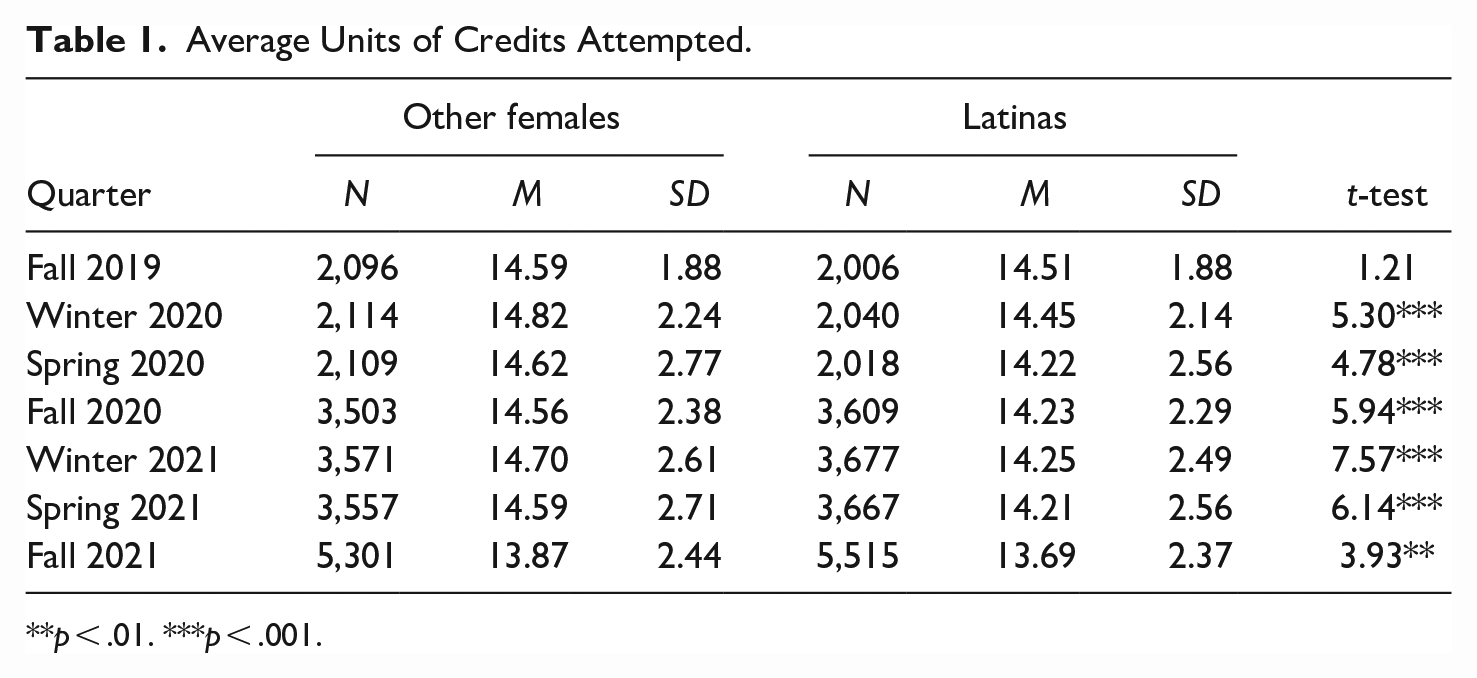
p < .01. ***p < .001.
Average Units of Credits Earned.
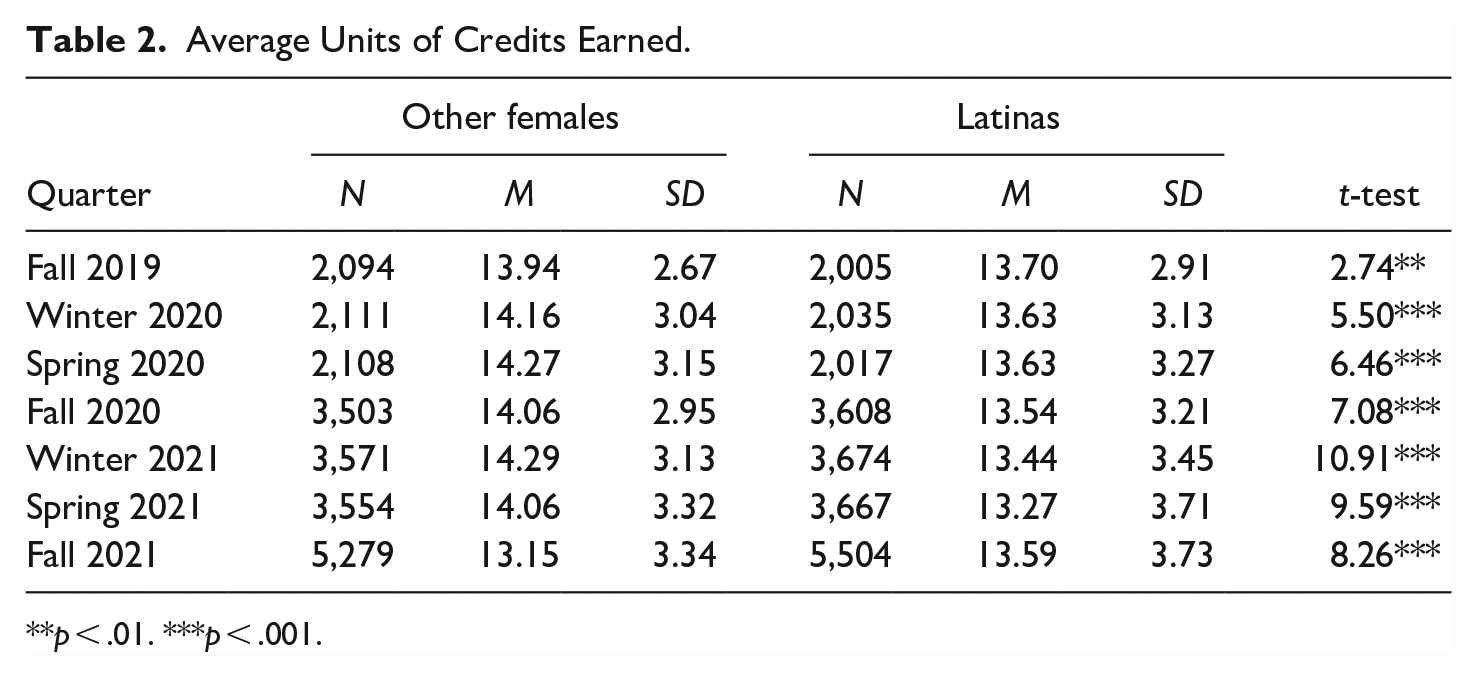
p < .01. ***p < .001.
In terms of online course enrollment, in the Fall 2021, Latinas (M = 0.63, SD = 0.31) enrolled in a higher percentage of credit units that were online compared to other females (M = 0.60, SD = 0.31). This difference is statistically significant after controlling for demographic variables and high school grade point average, t(8,621) = 3.31, p < .01 with a small effect size (ω = .01). Latinas also enrolled in a higher percentage of online credit units compared to Latinos (M = 0.56, SD = 0.32). This difference is statistically significant after controlling for demographic variables and high school grade point average, t(6,751) = 7.98, p < .001 with a small effect size (ω = .01). There were similar patterns in online course enrollment across the different colleges; except for Public Policy where Latinas were less likely than other females to enroll in online courses.
First generation Latinas (M = 0.65, SD = 0.30) were more likely than other first-generation females (M = 0.62, SD = 0.31) to enroll in more online course credits. First generation Latinas were also more likely than other Latinas (M = 0.58, SD = 0.31) to enroll in more online credits. Receiving a Pell Grant was related to enrolling in more online credits, t(8,621) = 2.44, p < .05. Latinas who received a Pell Grant on average enrolled in more online credits (M = 0.64, SD = 0.31) compared to all other females who received Pell grants (M = 0.61, SD = 0.31), and Latinas who did not receive Pell grants (M = 0.62, SD = 0.30).
Latinas earned consistently lower cumulative grade point averages than all other females (Figure 1). In the Fall 2021, when Latinas were enrolled in a higher number of credit units online, Latinas continued to have a lower grade point average compared to females from other ethnic groups, (t[8,621] = −11.16), p < .001. These findings were consistent even after including statistical controls for demographics and class level. First-generation Latinas had, on average lower grade point averages (M = 2.96, SD = 0.72) compared to other first-generation females (M = 3.17, SD = 0.63), other Latinas who were not first generation (M = 3.12, SD = 0.68), and Latinos (M = 3.00, SD = 0.71). Similarly, Latinas who received a Pell grant earned a lower grade point average (M = 2.94, SD = 0.72) compared to other females who received a Pell Grant (M = 3.18, SD = 0.63) and Latinas who did not receive a Pell Grant (M = 3.07, SD = 0.69). There is much greater variation among Latinas compared to Latinos in terms of demographic characteristics, with 83% of Latinas that were first generation compared to 76% of Latinos; and 67% of Latinas received Pell Grants compared to 62% of Latinos.
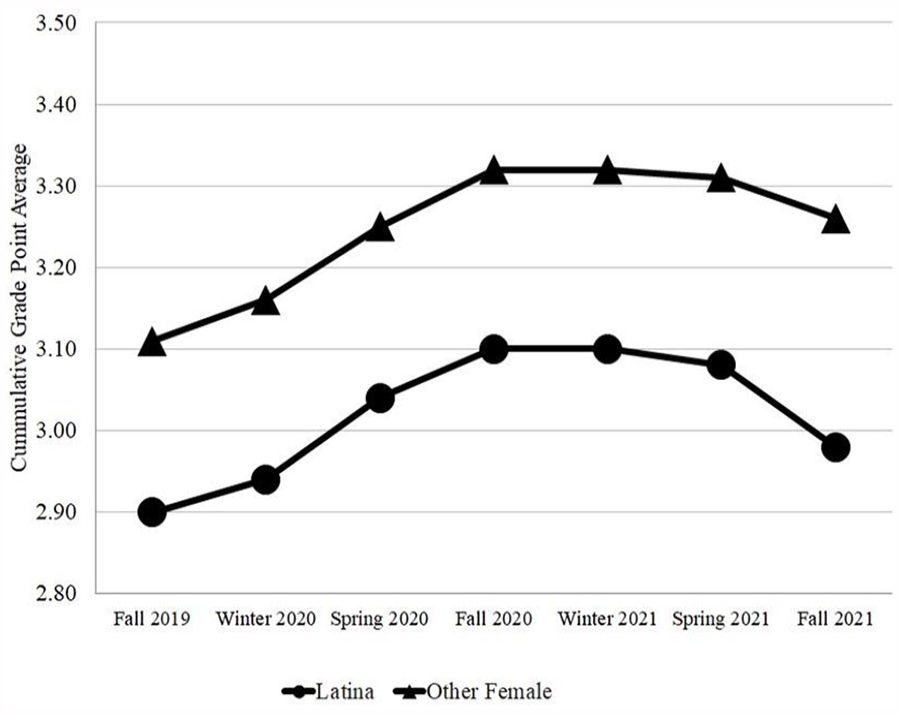
Cumulative grade point average.
After reviewing the quantitative findings, we engaged currently-enrolled Latina students in semi-structured group interviews (i.e., focus groups) to help understand how and why the differences in course enrollment patterns, credit loads, and grade point averages were observed. One of the salient themes that emerged in the group interviews was a fear of failure. Latinas talked frequently about the importance of planning and taking responsibility for both their studies and their families. They showed significant awareness of major requirements, course planning, and financial aid. For example, even without any mention from the interviewers, most participants mentioned the 12-unit minimum course load required to maintain financial aid. One student expressed a common sentiment: “I knew that I would be good at the minimum of 12 units or 12 to 13 units, just because, like I didn’t want to like overdo it.” In a different group interview, a separate participant expanded on this theme: It had a lot to do with how difficult those courses were going to be. I knew that I was not going to try to take anything more than the minimum of twelve units to also get my financial aid, but knock out the required classes, so I can keep getting closer to graduating. So for me, it was what is my capacity, trying to find the courses that weren’t just all difficult at the same time, or trying to find a different way to manage these. . .because in the spring of 2021, I didn’t do that great. . . and I knew that I couldn’t afford to fail classes again.
In addition to weighing the risks of difficult courses and chance of failure, Latina students indicated that familial responsibilities impacted their choice to enroll in online versus in-person classes. Some challenges were specific to the pandemic. For example, one student described the dilemma of deciding whether to go to campus, knowing she would achieve better grades versus staying home with her family and preparing food for her mother, who worked daily through the pandemic as a custodian: If I go on campus, I know I’m just gonna get better grades like I know I am, even though it’s harder . . .But the other part of me was like, no, I just want to stay home, and I want to be with them, and they’re only here for a limited amount of time. So how is that not more important?
Another student described a scenario with her grandmother’s illness even later in the pandemic (i.e., Spring 2022) that affected her decision-making: “Because of like COVID restrictions and not trying to like compromise other people’s health, I wasn’t allowed to see her, and so, like all that kind of took a toll on me and so like I still opted for online classes.”
Other challenges were ongoing outside of the pandemic. The “perfect daughter” archetype was salient among focus group participants and is consistent with the scholarly literature regarding Latina student experiences in higher education (Mireles-Rios & Romo, 2014). Sy and Romero (2008), for example, identified three specific themes related to Latina students’ family expectations: (1) self-sufficiency as a means of relieving their family’s financial burdens, (2) voluntary financial contributions to support their family’s needs, and (3) caretaking responsibilities or the “surrogate” parent for siblings in the home. One student in the current study noted, “I feel like a lot of Latina daughters have this experience, where they’re kind of like the glue that holds the family.” Others described their familial roles as a “mediator” or “translator,” and that families relied upon them as the “breadwinner” or their “retirement plan.”
There were a few other pragmatic considerations that surfaced as factors during the online versus in-person course enrollment decision-making process. If students were commuting from home, it would be difficult to justify driving multiple hours for one lecture if there was an online option. They opted for more online options for convenience, thus saving both time and money. Students also appreciated the continued accessibility of online lectures that could be stopped and replayed: At least for some of the online classes that we had, the lectures would be recorded and posted. But kind of when we went back in person, like winter and spring quarter, a lot of professors stopped that, and it was kind of really hard to adjust to that just because, like, I feel like it made it more accessible for all students.
The benefits of online learning for Latinas are consistent with the existing literature on online learning. Latinas expressed both interest and preference for the online learning options, but the academic outcomes (i.e., grade point averages) of these opportunities fall short.
Discussion
Over a span of less than 2 years (2020–2022), the COVID-19 pandemic significantly impeded Latin* students and their educational trajectories across the United States (Azevedo, 2022; Kuhfeld et al., 2022; Liu, 2023). While the pandemic affected all students, our study found that the impact was especially acute for Latina students, who opted to complete courses online rather than in-person, enrolled in fewer credits, and experienced lower grade point averages compared to other female UCR students. We know from the literature that the experience of taking online courses could vary substantially (Bernard et al., 2004; Tamim et al., 2011), but we do not know from the current data what the quality of the different online courses were. For example, we do not know which courses were primarily synchronous, primarily asynchronous, or a combination of synchronous and asynchronous. Thus, a limitation of this work is that we were not able to differentiate between the courses that were a result of the emergency remote learning situation and which were courses that had the benefit of more preparation and support to create and run as a remote learning course.
Results from the focus group suggested considering both institutional (Turner & Garcia, 2005) and individual factors to improve success. More specifically, institutions should identify strategies to provide Latinas with more immediate resources to address their specific academic circumstances and familial expectations (Espinoza, 2010; Hurtado & Carter, 1997; Saunders & Serna, 2004). Universities might, therefore, consider a proactive approach that more effectively embeds and financially supports Latin* students’ needs outside the classroom (O’Connell, 2023; Ryan & Ream, 2016). In addition, it is important to consider opportunities to highlight specific Latin* student strengths, even in the midst of challenges. Castellanos and Gloria (2007) provide helpful insight into the need for institutions to make connections between education and the needs of the community by providing more community-engaged learning opportunities. Rodriguez et al. (2021) also recommend integrating more familismo cultural values through multilayered research teams that create a sense of family and provide pathways for students to see how their education can be a way to support their own families. Moreover, through intentional advising and co-curricular engagement with students’ communities (i.e., community-engaged and service-learning programs), institutions can show a commitment to servingness for Latin* students.
Footnotes
Declaration of Conflicting Interests
The author(s) declared no potential conflicts of interest with respect to the research, authorship, and/or publication of this article.
Funding
The author(s) received no financial support for the research, authorship, and/or publication of this article.
