




Abstract
In this article, we introduce the
Keywords
1 Introduction
Predictive (Granger) causality and feedback is an important aspect of applied time-series and longitudinal panel-data analysis. Granger (1969) developed a statistical concept of causality between two or more time-series variables, according to which a variable x “Granger-causes” a variable y if the variable y can be better predicted using past values of both x and y rather than using solely past values of y. The concept of “Granger causality” has been widely adopted in economics, medicine, chemistry, physics, biology, engineering, and beyond.
Granger causality is also useful when the data consist of multiple time series, as in the case of panel data. Methods on testing for Granger causality using panel-data models are very well cited and widely available in standard econometric software. Prominent examples include the generalized method of moments (GMM) approach of Holtz-Eakin, Newey, and Rosen (1988), which is valid for homogeneous panels with a few time-series observations (T), and the methods of Dumitrescu and Hurlin (2012) and Emirmahmutoglu and Kose (2011), suitable for heterogeneous, large-T panels. The GMM approach of Holtz-Eakin, Newey, and Rosen (1988) has been implemented in Stata by Abrigo and Love (2016) with the command
Recently, Juodis, Karavias, and Sarafidis (2021) developed a new method for testing the null hypothesis of no Granger causality, which is valid in models with homogeneous or heterogeneous coefficients. The novelty of their approach lies in the fact that under the null hypothesis, the Granger-causality parameters equal zero, and thus they are homogeneous. This allows the use of a pooled fixed effects-type estimator for these parameters only, which guarantees a
The method of Juodis, Karavias, and Sarafidis (2021) has a number of advantages relative to existing approaches. In particular, the GMM approach of Holtz-Eakin, Newey, and Rosen (1988) is not appealing when T is (even moderately) large. This is due to the well-known problem of using too many instruments, which often renders the usual GMM-based inference highly inaccurate; see, for example, Bun and Sarafidis (2015) and remark 8 in Juodis and Sarafidis (2022). Moreover, when feedback based on past own values is heterogeneous (that is, the autoregressive parameters vary across individuals), inferences may not be valid even asymptotically. On the other hand, while the method of Dumitrescu and Hurlin (2012) accommodates heterogeneous slopes under both null and alternative hypotheses, their test statistic is theoretically justified only for sequences where N/T 2 → 0. This implies that when T is sufficiently smaller than N, that is, T << N, this method can suffer from substantial size distortions. In an extended Monte Carlo experiment, Juodis, Karavias, and Sarafidis (2021) show that their method outperforms the method of Dumitrescu and Hurlin (2012) in terms of power.
The present article introduces a new command,
Notably, by construction
The
The remainder of the article is organized as follows. Section 2 briefly outlines the Wald test approach developed by Juodis, Karavias, and Sarafidis (2021). Section 3 describes the syntax of the
2 A bias-corrected test for Granger noncausality
We consider the following linear dynamic panel-data model,

for i = 1,…, N and t = 1,…, T . Without loss of generality and for ease of exposition, xi,t is assumed to be a scalar. The parameters ϕ 0 ,i denote the individual-specific effects, εi,t are the errors, φp,i denote the heterogeneous autoregressive coefficients, p = 1,…, P , and βp,i are the heterogeneous feedback coefficients, or Granger-causality parameters.
The restriction that the number of lags of yi,t
is the same as that of xi,t
has the benefit of a minimal computational cost when it comes to lag-length selection. Such restriction is also imposed by
The null hypothesis that xi,t does not Granger-cause yi,t can be formulated as a set of linear restrictions on the parameters in (1):

The alternative hypothesis is

Failure to reject the null hypothesis can be interpreted as xi,t not Granger-causing yi,t . 4 The same applies when xi,t consists of multiple relevant variables and is a k × 1 vector of regressors.
The main feature of the above setup, utilized in the Granger noncausality test proposed by Juodis, Karavias, and Sarafidis (2021), is that under the null hypothesis, βp,i
= 0, for all i and p. In other words, the model is homogeneous in the feedback coefficients. This allows the use of a pooled estimator for
The above arguments are demonstrated as follows. Rewrite (1) as

where

where

Where

where
To remove the bias of the pooled estimator, we use the HPJ estimator of Dhaene and Jochmans (2015), which is defined as follows:

where
The bias-corrected estimator then forms the basis of a Wald test for Granger noncausality. In particular, under mild regularity assumptions reported in Juodis, Karavias, and Sarafidis (2021), as N, T → ∞ with N/T → κ 2 ∊ [0, ∞), we have

where
When the errors are assumed to be homoskedastic along both time and crosssectional dimensions, then
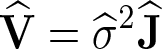
with the variance estimator given by

On the other hand, if the errors are cross-sectionally heteroskedastic,

The model in (1) can allow for weak cross-section dependence as in Sarafidis and Wansbeek (2012) and Dumitrescu and Hurlin (2012). Under weak cross-sectional dependence, the HPJ estimator
3 The xtgrangert command
3.1 Syntax
Data must be
3.2 Options
3.3 Stored results

3.4 Postestimation command
4 Example
4.1 Estimation of the determinants of banks’ capital adequacy ratios
To illustrate the
We focus on the following model,

for i = 1,…, N(= 450) and t = P + 1,…, T (= 56).
ROA i,t stands for the “return on assets” and is used as a measure of profitability; in particular, it is defined as annualized net income expressed as a percentage of average total assets. inefficiency i,t − p presents a measure of cost inefficiency, which has been constructed from a stochastic cost frontier model using a translog function form. 6 Finally, quality i,t − p represents the quality of banks’ assets and is computed as the total amount of loan-loss provisions expressed as a percentage of assets. Thus, a higher level of loan-loss provisions indicates lower quality.
We start by testing whether the pair of

As we can see, the null hypothesis that cost inefficiency and asset quality do not Granger-cause profitability is rejected at the 5% level of significance. The optimal number of lags equals 1 according to the BIC.
7
The option
In addition to the Wald test statistic, the command also reports regression results with respect to the HPJ bias-corrected pooled estimator. The regression output above indicates that the test outcome may be driven by

The output on the top (bottom) corresponds to the Granger noncausality univariate test of the relationship between profitability and cost inefficiency (asset quality). The null hypothesis that
To illustrate further options of the

As before, the null hypothesis that
5 Conclusions
The Granger causality testing approach developed by Juodis, Karavias, and Sarafidis (2021) is computationally fast and widely applicable. In the presence of cross-section dependence, some caution must be exercised with interpreting the results. This is because we do not provide a formal proof that the bootstrap methodology used in this article is asymptotically valid in this case. The same issue applies to other notable contributions in the literature; see, for example, Dumitrescu and Hurlin (2012). While the Monte Carlo simulations are encouraging, a formal investigation on the properties of estimators and the bootstrap is an interesting direction for future research.
A special case of strong cross-section dependence is the additive time effect of the two-way fixed effects model, which is frequently used in the literature. Typically, this time effect is removed by transforming the data to deviations from their cross-sectional means for each time period. This approach is valid if the panel is assumed to be homogeneous across i. After the transformation, the Juodis, Karavias, and Sarafidis (2021) test can be applied without using the bootstrap. If, however, the panel is heterogeneous, then the demeaning no longer removes the additive time effect.
7 Programs andx supplemental materials
Supplemental Material, sj-zip-1-stj-10.1177_1536867X231162034 - Improved tests for Granger noncausality in panel data
Supplemental Material, sj-zip-1-stj-10.1177_1536867X231162034 for Improved tests for Granger noncausality in panel data by Jiaqi Xiao, Yiannis Karavias, Artūras Juodis, Vasilis Sarafidis and Jan Ditzen in The Stata Journal
Footnotes
6 Acknowledgments
Financial support from the Netherlands Organization for Scientific Research (NWO) under research grant number 451-17-002 is gratefully acknowledged by Artūras Juodis. Jan Ditzen acknowledges financial support from the Italian Ministry MIUR under the PRIN project Hi-Di NET—Econometric Analysis of High Dimensional Models with Network Structures in Macroeconomics and Finance (grant 2017TA7TYC).
7 Programs andx supplemental materials
To install a snapshot of the corresponding software files as they existed at the time of publication of this article, type
The
Notes
References
Supplementary Material
Please find the following supplemental material available below.
For Open Access articles published under a Creative Commons License, all supplemental material carries the same license as the article it is associated with.
For non-Open Access articles published, all supplemental material carries a non-exclusive license, and permission requests for re-use of supplemental material or any part of supplemental material shall be sent directly to the copyright owner as specified in the copyright notice associated with the article.
