




Abstract
The Tygerberg Children’s Choir (TCC) is rooted in South Africa’s Afrikaner culture. Its transition to a multicultural children’s choir, within a drastically changed political dispensation, furnished a rich subject for a historiographic choir identity investigation. From its establishment in 1972 until 2019, Hendrik D. Loock was the conductor. Since then the choir has continued under Karina Erasmus. The TCC is one of the oldest existing mixed-gender regional children’s choirs in the country, directed by the longest serving conductor of such a choir. The choir’s identity and Loock’s forty-seven-year directorship are interwoven, his work perceived as a significant cultural contribution. With his late wife Theresa (TCC accompanist, choral trainer, and arranger of choir music for thirty-two years), Loock confirmed a uniquely familial leadership profile amongst children’s choirs. This qualitative biographic report about the life and contribution of Loock and the TCC merges thematically analysed data from the TCC’s archival collection, non-participant observations, face-to-face interviews, and contextual information.
Keywords
Introduction
Since its inception in 1972 the Tygerberg Children’s Choir has been uniquely situated by place, history, and social context. Their accomplishments have brought prominence to the Tygerberg region, 1 a district in Cape Town’s northern suburbs, where a range of hills carries the same name. Auditioned TCC choristers (boys and girls between ten and fourteen years) came from schools in these suburbs, gradually changing to include children from the larger Cape Town Metropole. Choir numbers grew from around forty-five before 1980 to between eighty to eighty-three for a few years from 1994. 2 More choristers ensured always having sufficient present in light of their policy to prioritize school activities over TCC rehearsals and performances. 3 The TCC has been instrumental in raising choral standards throughout South Africa under the leadership of Hendrik Daniel Loock (widely known as Hennie), with the support of his late wife Theresa, generations of choristers, volunteering music staff, and committee members. 4
The topic for this article may raise valid questions about the justification of auditioned choirs, especially considering the widely accepted belief that all children should have access to music education. 5 We argue that regional choirs such as the TCC have an important role to play in joining choristers and their parents beyond neighbourhood and socio-economic borders – different to public, private, and community choirs. Under Loock TCC choristers were encouraged to sing in their school choirs where they shared what they learned in the TCC, contributing to those choirs, and their school music classes and communities. In this way choral singing and music education were enriched on a wider scale than commonly acknowledged. We argue that this question should not be a choice of either/or 6 and that auditioned choirs can contribute to developing more music education opportunities.
The TCC has been described as a “family,” its history as a “feel good story” and “wholesome.” 7 Nevertheless, there have been challenges: significant among them are continuous financial shortages; constantly rehearsing and performing with incomplete choirs as per their approach to allow choristers to prioritize school and extra-mural activities, and resulting pressure experienced in maintaining their performance standard; cultural isolation due to the previous political dispensation’s Apartheid policies.
Apartheid categories differentiated population groups as Black, Coloured, Indian and White; we also refer to Caucasian/Non-Caucasian as speaking about and beyond a period in South African history. We are aware that mentioning these colonial and Apartheid categories may pose the risk of continuing a specific and problematic historical trajectory. However, many South Africans refer to themselves or their racial groups as Black, Coloured, Indian, or White. The South African constitution mentions race in several instances: “to create a non-racial society, it is necessary to acknowledge and deal with the effects of lingering racism and formal and informal racial discrimination. To do that, one has to acknowledge that “race” continues to have real-life consequences.” 8
An interpretative account 9 of TCC history sheds light on how choir identity has been constructed, sustained, and changed since its inception (1972) until the only conductor Loock retired (2019). In the context of social developments, change and transformation define interlinked processes. Change may indicate alteration (“change to pre-existing variants”) or transformation (“incorporation of new variants or possibilities”). 10 Change in TCC identity may be perceived as alteration and/or transformation, depending on new facets. Aspects that have remained constant are referred to as sameness. Case study methodology suits research exploring processes of change. 11 Data collection methods included archival research, non-participant observation of choir rehearsals, and qualitative face-to-face semi-structured interviews. 12 The TCC collection in the DOMUS Archival Holdings, housed at Stellenbosch University’s Music Library, provided primary information, adding context to the other data sources. We posed the question: “What role did Hennie Loock play in TCC identity construction during 47 years?”
In answering this question Braun and Clarke’s (2006) qualitative thematic data analysis (TA) method provides a six-step system.
13
Their “reflexive” TA is an “organic approach for coding and theme development” where “the active role of the researcher in these processes” is key.
14
TA does not prescribe specific conceptual choices, philosophies or theories, “only provid[ing] a method for data analysis.”
15
Interviewees’ direct quotations voice their perceptions, opinions, and thoughts about Hennie Loock and how he influenced TCC identity; these are not necessarily the views of the authors.
16
Thus, our case study fits a qualitative research framework with the aim “to see things through the eyes of respondents and participants.”
17
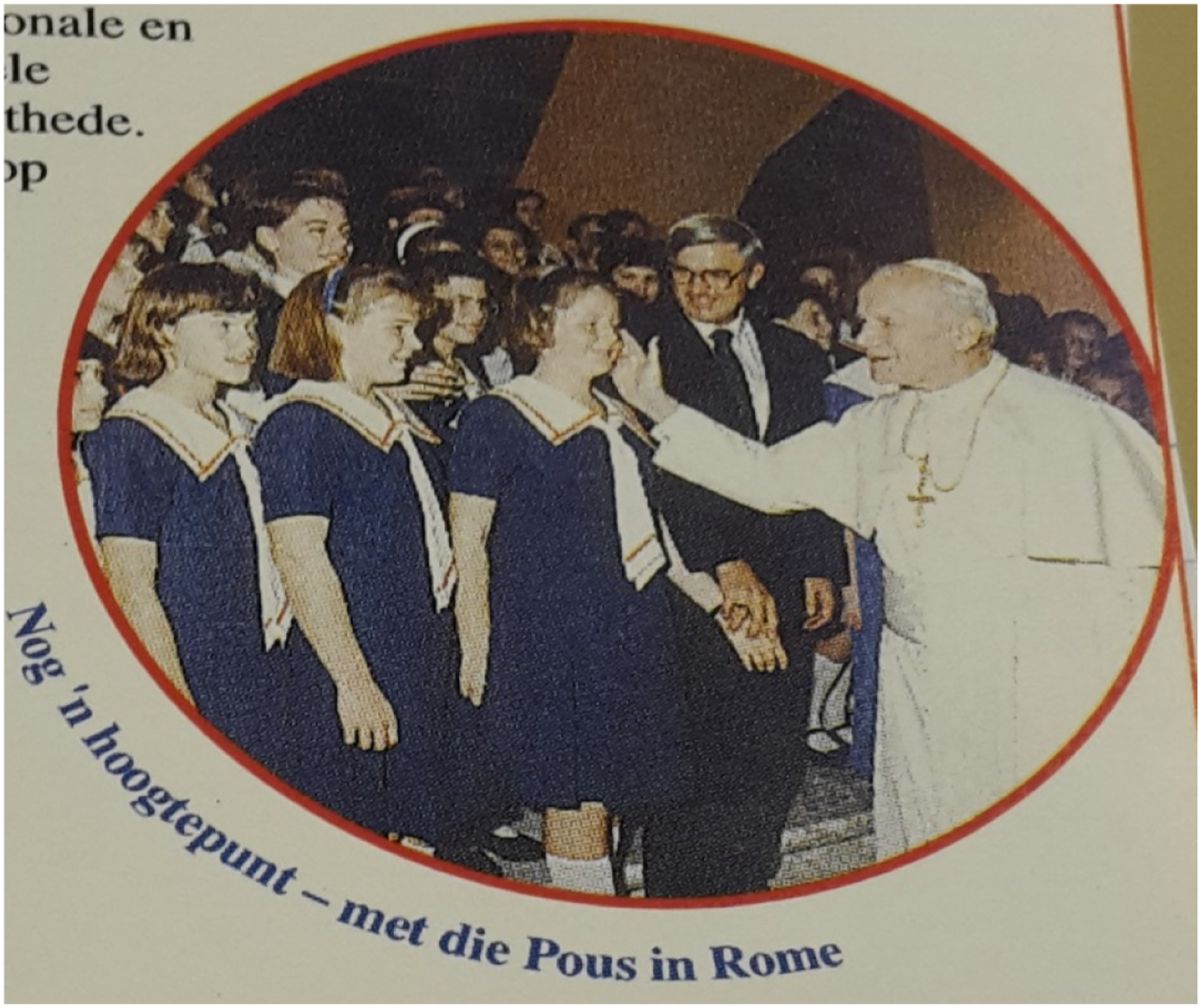
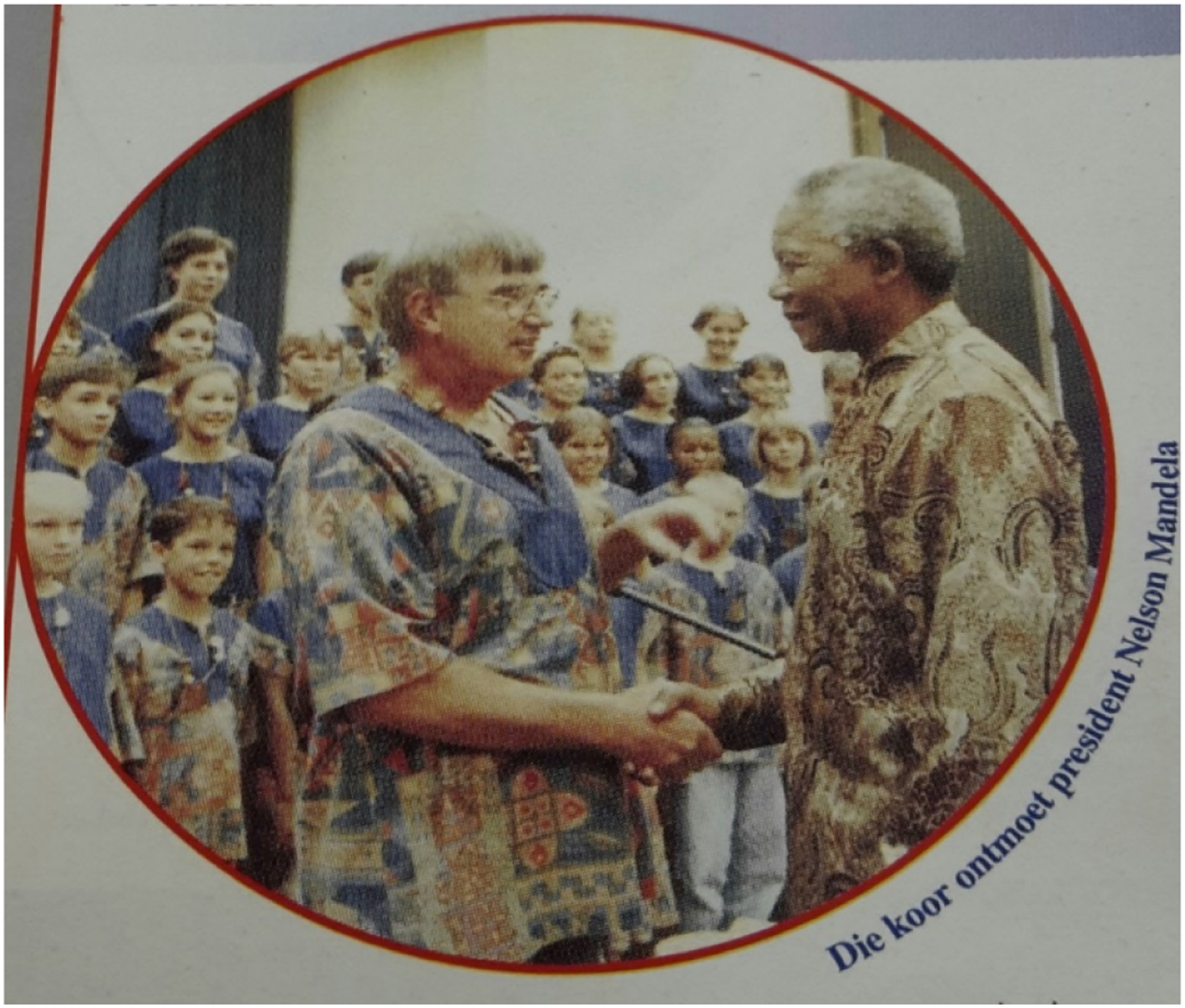
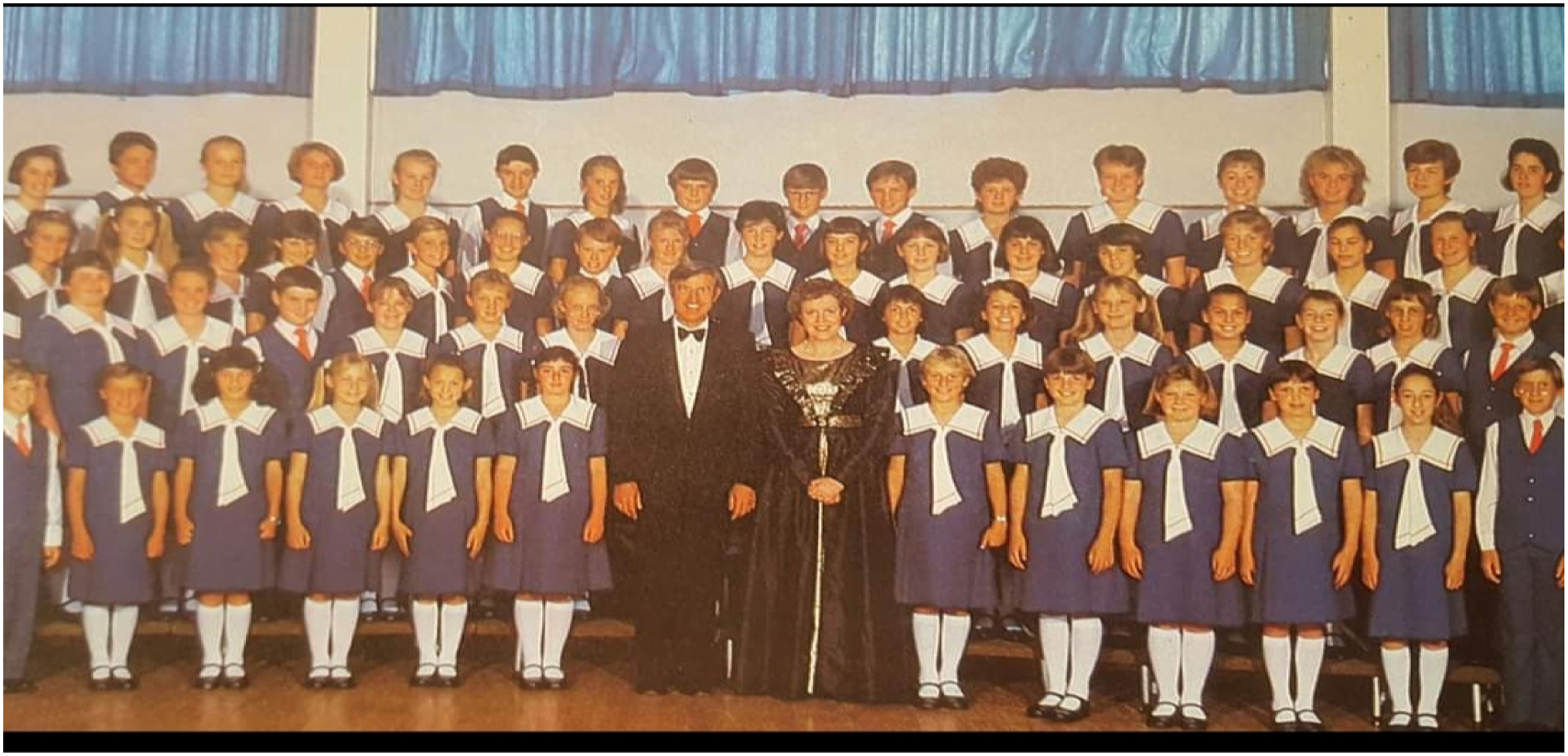
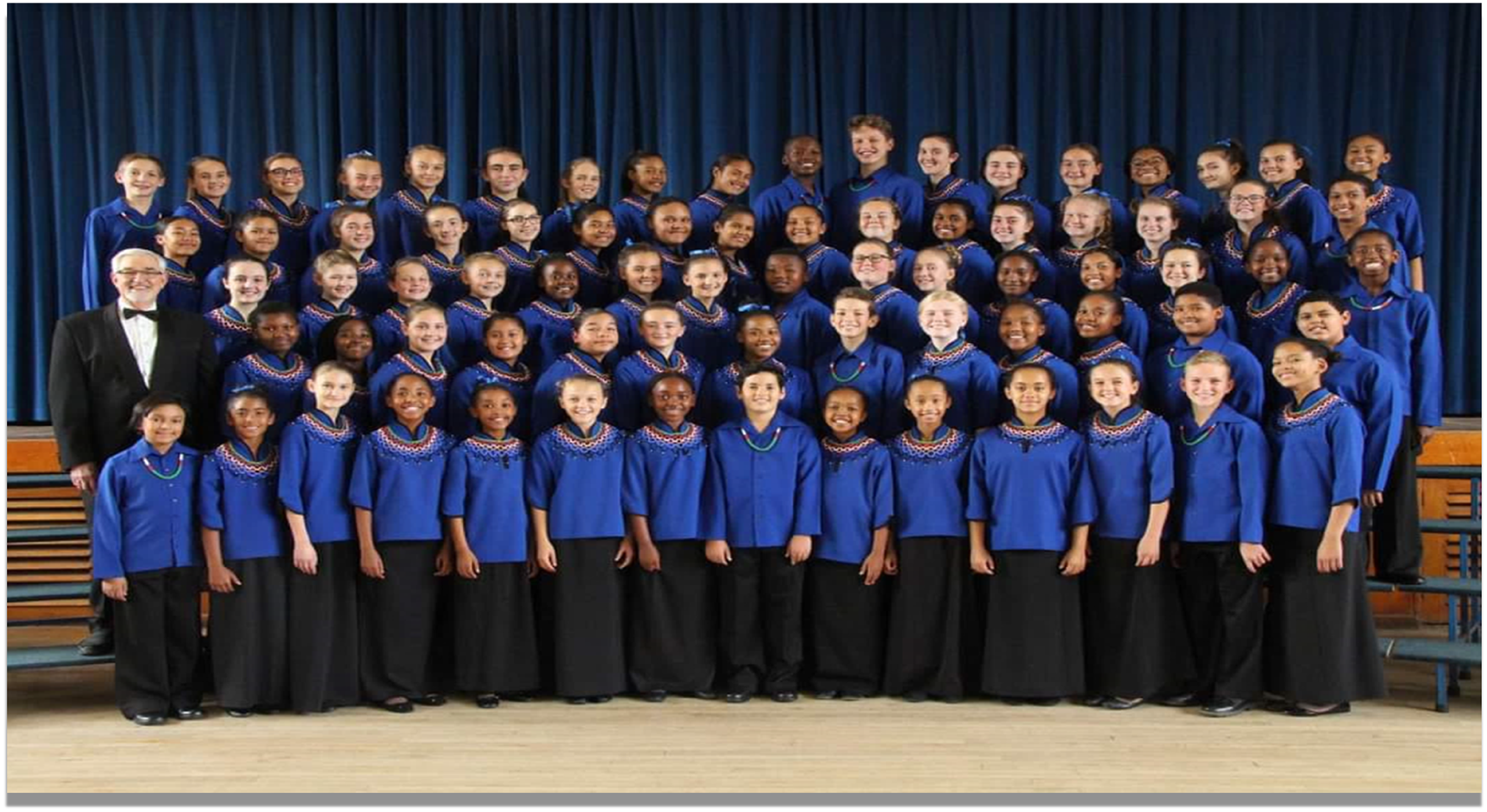
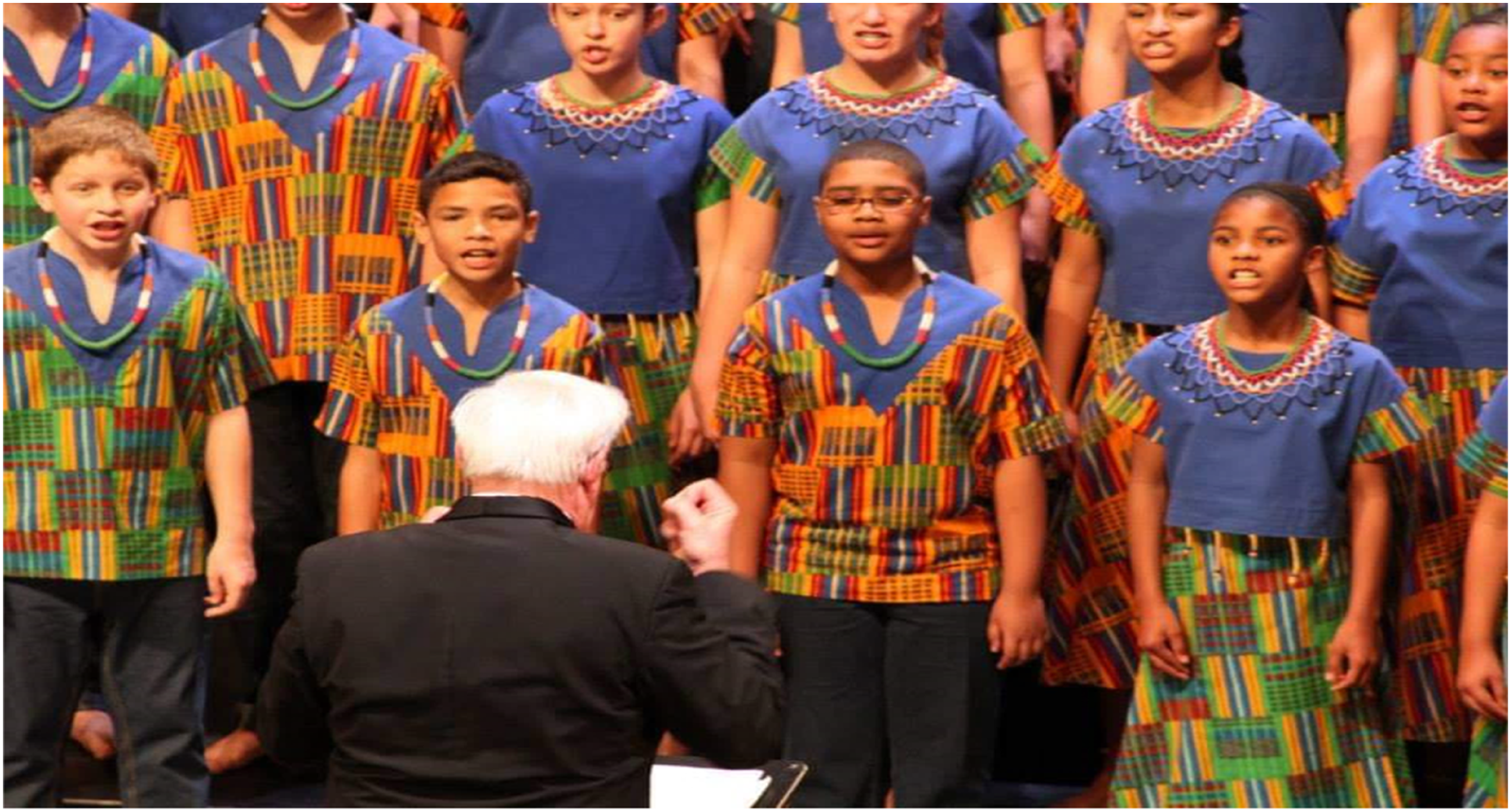
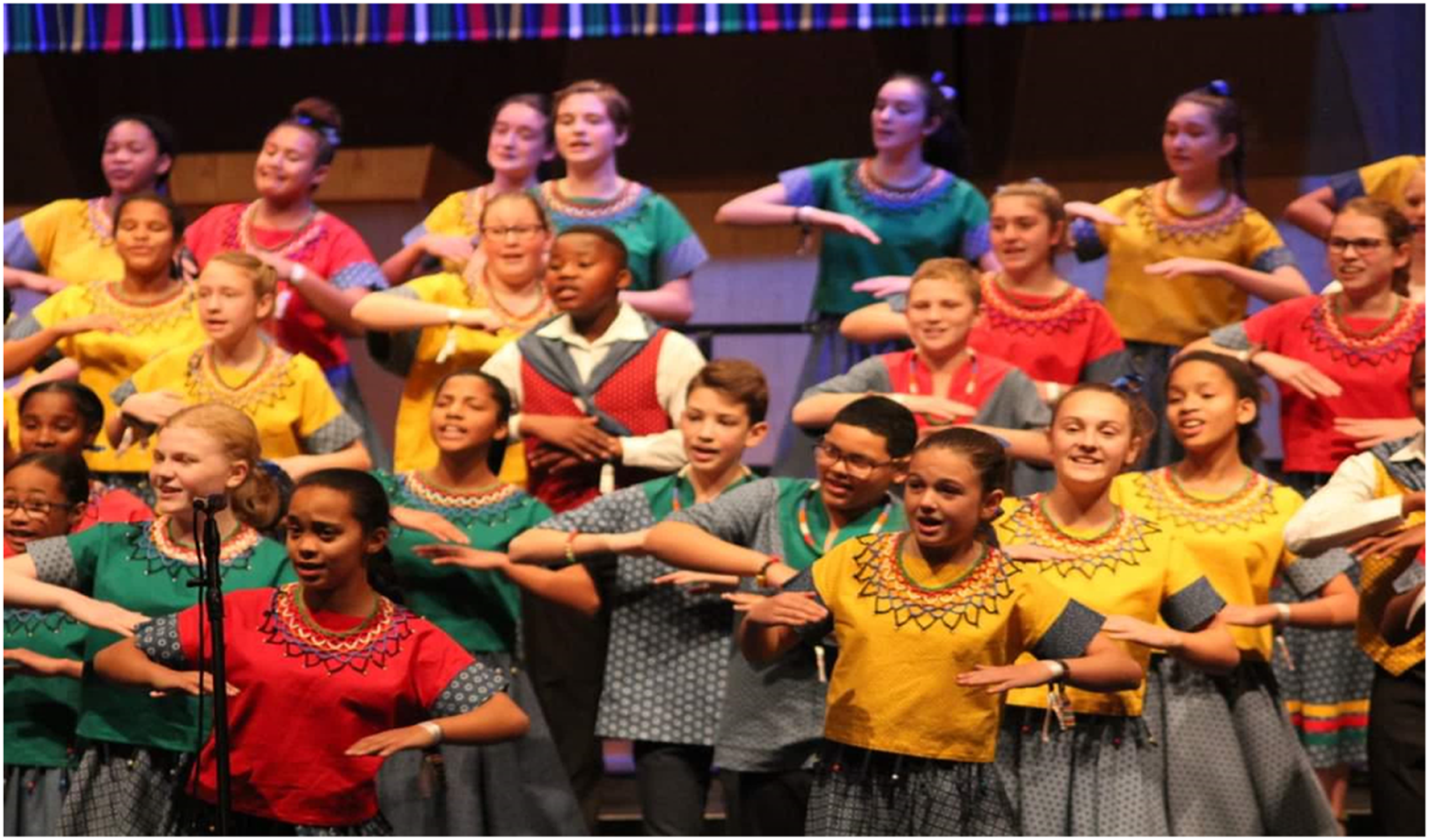
Two themes (‘Interrelated identities – conductor and choir’ and ‘Constructing diversity, one song at a time’) are integrated with contextual and biographical information, to answer the research question: “What role did Hennie Loock play in TCC identity construction during forty-seven years?” Figures 1 and 2 illustrate racial representation in the TCC before and after democratization. Loock and TCC choristers, 1985, before transformation. Photo courtesy and permission Karina Erasmus, from concert program in her possession. Photographer unknown. The TCC performing at the 2018 World Choir Games in Tshwane, South Africa. Photo permission/credit Interkultur, Nolte Photography. Permission from TCC for all photos for publication and from 2018 chorister parents for group photos. Pope John Paul II, Hennie Loock and choristers, 1990, at their historic meeting. Photo cropped by first author, from an undated information brochure around the turn of the century, photographer unknown. [n.a.], [“TCC the emblem with a guarantee”], [n.d.], DOMUS. Permission from TCC (Karina Erasmus) as advised by DOMUS. Hennie Loock, former President Nelson Mandela and choristers at one of their encounters, 1998. Photo cropped by first author, from an undated information brochure around the turn of the century, photographer unknown. [n.a.], [“TCC the emblem with a guarantee”], [n.d.], DOMUS. Permission from TCC (Karina Erasmus) as advised by DOMUS. Hennie and Theresa Loock, choir in original uniform, 1987. Photo courtesy/permission Karina Erasmus, from 1988 concert program in her possession. Photographer unknown. Loock and choir in formal uniform, 2018, worn since 2006. Photo permission/credit Robert Hamblin, 2018. Permission from TCC for all photos for publication, and from 2018 chorister parents for group photos. Loock conducting, choristers wearing the second ethnic uniform, 2014. Photo permission/credit Charl van Heyningen, 2014 World Choir Games, Latvia. Permission from TCC for all photos for publication, and from 2014 chorister parents for group photos. Choristers performing in the third ethnic uniform, 2018. Photo permission/credit Charl van Heyningen, 2018 WCG, South Africa. Permission from TCC for all photos for publication, and from 2018 chorister parents for group photos.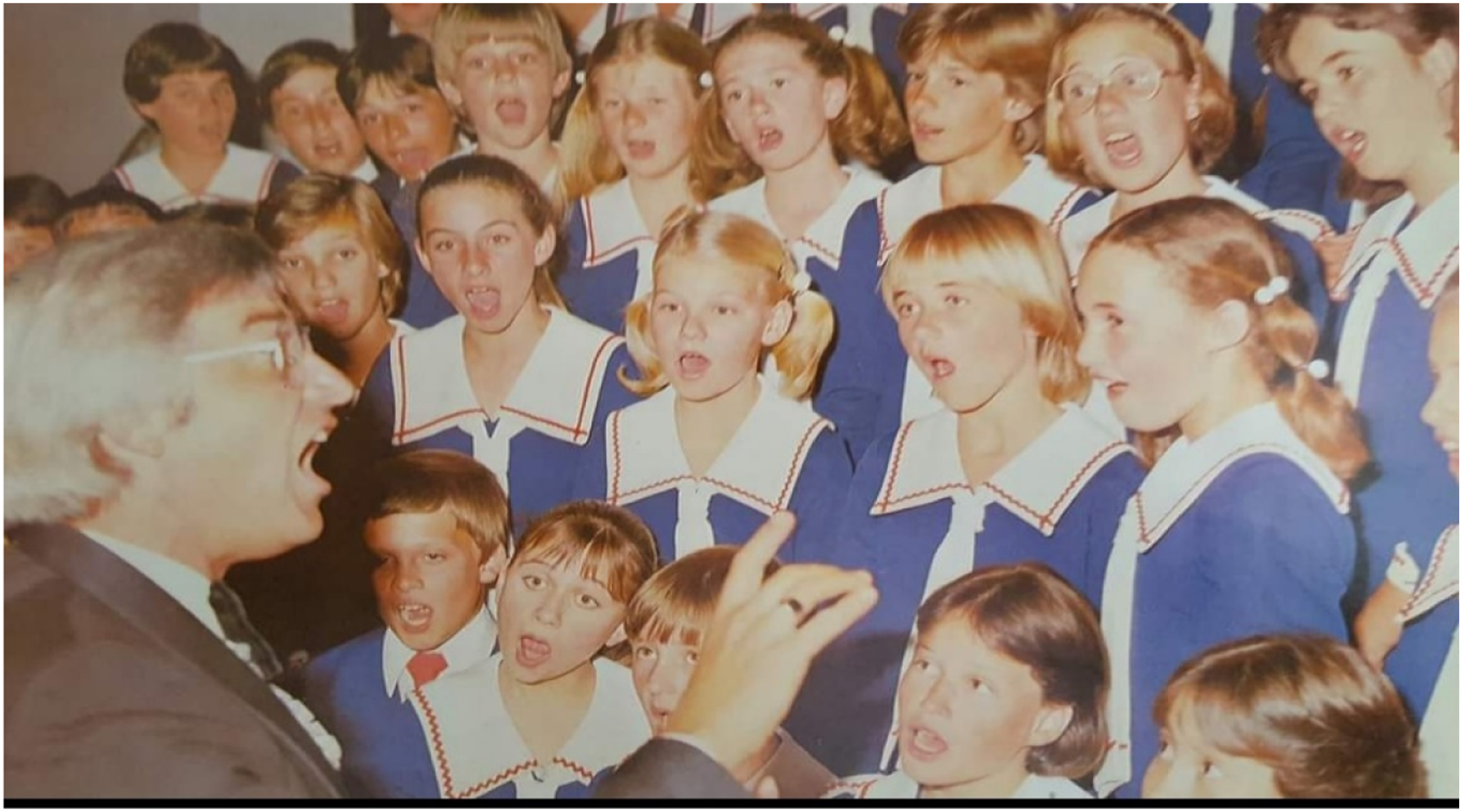

Identity, Choir Identity and Identity Process Theory
Identity concerns intricate nuances, meanings, frameworks, and theories. 18 Elements of individual or group identity may alter with personal or social changes. 19 Choir identity is a “choir’s unique corporate nature, essence or persona.” 20 This may include sound, timbre, genre, repertoire, competence level, performance style, artefacts, movement, and dance as well as age, gender, socio-politics, culture, audience perceptions and their interrelationships. Choir group identity includes involved perspectives, input, and interactions of role players (conductor, choristers, parents, accompanist/s, assistant trainers, committee, audience, and social environment).
Identity Process Theory (IPT) provides a useful lens to simultaneously explore “identity, change and action.” 21 IPT offered a way to investigate TCC identity construction whilst considering social and historical contexts and exploring how and if identity shifts and sameness have been perceived. The theory includes six principles: self-esteem, continuity, self-efficacy, distinctiveness, belonging, and coherence. 22 When social context affects any identity principle, identity threat occurs. 23 Humans find different ways and “levels” of coping with threats, 24 influencing identity formation, alteration, or continuation. 25 This article considers the principles self-esteem, continuity, self-efficacy, and distinctiveness in relation to Hennie Loock’s vision and TCC identity.
Hennie Loock’s Dream
A teacher at heart, ‘oom (uncle) Hennie’, as he has always been addressed by choristers, has often said his dream came true to have a professional children’s choir. 26 Yet Loock never imagined being named among the best internationally as reflected in competition results from 1980 to 2018. 27 He rather aimed to conduct a musical ensemble with a pleasing sound, to expose children to diverse musical genres and styles, and for their music to touch the hearts of audiences. 28
Before his final concerts, it was reported that “more than 3000 children have been inspired to sing” under Loock, and that he took “countless groups of children overseas to delight foreign audiences, performed at hundreds of concerts and put his personal mark on the harmonious sounds of young voices coming together in perfect synchronicity.” 29 Loock was inspired by “the satisfaction of the artistic aspect, the creativity involved and the sound, harmonic sound which always poses a challenge yet a very satisfactory end result.” 30
Since their first local performances as festival choir in 1972, first weekend tour to countryside towns in the Western Cape, first interprovincial school holiday tour in 1974 and first international competition tour in 1980, the TCC has captivated audiences, inspiring them to continue delivering their performance product. 31 Lombard remembered the initiative for the first international tour coming from a fellow choir parent who thought the TCC would get more recognition (possibly financially) if they did well abroad: “In South Africa one needs to achieve abroad before you get local recognition.” 32 However, funding has remained a challenge despite international exposure.
Loock’s first long-playing record, bought as a child, was of the Vienna Boys Choir; already then, he became aware of choral singing’s communicative properties by means of text sung and through atmosphere created by tone color and sound production. Mixed-gender children’s choirs developed globally in the second half of the 20th century from the western European boys’ choir tradition with roots in the middle ages. 33 As this development continued, during Loock’s youth and career, embedded in a western art music idiom, children’s choirs became recognized as “instrument[s] of choral excellence,” 34 the child’s voice “as an instrument of musical excellence,” 35 and as a distinct “art form.” 36 Accordingly, excellence and success (and achievement) in this genre have become synonymous with conductor competence, voice training, repertoire choice and standard as well as a child-centered choral education philosophy including musical development and gaining personal, educational, and social skills. 37 Striving for such excellence did not exclude the important music education value of chorister participation, of learning and developing; it was interconnected, illustrated in mention by former choir parents and choristers of personal development (resilience, conscientiousness, discipline) and world views, self-esteem and social confidence.
Notions of excellence, success, and achievement in the form of competition results, accolades and awards, reviews of choral experts and in the media, regional, national and international recognition, audience responses and continued interest and commitment of role players, including parents, were a feature of TCC choir identity during Loock’s conductorship. 38 These aspects reflected on their website, in carefully collected material in their donated archival collection and impressions shared by interviewees. 39 Excellence in children’s choralism is subjective and dependent on specific contexts, cultures, and value systems. 40 Descriptors such as “excellence,” “success,” and “achievement” may be interpreted as contentious value judgements, culturally situated and formed, without singular meanings, as this article shows.
Loock described the choir’s entire existence as an enormous achievement. Theresa Loock referred to TCC successes as a lifetime of achievements. 41 Excellence in this context aligns with their 1995 vision and mission statements: “[Vision]: To be the finest children’s choir in the world” and “[Mission]: We aim to promote choral singing of the highest caliber in the unique multi-cultural Southern Africa, and to be recognized as the criterion for all children’s choirs internationally.” 42 Arguably, achievement and wide recognition should not be the main purpose of children’s choirs. These statements may also suggest superiority to some; others may recognize motivation to strive for and deliver to the best of a group’s ability. This is characteristic of a form of collective identity, illustrated by sports teams and competition groups, and also associated with the TCC under Loock. Bartolome wrote that “competition is important in the choral scene … throughout South Africa.” 43 Loock also referred to the assumption that South Africans in general are competitive. He acknowledged his personal competitiveness.
The TCC 1993 mission statement prioritized the commitment to create “equal opportunities for all choir members, irrespective of language, culture or financial situation.” 44 This referred to complete or partial funding for an average of eight choristers since it started: the development program has been funded by two small corporate sponsorships, choir parent donations and monies raised through several projects initiated by parents and committee members. The 1993 mission had as its major purpose “to keep the process of putting together a multi-cultural choir on track”, including the outreach action. 45
Cultural and Socio-political Contexts
This account of Hennie Loock and the TCC is embedded in the histories of culture and socio-politics in South Africa. Regional mixed-gender children’s choirs, formed across the country in the previous political dispensation, were framed in a western art music idiom and had mostly Caucasian membership within a racially segregated society. 46 Especially since the onset of democratization in 1994, South African choirs have become increasingly multicultural. 47 The TCC’s dominant Afrikaner/Afrikaans leadership core has remained, yet several interviewees who experienced the transition described becoming more representative, by embracing change and diversity, as one of the greatest highlights in TCC history. 48
‘Afrikaner’ refers to Afrikaans-speaking. Afrikaans is the preferred language of the majority in the Western Cape, with the mainly Afrikaans-speaking so-called Coloureds as the largest racial group in the province. 49 The Loocks, assisted by TCC volunteers in managerial and training positions, established a strong Afrikaner leadership.
Afrikaner identity has been associated with/developed from indigenized European/Caucasian colonist histories, religions, and cultures, over the years embracing new facets and directions. 50 Afrikaans gradually developed in the former Cape Colony as creolized dialect spoken by different peoples from several origins and parts of the world. 51 It became an official language in 1925 and is spoken widely, not only by so-called Afrikaners. 52
‘Afrikaner’ culture and nationalism associated with White Afrikaans speakers gained momentum after the two wars against Britain (1880–1881, 1899–1902), as an organized attempt at upliftment and positioning. 53 Organizations within the penurious Afrikaner community furthered their language, culture, and business opportunities. Afrikaners became synonymous with Apartheid within the ruling party 54 from 1948 till 1994, furthering themselves as a cultural group and Whites as a racial group, whilst excluding Non-Caucasians from the “central political system.” 55
The concise overview of Afrikaners (above) and of Apartheid (below) cannot communicate the complexities of this group nor their political system. When the TCC was founded, the political and social landscape was indissolubly connected to its earlier histories of Christian nationalism, Afrikaner identity, multiracialism, White dominance, and segregation, but it is also connected to what followed. Whites from different Caucasian cultural groups benefited from systemic Apartheid, even if they did not agree with it, whilst Non-Caucasian racial groups experienced large-scale atrocities. Many White South Africans, including Afrikaners, welcomed democratization, transformation, and equality, yet remnants of political, social, racial, cultural, and economic injustice remain part of current collective South African national identity.
Under Apartheid there were different education departments for different races. White schools were generally well designed, well equipped, with well-qualified and relatively well-paid teachers; other races had less advantageous dispensations. Music instruction in public schools in the Tygerberg region at the time of TCC establishment reflected education inequalities designed to favor Whites. After desegregation, these differences remained in the region and throughout the country: “the quality of education still corresponded closely with race” 56 and with socio-economic class. In general, most white schools housed more than one piano, primary schools were equipped with melodic and non-melodic percussion music instruments, secondary schools owned a selection of wind instruments, qualified music teachers acted as music educators, and a choir culture was evident in white schools. All these aspects were in stark contrast to music education opportunities and resources in underfunded Coloured, Indian, and especially Black schools. 57
Posel describes Apartheid’s three distinct phases: the 1950s phase of “cautious ... racial social and economic engineering”, the second phase of “ambitious and unyielding” institutionalized racism from the 1960s to mid-1970s, and the third phase of reform, continuing until 1994. 58 The TCC was established in Apartheid’s second phase, when neighbourhoods, schools, and society were racially segregated by multiple laws. The original TCC, subject to these laws, catered for White choristers from White schools.
Loock’s Early Life and the Establishment of TCC (1944 – 1982)
Loock was born on July 7, 1944 in Kakamas (Northern Cape) into a musical family. He grew up during the first phase of Apartheid, matriculated from Knysna High School in 1961, studied at Stellenbosch University, and obtained Bachelor of Arts, Bachelor of Education, and music teaching and secondary school teaching diplomas. He received a piano teaching licentiate from the University of South Africa. Loock sang in the Stellenbosch Dutch Reformed Church student congregation choir and participated in the annual student song festival/choir competitions. He acted as assistant conductor for the latter.
To celebrate the twenty fifth Tygerberg Eisteddfod birthday in 1973 Loock was asked in 1972 to form and conduct a festival choir from 12 Tygerberg primary schools. 59 He had already distinguished himself as leader of the De Kuilen Primary School choir. He was recognized as innovative amongst his colleagues: his choice of repertoire (including foreign languages), use of chorister soloists and the sound palette achieved, resembling the Vienna Boys Choir. Theresa Loock recalled that he toured and made three long-playing records – unheard of in terms of Western Cape school choirs in the early 1970s. 60 The festival choir first performed in April 1973. 61 Performance successes incentivized establishing the first regional Western Cape choir project. 62
Later Life and Conducting Career (1983 – 2019)
Loock was part time piano lecturer at the Denneoord Teachers’ College (1983 – 1985) with special responsibility as TCC conductor under the auspices of the former Cape Provincial Administration Department of Education. 63 From 1986 to 1996 he presided as school choir subject advisor for this education department whilst continuing his TCC conductorship. As example, his 1989 subject advisor report indicates his visiting fifty-seven schools and listening to seventy choirs in an advisory capacity. 64 Upon request he would work with the choirs, enabling practical remedial actions. Additionally, he presented seven workshops with different topics at four teachers’ centres, attended by 425 people in 1989. Due to his position’s rationalization by the newly formed Western Cape Education Department, Loock went on early pension in 1996, becoming an independent choir consultant.
Loock has presented choir training talks, lectures, symposia, and workshops – innumerable in the Western Cape, throughout the country and abroad, and officiated as adjudicator of choir competitions, festivals, and eisteddfods nationally and internationally. During his career and post-retirement he has received multiple awards, not limited to numerous examples from Afrikaans/Afrikaner organizations. 65 Among these the Western Cape Department of Cultural Affairs and Sport recognized Hendrik and Theresa Loock for their national and international excellence at an awards evening in 2004 for recipients who played significant roles in the development of arts, culture, and heritage in the province. In 2008 Loock received the Molteno medal for distinguished ongoing service to the performing arts from the Cape Tercentenary Foundation. In 2011 he was the recipient of the ‘Inspiration award’ at the ninth ‘Cause we Can! charity/benefit concert and in 2018 he received the ‘Commonwealth Youthchoirs Founders Award’ presented to him by Steven Fisher for “a lifetime of transforming young lives and inspiring colleagues through the power of making music together – one song at a time.” In April 2021 he was awarded the Huberte Rupert prize for classical music from the ‘Suid-Afrikaanse Akademie vir Wetenskap en Kuns’ (South African Academy for Science and Arts), an Afrikaans organization supporting various categories of achievements in these disciplines.
Influences on Loock’s Conductorship
Recognition for his artistry and exposure to the work of/collaborating with numerous conductors enriched Loock’s choral practice since the 1980s. Earlier inspiration came from the Vienna Boys Choir’s sound and from singing in the Stellenbosch University Choir under the late Philip McLachlan: voice training, technical mastery, secure intonation, uniformity of sound, suitable projection, and creating atmosphere were essential elements, but also enthusiasm and a group spirit. 66
George Gruber, conductor of the Rhodes University Chamber Choir and a “former conductor in chief of the Vienna Boys Choir”, 67 also influenced Loock. He viewed Gruber and McLachlan as leading local choir conductors during his formative years. Their choirs undertook numerous national and international tours and made several recordings – distinctive aspects of Loock’s conducting career. 68 Loock also specified the later influence of Erkki Pohjola of the Finnish Tapiola Choir on cultural bridge building by means of repertoire choice. 69 His work was positively shaped and supported, too, by the music writing and accompaniment skills of his late wife Theresa.
Interrelated Identities – Conductor and Choir
The impact of conductor beliefs on choir identity was expressed by several interviewees. Brand, involved since inception, said: “the [choir] identity is related to who Hennie is, what his ideals are, his life principles.” 70
Inspiring choristers’ later lives by example
Lombard linked personal values to the TCC’s identity and its effect on choristers’ development: “Hennie’s approach to the choir creates identity. An identity of dedication and discipline influencing children’s later lives, careers, resilience, to be conscientious at all levels.” 71 Theresa Loock also named discipline and respect as main TCC identity features. 72 She connected discipline to conductor energy and expectations in rehearsals and performances: “Discipline plays an important role … in rehearsals … on stage … on tours, discipline in terms of yourself. Discipline also stands for respect for each other … for yourself.” She remarked that a conductor leads by example and inspires a collective vision for all role players. Abrahams confirmed the TCC’s lifelong positive effect, providing stability in children’s lives. 73
Proficiency and Continuity Create the Product
TCC excellence has been attributed to the conductor’s competence, continued excellence to his long directorship. Gericke’s opinion was: “The identity of the TCC is connected to a person, to Hennie Loock.” 74 Van Heyningen stressed: “The children’s choir is Hennie’s life and that is why it has existed this long. The late Jenneker, former director of the Erub Children’s Choir, linked TCC identity to professional standards of “dedication, commitment [and] total conviction.” 75 Gaffley, conductor of the Kensington Chorale, related TCC success to Loock’s competence: “you have the same leader for so many years doing a brilliant job so who doesn’t want that leader to stay for ever.” 76
A Legacy Reaching Beyond One Choir
Interviewee responses confirmed the TCC as a choir of high standing with a tradition of continued excellence, interlinked with the conductor’s influence. Van der Merwe commented that the concentration of good choirs in the Western Cape was directly influenced by Loock: “Hennie lifted the bar in the region and country.” 77 Van Heyningen offered a matching response: “Loock and the TCC laid the foundation of choral singing in the Western Cape – [with]… the best choirs in SA.” 78 Gericke responded similarly: “We have fantastic children’s choirs in our country ... TCC demonstrated to other choir leaders what is achievable with children’s voices.” 79
Hendrikse called Loock a worthy successor to McLachlan as the father of [western] choir music in SA. 80 Others concurred with the extent of TCC influence: “The TCC functions in the broader community … its influence [is] countrywide and abroad.” 81 Theresa Loock summarized: “The TCC serves as a feeder choir, it provides choristers and builds high school, university, college, and regional choirs ... former choristers establish choirs and vocal groups because a love for choir singing is cultivated in the TCC and a standard is set.” 82
We are unaware of any formal partnerships with public schools beyond providing choristers for the choir, and Loock’s choral training workshops and in-rehearsal advice for school choir leaders. The TCC was widely associated with performances, concerts, functions, events, and causes in aid of various charity and benefit organizations including churches, schools, hospitals and various initiatives for children and the elderly. They organized many outreach concerts where they invited school and youth choirs from the area to share evenings of song with them. Apart from the many charitable and prominent performances through the years, Loock and the TCC gave countless informal performances in cathedrals, on airports, and at tourist attractions locally and abroad, to share the joy of song.
Financial Concerns
From 1977 the TCC was partly subsidized and managed by an appointed board of the former Cape Provincial Administration Department of Education. 83 A fixed allowance was provided by the Department from 1981 84 and from 1986 support for the choir by means of Loock’s school subject advisor position. 85 Since October 1, 1996, the choir has been privatized. Volunteer service, involvement of parents, donations, income from performances, and fundraising projects became imperative for survival.
Since privatization, apart from monthly contributions, parents pay a once-off entry and uniform rental fee; they have always been responsible for tour costs. 86 TCC families are encouraged to sell CDs, DVDs, and concert tickets, receiving 10% from such sales towards tour fees, since these recordings became the custom., involving everyone who committed to being part of the TCC. 87 In 2022 the fees for new incoming 2023 parents were R1100 for entry, R440 monthly membership per chorister and R1600 uniform rental. 88 On June 13, 2023 at 12.26 the conversion rates were one US Dollar (USD) to R18.64 South African Rand (ZAR).
Post privatization the TCC’s main income has been from membership fees, paid monthly, quarterly or annually with additional income derived from performances (20%), CD and DVD sales (10%) as well as from Friends of the Choir donations (5%). 89 The choir friends initiative, started ten years after inception in 1982, 90 has developed into a project to collect funds, particularly to assist with financially needy choristers’ choir and tour fees, becoming more crucial after privitazation. 91 The biggest concert income is from Christmas concerts, performed annually since 1997. 92
As recipients of very limited funding from former and present provincial education departments from 1977 to 1996, the TCC has, for most of its history, been dependent on creating its own funds and on volunteers doing management and music teaching in rehearsal sectionals. Their website states: “It is vital to receive additional funding in every conceivable way.” 93 A detailed fundraising letter drafted by former chairperson Lombard in 1983 reached out to possible sponsors. 94 Four years later, indicating the reality of minimal funding, she wrote of cultural activities not receiving unconditional support from the wider community, and TCC parents carrying the biggest responsibility. 95 The next year she conveyed that the then economic climate impacted the entire community and that restructuring the Friends of the Choir project should be the future necessary financial base. 96
With rationalization of Loock’s subject advisor position in 1996, the already financially burdened TCC committee had to decide if the choir should continue. 97 They elected to privatize and raise funds. Their dually focused fundraising campaign was for Loock’s honorarium plus their development program. 98 Comprehensive notes in the archive mention plenteous fundraising goods for sale and numerous organized events, but finances remained problematic. 99 Policy was drafted to develop a realistic strategy. 100 It was established that choir performances were most profitable; selling various goods least profitable. The choir was recognized as its own best product and marketed as such since. 101
A 2006 proposal reaffirmed their financial situation: “The Choir is registered as a non-profit organization ... It is literally the parents of the choir members (by paying a monthly choir fee) and a few Friends of the Choir who maintain the financial and administrative viability ... Choristers from underprivileged and previously disadvantaged communities can often not afford to pay choir fees.” 102 Brand pointed to financial limitations preventing needed expansion, specifically providing more opportunities for less fortunate children: “One would really like to see that children are not excluded from participation due to finances … to serve less privileged communities, that there would be funding for children who would like to sing.” 103
Financial threats to ongoing TCC existence were a leitmotiv reflected in all three data sources for this article: continuously finding solutions, the TCC’s volunteering leadership, with the assistance of willing parents and children’s choir lovers, fought relentlessly to sustain the choir and to keep Loock as conductor. Thematically analyzed data showed that goodwill, hard work, and persistence from the many support teams kept the choir going whilst since privatization they increasingly delivered much-needed funds with busy yearly performance schedules.
Respect for Loock as a person, his conductorship, and accomplishments as well as a belief in the choir’s cause, inspired extraordinary personal volunteer support. On their 30th anniversary, Loock noted, as previously, his gratitude for the way his life played out, earning a living doing what he so enjoyed. 104 He reflected on the personal impact on his life and career by many volunteers: “With their community service they provide me with the opportunity to find fulfilment in my passion.” 105 Loock acknowledged the continued monetary benefit of his honorarium as an incentive to carry on into his seventies.
Loock defined his TCC conductorship as a service of love. 106 Before 1977 he received no compensation; the accompanist received payment from 1989, financed from choir funds. 107 The conductor received 10% of the income of all paid performances as well as 10% of all CD and DVD sales when these became the custom in the 2000s. 108 The accompanist received an additional amount for every performance. 109 Their son said one of the life lessons he learned from his parents was that success is not always measurable in monetary terms. 110
Constructing Diversity, One Song at a Time
Constitutional amendments, including reference to their development program, were aimed at becoming racially more diverse. Even though this study did not intend to prove representative ‘extent’ or ‘measurement’, an estimate during observation indicated around 50% Non-Caucasian choristers. During data collection, the TCC had an ongoing policy that no chorister’s race was considered or listed. Rehearsals and concerts never showed complete attendance: attempting to count numbers according to race was futile. Several participants of different race groups indicated that they did not expect a certain racial distribution. 111 Below we consider related issues of international credibility, accessibility and dominant culture, the social and personal value of membership for choristers, as well as the message of vibrant uniforms and repertoire choice as facets of group identity formation.
International Credibility
Loock affirmed that democratization enabled the choir to travel internationally with confidence, to show their representative membership to the world, and that South Africa is one nation: this made the choir credible. The former government’s policies, as well as the world’s position on Apartheid, posed a threat to TCC self-efficacy, self-esteem, and distinctiveness for many years, 112 excluding them from competing internationally. According to former chairman Gericke, the TCC could only be evaluated at international competitions, highlighting their pre-democracy dilemma. 113 The regular affirmation of their international proficiency post-1994 would have been impossible without internal transformation. Most interviewees thought that the political changes in South Africa directly triggered changes of racial representativity. Gericke said transformation in the TCC was strongly supported by a non-discriminatory outlook and intent of the leadership teams and that the political changes in the country were not the main incentive to change. 114 The general stance was that the TCC became more inclusive because of democratization.
Since 1991, increasingly more Non-Caucasian choristers have experienced the opportunity of membership. The first Coloured members were accepted in 1991; the first Black choristers in 1994. 115 The TCC evolution into a multicultural choir is an example of gradual change in a music educational setting. Against the background of developments in children’s choirs, as well as continuous social change in the region, country, and world, the TCC and their conductor had to continue adjusting identity to remain relevant.
Accessibility and Dominant Culture
Most interviewees described the choir as racially integrated, reflecting multicultural choral identity, racial inclusivity and diversity, and welcoming children from different racial groups. Four participants perceived TCC accessibility as only allowing children whose parents can afford membership, tour, transport, and uniform fees. 116 This illuminated ongoing problematic limited funding/sponsorship opportunities, which these interviewees understood. Accordingly, not only musical giftedness, but also specific affiliation of schools as well as school choir conductor involvement and experience in nominating and preparing candidates for auditions, enhanced exclusivity.
The audition process has prohibited many children from becoming part of the choir. However, Verster reports consensus amongst regional/provincial/non-public school children’s choir experts “that auditions are a non-debatable prerequisite for the development of excellent children’s choirs.” 117 These positions illustrate the valid arguments for those who believe that musical experiences should be available to all children and those who think that music for all should be encouraged as well as opportunities such as auditioned choirs, bands, and orchestras. The TCC has been an auditioned choir since establishment, compared to an elected regional or provincial sports team, that does not discourage participation in sports for all children. School choir directors affiliated to the Tygerberg International Eisteddfod and on the TCC contact list nominate children to audition, as may parents. Schools receive invitations for nominations; advertisements are published. Despite these inviting measures, innumerable children will never have the opportunity to audition for the TCC.
Different examples of Loock’s audition forms showed assessment of personality, facial expression, attitude and communicative performance ability, aural dexterity, intonation, musical memory, musical sensitivity, voice quality, a useful voice range, breathing, breath control, and phrasing. 118 Audition forms confirmed that candidates with potential to develop in some areas could be accepted. 119 Van Eeden shared her experience: “I didn’t have an exceptional voice but my aural ability was quite developed when I auditioned.” 120 Loock suggested that a good ear implies musicality – the main quality he looked for.
Four non-Afrikaans first language speaker interviewees stated that they experienced the TCC’s dominant Afrikaans culture as stemming from the conductor and leadership team, despite the choir officially adopting English as the language of communication. 121 They showed a measure of acceptance of this sameness: keeping the original Afrikaans cultural core, linked to the extended presence of the conductor and support teams. A Xhosa mother tongue participant noted her accommodation of incidents where Afrikaans was spoken, but that others could be offended: “if there are a lot of Xhosa speaking people and there are few people that do not understand Xhosa you find yourself speaking your language.” 122
Social and Personal Value of Choir Singing
Jones acknowledged Loock for unifying the multicultural TCC: “we [South Africa] have so many cultures … I think the hardest part for me is … to fuse all of that together and … Oom Hennie did that.” 123 Bagula remembered the TCC as depicting the social variance of the larger South African landscape: “there are people from different backgrounds, different races … people that couldn’t afford the choir, people that could afford the choir … there was just a big representation … we were all able to mix like regardless of our backgrounds and like circumstances that was quite amazing for me.” 124
Anand connected difference in the TCC with exposure to various cultures, also through repertoire: “the TCC kind of made the effort to expand and to include and you know explore different cultures within the music.” 125 He named demographics as one of several interlinked factors, depicting national differences, reflecting in the TCC: “different students from different cultures and different schools because different schools mean different areas, different upbringing, completely different lifestyles.” He noted underlying social capital of choirs in general and the TCC specifically offering the opportunity to “expose different kids from different backgrounds to other kids’ different backgrounds … to share that diversity.” 126 Social character of a choir was emphasized by Dippenaar, describing it as a “microcosm of the society”; she explained: “a racially diverse choir changes the vibe of your choir positively.” 127 Since the choir’s early days, parents were grouped in wards for the purpose of traveling to the twice-weekly rehearsal venues and regular concerts. Accordingly, parents and choristers from the same neighbourhoods or within the same area share lift club duties. This proved beneficial for productive time management and complementary supportive social group formation.
Interlinked personal and communal social value has been illuminated: “it is needed, it is useful especially to unite people from different communities.” 128 Louw agreed: “you have different cultures coming together and we sing as one so it’s to show the image ... of what South Africa is.” 129 Pretorius expressed his view of the choir’s identity in terms of opportunities, diversity and excellence: “The choir represents dreams and possibilities for young people. It is a place where children from diverse backgrounds can share a stage and be part of something great – to make good music, to compete internationally, to meet dignitaries. It is not only a choir ...” 130 Numerous such memories were highlighted by former chorister interviewees, including performing for and meeting Pope John Paul and former President Nelson Mandela (as illustrated by images in Figures 3 and 4).
The personal value of multicultural interaction was pointed out by Gericke: “The TCC provides an opportunity for children with a lived experience of multiculturalism and diversity ... personal development, development of their world view, their peoples’ view” may be positively influenced within such a group. 131 De Bruyn described how social confidence in getting along with different cultures developed: “it’s easy for me to walk up to someone and start a conversation.” 132 Personal growth was highlighted by Anand in explaining what involvement meant to him, from a non-dominant Afrikaans cultural perspective: “it’s definitely a great opportunity to be a part of something so different from your own background … to be involved in different cultures is what kind of gets you to where you are … I wouldn’t be the same person if I had skipped on that side.” 133
Uniforms and Repertoire Choice
Their new ethnic choir uniforms and repertoire choices symbolized the adjustments made to confidently reflect a credible multicultural children’s choir. Unique outfits distinguish choirs, reflecting aspects of their identity, culture, and purpose. 134 “In a South African context, choral identity has evolved from two diverse choral traditions [African and western] and includes features such as African-ethnic dress, movement or dancing, through which identity can be projected.” 135 Since 1994 the TCC have formal and informal costumes, worn depending on the program and/or changed during long concerts. They, and other South African choirs, wear formal attire for “sacred and classical works” and African clothing for second halves of concerts, usually consisting of folk, popular, and contemporary music. 136
In their history the TCC has only had two different formal (illustrated in Figures 5 and 6) and three informal uniforms (the second and third versions are shown in Figures 7 and 8). Initial attire was worn till the end of 2005. Since 2006 both boys and girls wear colorful African beads with the plain and versatile formal uniform, displaying a definite association with indigenous African traditions.
The first reflection of a second, colorful ethnic outfit is significant on the cover of the 1994 annual concert program. 137 Swart uses the term “African-ethnic” to refer to the characteristic fabric used. He describes such outfits as “unique neo-traditional designs” displaying “a fusion of western and ethnic uniform elements.” 138
Loock underlined the multicultural make-up of the choir’s positive effect on repertoire and in general: “We were enriched by circumstances that changed the choir for the better.” 139 Anand remembered ethnic repertoire positively: “there was always a focus to try and learn Xhosa and Zulu songs and for me that was great from a child’s perspective … if you sing in different languages all the time it’s a way of learning and just being comfortable with different cultures.” 140
Diminished representation of Afrikaans songs over the years was observed in the archival collection from the 1980s and more so from the 1990s with an average of only three per program, whereas a 1975 annual program listed 13 Afrikaans songs. 141 In early annual programs from the 1970s the many Afrikaans songs included children’s songs, composed items, translated songs, adaptations and arrangements as well as folk songs. 142 From 1992 diverse indigenous African and African themed items appeared as a fixed part of annual programs, numbering on average four to six per program. Yet featured throughout their history, mostly as opening concert item, has been Middelpunt van ons verlange, always sung in Afrikaans. The text originates from Rutger Schutte (1806) and the original melody is derived from the 1688 German text Herz und Herz vereint zusammen.
International experience influenced the TCC’s rising standard, including more challenging repertoire and more unfamiliar and contemporary works, often with several voice part subdivisions. 143 One such example is Hans Roosenschoon’s Sky, for double choir (SSAA): the first soprano voice part subdivides into four and the other three voices into three parts each. 144 A ‘drumkit voice chorus’ in four parts, imitating percussion instruments, accompanies the vocal parts. They performed this work in 2004 and 2018 at the twenty first invitational Béla Bartók International Choir Competition in Hungary and at the World Choir Games in Tshwane.
Compared to the German children’s song Heidenröslein by Franz Schubert for SSAA recorded in the 1970s, 145 it is clear that complicated compositions as well as a wide repertoire necessitated increasing rehearsals to twice weekly for six hours per week from the 1990s, with additional performances and quarterly weekend practices and/or camps. After democratization, their advanced and diverse programs, plus the new South African flag as a symbol of unity, its vibrant colors showing in the post-2005 uniforms, could be proudly displayed. In summary, Loock accentuated that political changes, and the subsequent inclusion of choristers from different race groups, were highlights for him personally, and part of this process of constructing diversity, one song at a time. 146
Loock’s Legacy
Past histories within interconnected contexts can only be accessed from the present, adding to the multi-layeredness of historical contexts. 147 Cox highlights limitations of available sources. 148 This study illustrates how every account of a history is a mere version, and can never be complete. 149 The TCC collection is incomplete, yet, due to its size, material may have unintentionally been omitted. The interview sample, despite being considered sufficient, can still not speak for the entire TCC population over its history, and particularly the period under Loock. Meaning-making is situated within this study’s sampling, place, history and social context. Additionally, subjective interpretation of participants’ perceptions during analysis may unintentionally have been influenced by the authors’ age, background, culture, race, experience, views, preferences and more, even though the first author kept reflexive research journals for all three data collection methods to identify and limit biases. 150
Research data linked Loock to what the choir stands for – its identity. Swart, in his literature review, summarizes an “all-encompassing influence of conductors in the construction of identity in choirs.” 151 Likewise Pohjola writes: “The conductor’s influence extends into everything that is done in the choir … he also creates a profile for the choir.” 152 This article shows that such a profile/identity, in its context, may be linked to conductors, their legacies and identities. In Loock’s case his personal goals confirmed interlinked identities of conductor and choir: “the image I like to convey is a well-rounded, musical, professional ensemble.” 153 Loock related sameness not only to his lengthy conductorship but also to musical aspects of TCC identity connected to himself: “I think it is how I, Hennie Loock, feel about the music ... I hear the music before we sing it.” 154
Loock played a key role in constructing the TCC brand, being the face of the choir for 47 years, upholding their standard. It became his lifework as conductor-artist-educator and, during the 1990s, involved his entire family. 155 An identity as an exemplary children’s choir, moving audiences with their musical expressivity, reaching far beyond their local community, was carefully constructed. Not only their choral product, comprehensive repertoire, performance style and entertainment value, but also the inherent freshness of young children singing together, created TCC identity.
The TCC evoked respect in the local community with choir membership admired. Parents were inspired to volunteer to sustain Loock’s music educational lifework. Children aspired to become choristers and be exposed to life-shaping opportunities. Despite criticism and/or questioning of the TCC system, including high conductor expectations to uphold the standard of achievement, busy performance and rehearsal schedules to balance with schoolwork and other interests and pressure experienced by the conductor in maintaining their performance level, all eleven past TCC interviewees expressed positive associations. Travelling internationally and achieving honorable results were acknowledged as memorable/favorite aspects. The important cultural contribution of the TCC as a feeder choir in the area was confirmed by interviewees.
Importantly Hennie Loock’s lifework was supported by his late wife Theresa and teams of volunteers and parents in music training, managerial and organizational positions which established a familial character for all involved. This version of TCC history and identity is indissolubly connected to committed people. Leadership teams collectively coped with challenges to the choir’s self-esteem, continuation, self-efficacy and distinctiveness, especially by finances and cultural isolation. Key committee members and chairpersons offered support in easing the effects of threats to TCC identity: a history of countless meetings and careful planning is reflected in the vast variety and number of committee documents. Intergroup supervision at every level ensured the choir’s smooth running and dealt with obstacles.
The visual amalgamation of cultures in the choir and democratization in the country allowed confident international competition. Their multicultural image signaled how transformative change was embraced and processed. TCC adaptation to and finding significance therein is demonstrated by the two universal IPT processes: changes that enriched the choir are indicative of how they transformed a changing lifeworld, construed by the IPT process assimilation-accommodation, and how new meaning was found as per IPT evaluation. In a choir, all singers are equal because the specialised art of choir singing demands equality between all. Through choral singing, a multicultural society is slowly being united and through this, singers rely on each other … and they share their beliefs, striving towards a united country. This connection allows for choristers to enrich and educate one another through their differences.
156
Bartolome similarly reports “choir participation appear[s] to serve as bridging social capital, uniting singers from diverse cultural and racial backgrounds.” 157 These views, confirmed by this study, neither ignore nor minimize the complex intricacies of inequality that remain in the South African socio-political world. The power of music and choir singing are rather illuminated as important social activity, connecting people interracially and interculturally.
IPT thematically informed conductor influence on TCC history and identity. The TCC handled challenges on an “intrapsychic” and “intergroup” level, accepting threats in their history and dealing with these within their leadership/parent groups. 158 They adopted changes into their choral identity as per the IPT process “assimilation-accommodation”: these elements were meaningfully integrated with longstanding characteristics according to the “evaluation” process in dealing with social challenges. 159 This interpretation of the choir’s history reveals how shared commitment to achieve excellence in children’s choralism by all role players, mutual love for singing and making music together, and willingness to adapt, influenced sustainability and longevity.
Recommendations
The example of IPT’s application as a theoretical lens and TA as analysis method to inform qualitative historiography and examine choral identity is recommended as a replicable model, especially in the context of significant social change. Its avenue of exploring histories and identities of more choirs and their role players, locally and internationally, shows a way for investigating contextualized interpretations as social constructions, specifically by allowing interviewees to ‘speak’ and to voice their opinions. Development of literature, specifically of IPT applications in choral studies, is needed. A practical recommendation is that choirs and music educational groups should safeguard their documents and artefacts, according to a basic ordering system to be refined by archivists and their assistants once donated to research holdings.
Conclusion
This article contributes to relatively rare international choral music education history writing, 160 South African children’s choir historiographic literature and specifically the influence of the TCC and Loock on choral life and culture. Communal singing has the power to join people across former historical, cultural, demographical, racial, political, and societal boundaries, people with a mutual love for choral singing and intention to adapt to change in the form of alteration and transformation, despite challenges. 161 It reminds readers internationally that choral singing provides opportunities for diverse people to share musical and life experiences, to learn from one another, to develop world views accordingly, as humans belonging to a choral group and nation.
Local and international readers are informed about this particular account of learning to welcome and celebrate diversity, multicultural enrichment, and social bridging. 162 This is not only relevant to South Africa, and those interested in choral enterprises within local and national socio-political contexts, but constitutes a worthy choral history study internationally. Choral singing as an art form is not only influenced by socio-political changes: change is also shaped by conductors and choirs. The Hennie Loock/TCC history reveals the usefulness of learning how this conductor and choir contributed to transformative change. 163
Footnotes
Declaration of Conflicting Interests
The author(s) declared no potential conflicts of interest with respect to the research, authorship, and/or publication of this article.
Funding
The author(s) received no financial support for the research, authorship, and/or publication of this article.
