




Abstract
There are currently very few brass bands in schools in Australia, however they were the predominant music ensemble in Australian schools up to the 1970s. The aim of this article is to document the popularity of British-style brass bands in Australia, and the corresponding development of brass bands in schools during the 20th century. The history of the brass band in Australia and its decline is explored, drawing significantly on the historical research of Dr Duncan Bythell, Dr Thomas Fraschillo, Dr Dave Russell, and Dr John Whiteoak. In addition, various primary sources are examined, such as newspaper articles and photographs. British immigration to Australia played a significant role in shaping the brass band movement, which was distinctly male-dominated and had strong links to the military culture of the first half of the 20th century. These societal trends followed into the school brass band setting. The article concludes with an overview of the factors that influenced the shift away from the all-brass ensemble in schools. This research provides a better understanding of the brass band tradition within the context of the school environment in Australia and calls for further research and scholarly inclusion in the literature of music education.
To date there has been very little research into the predominance of brass bands in schools in Australia. They are largely overlooked for the role that they have played in shaping music education. Bythell attributes the lack of acknowledgment to musical and social snobbery, or “cultural cringe”: “to those brought up in the bourgeois tradition of European classical music, brass bands were amateur bodies … easily equated with low standards of technique and musicianship.” 1 Despite the fact that Bythell’s observations are from 20 years ago, little has changed and it seems that educational scholars are largely unaware of the role the brass band has played in shaping music education in Australia. The Bibliography of Australian Music Education Research (BAMER) includes 570 research studies; however, none are dedicated to brass bands. 2 The International History of Music Education Web site provides a summary of the history of music education in Australia, yet there is no reference to brass bands. 3 McCarthy points to an increasing awareness of “missing historical narratives” in a recent Editorial of the Journal of Historical Research in Education, and indicates a move towards “a more inclusive accounting of the past.” 4
Therefore, the purpose of this article is to bring to scholarly literature a much neglected history of brass bands in Australia, with the aim of redressing the missing documentation of their fundamental role in music education in Australia. As noted by Rose, “Unless we investigate and value our own extraordinary musical culture, the dreaded cultural cringe will continue to define what constitutes the practice of music on the continent.” 5
This article is organised thematically and chronologically, from the beginnings of the brass band movement in Australia in the late 19th century and the corresponding development of brass bands in schools, to the decline in brass band popularity, and more specifically the shift to concert bands in schools from the 1960s. The history of British immigration to Australia, including the transplantation of popular culture as described by Bythell, is summarized with particular emphasis on the popularity of the brass band as a British social institution. School brass bands were formed in the early 20th century in Australia and were almost exclusively for boys. 6 The belief that the brass band was a masculine domain is discussed, along with the strong links to military culture; brass bands played the troops into battle in both World Wars. This article considers the factors determining the formation of brass bands in schools and finally the reasons for their decline.
The impetus to conduct research on this topic was guided by my personal experience as a brass player and teacher in Australia. My musical journey commenced at age nine, when I played the cornet in the junior program of my local community brass band. I went on to complete an undergraduate degree in music in the 1990s; however, I was required by the institution to play an orchestral brass instrument. I have been working for the last few decades as a secondary school music teacher as well as tutoring and conducting in community brass bands, and I am acutely aware of the general lack of understanding of brass band instruments within education. The term “brass band” used in this article follows the British-style that was formalized in the late 19th century: one soprano cornet in E flat, eight or nine cornets in B flat, one flugel horn in B flat, three tenor horns in E flat, two euphoniums in B flat, two baritone horns in B flat, two tenor trombones in B flat, one bass trombone, two basses (tubas) in E flat, two basses (tubas) in B flat, and percussion as required in the musical score. 7 A concert band and military band as mentioned in this article refers to the combination of brass and woodwind instruments with the addition of percussion.
This historical analysis has been compiled using a variety of primary sources, including newspaper articles, photographs, record covers, concert programs and personal communication with teachers and brass band musicians. In addition, secondary materials have been accessed, more specifically journal articles with a focus on Australian music and social history. Analysis of primary and secondary sources for this article has largely followed an inductive thematic approach. 8 The flexibility and benefit of this approach is that I have been able to identify and interpret patterns to provide an analysis of the contents the material.
The British Tradition
Bythell has written extensively about the transplantation of British popular culture into the colonies and the detail in this paragraph is largely drawn from his research. 9 In many aspects of community life, Australia largely followed the British tradition. Brass bands were becoming popular in the United Kingdom around the middle of the 19th century and this coincided with the arrival in Australia of significant numbers of free immigrants from the United Kingdom. New communities were created and the physical forms and social institutions that were familiar were quickly replicated, including the institution of the brass band. The history of the brass band is generally associated with the working-class, and particularly mining communities. Australian mining areas were significant in the development of brass bands in Australia as they attracted working-class British immigrants who came with well-developed banding traditions. This was particularly evident in the coal mining district of Newcastle in New South Wales, in the copper mines in South Australia and Broken Hill, and the Victorian and Western Australian goldfields. Until radio broadcasting appeared in the 1920s, the brass band was for many people the only opportunity to hear live music in concert. It was also the only chance for many to learn to play a musical instrument.
In the early 1900s brass bands were emerging in schools in Britain. Prior to this time brass-playing students participated in the many school orchestras. By the end of the 1930s the idea of the school brass band became widely accepted. Furthermore, they became increasingly popular by music teachers due to the quick results that could be achieved with beginners, compared with novice school string players. 10 The development of school brass bands in Australia generally mirrored the formation of school brass bands in Britain.
Bandsmen: Men and Boys Only
British immigrants brought another aspect of their tradition to Australia: the opinion that the brass band was for men only. There were bandsmen and they were conducted by the bandmaster. The brass band was associated with working-class society where women played a crucial role in fundraising and formed ladies’ committees; however, women were rarely featured in the audience. The band was considered a “rigidly masculine republic.” 11 Consequently, the many school brass bands that formed in the early part of the 20th century in Australia were almost exclusively for boys. It is perhaps a concern for educational equality has deterred researchers from giving this topic serious consideration.
Doggett discusses gender and music during Victorian times in Australia, noting that women were considered to be the “fairer” sex and that many musical instruments were considered unacceptable. 12 Women during this period were expected to look attractive, and distorting the face to play a wind instrument, or straddling a cello or organ, was considered unladylike. Also, the locations where music was performed were not considered suitable for “ladies.” During the Victorian era it was claimed that biological differences between women and men determined that boys and girls should be educated differently, resulting in women not having the same opportunities that were available to men. 13 In line with these social norms, school brass bands in Australia were also a male domain. An example of the mindset is evident in this quote from the Australasian Band and Orchestra News, “The average boy, for his own psychological reasons, fights shy of the piano and the singing lessons. He sees these as fields for the girls. But just give him a cornet, or a trumpet, or a trombone…and see what happens.” 14
There are numerous newspaper articles that highlight the prevalence of “Boys Bands” in schools in Australia. The following examples offer a glimpse of the general mindset regarding gender and brass bands in the early part of the 20th century. Girls are usually not mentioned, but when they are, it is usually in a dismissive manner or to highlight their inclusion as a novelty. An article in the Newcastle Morning Herald and Miners’ Advocate (New South Wales) in 1916 suggests that boys should be encouraged to join their local brass bands, as “boys must have their amusements and for them bands are a profitable form of pastime.” Additional benefits include developing a taste for music, acquiring technical knowledge, conforming to the precision and discipline of the task, and “the playing is itself a gymnastic that strengthens the torso to a surprising degree.” 15 When the Kadina High School (South Australia) formed a brass band in 1938, the instruments were donated by the defunct local town band. A newspaper article in the Kadina and Wallaroo Times in 1938 reported on the formal ceremony to hand over of the instruments. The school principal, in accepting the gift, said that “he hoped the boys would develop their talents” and “advised the boys to practice and persevere.” The “boys” were congratulated on the fine gift and asked to “do their best to merit it.” 16
The National Advocate (Bathurst, New South Wales) in 1940 commented on the formation of the Bathurst Schoolboys Brass Band. The students in the band were recruited from local primary and secondary schools. The article states that “the ages of boys range from 8 to 13 years,” and that “one hundred boys applied for membership, from which 30 were selected and handed instruments.” The band is commended for its success and rapid development, and the article notes that “four boys have made such progress to a stage of proficiency that they have been drafted to the ranks of the Bathurst District Band.” 17 The Age reported in 1948 that more than 350 boys had competed in the Victorian State Schools Band Association Competition, 18 and an article about the Footscray Primary School Brass Band in The Argus in 1949 is titled, “These Boys Can Blow Their Own Trumpets!” and states that “schoolgirls never join brass bands, although they are not officially barred. ‘Blowing your own trumpet’ seems peculiarly a masculine hobby.” 19
An article in The Argus in 1949 comments on the great interest that has been sparked by the unique inclusion of both boy AND girl players in the Balranald Central School Band (Victoria). The article notes that it “comes as a complete surprise to most people” and that “furthermore, the girls have not been included in this band merely from the point of view of novelty; they have earned their places by hard work and proficiency, and are on a basis of absolute equality with the boys.” The author includes this encouraging message: “So let no girl feel any sense of inferiority when she sees a band composed wholly of males: the junior members of the fair sex of Balranald have won a high reputation as bandsmen.” 20
It may be perceived that there was a shift in attitude with the formation of some all-female brass bands, such as the Exhibition Brass Band in 1907, the Burra Cheer-Up Ladies Band formed in 1915 (see Figure 1), the Australian Girls’ Brass Band (1934), the Adelaide Girls’ Brass Band (1935) and the Brisbane Girls’ Brass Band (1938). These bands were, however, exploited as novelties and were short-lived. A newspaper review of one of their concerts noted that, “when one remembers the immense physical effort required to play the larger brass instruments, the success of the performers is all the greater,” highlighting the perception that playing a brass instrument required strength that women did not have.
21
During wartime, women were used as a reserve army of labour to compensate for the short supply of men, and at this time began to trickle into brass bands through necessity to boost numbers. Whiteoak comments on family membership of brass bands in Australia, noting that a rural survival strategy from the 1920s onwards was to allow women to play: “Where a dire shortage of players existed in rural areas and musically talented female family members were available, the traditional exclusion of women from brass bands was put aside.”
22
Despite some indication of conquering the gender divide, there is evidence that through to the 1970s brass bands were still largely considered to be a male domain. An article in The Canberra Times reported on the forthcoming New South Wales Schoolboys’ Band Championships, with the unique news that “Three girl members of the Lyneham High School Brass Band will take part in the New South Wales Schoolboys Brass Band Championships to be held in Sydney.”
23
The Burra Cheer-Up Ladies Band, June 1918. From the Burra Community Library, South Australia. Used with permission.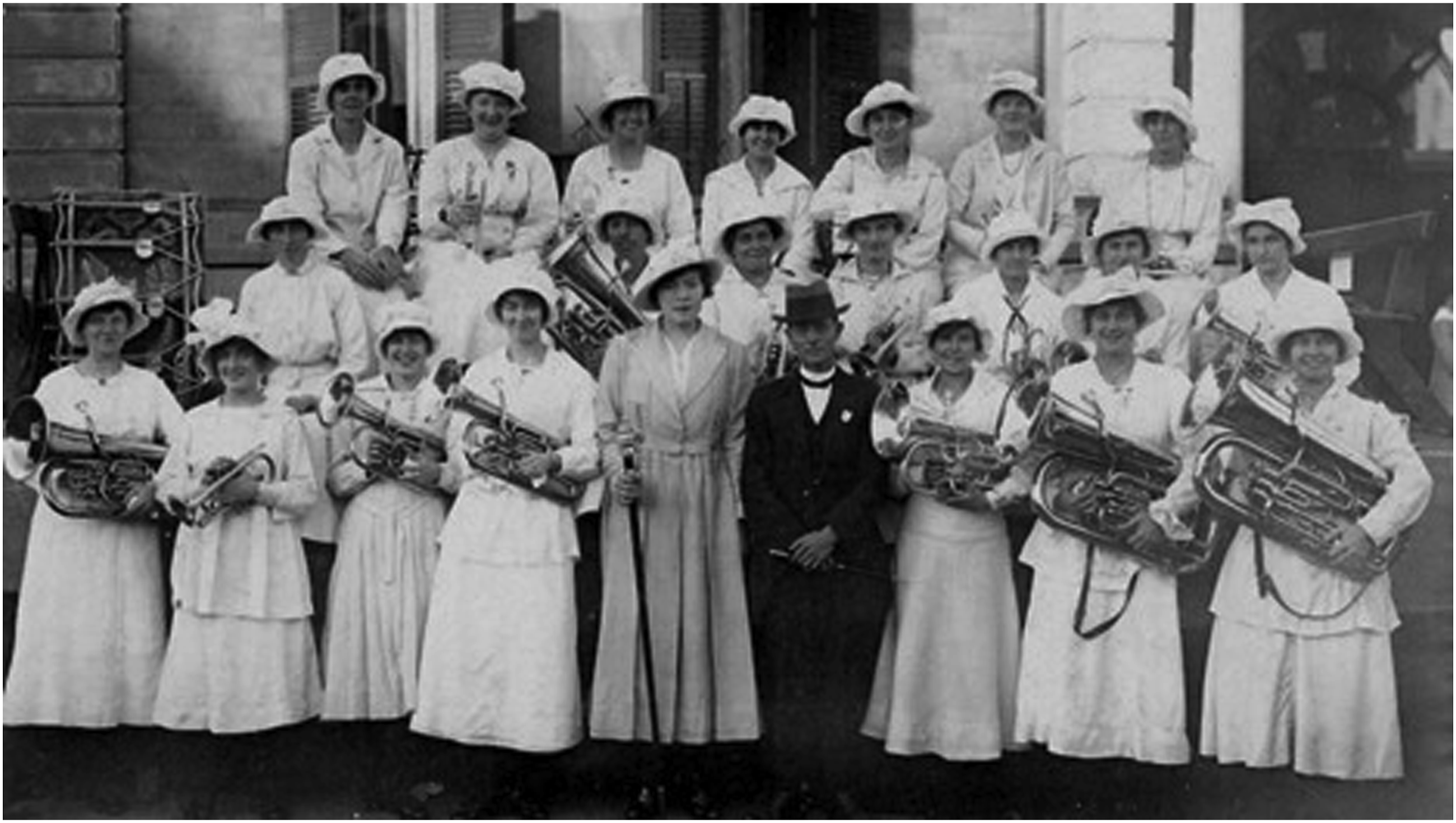
The social norms of the 20th century largely dictated an expectation that a brass band was not a female domain. British brass bands have their origins in the working class, particularly male-oriented industries such as coal mining. This masculine perception meant that it was considered unladylike for women to play brass instruments, which followed through into our Australian schools.
All Things Military
The male stereotype associated with brass bands was perpetuated even further with strong links to military culture. Brass bands assumed a military ethos in part because of the two world wars in the 20th century. This was apparent in the adoption of military-style uniforms, marching and strict sense of discipline during the 20th century and is a potential reason for the brass band being overlooked as a legitimate ensemble in music education. Perhaps there was a level of snobbery too, which considered orchestral ‘classical’ music to be real music, whereas military music simply provided an accompaniment to official events and ceremonies.
Band music in Australia began with the drum and fife ensembles of the British marines who reached Australia with the First Fleet, and these bands provided ceremonial and drill music. 24 When Australians enlisted in the two world wars, many Australian bandsmen also joined. After the wars, many volunteer band units were maintained, with the men wearing military uniforms and providing music for drills, marches, ceremonies and displays. These bands also played in contest against town bands and for private functions. This strong association between service banding and community bands reinforced a military ethos and is one of the reasons why marching contests continued to retain importance in Australia for so long. 25 Other quasi-military connections included fire companies, harbor trusts, police forces, railways and similar civilian services. These organizations often provided a strong support structure for bands, and along with this came the public image of a disciplined service, with military ethos being strongly encouraged and disciplined behaviour, appearance and demeanour expected. 26
Thus, in Australia, brass bands maintained popularity largely due to their association with militarism. The general public enjoyed brass bands playing on the march and this format maintained popularity as a quasi-military spectacle. 27 There was clearly a strong emphasis on the visual spectacle during brass band competitions and a major feature of most contests was the quick-step marching competitions. According to Whiteoak, this was an “unmistakable representation of a military band…[T]he banding codes of precision and discipline, dress and deportment, are traditional male codes and their resemblance to military codes is obvious.” 28 Community bands dressed in military-style uniforms and played military marches, with titles such as Army of the Nile (Kenneth Alford), Victorian Rifles (Wilton Roche) and Sons of Victory (William Rimmer).
Schools in Australia naturally mirrored what was happening in society. School bands, both brass and drum and fife, served a significant ceremonial function and Monday morning ceremonies would involve students marching to the beat of the bass drum and assembling in lines for the national anthem and start of the school week. When “Mr Inspector Gripp…had to inspect the pupils [of the Goondiwindi State School, Queensland] as to their proficiency in physical drill, he was somewhat surprised to see a band…turn out all school pupils.” 29 The Invermay State School Brass Band (Tasmania), from its inception, assisted with the school assembly and march-in playing “There’ll always be an England and other patriotic tunes.” 30 The state of Victoria boasted that forty schools had brass bands playing daily in school assemblies and that on ANZAC 31 Day of 1936 a massed band of three thousand children was conducted at the Shrine of Remembrance service. 32
In addition, the school brass band contests taking place around Australia included marching as a significant element of competition. The Kapunda Primary School Band was proud to be placed Fourth in the street march competitions at Nuriootpa (South Australia). 33 The School Band Championship held at Semaphore (South Australia) in 1936, under the patronage of the Public Schools’ Band Association, comprised three events: a street march, a quick-step and an own choice selection and march all to be held in the band rotunda. 34
Schools took great pride in outfitting their bands in uniforms; as noted above, military-style uniforms were the trend. The photographs in Figures 2, 3 and 4 are a small selection of the many school brass band photographs to be found. They show students attired in military-style uniforms. Note also that the bands are made up entirely of male students. Northcote School Band, Melbourne (Victoria), 1937. From IEBW.org.uk. Used with permission. Kew Central School Band, Melbourne (Victoria), 1954. From a personal collection. Used with permission. Merrylands High School Cadet Brass Band, Sydney (New South Wales), 1968. From https://twitter.com/merrylandshs/status/611350285332549632. Used with permission.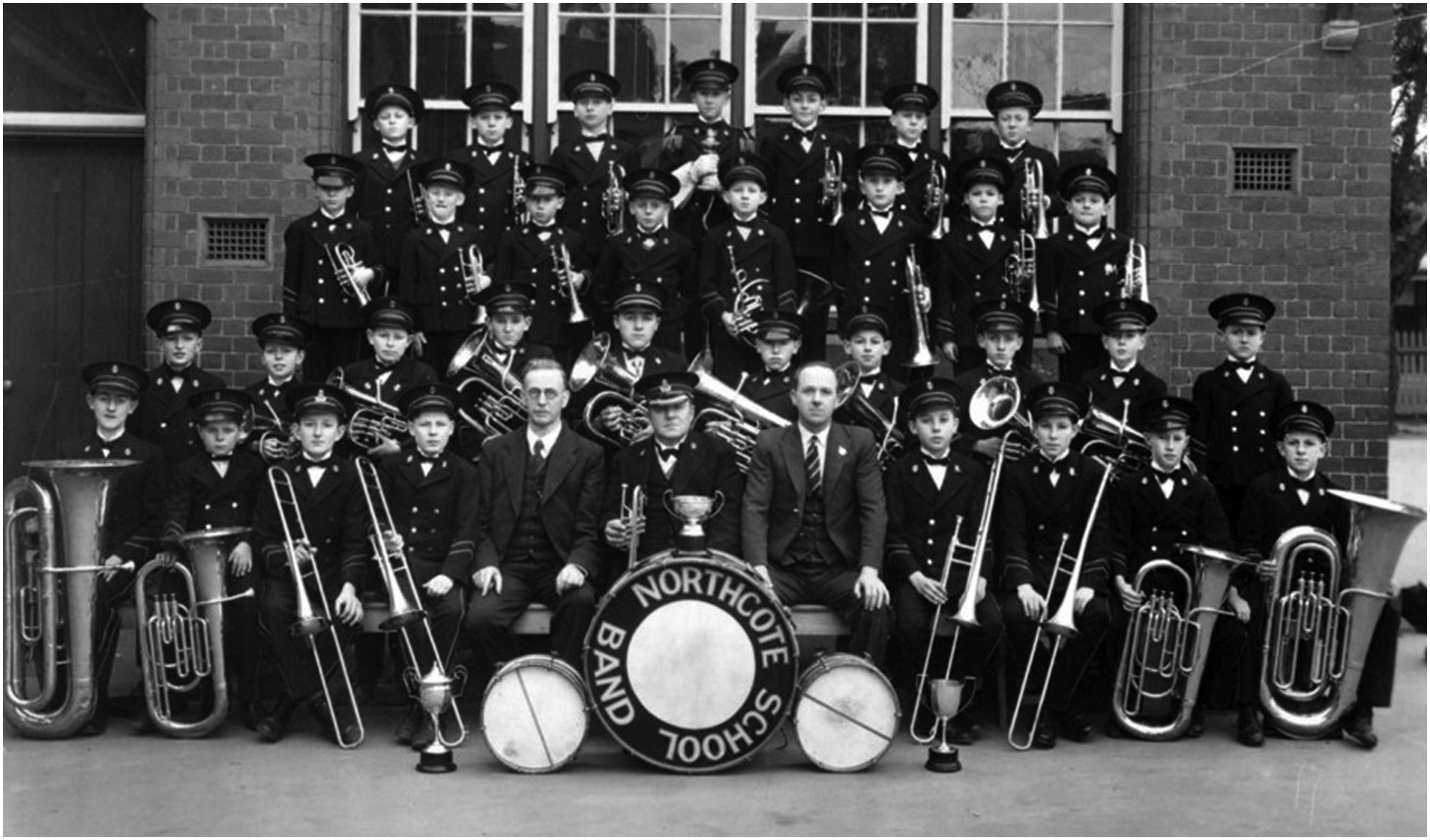
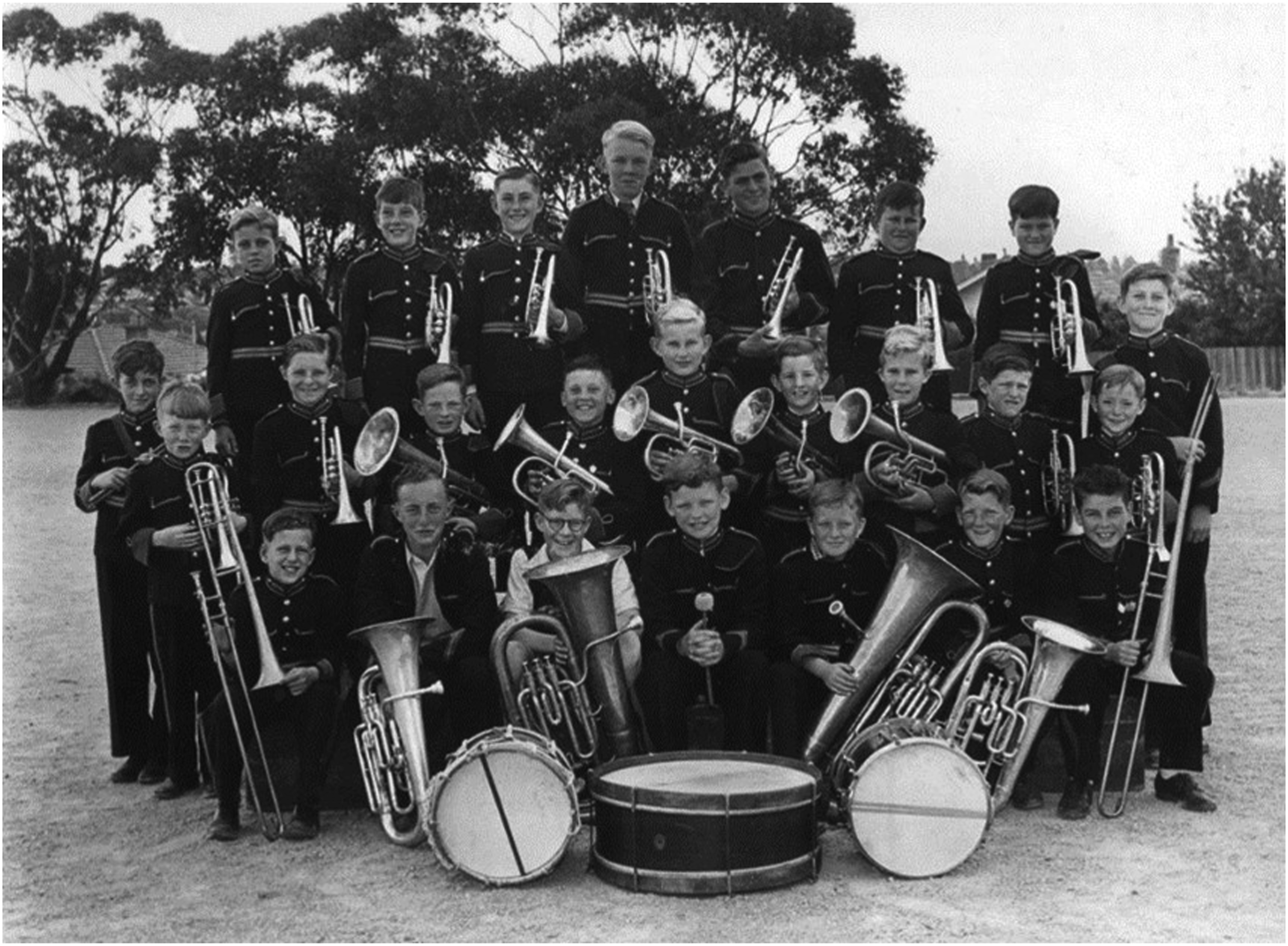
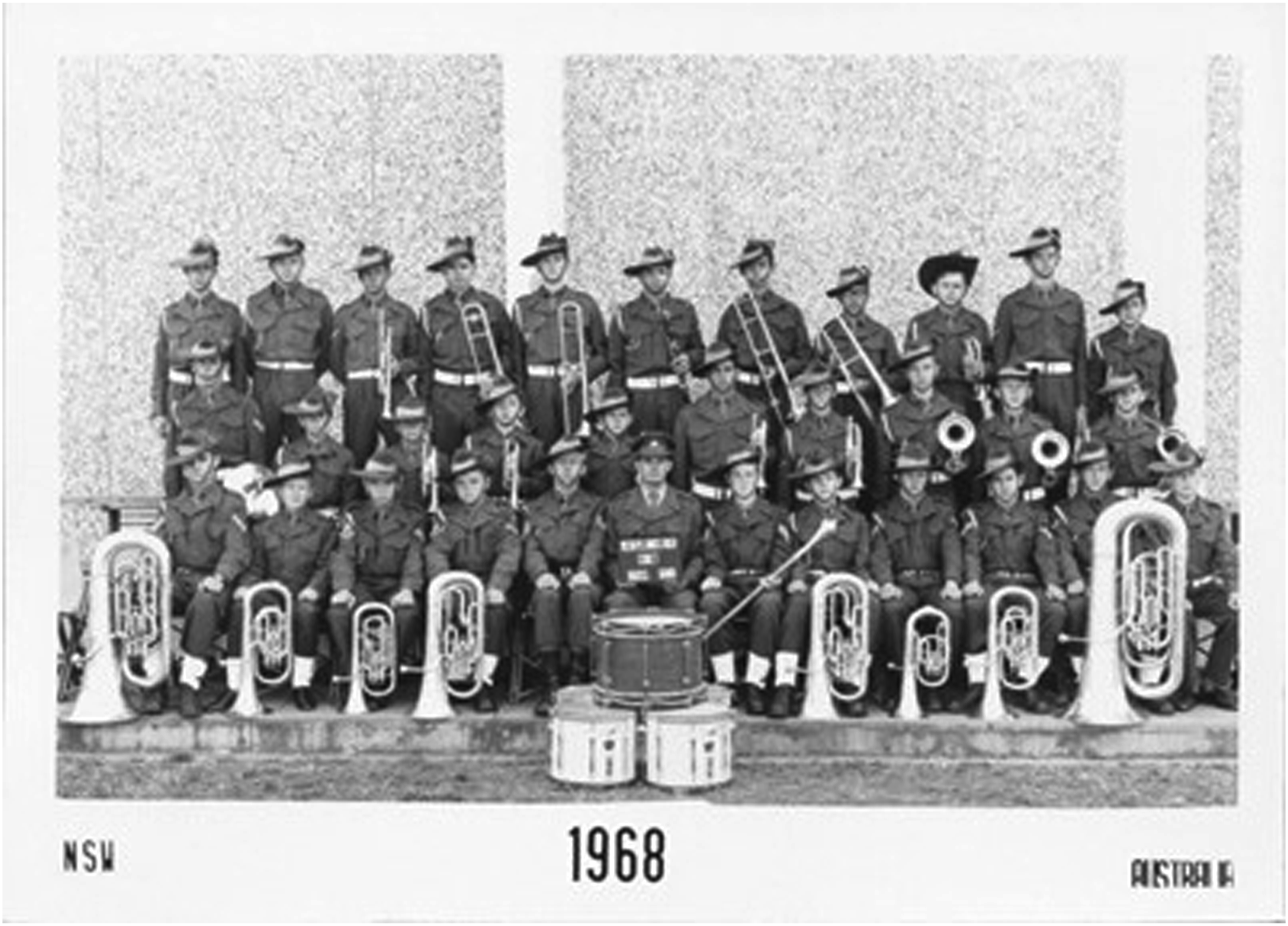
It is apparent from these photographs that the link with military culture and the masculine stereotype associated with brass bands remained well into the 20th century.
Join the School Brass Band!
Where, when, and why brass bands were formed in schools was largely a matter of chance and was often dependent on who was available to lead the band. While some schools had a general music syllabus that was the responsibility of a music teacher, or in the case of primary schools, the class teacher, many schools developed extra-curricular musical activities such as choirs and bands. These groups were seen to provide extra educational experience for students, as well as to raise the school’s status in the community. Leadership for these groups usually fell to whomever in the school community had the appropriate skills; it was not unusual for any classroom teacher or even a headmaster to take the role. 35 The person who volunteered to conduct and tutor the school brass band was quite often not a qualified music teacher and took on the school brass band out of passion and personal interest, usually because they were themselves involved in a community brass band Some school brass bands were short-lived due to the length of time that the conductor remained with the school, and others spanned decades. Possibly this ad-hoc way in which brass bands were formed is another reason why they have been overlooked as a serious consideration for music education history.
A particular case study to highlight a successful brass band program is the Hamilton High School (Victoria) (see Figure 5). The information provided in the following paragraph was sourced through personal communication.
36
Mr. Eric Beale, a humanities teacher of English and Languages, formed a brass band at the Hamilton High School in 1963. He conducted the band with no additional remuneration and made himself available to students for rehearsals and tutoring at lunchtime and after school. As the band progressed and grew in number, he formed a second band. For the first 7 years Beale ran the bands in addition to his regular teaching load; however, as the bands started to win prizes in competitions, the Principal offered Beale the position of Bandmaster full time. The brass band then became part of the curriculum; tutoring students and running rehearsals were included in the timetable. Students were given the option in Year Seven of choosing a brass instrument or classroom music. It was considered a great privilege for the students who played in the band, because they went to the band room for rehearsal while others attended classroom music. Student achievement in the brass band was noted on students’ report cards and the brass band offered two streams through to the Victorian Certificate of Education that followed school completion: Performance or Theory. Hamilton High School Band (Victoria), 1975. From a personal collection. Used with permission.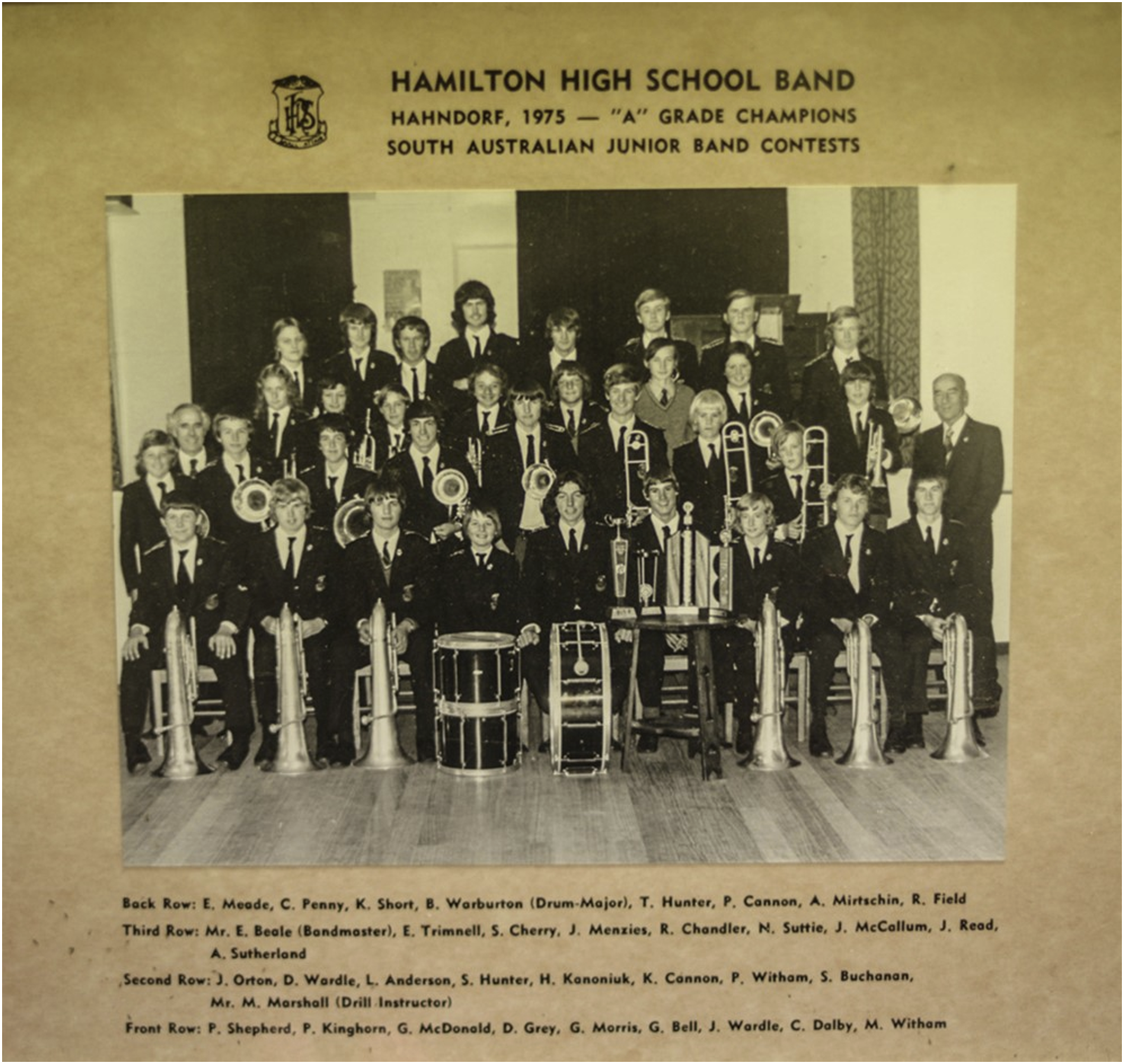
The brass band program was so popular at Hamilton High School that it attracted enrolments. A Parent Auxiliary was formed to support the brass band program and help with raising money for instruments. The band was active and performed in many contests, winning many trophies. After Beale retired in 1981, the brass band was changed to a brass choir (with trumpets and French horns) and shortly afterwards a concert band.
The attractions for students to join their school brass band were many. The camaraderie and team atmosphere played a significant role in holding the ensemble together, and students felt a sense of pride about belonging to something special or unique. The Hamilton High School Band (Victoria), outlined in the previous paragraph, is an example of this: Beale noted that students came to the school to be in the band; they wanted to be part of it, “students in the school band were almost a gang. They used to hang around the music centre in their own time.”
37
Another example of the status that could be placed on students is the Mitchell Park High School Band (South Australia), which was formed in 1961.
38
A “hub” for band members was created where they were provided with a private locker, including access to the building without teacher supervision. This was available at all times of the day from the time the building was opened by the cleaner until the end of the day at about 5:30p.m. Band members were also provided with tea and coffee-making facilities. Students playing in a school brass band were required for additional rehearsals that could take them out of class, and they had additional time off for performances and trips away. This is evident in many recollections from students, such as this memoir of playing in the Morawa District High School Band (Western Australia): Most memorable moments: trips to Carnarvon; band trips to Pemberton; trip to South Australia on the train; playing Yellow Submarine on the back of a truck at a street parade in Three Springs; the tiny band room (cupboard) at the end of the Year 1/2 block…playing in a combined band for the Queen’s visit in Kings Park (1977).
39
From the early decades of the 20th century, school brass bands went out to perform in the local community, with many travelling further afield. There are many newspaper articles that point to interstate travel, such as two school brass bands from Victoria travelling to South Australia in 1936 to give concerts: the Prince’s Hill School Brass Band,
40
and the Footscray State School Brass Band.
41
Other examples include a trip across the Nullarbor to Adelaide (South Australia) in 1972 for the Morawa District High School Brass Band (Western Australia),
42
the Tasmanian Tour (1973),
43
and New Zealand Tour (1979) by the Warragul Combined Schools Brass Band (Victoria),
44
and a trip to Wales, United Kingdom in 1975 (see Figure 6) by the Katoomba High School Brass Band (New South Wales) Katoomba High School Brass Band Pre-tour Concert Program, 1975. This program was for a concert at the Sydney Opera House (New South Wales), to be held on June 29, 1975. From Blue Mountains City Band Facebook Page. Used with permission.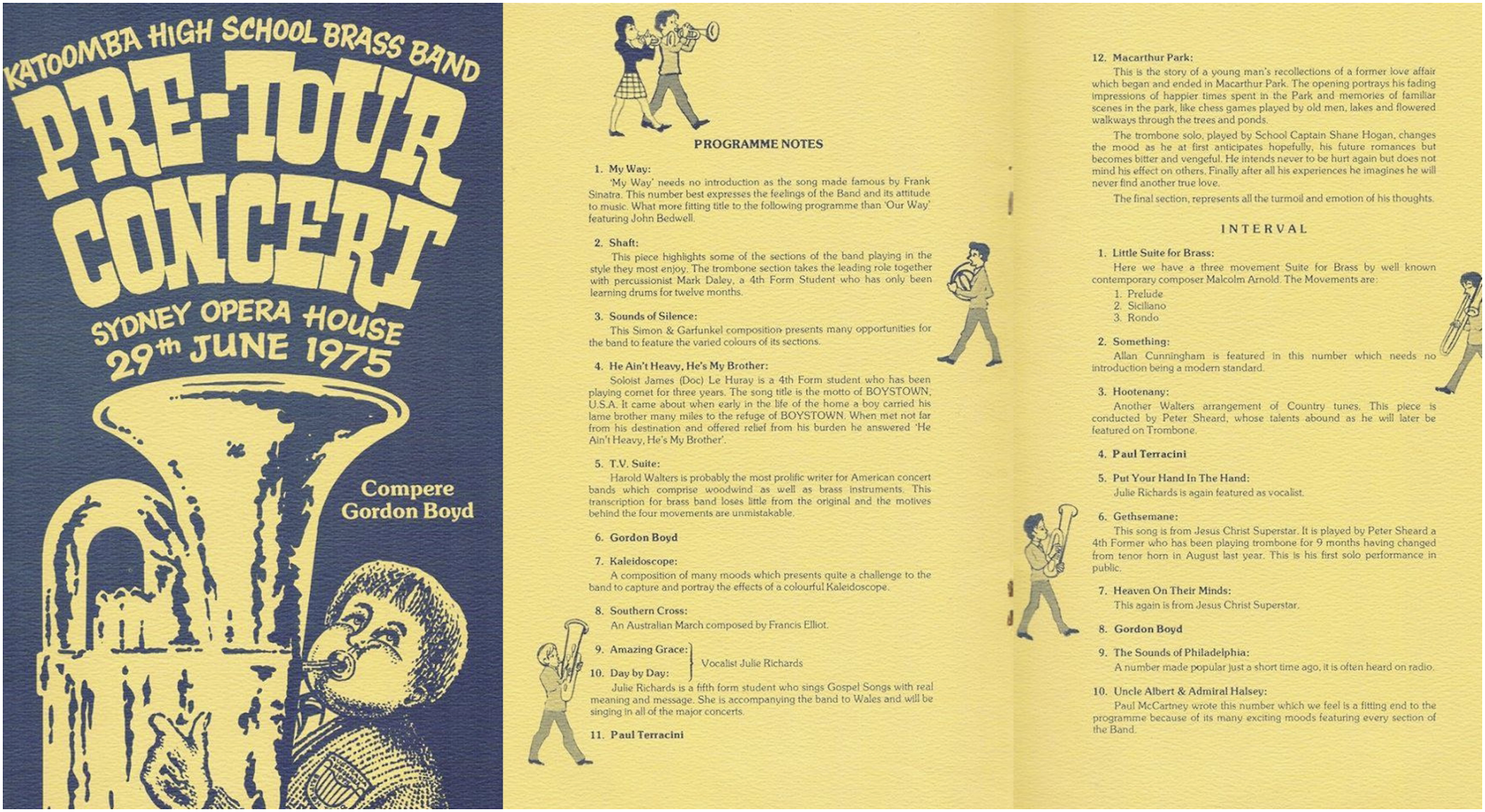
The Sport of the Band Contest
The British tradition of an organized competing structure for brass bands was developed very early in Australia. State and national organizations were established to facilitate regulated competitions with the aim of having a level playing field for all. To cater for the increasing numbers of school brass bands wishing to compete, school band associations were formed for regulating school brass band competitions. The South Street Eisteddfod in Ballarat (Victoria) held a school brass band contest through to 1987. 49 The State Schools’ Band Association was formed in 1926 in Victoria. An article in The Argus from 1930 announces the first school band contest to be held in the Exhibition Building in Melbourne with ten school bands participating and the Minister for Education and the Director of Education in attendance. 50 Eighteen years later the competition appeared to still be going strong: as reported in The Age, more than 350 boys aged between nine and 12 years had been competing for 2 days in the Victorian State Schools Band Association competition at the Prahran Town Hall. 51 In Queensland the band association was endeavouring to establish competitions for schools in their annual championships from as early as 1931 and an article in the Cairns Post makes mention of a meeting to be held of the Combined Schools Bands Committee to assist with this. 52
In South Australia, school brass bands were performing in various competitions from their inception in the early 1930s. Several newspaper articles report on the first school brass band in South Australia being the Tanunda School Brass Band, formed in March 1931. The Advertiser reports on a centenary school band championship that was to be held in Semaphore in December 1936, under the patronage of the Public Schools’ Band Association. 53 In the Riverland area of South Australia, The Advertiser reported on a brass and school band contest to be held in Renmark for their Jubilee Week in October 1937, with the largest gathering of juvenile bands ever seen in the state. 54
Contests played an important role in the school brass band calendar. An excellent example of the importance of contesting for school profile is evident in the text of the record covers of the Warragul Combined Schools’ Band. Their first record is titled Bold as Brass and is preceded by the text “1972 Championship Band” (see Figure 7). The biography of the band on this cover particularly highlights that for the past 5 years the band had competed in the Victorian School Bands’ Association Championships held at Kew Town Hall, noting that the band was runner up in 1970 and 1971, then judged the winner in 1972.
55
The second record, Bold as Brass Volume 2, proudly announced on the front cover that they were the Australian National Junior Brass Band Champions of 1978.
56
A similar example of the important status afforded contest wins is evident in a booklet written in 2012 for the 50-year anniversary of the St. Patrick’s College Sutherland Band (New South Wales). The second page displays award certificates and is titled: Band Successes Over the Years. Contesting had clearly played a significant role in the band’s history, as there were four pages dedicated to the various contests that the band attended between 1968 and 1979, approximately 2000 words!
57
LP Record Sleeve: Bold As Brass. Recorded by Warragul Combined Schools’ Band (Victoria) in 1972. From a personal collection. Used with permission.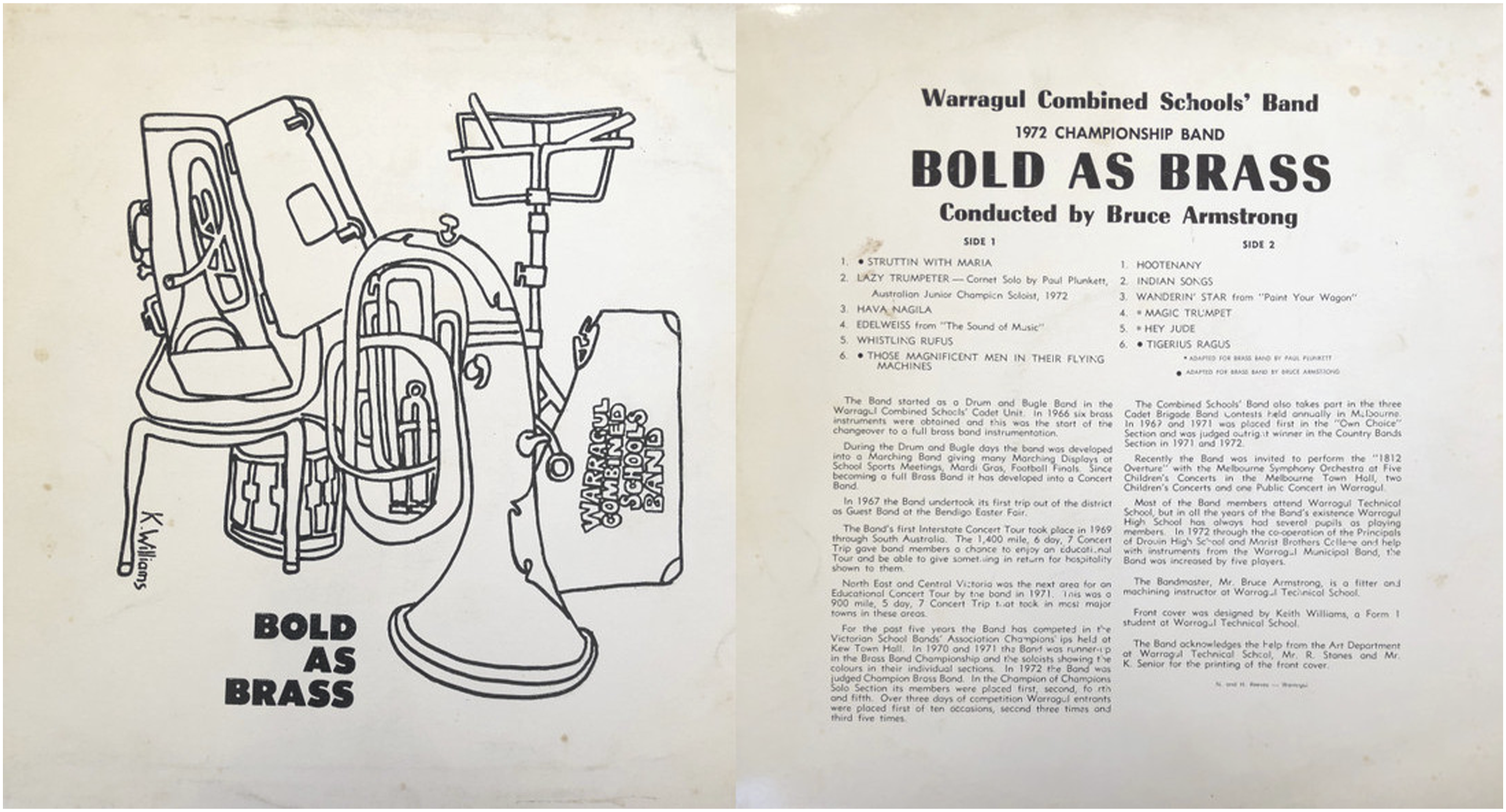
Brass bands in Australian schools participated in competitions from the early 1900s through to the 1980s. Winning brass bands were excellent promotion for a school, similar to having a champion sporting team, and they raised the profile of the school.
From Brass Band to Concert Band
One of the most popular sources of music entertainment in Australia during the early 20th century was brass band music.
58
Bythell notes that at a time when all music was necessarily ‘live’, brass bands played a vital educational role for both instrumentalists and audiences…and they served to popularise the classics of nineteenth-century European music among large sections of the community which would never have had the chance to hear them in their original form in the concert hall or opera house.
59
From about the 1920s, the popularity of the brass band began to decline with the introduction of jazz, commercial radio, the recording industry and talkies. 60 Schools in Australia had formed and maintained brass bands from the early 1900s until the mid-1960s, however over the following 20 years a variety of influencing factors caused this to gradually change. 61
While militarism remained popular in the early part of the 20th century the trend was dampened somewhat by the loss of Australian servicemen; in contrast, the new style of swing music played by American-style big bands became popular. 62 The introduction of technology in music, such as the microphone and electric guitar, resulted in a shift in the direction of popular music in Australia. 63 Despite this, many brass bands perpetuated the traditions of military bands, wearing military-style uniforms, and providing music for drills, marches, ceremonies and displays. The significant link between service banding and amateur banding continues to be evident in Australian community brass bands and is particularly evident in the compulsory marching section of brass band contests that is retained to this day. 64
The military traditions associated with Australian brass bands have been part of the reason for their decline. However, an ironic observation is that military associations also played a significant role in the shift towards the concert band format. The Australian Defence Force bands were still brass bands in the 1950s and it was ADF brass bands that performed over one hundred national anthems at the 1956 Olympic Games in Melbourne. 65 However, in 1952 the Royal Australian Air Force Band was formed, which paved the way for an emergence of concert bands in schools and the community in Australia. The conductor, Laurie Hicks, formed the band based on the instrumentation of a concert band, which is what he had encountered during his military band service in the United Kingdom. 66 While there were many school brass bands in Australia at this time, the trend for ‘military’ bands, which were essentially concert bands, started to gain popularity. A report on the Australian Council for Educational Research (ACER) survey of music education conducted in Australian schools in 1965/1966 noted that three of the schools surveyed had military bands in the style mentioned above and that these ensembles were gaining popularity, particularly in New South Wales secondary schools. 67
There were various other influencing factors and circumstances that prompted the move away from the all-brass ensemble. One consideration is the male stereotype associated with brass bands; women were gaining more equality and the development of concert bands enabled girls to join, potentially playing woodwind instruments. These were perhaps perceived to be less demanding and more feminine than brass, instruments such as the flute and clarinet. Another factor to influence the move to concert band instrumentation in Australian schools was the influence and availability of teachers. In 1967 Bruce Worland was given permission to recruit musicians to teach instrumental music in public high schools in Melbourne. Four members of the Royal Australian Air Force joined the Victorian Education Department and formed concert bands in schools. This was very successful and due to high demand, more teachers needed to be recruited. Australia did not have enough specialist music teachers to meet the needs, therefore graduates from American universities and colleges were offered 15-month contracts to come and teach in Melbourne. By 1974 there was such a large increase in woodwind, brass, and percussion players that the Melbourne Youth Symphonic Band was formed. 68 At the same time, two musicians from the Band of the Scots Guards in London migrated to Perth (Western Australia) and established concert bands in two Perth high schools. 69
In Queensland, the Flying Music Program that ran between 1977 and 1981 no doubt played a role in the shift away from brass bands in schools. The program was established by Russell Hammond as essentially a “flying conservatorium.” Music teachers flew to remote southwest Queensland, servicing small towns in the areas of Charleville, Quilpie, and Cunnamulla. 70 This evolved to become an Australia-wide initiative, funded by the national (Commonwealth) government, but administered in each state by the state governments. By 1981 the program had fifteen concert bands, one orchestra, three string orchestras, five jazz bands and numerous chamber groups and small ensembles. 71
Mathers outlines the origins of a symphonic band program that was set up in the 1980s as part of Melbourne Youth Music (MYM). 72 The program was part of the State public school system and was developed in association with Yamaha Music and the Australian Band and Orchestra Directors Association. Further, Mathers discusses how American music educators and conductors attended the MYM annual January music camp between 1985 and 2003 with the intention of attracting more students to the symphonic bands and influencing local teachers. 73 Fraschillo also comments on the role played by Yamaha Music in establishing concert bands in schools in Australia, specifically following the example of instrumental music programs in the United States and Japan. 74 In 1982, under the direction of Russell Hammond, Yamaha Music formed a concert band at the Melbourne College of Advanced Education as part of the curriculum for music-teaching students to offer them the opportunity to learn how to run a concert band as well as a practical experience in running an instrumental music program. 75 The band toured interstate venues each year, ran clinics and workshops with local groups as part of the tours, and introduced new literature that had been written specifically for concert band. 76 Certainly, the many conductors and composers visiting Australia had a dramatic effect, making a significant contribution to the development of concert bands in Australia.
As concert bands moved into schools and the general community, brass bands moved out of favor. One example to support this is the case of the Hamilton High School Band (Victoria) which is described earlier in this article. The school had a very successful brass band and there was much local community pride in it. When a new music teacher commenced at the school in 1980, the band was changed to a brass ensemble in an attempt to retain the brass band but move with the times (see Figure 8). It comprised trumpets, French horns, euphoniums, trombones, tubas, and percussion. In this guise, the band entered at least one brass band competition, but was viewed an oddity.
77
Ultimately, the school moved to concert band format. This would have been the case for many schools; in order to survive, brass bands would have needed to change to concert band or risk losing their band altogether. Hamilton High-Tech Schools Brass Choir, 1982 (Victoria). From a personal collection. Used with permission.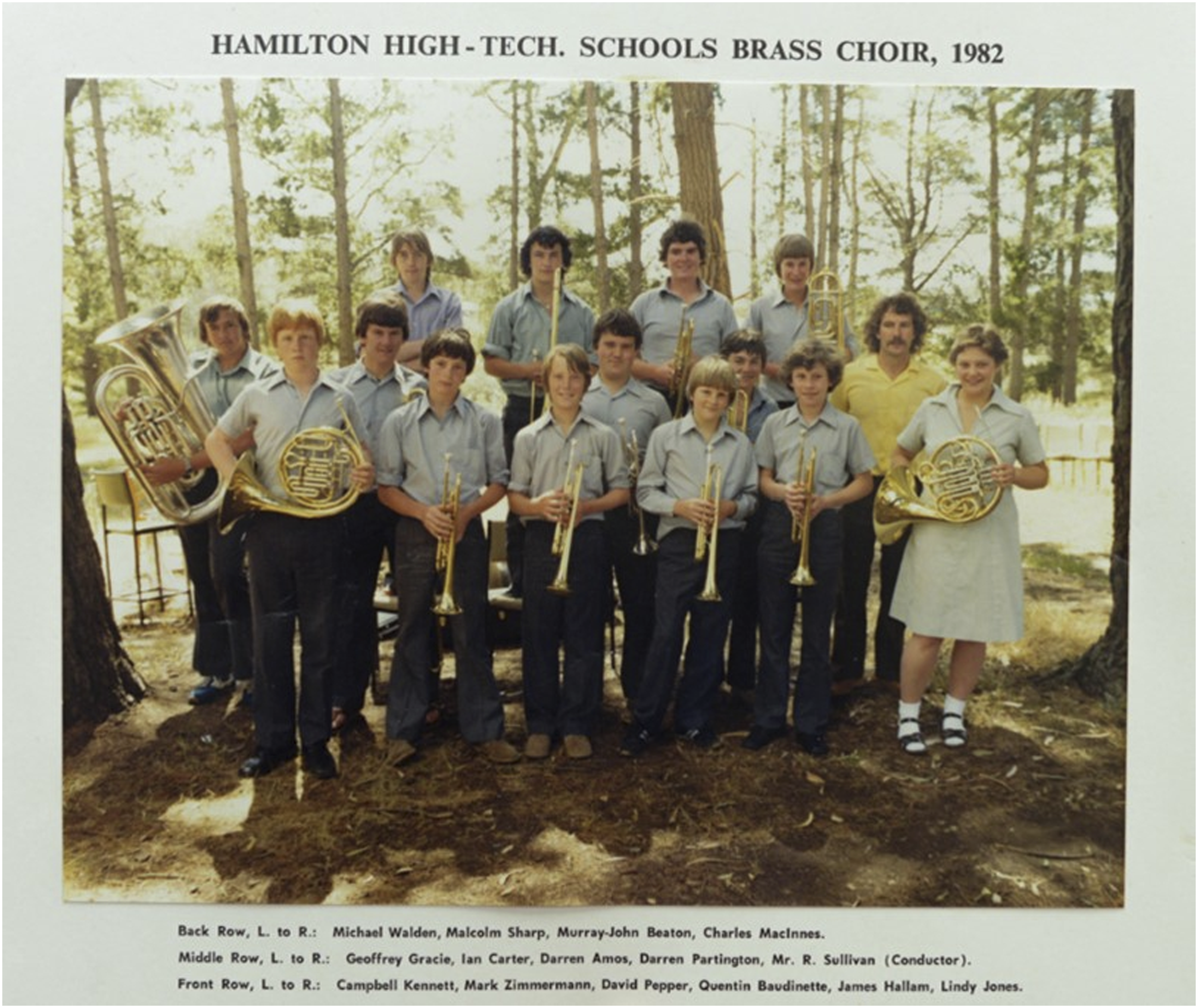
Despite the significant decline in the popularity of brass bands in schools in Australia, they are not extinct. In fact, they may even be making a comeback in the 21st century. The international charitable organisation, the Salvation Army has been reintroducing traditional brass bands into primary schools in Australia since 2010, and more recently in New Zealand and the United Kingdom, with their program titled Just Brass. 78 With an underlying principle of Christianity, students are given free lessons and the free loan of an instrument. The schools and areas targeted for the program are usually in low socio-economic areas where students are more disadvantaged. Aside from Just Brass, through personal communication with brass band colleagues, I was able to identify some other school brass bands across Australia. The following primary schools have traditional brass bands: Mount Pritchard Public School and Birrong Public School in outer metropolitan Sydney (New South Wales), The King’s School (Sydney, New South Wales) and Richmond West Primary School (Victoria). In addition, the following secondary schools have brass bands with traditional instrumentation: Morowa District High School (Western Australia), St Andrew’s Catholic College (Cairns Queensland) and La Salle College (Western Australia).
Conclusion
I stated at the beginning of this article that to date there has been very little formal research about the predominance of brass bands in schools throughout much of the 20th century in Australia. I also emphasized how little acknowledgment there has been in scholarly literature for the role that brass bands have played in shaping music education in Australia. Musical and social snobbery was discussed early in this article, and a bias in favor of more classical instrumental music has meant that many areas of music education have similarly not been recorded. For example, Shansky discusses the minimal research available on the history of harmonicas in music education in New York City 79 ; the history of jazz education has been widely underrepresented in Australia 80 ; and, there is little written about the drum and fife bands that existed throughout the first half of the 20th century in many Australian and New Zealand schools. 81 By tracing the development of the brass band movement in Australia, I have shown how brass bands have a legacy worthy of scholarly inclusion in Australian music education history. Brass band histories are readily available; they have been written by various enthusiastic individuals and most community brass band websites have a page dedicated to their history. There is much evidence available to document their existence and a quick online search reveals a plethora of sources. The findings that I have presented indicate that brass bands were widespread in schools throughout across Australia for most of the 20th century. Not only has the brass band been neglected by historians, but it appears to have been largely omitted from the history of music education in Australia.
The decline in the popularity of brass bands and the shift to concert band settings in schools over the last few decades of the 20th century should not eliminate brass bands from the history of music education in Australia. There are aspects of Australian brass band history that may be unappealing for music scholars, such as the links with military, band contests, working-class associations, and male exclusivity. Perhaps the informal way many brass bands were established in schools, with no particular link to the official curriculum, has also been a deterrent for inclusion in music education history. Writing brass bands into the history of music education in Australia is important for acknowledging the fundamental role these ensembles have played in establishing music in schools. In this article, I begin to redress the lack of recognition that the brass band has played in shaping music education in Australia. I have traced the development of the brass band movement and its corresponding popularity in schools in Australia, as well as the decline and ultimate move to concert band programs.
This historical analysis provides evidence of the existence of a robust brass band movement in schools in Australia from the early 1900s through to the 1980s, particularly across the eastern states of Queensland, New South Wales, Victoria, and South Australia. There is much evidence to support this in the many historic newspaper articles available through the National Library of Australia database (Trove), 82 as well as in personal collections, community band websites, and other unpublished resources such as school collections. There is opportunity for continued research to further understand the place of the brass band in music education in Australia. The Salvation Army Just Brass program is expanding across primary schools in Australia, New Zealand and the United Kingdom, and these students will be moving into secondary schools. Further research and documentation will enable music teachers to acknowledge and have an understanding of this niche musical genre, rather than being dismissive because brass band instruments are not considered standard. 83 As a result of conducting this research, I hope to open the door to further examination of brass bands in Australian schools, with the aim that brass bands will find their rightful place in scholarly literature on music education.
Footnotes
Declaration of conflicting interests
The author(s) declared no potential conflicts of interest with respect to the research, authorship, and/or publication of this article.
Funding
The author(s) received no financial support for the research, authorship, and/or publication of this article.
