




Abstract
Pasquale “Pat” Ciricillo (1907-1978) was a twentieth-century musician-teacher who incorporated multiple musical approaches in his work. Born to an Italian family in Cleveland, Ohio, Ciricillo’s affinity for wide-ranging musicianship afforded him a storied career as a professional trumpet player in New York City. His success as a jazz, popular, and classical musician served as a catalyst for the latter part of his career, when he became a school music teacher who created innovative school curricula based on his extensive musical background. This biographical investigation features three distinct periods in Ciricillo’s career: early life in Cleveland, Ohio (1907-1929); life as a professional performer in New York City (1929-1956); and life as a school music teacher in The Bronx and the Rockland County (NY) Schools (1956-1976). Of special interest are the intersections between Ciricillo’s performer and teacher identities and the pedagogical practices that he enacted in the music classroom. Ciricillo’s life and career hold implications for current and future teaching practices in school music programs.
Keywords
Introduction
Pasquale “Pat” Ciricillo (1907-1978) was a twentieth-century figure in music performance and pedagogy. Ciricillo’s ability to perform and teach both classical and popular music, as well as his incisive facility at combining them in the music classroom, holds lessons for music teachers today. The kinds of music that teachers choose to use in the music classroom, and the ways in which they choose to use them, have sparked debate for decades, particularly with regard to the inclusion of informal, vernacular, and popular musics. 1 Learning how teachers have navigated this landscape in the past could be helpful for enacting curricular change in the future.
Pat Ciricillo was born in the Little Italy section of Cleveland, Ohio. He grew up in a musically-rich environment that was cultivated by his father, a professional bandleader who immigrated to the United States from Italy, and by the multi-musical offerings that emanated from the early-1900s Cleveland music scene. 2 In the 1920s, Ciricillo became a professional jazz and popular music trumpeter in Cleveland and eventually in New York City. During the 1930s, Ciricillo played with a number of top band leaders in New York and quickly became one of the most versatile trumpet players in the city. He also earned three college degrees, all while maintaining a demanding performance schedule. In addition to playing jazz and popular music, he was a highly-accomplished classical trumpet player. In the 1940s and 1950s, he played with several professional orchestras as well as multiple radio and television show studio bands. His ability to perform in a variety of genres was remarkable.
In 1956, Ciricillo changed career paths and became a school music teacher at the Horace Mann School in The Bronx and eventually in the Rockland County (New York) Public Schools, where he focused on teaching elementary school bands. Ciricillo brought an unusual wealth of musical skills and arranging ability to his new teaching career, as he incorporated his own arrangements of current popular music into the classroom instead of standard elementary band repertoire. He also took a deep personal interest in his students and viewed music as an important factor in their personal development. Ciricillo influenced and inspired many young musicians over a twenty-year period, and is one example of how personal musicianship and teaching expertise can inform the development of school music curricula.
This biographical investigation outlines Pat Ciricillo’s career and includes elements of oral history 3 that highlight three distinct periods of his life. I consulted primary sources that consisted of family artifacts, letters, photos, and archived interview transcripts courtesy of the Ciricillo family, as well as newspaper articles, US census data, and school yearbooks that I accessed online through the Western Reserve Historical Society in Cleveland, Ohio. I also conducted two interviews with Pat’s adult son, Robert Ciricillo, who was able to corroborate various points in his father’s life. Secondary sources consisted of books, websites, digital files, and archived memorabilia that I accessed online or through the Kelvin Smith Library at Case Western Reserve University in Cleveland, Ohio. Using these sources, I organized composite information chronologically to create a narrative arc 4 and used it to generate insights based on Ciricillo’s life. The sections that follow refer to Ciricillo as “Pat” and contextualize the ways in which one musician-teacher reinvented himself—and his identities—out of necessity. These sections include the key figures, circumstances, and infrastructure of Ciricillo’s hometown that precipitated his family’s success, as well as the musical and professional experiences that encompassed Ciricillo’s early, middle, and late career stages.
The Life of Pat Ciricillo
A Place of Opportunity: Cleveland’s Little Italy
Cleveland, Ohio’s great transformation near the turn of the twentieth century set the stage for the Ciricillo family’s arrival beginning in 1902. Before Pat Ciricillo was born in 1907, Cleveland had established itself as a destination city for industry, trade, and culture. 5 Situated on the southern coast of Lake Erie, Cleveland was founded on nineteenth-century wealth and progressivism, 6 including the city’s documented involvement as a critical station on the Underground Railroad, where abolitionists transported freedom seekers across Lake Erie to Canada. 7 In 1900, Cleveland was known as an immigrant gateway city, becoming home to numerous immigrant communities including Croatian, German, Greek, Hungarian, Irish, Italian, Jewish, Polish, and Slovenian neighborhoods, among others. 8 By 1910, Cleveland was the sixth largest city in the United States and boasted Euclid Avenue’s “Millionaires’ Row” (1870-1920), one of the grandest mansion-laden residential avenues in America at the time. 9 Over the years, influential community figures such as Andrew Carnegie (1835-1919), John D. Rockefeller (1839-1937), Louis Comfort Tiffany (1848-1933), and, allegedly, Al Capone (1899-1947) and his associates, used Cleveland for their businesses, residences, studios, and temporary lodgings. 10 Cleveland’s continued standing as a place of opportunity hastened the city’s rise to prominence.
Established in 1885 as one of five Italian settlements in Cleveland, Little Italy grew to become a hub of cultural and vocational activity in the city. 11 Little Italy is located five miles east of downtown Cleveland, between E. 119th and E. 125th streets from west to east, respectively, and between Mayfield and Murray Hill roads from north to south, respectively. Due to its rolling topography, Little Italy was a protected community set on a hill, and often was referred to by locals as “Murray Hill.” 12 By the late-1890s, Italian immigration to Little Italy had increased considerably, primarily due the abundance of Italian-owned businesses in masonry, garment making, lacework, and embroidery, which reflected prominent trades in southern Italy at the time. 13 Many residents in Little Italy were Neapolitan and had moved from the Campobasso Province in the Abruzzi region, which included Matrice, Ripalimosani, and San Giovanni. 14 In time, one such newcomer from the Campobasso Province would be Salvatore Ciricillo, Pat Ciricillo’s father.
Meanwhile, one of the most well-respected community industries in Little Italy was The Carabelli Company, which specialized in masonry work. Italian stonemason Giuseppe (Joseph) Carabelli (1850-1911), recognized as the Father of Little Italy, 15 brought his craft from Italy to Cleveland by way of New York, and founded his company under the name Lake View Granite and Monumental Works. 16 Carabelli employed hundreds of Italian and German workers who diligently created ornate headstones, monuments, and architectural wonders for Lake View Cemetery. This sprawling cemetery spanned two hundred eighty-five acres in a lush, hilly, and well-manicured garden setting that overlooked Lake Erie and bordered Little Italy (Cleveland), East Cleveland, and Cleveland Heights. 17 Originally established in 1869, the cemetery soon served as one of Cleveland’s most revered resting places for area families, military personnel, business owners, and politicians, including the late President James A. Garfield (1831-1881). Carabelli’s ingenuity, stature, and legislative influence allowed him to work jointly with some of Cleveland’s most prominent figures, 18 which helped to create the socially- and economically-sound community into which the Ciricillo family found itself years later.
While several Italian-owned companies reinforced a vibrant community identity, another organization soon emerged as a neighborhood focal point, one that eventually would anchor the Ciricillo musical dynasty. Established in 1894, The Cleveland Day Nursery and Free Kindergarten Association, Inc. provided child development programs for the children of working Italian immigrant women who lived in Little Italy. 19 By 1898, day nursery programming expanded to include Cleveland residents and their children. Later that same year, stonemason Carabelli and other community leaders approached John D. Rockefeller about increasing the size of the day nursery’s programming footprint. Rockefeller subsequently agreed to finance the construction of a new Italian settlement house, Alta House, which was named after his daughter, Alta Rockefeller Prentice. 20 Alta House was built at 12515 Mayfield Road and was dedicated on February 20, 1900. Aside from maintaining its nursery, Alta House offered a variety of Italian enrichment programs, classes, and music, and featured a community center that hosted a variety of social clubs. The Little Italy community also witnessed the construction of the Holy Rosary Catholic Church in 1905 (where Pat Ciricillo eventually would be married), the patent of Angelo Vitantonio’s hand-crank pasta machine in 1906, and the opening of the Murray Hill Elementary School in 1908. 21 By 1911, roughly 96% of Little Italy’s residents were Italian-born, with a smaller percentage having been US-born to Italian parents. 22 Thus, Carabelli’s entrepreneurship, Rockefeller’s philanthropy, and Little Italy’s vitality were instrumental in producing the cultural backdrop that framed the Ciricillo family’s new life in northeast Ohio.
Early Life in Cleveland (1907-1929)
Pasquale (“Pat”) Rudolph Ciricillo was born on August 27, 1907 to Salvatore (1878-1922) and Luisa (1880-1974) Ciricillo. Named after his paternal grandfather and affectionately referred to as “Pasqualino” when he was a toddler,
23
Pat became the older brother to two additional Ciricillo siblings: Giuseppe (Joseph) (1909-1934) and Arthur (1911-1995). The Ciricillo household valued music deeply, which primarily can be attributed to Pat’s father. Salvatore Ciricillo came to Little Italy in 1902, just seventeen years after the growing community was established.
24
Prior to immigrating to the United States, Salvatore had been a successful and energetic military bandleader and celebrated cornet soloist in Italy. Having toured the US with Giuseppe Creatore’s sixty-piece band
25
between 1901-1902, Salvatore moved to Little Italy and brought with him extensive musical and performance expertise. He began teaching music privately in Little Italy and founded Ciricillo’s Italian Boys’ Band (also known as Ciricillo’s Boys’ Band and Ciricillo’s Juvenile Band),
26
which soon garnered national attention due to its quality and novelty.
27
The Boys’ Band (Figure 1) toured the country, playing in eighty-eight American cities, performing for various civic activities and Chautauqua assemblies, and entertaining vaudeville theater audiences. The band also solemnly led the funeral procession for the nineteen unidentified victims of the Lake View Elementary (Collinwood) School fire that, in 1908, claimed the lives of one hundred seventy-two children, two teachers, and one rescuer.
28
In 1909, Salvatore opened the Ciricillo School of Music as part of the community-based programming at Alta House, the Italian settlement house that Rockefeller financed a decade earlier.
29
Salvatore Ciricillo (center) and the Ciricillo’s Boys’ Band, c. 1910. Source: Photo courtesy of the Ciricillo family.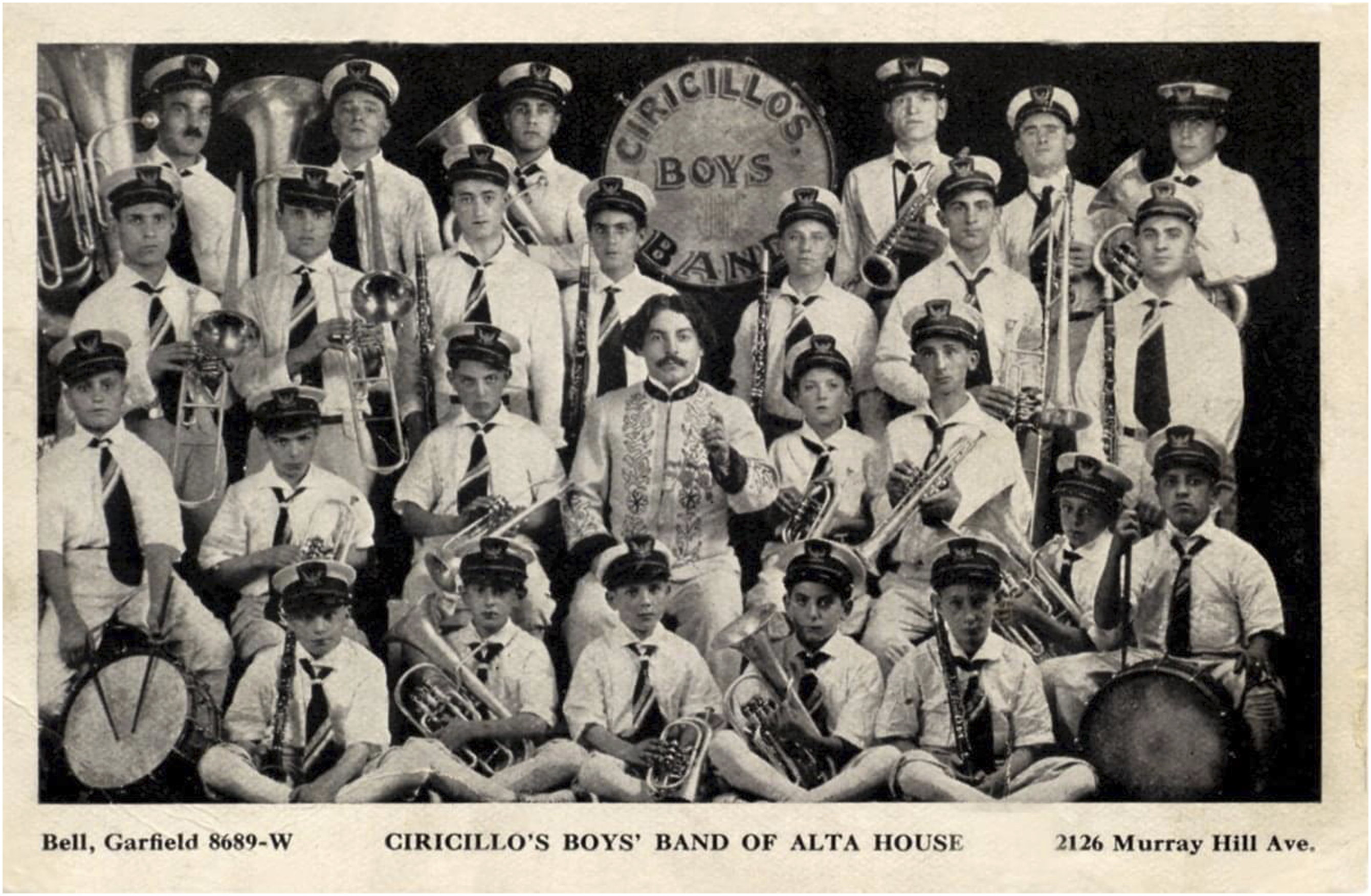
Consequently, young Pat was immersed in the musical surroundings that his father provided and joined the Boys’ Band in 1915. By the age of seven, Pat had become a serious horn and trumpet player who “create[d] furore everywhere”
30
and was billed as “The Little Melephone Wonder” in his father’s band (Figure 2). Over time, the Ciricillo’s Boys’ Band reached further acclaim, and by 1915, Salvatore appeared in newspapers nationwide and was headlined as “The Incomparable Signor Ciricillo!”
31
and “America’s Greatest Band Director.”
32
One recurring advertisement that appeared in multiple national papers included the following praise: No band leader of recent years has received greater ovations than Mgr. [Monsignor] Salvatore Ciriclllo, who, with his world renowned Italian concert band will make his second tour to the Pacific coast this summer. He is unquestionably the most interesting personality before the music world today and one of the most successful of all conductors, a musical genius of the highest order. In 1906 he toured the cities of the middle west with a boys’ band, which was accorded great applause. His present band is the mature fruit of that beginning, and many of his present players have been with him since boyhood. Ciriclllo began the study of music at eleven years of age in his native land, Italy. It was only a year later that the leader of the municipal band of Campobasso, his birthplace, asked Ciricillo’s parents to permit the boy to play in his band. He soon afterward entered the Royal Conservatory of Music at Naples and graduated at eighteen. He came to the United States in 1902. His first tour was successful, and he has traveled extensively every season since that time.
33
Postcard depicting Pat Ciricillo around the age of seven, when he was featured as “The Little Melephone Wonder” in his father’s band, c. 1915. Source: Photo courtesy of the Ciricillo family.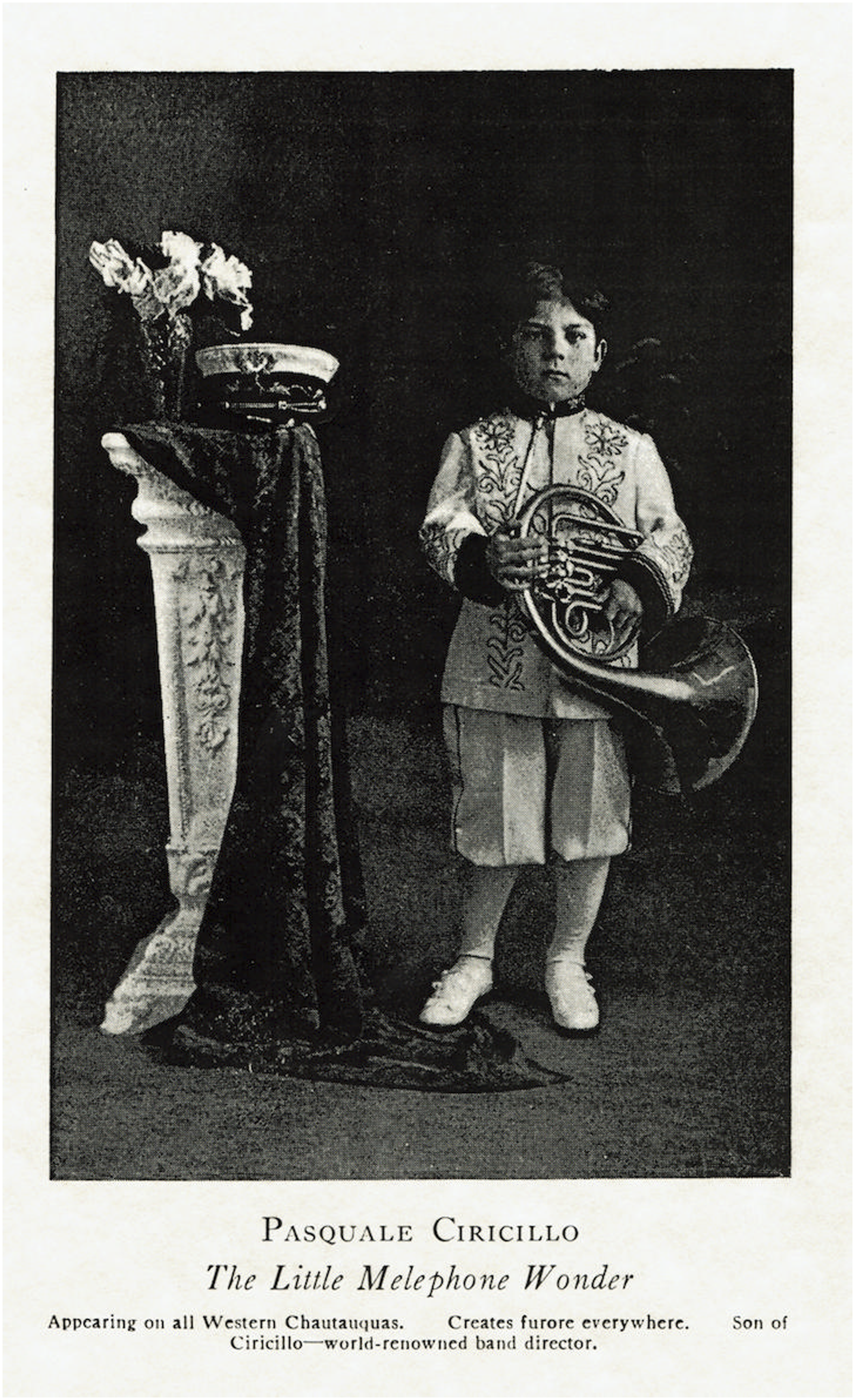
The Ciricillo family lost their father in 1922, however, when Salvatore died prematurely from Hodgkin’s disease.
34
It was at this point that Pat inherited his father’s band, essentially becoming a professional musician and the family breadwinner at the age of fourteen. Given Pat’s revered status as a performer, community members logically assumed that he simply would make a career out of music, and that there was no real need for him to go to college.
35
However, Pat held a deep-seated appreciation for acquiring new knowledge, and after graduating from East High School, he attended Western Reserve University (now Case Western Reserve University), where he participated in and led student ensembles alongside his regular studies.
36
He graduated with a Bachelor of Arts degree in 1927 (Figure 3) and resumed a full-time professional playing career in Cleveland. In due course, Pat accepted a trumpet subbing gig that would lead him to New York City, and to the next chapter of his life. Pat’s 1927 graduation picture from Western Reserve University. Source: Photo courtesy of the Ciricillo family.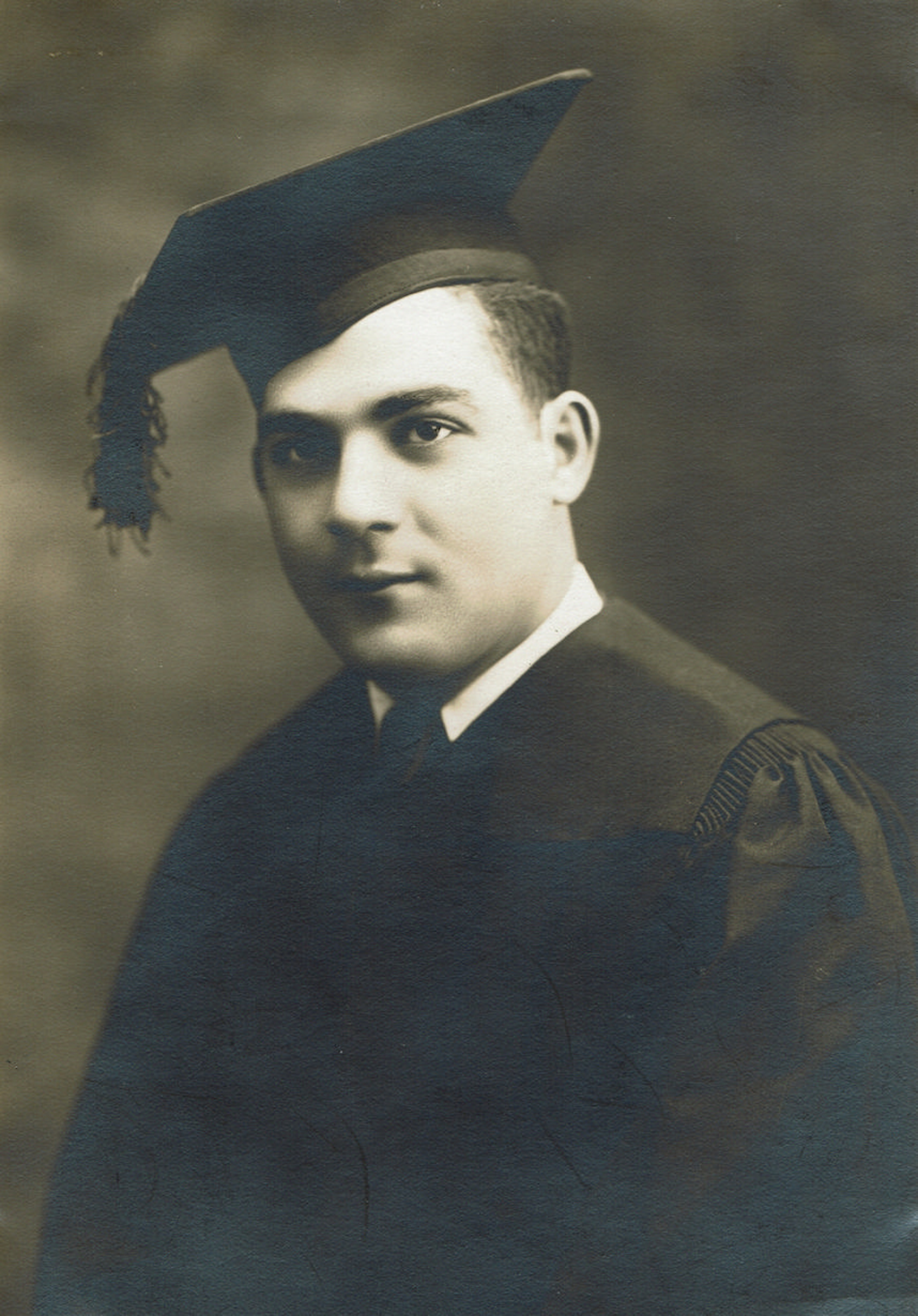
Performance Life in New York City (1929-1956)
By 1929, Pat Ciricillo’s reputation as an expert trumpet player in Cleveland had spread to the east coast. After being contacted to be a sub for cornetist Ernest Loring “Red” Nichols in New York City, Pat moved eastward to advance his music career. When Pat arrived in New York, he moved into Room 606 in the 44th Street Hotel.
37
On the heels of subbing for Red Nichols, Pat began playing with a number of top jazz bands throughout the 1930s. He was a regular with the Paul Whiteman Jazz Orchestra and The Dorsey Brothers, and frequently played with Rudy Vallée (Figure 4), Hoagy Carmichael, Vincent Lopez, Artie Shaw, Ben Bernie, Adrian Rollini, Fred Waring, and other eminent jazz musicians of the time.
38
“It was wonderful in those days,” Pat recalled. “You left one band, the next day you went into another. There was a big demand for my services.”
39
Pat’s consistent employability was impressive given the limitations of the Great Depression and the challenges that working musicians faced at the time.
40
Pat (third from the right) with fellow Rudy Vallée Vagabonds cast members before a “Farm and Country Fair Night” performance on the SS Transylvania II. The cruise traveled from Quebec and Nova Scotia to Bermuda.
55
Source: Photo courtesy of the Ciricillo family.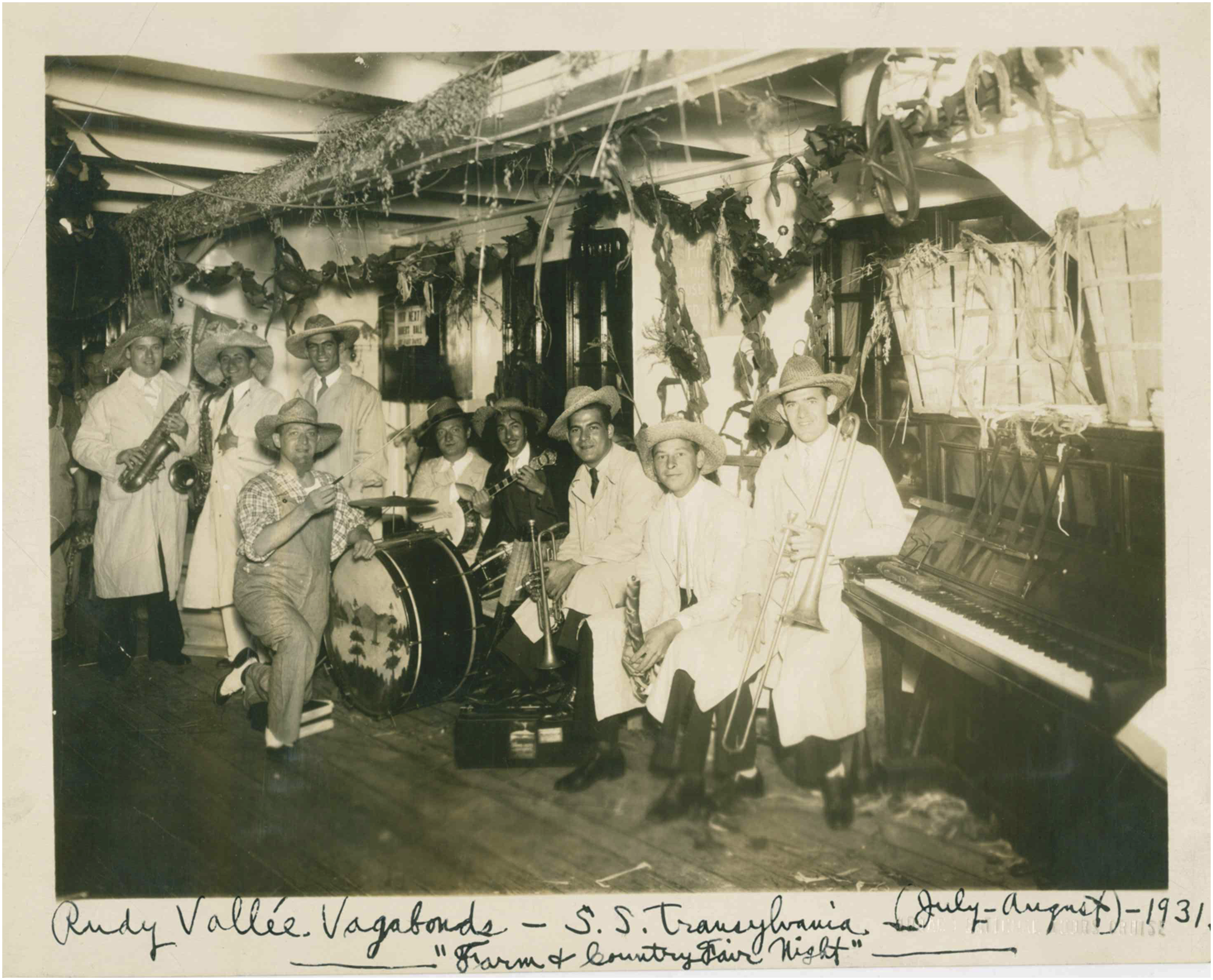
In April 1930, legendary jazz cornet player Leon Bismark “Bix” Beiderbecke (1903-1931) moved in next door to Pat, in Room 605. 41 While the two had not met before, Pat saw Bix and Paul Whiteman play together on stage in Cleveland in 1927. 42 Now neighbors, Pat and Bix became acquaintances and eventually contemporaries on the New York music scene, with Bix serving as a mentor to Pat. However, when Bix suffered the ongoing effects of alcoholic binges and was unable to perform on the Camel Pleasure Hour, a popular radio show sponsored by Camel cigarettes, Pat was the trumpeter who was called in to sub. 43
Pat’s desire for academic knowledge accompanied his prolific performance career. He pursued further study at Columbia University, 44 where he enrolled in graduate music coursework, taking classes by day and gigging by night. He also earned a music certificate from the University of Florence, Italy, where he studied with composer Luigi Dallapiccola, who was known for his twelve-tone compositions. 45 As in Cleveland, such educational pursuits puzzled Pat’s jazz musician colleagues, like Bix and the Dorseys, who teasingly called him “Professor” because they could not understand why Pat wanted to attend graduate school given his prowess as a professional trumpet player. 46 Nonetheless, Pat persisted in ways that demonstrated the value he placed on education and learning. “My life’s been very odd,” Pat said of himself once. “I’ve never stopped going to school. If it hadn’t been for that, I probably would have been one of those box-office names like Bunny Berigan.” 47
In July 1931, a set of circumstances combined that would propel Bix, Pat, and Pat’s piano into twentieth-century jazz lore. While Pat was on tour in Italy that summer, he allowed Bix to borrow his Wurlitzer upright piano (serial number 112635), for which he paid $300 when he moved to New York in 1929.
48
It was on that piano that Bix composed at least two of his last four piano compositions, Flashes and In the Dark.
49
Within weeks, however, Bix died in his room on August 6, 1931, from pneumonic complications.
50
When Pat returned that fall, he looked with fondness on the cigarette burns that Bix had left on the upper treble keys of the piano, where he rested his cigarettes while playing and composing.
51
Pat treasured those indelible marks from his collaborator and musical contemporary. As Pat’s son recounted, “We always kept that piano, and my father never wanted it changed [repaired]. He would say, ‘Now this is a very important piano, because Bix Beiderbecke composed on it.’ That piano is now in the Louisiana State Museum Jazz Collection.”
52
The piano’s museum placard reads, Piano Played by Bix Beiderbecke Wurtlitzer Console, 1920s This piano was owned by Pat Ciricillo when he lived in room 606 at the 44th Street Hotel in New York City from 1929 to 1931. Bix Beiderbecke was in room 605 and rented this piano in July 1931. It was on this piano that he wrote “Candlelights”
53
and “Flashes.” Bix joined in jam sessions with Tommy and Jimmy Dorsey, Red Nichols, Adrian Rollini, Bud Freeman, Mildred Bailey, Eddie Condon, Hoagy Carmichael, Pee Wee Russell and others, often as late as 3 a.m. They stuffed paper around the hammers to keep the noise down. Bix died on August 6, 1931. Gift of Mr. and Mrs. Frank V. Smith
54
The late 1930s encapsulated another momentous turning point in Pat’s personal life. On June 18, 1938, Pat married his long-time sweetheart, Yolanda Colombi (1912-2001), at the Holy Rosary Catholic Church back in Little Italy. Following the wedding, the couple moved to New York’s Riverside Drive 56 and remained at that location for many years during the height of Pat’s playing, recording, and radio music arranging career. 57 The couple also welcomed two children, Patricia (1940-2021) and Robert (b. 1945). In the coming decades, the musical skills that Pat refined on Riverside Drive would coalesce in his teaching and the innovative music education curricula he crafted for school students.
In addition to playing jazz and popular music, Pat was a first-rate classical trumpet player. The 1940s marked an era in which Pat turned more toward classical repertoire and away from jazz and popular music. Much of this had to do with the demands of touring band gigs and navigating late-night performances. While new performance and recording opportunities came in the form of projects with Harry Belafonte, Tony Bennett, Percy Faith, Guy Lombardo, and other celebrated musicians, 58 classical music added another form of stability. Being a classical trumpet player also meant that Pat could stay closer to home—and to Yolanda and the children—while still remaining an integral part of the New York music scene. Pat played with the NBC Symphony Orchestra under the direction of Arturo Toscanini, the Radio City Music Hall Orchestra under the direction of Ernö Rapée, and the hand-selected orchestra that Leopold Stokowski assembled from a variety of professional musicians. 59
In 1948, the Ciricillo family moved to a house in Edgemont near Scarsdale, just north of New York City. Pat taught private trumpet lessons in this home from a small room with glass French doors, and continued as a freelance musician in the city. Additionally, Pat intermittently served as a musical mentor for trumpeter, band leader, and songwriter Ray Anthony,
60
currently the last surviving member of the Glenn Miller Orchestra. In the 1950s, Pat played in Howard Barlow’s Voice of Firestone Orchestra, which aired live classical music on national television each week. “I remember watching it as a little kid,” Pat’s son Robert recalled. “Occasionally they’d scan the orchestra, and I wanted to see if I could see him.”
61
Pat also played with other live studio bands and orchestras, including “Stop the Music,” a prime time radio game show that first aired in 1948, and “Name That Tune,” a prime time television game show that debuted in 1953. “I played all over the place,” Pat said of himself. “Had a lot of experience and never had to worry about a job because I’d fit in anywhere.”
62
Pat Ciricillo’s chameleon-like ability to perform fluently in a variety of genres, styles, and venues spoke to the tremendous depth of his musicianship (Figure 5). As Pat’s son Robert commented, “He was highly regarded among musicians.…It’s hard to imagine that there were many other trumpet players in New York who had the range of professional experience he did.”
63
Pat posing for an F. A. Reynolds Company advertisement, c. mid-1950s. Source: Photo courtesy of the Ciricillo family.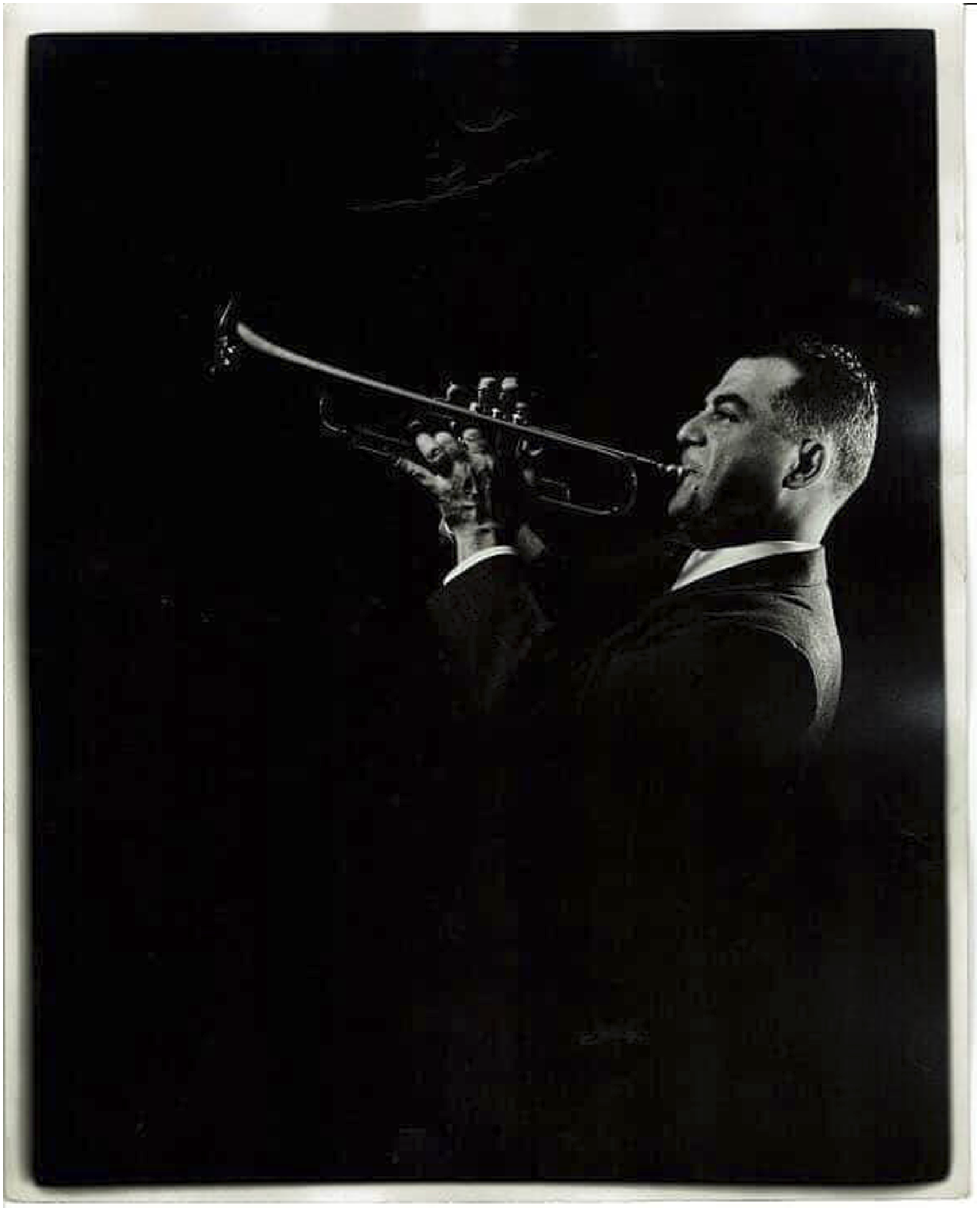
Teaching Life in The Bronx and Rockland County, New York (1956-1976)
The late 1950s marked a time of transformation for Pat Ciricillo, as he entered a seemingly more conventional period with less documented activity. Following a storied national and international performance career, Pat made the decision to become a full-time music teacher in the schools. This career change was due in part to the demands of being a full-time professional musician and the changing landscape of the New York performance scene. The 1940s and 1950s ushered in more restrictive performance opportunities, where “qualified musicians from Juilliard…would end up driving a cab” 64 due to job shortages. Professional musicians had witnessed a sharp decline in work for decades, and the musicians’ strike of 1942-1944 further devastated the entertainment industry. 65 That Pat was still a well-connected and highly sought-after musician was a testament to his remarkable ability. However, Pat began coming to terms with the ephemerality of a career in performance. As his son recounted, “He was 50 years old at that point and could see the handwriting on the wall. It became clear to him…that it was time. That’s when he made the transition to teaching.” 66 Because Pat had the educational background from Western Reserve University and Columbia University, moving directly into school music teaching seemed like a logical career shift. In the school setting, Pat was able to blend the skills he employed in the professional world with the pedagogical needs of student musicians.
Pat initially began working as the instrumental music director at the private, then all-boys Horace Mann School (The Bronx) in 1956. Prior to Pat’s arrival, The Horace Mann School orchestra consisted of only five members. Credited to Pat’s “unceasing efforts,”
67
the orchestra quickly grew to over fifty-five string, wind, and percussion students. The school yearbook, Horace Mannikin, indicated that a quiescent orchestra was re-awakened by Mr. Pat Ciricillo, and it soon developed into the largest and most proficient yet seen on the hill. Under Mr. Ciricillo’s patient guidance, the group developed from an aggregation of individuals into a harmonious, well-trained orchestra.
68
The orchestra’s initial performances primarily included classical standards from Beethoven, Brahms, Enesco, Handel, Mozart, Mussorgsky, Prokofiev, and Puccini, although Pat also programmed popular music and show tunes. Audience members were particularly enthralled with a performance of “I Could Have Danced All Night” during a spring concert in 1957. 69
Aside from fundamental performance preparation, Pat made a conscious effort to acquaint orchestra members with a wide variety of music, reinforce sight-reading skills, and create individualized growth opportunities for students. 70 He formed a chamber orchestra with the strongest players in the program to facilitate group collaboration and worked with students to develop original ensemble compositions and conducting skills that they debuted at school concerts. 71 Pat endeavored to cultivate his students’ ability to work collaboratively within an art form and to become “discriminating and objective listeners in the years to come.” 72
Pat simultaneously organized the first Horace Mann pep band, which played at all home football games, “belting out” music “with enthusiasm and verve” for players and fans alike. 73 Over time, Pat’s magnetic leadership transformed the band into a “smooth-running, sweet-sounding unit” 74 of nearly fifty-five students who performed at athletic and concert events. With full instrumentation throughout, the band became one of most celebrated traditions at Horace Mann, becoming the school’s “least noticed but most popular organization.” 75 As with the school orchestra, the band performed a variety of concert repertoire, from classical selections such as Beethoven’s “Hymn of Praise” and Mozart’s “Rondo Alla Turca” to popular tunes such as “Lady of Spain,” “White Christmas,” and “Anchors Aweigh,” the latter of which was conducted by the clarinet section leader. 76 Pat’s affinity for cultivating esprit de corps, strengthening students’ ensemble skills through classical and popular music, and mentoring student conductors and young composers emulated the dynamic ensemble philosophy he likely acquired from his father. Pat was a product of Ciricillo’s Boys’ Band in Little Italy and seemingly found great value in fostering student leadership and autonomy. He continued this pedagogical approach well after he departed Horace Mann’s private-school setting and began teaching in the public schools.
Throughout the 1960s and 1970s, Pat worked as an itinerant music teacher for the Rockland County (NY) Public Schools, concentrating his efforts on directing elementary school bands. Specifically, he taught fourth- through sixth-grade bands in several Rockland County elementary schools, including Orangeburg, Blauvelt, and Sparkill.
77
One of the hallmarks of Pat’s teaching during this period was his exceptional approach to creating band repertoire for his beginning band students. Because he was a skilled arranger, he took it upon himself to generate his own repertoire. Instead of using standard music that was published for elementary school bands, Pat selected current popular songs of the day, including rock-and-roll tunes, and arranged them for his elementary band students. Pat’s son Robert remembered how much time his father spent on crafting those arrangements, and how much the school system appreciated the insight that Pat brought to the community: It really raised the kids, because they were a lot more interested in music because he made it current for them.…There was no music teacher who took the time and trouble to arrange music like my father did. Because of his background and the professional arranging he had done, it was easy for him. It wasn’t difficult. When I was going through elementary school, I certainly didn’t have any music teacher like that who would do arrangements of current songs.
78
Another hallmark of Pat’s teaching was his inclusive, accepting approach with students. As at Horace Mann, he took great personal interest in his students and went out of his way to bolster all children’s sense of belonging and potential by encouraging them to join the band. In one example, he talked with an elementary student who displayed serious behavioral problems in the school and persuaded him to play percussion in the band. Pat believed this was a therapeutic way for the student “to get his hostility out by banging on the drum.”
79
He saw music as an essential factor in students’ personal growth and used music as a way to reach as many schoolchildren as possible. His welcoming approach appeared to be a precursor to the precepts of social-emotional learning today:
80
My father was known for accepting all students into the band, including those with discipline issues. He would find ways to help them overcome their struggles through musical involvement.…My father was very interested in the students, not just in the musical side of their education, but he was concerned with their general development as human beings.
81
Aside from his Horace Mann and Rockland County teaching positions, Pat also served as a substitute teacher in the Scarsdale and Edgemont (NY) school districts and was a music instructor for the Hoff-Barthelson Music School in Scarsdale.
82
Throughout the 1960s and 1970s, Pat maintained an active, itinerant teaching schedule with multiple beginning bands. His son Robert reported that he continued to be a kind, humble, and giving soul who displayed a modest disposition, sharing, They knew he was an accomplished professional trumpet player, but I don’t think they had any idea as to the depth of his experience. I used to get upset with him because I’d say, “Why doesn’t everybody know how famous you are?!” And he’d just sort of laugh. He didn’t really care about that. Rockland County knew he had a good professional background as a trumpet player, but I don’t think they could have appreciated the extent of it because there was just no way for them to know the details.
83
In 1976, Pat Ciricillo retired. After twenty years of school music teaching and just months before his sixty-ninth birthday, Pat determined it was time to close another chapter in his life. The Rockland County Schools hosted an honorary retirement dinner for him, where the superintendent and other community members showed their appreciation for Pat’s legacy as a veritable “Music Man.”
84
Teaching was an extremely rewarding experience for Pat and served as a culminating bookend to the earlier parts of his career (Figure 6). “I know how much my father loved his work, both professional playing and teaching,” his son reflected, “but I think it was more gratifying for him to experience teaching at the end of his life.”
85
Pat sitting at his famed Wurlitzer upright piano that Bix Beiderbecke used in 1930 and 1931, c. 1970. Source: Photo courtesy of the Ciricillo family.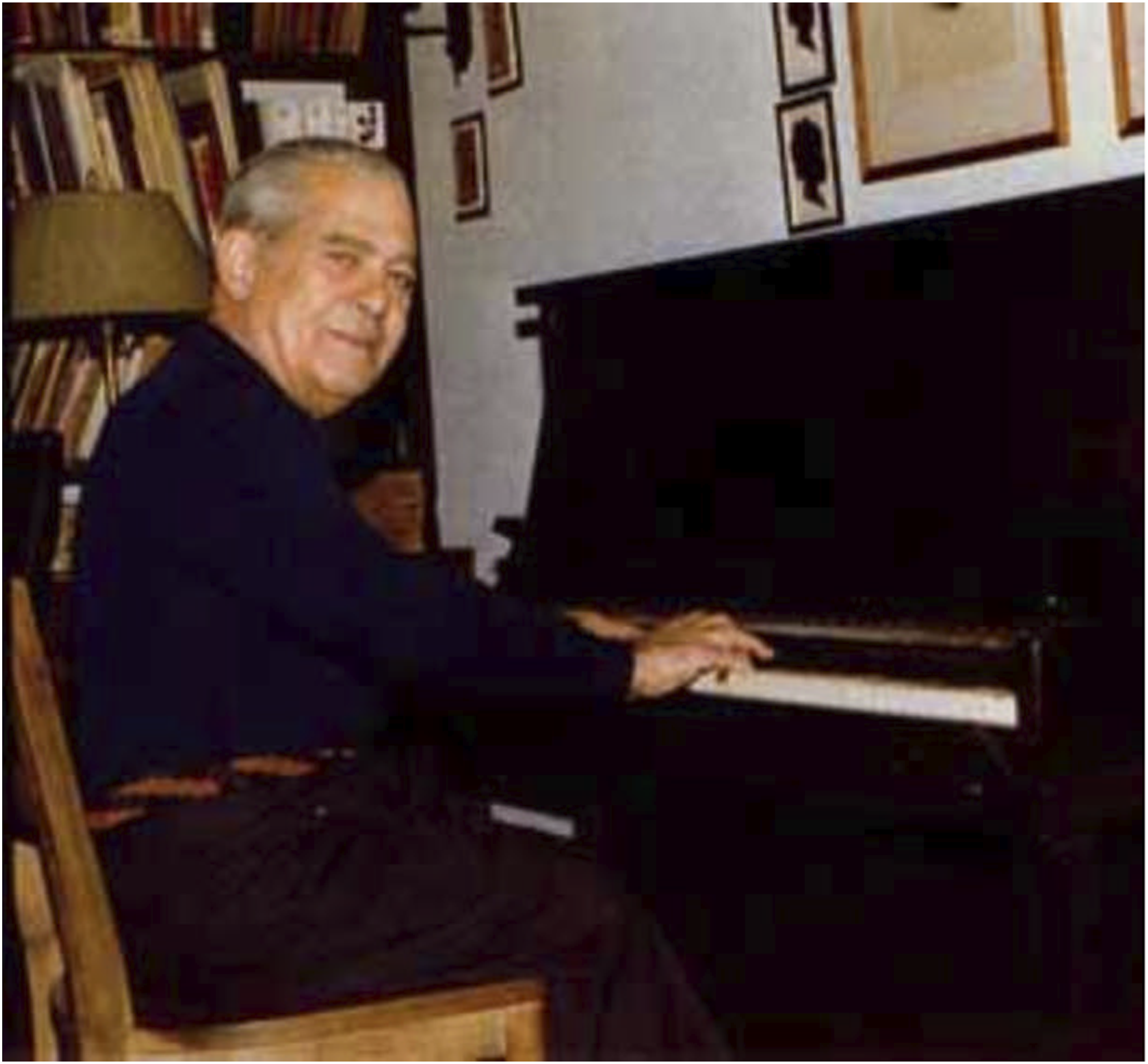
Pat Ciricillo passed away from a heart attack at his home in Edgemont, New York, on May 27, 1978, just two years after retiring. 86 He was seventy. He was survived by his wife Yolanda, his adult children Patricia and Robert, and his three grandchildren. 87 Over time, many of the original Ciricillo family members—Salvatore, Luisa, Pat, Yolanda, Joe, and Patricia—were buried in Cleveland’s Lake View Cemetery, just steps away from Daffodil Hill. 88 Pat and his family ultimately returned to the setting that stonemason Giuseppe Carabelli built a century earlier.
Lessons Across Ciricillo’s Life
The purpose of this biographical investigation was to highlight the musical and pedagogical contributions of Pasquale “Pat” Ciricillo, a twentieth-century trumpet player, arranger, and teacher. Analysis of primary and secondary sources illuminated thematic stages and turning points in Ciricillo’s biographical arc. The three chapters of Ciricillo’s life hold lessons for music teaching and learning in twenty-first-century schools, particularly in the ways that teachers approach curricular elements of participatory and performative music-making.
From the beginning, Ciricillo was immersed in a rich, multi-musical context that shaped his musical journey. Upon his father’s untimely death, Ciricillo became the family breadwinner at the age of fourteen and, by default, assumed the musical leadership roles that his father maintained. Ciricillo’s penchant for education and wide-ranging musicianship afforded him a storied career as a professional trumpet player in New York City. He was a contemporary of some of the most prominent jazz, popular, and classical musicians of the 1930s, 1940s, and 1950s. His success as a professional musician served as a catalyst for the latter part of his career, when he became a school music teacher. As a skilled arranger, he created innovative school curricula based on his extensive musical background. Throughout his twenty years of school teaching, he brought the music of the 1950s, 1960s, and 1970s into the music classroom, and used that space to reach students who might not have felt they had a place otherwise. Overall, Ciricillo’s life represented a convergence of musical identities that worked in a unified way and foreshadowed the musical and pedagogical discussions that music educators are having today.
First, music teachers can look to Ciricillo as an example for incorporating current popular musics (e.g., country, hip-hop, jazz, R&B, rock) in the classroom. For Ciricillo, popular music served as a point of connection for his elementary and secondary instrumental students, which speaks to the potential and applicability of popular music in teaching, no matter the era. Ciricillo’s intentional use of this music during those years reflected then-current arguments for the inclusion of jazz, popular, and youth culture movements in school music programs. 89 His approach was also forward-thinking given the global tensions of the 1950s that upended American schools and contributed to the decline in educational quality in the 1960s and 1970s. 90 As the profession continues to debate the value and place of vernacular and informal music-making in schools, 91 music educators could seek opportunities to explore a range of genres that spur students’ participation, critical thinking, and social awareness. Additionally, Ciricillo’s breadth of musical creativity was extraordinary, due in part to his musically-saturated upbringing. Moving between jazz, popular, and classical worlds likely involved a great deal of musical code-switching, 92 which school students also can be taught, even on a smaller scale. While not all teachers and students have backgrounds as immersive as Ciricillo’s, students do bring their own musical understandings and expressive traits to the classroom, which can be harnessed for making meaningful socio-musical connections. Given current discussions on the importance of providing students with a variety of musical models, 93 the landscape of popular and vernacular music in schools may be moving toward a more inclusive period. However, philosophical and practical considerations remain with regard to implementation, depth, and breadth. 94 Seemingly ahead of this time, Ciricillo’s nuanced approach to musical creativity could serve as inspiration for music teachers today.
Second, based on available evidence, Ciricillo was a diplomatic and empathetic teacher. He created open and inclusive music classrooms and used music performance, composition, and conducting as therapeutic outlets for students. His teaching practices may have been emblematic of the ongoing conversations that music educators would have with regard to student diversity and wellbeing. 95 Ciricillo’s teaching approach reminds the profession that music-making opportunities can be important for all students, regardless of ability, behavior, or performance level. Moreover, Ciricillo began his school teaching career when he was older, whereas the vast majority of school music teachers begin their careers as young adults. It is possible that Ciricillo’s collective wisdom and mid-life experience that he brought to the classroom informed his teaching and his reassuring interactions with students. Music teacher educators could continue to examine with preservice music teachers hidden personal biases and elements of occupational socialization that could better prepare early-career teachers for recognizing and acting upon the needs they might notice in their students. Additionally, schools and music teacher preparation programs could consider the teacher profiles they wish to attract. Teacher candidates with diverse musical backgrounds and teachers from various life stages could be key in shaping school music programs in the future. New teachers with more life experience, like Ciricillo, could have a great deal to offer students in terms of music instruction.
Third, Ciricillo illustrated the importance of teachers maintaining solid musicianship skills and drawing upon educational pursuits. Ciricillo’s ability to perform, arrange, and move between a variety of genres came from years of cultivation, which, in turn, informed his teaching and improved the musical lives of his students. Likewise, Ciricillo held an innate fondness for learning and earned multiple college music degrees, despite the playful ribbing he received from peers and community members who viewed academic pursuits as superfluous for someone of Ciricillo’s musical caliber. Furthermore, Ciricillo received his degrees during a time when the music education profession was still discerning the place of jazz in school music, yet he entered the classroom years later when jazz was starting to become an accepted part of the established curriculum. 96 His story also reinforces the notion that creative musicianship is possible among beginning instrumentalists and is not reserved for only advanced ensembles. As music educators continue to explore informal learning spaces and popular music teaching practices, 97 they likely will experience similar rewards and challenges as Ciricillo faced, especially with regard to the acceptance and usage of varied repertoire and the teaching dispositions that can actuate curricular change. 98 Ciricillo’s example reminds the profession about the interlocking relationship between theory and practice, and between good teaching and personal musicianship. Such an approach could allow music teachers to “fit in anywhere,” 99 as Ciricillo said of himself.
Conclusion
Pat Ciricillo’s life in Ohio and New York is one example of how the strength of personal musicianship can inform teaching, and how creative school music curricula can be realized through multi-musical approaches. Ciricillo was a model teacher who wove together jazz, popular, classical, and creative elements in his teaching. Because of his tenacity as a performer and lifelong learner, he masterfully interlaced the consequential experiences he amassed throughout his life. To those who knew him across his entire career, Pasquale Ciricillo truly progressed from “The Little Melephone Wonder” to a “Music Man.” 100
At the time of this writing, Pat Ciricillo’s legacy endures in many ways, including through a particularly meaningful gift. In 2018, the Department of Music at Case Western Reserve University was pleased to introduce a new scholarship, The Pat Ciricillo Music Education Scholarship. Presented by Patricia and Robert Ciricillo in honor of their late father, the four-year scholarship is awarded to an undergraduate student pursuing a music education degree at Case Western Reserve University. The department is proud to help carry on Pat Ciricillo’s name and example, and holds tremendous gratitude for the family’s continued support of music education students who find great meaning in teaching others, just as Pat Ciricillo did. “I think [the scholarship] is something that my father would feel very good about,” Pat’s son Robert conveyed. “I’m sure there’s nothing he’d like more than to help young students who are thinking about a teaching career in music.” 101 Pasquale Ciricillo’s life is a reminder of how music teachers can make lasting contributions to the students, families, and communities who know them.
Footnotes
Declaration of Conflicting Interests
The author(s) declared no potential conflicts of interest with respect to the research, authorship, and/or publication of this article.
Funding
The author(s) received no financial support for the research, authorship, and/or publication of this article.
