Abstract
Cultural appropriation, status consistency, and parenting gender: A snapshot of new research.
parenting gender, from left to right
In our present era of book bans, challenges to K-12 gender curriculum, and legislative battles over gender-affirming care, it seems the left and right have nothing in common when it comes to kids. To learn more, Mallory Rees and Abigail Saguy examined the current state of discourse on gender in the context of parenting, drawing on interviews with 85 U.S. gender activists from diverse political orientations. As expected, their Social Forces article reports conflicting opinions, but also notes several surprising points of alignment.
Left-wing gender activists in the study tended to endorse following a child’s intuitive gender expression and identification, sometimes even suggesting that parents should wait to use any gender labels until prompted by the child. In contrast, their right-wing counterparts typically expressed the idea that teaching children how they fit into society based on their sex assigned at birth would better set them up for adult success.
Despite these differences, however, Rees and Saguy found subtle indicators of convergence in these activists’ parenting preferences. On the right, activists expressed support for practices that would have been considered progressive a few decades ago, such as letting girls play with "boy toys" or encouraging them to pursue traditionally masculine career paths. On the left, activists showed a shift from earlier feminist movements by placing comparatively less emphasis on the societal oppression of women, instead focusing on gender as an identity to be celebrated and nurtured. Moreover, activists on both sides aligned in their understanding of gender as an innate rather than a socially constructed personal attribute (even if they disagreed on its origin).
Though activists may not reflect the perspectives—let alone the practices—of ordinary American parents, their views hold significant sway over public opinion. By highlighting points of convergence, the study provides a more accurate and nuanced depiction of the polarized parenting advice affecting U.S. families than we’re likely to encounter in our social media feeds.
Scholars find both divergences and convergences in U.S. parenting perspectives around gender across left- and right-wing political activists.
iStockPhoto // Choreograph

crossing the cultural line
When does cultural appreciation become appropriation? A recent study published in the American Sociological Review offers a fresh look at this often misunderstood process.
To do so, sociologists Abraham Oshotse, Yael Berda, and Amir Goldberg applied an experimental design, known as a vignette experiment, to a large sample of over 2,500 participants. The authors provided stories describing one cultural group member engaging in a practice of another cultural group while altering the contextual information provided to participants. For example, in one vignette a White woman is noted for her love of wearing an Indian sari. For some participants, the White woman is described as affluent, while for others she is working-class. In another vignette, a male organizes a Mexican-themed Calavera Party. For some participants, he is White, for others, Black.
By controlling for the impact of particular sociodemo-graphic factors, the authors found that cultural "trespassing" is most likely to be viewed as inappropriate when it devalues the host culture or is seen as being extractive to the benefit of the trespasser. Their findings show that the most offensive acts of boundary crossing are those in which a privileged group (e.g., Whites, males) adopts the practices of a disadvantaged one. Interestingly, though, it was those study participants most disenchanted with the possibility of upward social mobility who were most likely to take offense to any act of cultural boundary crossing.
Determining what constitues cultural appropriation is a contextual process, shaped by the act, the people involved, and the identity of the observers.
iStockPhoto // vladans

Amid public debates centered on what is and is not cultural appropriation, Oshotse, Berda, and Goldberg demonstrate the fallibility of any set of universal criteria. Instead, their account reveals how cultural appropriation is a contextual process, shaped by the nature of the act and the actors involved. Further, this research warns that inequality and status disillusionment create the conditions for increased cultural conflict.
rural rainbows
When envisioning the places most conducive to lesbian, gay, and bisexual (LGB) flourishing, we might picture urban hubs like Montreal, Toronto, and Vancouver, with their populations, progressive attitudes, and vibrant gay social scenes. But how are LGB-identifying Canadians faring in rural areas?
A study in the Canadian Review of Sociology examines LGB mental health across the urban/rural divide, finding mental health disparities that vary in complex ways along with respondents’ partnership status and gender. Drawing from 10 years of aggregated data sourced from the Canadian Community Health Survey, author Matthew Stackhouse shows that partnered gay men residing in rural areas report the highest predicted scores of mental well-being—higher
than both their partnered heterosexual counterparts and partnered gay men dwelling in Canada’s largest urban cities. Among partnered lesbian women, there were no significant mental health disparities across geographical regions. Regardless of partnership status and geographic context, bisexual individuals—particularly bisexual women—display disadvantaged mental health outcomes when compared to their heterosexual counterparts.
LGB Canadians experience mental health disparaties that vary by location, as well as partnership status and gender.
iStockPhoto // monkeybusinessimages

The findings of this study provide insight into the role of romantic partners as buffers against the challenges experienced by LGB Canadians, particularly those in rural areas. They also underscore how both single LGB individuals and bisexual women face significant disadvantages in mental health outcomes, speaking to the necessity of creating rural environments where they can thrive as well.
shedding the wealth
Let’s be real: taxes and fees stink. In Venezuela, a nation experiencing an ongoing political and economic crisis, nearly 52% of the workforce depends upon freelance work to make ends meet. In this context, many data workers trying to get paid are now subjected to a gauntlet of both international and domestic financial intermediaries—work platforms, digital crypto banks, and local brokers—each charging fees. A paper published by Julian Posada in Big Data & Society investigates the impact.
Through 38 interviews, Posada reveals how this volatile payment scheme presents three costly outcomes for workers. As crypto-payments must move through intermediary institutions, workers typically receive much less than they earn. The multi-layering of institutions also makes it difficult to withdraw funds quickly, which is essential given the risks inherent to the highly volatile crypto-market. Further, the distance between employer and international employee—both geographically and digitally—exacerbates power imbalances that push costs onto workers.
In an age of international outsourcing, worldwide data companies profit off of international workers, many of whom are in precarious financial situations. However, in cases like Venezuela, where the gig economy and crypto currencies make sense to counter unemployment and hyperinflation, ethical payment practices that take context into consideration may ease the over-taxed lives of global employees.
Ethical payment practices can ease the over-taxed lives of global workers.
iStockPhoto // oatawa

a woman walks into a brothel
Sex sells, the old marketing adage goes, but who is buying? Many assume that commercial sex is purchased by men, from women. However, new research published in the British Journal of Sociology sheds light on sexual transactions in which the traditional gender script is flipped—when sex is purchased by women from male sex workers.
To offer a novel account of women clientele in the commercial sex industry, sociologist Eileen Y.H. Tsang draws on interviews with female clients and male sex workers conducted during three years of ethnographic research in Pistachio, a high-end Chinese nightclub. Tsang reports that the transactional nature of these sexual experiences allowed some women to find forms of intimacy or sexual experiences that were otherwise unavailable to them. For other women, pleasure was the primary motivation in seeking novel sexual experiences focused on elation over emotional attachment. Finally, some women deliberately sought sexual experiences that challenged traditional gender roles. In those cases, women clients typically described a desire to adopt traditionally masculine behavior in their sexual encounters, a pattern corroborated by male sex workers who described performing femininity for wealthy women consumers.
Paying for sex can allow some women to challenge social norms around femininity and pleasure.
iStockPhoto // Sergey Dementyev

Tsang’s research challenges us to expand the enduring male-consumer, female-provider vision of commercial sex in order to recognize the diversity of subversive sexual experiences sought by and available to both male and female clients. Especially for women, these experiences can allow for challenging notions of what society expects of them—in and beyond the bedroom.
whose parents are paying?
Media coverage of race and higher education in the United States often portrays Asian American and White families as competing for limited seats at prestigious institutions. What happens, though, when it’s time for those admitted students to go to school? New research aims to untangle patterns in these families’ college spending.
The study, published by Kimberly Goyette and colleagues in Sociology of Race and Ethnicity, uses data from the 2015-2016 academic year drawn from the National Postsecondary Student Aid Study (NPSAS). In their analysis, the authors find that Asian American parents paid more for their children’s college education compared to White parents, despite having lower average incomes. In part, this reflects the fact that Asian American college
students were more likely to attend selective schools. But, by acknowledging the under-acknowledged diversity within the Asian American group and breaking the data down by immigrant generation, the scholars note important nuance. Parental spending was highest among three ethnic groups—Chinese, Japanese, and Korean Americans—and among recent immigrants. In fact, by the third generation in the United States, differences in Asian American and White parents’ college spending were no longer significant.
New ,research aims to untangle racial patterns in families’ collegespending.
iStockPhoto // ADragan

status consistency wanted
A comparison of hiring practices in the United States and China reveals an ugly truth.
iStockPhoto // byryo
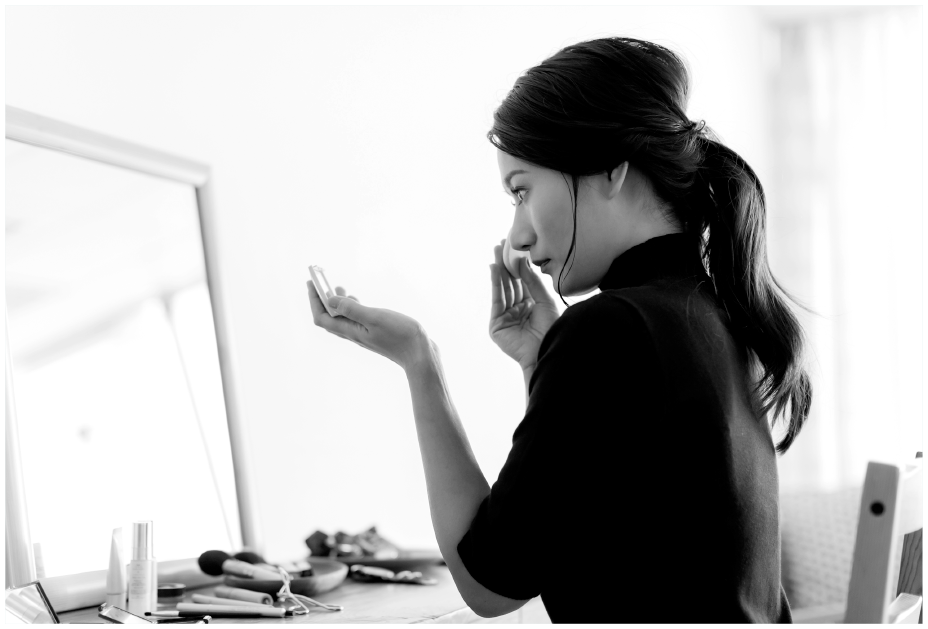
Status matters, but not in the way we might think. While it may not, for example, be surprising to learn that being attractive helps secure a job, a recent article in the American Journal of Sociology finds that "the extent to which an actor occupies similar ranks across different status dimensions," or has status consistency, is what truly matters.
Through a multi-context study in China and the United States, Christopher Marquis, Andras Tilcsik, and Ying Zhang examined status consistency in the job market. While no gender differences were found, more attractive applicants with elite educational credentials were favored for higher-status jobs, while less attractive applicants from non-elite universities were preferred for lower-status positions. Applicants with either attractive looks or elite educational credentials, but not both, were not favored for either type of job. The underlying mechanism the authors identify is that candidates with status inconsistencies are not perceived as the most qualified for higher-status jobs. Meanwhile, they are seen as less committed to the organization, which creates more uncertainty in the evaluation process for both types of positions compared to status-consistent applicants.
The proliferation of social networking sites—and their many photos of job-seekers—has only made it easier for potential employers to discern applicants’ physical attractiveness and, consequently, status consistency, raising important questions about the dynamics of status and inequality in contemporary labor markets. The authors thus hope that their perspective will shed new light on "the sociological aspects of physical attractiveness and help advance the broader social scientific project of uncovering the dynamics of status and inequality in contemporary labor markets and other social arenas."
23 and we?
With the explosion of genetic ancestry testing, more and more Americans are connecting with new parts of their ethno-racial identities. But does a White suburban New Yorker finding out they are 4% Cherokee make them Indigenous? If they believe it does, what are the implications for our everyday understandings of racial identity? A new article published in Social Problems offers some answers.
Sociologists Amina Zarrugh and Luis Romero studied 568 YouTube videos in which consumers of ancestry tests "revealed" their results. Given their public, and often performative, nature, these videos offered an ideal dataset for examining how genetic testing services are reshaping how people understand racial identity in their daily lives. Using qualitative analysis, the authors found that consumers of ancestry tests consistently engaged in a process of "genetic racialization" in which they employed a biological and genetic understanding of race and ethnicity to reconstruct their racial identity based on statistical percentages rather than culturally resonant definitions of group membership. For example, while 41% of the YouTubers described feeling as though their test results revealed their "true identity," only 25% contextualized these findings within American history or culture.
After decades of social science and humanities scholarship emphasizing the social construction of racial and ethnic categories, these findings offer several important, and challenging, implications. Acutely, they suggest that a "blood quantum" understanding of race may be regaining popularity through genetic ancestry testing. And when a genetically deterministic definition of race helps individuals feel connected to an identity outside their lived experience—that is, when natural science offers a pathway to a form of group membership—it pushes us to consider broader questions about the potential limitations of social scientific conceptions of race.
Does ancestry testing reify a "one-drop" vision of racial and ethnic identity?
iStockPhoto // Rasi Bhadramani

the wages of digital emotional labor
How do online interactions mirror societal norms? A recent Social Psychology Quarterly article reveals that even those online spaces that are collectively supportive against racism and sexism are rife with the sorts of limiting societal expectations imposed on racialized women in the offline world.
Using interview data from 18 Black and Asian women, Paulina d.C. Inara Rodis identifies their two primary responses to racist or sexist content online: either refraining from response or taking on an "educator" role. Despite advocating for the latter, interviewees more frequently opt for the former. Their decisions, while not diminishing their commitment to anti-racism or anti-sexism, stem from an awareness of the consequences of speaking up. These ramifications include increasing their already heightened visibility as racialized women in society and inviting the considerable emotional toll of carefully crafting a response, managing their emotions, and finding direct and often altruistic reactions to racist or sexist content—what the author labels "digital emotional labor."
Racialized women largely take two tacks to addressing (or not addressing) racist and sexist content online. Both approaches take a toll.
iStockPhoto // Prostock-Studio

Racialized women are aware that their actions and digital profiles may evoke and reinforce certain controlling images—stereotypes and tropes used to justify their othering and discrimination. Thus, they carefully consider not only how they wish to be perceived but also how their actions (and inactions) might perpetuate cultural biases and contribute to the marginalization of other women of color.
intergenerational costs
Stigmatization is often thought of as an individualized burden. But can this shameful mark be experienced by and shared with others? New work published in The Sociological Quarterly by Veronica Horowitz and colleagues investigates how legally imposed monetary sanctions act as intergenerational transfers of stigma and burden.
Through the analysis of 70 interviews with debtholders in Minnesota, the research team revealed that children, parents, and those subject to legal monetary sanctions all experienced stigmatization. Those individuals who attempted to overcome their debt sometimes prioritized paying fines over providing support for their children, which contributed to intergenerational impacts. Further analysis showed that parents of the fined who provided financial assistance felt the impact of stigma. Where past research underscores that mothers often front the bill for their adult children’s legal obligations, the current study makes clear that both mothers and fathers provide support. Fathers, especially, experienced anger along with the financial strain. Many of those who were fined had both debt and children, and they felt immense stress, hopelessness, financial strain, and a belief that they may never catch up on payments. Whether probation fees, fines, or restitution, the monetary sanctions experienced by people in this study affected multiple generations and most greatly impacted disadvantaged families.
The fact that the penal system most greatly impacts those who are disadvantaged is not news. But the intergenerational harm wrought by monetary sanctions and their attendant stigma is—it makes clear that this form of punishment spreads far beyond making those who do the crime pay the fines.
In the U.S. criminal legal system, the stress and stigma of legal financial obligations spread far beyond the targeted individual.
iStockPhoto // Rawf8