



Abstract
Race is considered a taboo subject in Sweden, both at the governmental and individual levels, yet racism persists. This bind creates serious difficulties for ethnic and racial minorities, hindering efforts to make their experiences known, challenge the ethno-racial status quo, and build anti-racist alliances.

“In my workplace,” explained Laura, an adult education instructor who had migrated from Kenya to Sweden eight years before I met her, “somebody can say, ‘Oh, you’re so smart.’ And sometimes I wonder, would they tell another [majority] Swede that they’re smart? Should I see it as a compliment? But why are they surprised? Is it a shock that African people are smart?” It was hard for Laura to decide whether her colleague was genuinely complimenting her or revealing racist assumptions about Africans, especially since Laura felt unable to openly discuss race or her racialized experience with others in her workplace. Given the taboo on addressing race in Sweden, Laura instead adopted a pragmatic approach of “not overthinking” the situation and, despite doubts, assuming the comment was a compliment.
In contrast to the United States, where race and ethnicity are official census categories and commonly discussed in people’s daily lives, race is considered a taboo subject in Sweden, both at the governmental and individual levels. This reluctance to talk about race is partly rooted in the belief that talking about race and using the category race will legitimize racial inequalities and racist ideologies. In Sweden, moreover, the word for “race,” known as “ras,” is closely associated with the nation’s history of eugenics and race biology. Indeed, Sweden removed the term “race” from the most recent Swedish Discrimination Act (2009), replacing it with a broad definition of ethnicity.
Just as, or perhaps even more, important, the prevailing Swedish sentiment is that the issue of race is irrelevant in this country. For many years, Sweden has perceived itself (and been regarded by other countries) as a progressive, humanitarian, egalitarian, and anti-racist nation. It maintained neutrality during the Cold War, welcomed tens of thousands of refugees and immigrants from non-Western countries in the post-World War II era, and has actively supported struggles against colonialism, racism, and gender inequality. To many, perhaps most Swedes, race is a problem that matters in the United States and other major Western European countries—even in Sweden’s eugenic past—but not in contemporary Sweden.
Even so, race in Sweden has real social implications. That is, however “color-blind” Sweden is when it comes to state policies and census statistics, racial differences still matter. How one looks has been crucial in determining whether a person is perceived as a Swede in everyday interactions and encounters, and being non-White and non-European is often seen as “incompatible” with being Swedish. Discrimination toward ethnic and racial minorities is still pervasive in Sweden. Factors such as having a foreign-sounding name, residing in an immigrant neighborhood, or having certain phenotypic features can significantly reduce non-European immigrants’ and the second generation’s chances of being invited, for instance, to a job interview. Residential segregation in Sweden, as a number of scholars show, also reflects an ethnic-/race-based hierarchy. In their 2015 article “Measuring the Scale of Segregation Using k-Nearest Neighbor Aggregates,” John Östh, William A. V. Clark, and Bo Malmberg found that the scale of spatial isolation of visible minorities in Stockholm, Gothenburg, and Malmö, Sweden, is almost the same as that of Asians and Blacks in Los Angeles. Racial differences are thus simultaneously denied (by the law) and affirmed (in everyday interactions) in contemporary Sweden.
How do ethnic and racial minorities in Sweden make sense of race and stubborn ethno-racial inequalities in this “color-blind” country? My in-depth research makes clear that living in a race-taboo land is far from ideal for non-European immigrants and their descendants. The people with whom I spoke expressed mixed feelings of unsureness, frustration, rejection, and physical, mental, and emotional exhaustion when they grappled with the subject of race and endeavored to comprehend the nature and impact of racial and ethnic inequalities in Sweden.
Ethnic and racial minority respondents spoke of the physical, mental, and emotional fatigue that arose from daily encounters with racism and their persistent efforts to combat it within a colorblind society.
iStockPhoto.com // Zanuck
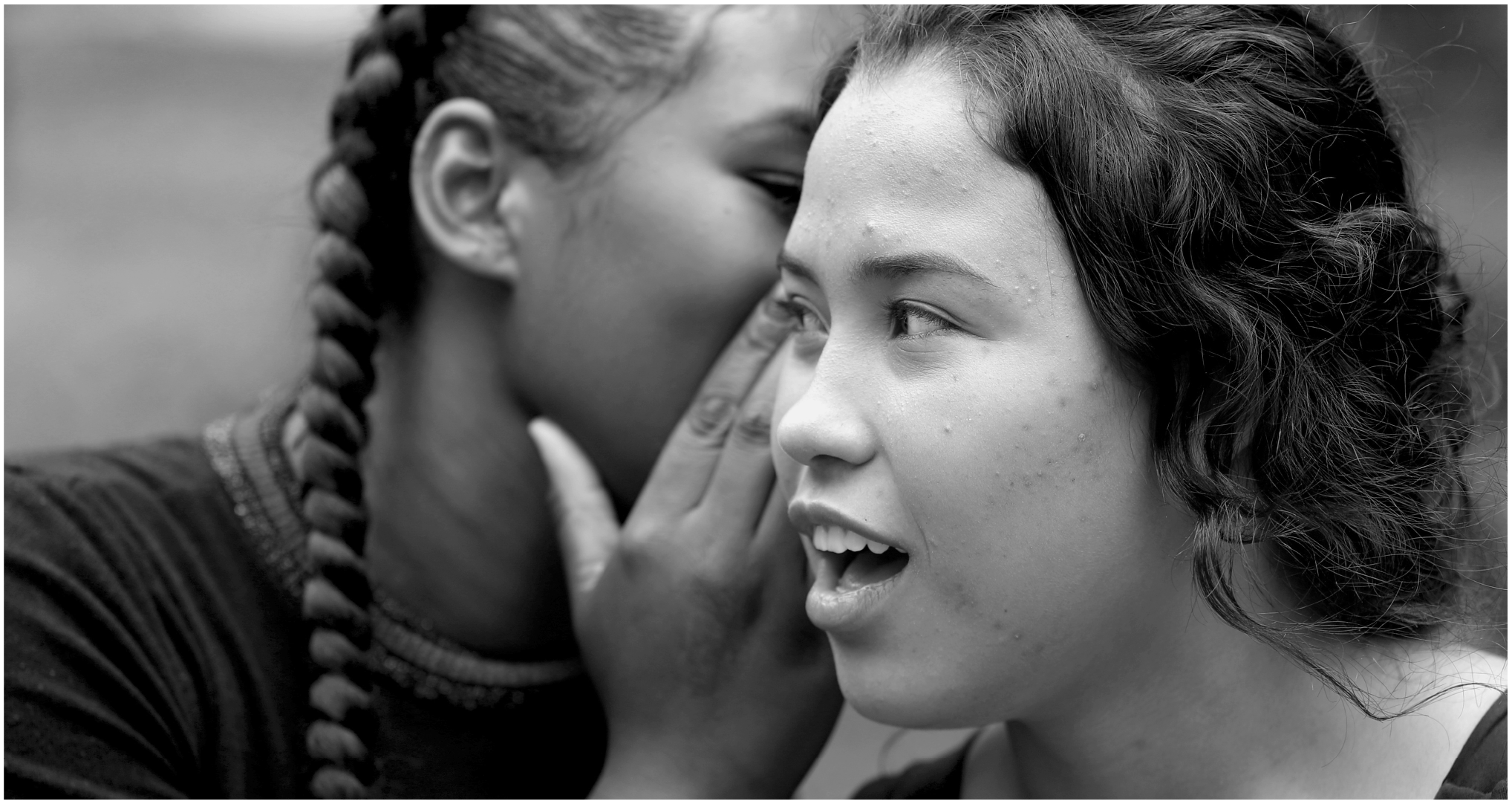
The research on which this article is based includes two pilot ethnographic studies I conducted in Stockholm from September 2013 to May 2014 and in the summer of 2019. I followed up these studies by conducting Zoom interviews with those previous informants I could locate. Additionally, I used a combination of snowball and purposive sampling methods to recruit additional individuals living in three Swedish metropolitan areas: Stockholm, Gothenburg, and Malmö. In total, I conducted 50 in-depth interviews, each lasting between 60 and 120 minutes. My respondents included those whom I refer to as majority Swedes, that is, people born in Sweden to at least one Swedish-born parent, as well as individuals from non-European backgrounds. My non-European origin respondents included individuals born outside of Europe as well as their Swedish-born children; all had lived in Sweden for at least five years, ensuring that they had some familiarity with the country. To protect anonymity, I use pseudonyms throughout.
Unsureness
The lack of openness in Sweden about talking about race left some of the people I interviewed feeling unsure of how to interpret the behavior and statements of majority Swedes. Laura recalled another instance in explaining her inability to decide whether she was experiencing racism. Laura was shopping for shoes with her friend in a big shopping mall; her friend noticed that the shop clerk kept closely following them, a sign that they were suspected of shoplifting. Initially, Laura thought of confronting the shop clerk, but in the end did nothing. Still, the experience stuck with her: “The incident hit me later. ...Right now, I still don’t know. Maybe she was doing her job, or she was just looking at us as a bit too close. ...Those kinds of things, they’re subtle, and sometimes you wonder, should I engage with these? Do I have the energy [to fight back]? Is it real? Is it just my imagination? Also, I don’t want to look paranoid, so I think about it over and over, analyze it, and scrutinize it. It’s difficult.”
In the United States, Black Americans tend to interpret being followed in stores as a sign of racial profiling. The experience is so extensively discussed in the United States news media and academic literature that there is a phrase for it: “Shopping while Black.” In Laura’s case, however, her uncertainty about whether she was experiencing racial profiling was due in part to the fact that in Sweden, unlike the United States, such incidents are not publicly discussed as reflecting racism.
Ethnic and racial minorities’ sense of being unsure about whether, and how much, prejudice was involved in various situations and incidents was also reflected in their job search experiences. Yilmaz is a member of the second-generation whose parents migrated to Sweden from Turkey before he was born. He shared, “When I applied [for jobs] and when people didn’t contact me at all, like not even to say, “You didn’t get the job,” it could be because I was actually unqualified, or it could be [my name]. I am not really sure. But it did make me question. ... So I always had that in the back of my mind.”
Yilmaz’s name could well have been an obstacle. Indeed, in a 2012 article, scholar Moa Bursell found that many people of Middle Eastern descent in Sweden had changed their surnames to disguise their Middle Eastern backgrounds in the hope of gaining better access to job opportunities. In a similar way, in the 1940s United States second-generation Jews, according to historian Kirsten Fermaglich’s account in A Rosenberg by Any Other Name (2018), commonly changed their surnames as a strategy to improve occupational mobility at a time of increasing anti-Semitic discrimination. In Yilmaz’s case, however, he was unsure that his name and Middle Eastern origins were a handicap in securing better positions.
Ethnic and racial minorities described being in a limbo state, trying to interpret whether specific incidents and interactions were normal or instances of everyday racism, never quite feeling sure. Even experiences that might seem trivial troubled many of those I interviewed, sometimes leading them to doubt or blame themselves for being too “sensitive” or “overreacting.” This type of unsureness, it should be noted, is not unique to Sweden. As psychologist Derald Wing Sue highlighted in his 2010 book Microaggressions in Everyday Life: Race, Gender, and Sexual Orientation, in societies where racial microaggressions remain unseen, invisible, and even normative, minorities often find themselves caught in ambiguity and ultimately doing nothing to address these microaggressions.
Moral Censure in Talking About Race
At times, even when ethnic and racial minorities believed that they were racially discriminated against, they found it extremely hard to talk about their experiences. Some worried that, in talking about this taboo topic, they might be accused of perpetuating racism or racist ideas. Sigrid, an Afro-Swede, commented on the difficulty of discussing race and ethno-racial inequalities with her majority Swedish friends: “I mean, why can’t we use these words?” When bringing up race or calling out racism among majority Swedes, she said, “they get silent. And sometimes I get silent too, but sometimes I just feel I have to say something [if they say something that is racist]. Because otherwise, they will keep on. But most of the time, even if you try to be, really, really nice, when you say it [race or racism], they get so upset because it hurts them so much. And so, instead of that racist remark [they’ve made], they are hurt. And we have to be sorry for them.”
As this example indicates, majority Swedes tend to become uncomfortable, silent, or shy away from the topic when issues about race come up (the term “uncomfortable” frequently appeared in my interviews with ethnic and racial minorities as they described the reactions of majority Swedes). Sigrid was blamed for bringing up the uncomfortable topic of race and racism and felt she had to “be sorry” in the interaction with her majority Swedish friends, even when they made racist remarks. The asymmetrical power relations between the racially dominant group of majority Swedes and racial minorities thus remain intact.
The silence surrounding race in Sweden not only masks minorities’ lived experience of race but also downplays the extent of racial inequalities.
iStockPhoto.com // Anatoliyk

In another case, Jasmeen, a young second-generation woman of Egyptian descent, was accused of “attacking” the majority population instead of having a serious and meaningful conversation on the topic of racial discrimination. “No, [we do] not [have] the term [racism] and the environment to talk about it. It’s hurtful to bring something like that up and try to educate people and say, ‘I’ve been experiencing a lot of pain in my life because of my skin color.’ And when people hear that and start attacking you for telling them that, they’ll start telling you that you made them uncomfortable, and that you’re wrong, and that you’re the one who is racist.” These reactions have a chilling effect, Jasmeen explained: “After a while, you actually want to stop talking about it, not only because of the [disagreement about] terms but also because of the lack of understanding.”
The view that talking about race itself is “racist” is pervasive in Sweden. It immediately places a moral burden on ethnic and racial minorities whenever they speak out against discrimination or racism. At the same time, it ignores the everyday reality of racialization, marginalization, and exclusion that minorities experience. As a result, many minorities do not feel secure enough to even mention race; many told me they simply “stopped talking about” race and racialized experiences with majority Swedes. As Mark, a Ghanaian immigrant, put it, “You have to be mentally bold and tough to talk about it.”
Difficulty Proving the Existence of Ethno-Racial Inequality
In contrast to a relatively weak welfare state like the United States, which takes what one might call a “sink or swim” approach and only provides modest social insurance benefits to a small portion of the population, the Swedish welfare state follows principles of universalism and egalitarianism in its social provisions. It extends equal social welfare services to all residents of the country, regardless of their native or foreign-born status or their socioeconomic background. While this commitment to equality is deeply ingrained in Swedish society and has become central to the country’s national identity, it has inadvertently obscured the acknowledgement of hierarchical disparities based on race or ethnicity.
Living in a race-taboo land is far from ideal for non-European immigrants and their descendants in Sweden.
iStockPhoto.com // Kar-Tr

The result is that ethnic and racial minorities find it difficult to prove the existence of ethno-racial inequalities they have experienced, let alone make proposals to address them. Mudiwa, for example, was born in Zimbabwe and lived in the United Kingdom for more than a decade before moving to Sweden. He discussed Sweden’s particular form of colorblindness: “So, there is nothing to talk about or to fix, because you will be told that ‘we are colorblind; we are all equal. I don’t see you as different from me. We are all the same. So why are you complaining?’ There is a lot of discrimination, and because of colorblindness, Swedes don’t believe in ‘I am Black, you are White;’ they believe in equality, ‘we are all the same.’ So, [this colorblindness] does not recognize that you are Black or you have been discriminated against because you are Black or Asian or Middle Easterner.”
Mudiwa’s comments reflect a paradox: because Sweden is colorblind, people in Sweden, particularly majority Swedes, do not recognize minorities’ everyday racial experiences; because of their inability to see race, they are unable to acknowledge that people could be, and often are, discriminated against based on their visible phenotypes.
If some majority Swedes hold that “everyone is equal,” minorities have an opposite perspective. Aileen, a Jordanian immigrant, was an elementary school teacher in Sweden. She was frustrated that a colleague, a White British man, had a higher salary, even though she had more work experience (12 years of teaching experience) and higher educational attainment (a Master’s in Education and a teaching diploma). “When I talk to other people who are [majority] Swedish, they would be very uncomfortable. Because for them, we are all the same. And honestly, we’re not all the same,” she insisted. “If we were all the same, we would get the same treatment. You wouldn’t hire someone who is a White British male and give him 6,000 Kroners more than me; we’re not the same. Well, I am more qualified than him, so we’re not all the same. And it makes them super uncomfortable when you say that—you know, when I told my boss, she’s like, ‘Oh.’ It flew over her head. She didn’t answer, she didn’t even answer to that.”
From Aileen’s point of view, the disparity between her and her colleague’s salary was due to the fact that her colleague was a “White British male.” Of course, this is her perception: gender, as well as race, might have been involved in the 6,000 Kroners difference. What was interesting here, though, was the supervisor’s response when Aileen tried to ask for an explanation. The supervisor did not address the salary inequality or provide an explanation, suggesting her desire to avoid talking about and admitting the possible influence of ethno-racial discrimination.
Aileen is not alone: other ethnic and racial minorities in Sweden I spoke with encountered similar challenges when attempting to report and resolve issues related to ethno-racial discrimination. Several factors contribute to this difficulty. First, Sweden’s reluctance to collect population data disaggregated by race or ethnicity, even for anti-discrimination purposes, makes assessing the extent of ethno-racial discrimination particularly difficult. Second, Sweden’s 2009 Discrimination Act uses “ethnicity” to encompass factors such as a person’s country of origin, ethnic group, skin color, and native language. This broad definition, which sidesteps race, further diminishes the role of the experience of racial discrimination. Lastly, even when minorities use the term “ethnicity,” their demands for addressing ethno-racial discrimination are unlikely to be met, due to the demanding task of “proving” the existence of such discrimination in colorblind Sweden. As a result, colorblindness effectively removes racial categories from population statistics and legislation in Sweden, but it does not eliminate, or even conceal, the impact of race and the associated inequalities.
Physical, Mental, and Emotional Exhaustion
Repeatedly, ethnic and racial minority respondents in my study talked about their physical, mental, and emotional fatigue that arose from daily encounters with racism and their persistent efforts to combat it within a colorblind society. Mark, the Ghanian immigrant, is a project manager in a Swedish government agency where he is one of the few ethnic and racial minority employees. Despite his active involvement in anti-racism initiatives, he admitted it was “tiring” to fight against racism in Sweden, as not many people dare to discuss race openly for fear of being considered a “difficult” person or “spoiling the party.” In a way, the presence of this race taboo posed a significant obstacle, discouraging more people from joining him and engaging in anti-racism efforts.
Mark detailed, “So, I tried to do more in my workplace or wherever [I saw racism], but it was very tiring. I don’t require everybody to do that. People cannot and don’t have the energy to tell the police and everyone. You will be seen as a very difficult person [if you do so]... I would like to educate, I would like to fight for it, I would like to talk about it, and fine, I can spoil the party... But few people dare to do this.” Being the outspoken one was, he said, “very difficult.”
Sometimes, exhaustion stems from the frustration of lacking appropriate terminology or platforms to engage in discussions about race and ethno-racial inequalities. Jasmeen used the analogy of a doctor’s visit to articulate her struggle: “I need a language to explain my pain. I mean, if I go to the doctor, and there is no word for ‘breaking a leg,’ and I have broken my leg, I probably won’t receive any treatment because there’s no way to explain what happened to my body. And when you’re experiencing racism, and there are no words to explain it, how can we treat it at all?”
A Race-Taboo Land?
Living in a race-taboo land has created serious difficulties for ethnic and racial minorities in Sweden. Far from protecting them from being racialized or discriminated against, the avoidance of discussing race is a formidable barrier, hindering ethnic and racial minorities from making their voices heard, challenging the prevailing ethno-racial status quo, or building anti-racist alliances in the everyday interactions and institutional settings where ethno-racial discrimination unfortunately often occurs.
The challenge lies in the disconnection between the ideal and the reality. In an ideal race-taboo society, an individual’s racial status would have no bearing on their life chances and everyday experiences. However, in practice, this race-taboo environment falls short. It’s not at all free from racism, only talk about racism. The silence surrounding race in this context not only masks minorities’ lived experience of race but also downplays the extent of racial inequalities. This, in turn, obscures society’s responsibility to protect against structural discrimination and racism. Consequently, colorblindness in Sweden tends to justify ethno-racial inequalities and sustain ethno-racial hierarchies, rather than allowing Swedes to address or eliminate them.
The Swedish case, I believe, has relevance for understanding how racism manifests itself in other societies that officially reject racial categories, deny the existence of racism, or commonly advocate a post-racial narrative. More generally, the case of Sweden reveals the diverse forms that racism can take, emphasizing the importance of in-depth studies of contemporary racism, including in the United States, that examine subtle, covert, and seemingly non-racial or anti-racial manifestations. Ultimately, it points to the need to make “blindness” to racism and ethno-racial inequalities visible.