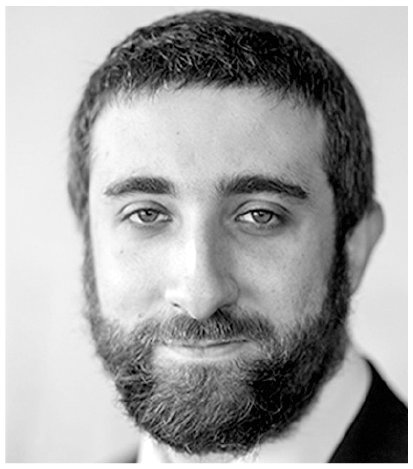
Amin Ghaziani interviews Charles Fain Lehman, a fellow at the Manhattan Institute and contributing editor of City Journal, about the value-add of conservative viewpoints in public debate.
Charles Fain Lehman is a fellow at the Manhattan Institute, working primarily on the Policing and Public Safety Initiative, and a contributing editor of City Journal. His work has appeared in outlets including the Atlantic, the Wall Street Journal, National Affairs, and National Review. He has discussed public safety policy before the House of Representatives and the U.S. Commission on Civil Rights. Contexts co-editor Amin Ghaziani caught up with Lehman to chat about the value-add of conservative viewpoints in public debates.
AMIN GHAZIANI: Hi Charles! You’ve written about topics that range from the drug crisis to hate crimes and Jewish conservatives. What ideas are your muse at the moment?
CHARLES FAIN LEHMAN: Right now, the large majority of my focus is on drugs—drug policy, the drug crisis, drug culture—thinking about drugs generally. I’ve done a bunch of work on the topic, which started with my interest in the drug crisis, its genesis, and that expanded into how we can think about drug policy differently, what we get wrong about drug policy on both sides of the aisle. My overarching project over the next year is focusing on talking about drugs and drug policy with an eye toward articulating not necessarily a hardcore, rabidly pro-drug war conservative position, but something of a, what I like to frame as a more sober position on drugs and drug policy than I think is currently in vogue in public policy culture. My core thesis is we swung in one direction in the 1980s, 1990s, and we have in many ways and across many measures swung in the other direction—and I think that we have over-corrected. And while, from a prudential perspective, the right course of policy is somewhere in the middle, at a cultural level, all I’m trying to do is say, “Look, the over-correction was wrong.” That’s the big-picture project that I’m undertaking.
AG: Can you briefly describe the content of those swings?
CFL: I think you see this in the modern history of drug use. Basically, you go through these cycles where cultures are naive to drugs. They get exposed to them. They go, “Oh, drugs are great!” They use them compulsively. The harms of drugs start to accumulate. People see those harms. They go, “Hang on a second. This is really terrible. We need to stop doing this.” They aggressively crack down on drug use. Drug use declines through the crackdown, and then we again return to it. We’re like, “Hey, hang on a second, drugs are great!”
I think, for example, we are at a point of irrational exuberance on something like psychedelics, really on the front end of that, where psychedelics haven’t been in the culture for 50-60 years. We have only some sort of vague inclination about why people got upset about them the last time. And we go, “Gee, this seems like it’s basically fine. Here are very small clinical trials that support their use in restricted medical populations. Let’s let everybody use these!” I think you see that back and forth often in contemporary discourse. I think the policy solution is somewhere in the middle.
AG: Your work shows quite clearly that you travel in a world of big ideas. How do you determine which issues are most important for the public to consider at any given moment?
CFL: To me, your question always starts with value add, which is, what am I saying that other people are not saying? When I talk to college-age journalists, people who want to get into this space, what I say is, “Look, everybody is writing about Donald Trump. Everybody has their opinion about Joe Biden. Everybody has their thoughts on the hot issue of the day. And you are probably worse at articulating your thoughts on the hot issue of the day than 20 or 30 people who do it professionally. You’re not going to out-compete them. If you want to be successful in that space, you have to think about, what is your value over replacement? What are you focusing on that other people are not focusing on?”
So, when I think about any of these ideas, my question is basically, what am I saying that other people are not saying, that is contrary to conventional wisdom, or [takes] an unexpected angle? For example, I wrote this piece on hate crimes recently in the Atlantic, and the thrust of the piece is basically, if you go and look at surveys of, or data on, hate crime offenders, they are as likely to have criminal histories as non-hate crime offenders. My observation is, for whatever reason, people who commit hate crimes, they are almost certainly motivated by bias. They almost certainly hold hate in their hearts. But also, there are lots of people for whom that is true who don’t commit hate crimes. So, there’s some additional variable there, which is like the propensity to offend. Maybe that’s a better focus for policy than, you know, trying to find a criminal needle in the hateful haystack. That’s value added.
AG: Your phrase, “value over replacement,” is quite interesting.
CFL: Yeah, it’s a baseball term, a sports term. It’s like, how much do you add on the margin compared to the average option? I’m always looking for where I can bring something to the conversation that other people aren’t bringing.
“I’m always looking for where I can bring something to the conversation that other people aren’t bringing.”
AG: How do you decide who to include in that conversation?
CFL: The rule of thumb that somebody gave me at some point is that most interviews will not be useful. And so, you want to wildly over-collect and assume that you’ll be wasting your time a lot because you don’t know what you don’t know, right? There are lots of unknown unknowns. The best thing to do is just ask as many people as possible as many questions as possible and then you go back through and you comb later.
I’m deep in edits right now on a piece looking at marijuana in New York state, and I did 30-plus interviews for that. I used maybe a third of them in actual quotes, and I use some more details from others. So, it’s really just, is this person somebody who might plausibly have something to say on the topic that is interesting, where they can give me a useful quote, or where they can give me a useful idea? Either they are an extra opinion, making a novel argument, giving you a novel framing, or they’re giving you something new to work with, a new direction to take. Cast as wide a net as possible, and then you can make edits later.
AG: What about social science? What role does it have in your work?
CFL: When I’m trying to answer a question, what I try to do is say, “What did the data say?” And the best way to figure out what the data say is first to ask, has somebody looked at what the data said already? Have they done it comprehensively? If not, what can I learn from the way they looked at the data in order to figure out how I can look at the data differently?
You asked me about interviews a second ago. You ask 10 or 20 people something, you should get a partial picture of reality, right? Data lets you scale that, and eventually get the tendency of the population. I think social science does a lot of that work already and often does it in very creative and interesting ways. I like a lot of economics and applied micro and econometrics stuff where they’re coming up with clever ways to really dig down into what is the effect of A on B. For me, the value of such science has always been, like, what facts can they establish more rigorously than I can satisfy just by talking to people?
AG: The presentation of rigorous facts is something that researchers do well, sure, but where can we improve?
CFL: The easy answer, but that’s true, is sharing. And this is the drumbeat, and everyone says they believe in it, and people sometimes follow it: open access, sharing data, sharing code, just like elementary stuff that makes my life much easier. I’ve done pieces where I’ve gone and pulled down somebody’s code and replicated their analysis and rebuilt their chart and, you know, I talk about their piece. That’s good for them because they get press coverage; it’s good for me because I’m able to reconstruct what they did and draw on it and explain it or expand on it.
The thing that I would say separately is there’s a weird mismatch between academic priorities and what I and I think other journalists want to do, where a lot of academia is very concerned with theory. Some of that’s institutional-structural, but some of it is necessary, right? Science is hypothesis testing. You want to talk out a hypothesis and the theory first, then you make a claim about reality, and then you test it. But I am actually not very interested in theory—I mean, theory for me is always secondary to facts. It’s like, first establish things that appear to be true and then explain why they’re true, is my preferred approach, which is really the opposite of how I think a lot of people in academia are trained to think, which is to think about theory first and then go to the evidence and say, “Does the evidence corroborate our theories or not?” The line of the argument makes sense to me, but I’d much rather have a constellation of facts and try to tell a story with it than start with the story and then see if the facts align with it.
AG: I think a lot of our readers would be sympathetic to the notion of first finding an empirical pattern and then trying to explain it. But still I wonder: doesn’t the attempt to explain the pattern require some reliance on a theory?
CFL: Yeah, absolutely. But a), I prefer to get to it second, and then b), you should have the minimum level of theory necessary—not because theory is bad; theory is very useful. It’s just very easy for theory to go beyond what is actually available in the evidence.
I often prefer what I think about as “big dumb explanations.” So, in criminal justice, there are several different frameworks for why people commit crimes. You talk about strain theory, which is like, there’s a misalignment between society’s vision of how people’s lives are supposed to be and how their lives actually are, and those people act out in response to the mismatch. And there’s another approach, routine activities theory, which goes, why do people commit crimes? Well, because they have an opportunity to, and there’s a lack of a capable guardian, and the incentives happen to align. I find this sort of simple explanation of, why do people commit crimes, because the incentives happen to align through this set of inputs, much more useful from a policy-making perspective. It may be the case, separately, you know, on a deep psychological level, people misbehave for such-and-such reasons, but that is less useful to me from the perspective of how to prevent crimes. You want big simple explanations because that is where the policy levers are.
AG: I’m intrigued by the notion of making theory useful for a policy perspective. Can you tell me again how we do that?
CFL: Take criminal justice. Criminologists go, what is the root cause of crime? And then they go, well, the root cause of crime is poverty, it’s racism, it’s disconnection from society. You have to think about these fundamental, structural, deep, powerful causes of why things are happening. Maybe that’s true, but we can’t really alter those on a policy level, like, there’s no easy lever to pull that will help us with that. And meanwhile people are getting their homes robbed, and meanwhile people are getting murdered. So, what I want are proximate causes. The fundamental cause is not necessarily a policy-relevant cause. A policy-relevant cause is the one that policymakers can shape, that policymakers can affect. And often, theory is concerned with what are the big fundamental causes? That’s interesting academically. It can be policy-relevant, but it’s much harder for it to be policy-relevant.
“The fundamental cause is not necessarily a policy-relevant cause. A policy-relevant cause is one that policymakers can shape, that policymakers can affect.”
Something like lead abatement is a good example. Again, in the criminology space, we have pretty good evidence that at an individual level, being exposed to lead increases your risk for all sorts of bad outcomes, including criminal behavior. We could talk about criminal behavior is caused by poverty and disenfranchisement and racism. That’s interesting, but also, if we got all the lead pipes out, then there would be less crime, and that would be good, and that’s something we can do and have largely done in many communities in America. That kind of very simple, cause-and-effect connection is what you want to be looking for to have real impact.
AG: That’s such a vivid example! Talk to me about the importance of including conservative voices in conversations like the one we are having right now.
CFL: Nothing I have to say here is very original, but I do think it’s basically true. Look, about half the country is conservative. You can think that they are wrong, but if you want to have an impact on those people, it is helpful to at least have some vague idea of what they think. You can, of course, think that they’re motivated by terrible things, but even a drop of epistemic humility should cause you to go, “Maybe they just have different value prioritizations.” People have different normative frameworks. You’re motivated by different things, different moral impulses, and those different moral impulses can often highlight different bads, different harms that are worth redressing. So, I think even just a little bit of epistemic humility—you don’t have to agree. It is probably useful to listen to what is, in many contexts, a majority opinion or majority perspective that might have something valuable to say. That’s my bare minimum case. My strong case is because I think I’m correct, but I’m not going to persuade people of that, necessarily [laughs].
“Look, about half the country is conservative. You can think that they are wrong, but if you want to have an impact on those people… even a drop of epistemic humility should cause you to go, ‘Maybe they just have different value prioritizations.’“
AG: I think your phrase “epistemic humility” is quite beautiful.
CFL: Yeah. I wrote a piece last year talking about how I changed my mind about marijuana. My view is that, all else equal, we are better off with a regime in which marijuana is basically illegal, probably not strongly enforced, than one in which it is legal—and certainly compared to the status quo in the United States. That was a pretty big inversion. It involved a lot of different changes in both my normative view, but also the facts as I understood them. That happens to lots of people. Anybody who is reading this interview has probably changed their mind in a big way about something, and that could cause them not necessarily to assume that all of their beliefs are false, but to imagine that they may not have all of the information. The people who disagree with them may have perspectives, value priorities, and information that they don’t have. And so, it is worthwhile to at least consider that because your perspective may radically change.
AG: You’ve had incredible impact with your writing, from publications in the Atlantic and the Wall Street Journal to discussing policies before the House of Representatives and the U.S. Commission on Civil Rights. What advice would you give to readers who wish to mobilize accessible ideas that make a meaningful difference?
CFL: The first thing is, I would reiterate the point that I made earlier, which is saying things that other people are not saying is an important thing to do. Part of why I was in that position is because I talk about things from a right-leaning perspective that many other people don’t talk about. There just aren’t that many people on the right who talk about hate crimes. And I do. So, when they need somebody who does that, they call me. It means that I can exist effectively in that niche.
The other thing is the idea of translational work, where you take research and you take data and you say, “Ok, what’s the real-world policy application? Why does this matter?” There are lots of people who do this. You read a study and you say, “Why does this study matter?” It’s very easy for translational work to get stuck in a rut, where it’s just like, study X confirms everything that I’ve already been saying, or study X confirms these grand theories that I’ve always had. People on left and right do this all the time. Everybody does this. It’s not very interesting. Nobody wants to read about how studies show that I am correct! [laughs] I think it’s much more interesting to say, “Ok, what is unexpected? What is novel about this study? What is this research doing and telling us that breaks from our expectations?” Now people go, “Ok, he has new information. I’m gonna pay attention to it.” That’s just having your own niche.
I think it’s also valuable to try to be deliberately—not contrarian for the sake of being contrarian, but saying, like, “How is this challenging to what everybody thinks is true?” and try to prioritize that, because it makes you stick out.
Footnotes
Amin Ghaziani is in the Department of Sociology at the University of British Columbia. He is the co-editor of Contexts and the author of There Goes the Gaybor-hood? and Long Live Queer Nightlife: How the Closing of Gay Bars Sparked a Revolution.