



Abstract
Jacob Avery on common humanity.
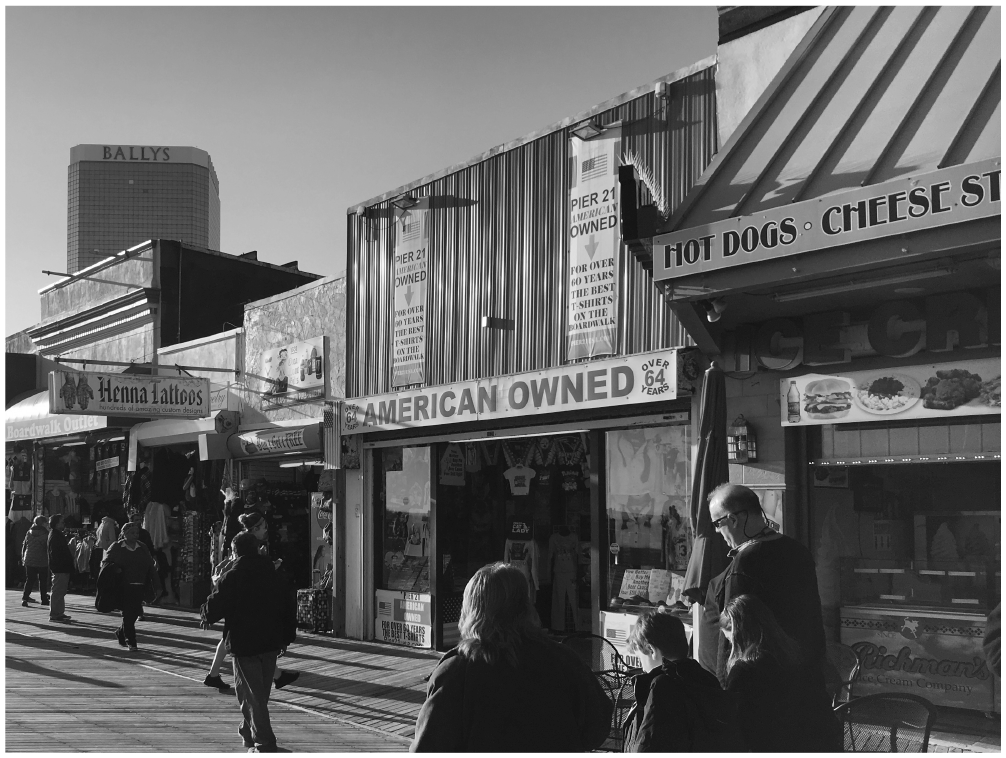
It was an early Friday afternoon during the summertime. Overhead, the sparse, fluffy clouds floated almost motionless. The sun blazed down on the crowds of people below. Thousands of them, all ages and colors, congregated on the famous Boardwalk in Atlantic City, New Jersey. It seemed most folks were there to enjoy the city’s various entertainment offerings. They smiled and laughed as they walked in and out of the casinos, browsed souvenir shops, drank and dined at restaurants, strolled along in the city’s iconic rolling chairs, and soaked up a cool ocean breeze.
There were others out there that day. They were begging for change. Mostly, they were middle-aged men dressed in soiled clothes, and they moved conspicuously through the crowd. Their faces and skin revealed the hard lives they lived. To some, they might appear undomesticated or grotesque. And yet, exterior appearances lie, for they hide a mild, downcast demeanor, one which has become subdued (if not agitated) through lack of nutritious food, adequate rest, quality healthcare, and change.
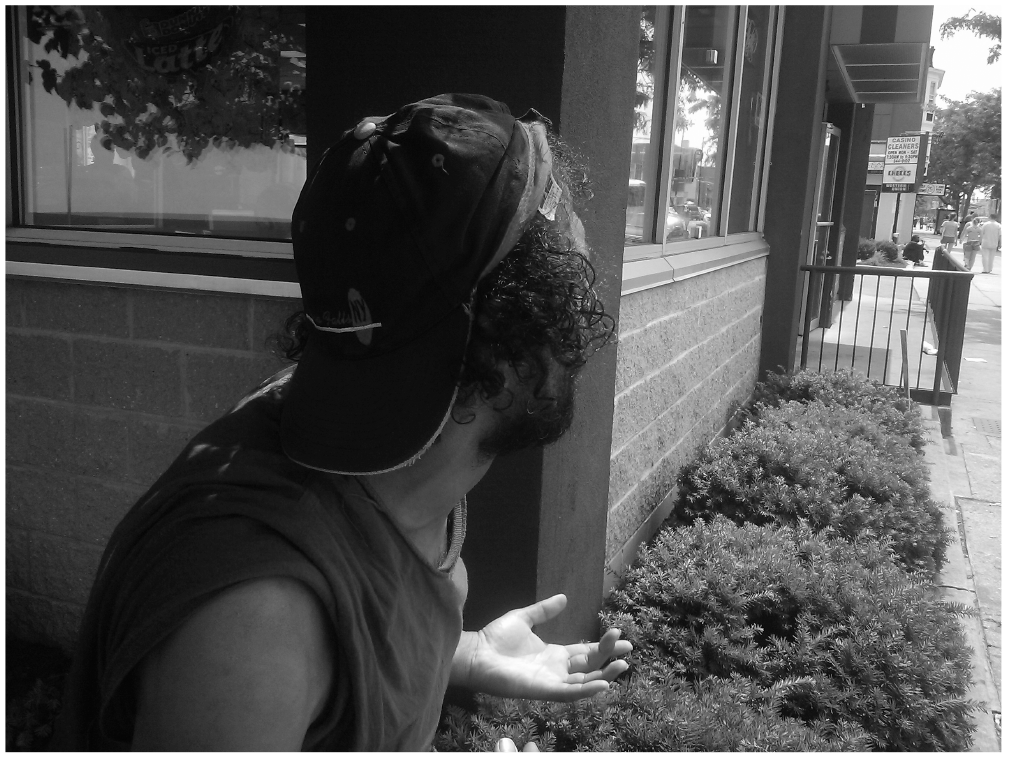
One beggar, whose name is Neon, stood in the center of the Boardwalk, slightly slouched, while immersing himself in the wandering crowd’s flow. With swollen, leathery hands, Neon grabbed the baseball cap from the top of his head, flipped the cap upside down, and made it into a donation bucket. He extended it outward with his arms, aiming it toward the massive herd of roving people.
“Excuse me, good people,” Neon said politely, “can you spare some change?”
Responses varied. One woman fixed her eyes on a distant point in the horizon and scurried away from Neon. A man shook his head from side to side. Another man briefly tapped his pants pockets, put his palms face up, and meekly uttered, “Sorry, I don’t have any.” And another individual strode a wide semicircle around Neon. All in all, it seemed as if none of them wanted much to do with Neon. They kept walking along. Away from Neon. Away from this kind of social encounter.
Neon stood there. He held his baseball cap. And he continued to ask the steady stream of passersby if any of them could spare any change.
As time went by, the pattern more or less repeated itself. Each incoming group of passersby behaved much the same way as those who came before. Many, zooming past, acted as if they did not hear Neon’s request. Many shook their heads, or they said “no” or “sorry” to Neon’s request, then walked away. Many physically distanced themselves from Neon. Perhaps if they got too close, it would mean some kind of social contamination?
On occasion, a passerby would stop. They would reach into their pockets, purse, or bag, and then deposit money into Neon’s cap. It might be a nickel, dime, or quarter. Sometimes, it was a handful of spare change. Rarely was it a dollar bill. Rarer still was a five- or ten-dollar bill. When that happened, Neon felt like he’d hit the proverbial jackpot. Neon only made about ten dollars per day.
But mostly, people didn’t give their change to Neon. They looked at him, faces filled with a mixture of fear, pity, and disgust. More generally, they avoided Neon altogether.
German sociologist Georg Simmel describes how the metropolis affects people’s mental lives. To avoid the overwhelming commotion of the city, people tend to distance themselves from many social encounters. This can, of course, include interactions with beggars like Neon. This type of avoidance, which takes place in cities across the world, unfolds in fairly predictable ways. As a general matter, when passersby on city sidewalks encounter street beggars, they ignore or avoid them. Of course, this is not always the case. But, it was one of the recurring patterns I observed over several thousand hours of watching and witnessing social interactions unfold on the Boardwalk in Atlantic City.
Why Does This Happen?
Truthfully, it can be jarring to notice fellow citizens on the street, surviving on scraps and begging for spare change. After all, anybody who ends up in such dire circumstances has clearly experienced an overwhelming avalanche of personal troubles. They need help. And yet, despite the beggar’s public declarations of socioeconomic precarity, most people who encounter beggars do little or nothing to help.
In Categorically Unequal, sociologist Douglas Massey argues human beings are naturally hard-wired to rely upon categorical judgment. As human beings, our social cognition divides the world and allocates people into categories. These categories are infused with our emotionality and morality. Whether we think of ourselves as prejudiced or not, our psychological templates categorize people based upon their appearance and other perceptible characteristics. Again, we cannot help doing so—it is part of the human condition to make stereotypical judgments of others, and we rely upon such judgments when we feel in danger, disrupted, uncertain, or if we are bombarded with sensory stimuli in a socially dense urban ecology. So, when people encounter a beggar, they tend to look at them through the lens of powerful public stigmas and stereotypes.
On the boardwalk in Atlantic City, NJ.
Courtesy Jacob Avery
Neon begs for change.
Courtesy Jacob Avery
Because a beggar’s social status is maligned, people can come to view them as fundamentally off-putting and lacking in competence. Consequently, beggars get placed into a pitied and despised social category. If pity is the dominant emotion, beggars are looked upon as people who have experienced a misfortune and who might deserve sympathy, though they ultimately fail to command respect. If a society believes in all peoples’ inherent dignity, then even pitied people are cared for and supported. But if a society differentially values people based upon their social status, then pitied people are subjected to neglect.
Social despise is another emotion that beggars have directed at them. This means street beggars are seen as a subhuman species, looked upon with disgust, and considered undeserving of sympathy. Despised strongly enough, beggars can become objects of targeting, exploitation, humiliation, avoidance, and violence. Anybody who has watched online “bum fights” videos or read headlines about homeless people being set on fire can readily appreciate how strong feelings of despise translate into extreme acts of human degradation. When beggars become dehumanized at the neural level, it seems to grant people the license to regard beggars as if they are pests, objects, or non-people. This happens every day, over and over, on city streets.
What’s it like to be treated with fear, pity, and disgust? Consider Neon. It would be totally understandable if Neon lost trust in other people, especially those who perceived him in extremely dehumanizing ways. Deep in his bones, Neon knew he was neither dangerous, nor pitiful, nor disgusting. Neon saw himself as a peaceful businessman who worked hard for the little money he had. So, when passersby subjected Neon to stigmatizing stereotypes, it proved hellishly difficult for him to retain trust in fellow human beings. Neon strived to view himself in positive terms, but every time somebody shoved, punched, or avoided him it felt like an attack on his essential humanity.
In our hyper-capitalistic society, where money has become the supreme test of social virtue, street beggars represent a class of people who have “failed” the game and therefore deserve widespread contempt. These harsh social psychological conditions faced by street beggars provide a damning indictment about our broader culture, what we value, and our unwillingness to extend mercy for society’s downtrodden. What lies behind the common public response to the presence of beggars, then, is a complex combination of emotional and evaluative assessments.
Realistically, beggars are not essentially different from you or me; there is nothing that grants us the right to despise them. Instead of seeing beggars as pests, objects, or nuisances, what if we chose to see human beings who have fallen through our social safety net and landed on very hard times? Given the fact that most people in America could not cover a $1,000 emergency expense if they had to do so, most of us are much closer to them than we think.
According to the latest national data, one in 18 U.S. residents lives in “deep poverty.” That’s nearly 20 million people who dwell in the basement of the stately American mansion, who experience grave socioeconomic scarcity, whose basic security and dignity are denied, and who could easily find themselves without stable housing. And, on an annual basis, nearly 600,000 people who reside in America’s basement do lose their housing. Many of them recover and re-establish housing. But many do not.
When reflecting upon the street beggars’ situation, shared by legions around the globe, the obvious conclusion is that we need a transformation in our collective mindset. In the end, it is not inconceivable that any one of us could fall through the cracks, land on hard times, and be out there on the streets, begging for change.