



Abstract
Syed Ali on the effects of school choice.
My first kid, Sami, was born in Brooklyn in 2005. We lived in the gentrifying Clinton Hill neighborhood that for decades was largely poor and Black but had recently become Whiter and richer. Around when Sami was ready to start school, in 2009, Mayor Michael Bloomberg instituted a system of school choice. This meant that Sami would not have to go to the family’s local, zoned K-5 school. We could now opt to send him to any other public school in the city, so long as that school had space. New York City had undertaken a massive experiment in school choice—the biggest in the country—and Sami would be participating.
In this land of the free, there are good public schools and bad public schools. Where parents can, they avoid the bad ones and opt for the good ones. But what is a “good” school? You could say it’s one where kids have resources to learn in a safe environment. Really, though, “good” schools are defined by being populated with middle-and upper-middle-class Whites, with a smaller percentage of Asian kids, and an even smaller percentage of Black and Latino kids. This is key, because the kids in “good” schools get good grades, do well on standardized exams, and go to colleges that reject the vast majority of applicants. The “bad” schools are usually largely populated by disproportionately poor Black and/or Latino students, and the schools are relatively underfunded. Students in these schools do not do as well on standardized exams, and the rate of college going is far lower. This is clear from ratings on sites like GreatSchools. org, where nearly all the highly rated schools are White or White and Asian-American majority.
Who decides what is a good or bad school, and how does everyone seem to know the difference?
Who decides what is a good or bad school, and how does everyone seem to know the difference? “Reputation” is an almost circular answer, which is dependent on word of mouth. If you ask parents in New York City to name their best public high school, they’ll answer Stuyvesant High School. Why? It is just something that is “known,” just as it is “known” that Harvard is the best university in the country. Saying a school is good is basically saying that it is desired. When word gets around that a school is desired, parents, especially White and Asian American parents, desire to send their kids to these schools. It is a rare school that has a reputation as “good” and doesn’t have a critical mass of middle-and upper-middle-class White kids. Why? Money follows the White kids, and White (and, increasingly, Asian-American) parents don’t want their kids to have too many Black and Latino peers. They usually won’t say it that bluntly, but their actions speak volumes, as we can see with parental protests over changes proposed to gifted and talented programs and admissions to magnet schools that could let in more Black and Latino students.
Sami’s local, zoned primary school had a bad reputation and was not desired. Only 27% of eligible students from that school’s zone actually attended the school, where the student population was largely poor and Black. The year before Sami was to start pre-K, the school’s principal was arrested for “knocking a kindergarten teacher off a chair, kicking him in the head, and stomping on him.” After school choice went into effect, both the newly arrived, richer gentrifiers and a great number of Black longtime residents avoided sending their children to this school.
Very few of our neighborhood friends, almost all mixed race or Black, would end up sending their kids to the local, zoned school for kindergarten—but that number (three of 13) was on par with what happened in other gentrifying neighborhoods. Bloomberg’s “reform” made it pretty easy to avoid the “bad” schools in the neighborhood and still access free, public alternatives—including gifted and talented programs, “good” local schools in other zones and districts, and charter schools (though precious few White parents send their kids to New York City’s charter schools).
My wife, Eli, first learned about the out-of-district grade school that Sami and our daughter Noura eventually attended from a Black father at a playground who said he would never send his son to our local, zoned school (where the principal had just beaten up a kindergarten teacher). He said he was sending his son to this other school because he liked its culture, it was very diverse, and the (Black) principal was very good. (She was. The city renamed the school for her after she died.) To us, this school was “good” because many parents, especially richer, Whiter parents than we, extolled the virtues of the school, and the school always had a waitlist of kids trying to get in. (Like us!)
The out-of-district school where we ended up sending our kids for grade school in 2010 was, at the time, 31% Black, 26% Latino, 35% White, and 5% Asian-American. Its long waitlist and word of mouth indicated desirability, and the local InsideSchools.org rating site gave it a “staff pick” designation. The principal was beloved, and the parents and kids were happy. Few New York City schools are so diverse—to the degree that, with a large number of Yemenis included in the “White” category, the school’s voicemail was recorded in English, Spanish, and Arabic.
This school is something of a unicorn. In a 2021 study of New York City schools, the Civil Rights Project at UCLA found 70% of schools in New York City had a student population that was 90-100% non-White, and 17% were 99-100% non-White. So our kids’ school stood out in terms of ethnic/racial integration, though it was richer than most. Where 73% of New York City public school kids qualified for free/reduced-price lunch (a proxy measure for poverty), just 40% at this school did. By 2022, though, the school had gotten much Whiter (and richer still, with the free/reduced-lunch rate dropping to 33%): it was 47% White, 19% Black, 18% Latino, and 6% Asian-American. This is still highly integrated in terms of the city’s schools, but the Whitening over time is clear.
Elsewhere in the United States, it is difficult to achieve racial/ethnic integration like this, especially without an active intervention like busing. Places that are already integrated are moving away from integration as demographic, social, and political forces aside from gentrification work in concert to undo the diversity. The court-mandated desegregation of the latter part of the 20th century after Brown v. Board of Education is faltering, to the point that American schools are now more segregated than they were in the 1960s. Some localities, especially in the South, are carving out richer, White-majority districts from the larger, integrated districts. In the United States today, roughly 15% of Black and 14% of Latino children attend “apartheid schools,” in which the student population is less than 1% White. A fifth of all schools are more than 90% White, and another fifth are more than 90% non-White. And this school segregation is increasing across the country.
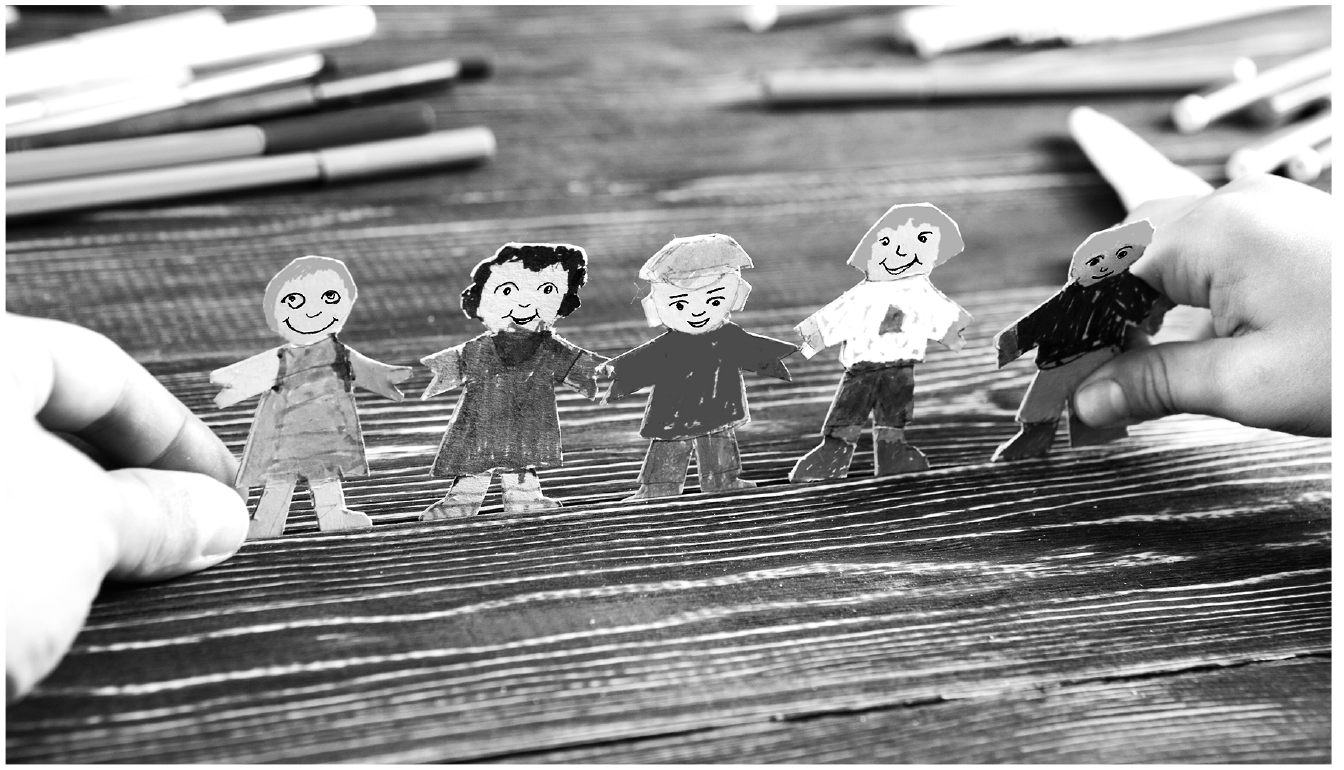
School choice is at least partly about parents choosing who will become their children’s peers.
iStockPhoto.com // Ulza
It is extremely possible that school choice is accelerating neighborhood gentrification in New York City and racial segregation in its schools. A 2018 study by the Center for New York City Affairs found that 40% of all kindergarten students in the city go to a school other than their local, zoned school. Of Black kindergarten students, that number is 60%. (Basically, a huge majority of Black parents are saying that their local school is not good enough.) In some gentrifying neighborhoods, that number was over 70%. The study found that “living in a gentrifying neighborhood is the largest predictor of [exercising school] choice we found over all the other student characteristics.” That is likely because, when gentrifiers (especially White ones, but Black parents also) know that they do not have to send their kids to the local public school, they are more likely to decide that they can “afford” to move into a gentrify-ing neighborhood.
Now, what happens to the kids whose families don’t exercise school choice? In poorer, segregated, and gentrifying neighborhoods, they attend schools with an even higher concentration of poor Black and Latino kids and a higher concentration of poverty. Since enrollments in these neighborhood schools have plummeted as other families opt out, enrollment-based funding dries up. Today, the struggle of poor, segregated, local schools is only getting harder.
All the movement captured the Center for New York City Affairs study underscores one critical point about good schools and bad schools: however much we think parents and teachers are the biggest influence on kids’ school success, parents know that peers are critical to their kids’ outcomes. If peers did not matter, it would not make sense for so many families to shift away from their local, zoned schools that have a supermajority of Black and Latino students. Where given the chance, too many White and Asian-American parents are making certain that poor Black and Latino kids will not be their kids’ peers.