



Abstract
A look into the arrival of narratives that critique critical race theory on Australian shores shows that the fears motivating the political clamor are nothing new. Indeed, the effort to keep Whiteness at the curricular core attempts to bulwark settler-colonialist logics.

“Stop teaching critical RACIST theory to our kids.”
“STEM not CRT.”
“Education not Indoctrination!”
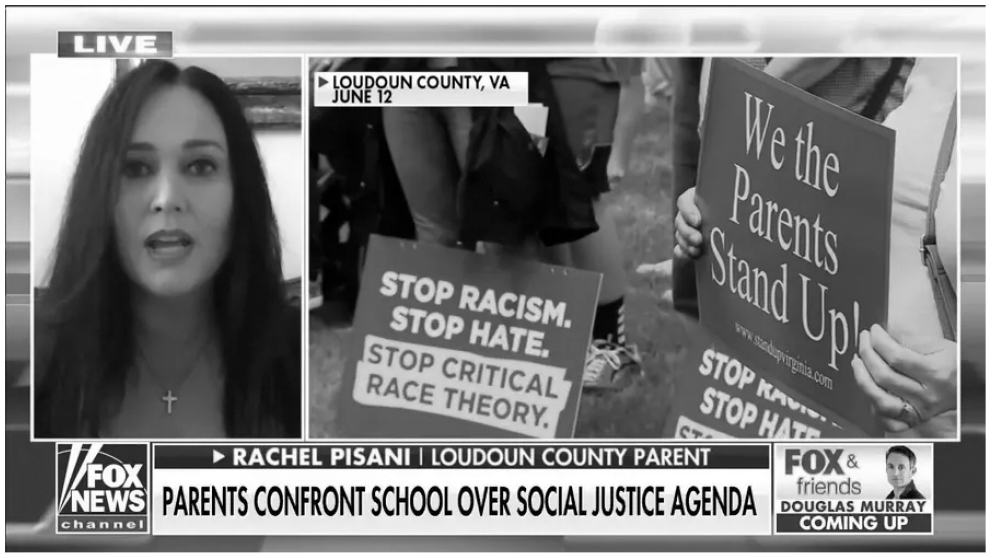
These were just a few of the signs carried by the angry parents, some of them in MAGA-emblazoned clothing, who stormed into a Loudoun County, VA School Board meeting in 2021. Police were called and board members walked out as the conservative parents railed against what they saw as the indoctrination of their children and the alleged teaching of critical race theory (CRT) in public school curricula. Further enraging the parents was the fact that the Board was scheduled to discuss a new policy enabling staff and students to outline their preferred pronouns.
Amid the chaos, parents variously complained that CRT was “anti-American” and would make White children hate themselves and demanded that School Board members “Resign, cowards!” One White parent claimed that “the Western culture and values that brought forth Christianity and the founding documents are being called evil and racist!” while another, interviewed outside the school, stated that “Critical race theory is anti-White.” Board members received death threats, and police arrested two of the protestors.
Such scenes are increasingly widespread across the United States, where conservative parents are treating school board meetings as battlegrounds for what conservatives call “culture wars.” And to some extent, their efforts have paid off. Various states have led motions or passed legislation banning the teaching of CRT in schools. Meanwhile, anyone actually familiar with CRT has been left confused as to how a complex framework developed by Black critical law scholars has allegedly entered elementary school education.
It may not surprise North American readers to learn that the viral clips of outraged conservative parents reached Australian screens. Specifically, Australian educators watched their U.S. counterparts with interest as the uproar over the supposed teaching of CRT inspired unfounded rhetoric about supposed “anti-White racism.” A White, ultra-conservative Australian senator named Pauline Hanson, who also watched these clips with intrigue, was motivated in 2021 to lead a motion in the Australian Senate against the teaching of CRT in the Australian curriculum. The conservative government at the time voted in favor of this motion—again perplexing educators, as there was (and remains) no evidence that CRT informed learning outcomes in the Australian curriculum. This bogus motion revealed a disconnect between politicians and the writers of the Australian curriculum, and it exemplified how far CRT hysteria in the United States had spread beyond its borders.
CRT hyteria in the United States has spread far beyond its borders.
Reflecting on all this, I became interested in how strikingly similar racist concerns manifested in these two societies, separated by thousands of miles, but united in their structures as White-led settler-colonial nations. There is merit in comparing both contexts, as I highlight how transnational White supremacy is a global phenomenon that sustains the benchmarking of Whiteness within curricula in both Australia and the United States. In what follows, I unpack how the conservative uproar over CRT is really about maintaining the dominance of Whiteness within core curricula. This nod to White supremacy is echoed, in the United States, in the establishment of Donald Trump’s 1776 Commission and the rise in book bans, and in Australia, in the efforts of conservative educational proponents to elevate the study of Western and Christian heritage in school curricula. Ultimately, I argue this global phenomenon of benchmarking Whiteness in curricula across these settler-colonial societies involves dual narratives of White victimhood and the denial of racism. Most notably, the conservative concerns in both contexts regarding the teaching of settler-colonial histories are about White supremacy and control over curricula content.
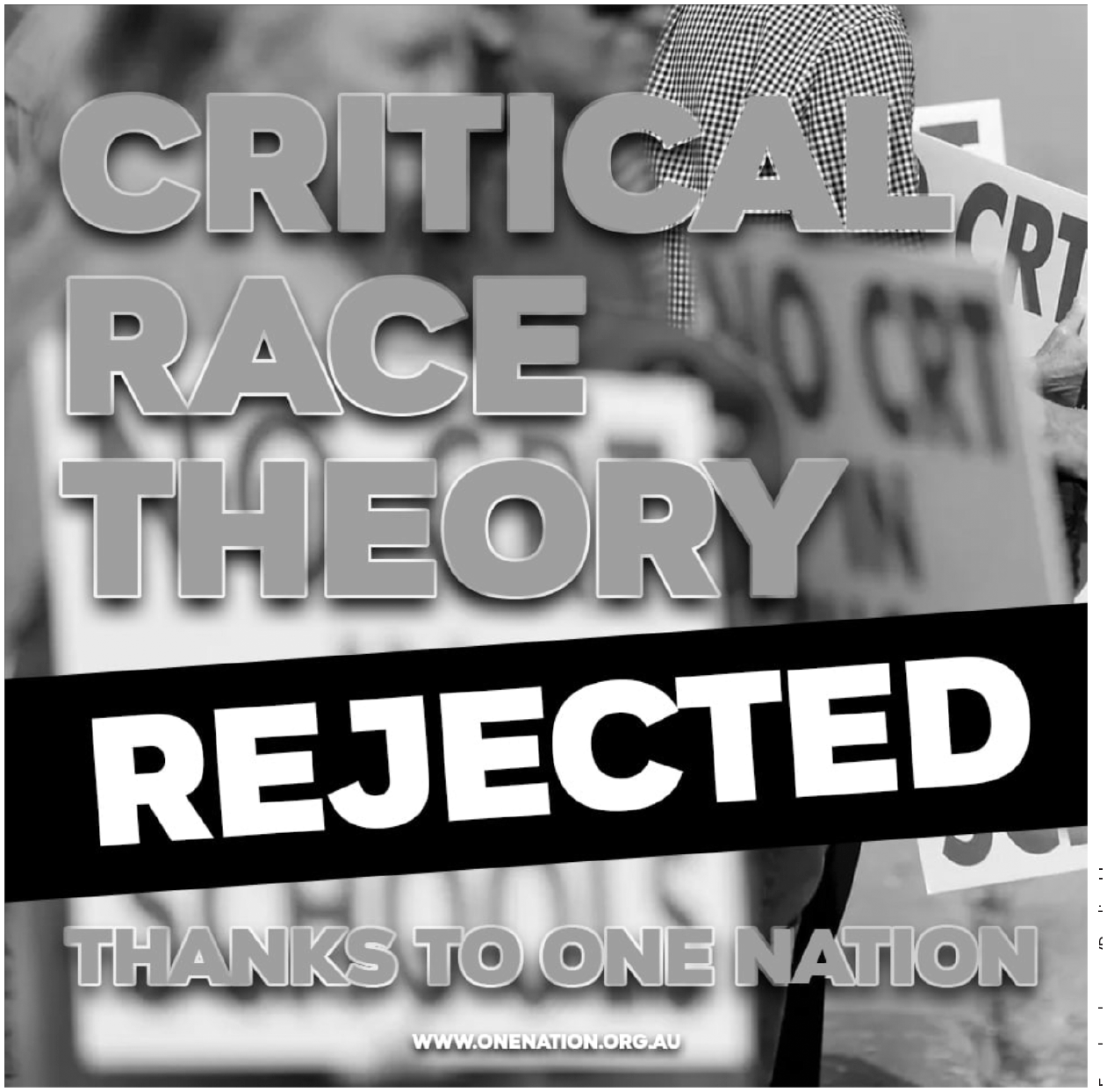
Australian Senator Pauline Hanson celebrated on Facebook as her anti-CRT efforts gained support.
Facebook.com/PaulineHanson
Keeping Whiteness at the Core (Curriculum)
In the aftermath of Hanson’s Senate motion, a Sydney tabloid claimed that CRT was “still” being taught across schools in the state of New South Wales. The proof cited by this newspaper involved the fact that students were learning that Indigenous disadvantage is linked to colonization. However, this realization was not a consequence of embedding CRT, rather incorporating an insight from Indigenous scholars, who have long argued that Indigenous educational disadvantage is linked to the colonial project that is Australia. Regardless, this newspaper sought comment from a representative of a right-wing Australian think-tank to discuss CRT in schools, and she claimed that not only was CRT present, but that children who allegedly “don’t see color” were being “taught” to hate White children.
The arguments against CRT across Australia and the United States both involve diatribes about children’s supposed innocence on race when, in fact, researchers suggest that not only can children see race, they can also adopt racist views at very young ages. The focus of curriculum concerns differ in terms of the racialized narratives that play out. The Australia predicament is primarily focused on the teaching of Indigenous perspectives, history, and experiences of Indigenous dispossession (both historical and ongoing), whereas the uproar over CRT in the States tends to focus the teaching of slavery, America’s beginnings, and antiracism. Similar to the U.S. context, the Australian uproar has involved conservatives objecting to the way settler-colonial history is taught and how marginalized perspectives and histories are placed within the curriculum. A striking example occurred in the late 1990s, when the so-called “history wars” saw conservatives debating progressives about the teaching of Australian history. At this time, history lessons began to recognize that Australia’s beginnings were not a tale of peaceful European settlement, but rather a racist genocidal project that attempted to wipe out Aboriginal and Torres Strait Islander peoples. Conservatives disputed this narrative and complained that it made White Australian children ashamed of their history.
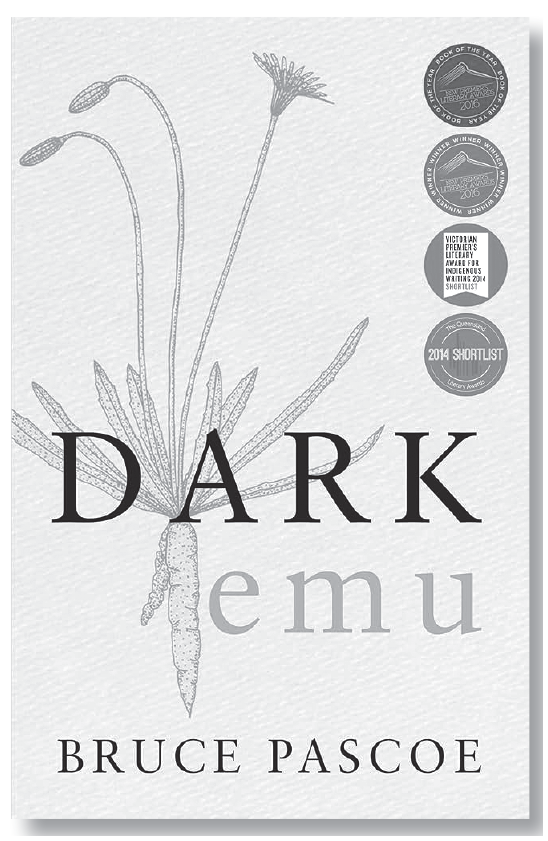
Later, in 2014, the publication of an Aboriginal-authored text titled Dark Emu challenged the long-held view that Aboriginal peoples were “hunters and gatherers” prior to British colonization. The author, Bruce Pascoe, argued instead that Aboriginal peoples had sophisticated agricultural land management practices. While educators considered how Dark Emu could enrich the Australian curriculum, conservatives were outraged at its possible inclusion. Similarly, the introduction of cross-curriculum priorities in Australian schools encouraged teachers to incorporate Indigenous perspectives and content in various learning areas, prompting conservatives to claim that Western content was being compromised or erased.
What is happening is that teachers are increasingly valuing topics that are often deemed electives (for example, topics such as Indigenous content/perspectives or texts about The 1619 Project), and this is petrifying conservatives. In expressing their opposition, conservatives are attaching their racist anxieties to topics such as CRT and Indigenous content. The simple questions “Is this really about the incorporation of Indigenous learning materials in the Australian Curriculum?” and “Is this really about the CRT framework somehow entering elementary education across the United States?” give way, then, to a third: “Is this really about the possibility that elective subjects and marginalized knowledge systems can became part of the core curriculum?”
Social work professor Ozy Alozeim once stated that “white privilege is your history being part of the core curriculum and mine being taught as an elective.” Indeed, there is an obvious relationship between Whiteness and what is considered the “core curriculum.” At a cursory glance, comparing the Australia and U.S. contexts, it is evident that conservative educational proponents counter both real and imagined curriculum changes that might decenter Whiteness. Whether it be the extreme claims that CRT would constitute an attack on White American kids or the allegations that learning about Indigenous survival would instill shame in White Australian children, racialized curriculum concerns underlie educational discourses. In these parallel controversies, there is an identifiable theme of benchmarking Whiteness in the curriculum—and conservative educational proponents are desperate to protect it. Again, CRT is not actually part of the curriculum in Australian or U.S. schools, yet the mere thought of it somehow infiltrating core curriculum content has prompted the rise in narratives of “White victimhood” amongst conservatives.
Banning Books
In recent times, conservatives across the United States have successfully managed to ban certain books from educational institutions. Even if these books are not part of a school’s curriculum, their mere presence in libraries is apparently incendiary enough to require banning. The African American Policy Forum identified a 467% rise in challenges to school, university, and library materials in 2021. According to an American writers group called Pen America, book bans across U.S. classrooms and school libraries have increased by an additional 28% over the 2022-23 school year. These book bans are most prevalent in Republican-led states such as Florida, Utah, South Carolina, Missouri, and Texas. However, the oversimplification produced by a red/blue state binary lens overlooks the way most states have enclaves of liberal and conservative voters. The UCLA Law CRT Forward Tracking Project reveals, for instance, how local governments within blue states have introduced anti-CRT measures. Whilst it tends to be less effective in Democrat- than in Republican-dominated states, anti-CRT activity prevails across blue/red state lines.
Fox News coverage of a Loudoun County School Board protest.
Fox News
Notice that, according to the statistics above, MAGA-inspired book banning attempts were, like anti-CRT protests including those in Louden County, kickstarted after Trump’s reelection loss and the subsequent January 6th attack on the U.S. Capitol. Interestingly, Trump himself “authored” a 2021 article about CRT. In it, he complained that public school curricula could portray America “in the most negative possible light,” teaching that American history “is evil” and naturally progressing into teaching that (White) American children are evil, too. The 1776 Commission, which Trump created under executive order to counter teachings on slavery, CRT, and systemic racism, was dissolved by the Biden administration but morphed into a 501(c)(4) group which continues as a Republican-led non-governmental organization. The efforts of book banning and the survival of the 1776 Commission both need to be seen as assertions of White supremacy, whereby particular books are targeted in the U.S. context. Pen America notes that 30% of banned books are ones that discuss race, racism, or feature characters of color. Other books are usually targeted because they feature LGBTQIA+ characters and storylines. This highlights how there is usually an intersection of racism, sexism, homophobia, and transphobia among book banning enthusiasts.
Whilst Australian conservatives have expressed parallel concerns regarding curriculum materials that have challenged racism, sexism, homophobia, and transphobia, they have been reluctant to engage in explicit book banning campaigns to the same extent as their American counterparts. For instance, as Hanson attempted to export the CRT uproar to Australian shores, her colleague in an Australian state parliament tried to replicate the U.S. book ban initiatives by trying to pass a motion to ban Dark Emu in public schools across New South Wales. This prompted a Greens’ Parliamentarian to respond “it is ironic that someone who often complains about cancel culture is using the parliament to try and cancel a book …which is not even a required text in schools.” The effort was unsuccessful. Later, when a children’s version of Pascoe’s text Young Dark Emu: A Truer History was published and educators identified how both versions were suitable teaching materials in History, Geography, Science, and Mathematics, it further alarmed those fiercely concerned with the inclusion of Indigenous content in the core curriculum. Whilst there are no calls (yet) to ban this children’s version, it appears that conservative educational proponents have triumphed elsewhere as, in 2022, they successfully pressured Australian curriculum writers to elevate the study of Western and Christian heritage in schools. This is a step back into a core curriculum that benchmarks Whiteness. Measures like these illustrate how White supremacy is maintained within Australian education. Back in 1998, renowned anthropologist Ghassan Hage wrote that Australian society is dedicated to maintaining its identity as a White nation in spite of the assertions of multiculturalism. Two decades later, Hage’s assertions remain relevant.
Bruce Pascoe’s book Dark Emu, a flashpoint in book banning calls in Australia.
Magbala Books
White Victimhood and the Denial of Racism
CRT was developed in the 1970s by Black legal scholars as a framework for understanding the normalization of racism and how it permeates social institutions. Also, CRT enables law students to consider how race operates not as a biological reality, but as a social construct with dire ramifications for those racial-ized. Further, this framework enables these students to value intersectionality in identifying the relationships between power and oppression. Considering their insight into the widespread denial of racism, it is likely that CRT scholars predicted a racist backlash against their framework. However, it is perhaps unlikely that they envisioned that this reaction would take place decades later at school board meetings, with angry (predominantly) White parents leading the charge against it. As the African American Policy Forum rightly clarifies, the uproar “over CRT reminds us that the struggle over thought, over knowledge, and over narrative has been a foundational dimension of the struggle over racial power in [the United States].”
When asked to define CRT, the parents at school board meetings tend to recite conservative talking points absorbed from tabloid-news programs. Most commonly, they use key terms such as “indoctrination,” “Marxism,” “brainwashing,” and “anti-American” to define CRT. These mischaracterizations extend to the ways these parents dismiss racism as a historical occurrence rather than a contemporary one. One viral clip showed a mother announcing at a school board meeting that America was no longer racist because of the election of former President Barack Obama.
Many within the anti-CRT brigade have quoted Martin Luther King, Jr.’s statement about his desire for his children “not to be judged by the color of their skin but by the content of their character.” Conservatives’ regurgitation of this statement to position CRT as “forcing” children to see race sparked a backlash from MLK’s own children who rejected the appropriation of their father’s legacy against CRT. But the appropriation of this quote functions to deny that racism is a problem today and to advocate for “color-blind” classroom approaches. Similarly, Pauline Hanson denied racism was a problem in Australia after her motion against CRT was passed in the Australian Senate. In an interview on Sky News (Australia’s “Fox News” equivalent), Hanson cited the 1967 referendum whereby White Australians voted to change the Constitution to allow Aboriginal and Torres Strait Islander peoples to legally be counted as part of the population. For Hanson, whose own political career has hinged on her ongoing racist comments against Indigenous peoples, this was the “end” of Australian racism experienced by Aboriginal and Torres Strait Islander peoples.
The anti-CRT brigade and those against the incorporation of Indigenous curriculum content play out two false narratives about racism. The first is the persistent claim that racism is only historical (having halted about the time of the 1967 Referendum or when MLK gave his famous speech or maybe when Obama was elected) rather than an ongoing occurrence. The conservative denials of racism are protecting an image of the United States and Australia as nations of tolerance rather than ongoing racist settler-colonial projects. Ultimately, conservative educational proponents in both contexts uphold the following fallacy, which is the idea that racism no longer exists. According to this view, it was something that happened a “long time ago” in their minds, and the teaching of this “long time ago” racism in history curricula needs to fit within White comfort-zones.
Paradoxically, the second narrative holds that the world is rife with rising “anti-White” racism. This position holds that the incorporation of CRT into children’s curricula is both imminent and a form of “racism” against White children. In the United States, anti-CRT activities involve homogenized conflations of “anti-American” and “anti-White”; in Australia, they involve conservatives positioning curriculum changes as compromising Western and Christian heritage (both heavily coded as White). While there was nothing developed by the original CRT scholars about making sure White children “feel bad” in classrooms, the mischaracterizations of CRT are about preserving a White curriculum, euphemizing definitions of racism, and vilifying anything that challenges Whiteness as a benchmark in the core curriculum.
The mischaracterizations of CRT are about preserving a White curriculum, euphemizing definitions of racism, and vilifying anything that challenges Whiteness as a benchmark in the core curriculum.
Conclusion
In two settler-colonial societies separated by the Pacific Ocean, we can see how Whiteness remains an unquestioned benchmark within curricula. An Ojibwe child attending a mainstream elementary school in Chicago or a Wiradjuri child attending a primary school anywhere within central New South Wales must navigate colonially imposed curricula and teaching standards that were designed for the White majority in both societies. Applying a critical Aboriginal lens to the Australian education system, Gamilaroi scholar Michelle Bishop has argued that schools are not “broken” for Aboriginal and Torres Strait Islander students, but were designed to treat Indigenous students as subjects that need to be “disciplined,” “civilized,” and assimilated. If these children get to learn about their own knowledge systems, which predate both colonies, often it is through extracurricular activities, side-programs to existing curricula, or community education programs that are placed on a lower benchmark by non-Indigenous observers.
In truth, schoolkids should be able to learn that their societies were not only founded upon the dispossession and subjugation of Indigenous peoples, but that racism continues to shape the ways that both societies function. To position such truth-telling efforts as “anti-White” reveals how narratives about White victimhood are really about preserving White supremacy in education. However, as outlined in this article, the transnational deployment of White victimhood has proven successful for conservatives in both the United States and Australia. Benchmarking Whiteness in education is a global phenomenon that serves to ensure that core curricula in settler-colonial societies remains White and well-suited to those in power.