Abstract
Sangyoub Park on a rise in later-life uncouplings.
In 2012, sociologists Susan Brown and I-Fen Lin caught academic and mass media attention by examining the gray divorce boom in their paper, “The Gray Divorce Revolution: Rising Divorce among Middle-Aged and Older Adults, 1990-2010.” This phenomenon, however, is far from unique to the United States. Far away from here, on the other side of the world, older Korean adults have been going through hwang-hon divorce or “twilight” divorce, on the rise since the 2000s. What accounts for this trend, and what are the social implications of a sudden spike in later-life divorcees? What does this gray divorce revolution tell us about Korea?
There are a variety of reasons Korea’s divorce rate started to creep up in the 2000s.
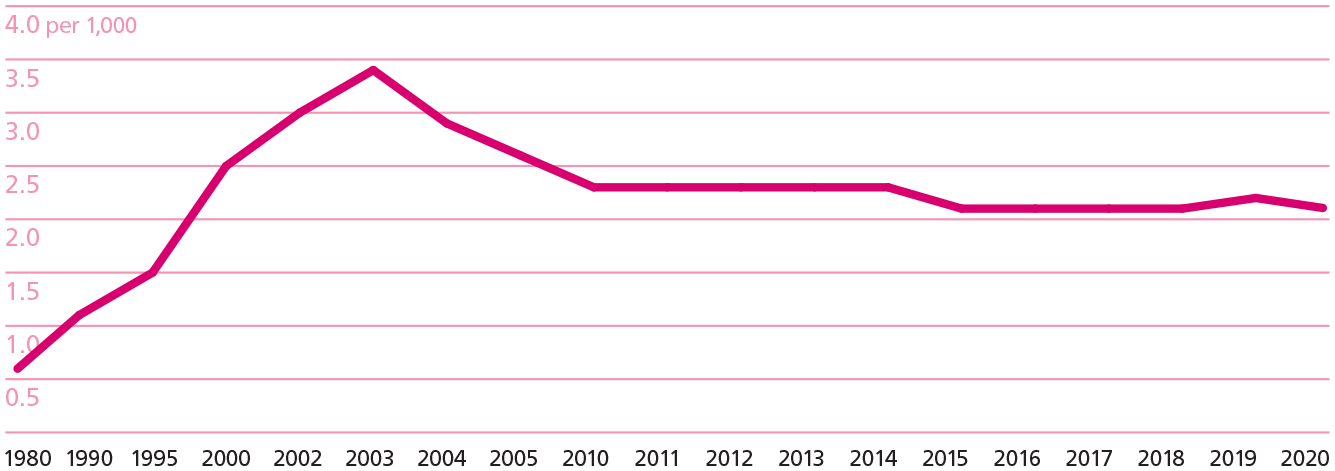
The term gray divorce refers to divorce among people 50 or older. It is because marital dissolution is commonly associated with younger couples that a rise in these later-life uncouplings seems “revolutionary.” Commonly, people assume younger people are more likely to rush into—and out of—marriage and that older people are more likely to stay together and try to “make it work.” Strikingly, in Korea, divorce of any kind is somewhat revolutionary; it was not, as the figure above shows, common until the 2000s. It is important to note that lower divorce rates should not be understood as indicating there are more happy couples; a low divorce rate could simply mean that getting divorced is extremely hard and/or discouraged.
Divorce rate per 1,000 population, 1980-2020
Source: Korea Statistics, Marriage and Divorce, 2020
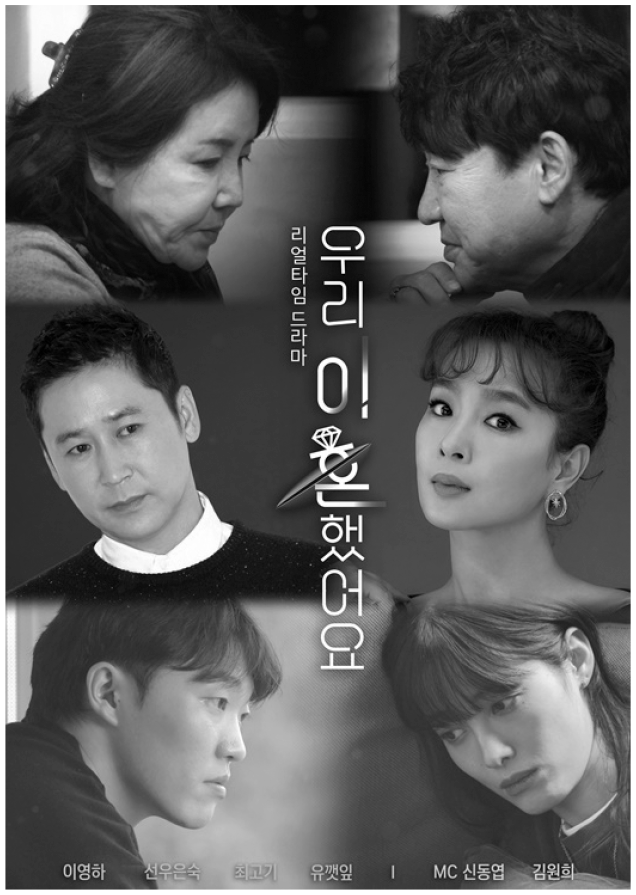
There are a variety of reasons Korea’s divorce rate started to creep up in the 2000s. First, Korea has become more modernized and individualized, and its traditional emphasis on the family has weakened. To some extent, this cultural shift has seen “I” displace the centrality of “we.” Second, women’s increasing educational attainment and career achievement provides them with more financial stability and independence. Wives are less likely to depend on husbands’ incomes, and are thus more financially able to seek divorce. Third, the social stigma attached to divorce has waned. Especially for women, getting divorced used to be like carrying the Scarlet Letter in Korea. Today it is far more socially acceptable—recently, cable channels have even launched reality TV shows like We Got Divorced and In Between Marriage and Divorce, both huge hits. Fourth, the legal system has improved for women. In particular, the division of property and child custody became more favorable to women in divorce. Finally, consistent with the first factor, marriage has been reoriented to include the idea that it is about seeking personal happiness. Marriage has become another arena for self-discovery, self-growth, and personal satisfaction. This notion of more individualized marriage fits with the idea that modern marriage is not a social obligation that must be fulfilled (in accordance with traditional Confucian culture) but, as Andrew Cherlin emphasized in his paper “American Marriage in the Early Twenty-First Century,” “one among many options available to adults choosing how to shape their personal lives.” One sign that marriage has become one among many options is a shift toward later ages at first marriage. In Korea, we can see that, in 1990, median age at first marriage was 27.8 years for men and 24.8 for women; in 2020, those ages had risen to 33.2 for men and 30.8 for women.
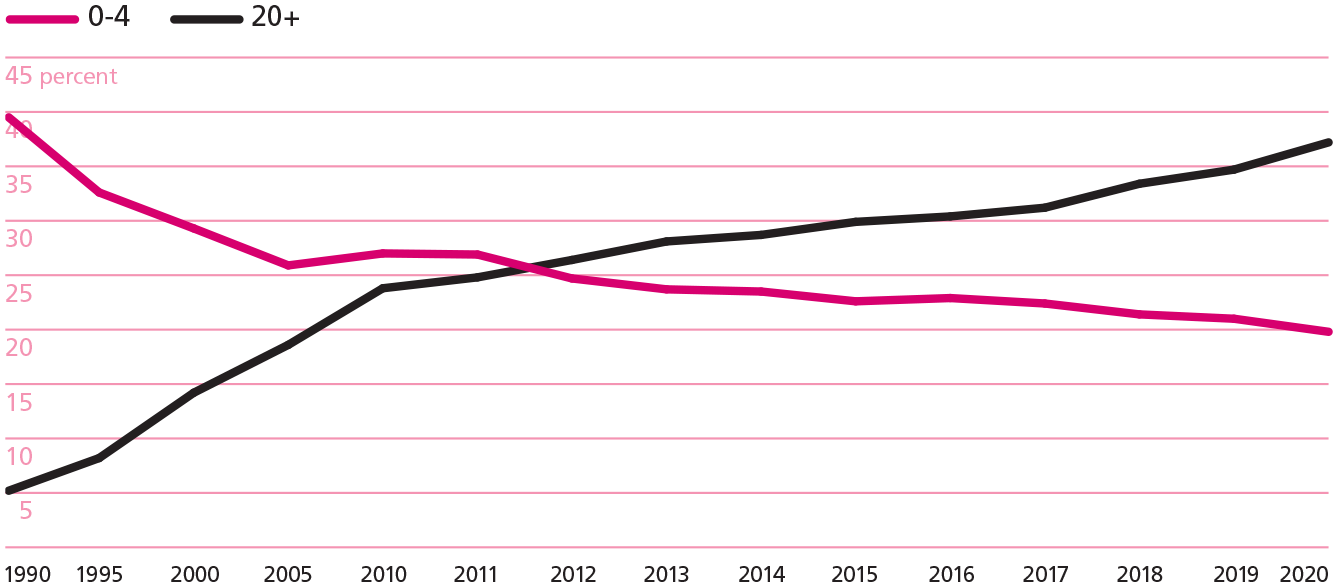
Divorce and marital duration of married couples between 0-4 years and 20+ years, 1990-2020
Source: Korea Statistics, 2020 Marriage and Divorce
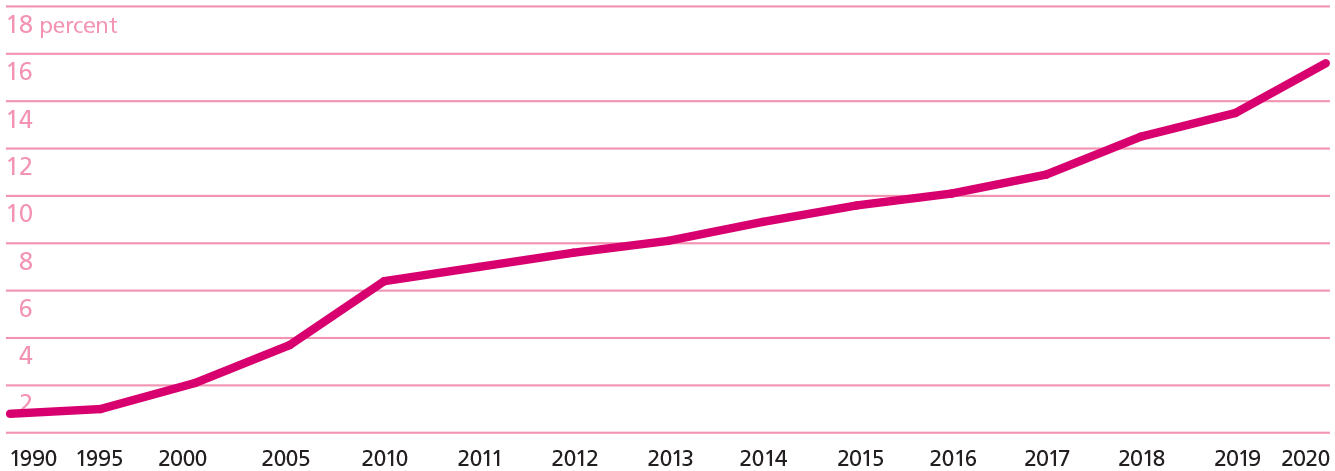
Divorce and marital duration among couples with 30+ years, 1990-2020
Source: Korea Statistics, 2020 Marriage and Divorce
Number of divorces by marital duration, 1990-2020
Source: Korea Statistics, 2020 Marriage and Divorce
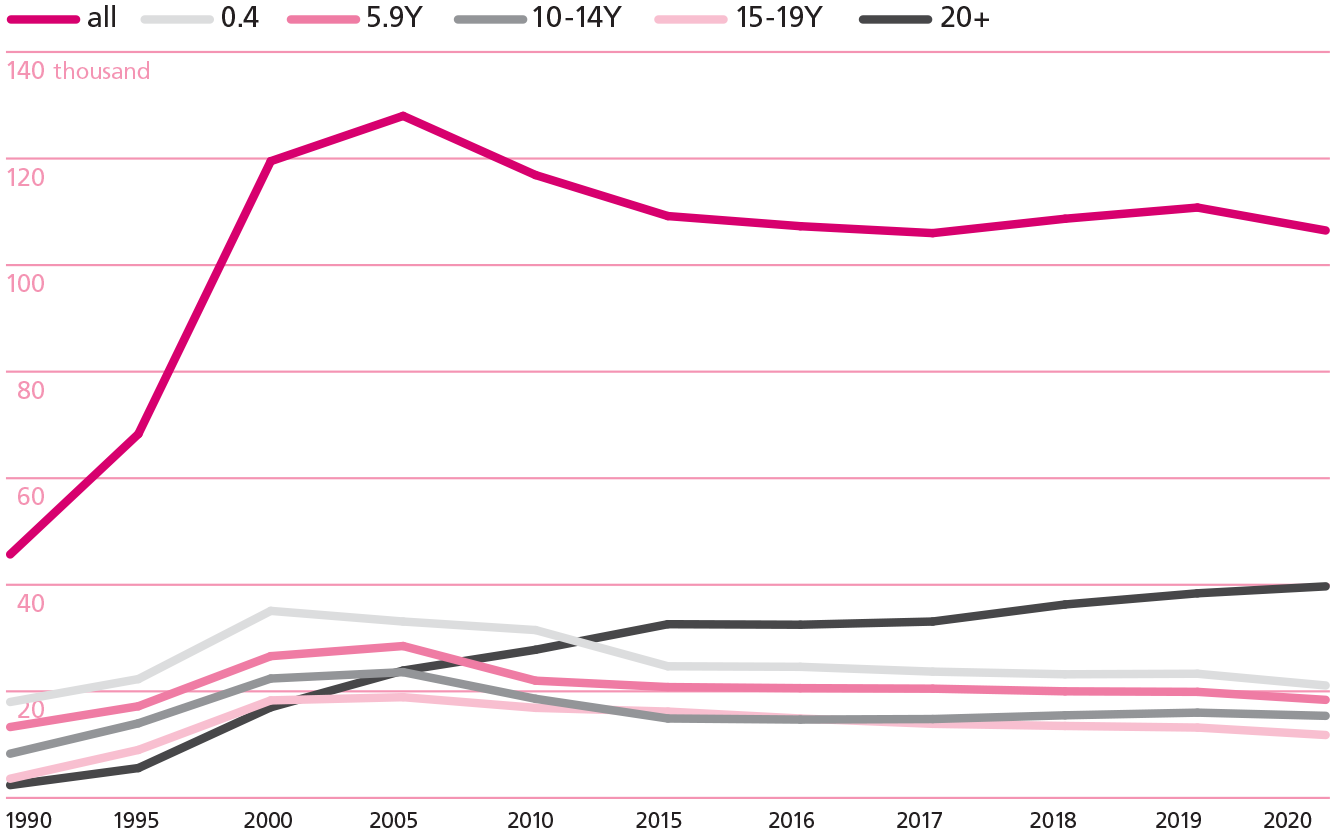
Note that, in the figure on p. 65, the overall divorce rises until the mid-2000s; since then, it has slowly but gradually declined and plateaued. This is pretty much the same pattern seen in the United States from the 1970s to 2020. In Korea, despite an overall downward trend in divorce rates, the share of divorces among older Koreans was steadily climbing. The top figure on this page illuminates how the gray divorce revolution has evolved over the past 30 years in Korea. Prior to 2000, less than 10% of Korean divorces dissolved marriages of more than 20 years. Currently these later-life divorces represent 39.7% of all Korean divorces (compare this with the fact that about 25% of U.S. divorces today involve couples over age 50). As shown in the next figure, a full 16% of Korean divorces occurred among couples with 30-plus years of marriage in 2020. This means that one in seven divorces is even “grayer.” In contrast, 21% of divorces were among couples married less than 5 years in 2020, compared to 40% in 1990. This reversal is eye-opening. It seems it may be an understatement to call Korea’s shift a gray divorce “revolution.”
The third figure at left captures the unfolding of Korea’s gray divorce revolution. As demonstrated, the overall number of divorces declines from 1990 to 2020, yet the share of divorce attributed to couples with more than 20 years of marriage steadily increases. More interestingly, throughout the COVID-19 pandemic, the number of overall divorces declined (from 110,500 in 2019 to 106,500 in 2020); the declines were seen across all marital groups except those married for two decades or more. For them, the number of divorces rose from 38,446 in 2019 to 39,671 in 2020. (The same comparison shows 625 more divorces among couples with 30-plus years of marriage in 2020 versus the year prior.)
We need not focus on how to prevent divorces among older adults, but rather on how to accommodate these gray divorcers as a society.
One main driver of gray divorce is actually Korea’s lengthening life expectancies. In 2020, the average life expectancy for Korean men was 80.3 years and for women 86.3 years. Those in their 50s and 60s can anticipate another 30 or 40 years of life, and gray divorce can offer a chance at a new chapter in life. If they are not happy with their marriages, Koreans are willing to try alternative options, either by becoming single or finding a new partner. In other words, older Koreans are less likely to stay in an unfulfilling marriage than in the past. This is especially so when divorce is considered alongside other key life transitions like sending kids to college, adult children’s marriages, or retirement; as these changes coincide, older adults are more likely to weigh their options when it comes to marital life.
Brown and Lin state that “the rapid rise in divorce during the second half of life has important implications for individuals, their families, and society at large.” This goes for Korea as well as the United States. We need not focus on how to prevent divorces among older adults, but rather on how to accommodate these gray divorcers as a society. For example, despite women’s improved status in Korea, wives still encountered financial hardship after divorce, and so Korea changed its laws. In 2014, Korea’s Supreme Court ruled that divorced women were entitled to part of their former spouses’ future pensions and severance pay. Such innovation will need to occur in more spheres of social life, too. For instance, if more divorced people decide to stay single rather than remarry, Korea needs to redesign its cities as sociologist Eric Klinenberg argues in his book Going Solo: The Extraordinary Rise and Surprising Appeal of Living Alone (indeed, the share of divorced-and-living-alone Korean adults is increasing).
Two implications of these trends stand out. First, there’s a Korean expression that captures the idea of lifelong marriage. They say that a marriage should last “until black hair becomes the roots of green onions.” This is harder to achieve today, though the phrase might serve as a wake-up call for couples in both Korea and the United States, reminding them that marriage is a work in progress and demands constant check-ups, no matter how long a marriage has lasted. Lifetime marriage is the outcome of constant, active commitment; couples should find ways to “grow together as a couple in this next phase of their lives,” to borrow a phrase from Bill and Melinda Gates’ joint social media statement on their divorce after 27 years marriage. Second, we must see Korea as a preview of the ongoing gray divorce revolution in the United States and throughout the world. Japan, for instance, has seen a concurrent rise in “mature” divorce (jukunen rikon) from the 1990s onward; today, mature divorces account for 22% of the total annual divorces there. We expect both lifespans and the number of gray divorces to continue to rise. In this view, the gray divorce revolution is both a global phenomenon and one still unfolding.
“We Got Divorced,” which tackles celebrity divorce, is a popular Korean reality TV series.
TV Chosun