



Abstract
From privileged dependence to precarious autonomy, students from different class backgrounds understood and experienced parental support differently amid COVID-19 campus closures.
“It wasn’t necessarily a bad thing that I was here to help, but it definitely impaired my studies,” Ashley told me, describing the months she spent at her mom’s house in spring 2020. A college sophomore from a low-income, single-parent household, Ashley attended an elite residential university in the northeastern United States. Her application for emergency on-campus housing during the first months of the COVID-19 pandemic had been denied. Ashley had been apprehensive about the caregiving responsibilities she would face at her mom’s house, but six months later, she realized just how important her presence at home was for her family.
Perched on her childhood bed during our Zoom call, Ashley described emailing her second-grade brother’s teacher when the WiFi failed, taking him outside to play between her own classes, and purchasing folding chairs and tray tables for him and her teenage sister to use as desks. Ashley also cooked, cleaned, and grocery shopped while her mom worked retail—all while managing a full course load. And when her mom’s grocery funds ran short, Ashley used her own money to help. “It was the first time that I was an adult at home,” Ashley concluded.
Ashley’s classmate Noah described a vastly different remote learning experience. He followed his parents, two healthcare executives, to the family’s second home, a spacious lake house. Like Ashley, Noah found remote learning challenging. But while Ashley was helping her younger siblings with their schoolwork, Noah was receiving help from his mom. “When he first came home, he was struggling,” Noah’s mother, Patricia, confided in an interview, explaining that she “spent a lot of time helping him organize himself and get up on his assignments.”
As the fall 2020 semester approached, Noah and his parents decided that the family’s primary home, back in the city, would be more conducive to Noah’s remote learning. His parents paid for a house cleaner, grocery delivery service, and private tutor to take care of Noah while they continued to work remotely from the lake house. “My parents are very active in my learning journey,” Noah said. If he ever struggled, he was sure his parents would either provide direct support or connect him to someone else who could.
Ashley and Noah are two of the undergraduates I interviewed to understand how students from different class backgrounds understand and experience parental support. All 48 students in my study attended the same highly selective private university, but half came from working-class families (like Ashley’s) and half from upper-middle-class families (like Noah’s, although his parents were even more affluent than most). I also interviewed ten of their mothers, five from each social class group.
I chose to sample students from two social class groups rather than attempting to represent the full socioeconomic continuum because I wanted to maximize analytic leverage within the sample size constraints of a small qualitative study. My selection criteria incorporated parents’ education, occupation, and income (guided by definitions previously used by sociologists Annette Lareau, Jenny Stuber, and Jessica Calarco). Each social class group was divided evenly between Black and White families, though I focus here on social class divides.
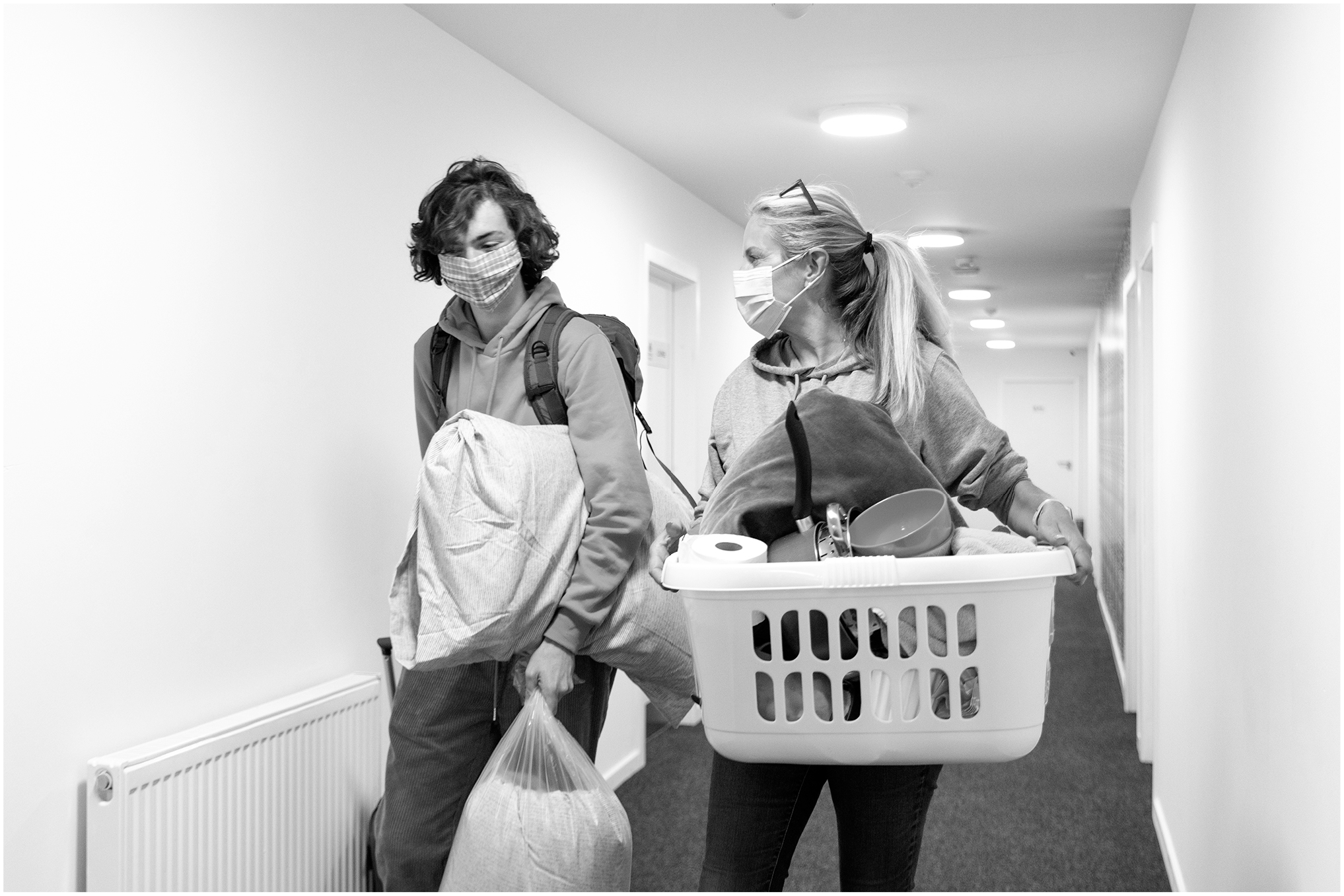
As campuses around the country closed down dorms amid the COVID-19 pandemic, many undergraduates had to make quick decisions about whether to move back home.
iStockPhoto.com / SolStock
Authority, Entitlement, Obligation
Students’ experiences of pandemic-related campus closures and the factors they weighed when deciding where to live and how to interact with their families revealed striking class divides. The groups of young adults differed in their understandings of their parents’ authority, their own entitlement to their parents’ resources, and their obligations to their families—divergences that led class-privileged young people to became more dependent on their parents while those from lower-class backgrounds became more “adult” than ever.
Margot, another upper-middle-class student, needed less help with school than Noah did, but she too remembered the sense of “feeling such a weight taken off” when she returned home in the anxious early days of the pandemic. Looking back, Margot recalled thinking, “This is such a controlled space. I’m very happy weathering it out here because I feel like my parents know what’s up.” Like Noah, she exhibited a privileged dependence. In a time that would prove a mental health crisis for young adults, the loss of the campus environment and the uncertainties of a global pandemic led most upper-middle-class students in my sample to turn to their parents for reassurance and assistance.
By contrast, less privileged students exhibited a precarious autonomy. Denied a variety of academic and financial protections available to their upper-middle-class peers, they typically saw themselves as responsible for figuring things out on their own. Many in this group expressed a sense of freedom rooted in their financial independence from their parents. Taylor, for instance, refused to return to her working-class father’s home as he would have liked, because, she said, “If you don’t give me money, I don’t have to listen to you.” Yet working-class students’ decisions were often shaped by concern for parents’ needs and vulnerabilities, and many, like Ashley, provided a great deal of support to their families.
Social class shaped how students thought about who was in charge, what they deserved from their parents, and what they owed their parents in return.
Parents’ Roles in Higher Education
Even in more tranquil times, parents are unequally positioned to provide academic and financial support to college students. In Paying for the Party, for example, sociologists Elizabeth Armstrong and Laura Hamilton described how parents’ unequal social, cultural, and financial resources contributed to disparities in the campus experiences and post-college trajectories of a cohort of undergraduate women. Beyond paying for tuition and living expenses, educated and affluent parents can often provide knowledge and connections. Past studies document privileged parents helping children navigate college admissions, coaching them on how to interact with faculty, finding (and sometimes funding) internships, and leveraging professional connections for post-college employment. By contrast, less privileged college students must navigate unfamiliar educational and professional contexts more independently—sometimes while providing financial and other forms of assistance to their parents.
While such studies demonstrate clear class divides in parents’ resources and involvement, sociologists have paid relatively little attention to the ways young adults themselves understand and seek help from parents—or how these practices vary across social class. Campus closures during the COVID-19 pandemic brought inequalities in students’ family resources, roles, and responsibilities into stark relief. This period of heightened risk and uncertainty provided an ideal context in which to examine class differences in students’ understandings and experiences of parental support, as well as the implications for inequality.
Deciding where to Live
When I asked Noah whether he considered looking for an apartment near the university campus instead of living with his parents during the spring of 2020, he said that he did. However, Noah ultimately deferred to his parents’ judgment that it would be too risky. This dynamic was common in upper-middle-class families: students in this study often described seeking and following parents’ guidance for travel, housing, and safety precautions during the early months of the pandemic.
Noah explained that his parents wanted to keep him close to home so that they could care for him if he contracted COVID-19. “They said things like, ‘If you’re [far away], it would be much harder for us to make sure that you are safe,’“ Noah recalled. When I asked Noah what he thought about this, he pointed out that both of his parents are physicians. “We’re in this position right now because people went against the experts,” Noah said, referring to the spread of COVID-19. “So I’m like, ‘I know you know your stuff. I’m gonna trust you.’“
I observed a similar power dynamic in other upper-middle-class families, even families in which parents did not work in medicine. These students often felt their parents possessed more information than they did. Margot’s parents are a college dean and a humanities professor. She recalled, “It was kind of scary; it was sort of weird [in my off-campus house] being like, ‘We’re literally six 20-year-olds in a house, debating what is safe and none of us have any idea.’ …Obviously neither of my parents are doctors or anything, but I just got home and felt like, ‘Okay, I can do this. I know how to function at home. This will be fine.’“
Working-class students did not expect their parents to tell them what to do. Indeed, many felt they had more information than their parents. For example, when I asked Ashley whether her mom was involved with her decision to move to an off-campus apartment for the fall semester, Ashley immediately replied, “Not at all. Literally not at all.” She continued: “[I]t’s very much one of the situations where it’s like, ‘I’m gonna figure this out and then I’ll come talk to you about it after I figure it out.’“ When Ashley informed her mom of her plans, Ashley’s mom expressed reservations. Yet Ashley gave little weight to these concerns because, she said, her mom knew little about the city where the university was located and couldn’t understand why moving to an off-campus apartment would make it easier for her to study.
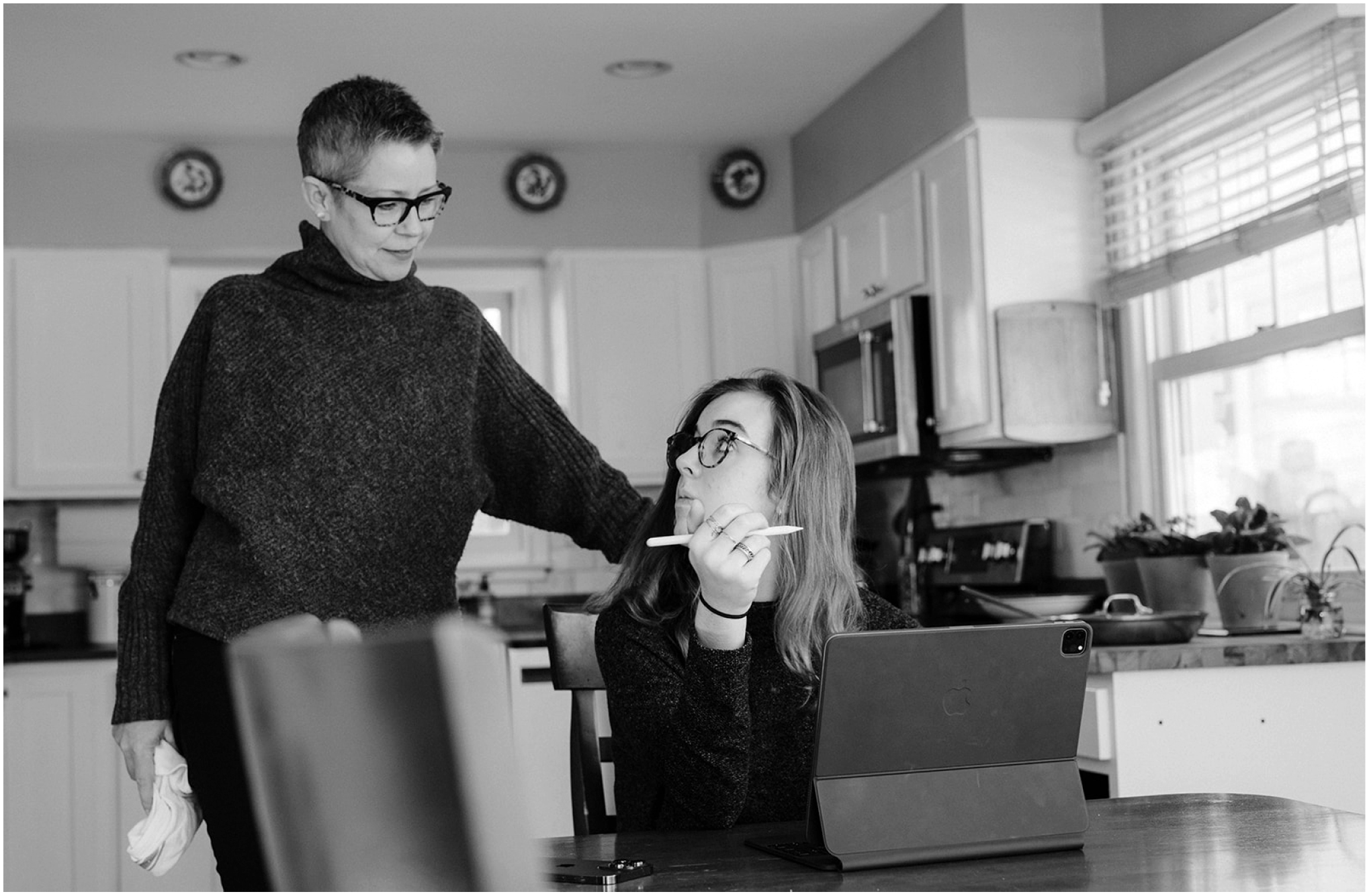
Class-advantaged students returned home expecting they would receive help and support from their parents.
Adrian van Stee, used with permission
Working-class parents’ lack of financial leverage also played a role. Margot’s parents, like Noah’s, paid their children’s housing expenses at college. If Noah were to move to an off-campus apartment, his parents would foot the bill. The working-class students in my study were, in comparison, more financially independent. Of course, institutional context shaped the dynamics I observed: at the highly resourced university my respondents attended, working-class students typically live on or near campus and benefit from unusually generous financial aid packages that typically cover most of their tuition and living expenses. This gave the working-class students in my study financial leverage their socioeconomic peers at other schools would not have possessed and that their wealthier classmates at their own school did not have. As Ashley admitted, “There’s more money in [my bank account] than [my mother’s] sometimes.”
Who Needs Whom?
The factors students considered when deciding where to live and how to interact with their parents during the pandemic reflected class divides in the extent to which young adults felt entitled to parents’ resources and/or obligated to provide for or protect their parents. In upper-middle-class families, housing decisions and family interactions typically prioritized the student’s well-being and academic performance. In contrast, working-class students gave more weight to parents’ needs and vulnerabilities.
As in Noah’s exchange with his parents, upper-middle-class families’ conversations about housing typically centered on where college students would learn best and where their parents could best take care of them if they were to fall ill. In other words, upper-middle-class families—students and their parents alike—prioritized the student’s needs and interests. These parents typically managed (or outsourced) household tasks, including shopping, meal preparation, and monitoring younger children’s schoolwork (although Noah’s parents outsourced more than most).
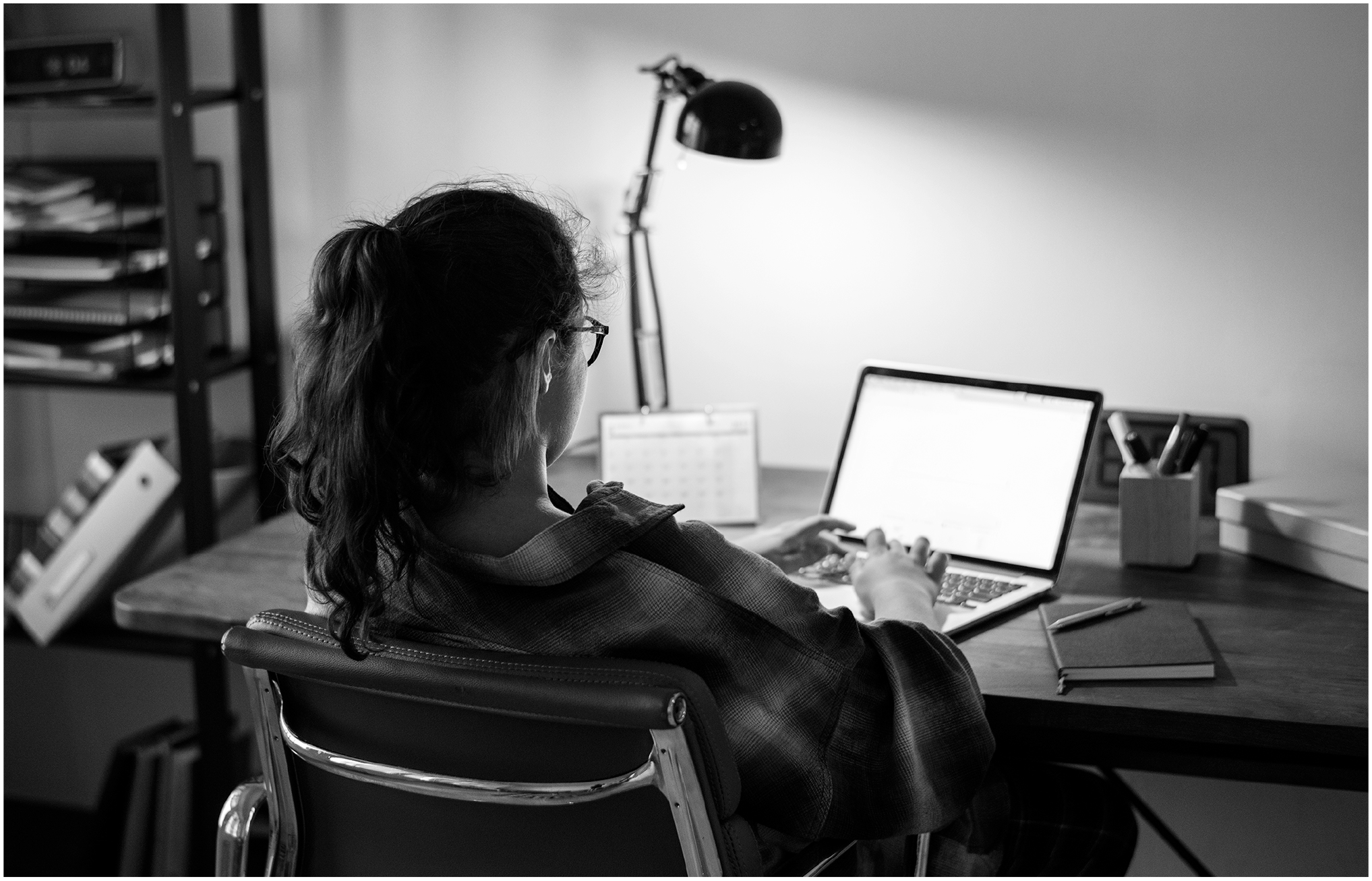
Some students expressed concerns about being a burden to their families while living at home during the lockdowns.
iStockPhoto.com / Rawpixel
Among upper-middle-class families, two-parent households were common and one or both parents was often able to work from home. Illustrating this pattern, an upper-middle-class student named Ben reported that his parents “seemed like they took [having their children at home] in stride. You know, they took over going and getting groceries, they took over making sure we were very well provided for and ordering things.” Another, Levi, shared that life at home was “easier” and “more comfortable” than living independently at college because his mom did his laundry and cooked the family meals: “My schedule right now is just: work until you’re called down [for dinner], and then don’t.”
Some upper-middle-class parents also took an active role in supporting students’ learning. Bella described how her parents bought a computer monitor and other technological accessories to make remote learning easier for her: “My parents were willing to do whatever would make the spring more fun for me and for them.” Another student, Kyle, described seeking his parents’ advice on whether to switch a class to pass/fail. “It was good because we talked about that, we went through every class, and then [my parents] helped me decide that I didn’t want to pass/fail anything,” Kyle explained. He said his parents “made sure [their children] were generally on top of our stuff, in terms of going to the lectures and doing the readings and everything.”
Upper-middle-class parents initiated a great deal of support, but their children typically felt entitled to request assistance as well. For example, Noah recalled asking his dad to upgrade the WiFi: “I said, ‘Hey, the internet here isn’t fast enough to do our classes. We need to find a way to speed it up.’ The man got it fixed within 48 hours.” Noah’s request reflects a common attitude among the upper-middle-class young adults I interviewed: they saw their parents’ home as their home and their parents’ resources as their resources. In fact, those who had been responsible for some of their own living expenses while on campus were glad to defray costs by returning home. As Bella admitted, in making the decision to return to her parents’ house, “it didn’t hurt that they were going to pay for all of my food and stuff for that time.”
Whereas upper-middle-class students typically emphasized the resources and protection their parents could provide for them, many working-class students described a sense of responsibility to protect their parents from COVID-19 exposure, provide financial support, or care for family members. At a macro level, the pandemic exacerbated class disparities in employment, morbidity, and mortality, making working-class parents more vulnerable to the crisis than their upper-middle-class counterparts. In line with these realities, working-class students generally felt less entitled to parents’ space, time, and money. Some even described their fears around being an “inconvenience,” a “risk,” or a “burden” to parents. These differences were evident in working-class students’ initial housing decisions, as well as in the ways they interacted with their families in the months that followed.
Ashley confided that she was worried about being an inconvenience to her family even before the pandemic, when she would visit home on school breaks. This fear immediately resurfaced when she learned she wouldn’t be able to return to her dorm after spring break. “[I’m] an extra person in the house who’s using toilet paper, I’m helping to eat the food up faster than it would otherwise be eaten,” Ashley pointed out, explaining, “That’s why I try to just pay [for these expenses] myself.”
Other working-class students voiced similar concerns. Shelton, one of the few students who gained a slot in the university’s emergency housing dorm, told me he had applied because he “didn’t want to put an undue burden on my mom by going home and having her financially provide for me.” Sophie, who moved in with her partner when the dorms closed, explained, “I couldn’t go back home because my mother would be a vulnerable person to this virus. She has two lung diseases.”
Awareness of parents’ vulnerabilities and concern for parents’ well-being also shaped the experiences of working-class young adults who returned to a parent’s home that March. Students in this group described trying to minimize the financial burden placed on their parents by paying for their own food or contributing to household expenses. Others told me they tried to help by driving parents to work, assisting younger siblings with homework, or caring for elderly relatives.
“I don’t mind doing it,” Ashley insisted, referring to the grocery shopping, meal prep, and childcare. “I want things to run smoothly. My mom works very hard. I want things to be okay.” Working-class students like Ashley did not expect parents to purchase learning technology, cater to their school schedule, or provide advice on academic decisions. Ashley knew her mom didn’t have the money to upgrade the family’s WiFi, and she certainly didn’t expect her mom to advise on course decisions or monitor her lecture attendance, as Kyle’s parents did. “There’s very much [a] separation of school and home,” Ashley explained, joking that she could tell her mom that she was majoring in “strawberries” and her mom would be happy.
Privileged Dependence, Precarious Autonomy
Having seen her more affluent peers’ interactions with their parents on Zoom, Ashley observed the same dynamics I found in my study. She said that wealthier students were “still considered kids” and that their parents seemed to say, “I’m your parent, what can I do to help you?” Students like her, however, “are like, ‘What can you do to help your parents?’ Because they’re the ones experiencing the difficulty, and all you have to do is log onto this online class and do X amount of reading or whatever it is you have to do for your class.”
As Ashley recognized, the class divides exposed by the pandemic reflected deeper differences than immediate resource constraints. The factors students weighed when deciding where to live and how to interact with their families also reflected different expectations for their parents’ roles at this stage of their lives. Social class shaped how students thought about who was in charge, what they deserved from their parents, and what they owed their parents in return. These understandings informed how they coped with the pandemic crisis, producing the patterns of privileged dependence and precarious autonomy I observed. My conversations throughout this study underscored that understanding young adults’ trajectories—the decisions they make, the needs they prioritize, and the opportunities they pursue—requires an understanding of their relationships with their parents.