



Abstract
Megachurches, school shootings, financial crises, and humor vs. nativism: A snapshot of new research.
The Way We Were?
The way we hold onto feelings about our past flames, according to the results of a recent study published in The Journal of Social Psychology, may depend heavily on our attachment styles, or the ways we relate to and bond with others in our closest relationships. Psychologists have identified four attachment styles, ranging from those who are more secure, experiencing less anxiety and avoidance, to those who lean toward anxiety and avoidance.
A team of New Zealand researchers helmed by Matthew T. Crawford set out to test how these attachment styles affect relationship memories. They asked 200 participants to recall happy and sad moments in a series of life experiences, including in their present and past relationships. They also used surveys to assess participants’ attachment styles and the emotional impact of their recollections. In their paper, the authors report that those who were more anxious or less avoidant in their attachment remembered relationship events as more significant and emotional than those who were less anxious or more avoidant. They conclude that those who suffer from anxiety may have a more difficult time releasing their emotions, while others, more prone to avoidant behavior, may attempt to shove those emotions aside.
Attachment styles affect the ways we remember—and move on from—the past.
iStockPhoto.com / Worayuth Kamonsuwan

The researchers show that understanding how attachment styles shape our memories may influence how we cope with relationship problems and maintain our mental well-being. Anxious attachment style folks may benefit from initiatives that assist them in coping with negative emotions and lessen perceived threats (such as rejection) in their relationships. Those who are more avoidant, on the other hand, may benefit from psychological interventions that help them enhance positive emotions and increase intimacy with or dependence on their partners. By gaining a deeper understanding of your attachment style and its effects on your emotional responses, it seems, you can begin to let go of the past.
Editing Online Communities
Have you heard of Stellar Skateboard? Likely not, in part because Wikipedia’s citizen gatekeepers keep a close eye on edits to actor Stellan Skarsgård’s page. Such hints about how digital technology has brought major changes to the ways information is controlled and shared have prompted researchers Moritz Bürger, Stephan Schlögl, and Hannah Schmid-Petri to study information control on Wikipedia.
Wikimedia CC BY-SA 3.0, Nohat/PaullusMagnus

In their piece, new in Social Networks, the authors examine a sample of 222 unique articles from the French and Spanish language versions of Wikipedia, focusing on networks of deletions among the site’s editors. Their findings indicate that highly active editors establish crucial reputations on the platform, helping to prevent their contributions from being deleted by other editors. Because these editors often view themselves as content creators rather than mere gatekeepers, they tend to be both hesitant to delete contributions made by other editors and comfortable deleting contributions made by “outsiders.” Users who engage with their peers via Wikipedia’s talk pages are less likely to delete others’ contributions, too. Additionally, the researchers report that many different editors occasionally engage in text deletion and reason that digital platforms’ information control likely involves collective, somewhat coordinated patterns that prevent single actors from independently assuming a gatekeeper role.
Even in decentralized, digital forums where the trappings of community seem absent, careful observers can see the workings of real-life gatekeeping around insider/outsider status. This raises profound questions about what digital communities are, what they can become, and whether they can (or should) transcend the social constraints of everyday life.
Cultivating Urban Environmentalism
In the face of global climate change, cities are often overlooked in their role as innovators and incubators for pro-environmental policies and practices. Nation-states more typically sign international climate treaties and accords, yet as researcher Christof Brandtner explains, it is often at the city level where the policies and practices needed to achieve those agreements’ goals are enacted. Looking at the city level can be difficult, however, as cities’ effectiveness in adopting green initiatives is highly variable. Why is that? In a recent article in the American Journal of Sociology, Brandtner makes the case that a city’s civic capacity—or the ability of a city’s non-profit organizations to “foster civic engagement and to mobilize citizens for social change”—is central to the successful adoption of green innovations.
To paint a holistic picture of how local context shapes the adoption of green building policies and practices, Brandtner combined data on green building certifications from over 11,000 U.S. cities over a 16-year period (2000-2016) with information on the local organizational, social, and political ecosystem of each place. The results showed that the adoption of green construction regulation was most effective and efficient in places where civic capacity was the greatest. There, values-oriented civic institutions like non-profit organizations and community groups act as catalysts for green initiatives by normalizing their adoption and making them more accessible to the city’s population. City governments then respond by enacting policies to legitimate the green practices and to provide enforcement mechanisms for their continued adoption.
Austin, TX, is a leader among green city innovators.
iStockPhoto.com / RoschetzkyIstockPhoto
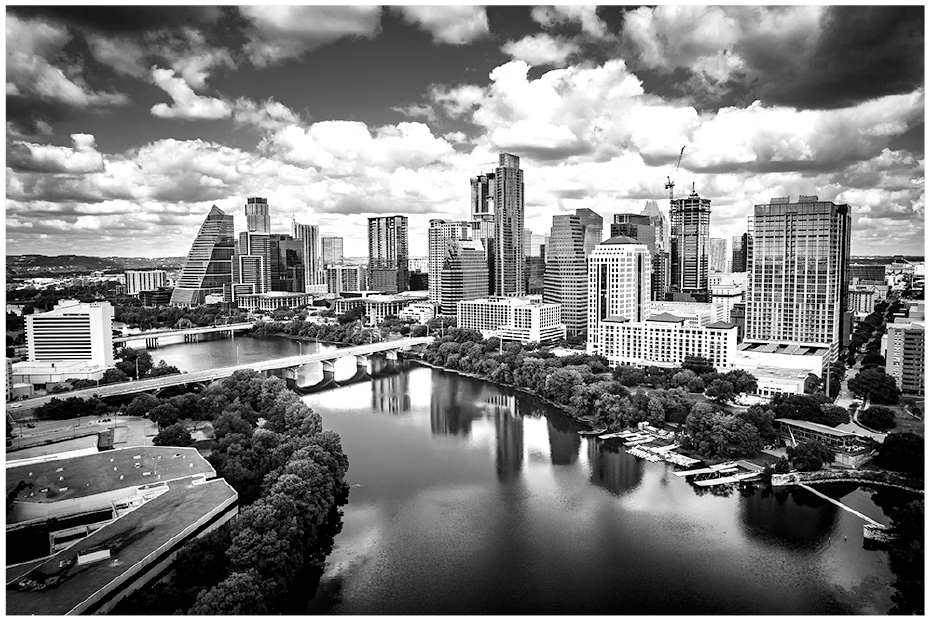
This model of “distributed adoption,” in which civic institutions lead the charge in the development and deployment of green innovation, pushes us to reimagine what a city is and what it can become. Rather than an autonomous entity unilaterally governed by bureaucracy, this research highlights how cities are lively, interconnected networks of civic organizations, public institutions, and private ventures that can facilitate or constrain environmental innovation.
Anxiety and Alcohol
Does drinking actually tamp down social anxiety? According to a recent study in Addictive Behaviors, it all boils down to personal preference and the company we keep.
A research team led by Eddie P. Caumiant analyzed how social anxiety, social familiarity, and alcohol consumption were related. Researchers equipped 48 heavy social drinkers with a device that measured their blood alcohol content for a week. During this time, drinkers were also required to take pictures of their surroundings and complete six surveys, randomly administered throughout each day, to assess their social anxiety. Results show that those who suffered from social anxiety drank more in the company of strangers; they appeared to imbibe to alleviate their anxiety about meeting new people and being judged or rejected. Those who lacked social anxiety, on the other hand, drank similar amounts regardless of their social surroundings, suggesting that they did not rely on alcohol to moderate their social enjoyment.
Raise a glass to social anxiety—but maybe just one.
iStockPhoto.com / FS-Stock
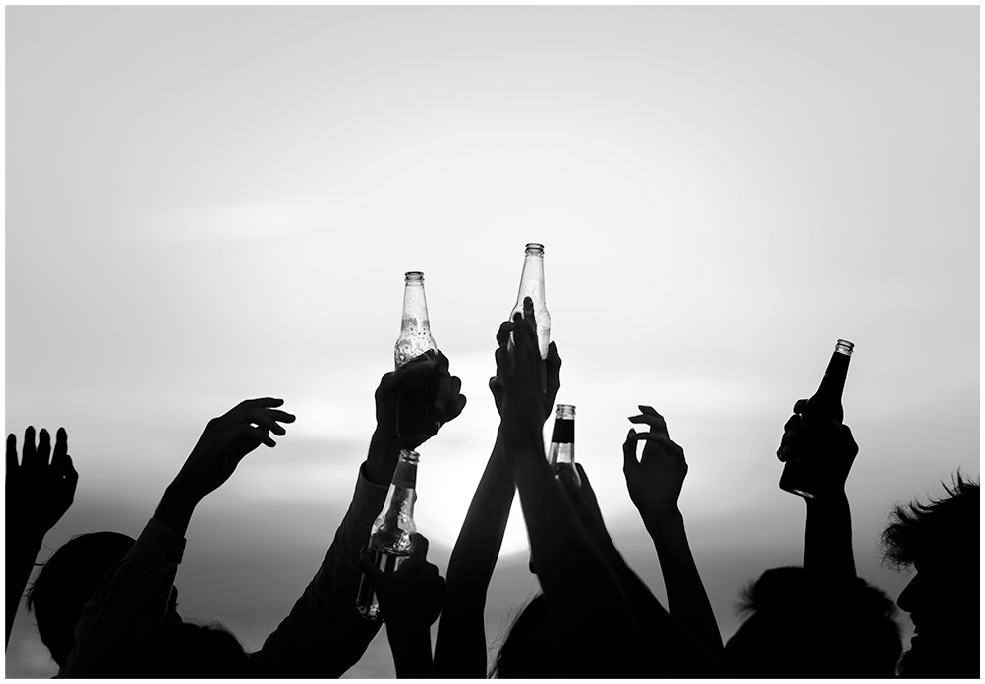
Understanding individual differences in stress responses will hopefully lead to better intervention strategies when it comes to alcohol moderation and improved mental health. This research warns that those who suffer from social anxiety may need to avoid or minimize situations that could lead to excessive drinking. Further, should they regularly interact with strangers, they may face a heightened risk of alcohol abuse.
Coping through Humor
Author Erica Jong once said that humor is one of the most serious tools we have for dealing with impossible situations. And what could feel more impossible than enduring adolescence as a newly arrived immigrant in a politically charged climate? In Ethnic and Racial Studies, sociologist Liliana V Rodriguez explores how teens from Latin America used humor as a coping mechanism to navigate life in the United States in the contentious months before and after the 2016 presidential election.
Through 24 months of ethnographic observations of and interviews with immigrant youth, Rodriguez identifies two strategic uses of humor. First, youth draw upon their cultural knowledge, such as shared language and collective experiences, to mock and appropriate anti-immigrant discourse. For instance, when a participant and his friends heard police sirens, they would joke about “going back to Mexico.” Second, newcomer teens utilize humor as a tool to gain control in stressful situations, like when they are confronted with nativist discourse. Rather than succumbing to the stress, the youth in the study used humor to reinterpret and diffuse the situation. For example, one participant and her friend exchanged a knowing look and laughter when they heard others making nativist remarks.
Immigrant youth use humor to navigate troubled waters.
iStockPhoto.com / Guillermo Spelucin Runciman

Humor serves not only as a means for making sense of reality but also as a protective resource that helps build solidarity and resilience. In the case of immigrant youths, their use of humor transcends the typical joking patterns of their peers, becoming a powerful tool for maintaining a sense of agency and control. Through their use of humor, these youth create a uniquely playful world within an often stressful immigrant experience.
Mapping the Megachurch
While churches and other religious institutions are found in nearly every corner of the earth, megachurches—those attended by crowds comparable in size only to a Beyonce concert—are much less common. Even in the countries where they flourish, such as South Korea, Brazil, and the United States, the rate of megachurches varies greatly from city to city. Boston, MA, and Providence, RI, for instance, have nothing on the abundance of megachurches found in Dallas, TX, and Atlanta, GA. Using this discrepancy in the American case as their point of entry, German sociologist Insa Priusken explores the socio-demographic and cultural conditions that appear to create the ideal breeding grounds for megachurches in U.S. cities.
Inside a Houston, TX, megachurch.
iStockPhoto.com / Julian J. Rossig
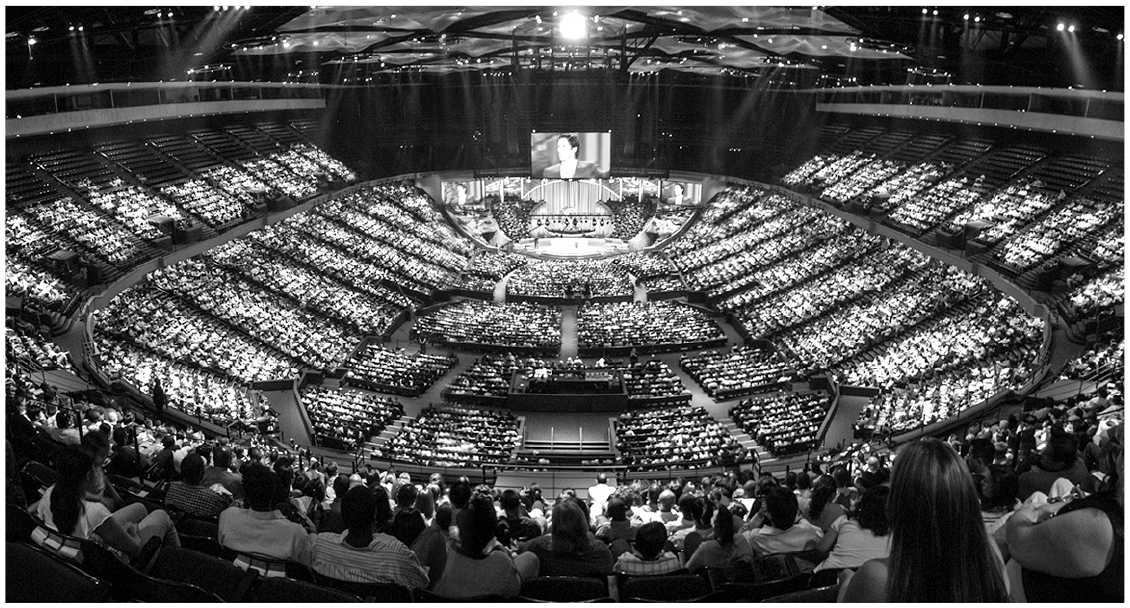
Priusken’s approach differs from traditional studies of religious proliferation by replacing individual-level religiosity with the “place-based” characteristics of urban areas in their inquiry. By doing so, the author identifies three key conditions that appear necessary for megachurches to succeed: the presence of 1) a large and closed Evangelical community (e.g., Dallas, TX, and Atlanta, GA); 2) a large and upward-oriented Christian immigrant community (e.g., Miami, FL, and Phoenix, AZ); and 3) highly tolerant and educated populations including a large community of mainline Protestants (e.g., Baltimore, MD, and Minneapolis, MN).
In an era of increasing globalization and mobility, as well as declining religiosity, it may seem counterintuitive that megachurches are flourishing in many American metropolitan areas. But this research shows that the conditions necessary for their success are quite common in many American cities. More importantly, this research shows that to understand why particular social institutions fail or take flight, we must understand their broader context.
Behind the Scenes of Financial Crises
From the Dotcom bubble of 1999 to the 2008 global recession and the Silicon Valley Bank run of 2023, financial crises have had an immense impact on our lives as citizens and consumers. Surprisingly, though, they continue to occur with few changes in the ways regulatory bodies respond case to case, even when the crisis is a result of rule evasion. The cynical among us might point to outsized corporate influence and regulatory incapability as the primary causes of regulatory inaction. Historical sociologist Pierre-Christian Fink instead uses the financial crisis of 1974 to offer a uniquely sociological explanation for why the financial crisis-management playbook never seems to change.
The public, or frontstage, construction of financial crises can leave the Federal Reserve waiting in the wings.
Don McCullough, Flickr CC

Published in the American Sociological Review, Fink’s study stands out by moving beyond analysis of public statements from regulators and corporations to consider recently released historical records from the Federal Reserve. This enables an understanding of how the crisis is constructed publicly, in the “frontstage,” and privately, in the “backstage” between financial institutions and regulators. In their response to the 1974 financial crisis, the Federal Reserve chose to present the crisis to the public, Congress, and the press as an issue of existing rules, not one of rule-evasion. This construction of the problem in the frontstage in turn limited the potential range of backstage responses, as any new regulatory approaches aimed at curtailing evasion would not match with the public definition of the crisis. In this sense, the Federal Reserve was caught between frontstage and the backstage constructions of the crisis, unable to enact novel policy interventions.
While sociologists have long used this type of dramaturgical metaphor to describe interactions between individuals, Fink’s study shows how the dynamic plays out between organizations and institutions. This understanding is particularly salient in understanding how governments, regulators, and the public come to understand, define, and respond to crises. Without broad institutional agreement on malfeasance, there’s little chance of the coordinated, adequate, and consensus-based response needed to prevent similar crises from happening again.
School Shootings as Organizational Accidents
School shootings are tragic events that shock and terrify communities—and lead to urgent calls for effective prediction and prevention measures. In a new study in Sociology of Education, Sarah Goodrum and coauthors view school shootings through the lens of “organizational accidents,” a term that captures schools’ combinations of tightly coupled guidelines, loosely coupled structure, and autonomy culture and reframes shootings as preventable detection and response failures.
To explore the utility of this framework, the researchers conducted a qualitative case study of a fall 2013 shooting in a large suburban high school that claimed two students’ lives. They interviewed faculty, reviewed school and police records, and looked at the institutional and cultural factors that affected the school’s approach to preventing violence. The study revealed numerous issues that compromised the school’s safety measures and contributed to the tragedy. Among them, the school’s inflexible threat assessment procedures gave students a false sense of safety and failed to take into consideration the nuances of individual behavior. The school’s decentralized structure meant that individual teachers often decided on disciplinary measures without input from the administration. And, due to the “culture of autonomy” and “fresh start mentality,” teachers were unable to discuss any student’s history of difficulties. Together, these issues resulted in unintentional secrets and knowledge gaps which hampered the threat assessment team’s ability to evaluate and monitor student behavior.
To better reduce violence in schools, the authors suggest instituting systems and cultures that encourage open lines of communication, teamwork, and adaptability when dealing with students of concern. In addition, they emphasize the need for formal, organization-level harm-benefit evaluations, which would weigh the potential drawbacks and advantages of different preventative interventions for various student populations.