



Abstract
Aging and retirement have changed dramatically in recent decades, and expectations about both need updating. Today, those willing and able to retire must also consider their hopes, capacities, and creative potentials.
“I wake up and every day is nearly identical. If I look at the news, my body, or my bank account, I see that things change. But otherwise, I’ve become irrelevant.” The feeling of becoming extraneous is not unique to Hollis, who is now a decade into retirement. Hollis feels the contrarieties of being well into mature adulthood, with an unknown amount of time ahead and yet living each day with a great deal of flexibility. Once every day of the week is similar to the weekend, does life become a holiday? What does it mean when a person declares themselves as retired? And better yet, what does it mean when an entire segment of society is deemed done with work?
Retirement: no work, income still arriving, and all the time you could want for golf and travel. At least, that’s the idealized version we get from advertisements. The problem is that this image is outdated and unsustainable. Even for those of us who are able and willing to retire, the disconnect between the fantasy of retirement and the reality of unstructured days can be disconcerting. For some, retirement is a euphemism for rejection, forced disengagement from society, and even death.
The tensions that can arise in retirement are akin to the contrast between an individual’s quest for freedom and societal norms that restrict these primitive instincts, a conundrum Freud articulated nearly a century ago. As a society, we agree to live within specific boundaries and follow certain norms to help maintain order, even when these rules limit our possibilities for contentment. A fundamental tension can exist between the autonomy, flexibility, and lack of boundaries associated with retirement and our instincts to maintain structure, a sense of social connectedness, and personal fulfillment. Retirement’s freedom can create challenges for people whose life’s work was closely associated with their sense of self-worth. There are also economic challenges and social losses when careers are foreshortened.
Now don’t get me wrong, there are many people who can’t wait to retire and truly do love it. Some people thrive in retirement. Retirement can be a time to finally relax or, when the pressures of work become physically and mentally untenable, to create a lifestyle that suits your interests. Or it can be a time to take up new hobbies, volunteer, engage with family and community, focus on yourself, continue an ongoing lifestyle, or even establish a new career. Retirement has a plethora of meanings these days. It is enhanced by financial planning and good health for you and those around you. The transition is also ameliorated by social connections, a sense of having made a favorable contribution to society, and an understanding of how you might continue to do so. However, for people whose work and personal identities have been intertwined, retirement can be an anxiety provoking experience and a potentially painful transition. The retirement paradox is characterized by the promise of adventure and new chapters as well as demise and last chapters.
The Pandemic Retirement Paradox
In the recent pandemic, many of us experienced a retirement of sorts. Some of us were laid off, others were forced to choose between paid work and childrearing or other caregiving obligations, or simply couldn’t work. Some of us felt “retired” because we were at home living in the movie Groundhog Day, fearing we were actually living in the movie Contagion or the book Station Eleven. Like “retired couples,” some of us were with partners who were unpredictably noisy and frequented the kitchen aimlessly and often.
Meanwhile, others were asked to come back to work—often in highly pressurized fields. Calls were put out to retired nurses, doctors, and other medically trained, frontline workers, urging them to return in a time of global need. This created tremendous tensions, particularly while the implications of the virus were still unknown and for individuals who had been pushed out of their jobs earlier because they had been deemed too old. Furthermore, the conditions for burnout (something that often leads to retirement) had already steadily accumulated in many sectors without remediation or even relief plans. Now retirees were asked to resume their jobs under unimaginably stressful and personally dangerous conditions.
The pandemic changed retirement not only by shifting how many of us think of work-life balance, but also by bringing some retirees back into the workforce. Here, Drs. Bryan Burke and Lorna Holmes join their son, Dr. Patrick Burke, to work in a Belfast vaccine center.
Rebecca Black/PA Wire (Press Association via AP Images)

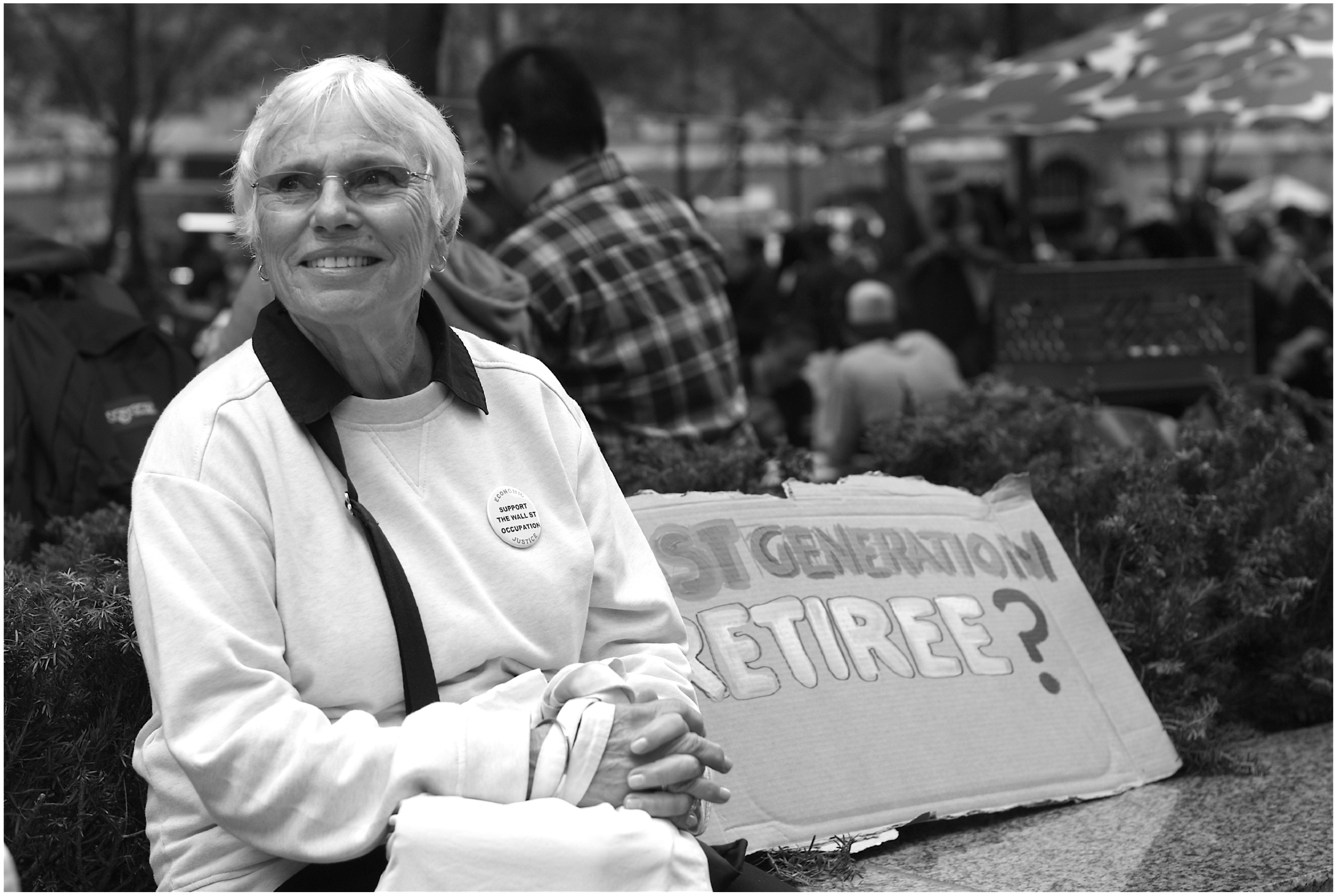
Retirement can make room for activism, as it did for this 2011 Occupy Wall Street protestor, whose sign reads, “Last Generation Retiree?”
kizzzbeth, Flickr CC
Many of us found it difficult to balance work and personal life. Some of us worked non-stop, rising to meet increasing demands. Others luxuriated in not having to commute or wear “real pants,” finding added flexibility to workdays that eased some of the stresses of jobs that had us on the verge of burnout prior to the pandemic. Others still experienced pandemic isolation as a forced marginalization from society. In various ways, many got a small taste of what retirement might feel like—that liminal space in which what comes next is unclear and uncharted. As we abided by the social norms and regional regulations in order to protect one another, particularly the most vulnerable among us, we altered the economy, the tenets of work and personal life, and intergenerational relationships.
Rising Tensions
Intergenerational tensions were exacerbated in the recent pandemic, too. Children and younger people experienced severely compromised learning and limited work opportunities. But data show COVID-19 mortality rates increase with age, and media images of the older among us veered toward depictions of vulnerable, needy, even selfish elders. And, of course, racial and socioeconomic disparities were clarified and ethnocultural tensions rose. It was, as some might say, a lot.
One of the changes that brought me to careful reflection, given my research specialties, is how the pandemic highlighted ageism and prevalent assumptions about the relationship between age and work.
For some time now, older workers have been pushed aside due to ageist assumptions that people become less useful with age. Portrayals of older workers clogging up spots are pitted against younger workers trying to get their foot in the door. Intergenerational tensions also arise as younger generations are perceived to be disrespectful and unmotivated or lacking proper work ethics and older ones as inflexible and behind the times.
As more of us are more likely to live longer, those of us who retire at prescriptive age milestones will have more and more years to fill and fund. There is an important subset of mature workers who are not interested in retiring, or who prefer not to view retirement as a binary decision between being a working versus nonworking member of society. In many cases, we are missing out on the intellectual contributions of a wide swath of society that wants to keep contributing but is being governed by anachronistic norms. We must recognize this risk and creatively rethink our social expectations about age, work, and retirement.
A Quick History of Retirement and Changing Demographics
As we consider our current retirement predicament, some context is needed. The bottom line is that retirement pension norms were created to kick in after the average worker was dead. Yet life expectancy has increased more in the last two centuries than in all of human history.
In 1889, Germany became the first nation to institute a public pension system for workers. Seemingly generous, it started at age 70—at least 5 years beyond the life expectancy of the average German worker of the day. Most of Europe and Scandinavia followed suit, developing their public pension systems, again setting the trigger ages beyond life expectancy. The pension system was really set aside to help only the oldest in society. In 1935, the United States instituted Social Security for workers at age 65, or 4 years older than the average American worker’s lifespan. As the gap between life expectancy and retirement age closed, a major problem emerged. Starting around the 1970s, people started living for more years than pension programs were ever designed to fund.
Remember, just two centuries ago, less than 2% of the planet’s population lived to age 65. The world has undergone a massive demographic shift: globally, there are now more people over age 60 than under age 5. While many people are financially unable to retire at age 65 or 67 or at all, others are forced into retirement due to health issues, caregiving obligations, or other factors that limit their work.
This leads us to another aspect of the retirement paradox: among those who do retire, not everyone is thrilled with the change in status. And it begs the question: Why rush to push out older workers to make room for younger ones? Where some insist it’s “selfish” for older workers to retain their jobs and delay retirement, demographic trends indicate that there are simply not enough individuals entering the workforce currently to cover the vacuum created by exiting Baby Boomers.
I have observed that retirement can be filled with discontentment, particularly among people whose personal identity was deeply intertwined with their professional identity. I have conducted hundreds of interviews prior to and since the pandemic with the goal of better understanding the social meaning of retirement as it pertains to people whose preretirement work was paramount to their sense of identity. During the pandemic, I was also able to reconnect with many self-identified retirees from around the world in order to continue our earlier conversations about their perceptions of retirement. What I learned taught me a lot. Below, I share a set of warnings and strategies relevant to the retirement paradox.
Preparation is Half the Battle
Financial and emotional planning are essential for a satisfying retirement. This point is best made through Allan’s experience as an emergency room physician, where burnout rates excel and work commitment is imperative. Allan believed his financial obligations prevented him from planning for retirement. He married twice and had five children (two in his first marriage and three in his second). His earnings allowed him to bankroll everything from private school tuition to down payments on homes for his oldest children, and he wanted to do these things for his younger children as well. Because of this, he never created the time or mental space to create a financial safety net for himself. And his drive to stay focused at work had kept him from planning for retirement mentally.
Allan was what sociologists call an “ideal worker,” who gave his all to what Lewis Coser termed the greedy institution. Greedy institutions require total commitment. Their workers are acclimated to a culture in which they must prioritize institutional demands over participation in other, nonwork spheres, making themselves available on weekends, at night, anytime, anywhere. After an adulthood largely dedicated to such work, retirement can be a complex, unsettling endeavor.
When Allan was forced into retirement, it was clear that he had worked past his prime. His retirement challenges were exacerbated by the fact that many physicians are self-employed and lack an employer-sponsored pension plan, so if they wish to invest for retirement, they must take the initiative to do so independently. Like many people at the top of their fields, it was all but impossible to imagine life without work, and so Allan hadn’t.
We must creatively rethink our social expectations about age, work, and retirement.
The takeaway here is not to let immediate interests take consistent priority over long-term planning. When individuals, workforces, and social structures create incentives to plan financially and mentally for retirement, it increases the likelihood that retirement becomes a choice. With choice comes opportunities for remediation and to incorporate strategies for satisfaction— like the following.
Declutter and Focus on What Sparks Joy
Once we have the space to plan for retirement, we can make room to sustain meaningful experiences or to create new and different life endeavors. Decluttering, in this sense, is not just about clearing shelf space, it’s about applying the skills you develop throughout your life, including at work, to focus on what brings you joy and what helps you share joy as you embark on retirement.
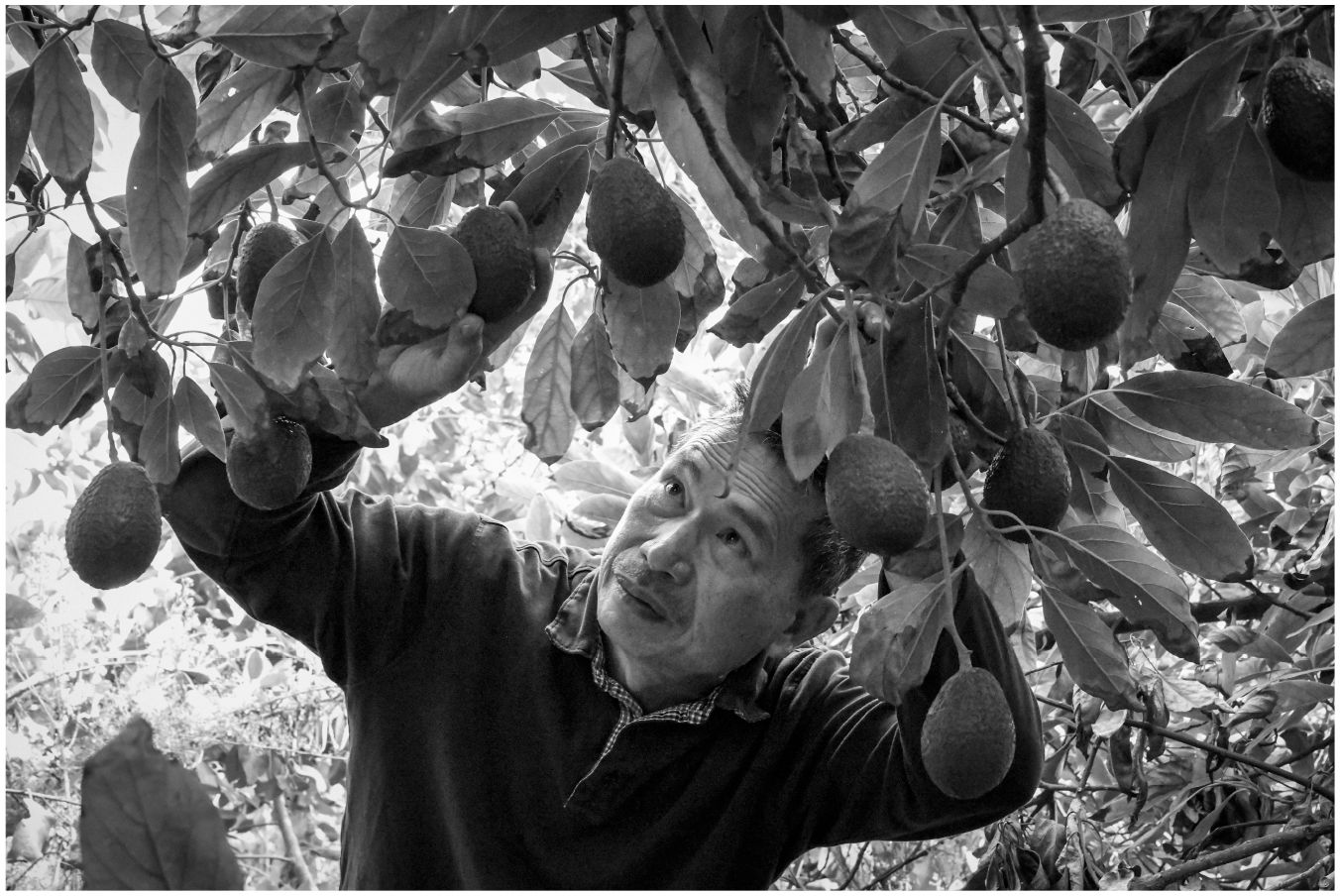
Retired from the U.S. Navy, Leonardo Aguila is a novice again. Here he checks the avocados growing on his California farm.
USDA Photo By Lance Cheung
Clare had worked since the time she was 14 years old. Most of her adulthood was dedicated to her work, and she rose through the ranks to become a CEO. Then, within a few years of that achievement, in the prime of her life, she developed cancer. Less than a day after announcing her diagnosis to her board of directors, Clare was contacted by staff to work on the assembly of her retirement package. At one point in our conversations, Clare told me that she was not sure whether she had been more challenged by what felt like a forced retirement or her battle with cancer. Both were forced upon her. They felt unfair. And she found them miserable to endure.
Aging today is different than it was in the past. Retirement should be, too.
But let’s fast-forward. When I last interviewed Clare, she was working as an Executive Vice President, doing some of the most gratifying work of her life. How’d she get there? Well, she explained, it had required a bit of decluttering. For Clare declut-tering was not about doing less, it was about aligning what she was doing with her personal values. Clare used the attention to detail that had made her so successful in her career to take stock of her time and her values. She culled unfulfilling professional and personal relationships, consolidated her financial portfolio, and recalibrated her sense of self. She applied what she did well at work to create a retirement—and a second act—that focused on the things she valued most.
A well-regarded theory called socio-emotional selectivity theory, put forward by Laura Carstensen, suggests that as their time horizons shrink, people become increasingly selective about what they choose to focus on. They optimize their time and emotional energy by investing their resources in emotionally meaningful goals and activities. Thus, aging is associated with a preference for positive over negative information. With age, people can optimally, selectively narrow their social interactions to maximize positive emotional experiences and minimize emotional risks. Though distinct in scope and significance, this ground-breaking work underscores the goal of making time and space to do what sparks joy.
And Clare’s story underscores the importance of not allowing oneself to be cast aside due to unforeseen circumstances. Instead of getting bogged down, focus on contributions that spark joy.
Keep Practicing
Practicing is not just for kids or early stages in life. Malcolm Gladwell promoted the notion that 10,000 hours of deliberate practice are needed to become world-class in any field. Most professionals accomplish those 10,000 hours relatively early in their careers, and so by the time we transition to another stage in life, we may have forgotten the practice it took to become comfortable and competent in new stages and roles.
Elite athletes know the importance of practice better than just about anyone. They must possess incredible physical and mental energy, singular focus, and a drive to practice in order to achieve their goals. My interviews with elite athletes taught me that sometimes the all-consuming process of rising to great heights can create very low points in retirement. One remarkable athlete I interviewed, Allison, started training at four years old. She left her family early in her childhood and trained eight hours a day, six days a week. Her career as an Olympic gymnast left her body wracked with pain. Her relatively early adjustment to retirement’s autonomy and independence was rocky, and she had few role models to provide road maps for a retirement at her age. She felt disconnected without her clearly set goals and adoring feedback from fans.
Allison lost her sense of purpose when she retired. What helped was practicing something new. Eventually Allison recalibrated her sense of self by rechanneling her energy into a new line of work as a paramedic. It was not a glamorous or high-paying job, and in the recent pandemic it retested her ability to overcome anxieties, remain focused, and endure burnout. But it connected her to a bigger picture and new set of goals. We don’t always have 10,000 hours in front of us, but we do have to expect that it will take practice to get comfortable doing something new, whether it is a new schedule or a whole new career.
Stay Active
We know that staying physically active is crucial for maintaining physical functioning and mobility; the same is true for staying mentally active. Keeping active and engaged to the best of our abilities and interests can separate fulfilling from disappointing retirement years.
Robert was an academic who retired at 75 when he chose to focus on his writing. At his retirement party, Robert heard speech after speech commending him for his prolific career. But to Robert, this party felt like a funeral. Robert was by no means done working. So, he decided that his retirement party would mark the beginning of a career pivot away from teaching and scientific research. His new focus on writing and publishing short mystery stories is what he now considers to be his most important life’s work.
In adulthood today, age alone can’t tell you much beyond how old you’ll be on your next birthday. It is time to question our expectations about aging and work, productivity, and purpose. Organizations are at risk of a massive loss in intellectual capacity and institutional memory as the largest growing age cohort exits the paid workforce. There is a genuine need for support systems that enable dignified, engaged, and flexible later career transitions. Many possibilities are not novel, but will take some creativity to implement. One option is to create more opportunities for job sharing, where individuals interested in gradually retiring are supported in efforts to cooperate with people taking parental or caregiving leaves or other forms of reduced workloads. Another option is mid- and later-career training and retraining. Another yet is to encourage regular transitions throughout one’s career. In times like these, when many workers are plagued by burnout and industries are facing foreseeable uncertainty, employers ought to incorporate mid-and late-career mentorship programs and other creative work opportunities, schedules, and spaces that emphasize workers’ emotional and physical health.
The Retirement Paradox
Retirement is a divisive term that has become a paradoxical paradigm. It can be a deceptive phase of life that promises freedom and ends in death. The term applies equally to the underpaid manual laborer who is forced into retirement as to the overpaid executive who exits on their own terms, perhaps gradually and with a golden parachute. Some of us are laid off, then unsuccessfully look for work, only to eventually stop looking and retire. Others greatly anticipate the date and then come to dread our retirement as the clock counts down because of the structure and meaning work brought to our life. And of course, some of us retire only to realize we can’t afford to be retired or no longer want to be retired; that can mean another paradox when we find ourselves “retired” and working again. Retirement can also be a long-awaited goal that gives you the time to pursue the things you put off while you took care of other priorities and/or everyone else.
Indeed, retirement is in the eyes of the beholder. As the recent pandemic foreshortened careers and forced people to make significant career shifts, retirement’s paradoxical nature has crystalized. Love it or hate it, currently there are more people around the world living well into their retirement than ever before. The Baby Boomers continue to demonstrate that there are many mature adults beyond traditional retirement age that possess skills and capabilities that our workforce needs. And for employers there are substantial precedents to learn from as we create new sectors, envision new lines of work, and creatively consider how to restructure older systems.
In short, the retirement paradox is deeply uncomfortable, and it is full of opportunities. It’s time that we question our expectations that age tells us much of anything about an individual’s hopes, capacities, creative potential, or preferences. Aging today is different than it was in the past. Retirement should be, too.