



Abstract
Iddo Tavory on The Making of White American Identity and On Critical Race Theory.
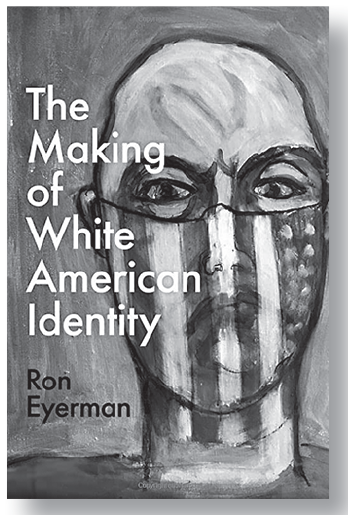
Ron Eyerman. 2022. The Making of White American Identity Oxford: Oxford University Press 304 pages
Understanding American racism—whether openly avowed or structurally embedded—is as urgent as it’s ever been. This is evident as we follow events such as the murders of George Floyd and Breonna Taylor, or the wave of Black Lives Matter protests; as we witness the mass incarceration of Black men, the immense racial disparities in deaths among Black and White Americans at the early stages of the COVID-19 pandemic, or the striking differences in voting patterns between White and Black Americans. Even as we encounter environmental collapse and witness the death of the neoliberal dreams of expanded global democracy, one of the core problems of the 21st century continues to be the problem of the color line.
Both Victor Ray’s On Critical Race Theory and Ron Eyerman’s The Making of White American Identity attempt to give us an intellectual skeleton key, unlocking the past and present of racism in the United States. Yet, the two books are very different in substance, tone, and audience. Ray’s ambitious book is aimed at the curious general public—those who have seen the right-wing turn critical race theory into a culture-war wedge, mobilizing White Americans as Republican constituents. It is short and punchy, carefully explaining modes of both sociological thought, and legal scholarship for broad audiences. Eyerman’s book, by comparison, is written for sociological and cultural-studies audiences. Itself an ambitious synthetic work, it makes a case for a particular reading of the formation of White identity, one rooted in a cultural theory of trauma which Eyerman, Jeffrey Alexander, Neil Smelser, and others developed over the past two decades. Even the font is smaller.
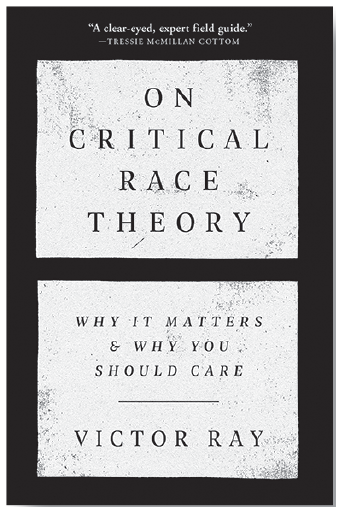
Victor Ray. 2022. On Critical Race Theory: Why it Matters and Why You Should Care New York: Random House 224 pages
And yet, the projects resonate with each other. The structures of racism and the formation of White identity are two sides of the same historical coin. Race, as Ta-Nehisi Coates reminds us to a pragmatist tune, is the child of racism (not the other way around). In this tale, both perpetrators and victims alike are historically structured. To read these two books side-by-side is thus an illuminating exercise.
Ray’s book provides a sociological reading of critical race theory (CRT)—a compelling project, given how sociological CRT was from its very inception. It is a work of lucid legal translation and sociological thought, clear, concise, and helpful in explicating the classic tenets of CRT, such as the concepts of Intersectionality, Structural Racism, Whiteness as Property, and Interest Convergence, as well as sociological work on race, including Ray’s own Racialized Organizations as well as Color Blind Racism, Racism without Racists, and constructionist accounts of race more generally.
For a sociologist reading this text, and for readers who aren’t already versed in CRT, one of the main take-aways from Ray’s book is just how uncontroversial CRT should be. CRT details the horrors of racism in American history, yet its power lies in showing how such history lives on in the normalized patterns of racial inequality it has wrought. In other words, as sociologists have argued for a good century, socially constructed categories are crystallized and made real through multiple interactions and institutions: through the allocation of resources, through the injuries of everyday micro-interactions, through schools, and through the withholding of different forms of capital from “particular” groups. The unacknowledged racism evidenced by hiring discrimination of the sort the late Devah Pager and her colleagues have shed light on is crucial for understanding the experience of Black Americans, but so too are the positions of White people who may not be virulent racists, but who were born into a world that afforded them with privileges that they see no reason to give up and who are incensed or threatened when these are pointed out.
Eyerman’s The Making of White American Identity complements Ray’s synthetic overview with a deep dive into one facet of American racism: a cultural tale of White racism and identity. It pays special attention to cultural objects such as monuments, books and movies, but also to cultural processes of narrative construction—chief among them the notion of cultural trauma, which sociologist Jeffrey C. Alexander defined as occurring when “members of a collectivity feel they have been subjected to a horrendous event that leaves indelible marks upon their group consciousness, marking their memories forever and changing their future identity in fundamental and irrevocable ways.” Eyerman’s point of entry into Whiteness is thus primarily a narrative one, with the construction of Confederate defeat as “The Lost Cause” and before it (although less convincingly depicted in the language of trauma) the hardships that settlers faced when they moved to what was, for them, the new world. It is what we may call, to echo Bernhard Giesen, “the trauma of perpetrators.”
From this culturalist point of departure, Eyerman tells an expansive story, tracing the long arc over which White supremacist identity has been shaped. In terms of the “others” against whom Whites constructed their supremacy, Eyerman takes a capacious view. Alongside Southern White re-narrations of the Civil War and the institution of the Jim Crow laws, he also accounts for the ways White identity has been formed in relation to the colonization and genocide of indigenous people, to the Chinese immigration to California, and to Mexicans in Texas and beyond. All this unfolds across a similarly expansive timeframe, from pre-independence through the Civil War, waves of KKK prominence, and Twitter battles waged by self-styled Boogaloo and Proud Boys. Throughout, Eyerman describes how White people were exposed to, and constructed, narratives of loss and Southern virtue, of their own supremacy and their vulnerability. Imagined as they are, past grievances fuel Whites’ racist sense of righteous victimhood. Much more can, and should, be said about both books. Still, it is interesting here to take a step back and see what these two projects might learn from each other—how reading one informs the other.
Perhaps the most interesting thing CRT could gain from engaging with Eyerman’s work, beyond the well-honed sociology of cultural narratives, is the dizzying number of others implicated in the construction of Whiteness. Of course, slavery and anti-Black racism were, and are, key for understanding structural racism in the United States. But Eyerman’s book allows the reader to explore how the dispossession and attempted erasure of Native American tribes, of Mexicans, Jews, and “swarthy” Southern Europeans, illuminates the racist structures affecting Black Americans. Much as the Nazis structured some of their Anti-Semitic laws on eugenic practices aimed at developmentally disabled Germans, reading Eyerman and Ray side-by-side set me wondering how, for example, some institutions that came to define anti-Black racism were honed in anti-Chinese laws and residential segregation strategies.
But perhaps more urgent is what the sociology of culture developed by Eyerman can take from Ray’s book and from CRT more generally. The first lesson may be about the possible limits of a trauma centered theory of Whiteness. No doubt, the construction of such narratives is important, but at certain points, Eyerman’s notion of trauma seems too encompassing and undifferentiated. Thus, for example, in his depiction of the KKK’s first and second waves, it isn’t clear how much of a rupture many Whites actually experienced. Most original KKK members were poor Whites—not exactly those who most enjoyed the economic system of Southern slavery. Joining the KKK was not about regaining their status so much as gaining what W.E.B. DuBois famously called “the public and psychological wages of Whiteness.” This became even more central in the second wave of the KKK, whose ire was aimed not only at Black people, but at Jews and Catholics, too. Do all traumas, no matter how convenient, have the same narrative heft? How should we understand the relationships between the construction of narrative trauma and the bedrock of oppression?
Even more urgently, Ray’s book reminds us of the limits of explicit meaning. The cultural narratives that Eyerman describes, as he acknowledges, are one structure of racism. This form of racism is visible and audible; its adherents often sew confederate flags to their sleeves. But the kind of White identities constructed through structural racism tend toward banal “color blind” iterations. Most White people would probably be appalled by much of the history Eyerman presents. Yet some of these very same people just don’t want their house prices to fall as Black residents move into the neighborhood, or are opposed to any university admissions criteria based on descent, history be damned. Trauma-narratives are not required for people to play along with structural racism. In part, then, Ray’s book reminds us not only that identity is a limited way to talk about Whiteness, but also that explicit narratives may be a limited way to talk about identity.
Such intellectual cross pollination may be crucial as we (scholars, sure, but society as a whole) attempt to think through questions of racism. We are confronted with an array of structures that are rooted in different temporalities, different institutions and different interactional moments. The kinds of Whiteness narratives Eyerman presents are, then, one more structure—held through narratives and cultural objects—that partakes in the complex array of structures depicted by critical race theorists like Ray. Read together, they help us appreciate how many kinds of “structure” are at work in American racism and also the momentous challenge that uprooting such structures would entail.