



Abstract
Trans joy, curated complaints, femininity anchors, and hamburgers after our hearts and minds: A snapshot of new research.
Keywords
Fight-or-Flight for America
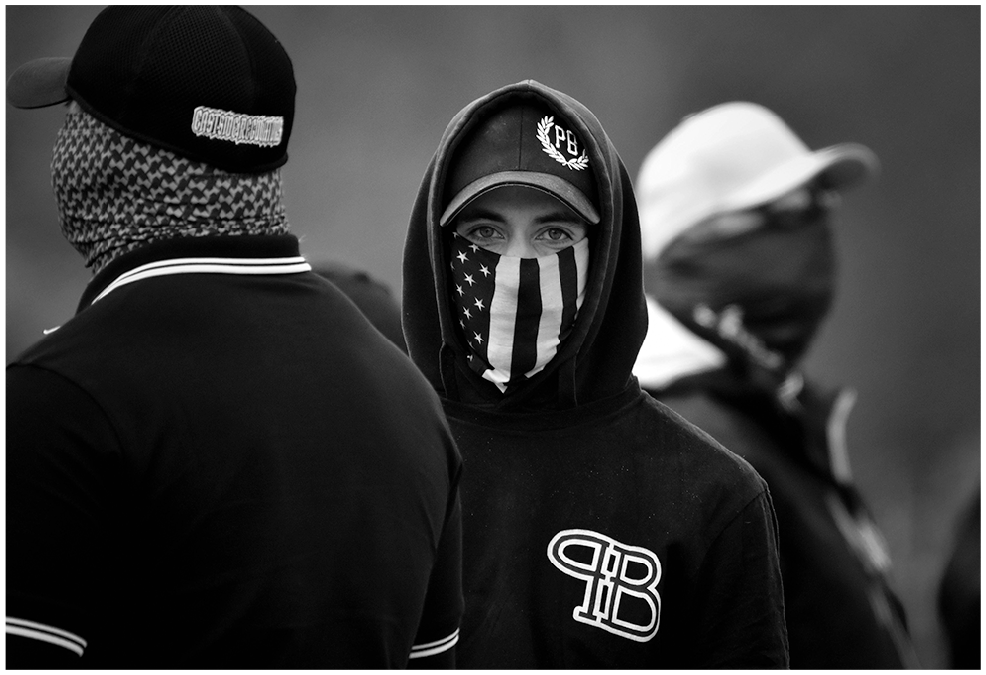
When was the last time anger or fear got the best of you? A jump scare, a close call, a confrontation? For most of us, most of the time, fight-or-flight events are memorable because they are rare. But in studying Christian Nationalist youth in the United States, Pew research associate Michael Rotolo found a more long-term and hard-wired sense of being under constant attack. This enduring threat perception, Rotolo writes in a recent issue of Sociological Forum, has both deep emotional underpinnings and severe political consequences.
Using a combination of interviews, ethnography, and surveys, Rotolo demonstrates that young Christian Nationalists’ biographies are often marked by the sorts of traumatic childhood experiences that lead to heightened, chronic states of rage or fear. As they enter early adulthood, these emotional states harden into a dominant belief that their cultural identity is perpetually precarious, which in turn shapes how they view contemporary social and political issues. The author argues that those with a disposition toward rage develop a “fight-for-America” emotional system that supports tribalism, nativism, and racialized sentiments, while those with a disposition toward fear develop a “flight-for-America” emotional system characterized by anxiety, passivity, and indifference.
Through his “fight-or-flight for America” framework, the author shows how the development of particular emotional dispositions throughout childhood, or “affective conditioning,” plays a fundamental role in shaping cultural and political attitudes in adulthood, especially among distinct cultural groups such as Christian Nationalists. This can have severe political consequences when the affective condition of a particular group is empirically associated with racist, sexist, and xenophobic attitudes and actions. To shift these enduring emotion systems, Rotolo suggests exposing people to unfamiliar emotional stimuli, but also encourages us to look further upstream to the cultural contexts in which they were developed.
Proud Boys provide security for the World Wide Rally for Freedom in Raleigh, NC, March 2021.
Anthony Crider, Flickr CC
The moral appeal of mcdonald’s?
Imagine yourself, driving home from a long workday late some Thursday evening. In those moments, the neon glow of fast-food burger joints can seem to have a primal pull. But your choice among the various options isn’t only about hunger, convenience, or desperation, attests a recent Cultural Sociology article, it’s also about morality.
Sabrina Montaño, Flickr CC

In “Moral Entrepreneurialism for the Hamburger: Strategies for Marketing a Contested Fast Food,” University of Toronto scholars Natália Otto, Josée Johnston, and Shyon Baumann use critical discourse analysis to analyze the websites and marketing campaigns of three major hamburger chains. In doing so, the authors identify three primary moral frames used by these chains as they push back against negative (often moral) perceptions of meat: global sustainability (McDonald’s), natural simplicity (A&W), and nostalgia and freshness (Wendy’s). Each of these frames bounds morally coded language and images aimed to associate products with particular values and evoke emotional reactions in consumers. Moral frames that mesh with target markets’ values build brand trust, loyalty, and desirability.
This form of “moral entrepreneurship” is a direct response to the increasing public scrutiny of fast food and the fast-food industry’s effects on personal and environmental health. By using moral frames to undermine negative impressions, the brands hope to make their burgers that much more palatable.
Anchored in hypermasculine orgs
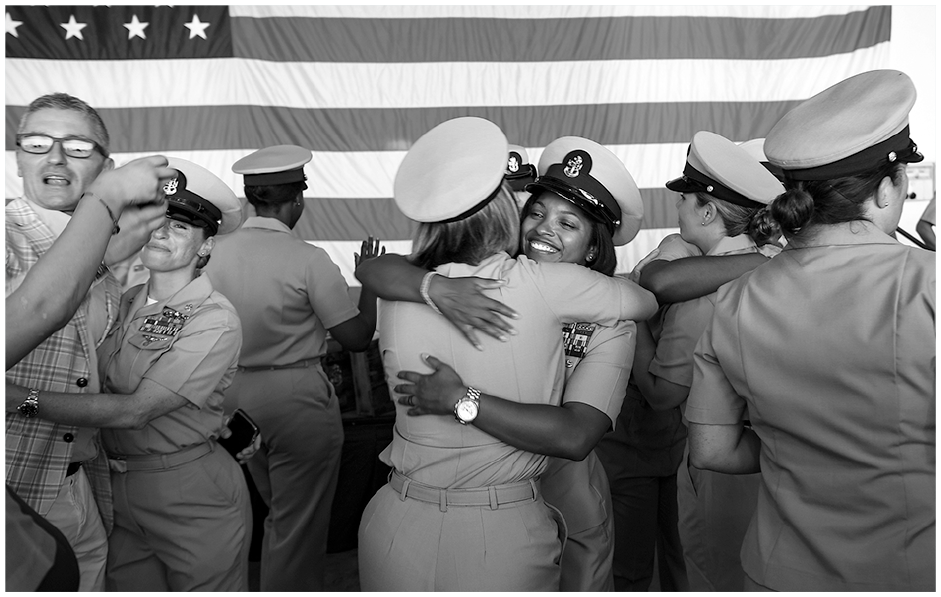
In a recent American Sociological Review article, Stephanie Bonnes asks what perpetuates organizational cultures of violence and misogyny. Drawing on in-depth interviews with 50 U.S. servicewomen, the author finds that chronic harassment and sexual assault in the hypermasculine space of the U.S. military, in addition to many other harms, degrade service-women’s identities as military insiders and severely limit their options for doing gender and career success.
For instance, the services’ hypermasculine climates push servicewomen to hide what Bonnes terms femininity anchors, as they seem to invite negative interactions. Pregnancy, she shows, seems to invite non-sexual and bureaucratic harassment, while having open heterosexual relationships with fellow service members can provoke harassment and assault. Further, femininity anchors appear to “sink” women’s military careers by undermining their belongingness in relation to the masculine norm.
Women in the military and other hypermasculine institutions face a tough climb.
U.S. Naval Academy
Hypermasculine cultures are known to circumscribe women’s gains and successes. The military is, admittedly, an extreme example, yet femininity anchors exist in all male-dominated organizations and industries. Women’s management of them—including their attempts to untether from femininity anchors to keep safe or advance—unfortunately also contributes to the continued broad gender segregation of sectors such as construction, policing, and technology.
Policing community complaints
Despite transparency talk, Tony Chen’s research finds police curate community feedback to resist reform.
Elvert Barnes, Flickr CC
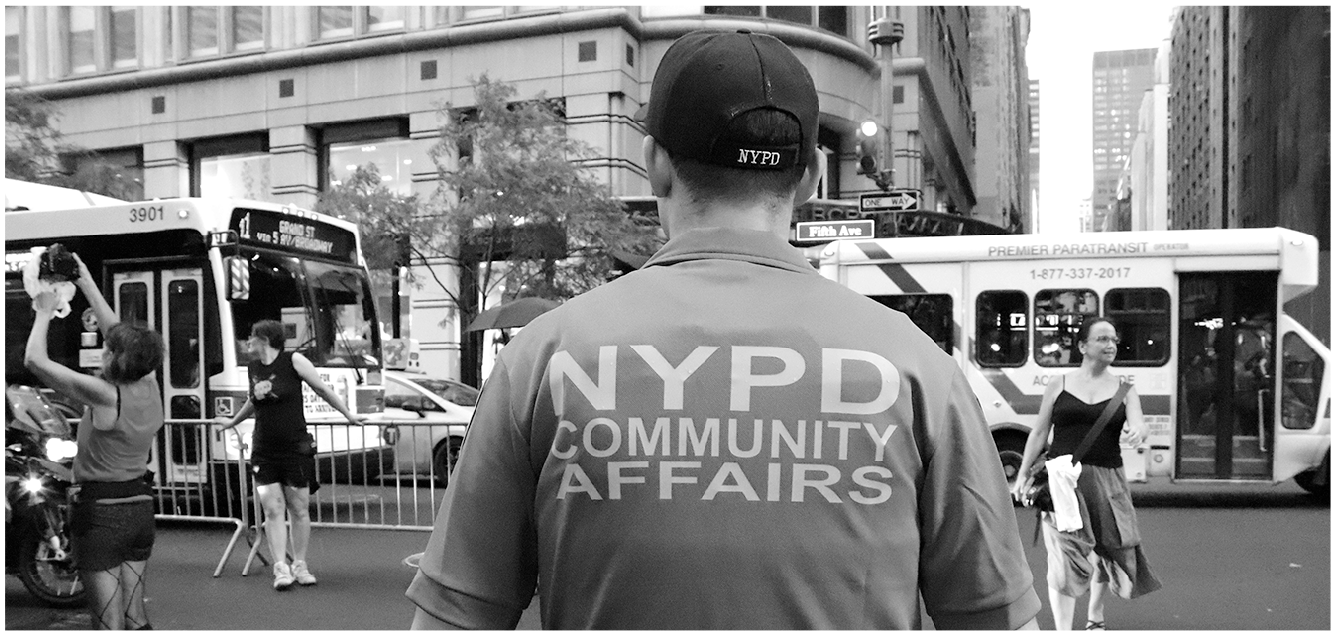
Amid rising scrutiny of police violence, many U.S. departments have implemented “neighborhood policing” strategies meant to facilitate non-enforcement contact between police and the community. For example, in the mid-2010s, the New York Police Department (NYPD) began to hold police-community meetings, inviting residents to informally express concerns with the officers assigned to their neighborhoods. Drawing on ethnographic data, Tony Cheng’s new American Journal of Sociology article reveals that, despite transparency talk, police frequently filter community complaints such that they appear to be endorsements instead.
More pointedly, Cheng finds that police actively curate public complaints in order to justify more policing rather than policing reform. A “selective decision-making” process results in police’s “cumulative discretion” and unfolds in a few key ways. First, departments choose where community meetings are held and who to invite. Second, they decide which complaints should be officially submitted into the organizational record. By Cheng’s reckoning, a full 88% of complaints seeking “police reform” to address “over- and unequal policing” practices are never properly documented. Third, police control reporting from community meetings online and work to publicly present only complaints that demand or are “construed to demand” increases in police services.
Because police actively work to control public perception of their practices, this study suggests scholars must carefully scrutinize administrative data provided by police departments. More broadly, the author demonstrates that when the police control their own complaint processes, public accountability is elusive if not impossible.
Food insecurity triggering migration
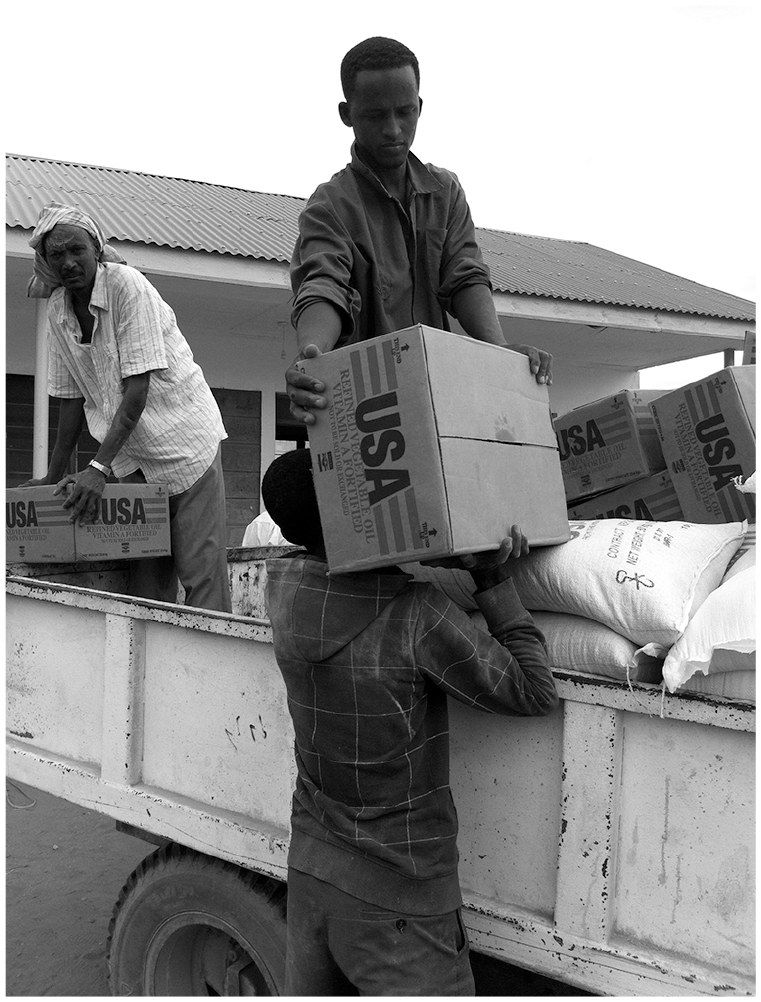
Well-worn explanations of international migration flows focus on factors such as poverty and political instability. New evidence, however, shows migration is increasingly associated with climate change and food insecurity (or FI)—defined by the UN’s Food and Agriculture Organization as the “situation when people lack secure access to sufficient amounts of safe and nutritious food for normal growth and development and an active and healthy life.”
In their recent International Migration Review article, economists Michael D. Smith and Dennis Wesselbaum first establish that significant link, then examine how the distribution of FI impacts regular, permanent international migration flows. They find that the origin country’s FI has a stronger impact on out-migration than does national income or changes in temperature—a fact that’s true on two levels. First, the more severe the FI, the larger the association with migration flows out of a country. Second, individuals suffering more severe FI have a stronger incentive to migrate, leading to uneven migration patterns within the origin country.
In the Dadaab camp at the Kenya-Somalia Border, amid devastating drought, refugees help unload international food aid from the Alliance to End Hunger.
Sodexo USA, Flickr CC
Documenting the impact of FI on migration suggests that policies directed at one phenomenon will likely affect the other. Food assistance interventions may influence migration behavior, and migration policies may help alleviate FI. Moreover, reducing inequality by targeting the population below the mean prevalence of FI would have strong impacts on migration flows. To achieve interlinked global targets, such as those set out in the United Nations’ Sustainable Development Goals, coordinating approaches to issues like migration and food security strategy may increase policy impacts.
Who’s lonely?
The COVID-19 pandemic gave us all a taste of social isolation, which mental health experts have long warned is detrimental to our well-being. Barring a lockdown, though, the risk of becoming socially isolated is more individual, as are its consequences. To help focus the picture, University of Texas researchers Debra Umberson, Zhiyong Lin, and Hyungmin Cha set out to see whether social isolation’s incidence or disadvantages varied throughout the life course or by gender.
Their study, published in the Journal of Health and Social Behavior, draws on a pair of datasets to learn about change in and experiences of social isolation. Respondents were sorted by gender and age (those aged 12-42 and 50+). The process revealed three key trends. First, regardless of gender, it appears Americans become lonelier as they age. Second, this process begins surprisingly early—during the teenage years and young adulthood, as major life changes begin to thin out social relationships. And third, the worst reported consequences of social isolation came before age 50 in men’s accounts, but after age 55 in women’s (a disparity most pronounced among the widowed, divorced, separated, and never married).
Risk of social isolation increases with age.
Krystian Olszanski, Flickr CC
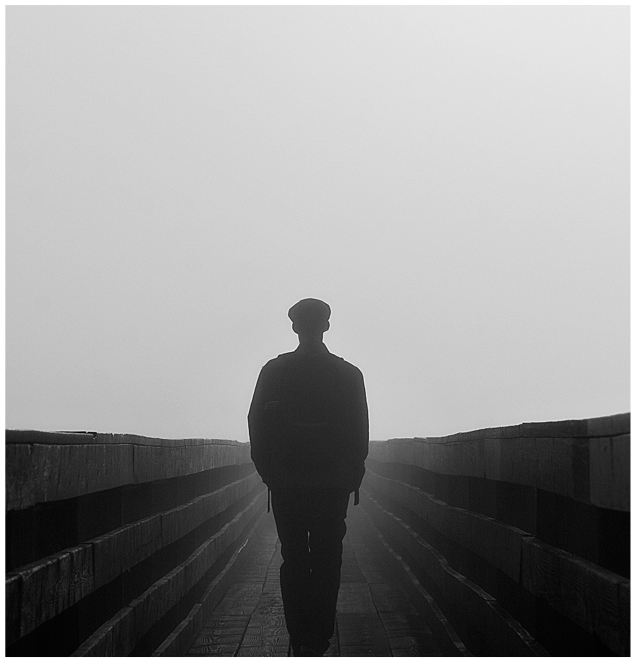
Together, the findings suggest those concerned with reducing social isolation will need to develop policies that attend to differences in at-risk populations and the resources needed to keep them socially connected at every age.
Trans joy
Sociology tends more toward documenting social problems than human joy. But despite the many negative experiences of marginalized groups, like transgender people (who, we know, disproportionately suffer discrimination, violence, and social exclusion), every life has its beautiful moments. In Social Problems, sociologists stef m. shuster and Laurel Westbrook write of their discipline’s “joy deficit” and highlight it by focusing on the accounts of 40 trans people asked what they found joyful about being trans. It turns out, marginalization and joy really aren’t mutually exclusive!
The trans joy comments the authors study elicited themes like authenticity, pride, mental health benefits, and community. Interviewees, they write, “easily answered the question about joy.” After transitioning, for instance, 80% of shuster and Westbrook’s respondents reported enjoying the feeling of not needing “to pretend anymore.” Many also expressed immense pride in belonging to a minority group and considered their trans identity a “gift.” Embracing their identity, respondents said, enhanced their self-confidence, encouraged body positivity, and cultivated a sense of calm—all of which improved the quality of their lives. And where a majority of trans people shared that their journey began with feelings of isolation, they also shared that the process had compelled them to build meaningful, joyful relationships across their marginalized-and-vibrant communities.
By even asking about trans joy—itself a first-time question for many trans people in the study—shuster and Westbrook help undercut the dominant narrative that being transgender is always painful and negative. Addressing the joy deficit in all areas of sociological inquiry, it appears, will help scholars better capture the breadth of contemporary social life.
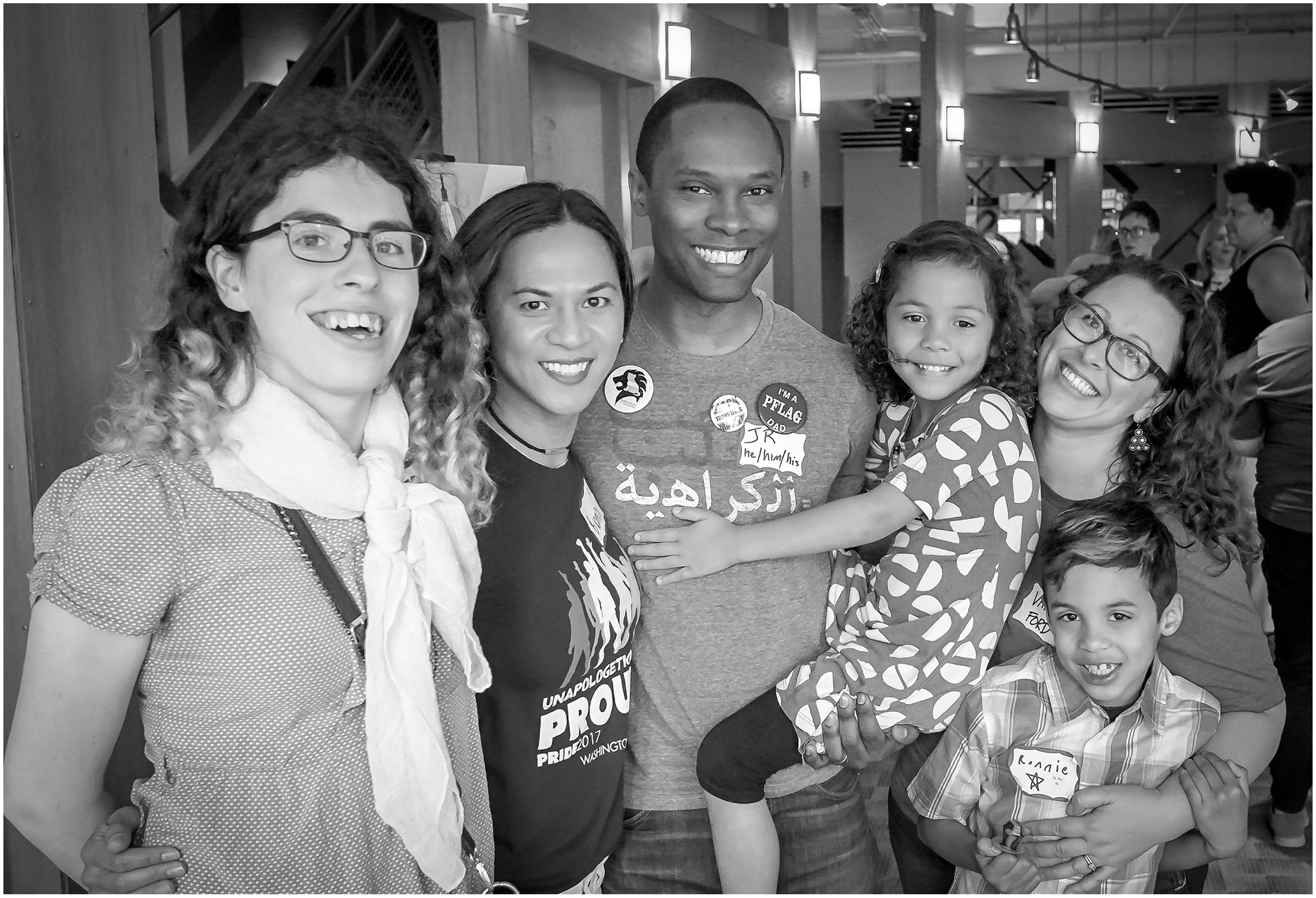
Trans lives are full of birthdays and barbeques, wedding days and graduation days, and so much more limitless joy, yet scholarship seems mired in a “joy deficit.” Here, the Ford family celebrates at Capital TransPride 2017.
Ted Eytan, Flickr CC
Footnotes
Correction (March 2023):
This article has been updated to correct the spelling of stef m. shuster’s name.