Abstract
Students designed posters for the sociology course Crime, Justice, and Rebellion and the design course Experimental Typography. The sociology class situated crime and criminal justice reform in relation to family, peers, community, and institutions. In the design course, students looked to historical examples of protest art and were challenged to communicate issues of social, cultural, and political relevance through poster design. Students considered the promise and limitations of sociology and design through reflections. Some posters engage with ideas from assigned readings while other posters represent original student research. Student poster designs advocate for social justice and criminal justice reform.
Keywords
What do sociology and design have in common? Through what are called paired courses, Whittier College’s liberal education curriculum teaches the value of an interdisciplinary lens in addressing complex problems by asking students to simultaneously explore content and research methods unique to different disciplines. We paired Crime, Justice and Rebellion with Experimental Typography; students enrolled in both courses and we attended one another’s lectures, seminars, labs, demos, and critiques. Addressing a variety of topics, students used poster design to advocate for social justice and criminal justice reform. We selected the images included in this essay from the body of undergraduate student artwork created in these paired courses.
The course, Crime, Justice, and Rebellion teaches the sociological analysis of criminal behavior in relation to social structure and criminalization processes. The class situates crime and criminal justice reform in relation to the family, peer groups, community, and institutional structures. Intersectional inequalities are a major focus as are discussions of how people counteract and resist social control efforts. Key texts include Western’s Punishment and Inequality in America and The Stickup Kids by Contreras.
The course Experimental Typography challenges students to communicate issues of social, cultural, and political relevance through poster design. Students are asked to consider the impact of typography on meaning and then to create their own letterforms through drawing, printing, projection and collage processes. Students look to historical examples of protest art for reference, from the woodcuts of the Protestant Reformation, to John Heartfield’s scathing Nazi critiques, to Cuba’s revolutionary poster art. We also examine images that have come to define more contemporary social and political movements.
The paired courses explored quantitative, qualitative, and visual methodologies. In sociology we discussed how to communicate quantitative data visually, through charts and graphs, and how to communicate qualitative data in narrative form through ethnography. In art, we explored the implications of using these different forms of information. How much data or language is enough to clearly communicate an idea? What concerns must be addressed when pairing personal narratives with found photographs? And how do we control the messages in our work? Students noted the promise and limitations of each discipline in a series of reflections. While Scout Mucher notes that, “A poster can never capture all the details of someone’s life the way an ethnography could…” Hailey Hirakawa explains that, “art is a powerful way to get a message across in a way that words, graphs, and charts cannot.”
Students and faculty found that a common question arose in both courses: Who has the right to research and present specific stories, words, or images? Our conversation began with the use of the N word in Contreras’s ethnography and continued as students grappled with the use of words and images in their posters. Our students capture this in their reflections. Bergen Flom asks, “who am I as a designer to make this image? …I learned about the importance of the artist or designer’s identity in relation to the works they create. It may be appropriate for one designer to tell a certain story, while it may be inappropriate for another to tell the same story.” Sarah Morgan explains, “I learned when designing these sociological posters that context is essential in relaying the proper message. This is important since sociology looks at race, gender, and social class differences and disparities. Without the appropriate attention to contextual information, a poster can be seen as offensive to some when that is not the end goal.” Scout Mucher expands on these ideas, writing that, “Sociology takes on the task of looking at both large groups of people as well as long histories of individual lives, neither of which are easy to simplify into an 11x17 work of art. Many of the sociological readings consisted of historical context, theory definition, mathematical analysis, and complex data gathering methods, which all feel important for understanding and trusting the data and conclusion they present you with. Design also becomes very important because every decision affects how the viewer will interpret, trust, respect, and feel about the information. As a designer, I’m trying to push them to feel a certain way about the information quickly, and the easiest way to do that is to say a lot with very little. But the less you say, the harder it is to prevent misinterpretation.”
Some posters engage with ideas from assigned readings while other posters represent original student research. All posters reflect student and faculty engagement with new materials, concepts, data, and techniques. Full color renderings of these and more images associated with the project can be found at studentart.whittier.domains/sociology-design
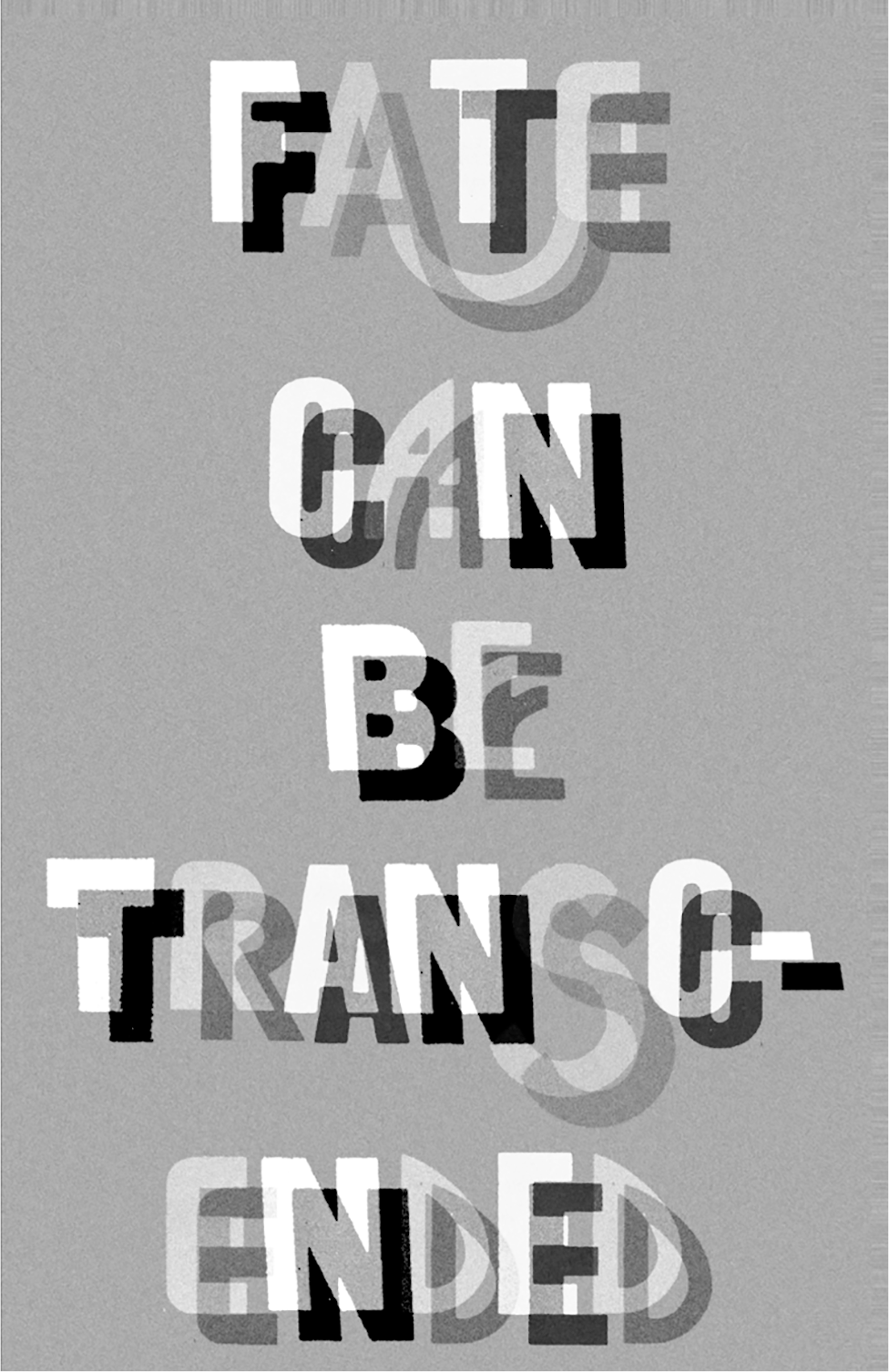
Senior Design and Social Entrepreneurship major Bergen Flom became interested in the writing of C. Wright Mills and found this quote in the book The New Left Reader. The text here is derived from found and photographed letterforms that were digitally collaged. Original Quote: “These systems can be changed. Fate can be transcended. We must come to understand that while the domain of fate is diminishing, the exercise of responsibility is also diminishing and in fact becoming organized as irresponsibility. We must hold men of power variously responsible for pivotal events, we must unmask their pretensions—and often their own mistaken convictions— that they are not responsible. Our politics, in short, must be the politics of responsibility.”
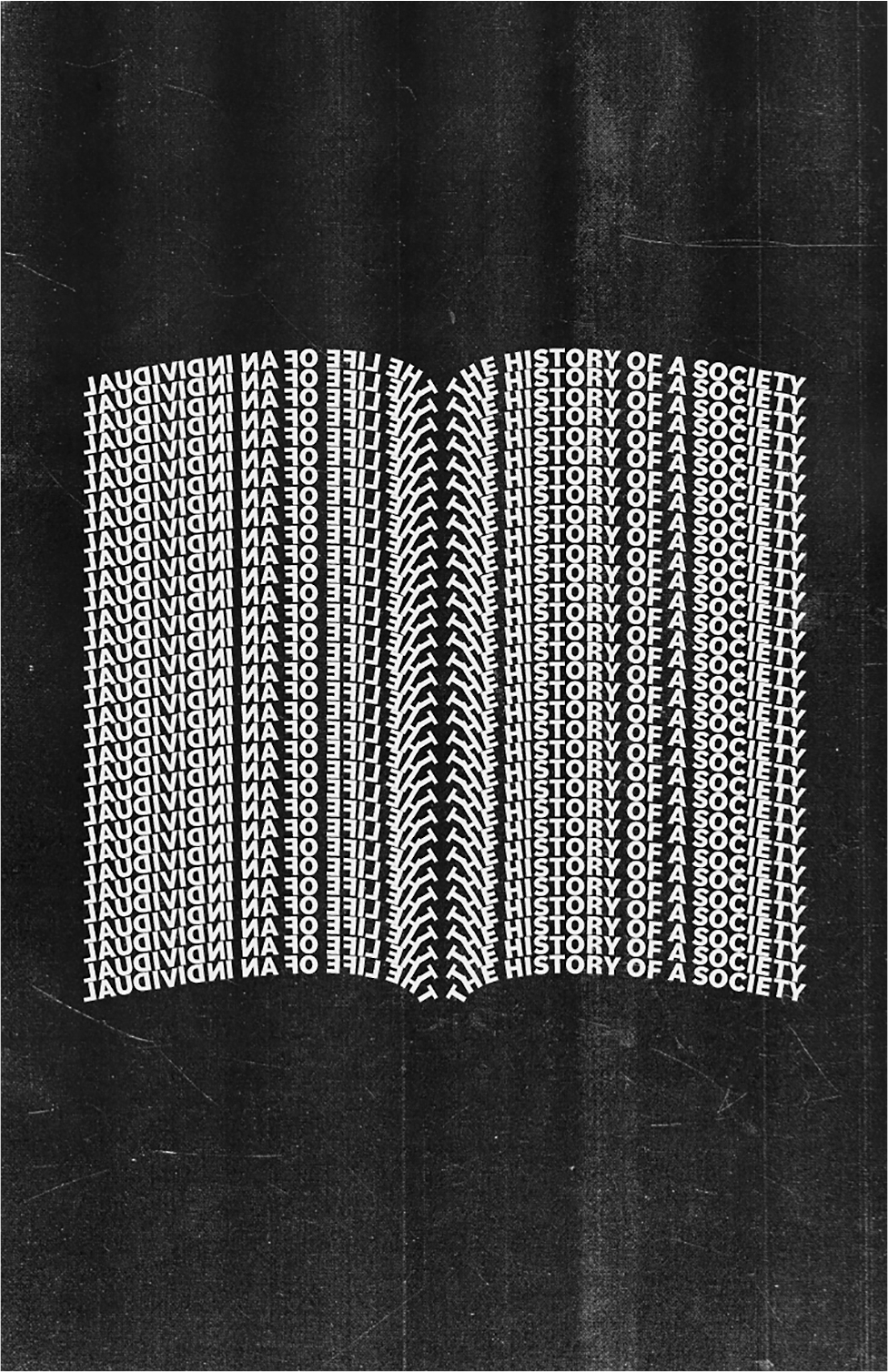
Here Flom interprets C. Wright Mills’s well known quote from The Sociological Imagination, “Neither the life of an individual nor the history of a society can be understood without understanding both.” In her design, the individual and the society reflect one another through adjoining book pages.
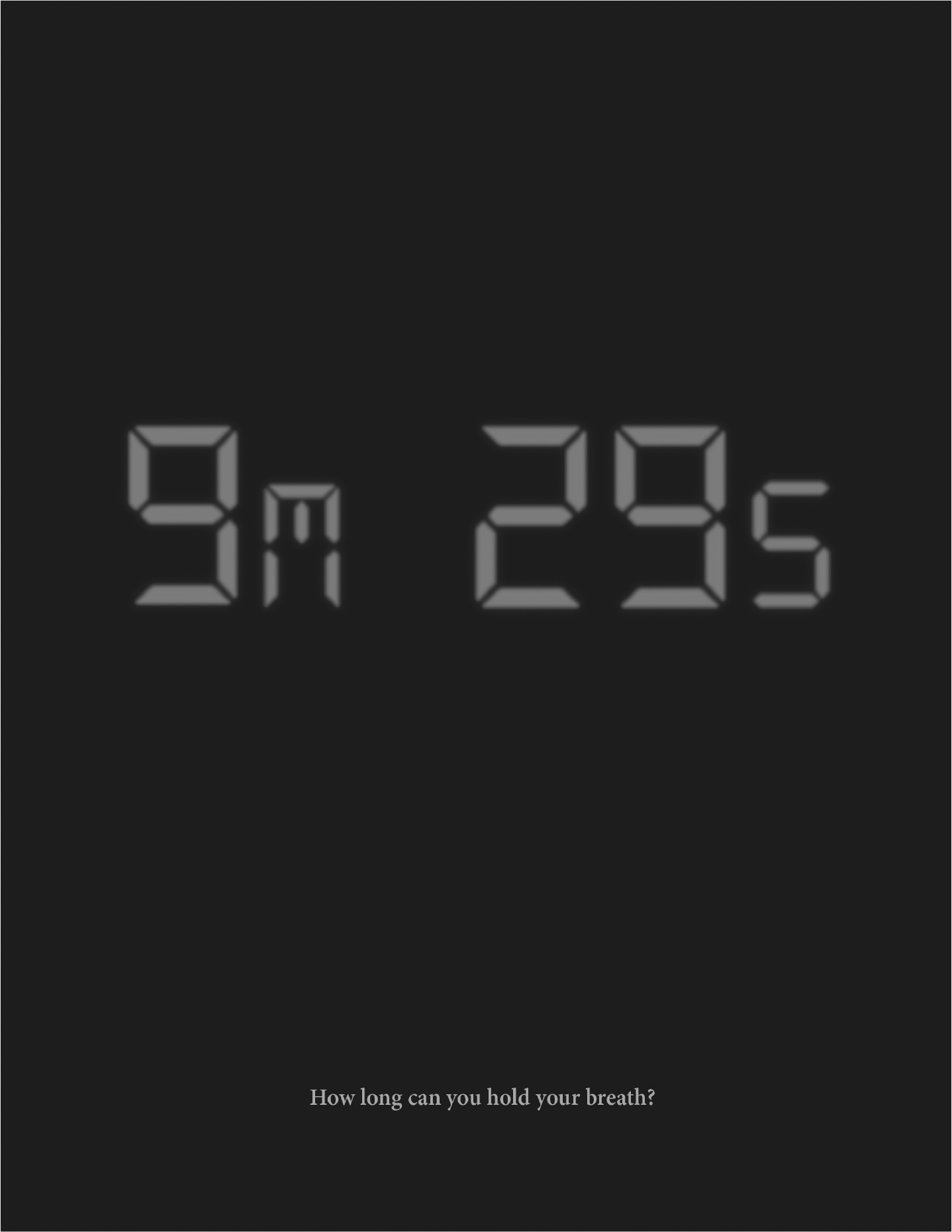
In this poster, senior chemistry major Sarah Morgan pairs the length of time white police officer Derek Chauvin knelt on Black Minneapolis community member George Floyd’s neck in the street, killing him on camera, with a simple question. The result is gut wrenching.
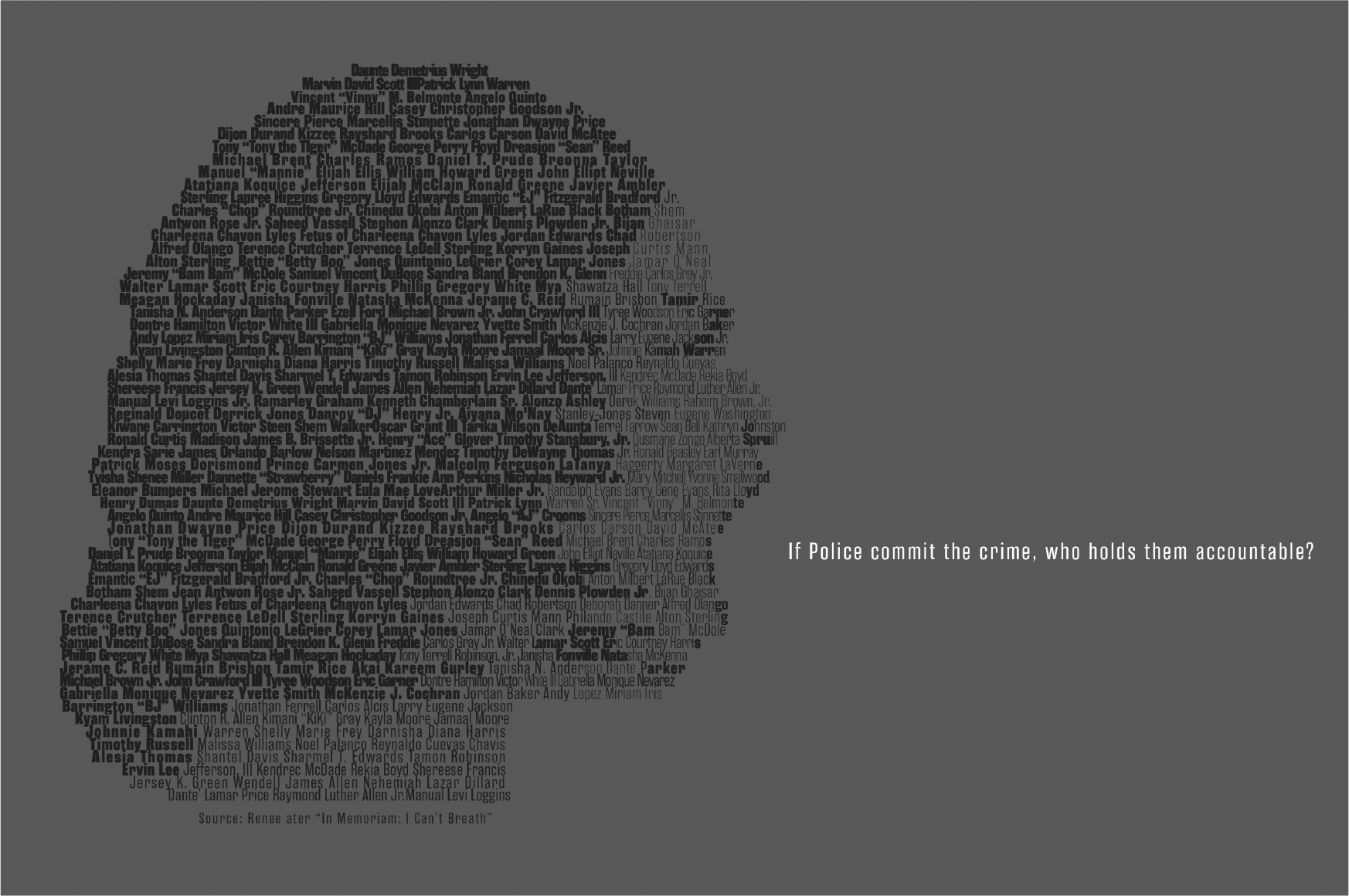
Senior art major Tom Santos constructs an image using only the names of Black and Brown men, women, and children killed by police officers. The names were taken from Renee Ater’s project “In Memoriam: I can’t Breathe.”
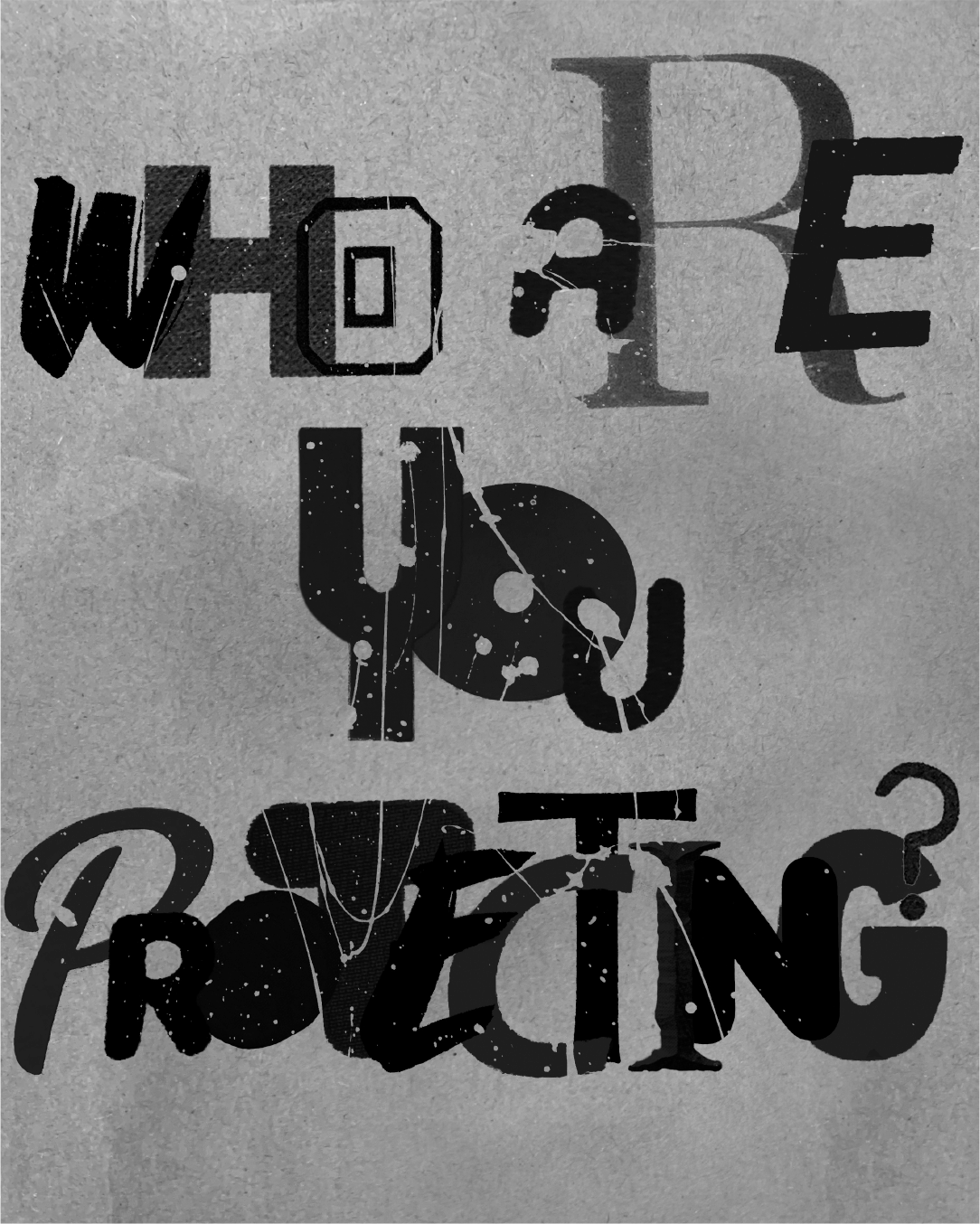
Senior computer science major Kallysta Lopez used found and photographed typography, hand-generated ink marks, and color to question deadly police shootings.
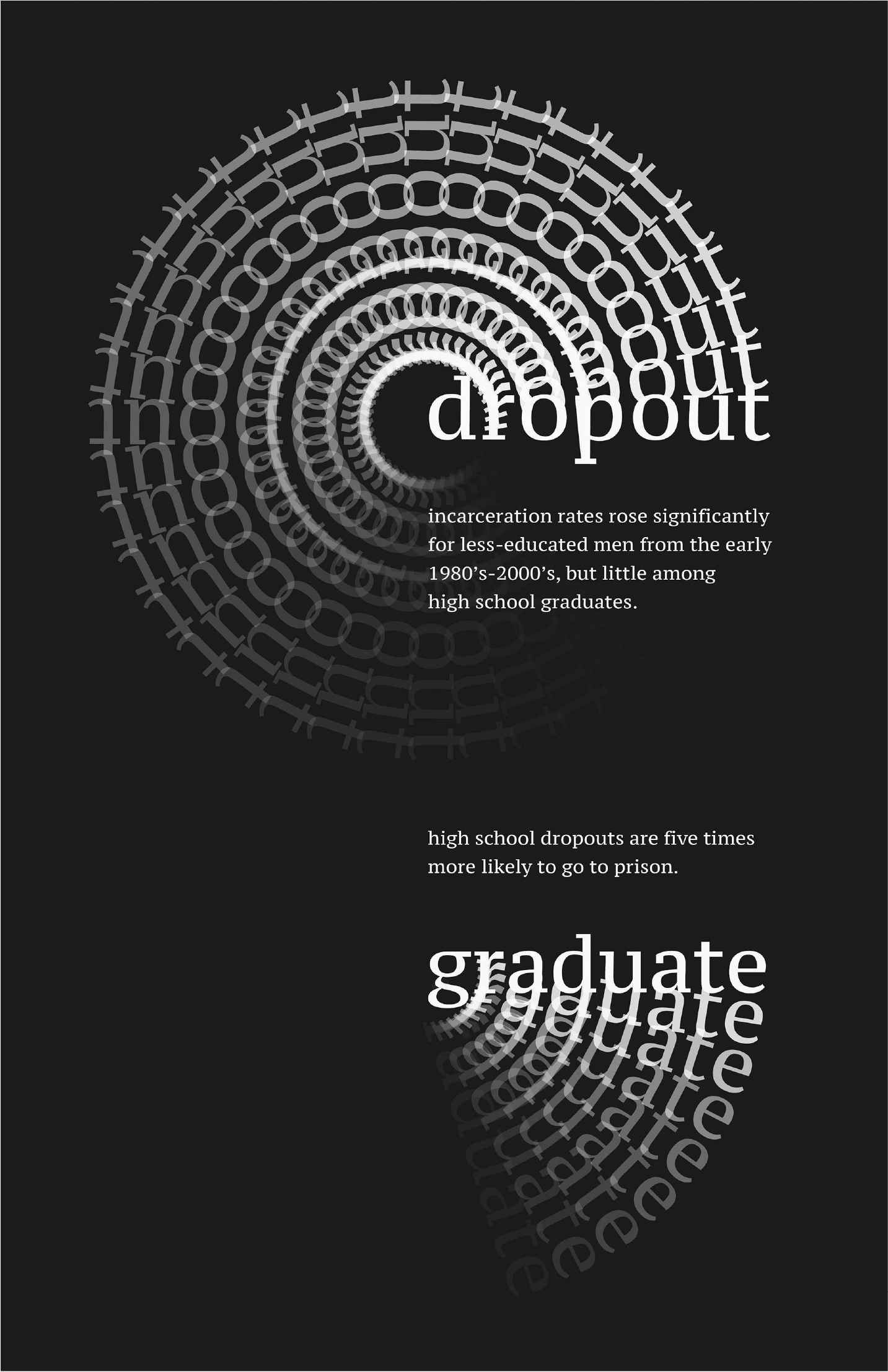
In this poster, junior art major Scout Mucher communicates information from “Chapter 3: The Politics and Economics of Punitive Criminal Justice” of Western’s book. The words “dropout” and “graduate” represent something of an abstract pie chart.
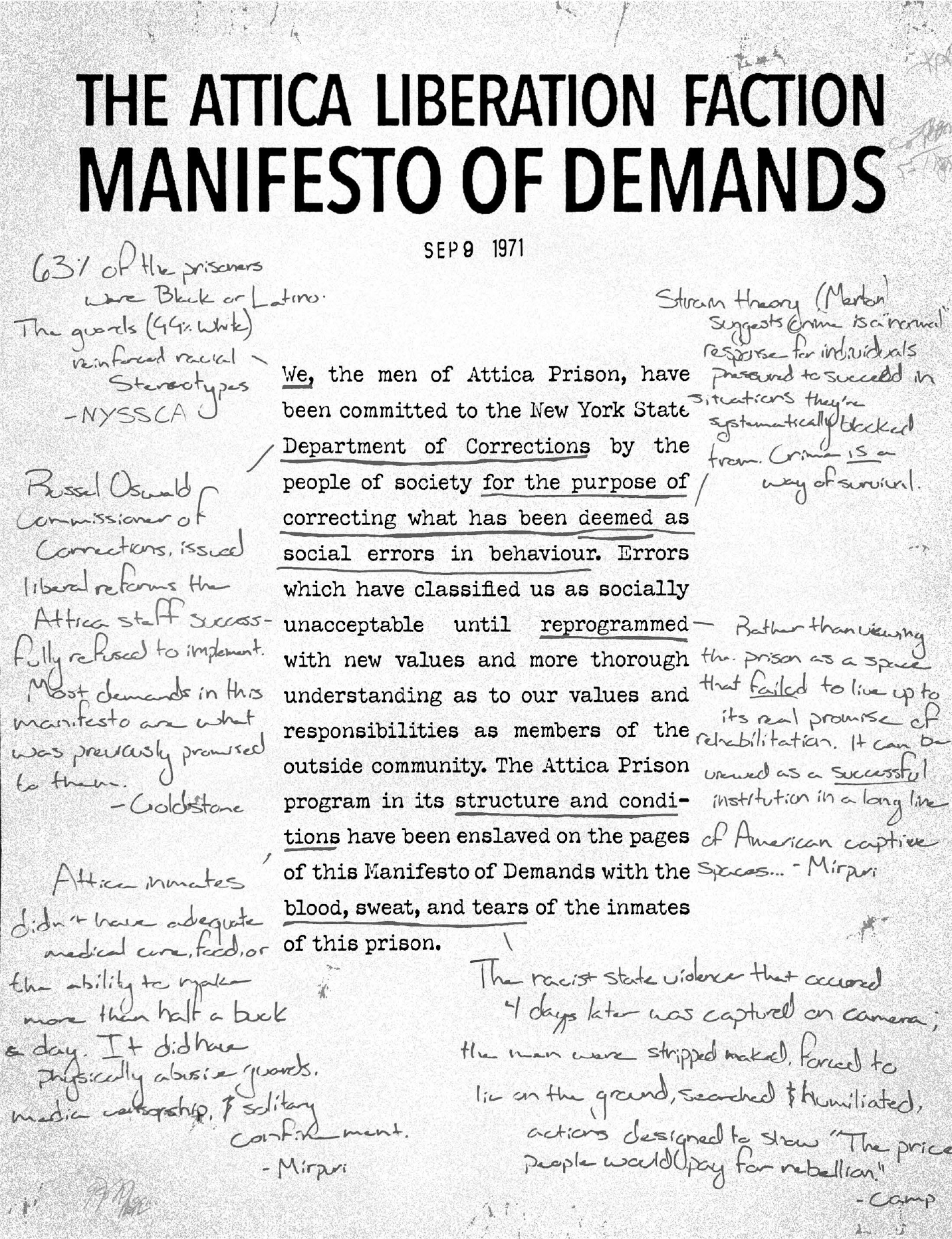
Here Mucher pairs an excerpt from the “The Attica Liberation Faction Manifesto of Demands” with hand-written texts from a wide variety of secondary sources.
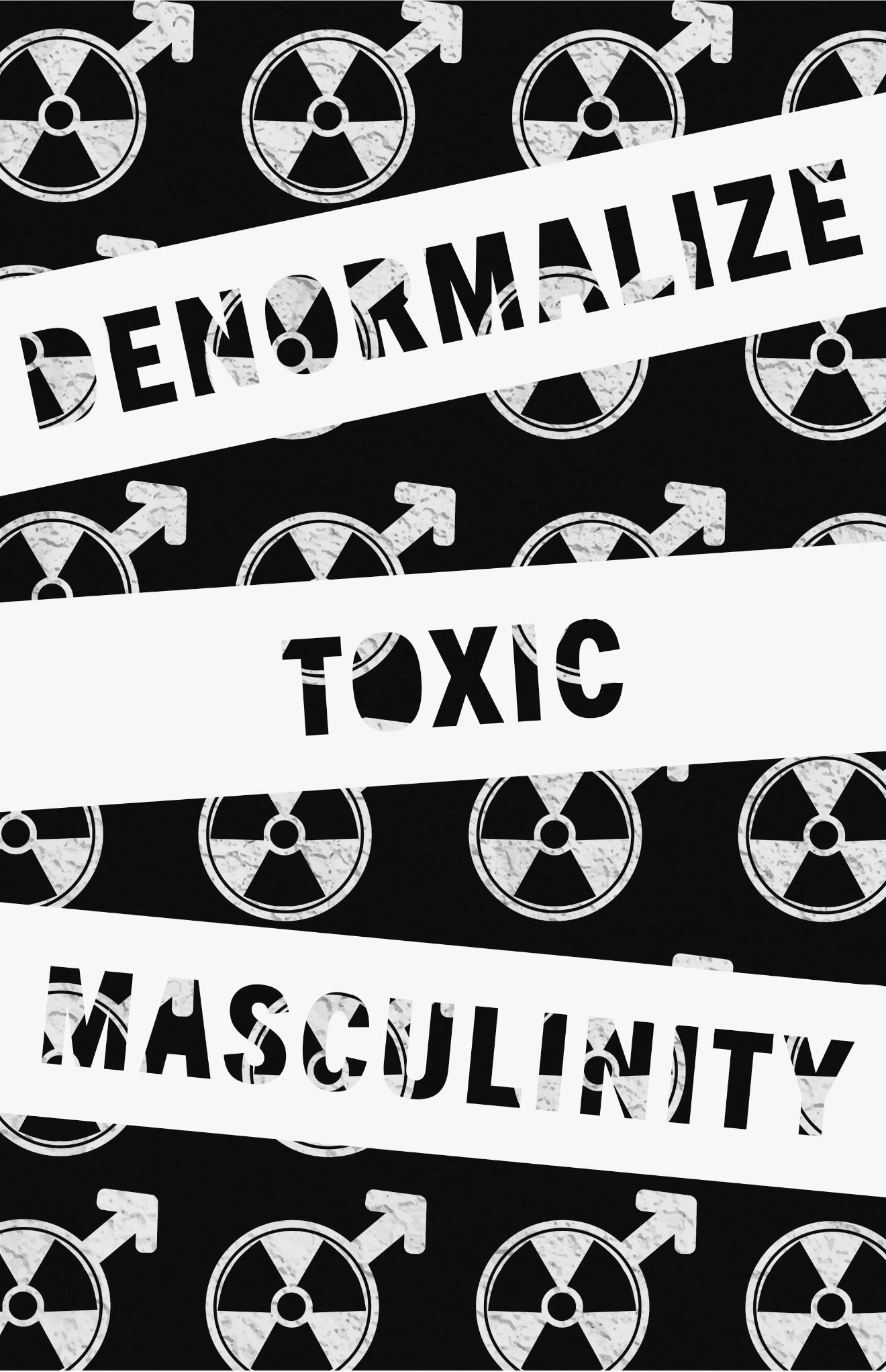
Junior art major Victoria Mejia was inspired by Victor Rios’s TEDx talk “Let’s Get Rid of Toxic Masculinity.” Mejia has created a symbol which merges the glyphs for male and nuclear.
In creating this poster, senior sociology major Michelle Velazquez-Leon was inspired by the first chapter of Bruce Western’s Punishment and Inequality in America.
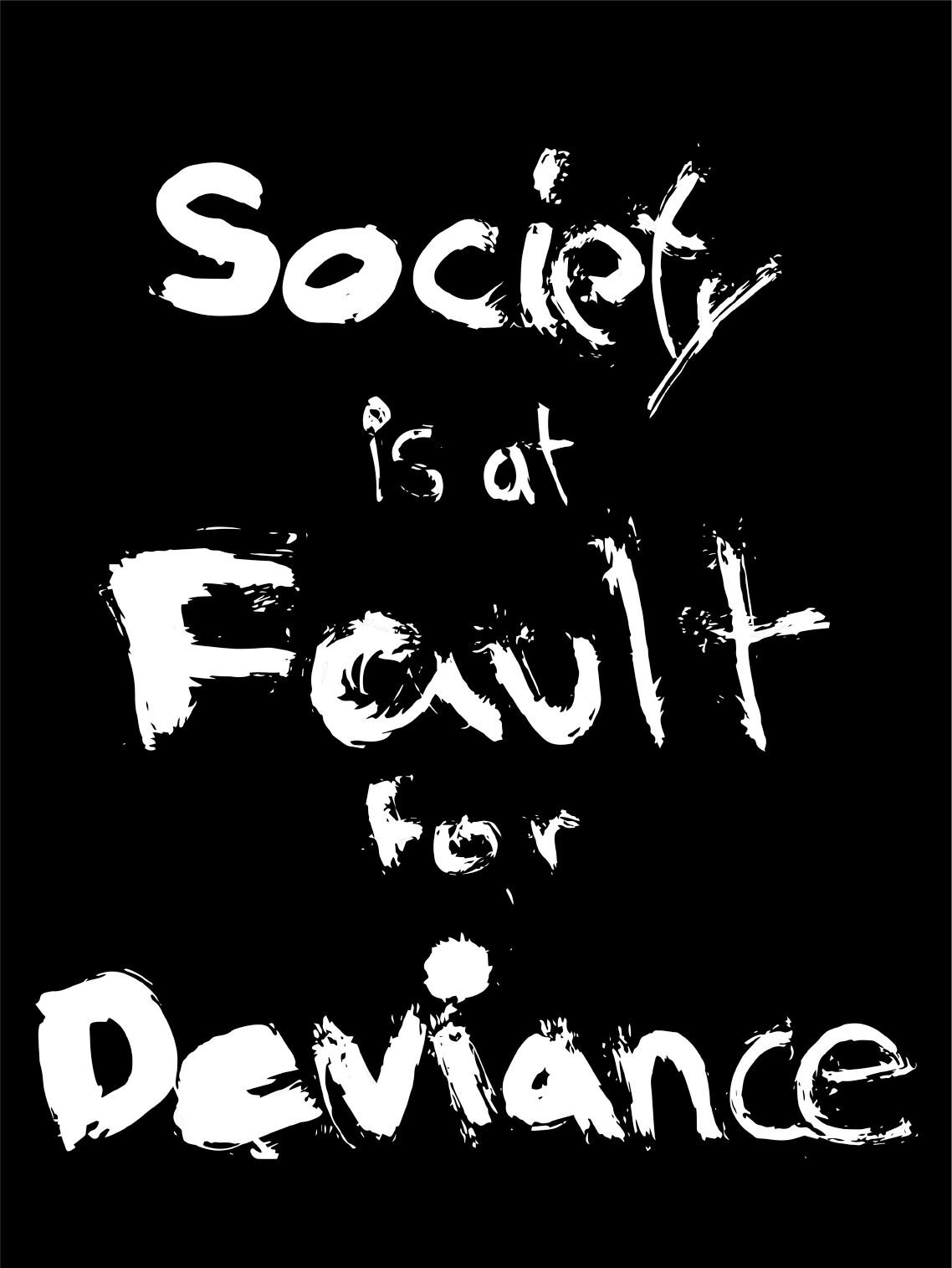
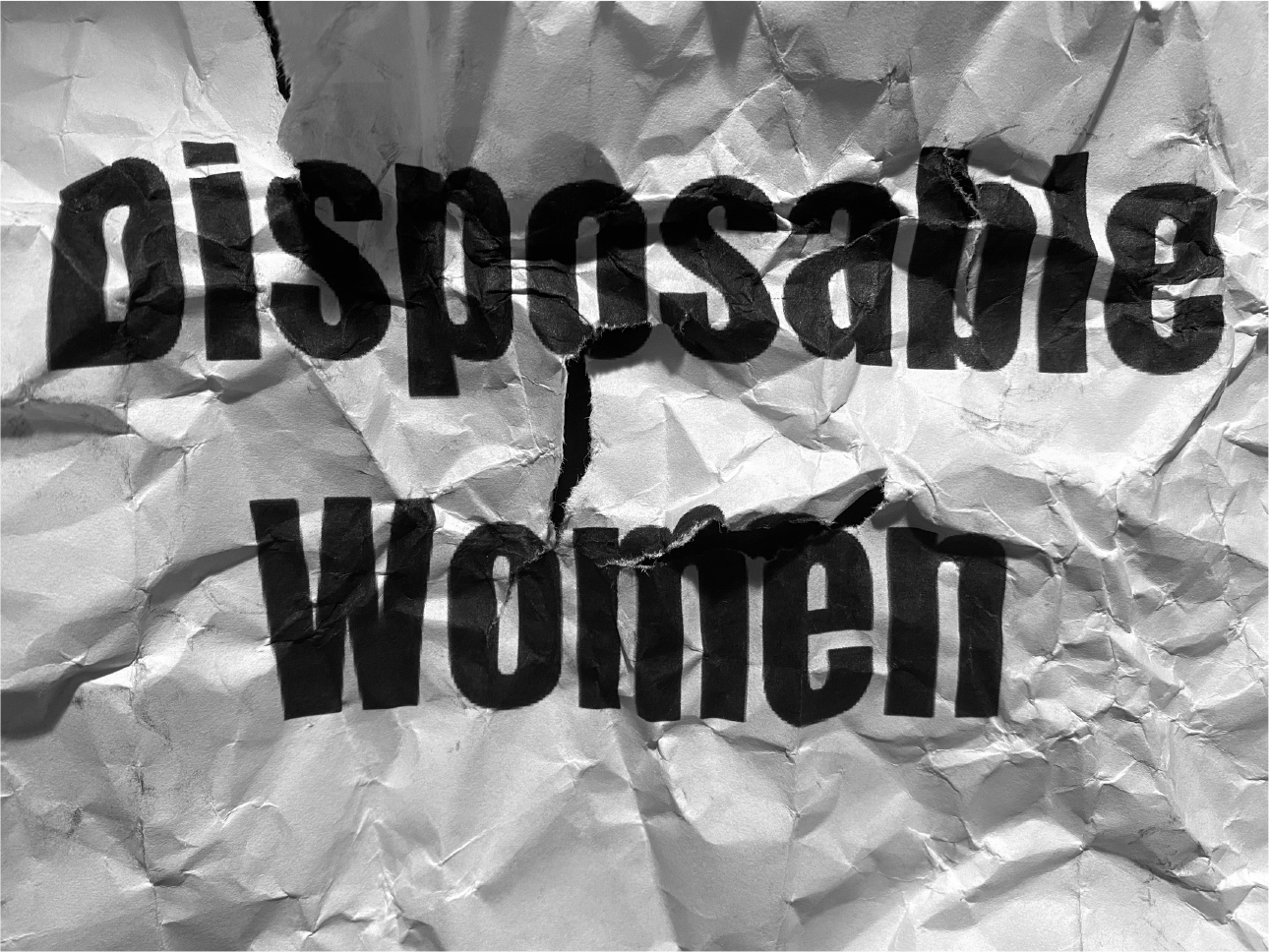
Velazquez-Leon created this poster in reaction to Chapter 6 of Randol Contreras’s The Stickup Kids: Race, Drugs, Violence, and the American Dream. While here she references the treatment of women in a specific ethnography, the poster’s message has broader implications.