



Abstract
With COVID, employees are questioning their exploitative workplace conditions, providing opportunities to rethink conventional arrangements. How might we reorganize economies so that they actually support the vast majority of people? How might we create stronger institutions to protect us against the array of existential threats we now face—which would include not just another pandemic, but also ongoing political instability, growing economic inequality, and the impending climate catastrophe? Besides introducing policies that guarantee a certain standard of living, people could explore cooperatives and other participatory organizations where members exercise a greater say in how to run their groups.

The upheaval of the last few years has sparked new conversations about the meaning of work. Even as COVID-19 devastated communities, endangered frontline workers, and disrupted supply chains, corporate profits and stock prices surged. As lockdowns upended workplaces, remote work became the norm in certain industries. Confronting this changed economic landscape, emboldened workers have organized new unions and staged widespread strikes, with public approval of labor unions soaring to highs not seen in six decades. Others have fiercely resisted management demands to return to the status quo. And since early 2021, millions of American workers have been voting with their feet and joining the so-called Great Resignation, a dramatic and prolonged spike in quit rates.
Now is a pivotal moment, a blip of opportunity when people seem to be open to different ways of doing things. How might we reorganize economies so that they actually support the vast majority of people? How might we create stronger institutions to protect us against the array of existential threats we now face—which would include not just another pandemic, but also ongoing political instability, growing economic inequality, and the impending climate catastrophe? Clearly, broad economic policies that share an economy’s rewards more fairly and inclusively are critical. We also need to consider promising grassroots efforts to build better economic organizations—such as cooperatives and other participatory organizations where members exercise a greater say in how to run their groups.
The work of the late Erik Olin Wright, one of the foremost sociological thinkers on alternative futures, can help us make sense of these possibilities. To illustrate class relations under capitalism, Wright presented the parable of the Shmoo—a fictional lifeform from Al Capp’s mid-twentieth-century comic strip Li’l Abner. Shmoos were cheerful, bowling pin-shaped creatures that reproduced prolifically and provided humanity—willingly and enthusiastically—with seemingly endless sustenance and entertainment. Once Shmoos were discovered and cultivated en masse, workers no longer had to toil desperately for employers. Workers could decline a particular task, or a particular job. They no longer could be exploited, because they had full freedom to decide what they wanted to do. Using the thought experiment of the Shmoo, Wright highlighted how exploitation is an endemic feature of capitalism. Any reasonable person would want Shmoos to exist—everywhere, for everyone—but capitalists had a vested interest in keeping them out of the hands of workers, who otherwise wouldn’t work hard for such low wages.
The massive policy responses to the pandemic in 2020 provided a glimpse of what Shmoo-based policies might look like in practice. Governments around the world expanded their social policies when pandemic-related lockdowns suddenly thrust some workers out of labor markets. European countries took the lead in almost entirely subsidizing the payrolls of employers so that benched workers could continue to draw wages. Even in the US, a country resistant to generous welfare state provisions, the economic crisis unleashed by the pandemic prompted Congress to pass temporary relief measures that included a universal child allowance, a policy common in social democratic countries. Sociologist Christopher Wimer and other Columbia University researchers have noted the powerful impact this policy had in temporarily slashing the country’s child poverty rates and stabilizing household finances. Along with the general tightening of the labor market, the financial flexibility provided by state relief may have also helped convince workers to quit their jobs in search of higher wages and better work conditions—or other careers altogether—at the outset of the Great Resignation.
COVID-related disruptions have helped redefine the meaning of work.
Laura James via Pexels

Particularly in Europe, the pandemic has stirred interest in implementing universal basic incomes (UBIs), and a number of municipalities in the United States and elsewhere have already piloted these programs or arrangements that approximate them. Under this general approach, governments distribute cash with few or no conditions to citizens. UBIs could help address economic inequalities that became particularly egregious during the pandemic. Furthermore, such policies inherently recognize the social value of the often invisible and unpaid labor people do in their homes and communities. If people widely received these sorts of income transfers, they would have more freedom to do work that they truly cared about, under humane conditions. That, in turn, would help ease the labor supply issues (also glaring since the pandemic began) in essential but underpaid occupations, such as caring for the young and elderly.
Pandemic-linked shortages have raised workers’ expectations and lowered their tolerance for exploitation-as-usual.
In the US, though, the federal government’s Covid relief measures were temporary, and in spite of Democrats’ control of Congress, party moderates worried about its high price tag chose to block the extension of the universal child allowance. Since then, high rates of inflation—which conservatives have blamed on generous relief measures—have further eroded the political will for broad-based spending to support struggling workers and families. The fierce pushback against efforts to strengthen the safety net is unsurprising, given the fundamentally imbalanced character of the current economic system: how the hunger and insecurity of workers who don’t have choices enable the various forms of exploitation that the market economy relies upon to generate profits for a few. Take the endless social-media stream of complaints nowadays by employers unable to find low-wage workers willing to staff their stores and restaurants; what’s good for workers—and therefore the majority of the populace—is bad for capitalism. For the time being, though, pandemic-linked shortages have raised workers’ expectations and lowered their tolerance for exploitation-as-usual. Even capitalists are beginning to recognize this, with big-box retailers now offering unprecedented wages—as much as $24 per hour in New York City—to attract job applicants.
The research of Erik Olin Wright can help us make sense of current discourses about work.
Aliona Lyasheva via Wikimedia Commons
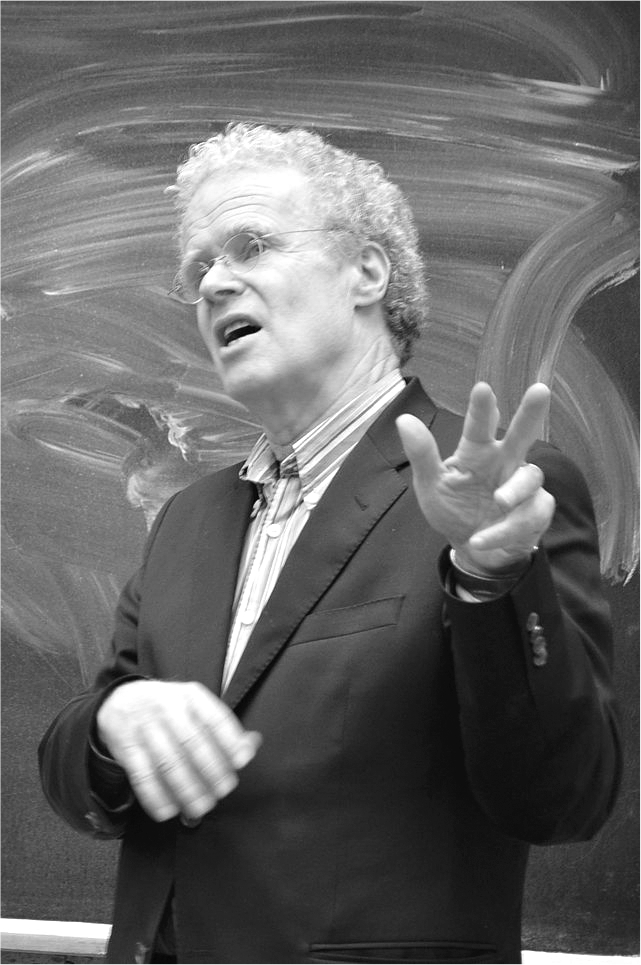
Wright recognized how the deeply rooted interests of capitalists made it difficult to “tame” markets with social democratic policies. For this reason, he also counseled an approach of “eroding” capitalism—and thus the exploitation baked into it—by cultivating alternative forms of economic activity. Cooperatives and other participatory organizations would allow societies to transition to less extractive ways of organizing economies. “The strategic vision of eroding capitalism imagines introducing the most vigorous varieties of emancipatory species of noncapitalist economic activity into the ecosystem of capitalism, nurturing their development by protecting their niches, and figuring out ways of expanding their habitats,” Wright wrote. “The ultimate hope is that eventually these alien species can spill out of their narrow niches and transform the character of the ecosystem as a whole.”
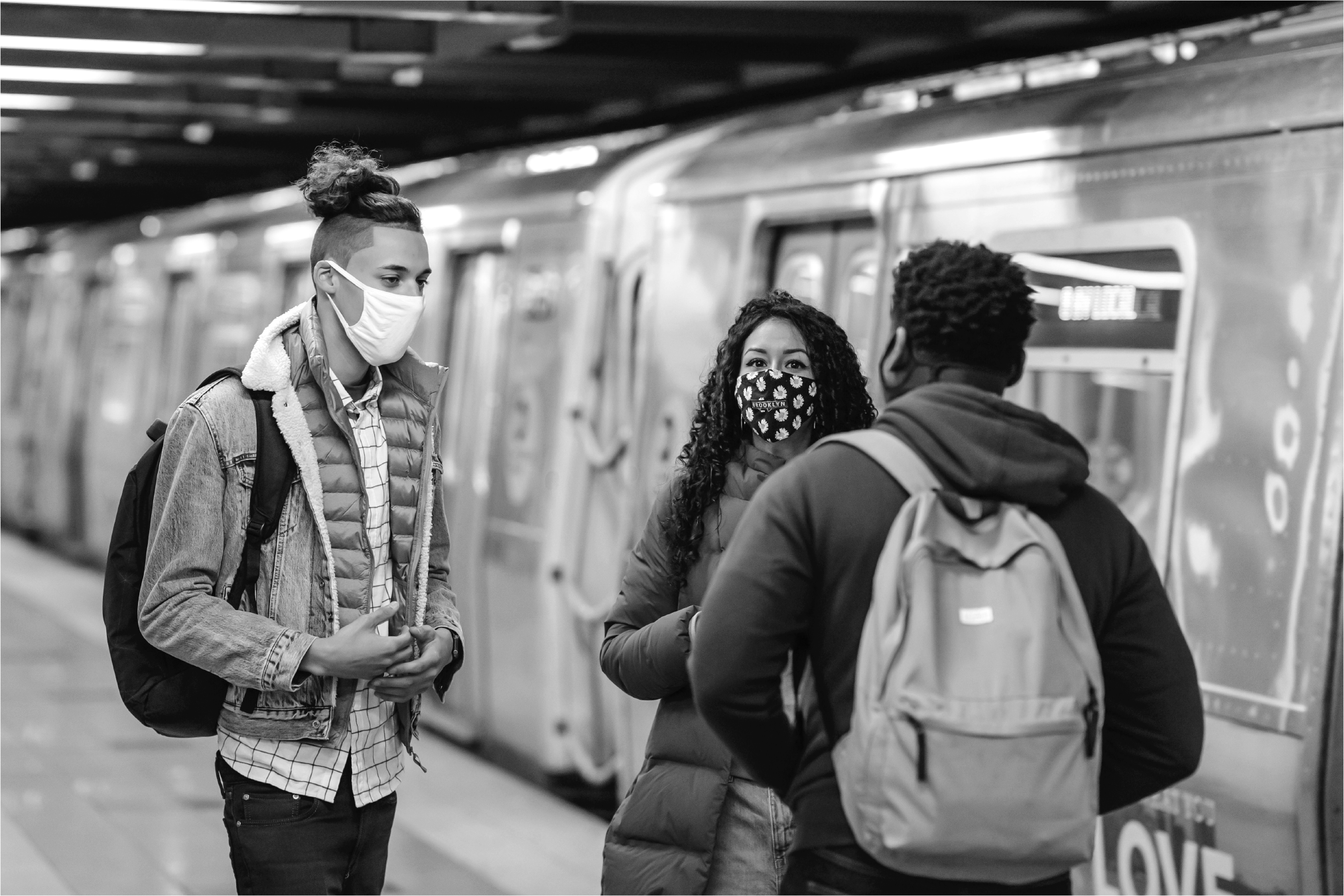
Being in crisis mode for so long has opened people to exploring a wider range of possibilities for how to organize their work lives. For example, the L.A. Co-op Lab, which offers help with launching worker cooperatives in the Los Angeles area, noticed an uptick in interest after the start of the pandemic; as co-founder Gilda Haas puts it, after experiencing so much death, people are seeking “life, life, life!” through more meaningful work. The workers dropping by—chefs, comedians, strippers— want to reconsider how they go about making a living, she says. In spite of the pandemic, the ranks of worker cooperatives in this country have swelled over the past two years, according to a biannual census conducted by the Democracy at Work Institute and the US Federation of Worker Cooperatives: from 465 in 2019 to 612 in 2021.
Perhaps surprisingly, the United States boasts a long tradition of participatory organizations. The Grange, a national agricultural movement launched after the Civil War, opposed corporate power in part by launching cooperatives and mutual societies. Disadvantaged communities have also historically turned to alternative forms of organizing after being shut out of markets or government-run programs. Notably, participatory organizing and union organizing have often complemented, rather than competed with, one another. The Knights of Labor, a storied US labor organization, aggressively promoted worker and producer cooperatives. Today, the union-supported Cincinnati Union Co-op Initiative (now called Co-op Cincy) has fostered the development of numerous worker co-ops.
As we mentioned earlier, the pandemic has also helped usher in a union moment, headlined by a round of high-profile strikes during last year’s “Striketober” and a slew of recent efforts—some, at long last, successful—to unionize corporate behemoths like Amazon and Starbucks. At the moment, though, the most democratic and participatory kinds of economic organizations remain a miniscule part of economies: the roughly 600 worker-owned co-ops now in existence only employ 6,000 people while taking in $283 million in annual revenue. If the goal is to erode capitalism, this approach needs to be dramatically ramped up. Otherwise, cooperatives will just serve as escape pods for a few—creative ways that a small number of people can buck the system without overturning it.
That said, participatory organizations can take myriad forms. For example, while worker cooperatives split ownership equally among workers and give each person an equal say in decision-making, other models allow for varying degrees and kinds of worker control. Employee ownership trusts, where more than half of a company’s shares are owned by workers, have become the dominant form of employee ownership in the UK; employee stock ownership plans (ESOPs), which give workers a stake in the company through their retirement plans, have proliferated in the United States. (According to the US-based National Center for Employee Ownership, the country’s ESOPs now cover 6,257 companies and own a total of $1.6 trillion in assets.) And very different models of democratic participation exist beyond employee ownership—from consumer cooperatives, to communes, to participatory social movement organizations.
Being in crisis mode for so long has opened people to exploring a wider range of possibilities for how to organize their work lives.
Keira Burton via Pexels
Furthermore, research suggests that participatory organizations—including those that aren’t as democratic and equitable as cooperatives—can have a powerful impact on the workings of economies. One study finds that US counties with a diversity of organizational forms—in other words, local economies where cooperatives, credit unions, community banks, nonprofit organizations, and research universities prevail—are better able to weather economic downturns. Specifically, these counties lost fewer jobs during the Great Recession and regained employment more quickly in the recovery than localities overwhelmingly reliant on traditional companies.
The know-how already exists for how to run a successful alternative enterprise. In the United States, programs such as City University of New York’s Community and Worker Ownership Project (CWOP) offer training and certificates in forming and managing cooperatives. Rutgers University’s Curriculum Library for Employee Ownership (CLEO) curates a repository of case studies and syllabi and a roster of guest speakers to support instructors. Organizers from Green Worker Cooperatives and Cooperation Jackson regularly mentor new entrepreneurs, particularly those working to start cooperatives in underserved communities.
For participatory organizations to spread widely, though, a larger share of the public will need some working knowledge of how workplace democracies actually operate. Nowadays, formative experiences can occur in classrooms and through volunteering, as shown in Katherine’s own research on a small democratic school in New York City and the organization behind the Burning Man event. This early exposure can be critical: research on people’s dispiriting experiences with occasional deliberative decision-making suggests that people need to engage frequently in participatory practices in order for democratic cultures to thrive. But in most local economies, the available training and assistance are geared toward promoting conventional business models. For instance, as Victor and his colleague Jesse Goldstein discuss in their research, university entrepreneurship programs train students how to pitch startups, on the grounds that creative business ideas invigorate the overall economy. But such ventures are typically judged on their market scalability—and, thus, the potential to be acquired by large corporations—rather than how they address community needs or create good jobs. What if students in such programs were also taught how to launch cooperatives, or were rewarded for ventures with positive local impacts?
Forward-thinking union leaders have come to see cooperatives as new ways for the labor movement to recruit and retain members and deepen their democratic skills and experiences.
Along with organizing unions and supporting pro-worker movements, starting a cooperative is a practical step that people can take to exercise their voice in the workplace. That said, a Research in the Sociology of Organizations volume we recently published describes how these alternative organizational forms require hard work and supportive conditions. For example, Katherine Sobering’s study of an Argentinian worker cooperative details the intensive everyday work that keeps a democratic venture alive—legally, economically, and spiritually—within capitalist economies. By providing legal recognition, sensible regulation, and tax incentives, governments can make collective ownership a more viable business strategy. Even with such support, though, a co-op’s members can tire of the constant work of making decisions by consensus, integrating new recruits, and keeping up with principles of equitable pay and job rotation. They may be tempted to introduce conventional practices and hierarchies to smooth over emotion-laden disagreements or increase efficiency. To resist these pressures, cooperatives have to find creative ways to reinvigorate members’ interest in their everyday activities. In one French sheet metal worker cooperative, for example, members drew upon a craft ethic that infused their work with creative meaning. By viewing projects as opportunities to hone their technical prowess, members resisted efforts to cut corners, automate work, and eke out greater profits like the firm’s conventional competitors were doing.
Nurturing a healthy ecosystem of cooperatives may open up space for more robust social policies and redouble collective efforts to deal with longstanding challenges.
Of course, the larger policy environment is essential in helping cooperatives and other alternative enterprises take root and sustain their values. In the UK, generous government tax incentives have spurred recent growth in employee-owned firms. In the burgeoning field of ethical finance, the influence of social movements can be decisive in ensuring that mission-driven banks don’t stray from their founding values. And when entire countries like Brazil pour resources into supporting participatory organizations, a diverse and mutually reinforcing constellation of alternative enterprises—a so-called cooperative commonwealth—can flourish. Even in the staunchly capitalist United States, these approaches are gaining traction at the local level. Larger “solidarity economies”—networks of cooperatives—have emerged in parts of the country that might seem politically inhospitable to such collectivism, such as Cooperation Jackson in Mississippi. Such economies counter corporate and governmental disinvestment and ensure that needed resources circulate within local communities.
That said, co-ops can be coopted by these larger networks of influence. Ideally, associations of cooperatives (such as the UK’s Employee Ownership Association) can provide needed resources and a helpful sense of community and common purpose to their member organizations. If such “meta-organizations” kowtow too much to capitalist conventions, however, they can also be vectors through which business-as-usual mindsets spread. Facing these top-down pressures, member cooperatives can lose their independence, creativity, and abilities to serve local markets and stakeholders—as Carla Young’s research on the organic grocery industry suggests. And when union and cooperative forms mix—as in the case of New York’s Cooperative Home Care Associates (CHCA), a cooperative of homecare workers which later voted to unionize by becoming a SEIU local—the workers within such hybridized arrangements may struggle to understand which aspects of their organizations benefit them or who exactly is representing them.
While these challenges are real, they are not insurmountable. As researcher and union consultant Sanjay Pinto points out, forward-thinking union leaders have come to see cooperatives as new ways for the labor movement to recruit and retain members and deepen their democratic skills and experiences. In turn, unions can play an important role in helping the public understand participatory organizations and their potential to improve people’s everyday lives. After all, throughout history, labor movements and other social movements have often had a decisive influence on how the public views what is fair and right—from the norm of the work-free “weekend,” to the belief that discrimination in hiring is wrong, to the understanding that employees should have safe and supportive working conditions. To truly scale up, cooperatives need a larger movement of supporters behind them.
Indeed, here is where we see these two strands of thinking—macro policy and micro practice—intertwine. On the one hand, policies shape what individual actors can do. Making it easier to organize workplaces as unions and worker cooperatives makes it easier for people to speak out on economic issues. A stronger safety net gives more entrepreneurs the ability to start participatory organizations, and more people the financial security to consider working for them. This last point was one that Wright himself made in favor of a universal basic income (UBI). Unconditional income transfers would not only “tame” one of capitalism’s chief ills—“poverty in the midst of plenty”—but they would also bolster the “potential for a long-term erosion of the dominance of capitalism by channeling resources towards noncapitalist forms of economic activity,” Wright noted. Worker cooperatives were often “fragile,” he added, because they needed to “generate sufficient income not merely to cover the material costs of production but also to provide a basic income for their members.” A UBI would take the latter costs off their balance sheets, allowing cooperatives to compete in the market on more promising terms.
Formative experiences with participatory practices can occur in classrooms and through volunteering for organizations such as the Burning Man Project.
Image provided by author, Katherine Chen

In turn, nurturing a healthy ecosystem of cooperatives may open up space for more robust social policies and redouble collective efforts to deal with longstanding challenges. Wherever participatory organizations proliferate, they can help erode the hypermeritocratic cultures of work and success that often turn people against strong government safety nets. Making decisions democratically underscores the value of cooperation and the dignity and voice of each member of the collective. Being part of a community provides a sense of purpose beyond the corporate rat race of climbing competitive career and income ladders. In this sense, alternative organizing can help bring about what Victor has called an “economy of grace,” which challenges the dominant market ethic of competition and deservingness in favor of other moral and civic ends.
In any case, the mass resignations and worker resistance that have roiled the labor market in recent years suggests that people are looking for something better. Too many of us are challenging what we’ve long been educated to accept—from how much we get paid, to how much input we have at work. And if capitalists cannot supply basic incomes and dignified work, maybe we need to seek out the sorts of organizations and governments that do.