



Abstract
Growing attention has been given to the massive spike in anti-Asian hate crimes since the COVID-19 outbreak. But it is also essential to recognize that not all Asians experience the rise of anti-Asian racism to the same degree. Many individual and contextual factors may shape individuals’ subjective experience of anti-Asian racism. Underlying Asians’ differential experiences are the unequal psychological consequences they bear. This essay explores nativity, and co-ethnic concentration, as well as how they interact to affect Asians’ experience of anti-Asian racism.
What are we talking about when we talk about anti-Asian racism during the COVID-19 pandemic? We talk about the videos that capture Asians being punched in the face, kicked in the head, or brutally stabbed. We talk about the Atlanta Spa Shootings that left seven Asians dead. Anti-Asian racism also entails the over 10,000 self-reported anti-Asian hate incidents gathered by community organizations in the United States and Canada.
Far less attention has been given to Asians’ subjective experience of anti-Asian racism during the pandemic. And how they experience it differently.
W. E. B. Du Bois highlighted the importance of considering the subjective experience of race and racism long ago. He theorized Black Americans’ experience of “being black” in double consciousness, a sense “of always looking at oneself through the eyes of others.” In his view, this internal struggle and conflict experienced by Black Americans are central to understanding the race problem in the United States.
Considering Asians’ subjective experiences also helps us understand how anti-Asian racism hurts Asian communities worldwide. Indeed, the massive spike in anti-Asian hate crimes during the pandemic has become a collective trauma felt by Asians worldwide.
Survey data suggest that millions of Asians have perceived themselves as targets of racial discrimination since the start of the pandemic. For instance, a Pew Research Center survey conducted in April 2021 indicates that nearly half of Asian American adults reported having experienced discrimination tied to their racial or ethnic background since the start of the pandemic.
The same Pew Research Center survey shows that one-third of Asian American adults say they have feared someone might threaten or physically attack them. The American Experiences with Discrimination Survey conducted in March 2021, a Canadian survey conducted in June 2020 by Angus Reid, and the New Zealand Human Rights Commission survey conducted in August 2020 all show a similar pattern.
Substantial empirical evidence reveals that how people feel about discrimination and unfair treatment is not only associated with mental and physical health status but also with self-esteem and identity. The fear and psychological distress experienced daily by many Asians is why the rise of anti-Asian racism is called a “shadow pandemic.”
Still, it is essential to recognize that not all Asians experience the rise of anti-Asian racism in the same way. Asians are a heterogeneous group. Many individual and contextual factors can shape individuals’ subjective experience of anti-Asian racism. Underlying Asians’ differential experiences are the unequal psychological consequences they bear.
At the individual level, one factor that has been found consistently to predict how individuals may experience racism differently is nativity. Tekle Woldemikael and others find that even though many Black immigrants are physically similar to Black Americans and face the same level of discrimination, they perceive and interpret their experiences very differently. When faced with racial discrimination, Black immigrants tend to blame their own perceived inadequate knowledge of American society’s dominant language or culture rather than see it as their collective group experiencing mistreatment.
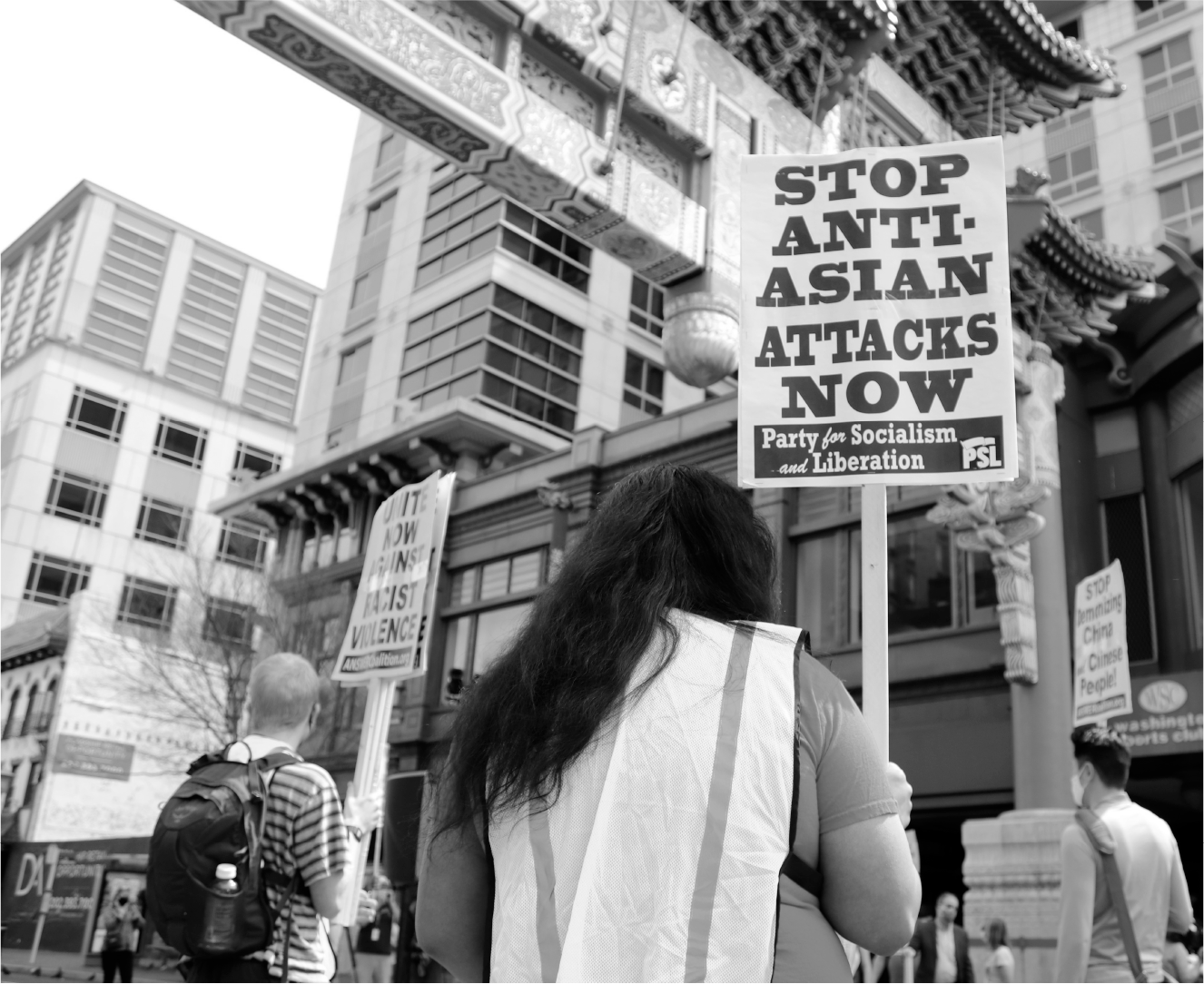
A rally to stop Anti-Asian racism convenes at the Chinatown Archway at 7th and H Streets, NW, in Washington DC in 2021.
Elvert Barnes Photography, Wikimedia Commons
These patterns also hold for Asians. Previous research comparing native and foreign-born Asians in Canada and the United States yields two consistent findings. First, foreign-born Asians are often less likely to report experiencing discrimination compared to their native-born counterparts. Second, among foreign-born Asians, a greater length of residence in North America is also associated with increased perceived discrimination.
Not surprisingly, my analysis of data from Canadian national surveys conducted during the pandemic shows that Asian immigrants perceive a significantly lower level of discrimination than native-born Asian Canadians.
Far less attention has been given to Asians’ subjective experience of anti-Asian racism during the pandemic. And how they experience it differently.
However, it is not simply that foreign-born Asians objectively experience fewer racist incidents during the pandemic. They probably experience more. But what makes them interpret their experiences differently?
Immigration scholars such as Krysia Mossakowski, Zoua Vang, and Yvonne Chang point to differences in racial and ethnic identification between native-born and foreign-born individuals. Racially or ethnically identified individuals perceive themselves as more personally vulnerable to discrimination. They often report more personal experiences with racism and are more likely to perceive themselves as targets of racism. The greater sensitivity to discrimination among native-born Asians may come from a deep-seated racial or ethnic identity. Compared to foreign-born Asians, native-born Asians tend to show a stronger sense of Asian pride and a stronger sense of affront at anti-Asian racism.
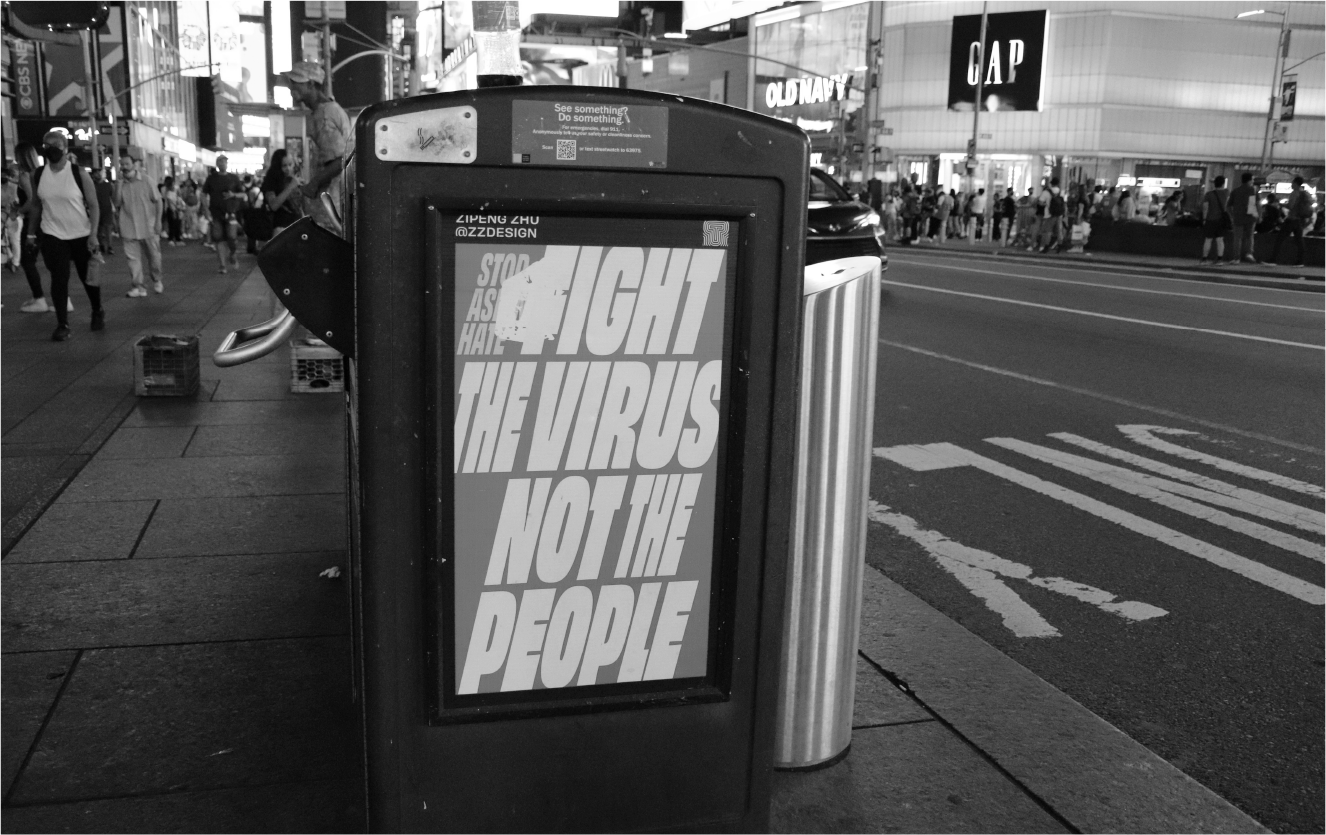
A billboard design by Zipeng Zhu on display in Times Square, NYC. New York City has been a site for several hate-motivated attacks against Asian Americans since the beginning of the COVID-19 pandemic.
Elvert Barnes Photography, Wikimedia Commons
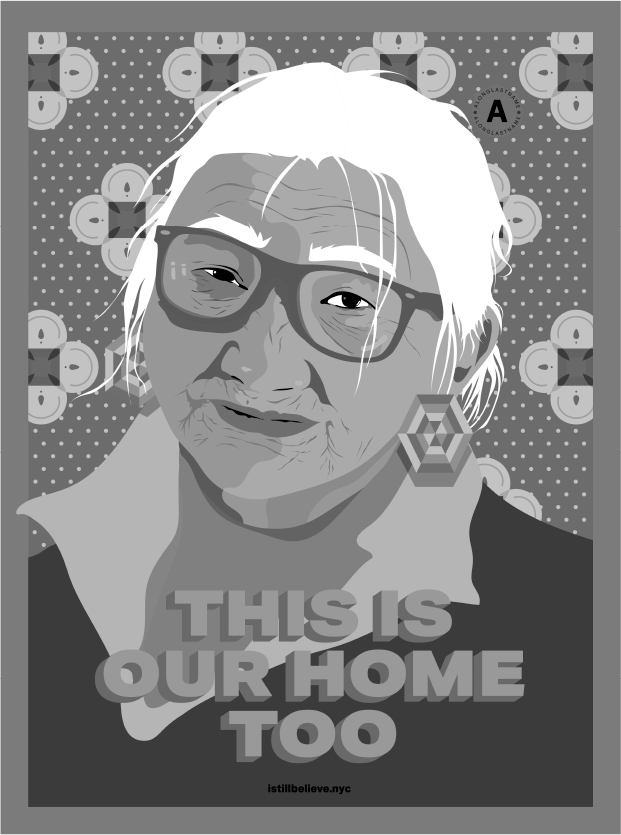
The City of New York has free downloads such as this one for activists and allies to use in support of the Asian community.
I Still Believe Project, City of New York
At the place level, one context that shapes people’s experience of racial discrimination is co-ethnic concentration or the share of people from the same racial or ethnic group in one’s neighborhood or residential area. Many suggest that minorities living around neighbors of similar races/ethnicities perceive lower discrimination. This is because neighborhoods with a high presence of co-ethnic residents can provide racial and ethnic minorities with linguistic and cultural familiarity as well as positive intergroup relations and social support. It is also because living among ingroup members means a lower probability of encountering outgroup members who may discriminate.
The daily experience of “being Asian,” the fear, and the collective trauma can create long-lasting damaging effects on Asians’ health and well-being. But the psychological consequence is unequal depending on how Asians experience anti-Asian racism differently.
On the other hand, a high presence of co-ethnic residents may also increase fear and competition and trigger intergroup conflict among residents. Higher co-ethnic concentration often results in residential segregation, leading to intergroup bias and discrimination.
More surprisingly, my analysis of data from the Understanding Coronavirus in America survey shows that Asian concentration does not work in a linear fashion to affect Asians’ discrimination experience. Instead, it produces a curvilinear effect. Asians perceive the highest level of discrimination if they come from areas with a medium concentration of Asians. Their perceived discrimination is lower when they live in areas where the percentage of Asians is low or high. Perhaps intergroup conflict and competition are greater in areas where boundaries shift and populations become less homogenous.
Place-level contexts often interact with individual-level factors to shape how people experience racial discrimination. Public health scholar Brittany Morey shows that co-ethnic concentration has differential impacts on discrimination experiences among foreign-born and native-born Asian Americans. For the native-born, higher co-ethnic concentration is associated with higher perceived discrimination. However, higher co-ethnic concentration is associated with lower perceived discrimination for more recent immigrants.
This means in-group support and solidarity and intergroup conflict and competition are probably not the only mechanisms in play. As discussed earlier, strong racial and ethnic identification is often associated with a higher likelihood of reporting experience of racial discrimination. One possible reason co-ethnic concentration may affect immigrants’ and native-born individuals’ discrimination experience differently is its polarizing effects on ethnic identification. Higher co-ethnic concentration promotes strong in-group solidarity and ethnic pride for the native-born. But for immigrants, higher co-ethnic concentration strengthens their retention of affiliation with their respective country of origin and weakens identification with the host society.
The daily experience of “being Asian,” the fear, and the collective trauma can create long-lasting damaging effects on Asians’ health and well-being. But the psychological consequence is unequal depending on how Asians experience anti-Asian racism differently. This, in turn, can exacerbate inequalities within Asian communities.