




Abstract
The law enforcement badge is a prized possession for white supremacists. Broader patterns of alliances between law enforcement and civilian white supremacists are endemic to social order in the United States, both in free society and within prisons. Using archival methods on trusty systems in California prisons, I show the development of prisoner-officer alliances that reify the privileges of white power.

White unity is a through-line across time and space. The law enforcement badge, representing both correctional and police officers at the local, state, and federal levels, has historically been a prized possession for white supremacists because it symbolizes the ultimate privilege to access unbridled white power. Using archival methods on trusty systems in California prisons, I show how the wage of whiteness permeates and guides institutional management policies, blurs the boundaries between prison staff and the incarcerated, and ultimately fosters the development of prisoner-officer alliances that reify the privileges of white power.
Broader patterns of alliances between law enforcement and civilian white supremacists are endemic to social order in the United States, both in free society and within prisons. The wage of whiteness is a social cause of these alliances that we must center within a historical context, in the tradition of W. E. B. Du Bois and Ida B. Wells. Whiteness is a poignant currency for otherwise lower-status white people, who, on account of their non-Black positionality, may access the privileges of white power across social locales, such that whiteness alone produces a valuable elite status. From plantation overseers during chattel slavery to over a century of law enforcement membership in the Ku Klux Klan—the wage of whiteness effectively enforces the color line as a weapon of social control because it blurs status boundaries that would otherwise create division amongst white people. Ensuring white unity is paramount to social order. Division amongst white people lessens the salience of white power and creates dangerous opportunities for rebellion, particularly within the confines of an organization or institution.
The Wage of Whiteness and Penal Management
Penal institutions such as prisons are a microcosm of our racial capitalist society. They are nested within histories of settler colonialism, Indigenous genocide, and the continued bondage of Black people, from chattel slavery and convict leasing to contemporary mass incarceration. Penal management mirrors how the wage of whiteness in free society facilitates the institutionalization of white supremacy and divide and conquer as tools of social control over non-white populations, creating racialized elites.
In prisons, this phenomenon also supports the creation of elite statuses that allow for the efficient, hierarchical control of incarcerated people. Consequently, incarcerated people do not experience the pains of imprisonment equally, given that institutional logics and corresponding practices foster hierarchies among the prisoner class. Race and racism structure how people experience institutional degradation rituals (i.e., replacing names with numbers, confiscating personal items, issuing standard uniforms, housing and work assignments, etc.) designed to reduce them to the status of “prisoner.”
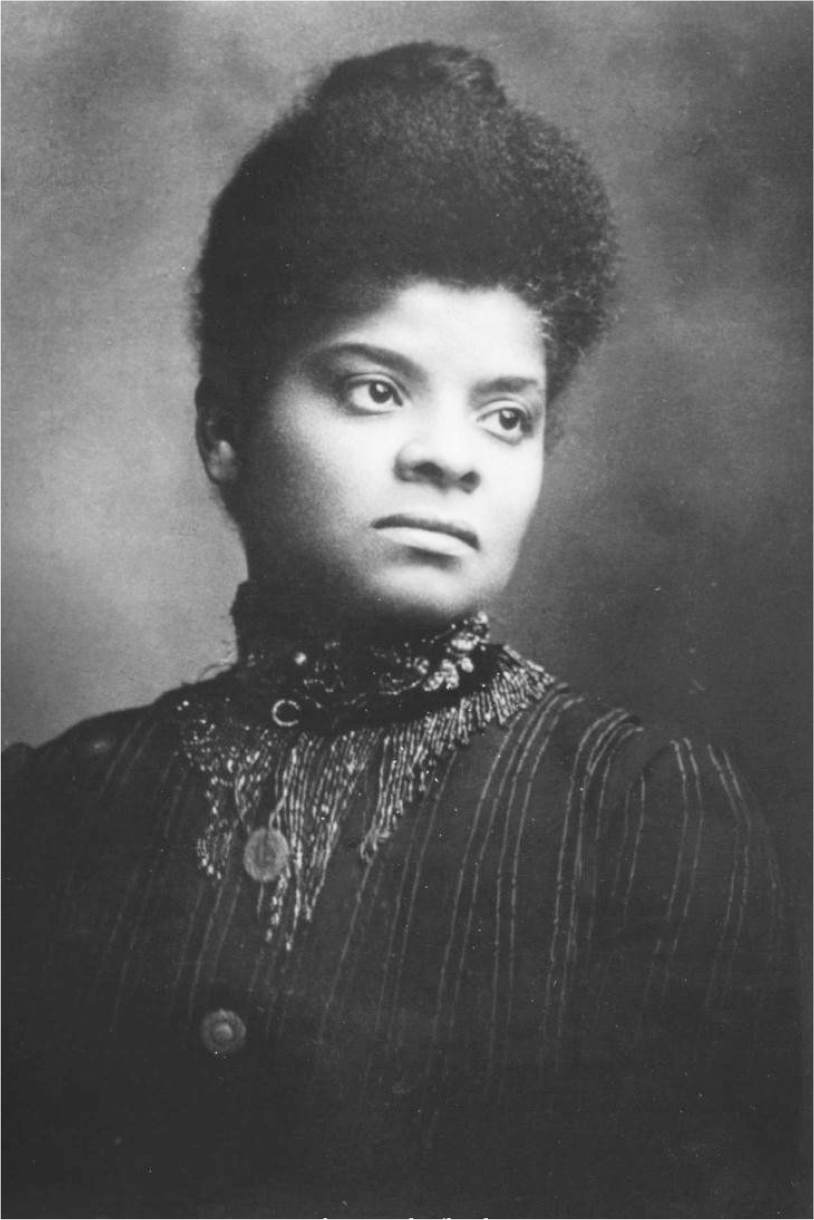
The wage of whiteness is a social cause of these alliances that we must center within a historical context, in the tradition of W. E. B. Du Bois and Ida B. Wells, who is pictured here.
Barnett, Public Domain via Wikimedia Commons
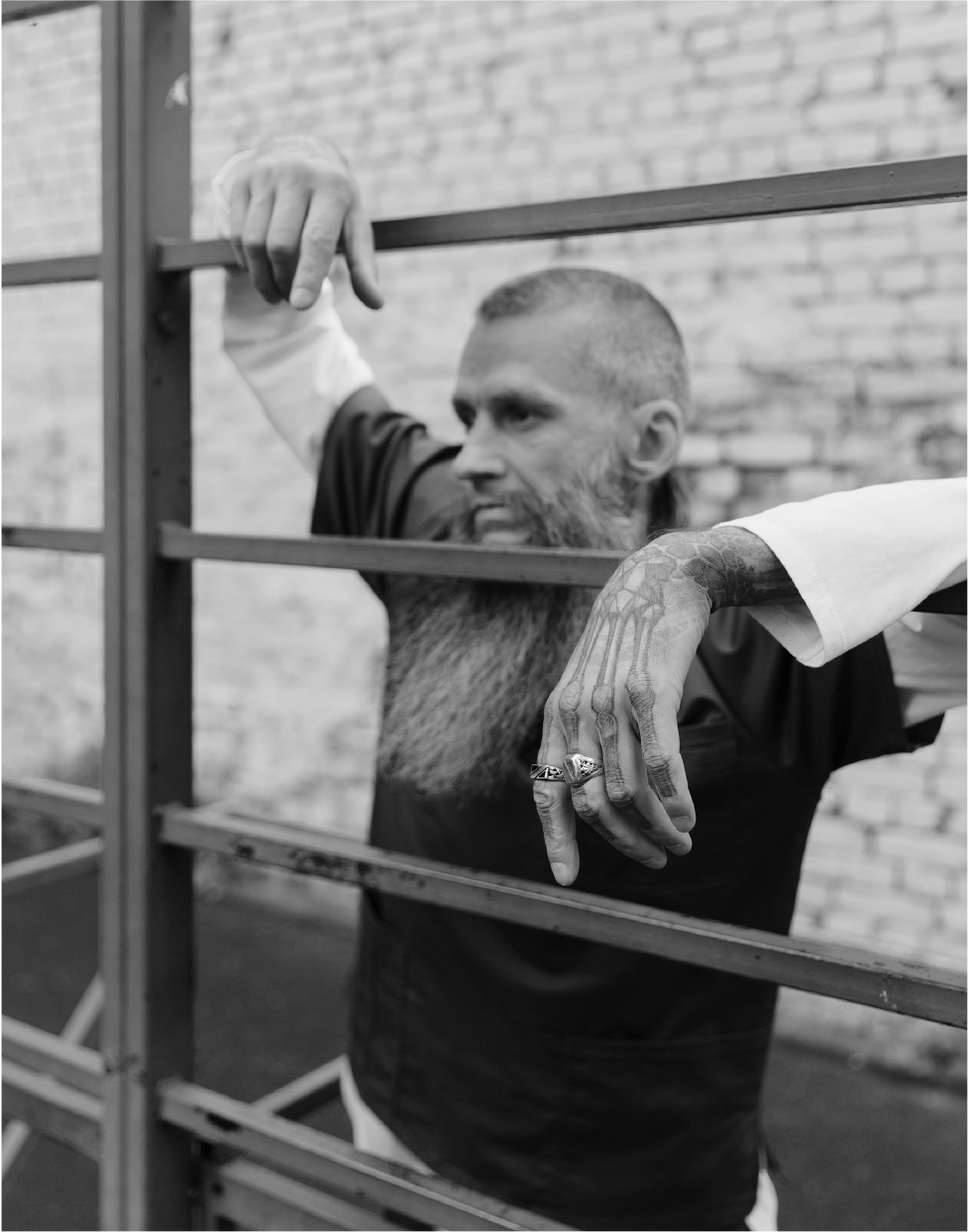
Penal institutions such as prisons are a microcosm of our racial capitalist society.
Ron Lach, pexels
Institutionalizing the Wage and the Historical Creation of Prisoner Elites: A Snapshot
Both prison staff and incarcerated people bring racialized identities and allegiances that are effectively shaped and crystallized by the degrading, deprived prison conditions. This becomes significant when prison staff are intimately familiar with the wage of whiteness in free society and see incarcerated white people as natural allies. Enforcing the color line supersedes formal boundaries of control, such as staff versus prisoner, because the color line is an importable hierarchy, meaning the statuses assigned to color in free society are transferable into the prison environment.
“If you can convince the lowest white man he’s better than the best colored man, he won’t notice you’re picking his pocket. Hell, give him somebody to look down on, and he’ll empty his pockets for you.”
For example, institutionalizing the wage of whiteness and the legitimation of alliances between law enforcement and incarcerated white supremacists is traceable to trusty systems implemented in penal institutions across the country during the 19th Century. The trusty system created prisoner elites through privileged work assignments. Officers divided incarcerated people by granting a small percentage of people disciplinary power over others. Prison officials justified the system by arguing it provided a solution to the disproportionate amount of incarcerated people versus staff within their institutions. This elite status, however, allowed trustees to engage in abusive behavior on behalf of the institution and themselves.
William McWhorter argued in 1972 that creating prisoner elites successfully divides incarcerated people and discourages collective action by incentivizing trustees with rewards like high levels of mobility, priority at commissary, separate living quarters, and sometimes weapons. Material gains, rather than physical reprimands, provided an incredible incentive for trustees given the deprived conditions of incarceration, effectively buying their trust and allegiance to the institution. Trustees performed their duties in exchange for a higher status among their peers and acted as agents of the institution, negotiating a dual identity of prisoner and institutional actor.
McWhorter documents how these “trusted” prisoner elites were essential to day-to-day operations and were chosen based on favoritism and “folk wisdom” of officers about who could be trusted. Folk wisdom, of course, was a euphemism for racism and the collective solidarity that the wage of whiteness affords to incarcerated white people. Incarcerated white people were disproportionately chosen as trustees, particularly armed trustees, institutionalizing white supremacy and access to white power as an elite status amongst the prisoner class. The highest ranked trustees were armed with rifles, held sets of keys, guarded other incarcerated people, led armed search parties to hunt for escapees, and were chosen for their propensity to inflict violence on behalf of the institutions. In his 1996 study of Mississippi’s infamous prison known as Parchman Farm, historian David Oshinsky described a white man chosen as a trustee, who engaged in a level of violence that had he “been a Negro, he probably would have died in the state’s traveling electric chair. Instead, his hard fists and mean disposition won him instant respect at Parchman, whose officials made him a trusty.”
Unarmed trustees wielded white power, too. Though they performed menial tasks such as administrative or janitorial work, they could also take away the privileges of non-white incarcerated people and inflict corporal punishment like whippings and beatings. White incarcerated people were only supervised by white trustees, while incarcerated Black people (especially in Southern states) were supervised by both Black and white trustees, all under the watchful eye of white officers.
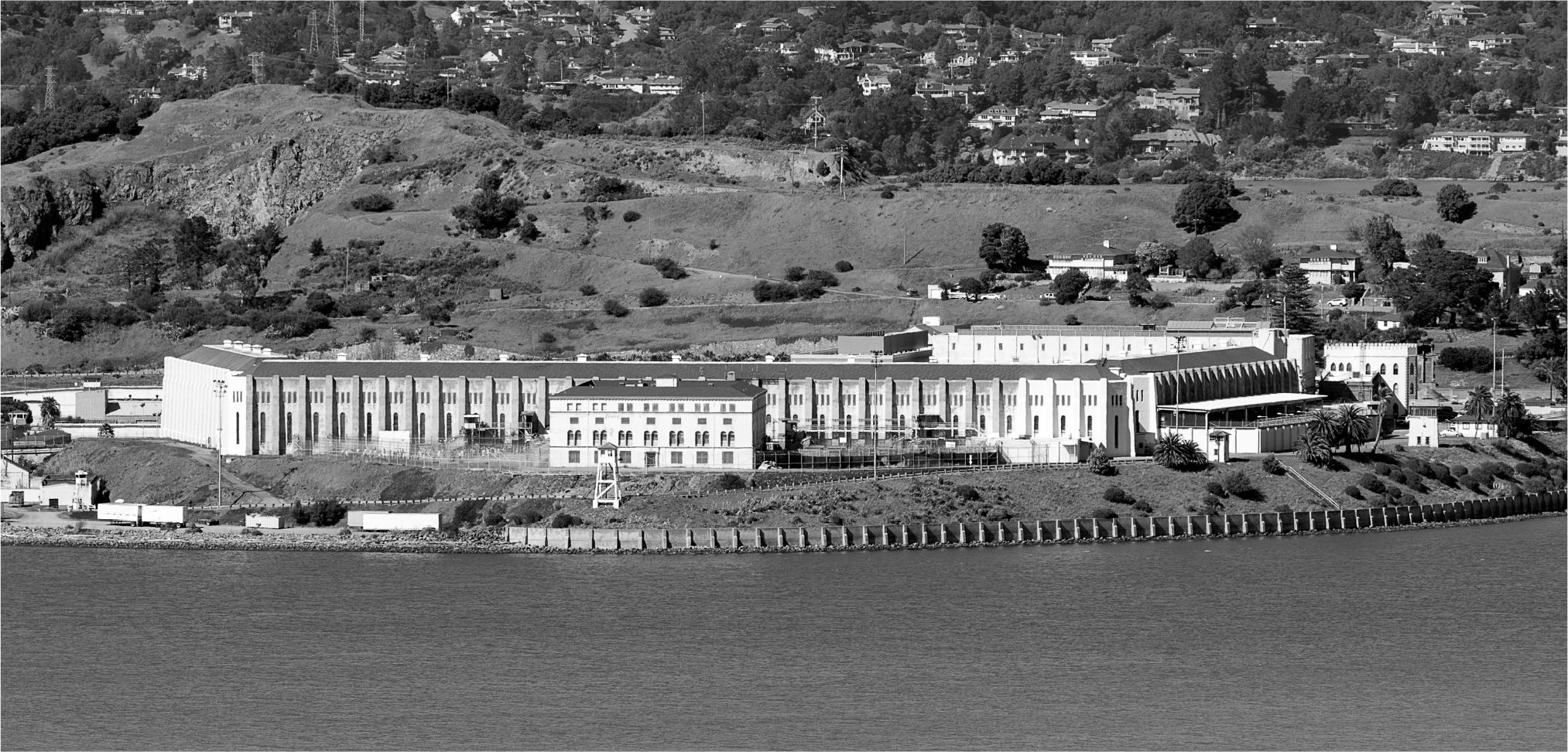
San Quentin State Prison, California’s oldest functioning prison.
Frank Schulenburg, via Wikimedia Commons
In states like Mississippi, Arkansas, Louisiana, and Texas, the trusty system was used to maintain the antebellum and Jim Crow racial caste systems, exploit prisoner labor, and privilege white supremacists. Texas, in particular, used its trusty system to create prisoner elites, foster alliances between officers and incarcerated white supremacists, and ultimately set the foundation for the founding of the Aryan Brotherhood of Texas. As my research shows, California should be added to this list for a similar set of institutional conditions that led to the founding of the original Aryan Brotherhood.
Utilizing archival methods, I uncovered evidence of trusty systems operating within California prisons dating back to at least 1856. The trusty system was instituted soon after the opening of California’s oldest functioning prison, San Quentin, which opened in 1852. In the 1857 journals of the California Legislature, one “attache” to San Quentin stated:
I think printed rules and regulations were in the possession of the officers and guards, pointing out the duties of each officer. The Trusty system was practiced under the Directory of 1856…I think there has been a change in the general management of the institution for the better; there are not so many trusties now as formerly, and less favoritism.
Thirty years later, the 1883 journals of the California Legislature describe how “there are a large number of prisoners employed in positions of more or less trust,” suggesting prisoner trustees as formal policy immediately spread to California’s only other prison at the time, Folsom State Prison, newly opened in 1880. The trusty system was not an accidental or hidden approach to prison governance; it was knowingly practiced and supported by the state.
Memoirs about incarceration experiences provide additional evidence that the trusty system continued into the twentieth century. Famed burglar Jack Black, in his 1926 autobiography, alleges a correctional officer in Folsom State Prison openly boasted about controlling incarcerated people using divide and conquer as a strategy, bragging, “I’ve got one half of them watching the other half.” Black accused the institution of privileging some to create deadly violence between them, preventing the incarcerated from acting collectively against the institution:
No prisoner was allowed to buy anything through the office. The trusties stole every movable article they could from the guards’ and warden s quarters and peddled them to us in the prison for their rations of hop. The cons were divided roughly into three groups. One group played the officers’ game, working in the offices or holding down other soft jobs where they could loaf about the place and spy and snitch on the others. [Officer] rewarded them all. He gave the best snitches the biggest beefsteaks. Another and larger group openly antagonized the officers, engineering hop deals, planning the murder of stool pigeons and promoting escapes.
Black’s allegations, along with numerous prisoner memoirs documenting 20th century California, coincide with McWhorter’s sociological analysis of prisoner trustees. All confirm that the creation of prisoner elites by officers incentivizes abuse of power within the prisoner class to maintain social control within the prison.
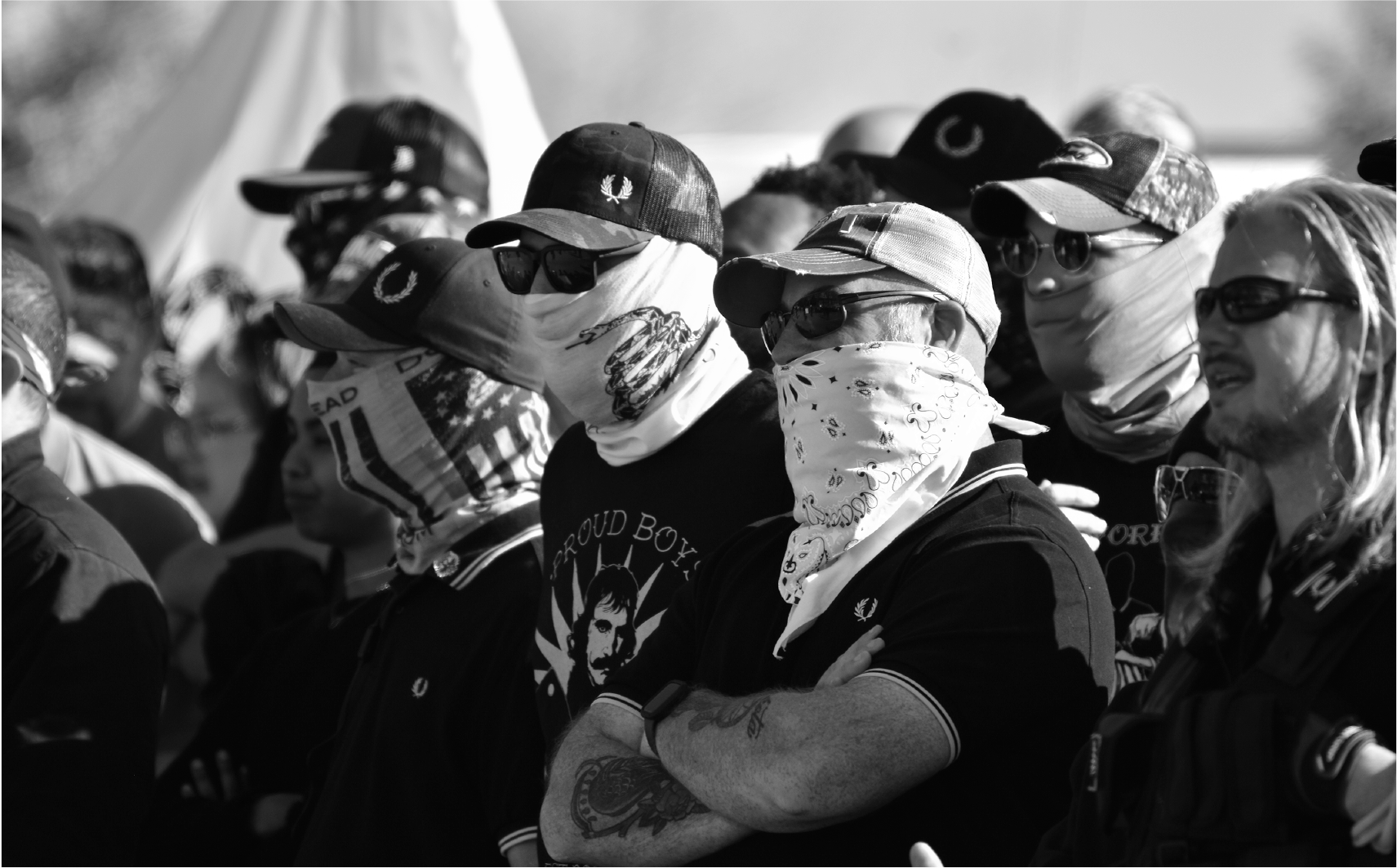
White supremacist organizations such as the Proud Boys, pictured here, view state institutions such as jails and prisons as opportune sites to dominate and control people of color.
Anthony Crider via Wikimedia Commons
Contemporary California jails still use the term trustees for incarcerated people assigned to administrative roles. However, mid-twentieth century accounts suggest California prisons began transitioning to the term tier-tenders or block-tenders. Tier-tenders were unarmed yet functioned similarly to trustees in terms of completing administrative tasks, running errands for prisoners and prison staff, serving meals, and completing custodial work, but differed in that they did not have formal disciplinary power over other prisoners like in California’s original trusty system. However, the structure of the trusty system provided institutional precedence for giving favored prisoners special powers over other prisoners to use as a cover for nefarious, extralegal control strategies. For example, like trustees, officers routinely gave orders to tier-tenders that allowed them to keep their hands clean and retain plausible deniability should any prisoner abuse allegations come to light.
We must further excavate how the powerful privilege of whiteness also exists within prisons where law enforcement and incarcerated white supremacists cooperate to control and dominate non-white incarcerated people.
A Black man named Christopher, who served time in numerous California prisons in the 1960s and 1970s, explained to me in an interview that by that time, tier-tenders represented all racial groups, even though more incarcerated white people were chosen for the role. Christopher was incarcerated during the height of the Black Freedom Movement. This particularly telling historical period reveals how the institutional desire to suppress Black collective action continued to inform how officers decided which incarcerated white people could be trusted. Like my earlier discussion of trusty systems in the Reconstruction and Jim Crow eras, incarcerated white people deemed loyal to white unity or known for their use of violence were ideal for adding to the tier-tender ranks.
An interview with a white man named Matthew, who served a life sentence in California, details how white officers used the tier-tender system to cooperate with incarcerated white supremacists to control and dominate non-white incarcerated people. As a tier-tender, Matthew was instructed by the Aryan Brotherhood to use his coveted mobility to transport street knives throughout the prison. Matthew did not explicitly self-identify as a “Nazi” or sworn member of the Aryan Brotherhood, but he did describe his loyal allegiance to “the whites” in prison. He explained in intimate detail how his whiteness fundamentally structured his socialization into prison life, facilitated first and foremost by the institution and its officers and only secondarily by other incarcerated people. Officers subsidized incarcerated white supremacists with resources such as providing street knives versus handmade prison shanks, giving them considerable power over other incarcerated people to do the officers’ bidding. Matthew agreed to use his tier-tender position to transport the street knives because he wanted to prove his allegiance to “the whites,” and he did not want any violent backlash from the white officers who smuggled the street knives or the Aryan Brotherhood, who governed the white incarcerated population by proxy.
The Foresight of Du Bois and Wells
Though commonly discussed in the context of extralegal lynching, we must further excavate how the powerful privilege of whiteness also exists within prisons where law enforcement and incarcerated white supremacists cooperate to control and dominate non-white incarcerated people. In his 1935 classic Black Reconstruction in America, W. E. B. Du Bois insightfully noted how poor and working-class white people are exalted over all Black people regardless of their socioeconomic status because whiteness affords a certain “compensation” or “wage of whiteness.” The wage of whiteness historically allows white people, regardless of their socioeconomic status, to enact racist violence. Ida B. Wells made a similar observation much earlier in 1893 with “Lynch Law in All Its Phases.”
The ultimate sign of access to white power is the privilege to commit violence in collaboration with or under the protection of a law enforcement badge. White people, more than other racial groups, have long believed they can claim space and enforce the law, even if their actions are technically extralegal and prosecutable by the same law. White unity, racial supremacy, and tangible alliances between law enforcement and white supremacists remain as prominent social forces of our time. In May 2020, I asked Pete Simi, co-author of American Swastika, “why are white supremacists drawn to law enforcement?” He explained:
State power in the U.S. has always been deeply connected to white supremacy and, in turn, the white supremacist movement sees the state, including positions in law enforcement, as an opportunity to exercise their desire to control and dominate people of color. In short, white supremacists see the badge as the ultimate sign of white power.
Barely months after this conversation, we watched blatant displays of officers viewing white supremacist groups, such as the Proud Boys, as allies in their suppression of Black Lives Matter protests. Soon after, as our society continued to grapple with the social upheaval and loss that marked the Year 2020, the supposed unthinkable happened. On January 6, 2021, we witnessed current and former members of law enforcement among the people who stormed Capitol Hill. Many who stormed the capitol to protest the election defeat of President Donald Trump proudly displayed Nazi-affiliated symbols while chanting “Make America Great Again!”
Conclusion
The wage of whiteness is a social fact in the United States, with a lengthy past and ongoing present. It is a valuable social currency in our society because any person may access it according to their perceived proximity to whiteness, not solely self-described white supremacists or those who are official members of law enforcement. Ranging from the white woman in the park who strategically threatens to call the police on a Black person when she feels fragile and projects disempower-ment to the person of color who buys into the model minority myth or willingly accesses the wage to step over other people of color—the wage of whiteness is both contingent and durable given the social context. The wage of whiteness creates an incentive, according to proximity to whiteness, to maintain racialized hierarchical structures that require the creation of privileged elites who act as intermediaries between the top and bottom.
Black political movements ignite the rapid mobilization of these alliances partly because these movements disrupt racial and ethnic divisions by discouraging people from buying into the wage of whiteness. Looking at each historical period, we see cross-racial coalitions as significant facilitators of movement resources, membership, and ideological spread, keenly disrupting white supremacy and divide and conquer as logics of social control. Reform, thus, will not curtail the significance of the wage of whiteness. This observation is self-evident when applied to formal institutions of social control such as law enforcement, courts, and corrections. Time and again, we see how reforming institutions remains an insufficient antidote to white unity, racial supremacy, and resulting alliances designed to suppress Black political power.
Footnotes
Acknowledgements
This research was funded by generous support from the National Science Foundation, American Society of Criminology, and the Kellogg School of Management Dispute Resolution Research Center. I would like to thank Michael Sierra-Arevalo, Nicole Gonzalez Van Cleve, April Fernandes, Norah MacKendrick, and Quan Mai for comments on earlier versions of this article.
References
Supplementary Material
Please find the following supplemental material available below.
For Open Access articles published under a Creative Commons License, all supplemental material carries the same license as the article it is associated with.
For non-Open Access articles published, all supplemental material carries a non-exclusive license, and permission requests for re-use of supplemental material or any part of supplemental material shall be sent directly to the copyright owner as specified in the copyright notice associated with the article.
