



Abstract
Before Covid-19, Downtown Detroit was enjoying an urban renaissance, but periphery neighborhoods that were lower priority for revitalization remained “service deserts.” These service deserts resulted in coping strategies, behavioral health outcomes, and neighbors becoming service providers. Residents of these areas also experienced increased vulnerability to the pandemic due to lack of access to information and pre-existing health conditions. This article recounts how residents experience living in a service desert and the subsequent impacts of Covid-19.
Detroit Now
Before COVID-19 Downtown Detroit was experiencing an urban renaissance. However, instead of the downtown revitalization being a harbinger of what neighborhoods would soon enjoy, the result was “polarized urbanism” due to factors including the size of the city, scarce resources, crime, and geographic restriction.
To understand the impact of this polarized urbanism related to revitalization, we used field and interview notes, health screens, and survey data from the American Community Survey from residents of a periphery neighborhood that experienced the compounded impacts of out migration, depopulation, blight, and social decay. Individuals who remain in these now isolated neighborhoods recall their former beauty, “it used to be beautiful,” and friendliness. Today their social networks are more isolated, impacting norms around behavioral health and habits including (un)healthy eating, smoking, and substance abuse that also cause individuals to be vulnerable to COVID-19.
The Periphery Neighborhood and Service Needs
The Petosky-Otsego neighborhood is on the west side of Detroit and is home to Auntie Na’s Village a 501(c)3 nonprofit community development organization that partners residents with Wayne State University (WSU) students to operate a safety net for the neighborhood. Petosky-Otsego is the third most abandoned neighborhood in the city; there are currently 2,614 unoccupied homes 500 of which lack a kitchen (Figures 1 and 2). The neighborhood has suffered the ills of social and physical disorganization. According to FBI data, 2018 crime rates were 191 percent higher than the national average, with a 1-in-14 chance of being victimized in the neighborhood.
Instead of the downtown revitalization being a harbinger of what neighborhoods would soon enjoy, the result was “polarized urbanism” due to factors including the size of the city, scarce resources, crime, and geographic restriction.
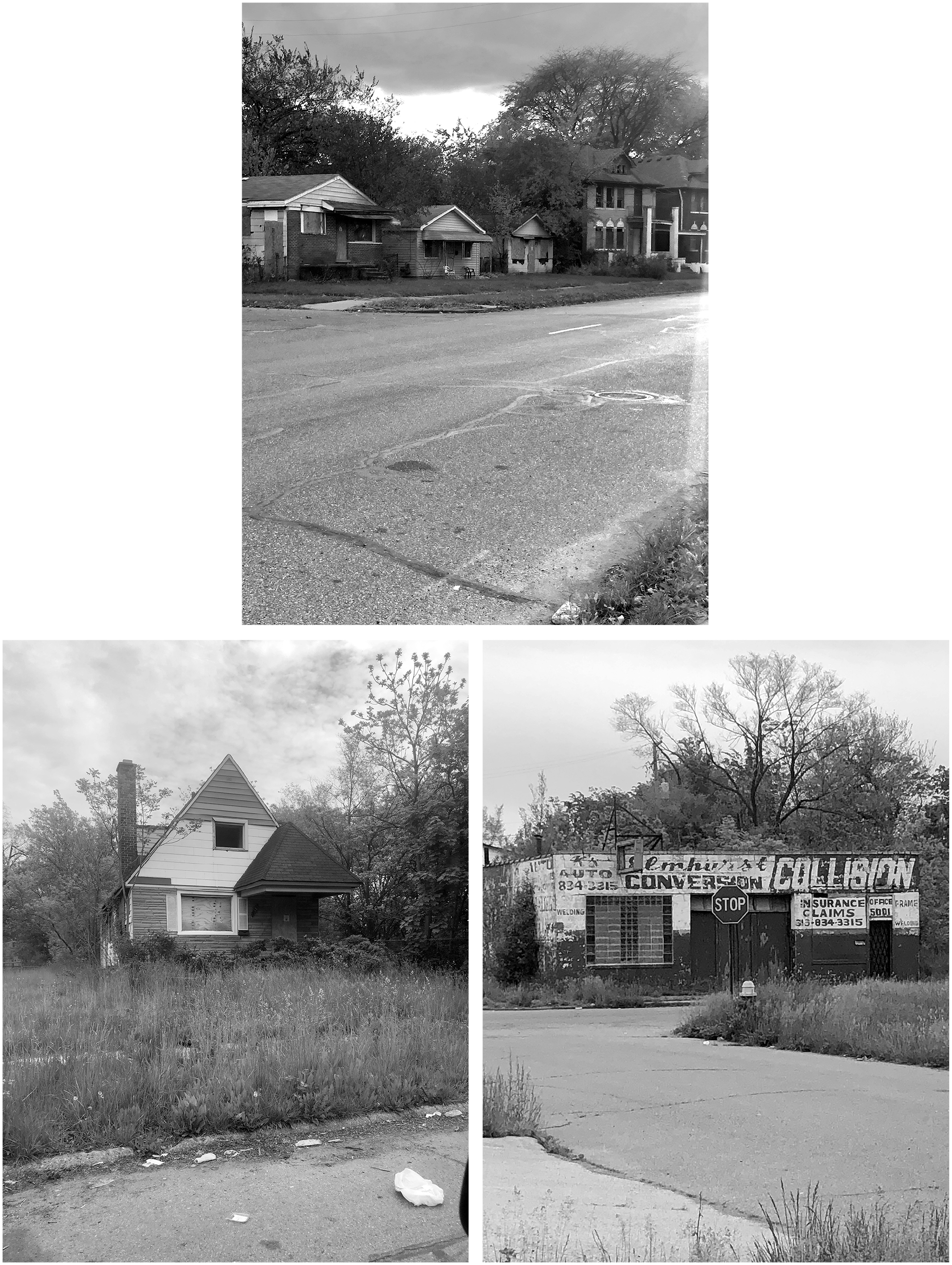
Unoccupied homes and businesses in the Petosky-Otsego area: Many areas in Detroit feature green space. There are rows or clusters of well-kept homes, but most areas are punctuated by blight.
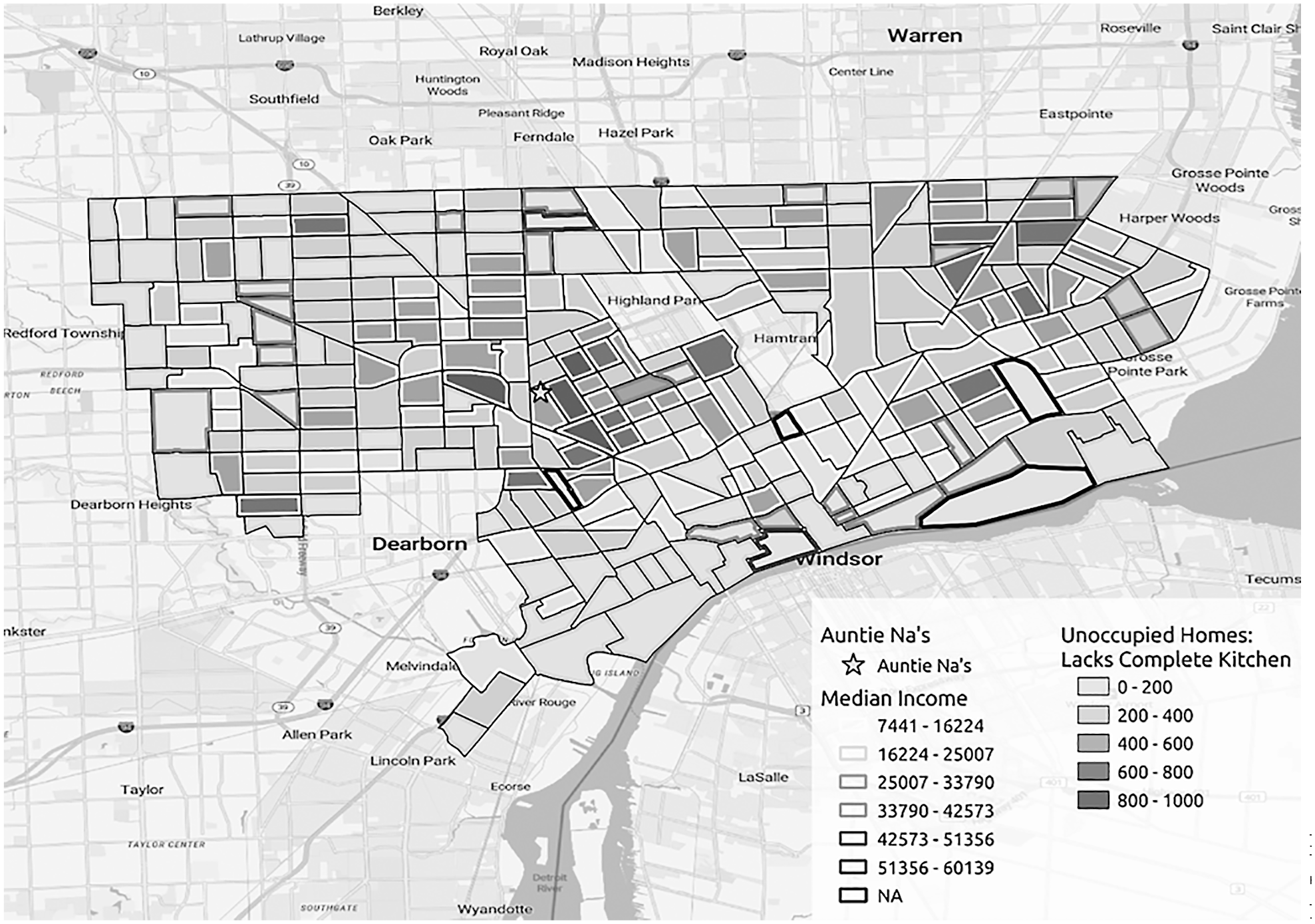
Map of homes that lack a complete kitchen with income vverlay: The median home values in the neighborhood range between $0 and $50,000.
Figure 3 provides a time-series of two houses in Petosky-Ortego from 2009 to 2019. They started out with a kept yard, but by 2019 the houses were abandoned. The area is the second lowest median income area in Detroit with annual incomes ranging from approximately $8,000 to $18,000 (Figure 2). To put this in perspective, from 2014-2018 the median income in Michigan was $28,178 (+/-$118) compared to $30,119 (+/- $58) for the United States. The median home values in the neighborhood ranged between $0 and $50,000.
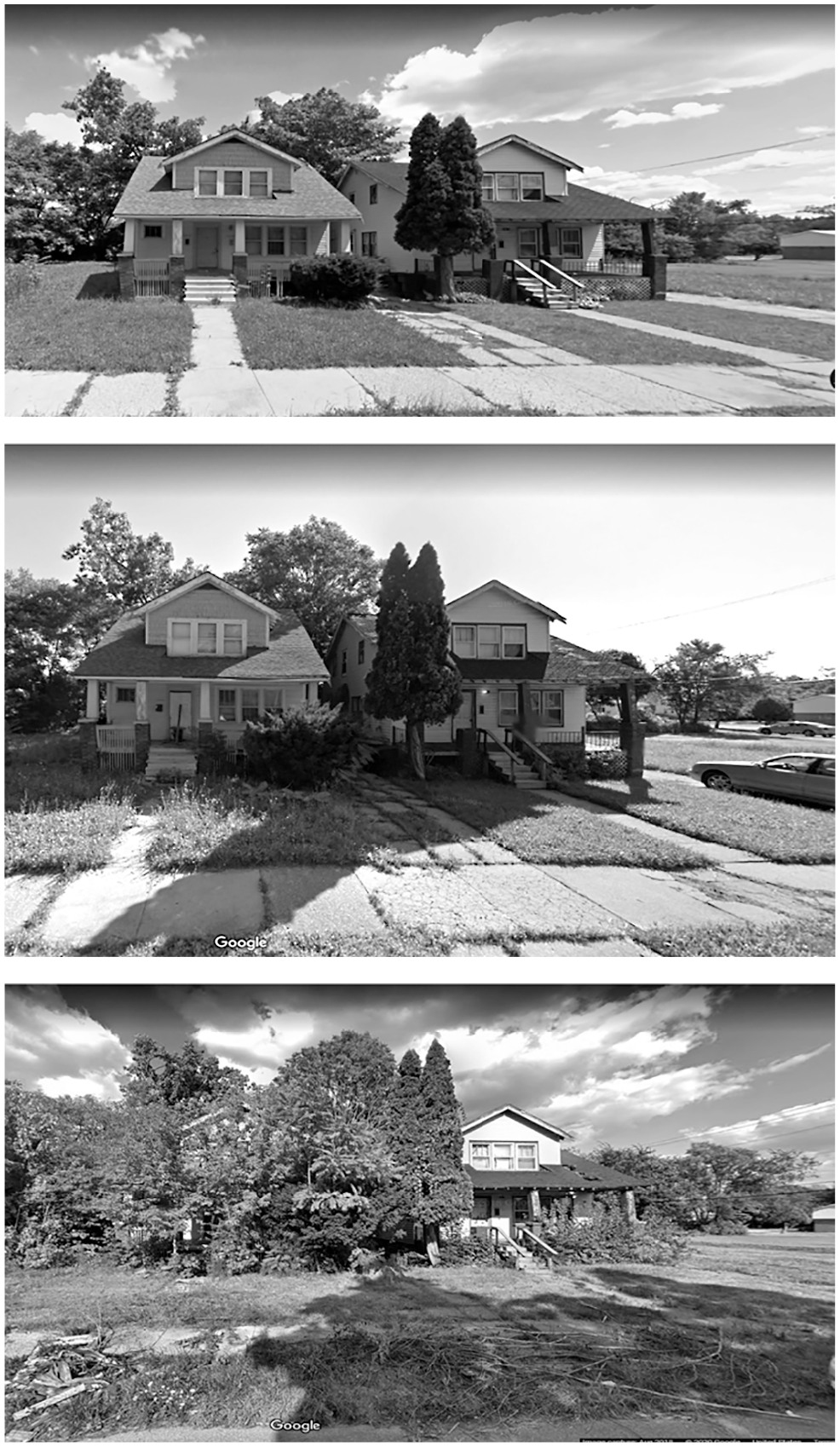
Petosky-Otsego neighborhood time series (images from Detroit Land Bank): Detroit is spacious and flat. But 10 years of overgrowth and neglect obscures both habitable and inhabitable spaces.
Food insecurity is an issue due to financial, temporal, and transportation constraints. With the nearest grocery store approximately three miles away, residents who lack access to transportation are at a disadvantage. At Auntie Na’s village there is, “emergency food every Saturday because there is no transportation to grocery stores.” The local corner stores carry little perishable food that is crammed among a bounty of unhealthful but cheaper options (see Figure 4). Thus, the emergency food exchange managed by neighbors in collaboration with food banks permits residents to have access to healthy options. The need for the food exchange grew during the pandemic. In response, the WSU student organization shifted their medical clinic to a neighborhood food bank (Figure 5).
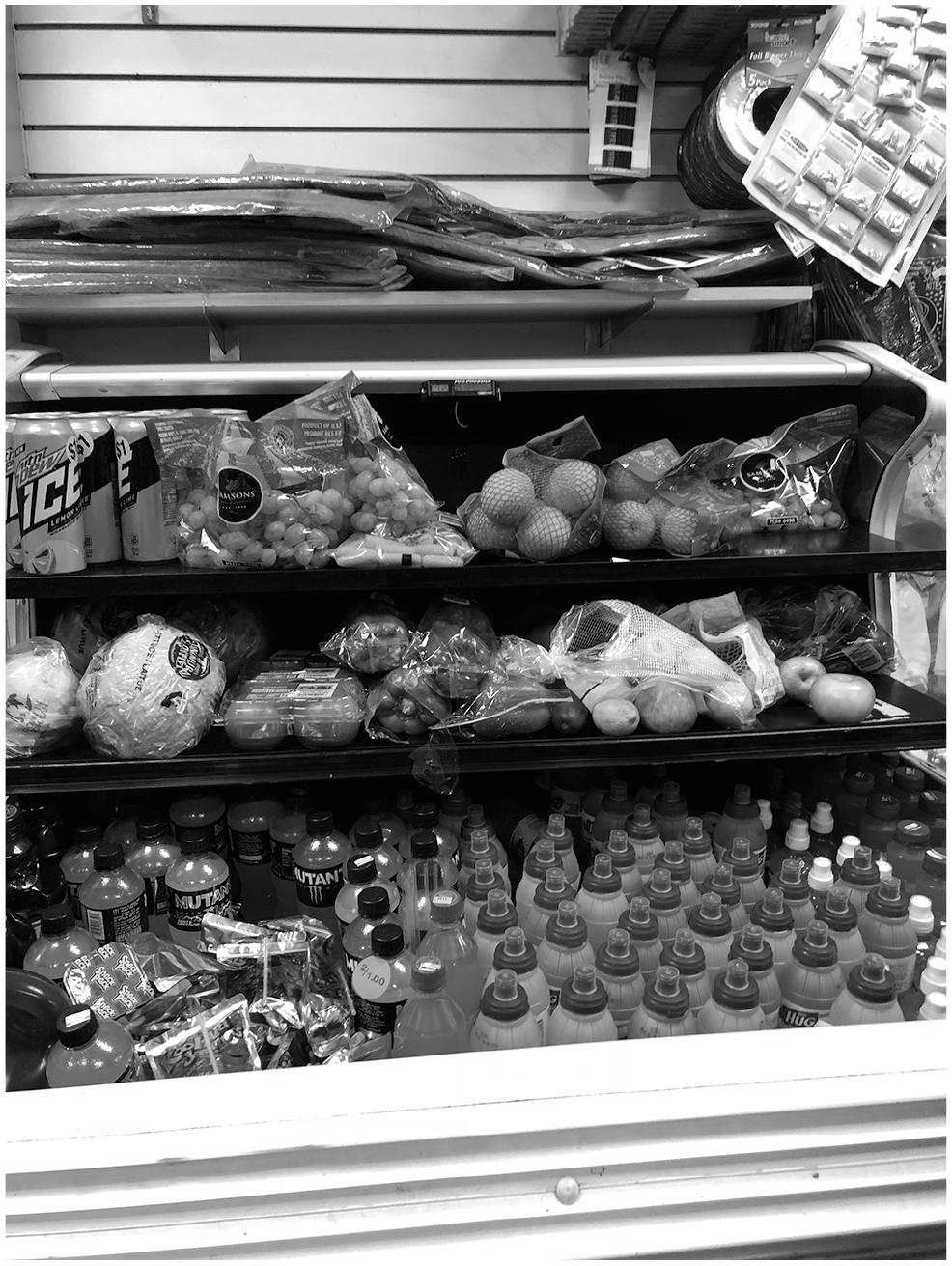
Limited produce at a local corner store shares shelf space with sugary drinks. Processed foods can be preferred in that they are cheap, need no refrigeration, and have a lot of preservatives.
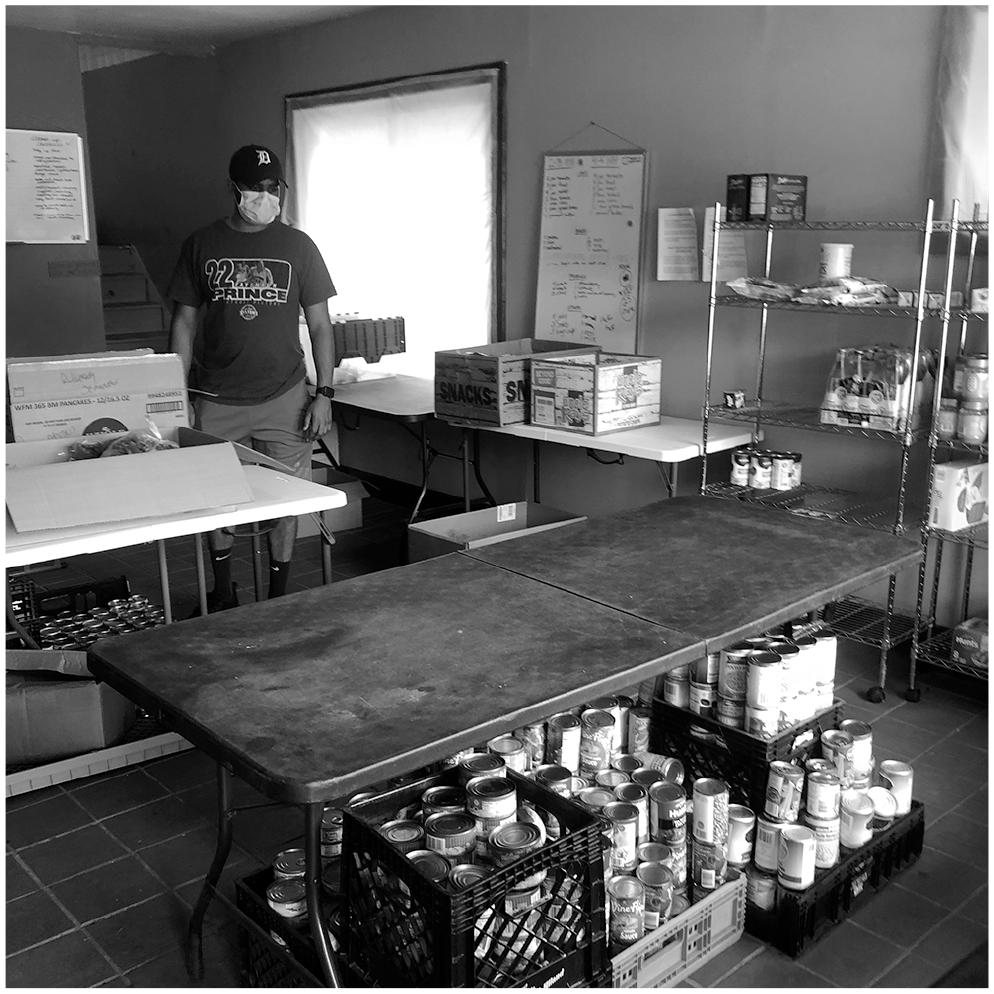
Images of COVID-19 neighborhood food bank and distribution spearheaded by neighbors and students
Still residents of Detroit’s periphery neighborhoods suffer from obesity and related health issues. Detroit has a 38 percent obesity rate among adults while the rate is 35 percent for Michigan. Food bank employees reason this is due to the scarcity of healthy food, intermittent hunger, and the lack of safe spaces to recreate. Food safety and preparation are other issues and related to plumbing and the lack of functioning kitchens. Inhabited homes in periphery neighborhoods in Detroit can lack electricity, refrigeration, and running water. In turn, regular hand washing, proper food storage, and waste removal can be challenging (Figure 6).
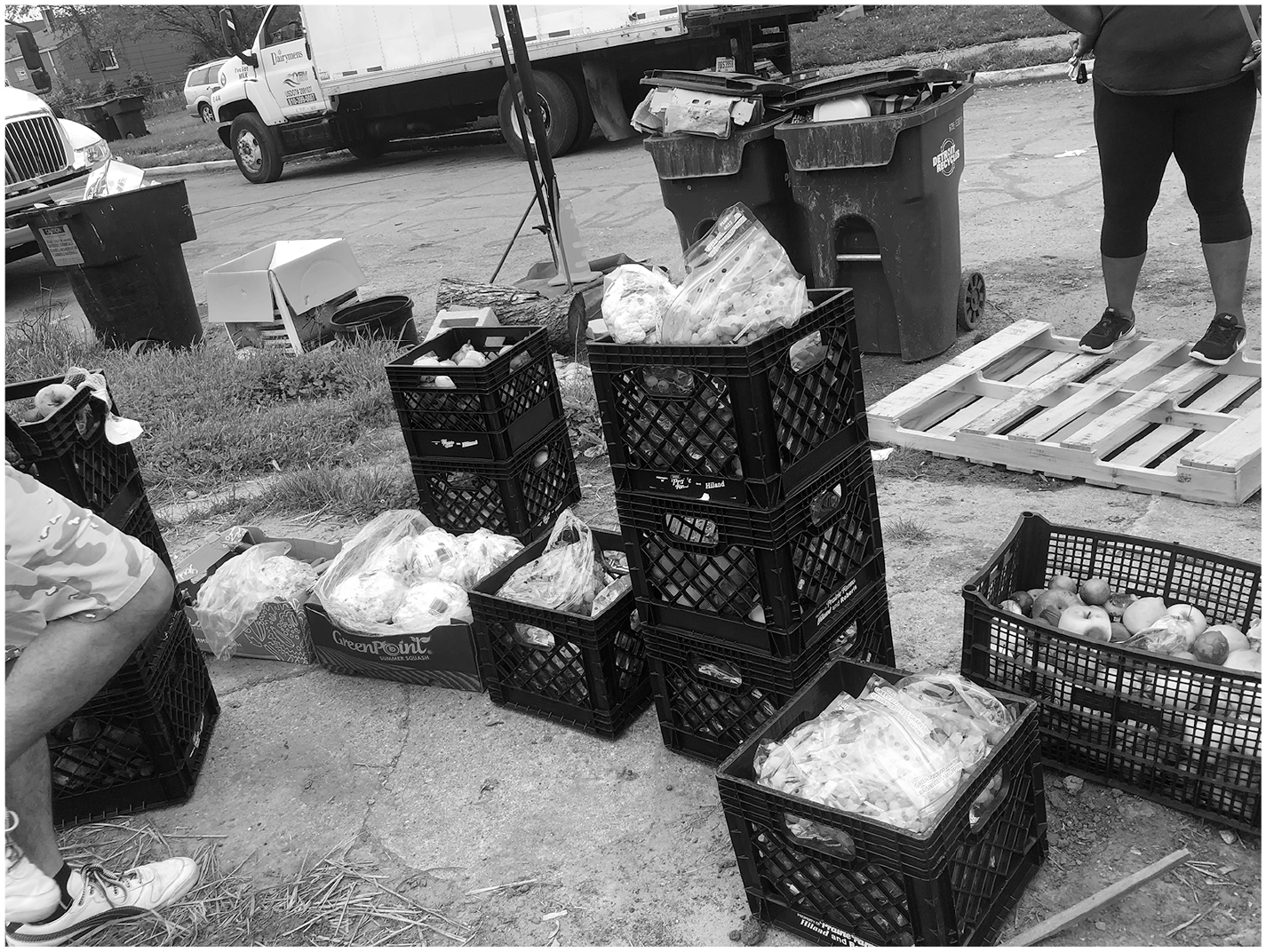
Neighborhood issues with refrigeration and waste pick up.
Even though 98 percent of the city should have internet access numerous barriers to technology adoption has relegated the city to the annals of technological misfits. From 2014 to 2018, 82,894 (+/- 1,593) or more than 10 percent of Detroiters had no internet access, while 53,737 (+/- 1,259) did not have access to a computer. This causes significant problems as periphery residents attempt to keep up to date on current events as well as more mundane tasks. One resident in our focus group reported, “it’s hard to apply for a job on a smartphone,” and another stated, “I need help on how to fill out job applications.” There are 561 free Wi-Fi sites throughout the city. Most of these sites belong to McDonalds and Tim Hortons with a few available via churches and non-profits.
Other Service Needs
We delved further into the neighborhood’s service needs using a subset of the medical clinic service needs checklists (N=14). One-third of the respondents reported needing the following: (1) housing; (2) dental services; and (3) recreational opportunities “for kids,” but they are also lacking for adults. It is dark about half the year in Michigan and, “lots of streetlights are out, so it is pitch black at night.” Neighborhoods that lack maintained sidewalks and streetlights are not inviting places to play or recreate. One resident said, “our kids don’t have a lot to do…,” and went on to say, “the only thing left is the Boys and Girls Club, but you have to pay to go up in there…why are you charging kids? A lot of people here on fixed income, some are on no income.” To address the recreational need, the WSU student organization and Auntie Na’s were awarded a Kresge grant that provided the resources to create a walking track through connecting alleys the size of a regulation track to encourage exercise (Figure 7). This track compliments the new playground and community garden (Figure 8) in the neighborhood.
Other service needs included half reporting: (1) transportation, “need it to get to the laundromat;” (2) employment; (3) hospital discharge services; (4) improved educational options, “many schools in the neighborhood closed;” (5) job training; and (6) daycare. Two thirds reported needing financial help, mental health services, and disability services. Almost 80 percent reported not having access to needed substance abuse services, as also described in the focus group: “depression is a huge issue, especially with self-medication with alcohol.”
Our observations suggest that digital divides isolate residents of periphery neighborhoods from access to information including health information.
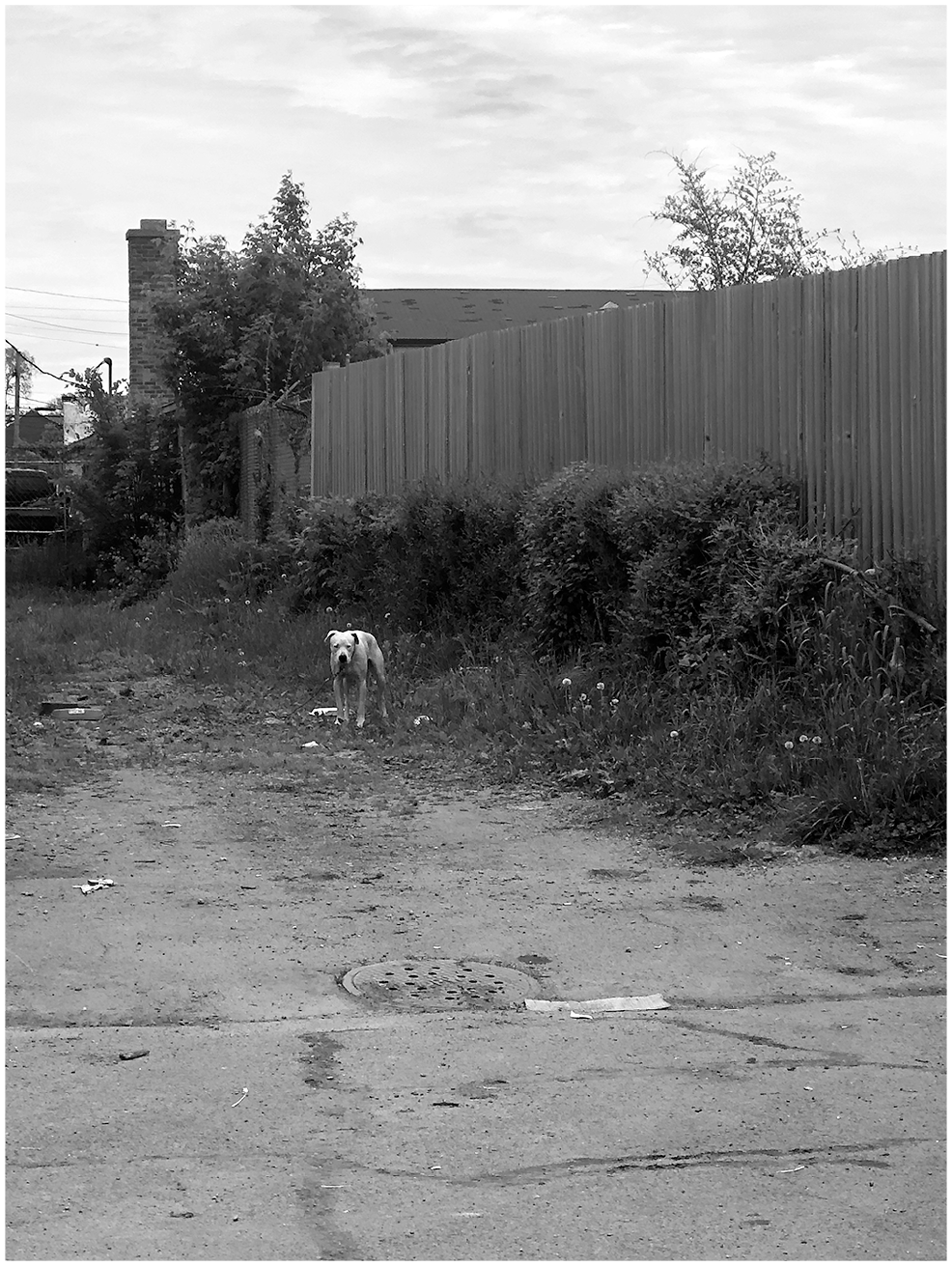
Alley to be converted to walking track: Detroit neighborhoods are mainly organized in grids so disparities and even type of home construction can be seen changing block by block. These grids create alleys.
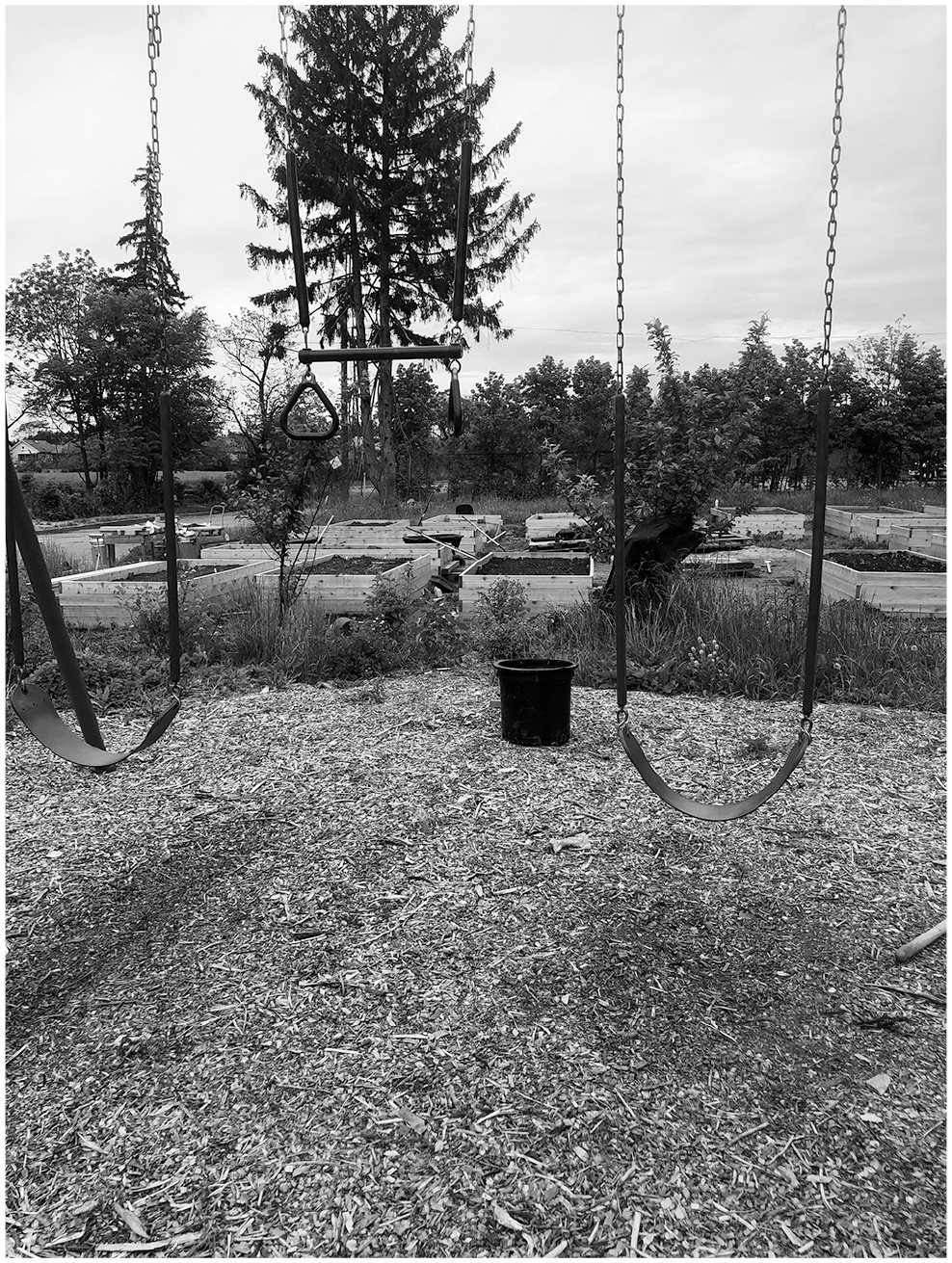
New playground and community garden.
Focus group participants described feeling ignored by city municipal services. For instance, they were disappointed the city opted to swap stop lights in some periphery neighborhoods for ignored stop signs that people speed through, lots of cars slamming on breaks and crashing into other vehicles. They appreciate the police, but described their response times as slow, sometimes taking 3 hours or sometimes they won’t show up at all. One resident said, “now police always in their cars, they used to have bikes, but now they just stay in their cars.” The residents describe the need for basic and structural supports as related to healthcare, many mental health centers were shut down, and prosocial activities, but there are no public libraries, bike paths, or block clubs. Resident turnover and lack of interest from renters led to the decline of block clubs that previously made residents, feel more safe. “There was more sitting on the porch, everybody knew everybody, and people still looked out for each other.” Now, “people don’t go out on their porches anymore, they are scared of the shootings.gang shootings are normal in the neighborhood.”
Trauma, Resilience, and Lessons Learned
Our observations suggest that digital divides isolate residents of periphery neighborhoods from access to information including health information. For instance, of the 100 health screens we entered, 70 percent of respondents reported smoking cigarettes. This figure is astounding when you consider almost 3 decades of public education campaigns on the dangers of smoking. In the Midwest in general only 22 percent of the population reports smoking cigarettes. This gap in prevalence is the result of neighborhood isolation where outside and behavioral norms are not absorbed. Essentially, the digital divide leads to a communication and knowledge divide and ultimately behavioral and health divides, and explains why these neighborhoods were so hard hit by COVID-19.
Before COVID-19 the city’s resurgence led to a fragmented narrative of prosperity in downtown areas while economic and social decline continued in many of the neighborhoods. As the city focused on the restoration of essential services, many periphery neighborhoods still lagged because of a lack of infrastructure attention. A resident described the untimely death of her brother because, “emergency responders could not find the name of the street, the street sign for Bordeaux, where he lived.” Stories like this belie the trauma and tension that characterize periphery neighborhood resident and city interaction. Yet, amidst the collective trauma, resilience continues to shape the existence of these neighborhoods through their residents who have lobbied for mass demolition of blight, street lighting, and the establishment of food pantries. They have galvanized their churches to establish programs to help returning citizens and medical relief for vulnerable populations. The lessons from these residents in dealing with the dichotomy of Detroit’s revitalization can guide other cities on the nuanced elements of resurgence without leaving behind the periphery populations.
The lessons from these residents in dealing with the dichotomy of Detroit’s revitalization can guide other cities on the nuanced elements of resurgence without leaving behind the periphery populations
Still, neighbors as service providers can only do as much as the resources they command, and there are few in service deserts. The lucky neighborhood has at least one institutional resource from which information, services, and infrastructures can begin to be generated, and this is what we witnessed at Auntie Na’s Village. Faced with extreme economic austerity, residents feel abandoned and turn to neighborhood champions such as Auntie Na’s Village and the resources they can command to support them. It is a beacon: a safe spot to play, learn, gather, “look out for each other,” and distribute resources as needs emerge.
Together, residents and students have collaborated to identify needs. The results have included garnering resources to create a tutoring space for children, “adults need tutoring too,” (Figure 9), a nutrition house (Figure 10) and community garden, a medical clinic, and a walking track. Auntie Na’s Village represents the best of what true public/university partnerships can achieve, but there remains the question of sustainability. There is resilience there, but there are also informational and resource divides that shape behavioral norms that leave them vulnerable to predators such as COVID-19.
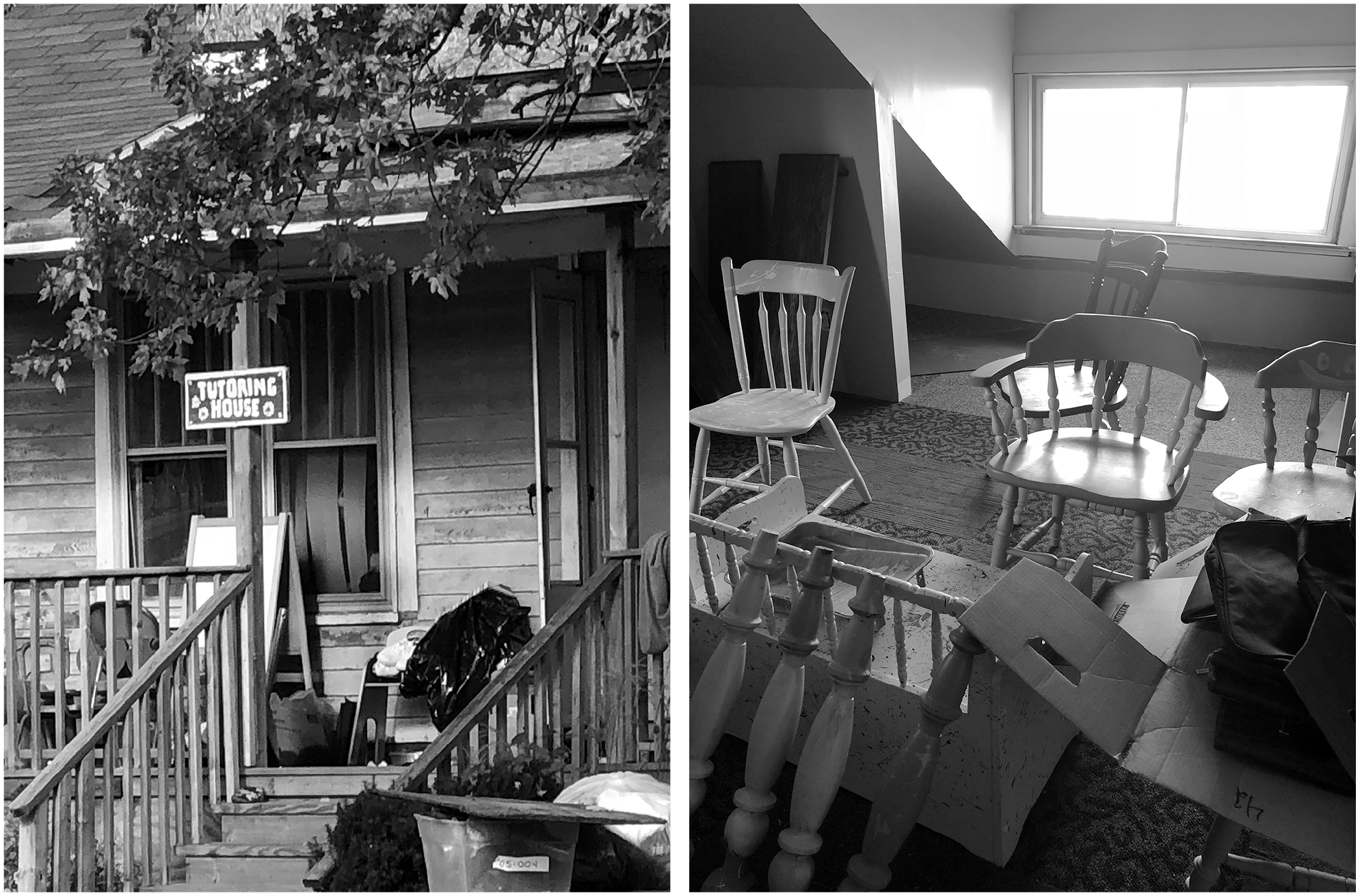
Images of tutoring house.
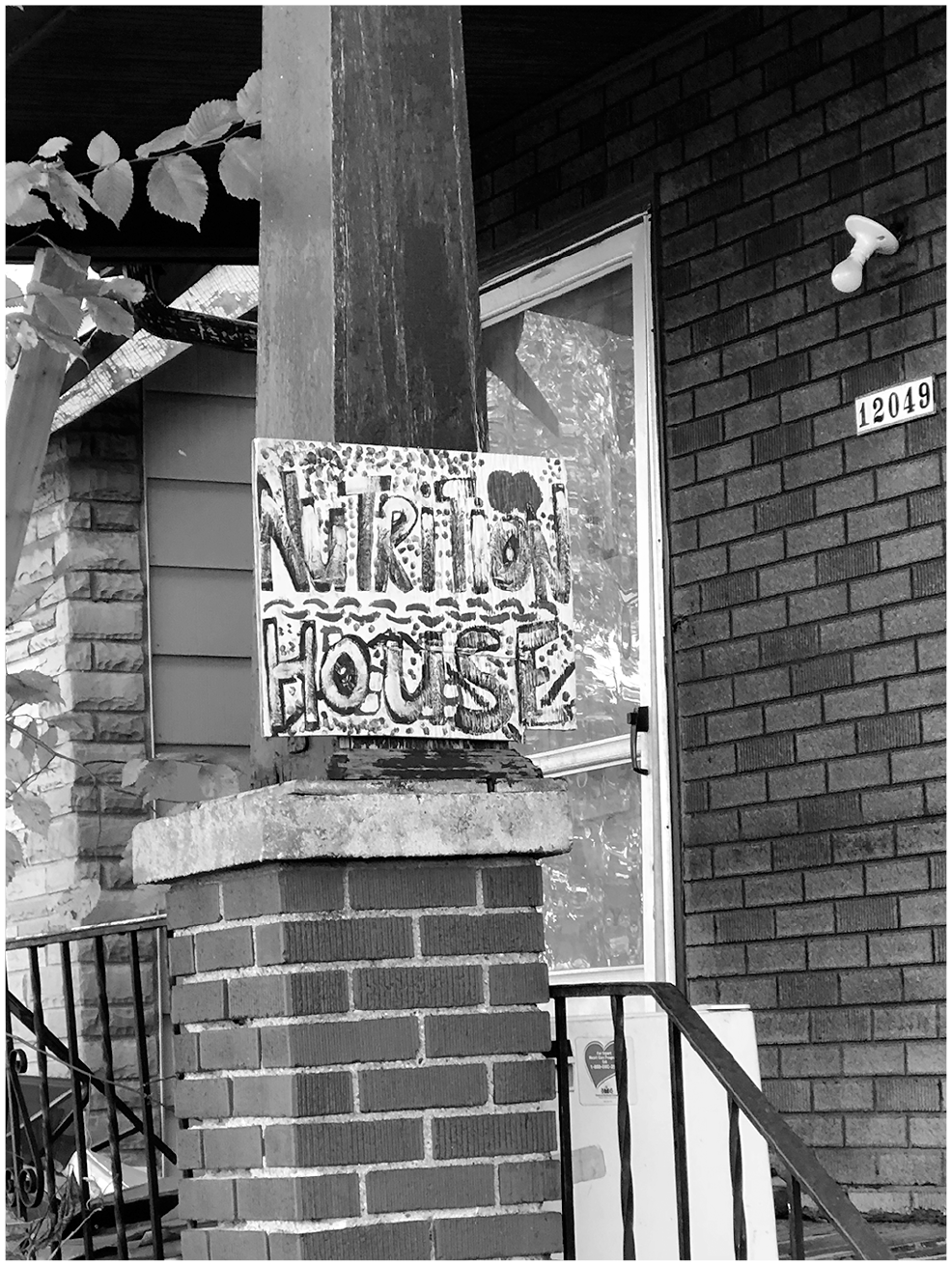
Nutrition house.