



Abstract
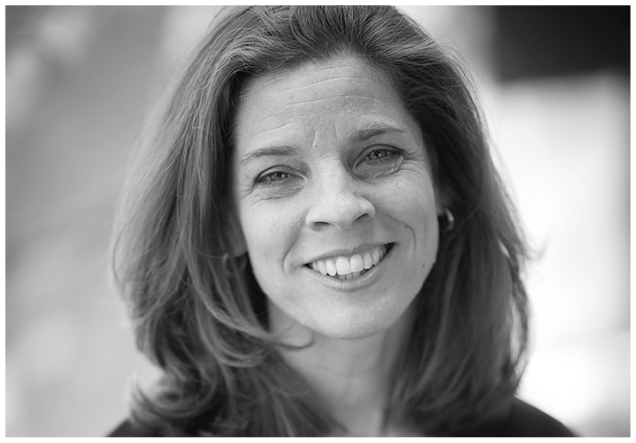
Christy E. Lopez joined the Georgetown faculty as a Distinguished Visitor from Practice in 2017, and was made Professor from Practice in 2020. From 2010 to 2017, Professor Lopez served as a Deputy Chief in the Special Litigation Section of the Civil Rights Division at the U.S. Department of Justice. She recently sat down for an interview with Contexts Managing Editor, Genesis Fuentes, to discuss her time at the Department of Justice where she was the primary drafter of the Ferguson Report.
Christy E. Lopez joined the Georgetown faculty as a Distinguished Visitor from Practice in 2017, and was made Professor from Practice in 2020. From 2010 to 2017, Professor Lopez served as a Deputy Chief in the Special Litigation Section of the Civil Rights Division at the U.S. Department of Justice. She recently sat down for an interview with Contexts Managing Editor, Genesis Fuentes, to discuss her time at the Department of Justice where she was the primary drafter of the Ferguson Report.
I headed up what we called the Police Practices Group. It was a high-profile group with high-profile work throughout the time that I was there. I worked with a team of really amazing people, administrative assistants, investigators, lawyers, paralegals, and what the day looked like depended on what particular project I was working on. Most often, I was involved with the investigative process. I was working with experts to help to understand their findings. I was in a city talking with community members, talking with police officials, going on ride-alongs. There’s not really any normal day because there were so many different tasks involved with even just the investigative process and that wasn’t all the work that I was doing.
That was the quickest an investigation was ever completed at the Department of Justice, which was six months. We really chose to focus on fines and fees and the way that Ferguson had a police department in large part to raise revenue for the city. One thing came up implicitly and I think we didn’t really see how important this was until after the murder of George Floyd. This method of policing wasn’t just because the city wanted to use policing to raise revenue.
Christy E. Lopez
Georgetown University Law School
And we were quite clear that it was doing so on the backs of poor people and Black people in Ferguson. That part was clear. But what was less emphasized, or I think less fully appreciated by the public, was that this form of policing was also done out of fear.
Ferguson had gone from majority White to majority Black in a fairly short time period over about 10-years, just prior to Michael Brown being killed. That was frightening to a lot of people in Ferguson, a lot of leadership. They wanted to use policing to keep people in line. It was about using policing to enforce a racial order and I think that’s really important.
Policing wasn’t always done to protect communities. Whether it was for money, whether it was for racialized reasons, it wasn’t for public safety. I think that recognition, putting that idea in the minds of the public, was what many activists had been trying to do for years. I’m really happy that the DOJ were able to take that important truth and help expand people’s understanding of it.
We tend to define public safety very narrowly. Protection from precipitous violence, that’s important, but most people think, “well actually a house would keep me much safer than a police officer.” We’ve defined public safety very narrowly, it’s about policing, not about those other things. Then even within that narrow definition of public safety, we have defined how you secure that protection from precipitous violence very narrowly. It’s with armed police officers with a gun, not a better mental health safety net, not better housing for people, not more afterschool activities for kids. I mean, there’s myriad of approaches one could take.
The second bucket is things police do that other entities could do better. That’s responding to mental health crises where there’s no imminent harm of bodily danger. Dealing with people who are unsheltered and sleeping on someone’s stoop. We don’t need police to be doing those things. I think changing those things both require you to go beyond reform. It does really require us to rethink what police do, to rethink how many people we need to do it, whether they need to be armed, whether they need to be sworn versus unsworn, civilian, what we often call civilian employees. All that puts [us] far beyond reform in my conception of reform.
The third bucket, however, is, and many people disagree with me on this— at least people who are really active in this area—I do believe that we continue to need police for certain functions, but we need them to police better. And that’s where the reform comes in. We’re never going to get police to police the way we want to, if we don’t attend [to] those first two buckets. Because we’re asking them to do things that set them at odds fundamentally with the communities they’re supposed to be protecting. We’re asking one individual, one police officer, to have too broad a set of skills. I think that we need to go beyond reform, but I still think that we need to work on actually fixing policing itself as well.
One of my main reasons for coming to Georgetown was because I realized that you are not going to fix policing if you just focus on police officers. The architects of the system are prosecutors, judges, legislators, and of course the public at large. But those prosecutors, judges, and legislators are largely lawyers and they all go to law schools. I had to go to where we’re creating the lawyers and help teach them from the outset. I have learned that it is a different perspective, and it is valuable for law students to learn about these issues from this perspective. I’m hoping that helps make a difference as they go out into the world, and do their work.
I think I previously would’ve not fully appreciated the value of the academic scholarship in that respect. But I now think quite the opposite: that it’s actually better for everyone if the academics stick in their lane, and the other people stick in their lane and we work together to come up with something that makes sense. I think, increasingly, academics are resistant to that because they want to feel like they’re a part of the solution. I wish they could understand that. I know you are. This is an important thing that those practicing would never have the time and sometimes not the skill to do. So, thank you for your service. But now let’s hand it off to a practitioner.