




Abstract
Unequal Partners is a beautifully told ethnography of religious life within the transnational order Sisters of Notre Dame de Namur. Clevenger artfully weaves together the words and experiences of Catholic sisters living out a shared mission and identity within vastly divergent historical, economic, and cultural contexts. The story that emerges is one of both enduring tensions and heartening mutuality. As the first ethnographic study of a transnational religious women’s organization, Unequal Partners makes an important contribution to sociological and transnational scholarship, pertinent to both globalized religion and cross-border collectives more generally.
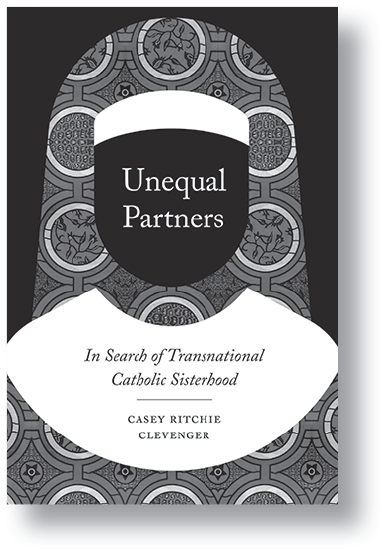
Unequal Partners is a beautifully told ethnography of religious life within the transnational order Sisters of Notre Dame de Namur. Clevenger artfully weaves together the words and experiences of Catholic sisters living out a shared mission and identity within vastly divergent historical, economic, and cultural contexts. The story that emerges is one of both enduring tensions and heartening mutuality. As the first ethnographic study of a transnational religious women’s organization, Unequal Partners makes an important contribution to sociological and transnational scholarship, pertinent to both globalized religion and cross-border collectives more generally. Clevenger vividly describes her observations and interviews with Catholic sisters in the greater Boston area and the Democratic Republic of Congo. She paints a rich picture of the stark inequalities, relational and organizational tensions, and unique local challenges these sisters confront.
The book opens by introducing Sr. Ellen, general treasurer of the Sisters of Notre Dame, coordinating a U.S.-led development project for the African sisters. Sr. Ellen summarizes the frank skepticism Congolese and Nigerian sisters initially expressed of the American venture due to past negative experiences: “There are so many of you Americans, and you think you know everything and you do not.” This account is a pithy example of the uneasy relationship between provinces in the Global North and the Global South. The book highlights the various ways in which this tension manifests: the flow of resources, memories of Congo’s colonial past, and perceptions of religious identity. Despite these strains, the women express a strong feeling of shared sisterhood and unity in their broader spiritual mission. Clevenger reveals the complicated dynamics and contradictions this presents and shows us how such contradictions play out on the ground. Zooming out, Unequal Partners demonstrates the stickiness of place, how even in an age of globalization, amidst the push and pull of myriad transnational relationships, the local still profoundly shapes lived realities.
Clevenger gives several key examples of the deep influence of local identities, history, and context. In the Democratic Republic of Congo, the inertia of colonialism persists. The obvious imbalances in financial, political, and professional resources are always present in the daily life and realities of the Congolese sisters. In Boston and Ipswich, sisters seek to exercise their talents through meaningful service to the local and international community while living what is perceived within American culture to be an increasingly radical lifestyle. Demographic trends illustrate the comparative growth of Catholic women’s religious vocations in Africa relative to the continued decline of women’s institutes in Europe and the United States. These demographic shifts notwithstanding, provinces throughout the developing world still depend materially and administratively on the Western provinces.
The book also presents the order’s origin story, offering a brief biography of its spiritual mother, St. Julie Billiart. Dedicated to serving the poor, St. Julie founded the institute in Amiens, France, in 1804. She overcame substantial adversity, including a twenty-two-year paralysis that had confined her to bed, and made 120 journeys to expand the ministry. Clevenger explains the slow African beginnings of the Sisters of Notre Dame from 1894 to 1905 in the Congo Free State, King Leopold Il’s private colony. Her careful synthesis of the historical scholarship reveals the deep ties of the Catholic Church to Belgian imperialism and how the overlapping interests of the state, missionaries, and private industry—or trinité coloniale—wrought havoc on local customs and institutions. Even following Congolese Independence, which was supported by Catholic leadership, presumptions of cultural superiority and racist attitudes pervaded the ranks of religious orders. Initially segregated, Congolese women were finally allowed to join the Sisters of Notre Dame in 1959. Yet, another 26 years would pass before the first local sister was elected to lead the Congolese province. Clevenger details the order’s long internal struggle against racism and paternalism; even today, some older Belgian sisters refer to their African counterparts as “little sisters.” In the early 1960s, Catholic leaders convened for the Second Vatican Council, commonly known as Vatican II. They announced several modernist reforms which ultimately resulted in a liturgy more permissive of local customs and language. Following Vatican II, African sisters gradually gained leadership roles and cultural autonomy. Much of the sociology of religion literature on international Catholicism focuses on changes brought about by Vatican II. Clevenger’s contribution here, however, is her contention that the current struggles of Congolese sisters within an international order must be understood in the perspective of a much longer, colonial history.
The bulk of the book contrasts the day-to-day routines, customs, pathways to religious life, organizational logics and mentalities of the U.S. and Congo-Kinshasa provinces. Clevenger argues that national and regional cultures shape the disparate praxes of the sisters in each region. For instance, the communal aspect of Congolese culture leads to a very different organizational structure and decision-making process in comparison with Boston and Ipswich. Congolese sisters conform to a clearer structure of hierarchy that prioritizes the need of the community above individual preferences or desires. This is understood and accepted but can also be hard at times such as when a family member is severely sick or in financial need and the sister is unable to take leave of her duties or lend any monetary support, for example. In a culture that places high value on motherhood, procreation and marriage dowries, explaining the vow of celibacy is another challenge. But this collectivism also creates a tight-knit community among the sisters, one that emphasizes physical presence and shared ritual. In contrast, U.S. sisters emphasize individual discernment and self-actualization, albeit in the service of the order’s charism or spiritual mission to educate and serve the poor.
Returning to the importance of Vatican II, Clevenger explains how the reforms that followed the Council had a significant impact on U.S. religious life, foregrounding poverty and the need to adapt church service to local needs. This local emphasis and renewed focus on reaching out to the poor led to a steady decline of convent life and stricter traditions, replaced by smaller communities and more individual autonomy. In the face of increased personal freedom and less organizational rigidity, diverse views arose on how to respond to shifting institutional norms, evolving internal and external perceptions of sisterhood, and downward trends in religious vocations. Still, many sisters found these reforms liberating and visionary ideas of how to better serve vulnerable local populations advanced from humble beginnings to well-established community organizations. At the same time, national identity and culture exerted a relatively stronger influence on the development of religious life in the Congo-Kinshasa province. Throughout Africa the concept of “inculturation” took hold, and religious life became ever more Africanized, with the religious moving away from purely European traditions and adopting more national customs. Food, dress, and communal celebrations were visible manifestations of this trend. In contrast to the individualization of religious life in the United States, ties between nation and Catholicism deepened in Congo.
The book does an excellent job outlining both the progress African women religious organizations have achieved as well as the difficulties that remain. In Congo, Catholic sisters fill in the institutional gaps in education and public health left by a poorly operated government. Clevenger’s interviewees explain how this role leads to local misunderstandings. Sisters express ambivalence over their collection of necessary service fees and personal misgivings about the comfort and security they enjoy relative to the locals despite their vow of poverty.
…the current struggles of Congolese sisters within an international order must be understood in the perspective of a much longer, colonial history.
The conclusion offers a fascinating discussion of institutional politics in the United States, describing some of the rifts between the patriarchal leadership and outspoken sisters over issues such as reproductive rights, sexuality, and church priorities. My only criticism is that as a reader this felt more like a cursory addition than a summary of previous points. If it merits inclusion in the closing chapter—and I believe it does—there could have been more on the specific differences in U.S. and Congolese perceptions of gendered hierarchy and controversies. Clevenger does point out the African sisters’ tacit acceptance of male leadership (while they also work to raise gender consciousness and increase girls’ access to education), but only in the conclusion is the U.S. comparison really fleshed out.
Clevenger’s core argument, however, is nuanced and persuasive: the effects of colonialism and racism continue to reverberate, lived realities of Catholic sisters remain deeply influenced by place and circumstance, inequalities persist, yet there are reasons to be optimistic. New technologies and strengthened international ties have allowed for increased interaction between Sisters of Notre Dame across the globe. This has led to greater understanding and opportunities for mutual betterment. In the United States, emphasis on more effectively serving the poor and vulnerable has led to numerous successful endeavors, some now full-fledged, independent philanthropic organizations. In the Global South, growth in both sisters’ vocations and transnational influence support a hopeful view of the future.
Unequal Partners is a welcome addition to the sociology of religion and transnational scholarship; related readings include Peggy Levitt’s work on transnational religion and Adam Hochschild’s King Leopold’s Ghost: A Story of Greed, Terror, and Heroism in Colonial Africa. Perhaps the book’s greatest strength is Clevenger’s prioritization of the sisters’ own words and descriptions. She skillfully combines direct quotes and personal anecdotes with meticulous thematic analysis. Unequal Partners concludes on an optimistic note. While the systems and logics of colonialism endure in some ways, demographic and theological changes offer new possibilities and increased opportunities for international leadership from women religious in the Global South.