




Abstract
When used too frequently, exclusionary school punishment like out-of-school suspensions are ineffective and harmful. The harms to students are clear, though excessive use of school suspensions also impacts entire schools, students’ families, and communities. Because youth of color are at greater risk of school punishments, these harms disproportionately limit their life opportunities and exacerbate racial inequality. To better understand how and why we punish students the way we do, sociologists need to understand school punishment as rooted in a historical legacy of racial oppression and denial of educational opportunities to Black children.
As I sat in the living room of their house outside Mobile, Alabama, talking to Michael and his mother, Nora, Nora showed me a file folder several inches thick that contained all of Michael’s “referral forms,” the paperwork from his many out-of-school suspensions. Michael’s school suspended him repeatedly for dress code violations, talking back to teachers, tardiness, refusing to complete assignments, and other minor misbehaviors. None of the incidents involved weapons, drugs, assaulting a teacher, or other serious infractions. By the time of our interview, seventeen-year-old Michael had dropped out of ninth grade; his suspensions had resulted in so many missed days of instruction that he was never promoted to tenth grade. He had no educational prospects and no social network. His treatment at school left him angry and unable to trust most people, and he had lost touch with all of his friends who had moved on to the tenth grade and beyond.
Michael’s case is extreme, but it illustrates the harms of schools’ excessive use of exclusionary school punishments like suspension. Too often, schools see students as threats or problems to be contained rather than children to be nurtured. In response, school staff often remove students from school through suspension, even though this is ineffective as a strategy to reduce misbehavior and has long-term harms to students, their families, and entire school communities. Suspended students are at heightened risk of several dire future outcomes: academic failure, dropping out of school, arrest, and incarceration. This process is referred to as the “school-to-prison pipeline.” But the students who experience this pipeline aren’t the only ones who suffer. Entire families shoulder the burden of their children’s punishments, as do their communities. Rather than helping other students learn, suspensions result in worse learning climates for all students (not just those who are punished). Given that children of color, particularly Black youth, are at far greater risk of punishment than others, they, their parents, schools, and communities are disproportionately harmed by excessive school punishment.
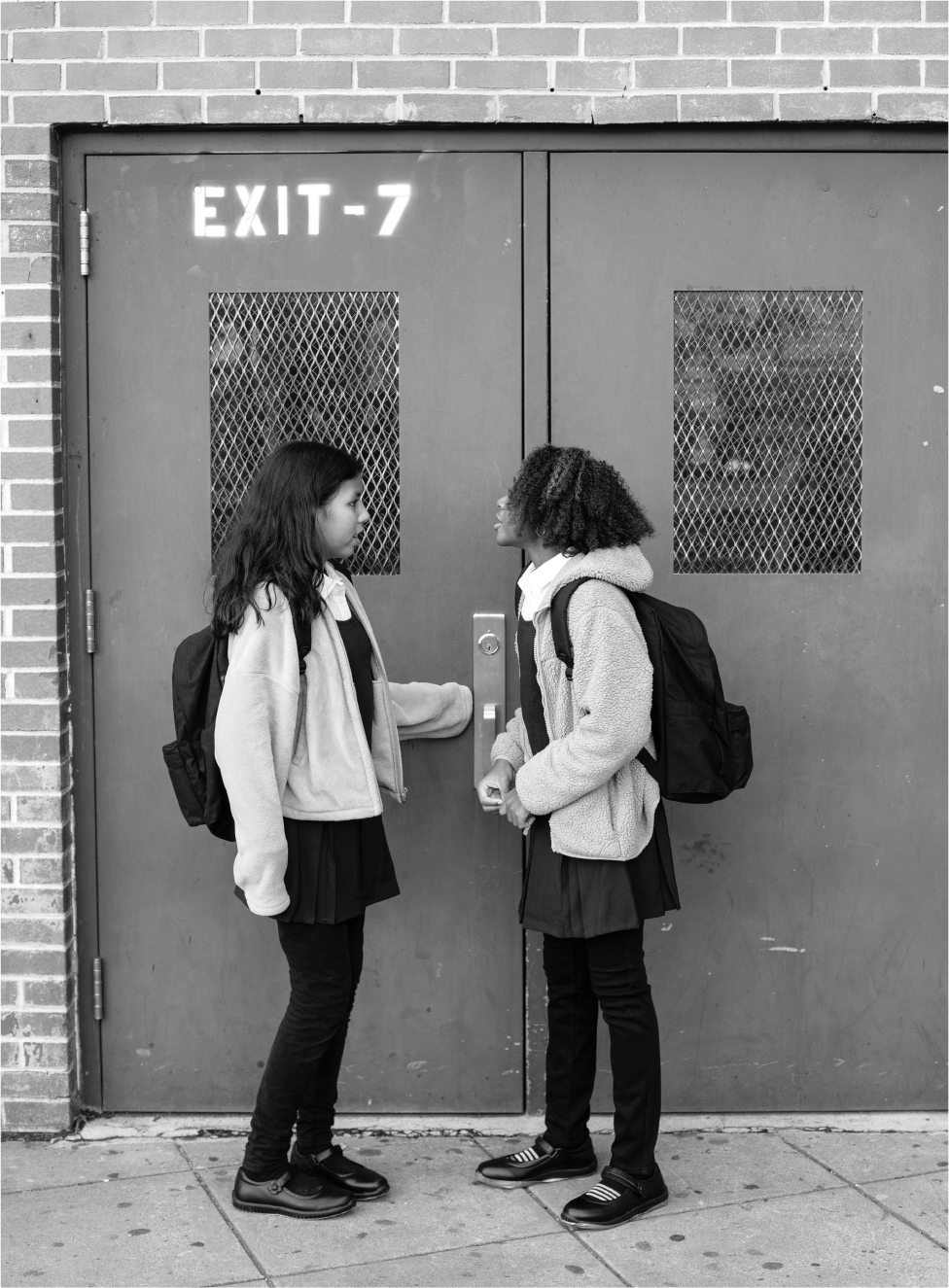
Students chatting outside their school in a large city.
Mary Taylor, Pexels cc
The Harms of School Punishment are Broad and Deep
While discussions of the “school-to-prison pipeline” are now common, these discussions typically focus only on the individual students who are punished and the effects punishment has on their future life opportunities. In my book, The Real School Safety Problem, I elaborate on several broader and longer-term harms of excessive school punishments (i.e., beyond the harms faced by the individual students who are punished) than had been previously considered. Excessive use of exclusionary school punishments doesn’t just jeopardize the futures of individual youth—it also impacts families, schools, and entire communities.
Much of my interview with Michael and his mother, Nora, consisted of listening to Nora’s harrowing account of how Michael’s treatment at school had impacted her entire family. Nora had been helping her ailing father, who had recently passed away before our interview, and was responsible for two severely disabled young children. She had a lot on her plate. So when Michael’s school would call and demand that he be picked up immediately or be sent to juvenile detention, Nora faced difficult decisions: did she skip one of her younger children’s medical appointments, not visit her dying father, or let Michael get locked up? Her anguish was palpable when she described her efforts to advocate for Michael at school and how stressful the situation had become.
Too often, schools see students as threats or problems to be contained rather than children to be nurtured.
Along with a colleague, Dr. Thomas Mowen, I spoke with several parents like Nora in my research for the book. These parents told stories of lost wages and even being fired from jobs for repeatedly taking time off work to pick up their children when the principal called. They all discussed the stress and anxiety that their children’s troubles in schools caused them. Some pointed towards physical manifestations of this stress, including weight and hair loss, and a number of them described their responses as similar to having PTSD. A number of families had separated because of school punishment; some families, determined to obtain an education for their children, sent the children to live with a relative so they could attend school in another area. Many of these parents told us how they had eventually given up on trying to keep their kids in school, letting their young teenagers simply stop attending because the struggle against the school was too great. Like Nora’s, many of their stories were heart-wrenching accounts of parents desperate to provide essential educational opportunities for their children. Receiving an education might be their right under the law, but in practice, exclusionary school punishment left their children without the promised benefits of public schooling.
Often, the school-to-prison pipeline discourse describes harms to individual students and not the broader structural forces that justify school punishment.
Paul Barlow, Pixabay cc
Excessive use of punishment can also hurt entire schools. A school’s willingness to suspend students sends a message of intolerance and possibly even hostility, letting all students know they are problems to be managed rather than children to be cared for. It can erode the school’s social climate—the extent to which students feel valued, connected to others in their school, listened to and respected. It should be unsurprising that analyses by Brea L. Perry and Edward W. Morris found that schools with higher suspension rates have lower test scores even among students who have not been suspended, after taking into account other school and student body characteristics. In other words, the frequent suspension might actually reduce student academic achievement, likely because of its impact on the school climate.
In our analyses, Dr. Katie Farina and I find a somewhat similar school-wide effect on bullying victimization. We find that students who attend schools where they view school rules as less fair, on average, are more likely than others to report being the victim of bullying. While we cannot be certain, we believe that this result is again due to the negative effects of perceived unfairness on the school social climate. Excessive school punishment bears some similarity to bullying: it is repeated over time, involves a substantial power differential, and is intended to demean its victims. I have observed this kind of school discipline many times. If students attend schools where this is the model for dealing with conflict or stressful interactions, shouldn’t we expect some students to imitate this behavior? We interpret our results to suggest as much.
Excessive use of exclusionary school punishment also harms communities by suppressing civic and political engagement. Consider, for example, the use of zero-tolerance policies, which prescribe mandatory punishment for any offense that falls within a broad category, such as weapons, drugs, or violence.
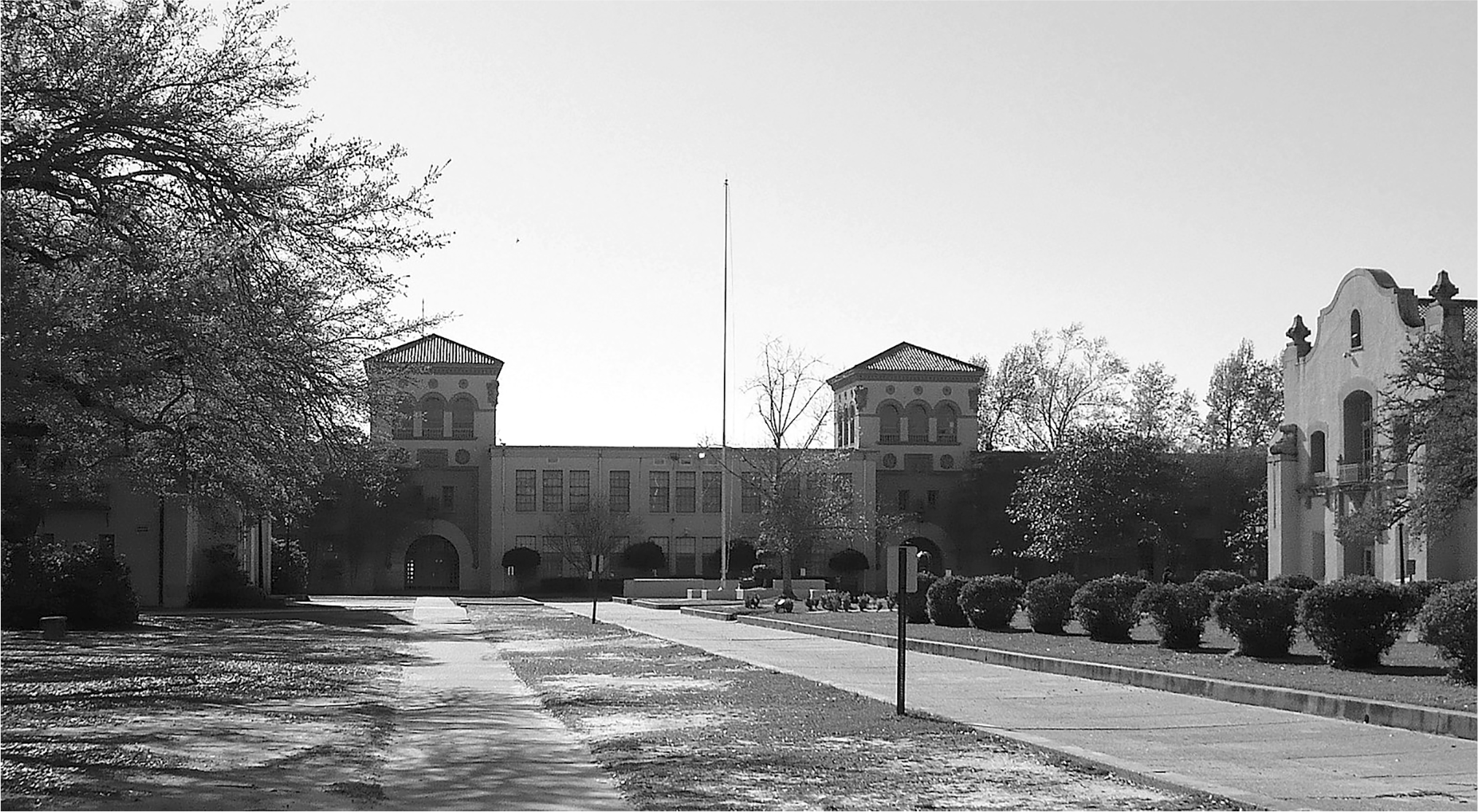
Murphy High School in Mobile, Alabama, one of the schools in the district where interviewee Michael and his mother Nora live.
Altairisfar, Wikimedia Commons
This means that a young person who forgets that a box cutter used for her afterschool job at the hardware store is still in her backpack can receive the same punishment as a student who brings a knife to school with the intent to attack someone. Or, a student who defends herself in a fight receives the same punishment as one who attacks and severely hurts a fellow student. Zero-tolerance policies were designed to reduce discretion and increase consistency—and hopefully fairness—in school punishments. But these “one size fits all” rules ignore students’ voices by design. The student with the box cutter has no opportunity to explain why it’s in her bag—the school rule ensures that her explanation falls on deaf ears. Such practices are undemocratic, as they deny students a right to defend their innocence, contextualize their behaviors, or have a dialog about the incident.
It is easy to imagine students feeling powerless in such schools and learning that they are helpless to shape or interact productively with authorities. Out of concern for how school punishments might teach students lessons like this that contradict norms of democratic participation, Dr. Thomas Catlaw and I analyzed data from a nationally representative longitudinal sample of students. We found that students suspended from school are less likely than others to vote, register to vote, or volunteer in their communities even years later when the former students are aged twenty-five to thirty
Finally, school security and exclusionary punishment are expensive propositions. Schools and local governments eagerly pay for them, despite evidence suggesting they are largely ineffective at improving student behaviors. It costs a great deal of money to hire police officers to patrol hallways; invest in surveillance equipment (e.g., cameras, ID card scanners, metal detectors); pay staff to watch or analyze the surveillance data and to staff punishment rooms; create alternative educational programs for students removed from the school but who still require instruction; hire administrators (e.g., Dean of discipline, interventionist, etc.) specifically to deal with student discipline and assign punishments; and so on. Taxpayers pay for schools to implement these strategies, despite evidence of ineffectiveness. If schools across the U.S. were to spend an equivalent amount as the school district I analyzed in The Real School Safety Problem, this would mean $14.8 billion nationally on annual direct costs of school safety efforts. Further, more students suspended, expelled, or arrested means more young people eventually entering the justice system; this entails expenses to run criminal courts and for incarceration and lost wages due to added dropouts, increased unemployment, and incarceration.
Excessive use of exclusionary school punishments doesn’t just jeopardize the futures of individual youth—it also impacts families, schools, and entire communities.
School Punishment and the Growth of Racial Inequality
One of the fundamental promises of public schools is that they are “the great equalizer.” Children are told that if they work hard enough, they can be anything they want—that if they take advantage of a free public education to earn academic credentials, they will secure financial and career stability. But there is little “equal” about how school punishments are assigned and consequently about how some students’ academic careers and future life outcomes are handicapped.
Research consistently finds that students with disabilities, LGBTQ students, and students of color are disproportionately punished in schools. Most studies find that the risk of punishment is greatest for Black students. However, some studies, such as Victor Rios’s excellent book, Punished, find that the over-policing and over-punishment faced by Latino/a youth in the community is felt in schools, too. Study after study has found racially disproportionate school punishments, whether looking at national statistics or individual areas or states, regardless of the analytical methods used. Importantly, several of these studies can statistically control for student misbehavior (though it is difficult to measure in an unbiased way); any differences in misbehavior that may exist do not seem to explain disproportionate rates of school punishment. Qualitative research complements and extends this body of work by demonstrating that students of color often perceive school punishment and policing as unfair, coercive, and racially unjust.
We need to understand school punishment as rooted in a historical legacy of racial oppression and denial of educational opportunities to Black children.
Two related observations help explain why Black youth are disproportionately given exclusionary school punishments. The first considers differences among schools. Research finds distinctions in school policy and practice that correspond to the race/ethnicity of their student bodies. Schools with higher percentages of students of color tend to use more invasive security practices (e.g., metal detectors) and have harsher punishment practices. Students in them are seen as threats to be policed and treated more harshly than students in predominantly white schools, who are more likely to be seen as children who need care and nurturing. Thus, students of color are at greater risk of exclusionary school punishments than white students because they attend schools that prefer to assign such punishments.
The second observation is about how individual staff interpret the actions of youth of color. A growing body of evidence demonstrates that school staff often interpret youths’ actions in ways marked by implicit racial bias. Implicit racial bias refers to subconscious biases, usually a preference for whites and negative judgments of people of color, which are at an unconscious level and are thus unknown to those who hold them. Research shows that school staff are more likely to view the behaviors of youth of color as threatening, loud, and disruptive, in contrast to more benign interpretations of white youths’ behaviors. One recent experimental study illustrates this well. Researchers gave teachers vignettes that described student misbehavior and asked the teachers to report their level of concern and preferred response. The researchers, Jason Okonofua and Jennifer Eberhardt, randomly varied only the names of the students, alternating between “stereotypically white” names (Greg and Jake) and “stereotypically black” names (Darnell and Deshawn). They found that teachers were significantly more bothered by the behaviors of Darnell and Deshawn and desired more punishment in response, particularly if it was a second offense, than when the student was named Greg or Jake.
Over the past few years, more advocates and scholars have turned their attention to this problem, resulting in many high-quality empirical studies. Only one study of which I am aware, by John Paul Wright et al. in a 2014 issue of Journal of Criminal Justice, suggests that racially disproportionate rates of school punishment result from Black students misbehaving more than white students do. Yet in a 2020 issue of Educational Researcher, Francis L. Huang replicates Wright et al.’s analyses, finding that their results are primarily due to sample selection bias. Once correcting for this bias, and using the same dataset as Wright et al, Huang finds that the significant racial disparity in punishment remains even after controlling for student misbehavior.
Despite the impact of sample selection bias on the Wright et al. study results and the fact that several other studies contradict its conclusions, it is the only study on this issue cited by the recent Final Report of the Federal Commission on School Safety. This report ignores the body of high-quality empirical evidence to suggest that disproportionate school punishment is “a mere statistical disparity” and recommends that the Departments of Education and Justice rescind guidance on school discipline from the Obama era intended to reduce racial disproportionality in school punishment.
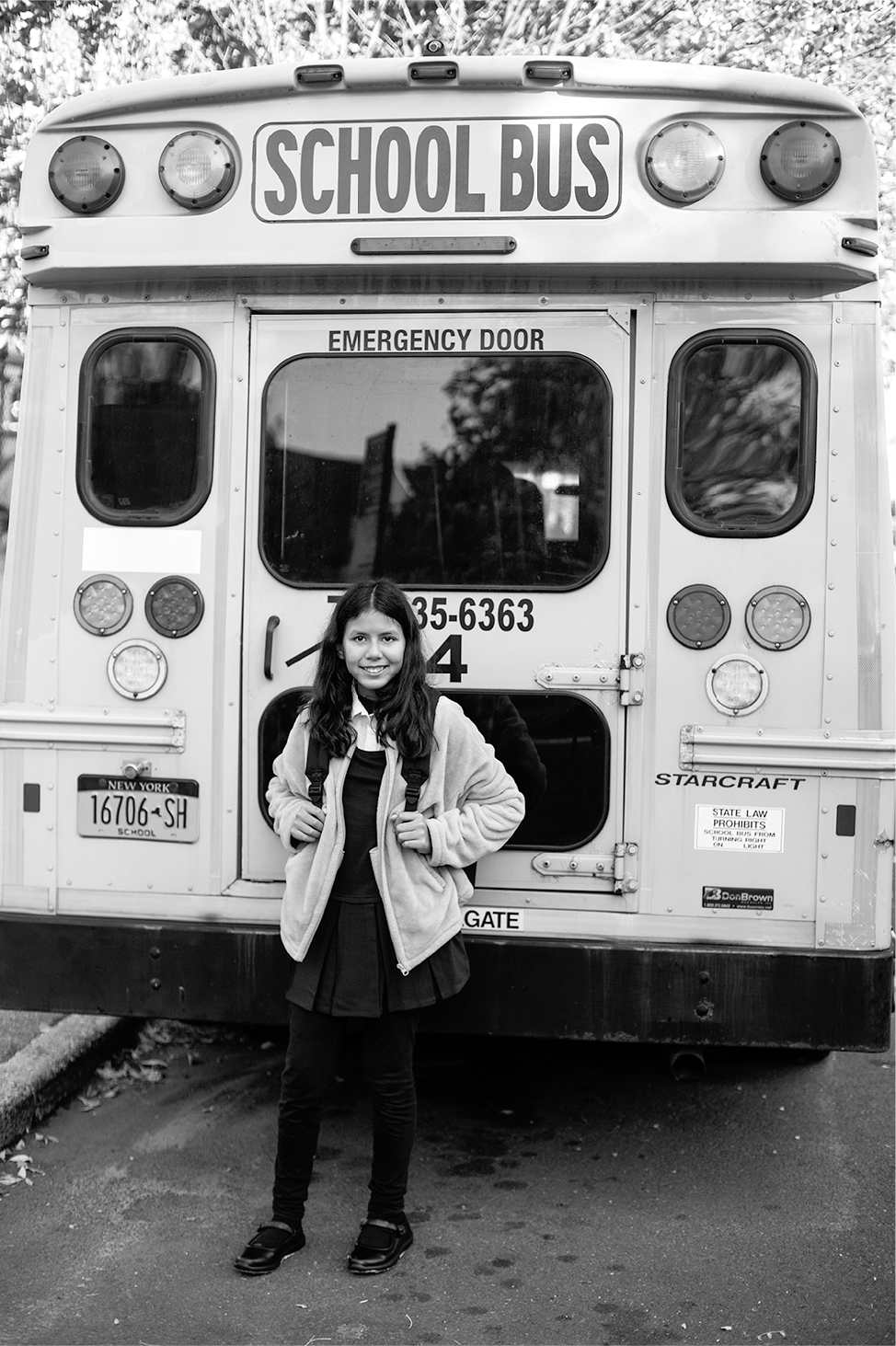
A student stands in front of a schoolbus at school.
Mary Taylor, Pexels cc
Expanding Our View of the Problem
Many scholars, politicians, civil rights groups, and others advocate for school punishment reform. They agree that it is important for schools to have clear, consistently enforced rules but provide little guidance on doing so more effectively and fairly. Their policy proposals tend to include evidence-based practices such as Positive Behavioral Interventions and Solutions (PBIS), restorative justice, and others. These reforms are needed to reduce unnecessary suspensions and offer more supportive, inclusive learning environments. But they are also limited. Because they seek to reform punishment practices, generally, they do not deal directly with the problem of racial inequality.
Policy-makers and educational administrators should take a more expansive, sociological view of racially disparate school punishment. We need to understand school punishment as rooted in a historical legacy of racial oppression and denial of educational opportunities to Black children. One can trace the pattern of oppression from laws prohibiting literacy among enslaved people, to segregated (and unequal) schools, to racially disparate punishment today. Contemporary school punishment is based on formally race-neutral policies and thus very different from Jim Crow segregation. But in this way, it resembles Michelle Alexander’s well-known description of mass incarceration as The New Jim Crow. Her powerful work makes the case that colorblind policies are enforced so disparately that the justice system continues a legacy of oppression—one that needed a new form once Jim Crow era practices ended.
In a recent article, co-authors Geoff Ward, Nick Petersen, James Pratt, and I found that contemporary rates of corporal punishment, particularly of Black students, in southern schools relates positively to county-level rates of lynching, 1865-1950. We describe a legacy of racialized violence seen in schools today in the form of corporal punishment. The same is likely true of other forms of school punishment as well.
Sociologists have yet to examine this connection, which is crucial to better-explaining school punishment today and understanding how to mitigate the harms it produces. Seeing racially disproportionate school punishment as one element of historic structural inequality would help broaden our understanding of why Black students are frequently punished. Currently, a focus on implicit racial bias, a micro-interactional theory, dominates these understandings. Implicit bias is a significant problem, but it does not help us understand why entire schools that serve mostly students of color are subjected to harsh policies, nor does it explain why suspensions came to be the default response to student behavior despite being ineffective and harmful. Further, focusing solely on micro-interactions means that the broader problem of systemic racism goes unacknowledged. We also need to understand the bigger picture: how school suspension became institutionalized as a response to perceived student misbehavior and why schools are so willing to suspend Black youth in particular from school.