




Abstract
Vaccine refusal, homeownership in chile, and title ix and universities. New research from the journals.
Clusters of Vaccine Refusal
“Personal belief exemptions” (PBEs) for vaccines have gained in popularity in state legislatures recently and, in turn, the proportion of parents electing to opt their children out of vaccines has increased, causing concern among public health professionals. Even when states minimize availability of PBEs, vaccine exemptions cluster in certain communities and schools. While past research has uncovered health risks associated with PBE clustering and revealed certain parental characteristics that tend to lead to PBEs, much less is known about where and why these PBE clusters exist and persist.
Kevin Estep and Pierce Greenberg, in American Sociological Review, argue that families with adequate resources often move into communities that have similar characteristics, such as social class, racial/ethnic identity, and political views, creating “pockets of homogeneity,” or neighborhoods that attract a higher proportion of families that exemplify the mindset of opt-out individualism. Because these families are surrounded by other families that share their mindset, their views regarding opting-out of vaccinations are not only protected from stigmatization in the immediate community, but also reinforced and shared by other parents in the same neighborhood. In these pockets, opting out of vaccination may be considered safe and even socially acceptable.
The authors use data from school districts to identify patterns in PBE clustering in the state of California, while interviews are used to explore motivations behind choices about vaccination, schooling, and housing. They find that PBEs do cluster in certain affluent pockets in both neighborhoods and school districts. Additionally, interviews with families that opt-out indicate that the same individualism that informs opting out may influence schooling and housing decisions, thus generating pockets of homogeneity. The authors conclude by considering implications for public health and broader contributions to sociology.
Coalitions Beyond the Ivory Tower
Many point to public and critical sociologists as vehicles for social change. However, these figures largely operate within the confines of their discrete intellectual roles, impeding their abilities to challenge ivory-tower norms and practices. In contrast, the “collective intellectual” figure transcends beyond the academy, collaborating across social contexts to translate research into strategies for public intervention and collective political action. In The Sociological Review, Amin Perez traces the career trajectory of Algerian sociologist of immigration, Abdelmalek Sayad, to outline how social context, positionality, and the structure of academia itself informs engagement in collective intellectual work.
Pérez maps the transnational intellectual engagements of Sayad through an application of Sayad’s three stages of emigration: (1) emigrants retain a vested interest in the affairs of their country of origin, (2) develop an increased investment in improving the quality of life in both their host and origin countries, and (3) detach from their country of origin to become more politically engaged in their host country. Perez links Sayad’s initiation into the stages of emigration to his refusal to join and eventual exile from the Algerian intellectual elite. Following his emigration to France, Sayad leveraged his sociological expertise as well as political resources to politically intervene and collaborate across sociopolitical contexts, including Algerian and French officials, political dissidents, unionists, activists, and writers.
While Pérez acknowledges the utility of public, critical, and political sociology, Sayad’s collective intellectual engagements highlight the power of reflexively moving across these roles. By using their sociological expertise to expose and intervene in academic and political affairs—often at the expense of their own career advancement—Sayad’s trajectory illuminates the inherent constraints of the academy, which provide little space for political intervention and coalition building. Perez argues that collective intellectuals like Sayad, move beyond the acquisition of specialized knowledge and instead build coalitions of defense to arm with instruments for emancipation.
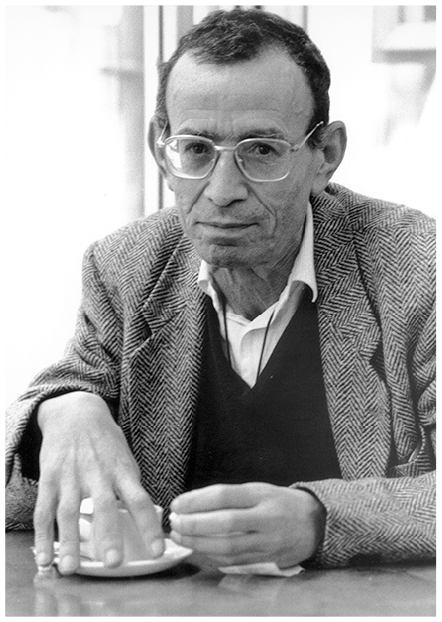
Algerian sociologist of immigration, Abdelmalek Sayad.
Editions Bouchene, Flickr cc
Claiming Space and Negotiating Boundaries
What happens when rapidly changing cities make exclusive physical spaces accessible to everyone? How does accessing these physical spaces influence established social and symbolic boundaries, and inclusion and exclusion patterns? Using the case study of Tehran, Iran, Jaleh Jalili in Social Problems, discusses the consequences of the blurring of physical boundaries. The author, in her fieldwork, from 2013-15, uses observations, survey data, and interviews with users of these public spaces to understand the processes used to define and negotiate identity.
In the 1990s in Iran, there were substantial investments in urban development that led to growth in infrastructure such as highways and public transport. This has made it easier for people to access public spaces beyond their immediate communities and neighborhoods. As a result, those from poorer neighborhoods in the south now have more access to elite public spaces in the north and vice versa. However, an individual’s physical location (i.e., whether they are from the north or the south) remains important markers of identities. This is amplified in the context of Tehran, which is largely a homogenous city. In the absence of the usual markers of boundaries such as race, ethnicity, social class, and sexuality (state regulated), belonging to a particular physical location carries with it implications for an individual’s symbolic and social status.
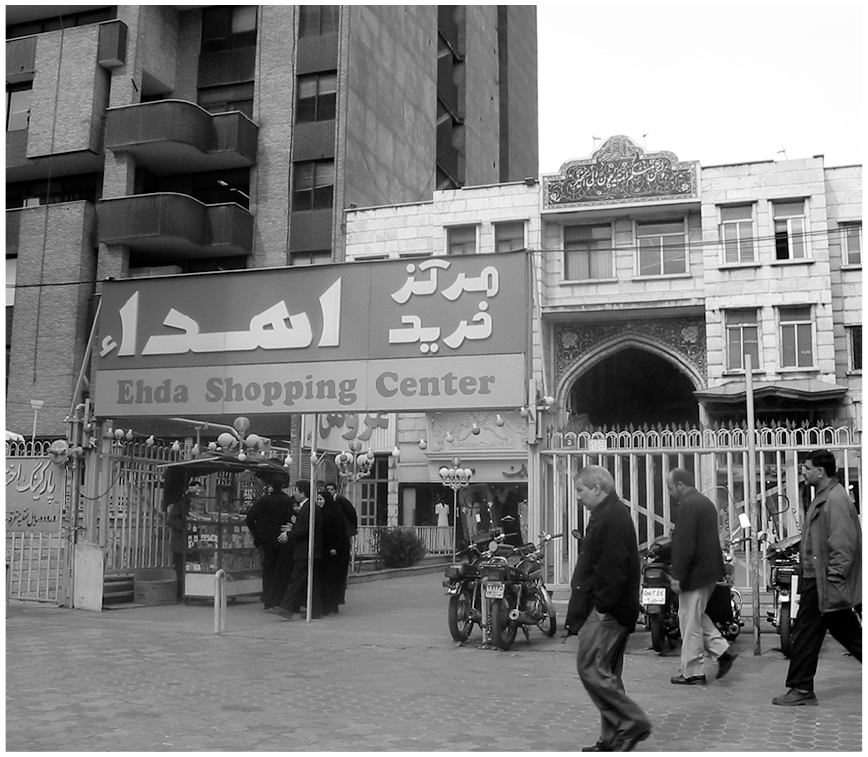
The Ehda shopping center in the Tehran Province of Iran.
RNW, Flickr cc
Public spaces that bring together people from different locations are therefore integral to the process of identity formation and the defining and redefining of boundaries, creating a constant state of class awareness. While the use and access of previously inaccessible public spaces bring together people in a physical sense by blurring spatial boundaries, feelings of discomfort, resentment, and conflict are not uncommon in these spaces. Discrimination and exclusion are regularly practiced based on the real, and imagined, location of individuals.
Neighborhood Selection and Social Class in Chile
In a recent Poetics article, Joel Stillerman explores how middle-class Chilean families make decisions toward homeownership. The country’s free-market policies plus a mortgage system from the 70s explain a relatively high homeownership rate (70 percent). The author analyzes the housing pathways, followed by 77 adults living in mainly two middle-class neighborhoods in Santiago. He distinguishes between upper and low-middle class members. He focuses on moral, physical, and symbolic meanings that interviewees use to explain the sense of belonging to their communities and places where they choose to live.
Stillerman describes three trajectories toward household ownership: linear, chaotic-progressive, and reproductive— people in the first group have more access to parental economic support that allow them to choose where to live. The second group followed pathways characterized by living in different households in a short time and living arrangements that alternate living with family or friends. This group faces higher constraints related to mortgage and/or government subsidies, and they rely on family and friends to make housing decisions. Finally, low-middle class interviewees follow reproductive pathways and tend to rent for a long time in neighborhoods near to their families. Hence, they reproduce their social and physical position from childhood.
Social and cultural capital plays a role in how families make neighborhood decisions, and again, there are differences by class, even within members of middle-class members. For instance, upper-middle-class people value social connections, closeness to high-performing schools, or urban aesthetics. In contrast, low-middle class families privilege houses near their families, and in other cases, they move to neighborhoods that implied downward mobility as a result of limited options. The author concludes that more privileged middle-class members select neighborhoods based on a moral belonging, defined by social, cultural, and economic capital-based choices. Conversely, low middle-class members select neighborhoods strongly based on their kinships, making them more likely to live near their families and in their childhood neighborhoods. constanza Hurtado
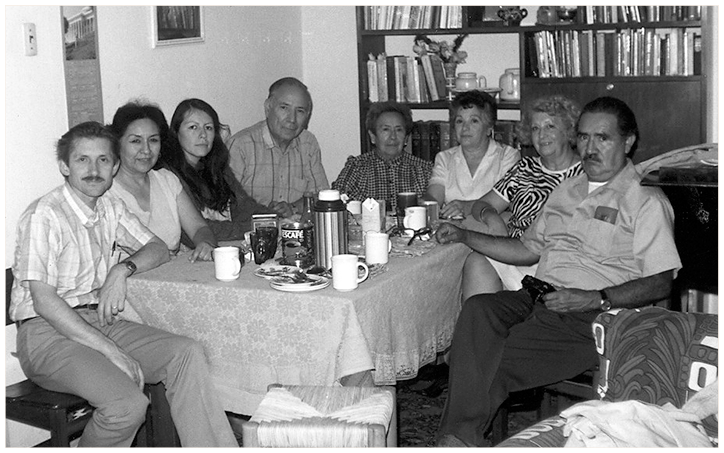
A Chilean family living in Santiago, Chile, circa 1988.
Stephen Pulley, Flickr cc
Local Resistance in South Africa
In International Sociology, Marcel Paret conducts three ethnographic and interview-based case studies of impoverished urban settlements in South Africa that experienced protests between 2009 and 2014. Unlike some well-known and far-reaching global protests of this time, such as the Arab Spring and the Occupy Movement, these protests pursued narrow, local demands around access to basic necessities and improved institutions. Paret outlines four key factors that characterize these protests: service delivery, community, political climate, and administrative fixes.
The main demands of protesters in these settlements involved service delivery. Specifically, protesters sought adequate access to basic necessities and infrastructure, such as housing, water, electricity, improved roads, streetlights, trash removal, job opportunities, and educational access. As a result, protesters organized at the community level, framing their demands as apolitical, collective community concerns to gain legitimacy and avoid conflicting political party affiliations. However, the political climate of South Africa still played a major role: despite the perceived betrayal of the post-apartheid government’s promise to secure “a better life” for the Black majority, South Africans felt hopeful that the party that led their liberation movement was capable of following through on that promise. This led protesters to seek administrative fixes and follow-through from their local governments, as opposed to major policy reform or revolution, which reinforced the local focus of these protests.
Paret’s analysis supports previous findings that poor and unemployed individuals are more likely to engage in local resistance than national or global resistance. It also contributes to social movement literature by showing how different political climates may lead to different mobilization levels and outcomes. In the case of South Africa, we see how the legacy of the anti-apartheid struggle and the government’s promise for “a better life” has kept poor residents invested in the state rather than pursuing revolution.
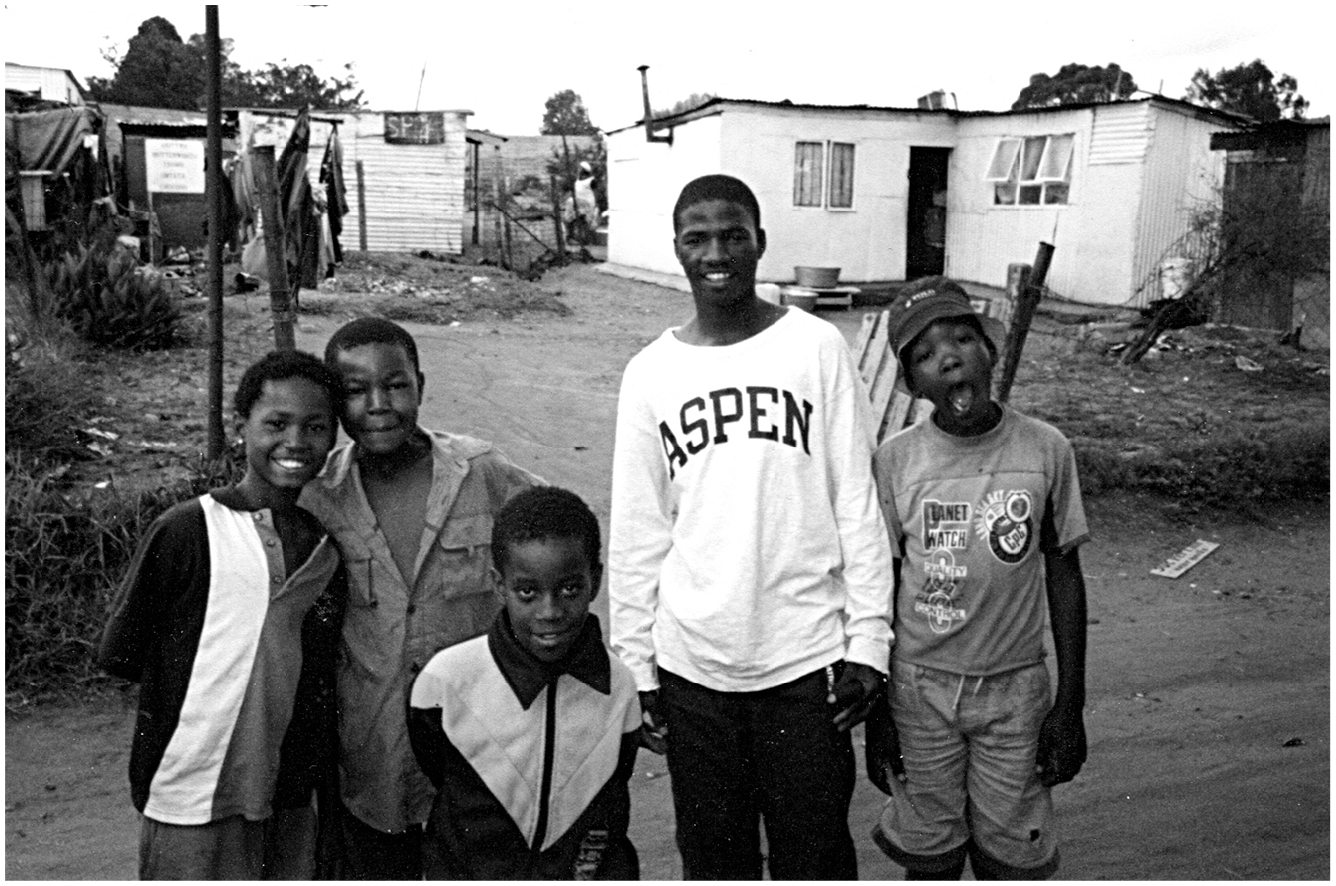
Young, local residents from South Africa’s Soweto Township.
Paul Seligman, Flickr cc
Critique of Title IX and Universities
In Teaching Sociology, Amina Zarrugh and colleagues assess the effectiveness of students learning about Title IX by exploring their university’s enforcement of the policy. This study was conducted in three phases — an undergraduate class focused on Title IX, focus groups composed mostly of women participants aimed to understand what they gained from the class, and a follow-up survey with members of the class. At the beginning of the undergraduate class, students were asked what they knew prior to the class about Title IX policy. Answers ranged from general knowledge around gender discrimination to knowing little about the policy. Each week, the class was led by student discussion leaders. The focus groups revealed the student-led structure of the class promoted student interaction and critique of the policy.
The authors discovered that students found Title IX to be “complex” and difficult to understand. Because of this, it was hard for the students to access Title IX resources in general. Additionally, students found the disconnect between narrow state law and broad Title IX policy definitions of sexual assault to be problematic. Students discovered the discrepancies between expected sexual assault statistics on college campuses based on national data and the number of those actually reported by their own campus. They began to understand Title IX as a policy to protect the institution from liability of sexual assault. The students revealed that through exploring Title IX, they better understood the broader impact of gender-based violence and expressed a desire to take their new understanding “beyond [them]selves” to spread knowledge and inspire action regarding Title IX within the campus and the local community. The authors end the article by arguing that the campus-based teaching approach is a useful tool and could be used to interrogate other examples of inequality.
Stanley Morales, Pexels
Corrections
In the
Communities of Color.” Please find the correct image here.

In the original