



Abstract
This essay gives the reader an inside look at “Cria pride.” Cria is how residents refer to someone who was born-and-raised in certain Brazilian communities. It is a status marker, a sort of favela citizenship, a category of belonging deeply connected to place and the dense web of social relations rooted in place.
Keywords
Isabel relies on her charm to convince the Uber driver to enter the hillside Rio favela she has called home for exactly 52 years. Outsiders often treat the century-old informal settlement as a “no-go” zone. Such favelas, which grew during waves of urban migration, continue to house much of the city’s working class.
The driver, who did not expect an airport pickup to be heading to a favela, asks about safety and if there is a checkpoint. Isabel assures him that things are presently calm and he can proceed without stopping.
The Uber climbs the steep, curvy road. From there, Isabel pays a fellow resident to carry her bags to her doorstep, about five minutes winding through narrow, mazelike alleyways and up community-built stairs. As Isabel approaches, her family shouts out birthday greetings, showers her in hugs and kisses, and does not delay to break out the bottles of her preferred beer, Budweiser, to “bebe-morar” (drink and celebrate) in the alley in front of the lanchonete (snack shop) she runs.
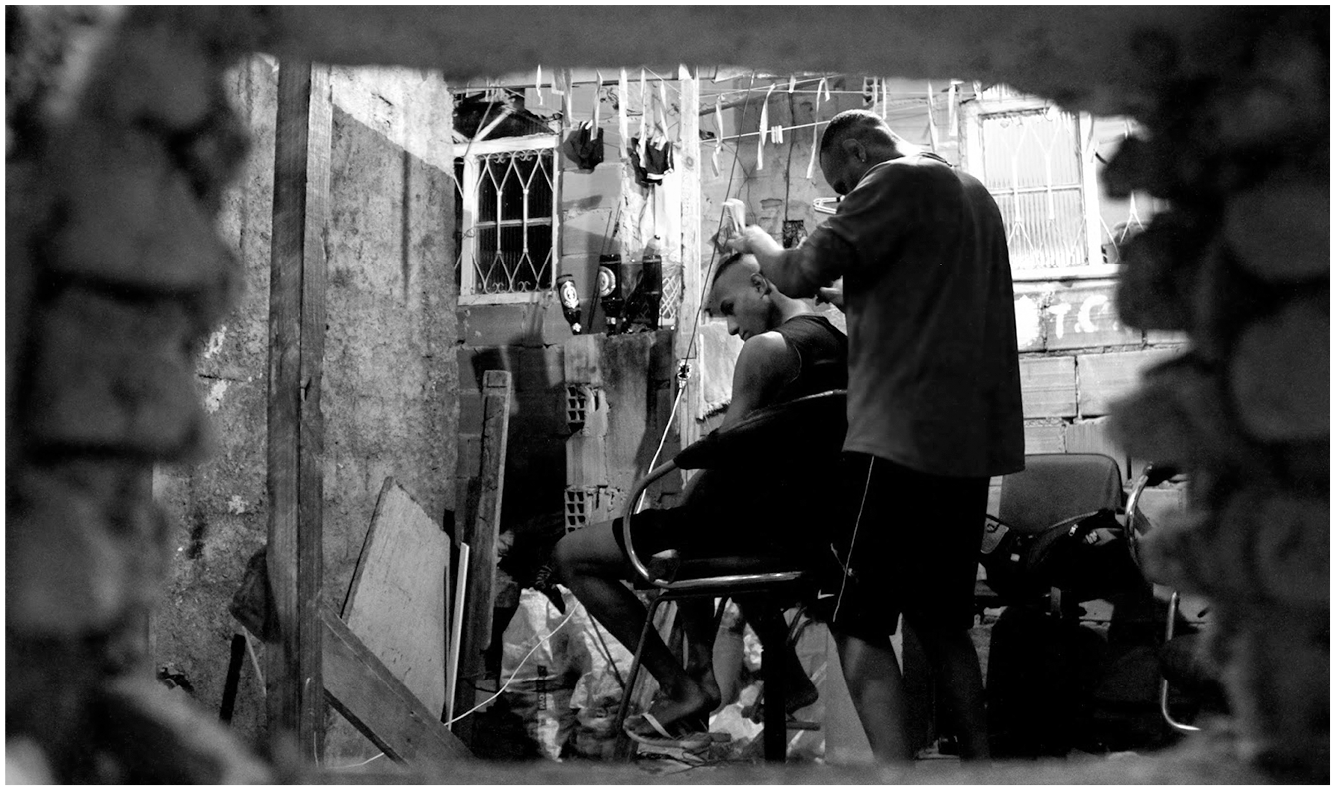
A barbershop in the favela.
Nathália Pires
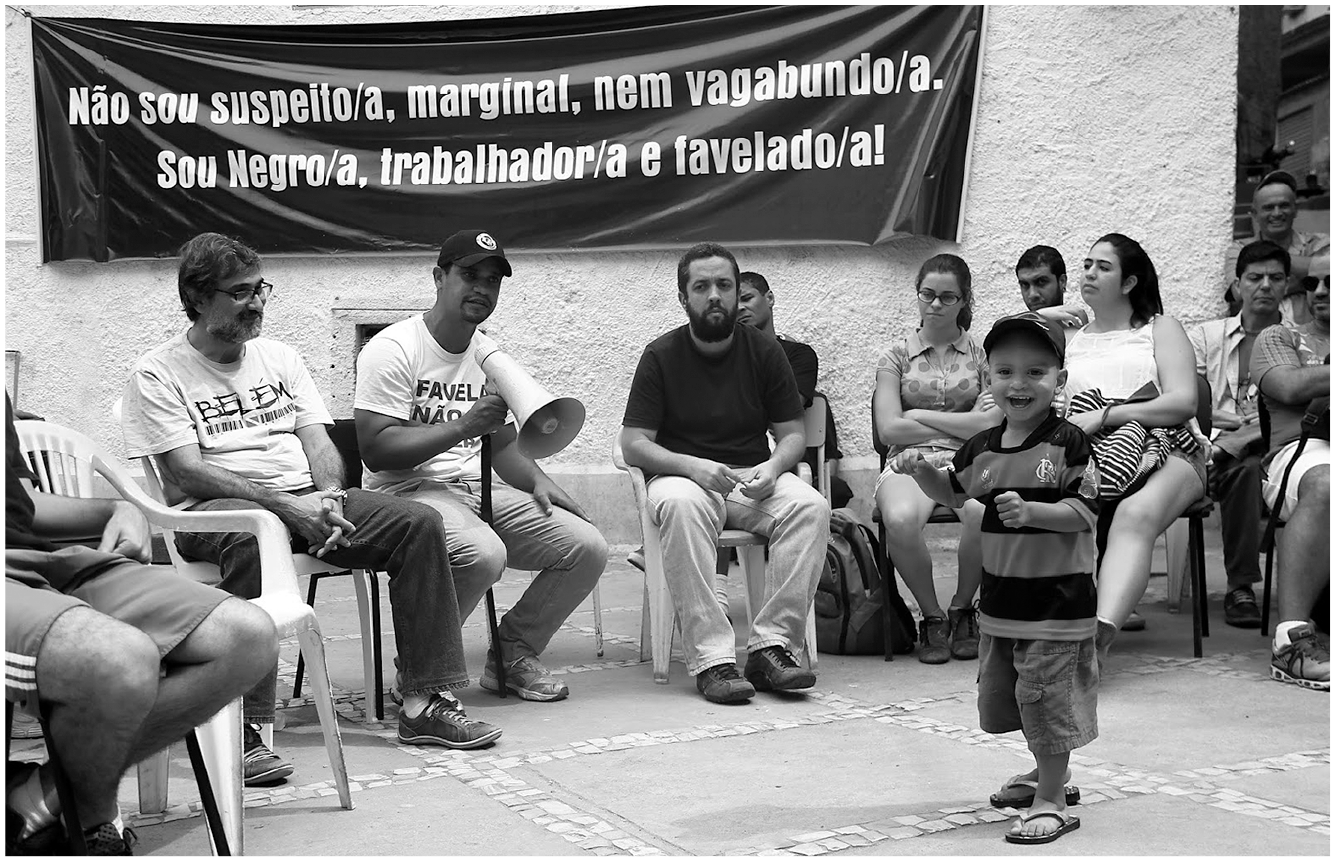
A protest event in the favela.
Nathália Pires
Isabel, her sister, and her niece take turns serving the customers who appear at the lanchonete, floating in and out from behind the counter overlooking the alleyway where her family has gathered to bebe-morar, relaxing on concrete steps and partially constructed houses.
As Isabel’s family drinks, talks, and laughs in the alleyway, neighbors heading home pass through and wish Isabel a happy birthday. Isabel’s neighbor, Raul, stops by to collect the artisan cachaqa (“Na Bunda”) he requested from Belo Horizonte. He sits down and immediately cracks the bottle open, asking others if they would like to “tomar na bunda” (“try/take in the ass”), inevitably leading to many jokes and laughs and a few takers—of the liquor.
Raul, who has already been drinking, launches into a drunken monologue justifying himself as a respectable community member. “I am not cria,” he begins, “but I have lived here since 1997, for over twenty years, I know the community well, I built this house with my own hands, but that does not make me cria. But my wife is cria and all of my children are cria.”
Cria is how residents refer to someone who was born-and-raised in the community. It is a status marker, a sort of favela citizenship, a category of belonging deeply connected to place and the dense web of social relations rooted in place. A true cria carries the marks of shared experience, shared histories of struggle and resistance, and vibrant collective memory of their particular community.
“1966! 52 years of being cria,” Isabel declares. Her parents, who live above the lanchonete, settled in the community before she was born.
Residents like Raul value connection to place based on their personal and family histories of overcoming. Others recount how residents decades earlier organized collective construction projects known as mutirao to build the needed infrastructure themselves.
As soon as Raul lays his claims to belonging based on marriage to a cria, having cria children, and twenty years of residency, others do not delay to assert their cria status. “I am cria since 1996!” Isabel’s 21-year-old niece shouts out.
“1966! 52 years of being cria,” Isabel declares. Her parents, who live above the lanchonete, settled in the community before she was born. Isabel made her entrance into the world beneath the community’s iconic mango tree with the help of the local midwife. Historic flooding made it impossible for her mother to get to the hospital.
“1948! This year, in August, will mark seventy years of being cria!” Dona Eliza, a neighbor who stopped by and accepted a beer, chips in, quickly silencing others who chuckle, agreeing she is indeed the most cria.
From birthday celebrations to cria identity, the profound importance of place in the lives of favela residents is clear. This connection has endured across generations and in spite of outside stigma, state interventions, gang invasions, and social change more broadly. However, a recent increase in unpredictable violence— brought by aggressive police operations and gang disputes—has led Isabel and others to talk of wanting to leave.
Yet every evening, Isabel continues to open the lanchonete on the first floor of the home her parents built before she was born. She sells hamburgers, aqai, beer, and free advice to customers she grew up with, to those she has known since they were born, and to the newer folks, whom she helps socialize to the favela. She frequently shares her many place-based memories as a cria, and hopes that the current situation of violence will soon be behind them: just another story of resistance to tell future generations.