




Abstract
Police killings have increased over 100% in the past two decades. Black people, along with American Indians and Latinx communities (and some Asian and Pacific Islander communities), are more likely to have police force used on them relative to whites. This article aims to provide policy recommendations that inform reforms toward police accountability, improved training, and a police culture that protects citizens. We focus on short-, medium-, and long-term solutions for reimagining law enforcement to reduce officer-involved shootings, racial disparities in use of force, mental health issues among officers, and problematic officers who rotten the tree of law enforcement. We focus acutely on the need to abolish qualified immunity with the longterm change of transforming police culture itself to better protect civilians and police who approach their jobs with ethical respect.
Police killings have increased over 100 percent in the past two decades. Black people, along with American Indians and Latinx communities (and some Asian and Pacific Islander communities), are more likely to have police force used on them relative to whites. Our article aims to provide policy recommendations that inform reforms toward police accountability, improved training, and a police culture that protects citizens. We focus on short-, medium-, and long-term solutions for reimagining law enforcement to reduce officer-involved shootings, racial disparities in use of force, mental health issues among officers, and problematic officers who rotten the tree of law enforcement. We focus acutely on the need to abolish qualified immunity with the long-term change of transforming police culture itself to better protect civilians and police who approach their jobs with ethical respect.
Racial Disparities and Racist Policies in Policing
Recent incidents centering on the deaths of unarmed Black Americans including George Floyd, Elijah McClain, Breonna Taylor, and William Green have continued to apply pressure for wide sweeping police reform. To some, these incidents are the result of a few “bad apples.” To others, they are exemplars of a system imbued with institutional and cultural failures that expose civilians and police officers to harm. Our article aims to combine perspectives from across the political spectrum on sensible police reform. We focus on short-, medium-, and long-term solutions for reducing officer-involved shootings, racial disparities in use of force, mental health issues among officers, and problematic officers who rotten the tree of law enforcement.
Despite violent crime significantly decreasing since the early 1990s, police killings are up over this span. In the policy space, the 1986 Drug Bill and the 1994 Crime Bill are often noted as key culprits for overpolicing. For example, SWAT deployment has increased roughly 1400 percent since 1980. Coinciding with the 1986 drug bill, SWAT is often deployed for drug raids and no-knock warrants. The death of Breonna Taylor, a 26-year-old Black woman killed in her home in Louisville, Kentucky, is most recently highlighted as some of the problems associated with organizational and cultural problems within law enforcement.
The 1994 Crime Bill ushered the COPS program and an increase in prisons around the country. This legislation also coincided with stop-and-frisk policies and a rise in stand-your-ground laws that disproportionately disadvantaged Black Americans and led to overpolicing. It is an indisputable fact that Black people are more likely to have force used on them. In fact, Black people relative to white people are significantly less likely to be armed or be attacking at the time they are killed by police. This is a historical pattern, including during the 1960s when Civil Rights leaders were being beaten and killed. And, we also know that if drugs were the only culprit, there would be drastically different outcomes for whites. Research shows that Blacks and whites have similar rates of using drugs, and often times distributing drugs, but huge disparities in who is arrested, incarcerated, and convicted for drug crimes. However, it is also true that predominately Black community have higher levels of violent crime. Though some try to attribute higher crime in predominately Black neighborhoods to biology or culture, most scholars agree that inequitable resources related to housing, education, and employment contribute. Research documents that after controlling for segregation and disadvantage, predominately Black and white neighborhoods differ little in violent crime rates.
These are complex patterns, and Democrats and Republicans often differ on how America reached these outcomes and what we do about them. As a result, bipartisan police reform has largely stalled. Now, we know that in March 2021 the House of Representatives once again passed The George Floyd Justice in Policing Act. States and localities are also presenting and passing a slew of police reforms. We are not here to debate the merits of these legislations, nor are we here to simply highlight low-hanging fruit such as banning no-knock warrants, creating national databases, or requiring body-worn cameras. People across the political aisle largely agree on these reforms. Instead, we aim to provide policy recommendations on larger-scale reforms, which scholars and practitioners across the political aisle agree needs to occur, in order to transform law enforcement in America and take us well into the twenty-first century.
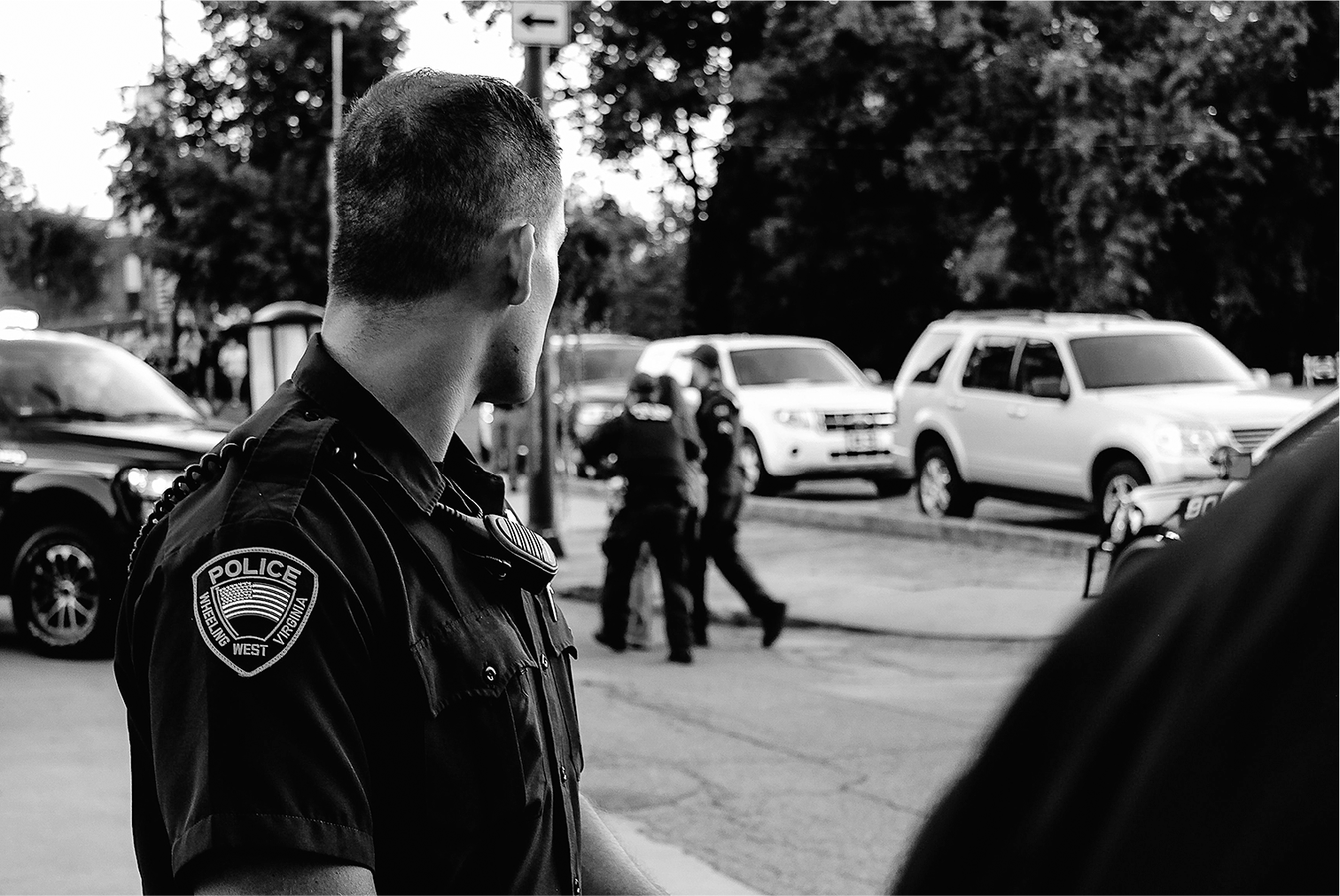
A West Virginia police officer watches a protestor being escorted by fellow officers.
Rosemary Ketchum Pexel cc
Accordingly, our recommendations include:
Reform Qualified Immunity
Create National Standards for Training and De-escalation
Restructure Civilian Payouts for Police Misconduct
Address Officer Wellness
Restructure Regulations for FOP Contracts
Change Police Culture to Protect Civilians and Police
Short-Term Reforms
National Standards for Training and De-Escalation
In 2016, Daniel Shaver was fatally shot and killed by officer Philip Brailsford. Brailsford was charged but found not guilty. At the time of the killing, Shaver was unarmed as he lay dead in a hotel hallway. Police experts critique Brailsford’s tactics to de-escalate the situation. As he entered the scene, he had both hands on his M4 rifle and eliminated all other tools or de-escalation tactics. Brailsford was fired, tried for murder, and then rehired. He ultimately retired due to PTSD. Highlighting the role of militarization, mental health, qualified immunity, and other policy-related topics, this incident shows why there is a need for national standards for training and de-escalation. Many officers would have approached this situation differently, suggesting there are a myriad of tactics and strategies being taught.
Nationally, officers receive about 50 hours of firearm training during the police academy. They receive less than 10 hours of de-escalation training. So, when they show up at a scene and pull their weapon, whether it be on teenagers walking down the street after playing a basketball game or at someone in a hotel, poor decisions and bad outcomes should not be surprising.
Police officers, regardless of whether they live in Kentucky or Arizona, have similar training. Among the roughly 18,000 law enforcement agencies across the country, there is wide variation in the amount of training that officers have to complete as well as what type of training they complete. With the amount of travel that Americans engage in domestically, law enforcement has not kept up to speed with ensuring that officers receive the same training. Consequently, police officers may be put in positions to make bad decisions because of a lack of federal standards. Funding can be provided to have federally-certified trainers who work localities within states, counties, and cities.
Reform Qualified Immunity
When an incident involving use of force and/or police killing occurs, qualified immunity often comes into play to determine liability even beyond criminality. Qualified immunity is a legal doctrine that courts invented to make it more difficult to sue police and other government officials who have been plausibly alleged to have violated somebody’s rights. We believe this doctrine needs to be removed. States also have a role to play here. The Law Enforcement Bill of Rights further doubles down on a lack of accountable for bad apples.
We are not on a limb here. A recent You-Gov and Cato Institute poll found that over 60 percent of Americans support eliminating qualified immunity, and over 80 percent of Americans oppose erasing historical records of officer misconduct. In this regard, most citizens have no interest making it more difficult to sue police officers, but police seem to have a very strong interest in maintaining the policy. However, not only do everyday citizens want it gone, but think tanks including The Brookings Institution, The Cato Institute, and R Street have asserted the same. It is a highly problematic policy.
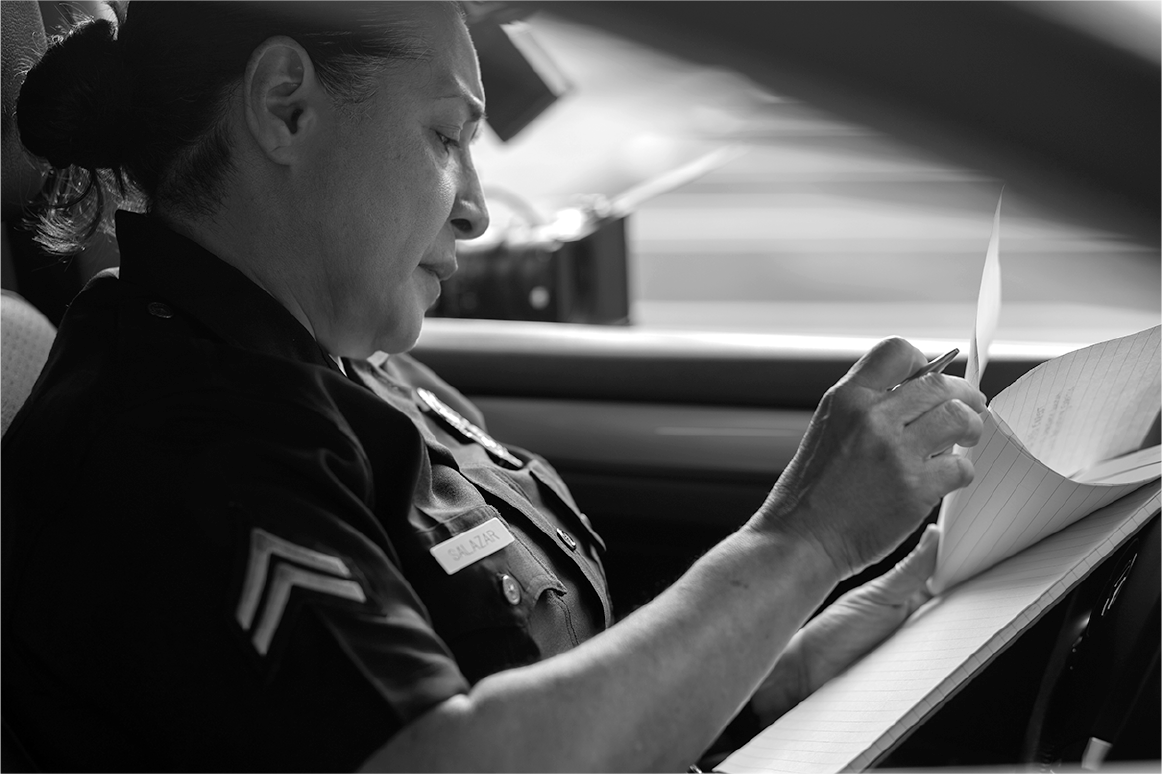
A police officer does paperwork on the job.
Kindel Media Pexel cc
Though police chiefs might not say it publicly or directly, we all have evidence that a significant number of them are quite frustrated by their inability to get rid of the bad apples, run their departments in ways that align with best practices they learn at Federal Law Enforcement Training Centers and National Association of Chiefs of Police, and discipline and terminate officers who deserve to be held accountable and jeopardize not only the public perception of their own department but drag down the social standing of the entire law enforcement profession. And then, finally, The Law Enforcement Bill of Rights at the state level needs to be addressed. It further doubles down on qualified immunity and removes accountability for law enforcement.
Medium-Term Reforms
Restructure Civilian Payouts for Police Misconduct
From 2015-2019, U.S. municipalities spent over $2 billion in civil payouts for police misconduct. Rather than the police department budget, these funds mostly come from general funds. So, not only is the officer absolved from civil or financial culpability, but the police department faces no financial liability. Instead, the financial burden falls onto the municipality. This money could be going toward education, work, and infrastructure.
Not only are the financial settlement often expensive, like the $20 million awarded to William Green’s family in Prince George’s County, Maryland, but the associated legal fees and deteriorated community trust are costly. In a place like Chicago, over the past 20 years, it has spent about $700 million on civilian payouts for police misconduct. In New York City, it spends about $300 million in the span of a few years.
We assert that civilian payouts for police misconduct must be restructured. Indemnification will be eliminated, making the officer responsible, and requiring them to purchase professional liability insurance the exact same way that other occupations such as doctors and lawyers do. This would give insurance companies a strong incentive to identify the problem officers early, to raise their rates just the way that insurance companies raise the rates on a bad driver, or a doctor who engages in malpractice. In this regard, the cost of the insurance policy would get higher and higher the more misconduct an officer engaged in. Eventually, the worst officers would become uninsurable, and therefore unemployable. This would help to increase accountability. There would be little requirement for a police chief to terminate officers. Rather, these officers would simply be unemployable by virtue of the fact that they cannot secure professional liability insurance.
There needs to be a shift for civilian payouts away from tax money and to police department insurance policies.
Bottom line, police almost never suffer any financial consequences for their own misconduct. There needs to be a shift for civilian payouts away from tax money and to police department insurance policies. This would instantly change the accountability structure. They are almost always indemnified for that misconduct when there is a damages payout. And what that means is simply that their department or the city, which is to say us, the taxpayers, end up paying those damages claims. That is absolutely the wrong way to do it.
Most proposals for restructuring civilian payouts for police misconduct have included some form of liability insurance for police departments and/ or individual officers. This means shifting the burden from taxpayer dollars to police department insurance policies. If a departmental policy, the municipality should pay for that policy, but the money should come from the police department budget. Police department budget increases should take settlement costs into account. This is a similar approach to healthcare providers working in a hospital. If individual officers have liability insurance, they fall right in line with other occupations that have professional liability insurance.
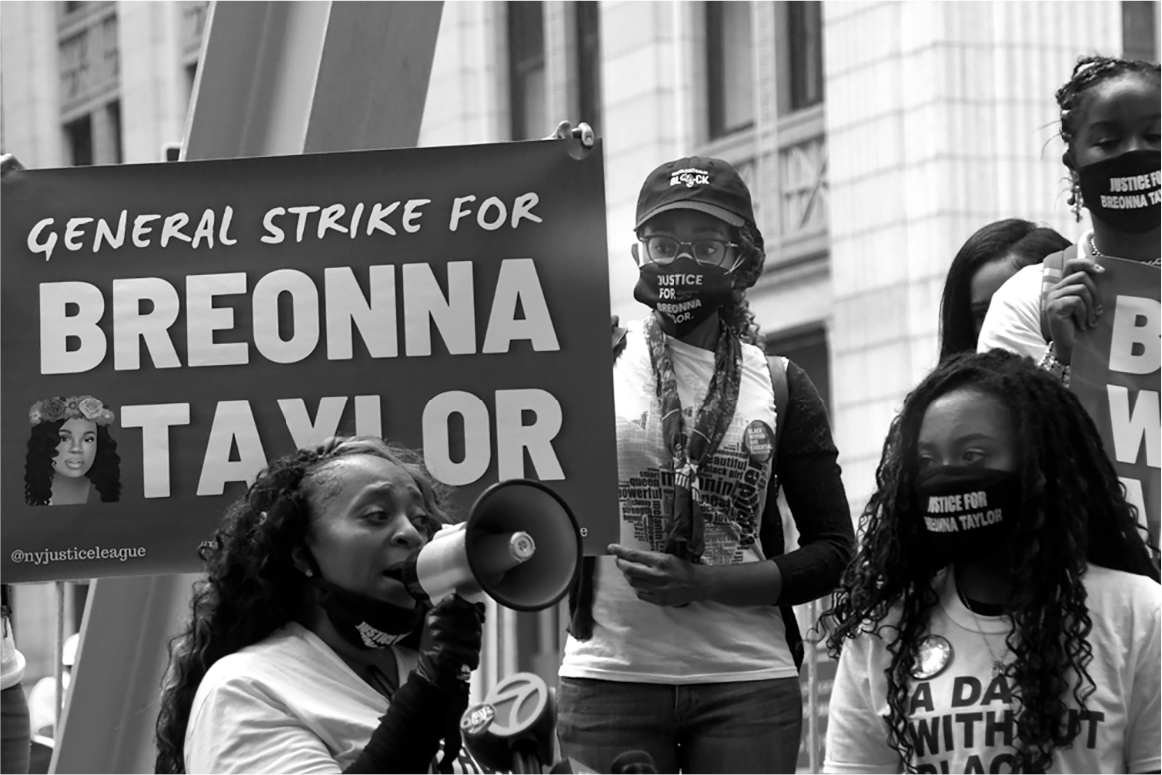
A group of activists at an NYC protest calling for justice for Breonna Taylor.
Diane Green Lent, Flickr cc
Congress could approve a pilot program for municipalities to explore the potential impacts of police department insurance policies versus individual officer liability insurance, and even some areas that use both policies simultaneously. Regardless, it is clear that the structure of civil payouts for police misconduct needs to change. We believe not only will the change provide more funding for education, work, and infrastructure, but it will increase accountability and give police chiefs and municipalities the ability to rid departments of bad apples that dampen an equitable and transparent cultural environment. If liability insurance is needed for plumbers, electricians, lawyers, and physicians, surely liability insurance should be required for people mandated to carry and use deadly weapons.
There must be a fundamental reconceptualize of both the mission of police and the culture in which that mission is carried out.
Address officer Wellness
Mental Health Counseling
In this broader discussion of policing, missing is not only the voices of law enforcement themselves, but also what is happening in their own minds and in their own bodies. Recent research has highlighted that about 80 percent of officers suffer from chronic stress. They suffer from depression, anxiety, they have relationship problems, they get angered easily. One out of six report being suicidal. Another one out of six report substance abuse problems. Most soberingly, 90 percent of them never seek help. We propose that officers should have mandatory mental health counseling on a quarterly basis. Normalizing mental health counseling will reduce the stigma associated with it.
It is also important for law enforcement to take a serious look into the role of far-right extremism on officer attitudes and behaviors. There is ample evidence from The Department of Homeland Security showing the pervasive ways that far-right extremists target law enforcement. Academic research examining social dominance ideation among police officers may be key to rooting out extremism during background checks and psychological evaluations. Social dominance can be assessed through survey items and decision-making simulations.
Community Policing
Community police is defined a multitude of ways. One simple way we think about community policing is whether officers experience the community in everyday life, often when they are not on duty. Do they live in the community, send their children to local schools, exercise at the neighborhood gym, and shop at the main grocery store? Often times, police officers engage in this type of community policing in predominately white and affluent neighborhoods but less in predominately Black or Latino neighborhoods, even when they have higher household income levels. Police officers also live farther away from the areas where they work. While this may be a choice for some, others simply cannot afford to live there, particularly in major cities or more expensive areas of the country. Many police officers are also working massive amounts of over time to make ends meet, provide for their families, and send children to college.
Altogether, community policing requires a set of incentives. We propose increasing the required level of education, which can justify wage increases. This can help to reduce the likelihood of police officers working a lot of hours and making poor decisions because of lack of sleep or stress. We also propose requiring that officers live within or near the municipalities where they work. Living locally can increase police-community relations and improve trust. Officers should receive rent subsidies or down payment assistance to enhance this process.
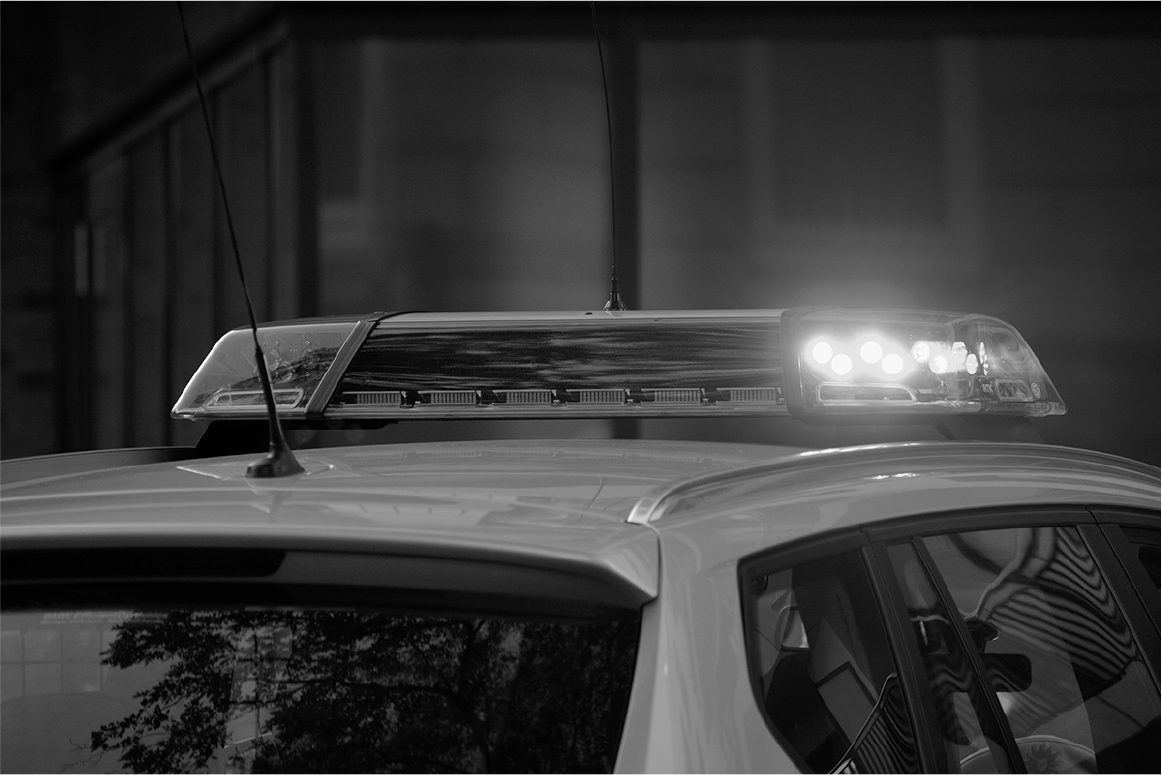
Emergency lights flashing on a police cruiser.
Pixabay Pexel cc
Long-Term Reforms
Restructure Regulations For Fraternal Order Of Police Contracts
Unions are important. However, Fraternity Order of Police Union has become so deeply embedded in law enforcement that it obstructs the ability for equitable and transparent policing, even when interacting with police chiefs. There needs to be a separation between the role of police from issues they should not be involved in.
Change Police Culture to Protect Civilians and Police
Police have to be of the people and for the people. Too many times you hear police officers talking about themselves like they are somehow outside of the community. Rizer conducted over 350 hours of ride-alongs with police officers in Montgomery, Alabama, Miami, and L.A, in addition to being a former officer and prosecutor. He found that officers repeatedly view themselves as warriors at war with the people in the communities they serve. Police officers embody an “us versus them” perspective, rather than viewing themselves to be part of the community.
It must be a change to police culture regarding how police officers view themselves and view others. Part of changing culture deals with transforming how productivity and awards are allocated. Police officers overwhelmingly need to make forfeitures in the form of arrests, citations, and tickets to demonstrate leadership and productivity. Police officers rarely get credit for the everyday, mundane things they do to make their communities safe and protect and serve. We believe there must be a fundamental reconceptualize of both the mission of police and the culture in which that mission is carried out. Policing can be about respecting individuals and not using force. It is an ethnical approach to policing.
Conclusion
We have aimed to take a deep dive into large policy changes needed for police reform at the federal and state levels that centers accountability, finances, culture, and communities. Though there is much discussion about reallocating police funding at the local level, we believe there should be an evidence-based research approach. Clearly, some municipalities need to desperately reallocate funding to social services and alternative community strategies. Others, however, may need to shift funding within the department or potentially make little changes to funding if they have already addressed funding issues due to previous concerns. With over 18,000 law enforcement agencies, there is wide variation to funds provided for policing and how those funds are spent. This is why it is imperative that standards be set at the federal level to help municipalities grapple with this issue.
Footnotes
References
Supplementary Material
Please find the following supplemental material available below.
For Open Access articles published under a Creative Commons License, all supplemental material carries the same license as the article it is associated with.
For non-Open Access articles published, all supplemental material carries a non-exclusive license, and permission requests for re-use of supplemental material or any part of supplemental material shall be sent directly to the copyright owner as specified in the copyright notice associated with the article.
