




Abstract
In this article, the author addresses why some straight-identified men are primarily attracted to women, but have sex with men. This typically happens because they think that extramarital sex with men is less threatening to their marriages than extramarital sex with women. Additionally, many live what they consider a “straight life” and believe that sex with men is irrelevant to their identities.
Why do some straight-identified men have sex with other men? Not all are closeted gay or bisexual men. Nor are they all just experimenting. In fact, hundreds of thousands of straight-identified men—at least— have had sex with other men. Estimates from one survey, the National Survey of Family Growth, indicate that a little over 1 percent of straight-identified men between the ages of 15 and 44 have had consensual sex with at least one other man, which equates to about 689,000 men. A little less than half of one percent, representing about 221,000 men, have had sex with two or more men. The real numbers are probably much higher since social stigma prevents men from reporting sex with other men. Contrary to stereotypes, men of all races/ethnicities have approximately equal likelihoods to identify as straight and have sex with other men.
The question many people ask is: “why do men identify as straight if they have sex with other men?” Just as important, however, is the reverse: “why do men have sex with other men if they identify as straight?” These are two related but separate issues. To investigate these topics, I interviewed 60 straight-identified men who have sex with other men. I focused on men in rural areas and small towns because little prior research has focused on sexuality in these settings. The stories these men told me were complex, messy, and filled with paradox—yet were also genuine.
The majority of the men I interviewed reported that they were primarily attracted to women, not men. These interviews show that sexuality is multidimensional, and that attractions, behaviors, and identities do not always align. Sexual identities may describe how individuals perceive themselves, but they do not always indicate a person’s attractions or sexual behaviors.
Most of the men I interviewed identified as straight because they felt that this identity best reflected their understandings of themselves as masculine, their romantic relationships with women, or their integration in straight communities. Most did not want to identify as gay or bisexual. Additionally, many men explained that their marital sex lives were not as active as they wanted. Sex with men allowed them to have more sex, but in a way that they felt was not as threatening to their partnerships as extramarital sex with women.
Why Some Straight-Identified Men have Sex with Other Men
Over half of the men I interviewed were married to women but no longer had sex with their wives, or had it infrequently, and felt that sex with men was not cheating or was less threatening to their marriage than extramarital sex with women. As fifty-seven-year-old Adam from Wisconsin said, “My wife really doesn’t necessarily enjoy sex, and I don’t feel like I want to take up an affair or relationship with another woman. I don’t feel right about that, so my sexual experience with other men is basically out of need to have some personal gratification.” Adam explained that sex with men is “not cheating,” because “men are a lot less complicated and it’s just easier, it’s like, it’s sex but there’s no attachment. I don’t think women can do that.” Men like Adam felt that sex with women would be cheating, but sex with men was not—or was at least less of a threat to their relationship.
Although it may seem as though men who turn to extramarital sex are dissatisfied with their marriages, the reality is more complicated. Research has shown that many men and women have extramarital sex because they consider their marital sex lives unsatisfying and feel that extramarital sex will ensure they continue to have sex, but without harming their partnership. Men I interviewed described this as well. Travis, a fifty-nine-year-old man in South Dakota, was frustrated that his wife was no longer interested in sex, but also explained, “I’ve got friends that say why in the hell do you stay married to her. Well, I guess it’s because I love her, and other than the fact that we don’t have a sexual relationship we do have a good relationship.” Most of the men I interviewed were, like Travis, mostly satisfied with their marriages. Their biggest complaint was that they did not have as much sex as they would have liked.
As for why men would turn to other men rather than women for extramarital sex, many of the men I interviewed believed that women and men are complementary emotionally, but not sexually. They thought that women may become too emotionally attached after a hookup, whereas men would not. This belief is not necessarily true, but many men believed it. As Ian, a forty-two-year-old man from Idaho, said, “Whereas men are able to more easily separate a sexual encounter from feelings or emotions, they can categorize that, yeah, this is just to get together for sexual release because, they’re needing [it]. [Guys] can be more readily available. If you’re looking for a hookup off Craigslist for example, you’re much more likely to be able to do that with another man…. so part of it is effort and availability.”
Maybe only a few times I’ve ever mentioned this; I can’t exactly in a politically correct world. I think there’s a definite disconnect between gay and homosexual. There’s the homosexual community, which isn’t a community, there’s the homosexual proclivity, and then the gay community. It’s like you can be an athlete without being a jock. And you can be homosexual without being gay, or into all of it. It just becomes so politically charged now.
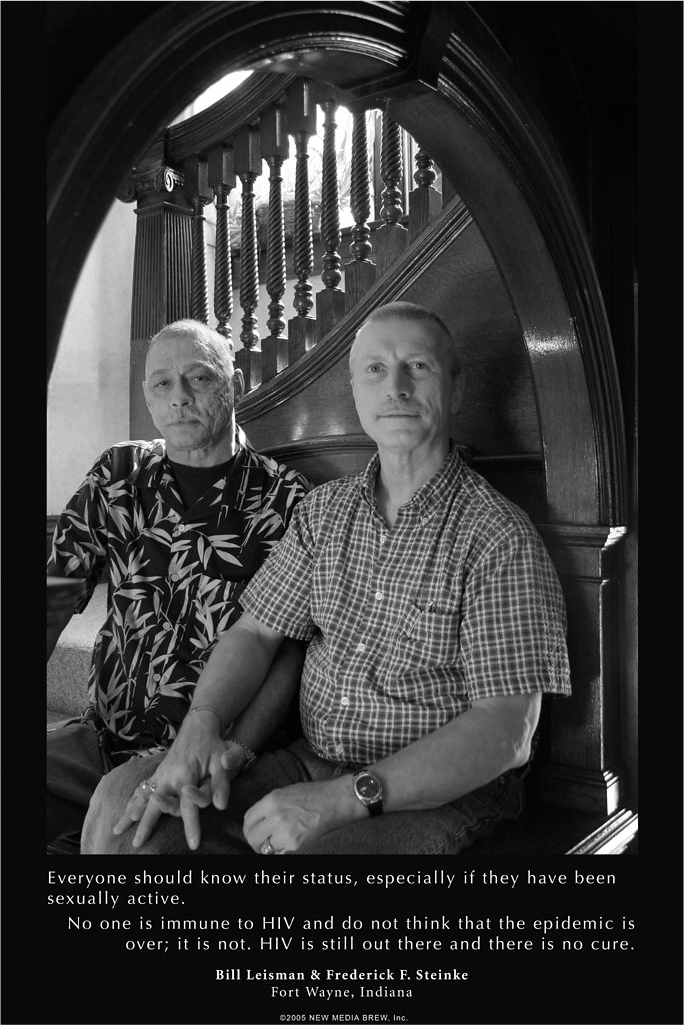
Bill Leisman and Fred Steinke are a gay couple from Fort Wayne, Indiana.
John Gevers, Flickr cc
Why They Identify as Straight
Regardless of reasons for having sex with men, the fact remains that some straight-identified men still have sex with men—so why not identify as bisexual or gay? Many men identify as straight for reasons related to masculinity and because they are a part of institutions and communities that expect heterosexuality and masculinity. Many men feel that to be masculine, they need to identify as straight. This is one reason why fewer men than women identify as bisexual and report same-sex experiences: women are perceived as less socially valuable than men, and therefore have more flexibility to engage in same-sex sexual behavior. Gender inequality, in other words, makes it less likely that men will have sex with other men or identify as bisexual.
Additionally, many of the men I interviewed equated marriage to a woman—and often childrearing—with straightness. Chris, a sixty-three-year-old man from Montana, identified as straight, “because I’m married and I’ve got children. And I do love my wife.” Jared, a sixty-three-year-old man from Iowa, similarly concluded that the identity straight “describes me best because I am married, have children, adult, grown children—but I also have urges to be with men.” In short, the men I interviewed felt that being straight was a way of life, indicated by being in relationships with women and perhaps raising children. Being in a relationship with a woman meant being not gay, nor even bisexual, despite sex with men. It is, of course, possible to identify as bisexual regardless of the gender of one’s partner. Yet, the men I interviewed felt that romantic interest in women was more important to their identity than sexual behavior with men.
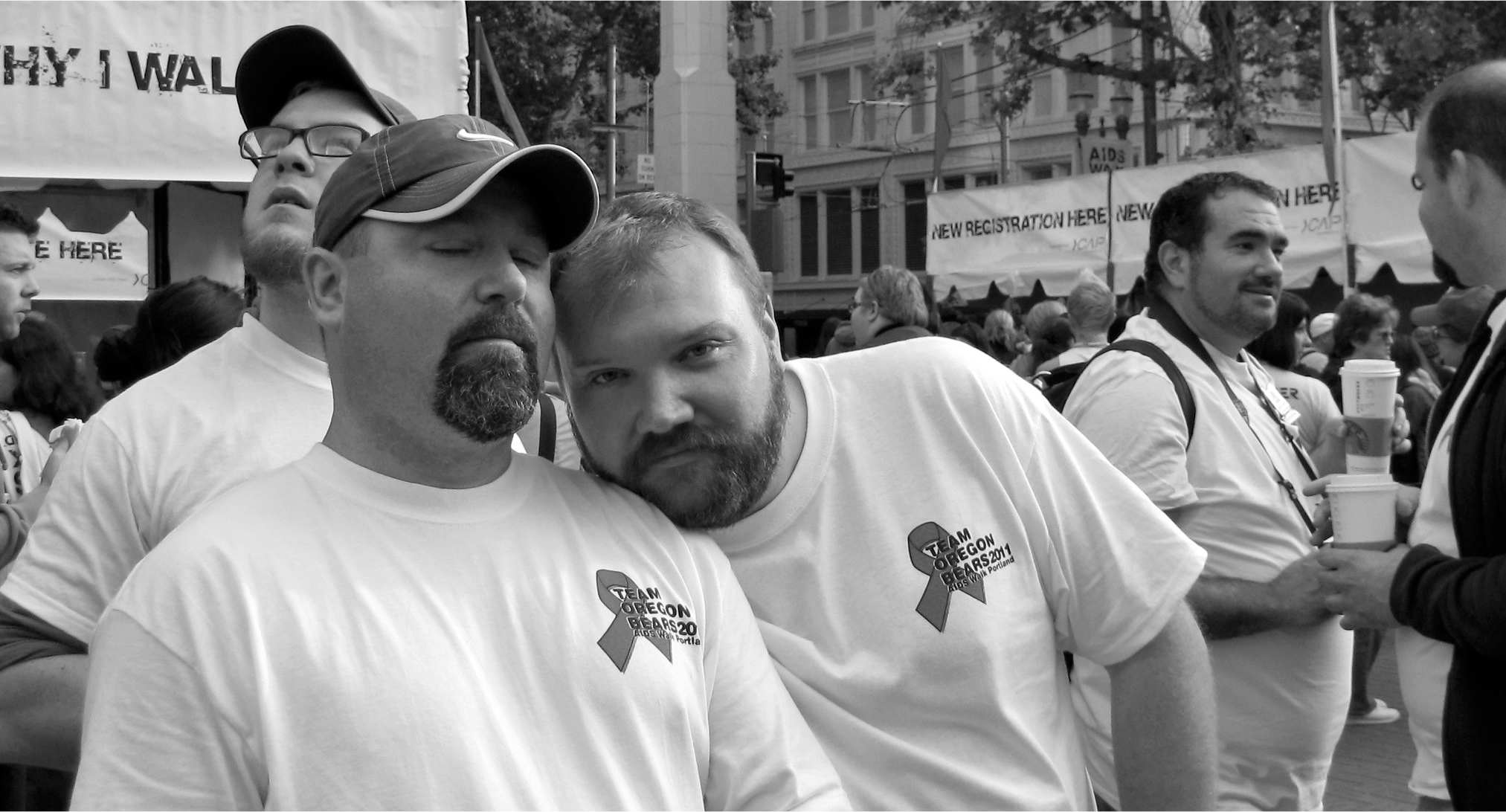
An AIDS Walk in Portland, Oregon.
Mike Krzeszak, Flickr cc
Sexual identities do not always perfectly reflect attractions or sexual behaviors. Instead, they indicate relationships to certain people, communities, and institutions. In other words, some men feel that sex with men is irrelevant to their identities given other aspects of their lives. As Connor, a forty-three-year-old man from Oregon said, Maybe only a few times I’ve ever mentioned this; I can’t exactly in a politically correct world. I think there’s a definite disconnect between gay and homosexual. There’s the homosexual community, which isn’t a community, there’s the homosexual proclivity, and then the gay community. It’s like you can be an athlete without being a jock. And you can be homosexual without being gay, or into all of it. It just becomes so politically charged now.
Like Connor, the men I talked to considered straightness an identity, a way of life, or a community. Identifying as straight meant they could continue relationships with their women partners, children, extended family, friends, and other people in their straight communities, relationships they did not think possible with a gay or bisexual identity. It also meant they could avoid stigma and feel connected to a socially dominant group. In terms of identity, having sex with men was largely irrelevant.
Relatedly, as thirty-two-year-old Peter from Montana explained, sexual identity is a “way for groups of people to kind of come together or separate, and so I feel like as a community, straight sexual identity is where I feel aligned.” He went on, “Personally, I don’t really believe that anyone is just like completely heterosexual or completely homosexual, I think everybody’s got some place on the spectrum of that…. I very comfortably wear that label of being a straight white man, because culturally and socially that’s what makes the most sense for me. I’m not interested in trying to get my environment to acknowledge me as some different new fluid sex thing.” Like Connor, Peter felt connected to a straight community. His attractions to and sex with men did not detract from his feelings of belonging within that community.
Heteronormativity, of course, encourages everyone to identify as straight, as does stigma against gayness and bisexuality. Sexual identification is far from completely voluntary. Still, today there is widespread LGBQ (lesbian, gay, bisexual, and queer) visibility, and LGBQ people have many legal rights today they did not have even a decade ago. Thus, men’s reasons for identifying as straight and having sex with other men are more complicated than they first appear.
Rural and Small-Town Contexts
Living contexts shape how people identify. This is the case even though LGBQ people live in all types of areas, including rural areas and small towns. Most of the men I interviewed felt that heterosexuality and masculinity were normal and expected of them. Unlike the main characters in the film Brokeback Mountain, however, most of the men I interviewed did not fall in love with other men or desire an opportunity to come out as gay or bisexual. Neil, a thirty-four-year-old from South Dakota, explained that his everyday life made identifying as straight and masculine obvious: “Day to day, the majority of the time I just kind of live in that straight world, straight persona. No one would ever think that I would be curious on the other side I guess, I don’t think anyway. Kind of a macho guy, I guess. I like my job, and where I live, the rural area, [it is] very conservative, so it’s kind of a straight world that I live in.” For Neil and others like him, having occasional sex with men did not detract from embeddedness in their “straight world.” Expectations to be straight and masculine, and few visible alternatives to either in rural and small-town America, encouraged many men to identify with what they felt was normal and expected of them.
Personally, I don’t really believe that anyone is just like completely heterosexual or completely homosexual, I think everybody’s got some place on the spectrum of that… I very comfortably wear that label of being a straight white man, because culturally and socially that’s what makes the most sense for me. I’m not interested in trying to get my environment to acknowledge me as some different new fluid sex thing.
Furthermore, a higher proportion of rural and small-town men are married (to a woman) than are their counterparts in large urban areas, which shows that marriage is more central to their identities. This attitude encouraged many of the men I interviewed to have sex with men rather than extramarital sex with women because they felt such behavior was not as threatening to their marriages. Counterintuitively, the enhanced importance of marriage to rural and small-town American culture actually encourages sex between some men in these areas. Many men I interviewed explained that extramarital sex with women could harm their marriages, whereas extramarital sex with men was not as much of an issue. Their wives would likely not have agreed, but few knew about their husbands’ sexual encounters with other men.
Generation and Age
Generational and life course dynamics affect how all people identify their sexuality. Coming of age during especially homophobic decades in the United States, such as the 1950s through the 1980s, affected how people were socialized, what options they felt were available to them, and how they understood their gender and sexuality. Generational factors are not the only ones at play, however. Surveys of young to middle-aged men, including the National Survey of Family Growth and the National Longitudinal Study of Adolescent to Adult Health, show disconnects between behaviors and identities among men of many ages.
Additionally, the aging process itself may shape sexual behaviors. About a third of the men I interviewed began having sex with men or increased the frequency with which they had sex with other men because of the aging process. Many reported that their wives experienced health issues or lost interest in sex as they aged. Thus, the aging process itself—in combination with other factors I explored earlier—encouraged straight-identified men to have sex with other men. It is not necessarily that the men I interviewed identified as straight because they were older. Instead, many had sex with men because they were older. Thus, generational factors and the aging process both explain why some men have sex with other men yet identify as straight.
Prejudice Against LGBQ People
Prejudice against LGBQ people, of course, plays a role in sexual identification. As I found through interviews, however, it is only one of many reasons for straight identification. Indeed, many of the men I interviewed were actually fairly liberal: a majority supported same-sex marriage and the right for same-sex couples to raise children. Only a distinct minority were overtly homophobic or biphobic.
Of course, there are many types of homophobia and biphobia, and support for legal rights can coexist alongside other forms of anti-LGBQ prejudice. Research has shown that many straight-identified people support equal legal rights but not certain social rights, like the ability for same-sex couples to kiss in public. Additionally, bisexuality is often stigmatized or ignored in popular discourse, and this affects how people understand their sexuality. Clearly, this issue is complicated.
It is worthwhile to examine nationally representative survey data to help understand how much of a role prejudice plays in straight identification. The National Survey of Family Growth is one of the only surveys that measures sexual identity, sexual behavior, and attitudes about sexuality and masculinity. I combined surveys across years to create a dataset that spanned from 2011 until 2017, and examined the only four questions it asked about LGBQ issues and masculinity during each of those years: “Sexual relations between two adults of the same sex are all right.” “Men have greater sexual needs than women.” “Men only need to see a doctor when they are hurt or sick.” “When a man is feeling pain he should not let it show.” I then compared the responses of straight-identified men who reported consensual sex with at least two other men compared to those who did not.
The results showed that straight-identified men who had had two or more male sexual partners were little different in their attitudes than other straight-identified men about LGBQ rights and masculinity. If anything, compared to other straight-identified men, they were more supportive toward LGBQ people and less likely to say that men should only go to a doctor when hurt or sick or that men’s sexual needs are greater than women’s. Follow-up analyses showed that only about a third of straight-identified men with two or more male partners were homophobic and deeply conservative on gender attitudes. Most were liberal to moderate.
These analyses suggest that most straight-identified men who have sex with other men do not identify as straight only because of prejudice. Homophobia and biphobia do inform many men’s beliefs about gay, bisexual, and straight identities and impact their decision to identify as straight. Ultimately, however, prejudice is only one of many reasons men who report sex with other men identify as straight. For some men, it plays a large role, and for other men, a small one. In short, this issue is complicated, and it is overly simplistic to say that straight-identified men who have sex with other men are simply closeted gay or bisexual men. There are numerous factors that affect sexual identification. While many people understandably think that men are “closeted” if they have sex with other men yet identify as straight, this is not exactly true. These men are secretive about their sexual behavior, but not their identity.
Relatedly, most of the men I talked to knew that bisexuality was a possible identity but did not adopt that identity. Otto, a fifty-two-year-old man from Oregon, for instance, admitted that “for a long, long time I thought I would probably be described as bisexual. But the more I read and understand, and associated myself more with identified bisexuals, that’s not me, man. I’m not looking for a partner other than for sex.” Many people are prejudiced against bisexuality and believe that bisexuals are confused. This belief is widespread but false. Most of the men I interviewed did not report these beliefs, however.
Most of the men I interviewed knew that bisexual people existed and that they could have potentially identified as bisexual. Ultimately, however, they did not identify as bisexual in large part for three reasons. First, they considered bisexuality incompatible with having a woman partner. Second, they had no interest in romantically partnering with a man. And third, they thought that identifying as bisexual would threaten their other relationships. Most were romantically interested only in women, and a majority were in relationships with women. Many therefore felt that bisexual identification did not make sense for them. While it is, of course, possible to identify as bisexual while being in a relationship with a woman, the men I talked to identified as straight because they considered relationships with women and embeddedness in straight culture most important for their identity. Their sexual encounters with men were mostly irrelevant to their identity.
Grindr is a location-based social networking and online dating application for gay, bi, trans, and queer people. It was one of the first geosocial apps for gay men when it launched in March 2009 and has since become the world’s largest and most popular gay mobile app.
Ivan Radic, Flickr cc
Conclusion
In much of social life, it is common for people to identify one way and act another. This is also the case for sexuality, since sexual attractions, behaviors, and identities do not always align. This topic is complicated, and for that reason, we can learn much about how and why men identify their sexuality in particular ways.
Footnotes
Acknowledgements
The author would like to thank the Sexualities Project at Northwestern (SPAN) for providing the postdoctoral fellowship that allowed him to advance this research. Thank you also to CJ Pascoe and Kristen Barber for their feedback and support.