



Abstract
The book review explores Silent Cells: The Secret Drugging of Captive America by Anthony Ryan Hatch explaining how the contemporary United States’ carceral state—prisons, nursing homes, foster care systems, active duty military, immigrant detention facilities, and schools—is mired in its own self-imposed drug addiction to psychotropic medication to control those in its “care.”
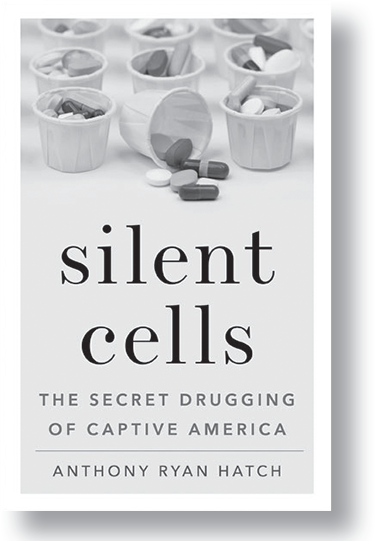
Millions of people are currently in detention centers, prisons, and other institutions in the United States. Such an unprecedented number of institutionalized citizens also poses a challenge for those charged with their care. While personal drug addiction is said to plague individuals, devastate families, and cost communities and the country tens of billions of dollars in treatment, lost productivity, and intervention, what might be the consequences of an institutional substance abuse disorder? Anthony Ryan Hatch’s Silent Cells: The Secret Drugging of Captive America argues that the contemporary United States’ carceral state—that is, its prisons, nursing homes, foster care systems, active duty military, immigrant detention facilities, and schools—is mired in its own self-imposed drug addiction to psychotropic medication to control those in its “care.” High incarceration rates and permissive legal precedents fuel such institutions’ ability to administer psychotropics to its charges, and the carceral state has steadily increased its expenditures on such medications in the last few decades at rates seemingly outpacing the growing prison population.
Coupling Foucault’s biopower and Achille Mbembe’s necropower frameworks, Hatch contends that the carceral state uses psychotropic medications, including antidepressants, antipsychotics, antianxiety meds, mood stabilizers, stimulants, and tranquilizers, to manufacture silence in institutions. Necropower is the pernicious process whereby governments define particular social groups as enemies of the state, isolating them with limited social infrastructure and using technological force to neutralize or possibly kill them. From this standpoint, Hatch argues that psychotropics are distributed in the prison system to cause psychic death.
Prisoners are currently the only U.S. citizens constitutionally guaranteed medical care. Despite prison expansion in recent decades, prisons have limited medical care by reducing the use of time-consuming and specialized medical services, such as therapy. As Hatch notes that roughly half of all prisoners have mental health issues, this medical care reduction further emphasizes his arguments about the silencing power of the carceral state. Psychotropics have become a technocorrectional tool, applied unevenly according to the race, gender, and class of the prisoner. Hatch points to past research indicating women are more likely than men to be prescribed psychotropics due to their higher diagnosis rates of mental illnesses. Further, according to other research by Jacques Baillargeon and Salvador Contreras examining the Texas prison system, Black and Hispanic prisoners are also less likely to receive psychotropic treatment than their White counterparts and more likely to receive older antidepressants and antipsychotics.
Through careful historical and comparative analysis of archival, scientific, and policy documents, Hatch uncovers a frustrating paucity of available information about how psychotropics are being used in prisons. Collecting comprehensive prison medication data proved challenging, partially due to the fragmented nature of the prison system and the seeming lack of information on record. Surveys of prison administrators and medical services employ inconsistent and insufficient questions (for example, only inquiring about psychotropic use when a mental illness has first been diagnosed), making comparisons and conclusions difficult. Yet, Hatch is able to compile some information. For example, he finds that the Census of State and Federal Adult Correctional Facilities conducted in 2000 identified 10 percent of all state inmates as receiving psychotropics, which increased in use the higher the security level of the prison.
Audits of prison medical services give glimpses into what is happening at individual institutions. Analysis of 31 prison pharmacy audits between 1999 and 2014 yields a (perhaps) shocking lack of documentation, oversight, and control of medication distribution in prisons. Hatch documents significant increases in expenditures on psychotropic medication in short periods of time. For example, Georgia’s psychotropic spending increased from under $4.5 million in 2000 to nearly $6.4 million in 2003. Limited data exists about how these medications are given to prisoners, including whether the patient was first diagnosed with a mental illness. Nonetheless, and in relation to this audit research, Hatch finds prisons’ rising medical care costs are the result of (1) increasing use of expensive brand-name medications, rather than their available generic equivalents; (2) an aging prisoner population (enlarged by three-strike and mandatory minimum sentencing policies) requiring more medical care than in the past; (3) outdated medication regimens; (4) massive waste of medical resources, including medicines and inventory mismanagement; and (5) unrealized cost savings from privatization. Inventory mismanagement is a particularly big issue. Hatch includes an example from Salt Lake County, Utah, which required the counting of pills within each prescription bottle, but the number of bottles was not subject to inventory counting. Such environments make the abuse, loss, or pilfering of medication easy.
With evidence of such ineptitude, Hatch argues that prison administrations do not know how psychotropics are used within their institutions, do not want to know, and/or are actively hiding how they use them. Echoing the work of Charles Mills and Linsey McGoey, Hatch identifies a problem ripe for a sociology of ignorance whereby institutions intentionally construct “strategic unknowns” as a means of limiting their liability and maintaining secrecy. How intentional is such institutional secrecy in this case? Unfortunately, we cannot tell, especially since conclusive data on how and why prisons use psychotropics continue to be unavailable.
Particularly interesting in Silent Cells is Hatch’s documentation of the relationship between American prisons and pharmaceutical companies. Due to the structural similarities of prisoners (e.g., similar diet, consistent meals, regulated exercise, proximity to each other allowing for convenient check-ups, and work flexibility) and isolation of prisoners from the general population, pharmaceutical companies have used prisoners as readily available human research subjects since the 1920s. Pharmaceutical companies often frame drug research participation as an opportunity for prisoners to exercise their citizenship, and during war times, as patriotic. Potential bioweapons, for example, and malaria medicines developed for soldiers were tested on American prisoners during World War II. Considering the American institutional history of subjecting Black community members to harmful medical procedures and disease, one might assume that Black prisoners were more likely to be targeted for as research subjects. However, Hatch’s research does not support this conclusion and identifies White men were more often allowed the “patriotic” honor of inclusion in these past research studies over Black prisoners, subtly reinforcing aspects of White privilege behind bars.
While the bulk of Hatch’s work focuses on prisons, other chapters extend the scope of the book to other settings of the carceral state: nursing homes, the foster system, immigration and terrorism detention centers, active duty military, and “chemical castration” for released sex offenders. By parsing testimony from court cases and other data, he further argues that psychotropics are used as a means of controlling the bodies and minds of wards—often without mental health diagnoses—to manage large numbers of people as inexpensively and easily as possible. The inclusion of such disparate sites as schools, nursing homes, and the active military in the “carceral state” may be stretching the cohesivity of the analysis. Hatch does demonstrate that psychotropics are used in each of these sites, but it is not clear that the logics of such use are consistent across all these settings. However, with the lack of conclusive data on the motivations behind psychotropic use in prisons, Hatch’s inclusion of these other institutions as proxies helps support his overall case.
Silent Cells demonstrates exceptional archival research. However, a few of Hatch’s arguments come off as somewhat ambiguous. Racial discrimination in psychotropic use is central to his analysis, yet the racial discrimination argument Hatch forwards is somewhat unclear. White male prisoners were allowed to participate in pharmaceutical testing at higher rates than Black and Brown men, helping them access a sense of patriotic duty, healthcare, and monetary benefits. Yet, this also means that White men were subjected to potentially dangerous and serious health consequences from their participation in these studies. Additionally, considering the questionable ability of prisoners to fully consent, it may have been advantageous to not be included in the studies, but this could coincide with the reduction of possible beneficial medical care and financial compensation.
Hatch also finds men of color in prisons are less likely to receive psycho-tropic medication and effective psycho-tropic treatment than White men. Despite discrimination occurring, it is difficult to determine the extent to which Hatch finds this discrimination is acting as a chemical straitjacket or benefiting marginalized groups with medical treatment due to the lack of conclusive available data. Suffice it to say, the carceral state reinforces the inequitable medical care of prisoners, most of whom are not White, through multiple, sometimes seemingly contradictory, processes. Finally, near the end of the book, Hatch considers whether psychotropics may actually contribute to violent behavior by providing the example of George Zimmerman’s use of psychotropic medication preceding the murder of Trayvon Martin. Though this potential side effect certainly requires further scrutiny, including this speculation in the book is a bit distracting from the central argument.
Silent Cells raises many questions about the use of psychotropic drugs on institutionalized populations in the U.S. A former prison psychiatrist once told Hatch that “[e]ach year, the warden would send me and my staff a nice bottle of something, because he knew we kept the prison quiet” (i). Unfortunately, the available data paint an inconclusive picture about the extensive use of psychotropics in prisons. Could a lack of social infrastructure for treating mental illness contribute to higher levels of mental illness in prisons and account for the extensive use of psychotropics? Are they used to quell incarcerated populations at the expense of free will? Is the carceral state strategically not collecting and withholding data? Is this a case of incompetence in the face of an overwhelming growth of incarcerated populations? Regardless of motivations or reasons, Hatch provides a compelling argument that the contemporary carceral state has a substance abuse problem itself, addicted to using psychotropic medications on institutionalized populations.