




Abstract
Sociologists use the term "cultural brokers" to describe how intermediaries can ease social interactions. Despite small numbers, Latina/o doctors may be particularly important for understanding the spread of COVID-19 in Southern California. While cultural competency is critical to working with marginalized communities, it is often undervalued.
Silent Minority? Latina/O physicians in California
“I am the only doctor today,” came the words from Lisa Macias, a family medicine physician, as she opened the door ushering me in to conduct observations in the small clinic, she had volunteered at for the past five years. As I walked down the corridor with all the patient rooms, a South Asian male intern wearing blue scrubs sat in a swivel chair, texting on his phone, waiting to be called to help with translations for monolingual English-speaking physicians. On this day he was never called in to help because there were no South Asian patients for whom he could translate, and the facility provided care for mostly Latina/o immigrants that qualified for Medi-Cal. He was also not expected to assist Dr. Macias, a Central American bilingual woman physician. I followed Macias around the facility that had images of Jesus Christ and the Virgin Mary hanging on the powder blue walls. While it was customary to see doctors wear the white coat as they treated patients, Dr. Macias broke the ritual and was wearing a traditional black Mexican blouse embroidered with colorful flowers. Her blue stethoscope hung around her neck.
Sociologists use the term “cultural brokers” to describe how social interactions can be eased by intermediaries. Building on cultural brokers, I find Latina doctors use language and cultural competence to foster trust, practice mannerisms that denote respect, understand cultural beliefs related to health, and know common homemade remedios [remedies] that allow them to advise Lati-nas/os on health-related matters better without having to rely on their children to broker medical information for them.
Dr. Marisa Delgado also had tales to tell of being a cultural broker, and one of the few treating people of color. A pathologist, Delgado said the hospital received many “overflow” patients, or the uninsured and indigent ones that other hospitals don’t want to treat. They were mostly poor African Americans or Latinos/as. I interviewed Dr. Marisa Delgado over Zoom. Her microscope was behind her as we spoke. This was a week after she had treated a COVID positive patient but didn’t know the results until after she completed the autopsy. She was self-quarantining before going back to work and interacting with patients and coworkers again. Delgado was the only Latina doctor in her facility performing this labor and explained that she was used to working in the token context as a Latina in medicine and in pathology.
Sathish kumar Periyasamy from Pixabay
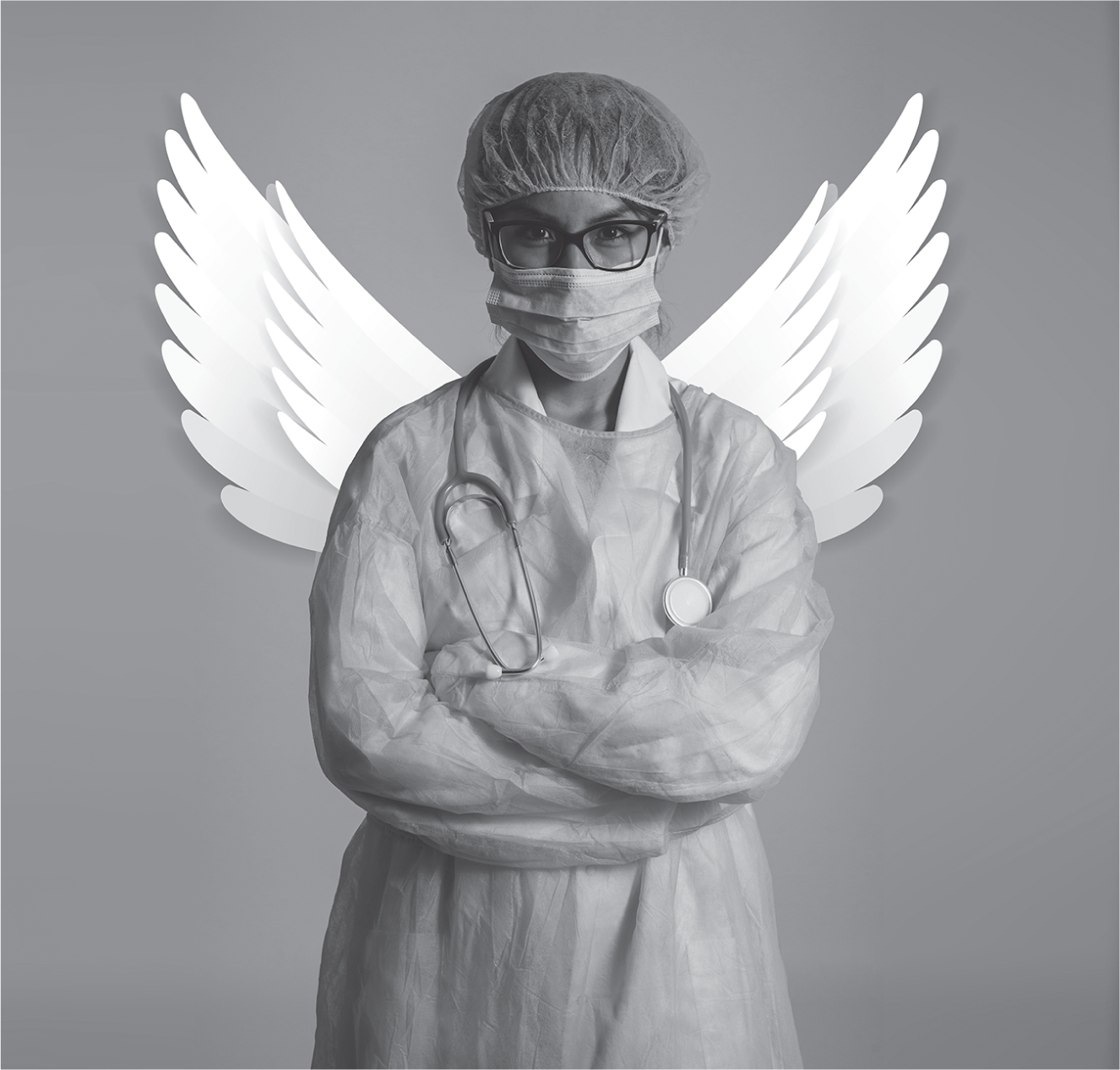
Growing up with other Nicaraguan immigrants, Dr. Delgado was used to hearing brutal “war zone” stories in Central America and assessed the current global health crisis through this dual frame of reference lens, suggesting that inequities fade when people are suffering because patients don’t care who provides them with care, and doctors treat whoever is in front of them without cultural biases. About inequities in her facility at the onset of COVID she said, “It all goes away. No one can tell you anything. If you just have the right scrubs and mask on you’re useful. They’ll hand you your stethoscope and you’re ready to work.” However, because she was the only bilingual Latina in her specialty in the facility, Delgado was often called upon by physicians in her job to explain to patients in a language they understood their results and treatment procedures. Now in the time of COVID, Latina physicians working and treating patients in less resourced communities are crucial to providing culturally competent care and helping numerous patients understand the public health implications of the virus in ways they can comprehend.
Culturally Competent Care
Despite small numbers, Latina/o doctors may be particularly important for understanding the spread of COVID-19 in Southern California. Doctors I spoke with reflected the heterogeneity of the Latina/o population. They identified as Mexican, Central American, South American, and Puerto Rican. They also had varying degrees of Spanish language proficiency, with women more likely to be bilingual than men. For example, Dr. Perla Canul, born in San Juan, Puerto Rico, now treats patients in her own small clinic in East Los Angeles. She explains that most of the Latina/o immigrant patients she sees had “over-use” injuries, caused by repetitive movements at their manual jobs. Some patients described their ailments using cultural-related descriptions such as mala circulacion [bad blood circulation] or entumido [numbness]. Dr. Canul clarified, “That’s not really a thing” and said “When patients stand for hours and hours that happens. It could be a pinched nerve, or something else.”
One day a Latina immigrant patient narrated, “Trabajo en un lugar muy fro y hay mucho polvo… Deje mi trabajo de housekeeper por los qulmicos y dolor de espalda…y me ful a una lavanderla.” [I work in a cold place and there is a lot of dust… I left my job as a housekeeper due to the chemicals and backache…And I went to a laundromat]. The respiratory distress, body aches, and fatigue experienced routinely by essential workers are some of the same symptoms as the novel coronavirus. Dr. Canul’s understanding of the sociocultural context of her patient’s work, Spanish language fluency, and cultural competency are now critical skills for accurately diagnosing early-stage COVID and supporting Latina/o COVID patients and their families.
You’re wearing the gown and a face mask and goggles and no one can see your ID…. Even though my badge has a big red thing that says doctor on it. Sometimes [patients] think that you’re the nurse or they’ll be like, ‘Oh, I want to speak to the doctor.’ I’m like, ‘You’ve been speaking to her for 30 minutes.’ Even though I introduced myself as a doctor when I walked into the room.
Providing culturally competent care comes at a cost. Dr. Lizet Ramos felt the pandemic highlighted inequities for Spanish/English bilingual women doctors. She worked in emergency medicine and said, “my [Mexican immigrant] dad sent me N95 masks that I’ve been using” in an underserved hospital. She presented as a light-skinned Latina, and pre-COVID19 she could pass, reducing the likelihood of racial discrimination at work. However, Lizet had a very slight accent indicative of a native Spanish speaker that sometimes gave her away, especially now that she was covered head to toe in medical protective garb.
You’re wearing the gown and a face mask and goggles and no one can see your ID…. Even though my badge has a big red thing that says doctor on it. Sometimes [patients] think that you’re the nurse or they’ll be like, ‘Oh, I want to speak to the doctor.’ I’m like, ‘You’ve been speaking to her for 30 minutes.’ Even though I introduced myself as a doctor when I walked into the room.
While Lizet felt she was culturally competent to aid patients of various social and economic backgrounds, she was well aware that her ethnicity and gender meant that patients undermined her medical expertise, favoring medical providers who conformed with the conventional white male norm of high-status occupations.
Gender and the Cultural Tax
While cultural competency is critical to working with marginalized communities, it is often undervalued and undermined by facilities and colleagues, especially for women. Both Latina/o men and women physicians explained their Spanish/English bilingual and bicultural abilities were an asset in their jobs. However, they often felt burdened by translation demands, with women having to do the lion’s share of this work more so than bilingual men. Dr. Yvette Gonzalez, a Mexican heritage doctor, explained white doctors relied on her uncompensated bilingual labor to explain to every Spanish-speaking patient what was going on with their health despite the fact it was not her job to do so.
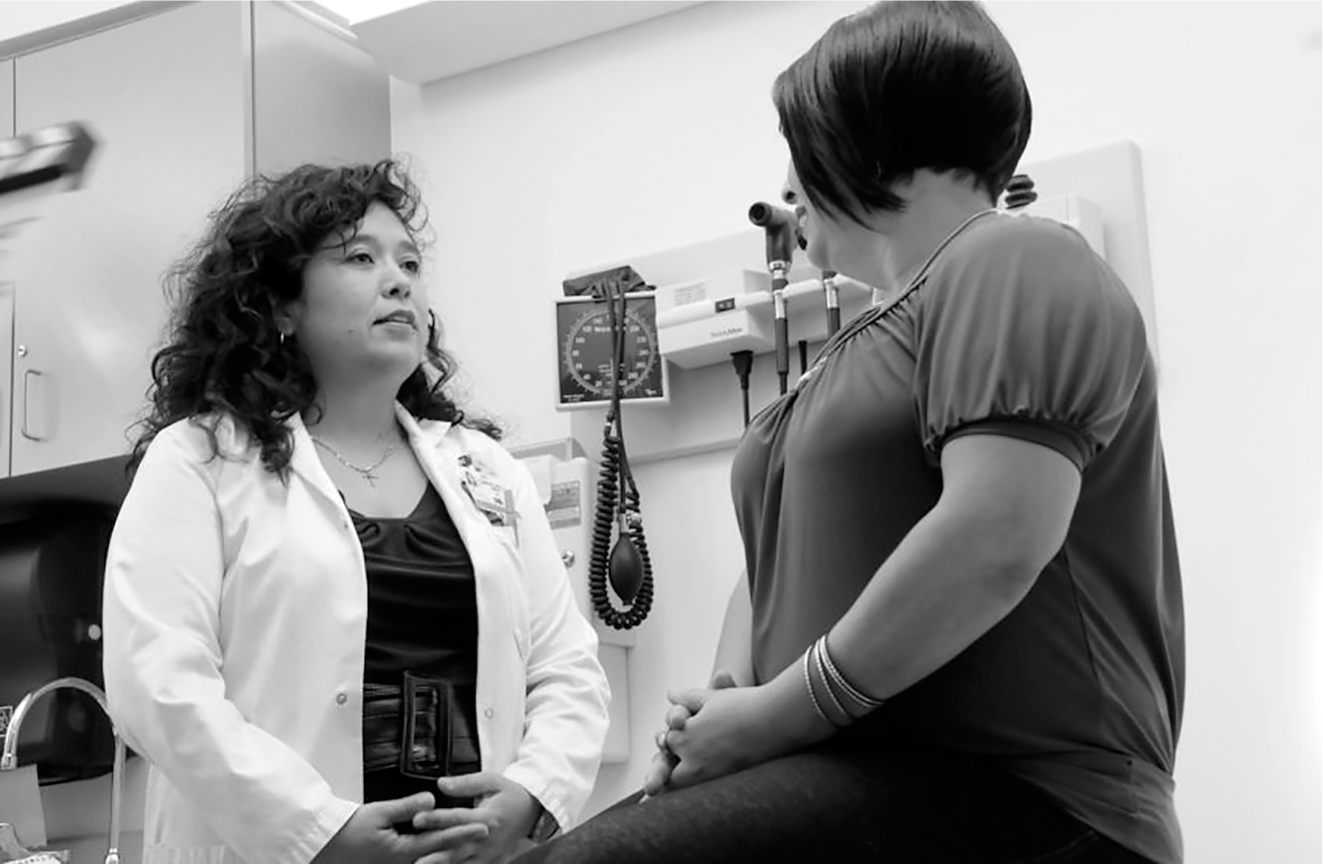
The sociologist Sharla Alegria notes that white women in technology experienced a small glass “step-stool” for their interpersonal skills—having strong people skills that pushed them into management positions—but Latina doctors rarely did. Instead, Latina doctors were emphatic that their workplaces’ weak commitment towards promoting cultural competency was apparent in their reluctance to hire Latina doctors, more Latina/o nurses, or official Spanish-speaking interpreters. Raquel, an internal medicine physician of Mexican roots, shared an instance where a colleague explicitly devalued the importance of hiring more Latina/o doctors because of a translator line service. She recounted, When I said, ‘I’m so happy to work in [this city], there’s a lot of Spanish-speaking patients.’ He [Asian doctor] said, ‘well before you came, we were doing fine without you. We have this thing? Have you ever heard of it [Dr. Ihiguez]? It’s a translator line. So, we don’t need Spanish speakers. We got this box, and they could speak their language.
While dismissing Raquel’s language and cultural contributions to the workplace, her coworker also failed to acknowledge the additional labor Latina/o doctors performed due to Latina/o patient and family needs. Latina/o doctors illustrate how cultural competence encompasses much more than solely Spanish use. COVID-19 is a brutally isolating disease. The cultural competencies Latina/o physicians describe are critical to supporting Latina/o patients and their family members who can’t physically be there with them. Latina physicians were indispensable to these communities for their culturally competent care, and possessed crucial skills that were often uncompen-sated, tokenized and taken for granted, even by themselves at times. They are what I call “racialized tokens” because they experience a series of uncomfortable situations and perform additional shadow labor—important unrecognized tasks—when they are numerical minorities in white-collar occupations.
Despite small numbers, Latina/o doctors may be particularly important for understanding the spread of COVID-19 in Southern California.
Bilingual Latinas working in the “token” context in white-collar jobs, often find themselves doing additional work that others performing the same job are not asked to do or cannot do. Latina/o clinicians, in particular, provide indispensable cultural resources for their patients, coworkers, and the medical profession as a whole, but their efforts are often invisibilized and deemed disposable, even though patients request and desperately desire them.