



Abstract
“Biracial identity, lgbtq+ and latinx, how suicide spreads, and embodying intersectionality. New research from the journals.”
Keywords
Navigating Stigma as Lgbtq+ and Latinx
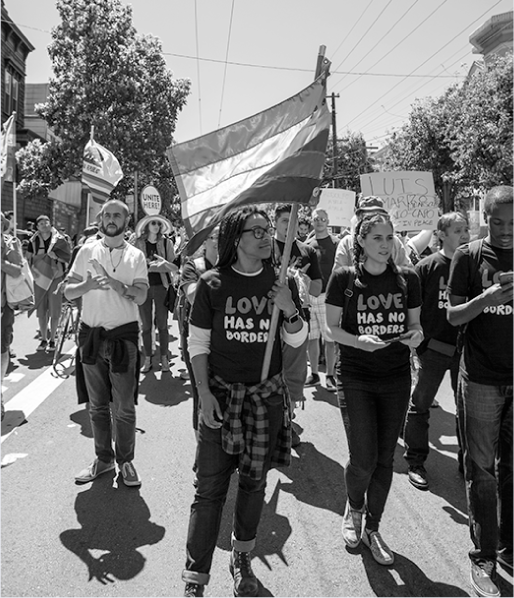
Racist and xenophobic rhetoric causes LGBTQ+ (lesbian, gay, bisexual, transgender, queer, and all other marginalized gender and sexual identities) Latinx people to experience co-occurring intersectional stigmas related to their racial, gender, and sexual identities. One can imagine the toll that this could have on the mental health of these young people in America, where structural stigmas such as heterosexism, racism, and homophobia exist. In Society and Mental Health, Rachel M. Schmitz and her peers investigate how these young adults discuss experiences of social prejudice and discrimination related to their multiple identities and how these understandings shape perceptions of their own mental health.
The authors conducted interviews with LGBTQ+ Latinx young adults, using an intersectional minority stress framework in their analysis, which combines two separate frameworks. The minority stress model asserts that exposure to social prejudice and discrimination can lead to negative mental health outcomes. Combined with intersectionality theory, this model examines how respondents perceive their mental health in relation to their multiple intersecting identities.
The authors find that marginalized youth must navigate multiple sources of stigma, including structural racism, gender policing, and anti-LGBTQ+ religious messages. In addition to experiencing the dismissal of mental illness as valid, participants face conflicting narratives surrounding mental health in their daily lives. The authors argue that public health initiatives should be attuned to these unique challenges facing this demographic. Ultimately, the findings suggest that the participants have complex lived realities, and their intersecting identities shape mental health inequalities in dynamic ways. We must recognize that there is not a “one-size-fits-all” approach to addressing mental health needs. It is important to center the unique perspective of those we wish to better serve through research and policy.
An LGBTQ-Latinx solidarity march in San Francisco, CA after the 2016 Orlando massacre at a gay nightclub.
Pax Ahimsa Gethen via Wikimedia
How Suicide Spreads
Decades of sociological research have uncovered patterns of suicide and the emergence of suicide clusters in communities where suicide has taken place. Findings include that certain groups within a population are more vulnerable to suicidality through such exposure. In an article from Society and Mental Health, Seth Abrutyn, Anna Mueller, and Melissa Osborne explore how suicide spreads in local communities where suicide has occurred. The researchers propose a theory for why diffusion occurs and include an empirical study to demonstrate the proposed theory.
The authors posit that when a suicide occurs in a community, the community reshapes their collective understanding of meanings behind and causes of suicide. This shift may allow suicide to become a more accessible or more imaginable option for youth in the community. The spread of suicidal ideation takes place not solely through exposure to suicide, but also through the changing of the collective understanding and the acquisition of that understanding within social networks by way of social interaction.
Using semi-structured interviews and focus groups in communities with high adolescent suicide rates, Abrutyn and colleagues find that repeated exposure to suicide may have generated a shift in the cultural script that made suicide a more imaginable option for young people in this community—namely that suicide is caused by exposure to pressure. The authors conclude by discussing the implications of the study for sociological understandings of suicide, the processes involved in social diffusion, the reforming of collective understandings, and issues related to suicide prevention.
Would You Like Bias With That?
Racial inequality in the labor force is well documented. However, despite the rise of service sector positions, less is known about the disparities that exist in this industry. In addition to usually being low-wage, hourly positions, service sector jobs often provide insufficient work hours and unstable, unpredictable and inflexible work schedules. In American Sociological Review, Adam Storer, Daniel Schneider, and Kristen Harknett explore the hidden racial inequalities that are present in the retail and food-service sectors. Using data from The Shift Project collected from 2017-2019, the authors were able to survey over 30,000 workers from over a hundred large companies including Walmart, Home Depot, McDonald’s, Starbucks, and Whole Foods. The study focused on five key scheduling practices to examine workers’ job quality: canceled shifts, expectation to be on-call, involuntary part-time status, inability to get time off, and expectation to work from open to close. Work-life conflicts caused by these scheduling practices have been shown to have negative consequences for workers’ health and well-being.
Miguel Andrade via Unsplash

The authors find that nonwhite workers were more likely, on average, to have experienced exposure to all five scheduling practices. They argue that some of this gap can be explained by differences in background, occupation, and job market characteristics. Yet, they indicate that racial discrimination is a factor in the persistence of these disparities. For example, managers have significant discretion when it comes to scheduling, and this study found that nonwhite workers were three times more likely to have a manager with a different race from their own. Overall, these inequalities disadvantage nonwhite workers, but the authors noted that women of color were the most likely to experience exposure to these working conditions. These findings build on the larger body of research showing that White workers have significant advantages in the job market, which lead to the persistence of racial inequity in the United States.
Race, Pregnancy, and Well-Being
Starting a family can be one of the most joyful and, simultaneously, most stressful moments of adulthood. Research has pointed to pregnancy intention status as an important factor in determining a mother’s happiness, impacting health outcomes both during and after pregnancy. However, pregnancy intentions have not been shown to fully explain racial disparities in pregnancy and birth, such as high infant mortality rates for Black mothers compared to White mothers. In the Journal of Health and Social Behavior, Caroline Sten Hartnett and Mia Brantley build on previous research by exploring how structural racism and intention status impact happiness during pregnancy among Black and White mothers.
Mustafa Omar via Unsplash

Previous studies have found that women are happier about intended births compared to mistimed births or unplanned births. In contrast, this study found that compared to White women, Black women are unhappier when they have a mistimed birth, and when they have an intended birth. Looking deeper, less happiness for an intended birth for black women was partially explained by greater levels of economic strain, less support from partners, and already having a male child. These factors represent different issues related to structural racism. For example, Black women have lower incomes and are more likely to be unmarried when having a child compared to White women. Additionally, the stressors related to raising young Black boys can impact how a mother feels about future pregnancies.
These findings help provide a better understanding of factors that impact women’s health and pregnancy and how we understand pregnancy desirability. Even though a pregnancy is intended, it can be accompanied by negative or complex emotions. Importantly, these findings show how the impact of structural racism felt by Black mothers not only comes from their own experiences, but also comes from the experiences of their partners and children as well.
Biracial Identity in Transition
As highly racialized institutions, colleges represent crucial sites for racial identity development. While many studies highlight the influence of educational context on monoracial student identities, fewer studies have examined how this interaction unfolds for multiracial college students. There remains an almost exclusive focus on Historically White Colleges or Universities (HWCUs) in research related to racial identity formation within higher education. In Sociology of Education, Kristen Clayton fills these gaps by analyzing the racial identity development of Black-White biracial college students across different educational contexts.
Employing a longitudinal research design, Clayton draws from in-depth interviews with 49 Black-White biracial underclassmen attending Historically Black Colleges and Universities (HBCUs) or HWCUs. In addition, Clayton utilizes follow-up interviews with each student at the end of college to better contextualize the various factors influencing racial identity shifts over time. Ultimately, Clayton finds that students’ increased understanding of racism led to their development of more salient Black racial identities in both institutional contexts. Yet, how HBCU and HWCU students came to this awareness differed significantly, especially as it relates to reflected appraisals of identity.
Andre Hunter via Unsplash

Taken together, HBCU students’ feelings of inclusion and acceptance into Black peer spaces alongside the integration of Black history and culture into HBCU curricula worked to increase students’ identification with Blackness. In contrast, HWCU students’ experiences with discrimination and exclusion by White peers and faculty, along with increased exposure to national conversations around racism promoted strengthened Black racial identities. Thus, Clayton argues that college context plays a powerful role in shaping biracial students’ racial world-views and identities. In so doing, Clayton highlights how racialized experiences in college often disrupt the colorblind messages conveyed throughout students’ pre-college socialization. These findings present both challenges and opportunities for higher education professionals concerned with students’ academic progression, retention, and psycho-social well-being.
Racial Ignorance is Purposeful Bliss
In Sociological Theory, Jennifer C. Mueller defines racial ignorance as the mental standpoint which contributes to the survival of white supremacy. Her Theory of Racial Ignorance (TRI) is a tool for understanding—and therefore resisting—the processes and forces that create this reality. Mueller advances five tenets of TRI, which together outline the processes through which racial ignorance contributes to racism.
The first tenet asserts that racial ignorance is produced through White people’s use of various strategies that uphold racial domination by avoiding, hiding, or increasing confusion about racism. Second, TRI asserts that ignorance serves the purpose of helping Whites uphold this system of domination based on rational psychological and material interests. In this case, racial ignorance allows White people to enjoy the benefits of racism while maintaining that they are not in fact, racist. TRI’s third tenet centers on the way that White people have used their disproportionate collective power to construct our societal institutions on a foundation of racial ignorance. This confounds the reality of racism, resists challenges to this distorted view of reality, and ensures that the warped White perspective will be protected at the expense of the reality lived by marginalized racial groups. Fourth, TRI points to both the explicit and implicit ways that people produce, use, resist, and confront racial knowledge and ignorance, such as avoiding racial language or silencing perspectives of color that challenge White racial ignorance. Lastly, TRI draws attention to the advances and reversions in racial logic among White people and how they align with their own material and psychological interests rooted in maintaining the system of domination.
Mueller’s article discusses the ways that white people practice racial ignorance and uphold racist systems for their own benefit.
Jeremy Brooks, Flickr CC

By outlining these tenets, Mueller provides an explanation of how, when, where, why, and by whom structural racism is maintained. Her theory pushes us to consider racial ignorance as a primary process that contributes to the reproduction of racism at all levels of society.
You “Act White”
Music is a form of culture that brings groups of people together based on the admiration and enjoyment of a particular sound or melody. As outlined by Shaap and Berkers in Sociology of Race and Ethnicity, music genres are a collective that connects industries, performers, critics, and fans in identifying a specific type of music. Within these genres, there exist stereotypes that exclude certain demographics of people from openly celebrating them. Shaap and Berkers acknowledge how rock music consumers navigate this genre’s whiteness in the U.S. and the Netherlands. In this exploration, they address the connection between music and ethno-racial categories.
Although rock music has its roots in African American culture (Nanry 1972), Shaap and Berkers show that Black individuals are met with opposition when professing enjoyment of this genre by both White rock music consumers and other Black individuals. Through an analysis of 15 interviews from Atlanta and 12 interviews taken in Rotterdam, authors identify three categories that both American and Dutch rock consumers take up in authenticating fandom. These three positions are complying, amending, and replacing. Through efforts of complying, we see that Black individuals, specifically, are regarded as inauthentic fans of rock music and treated by individuals as “acting White” because of their enjoyment of this genre. This is a result of the perceived stereotype of whiteness dominating rock music, and in response, Black individuals are seen to comply by withdrawing from the fandom. The second category, amending, is where individuals become aware of the whiteness of rock music and their goal is to amend this with their local scene, making it possible for them to enter the fandom. Finally, replacing aims to replace the current configuration of a music genre with a more inclusive one.
Sebastian Ervi on Unsplash

Overall, this research shows that music consumers are not always complicit to a genre’s configuration. We see this in the case of Black interviewees who profess a reception of opposition when declaring enjoyment of rock music. Further, this resistance given from music consumers is not always directly linked to their own ethno-racial backgrounds.
Embodying Intersectionality
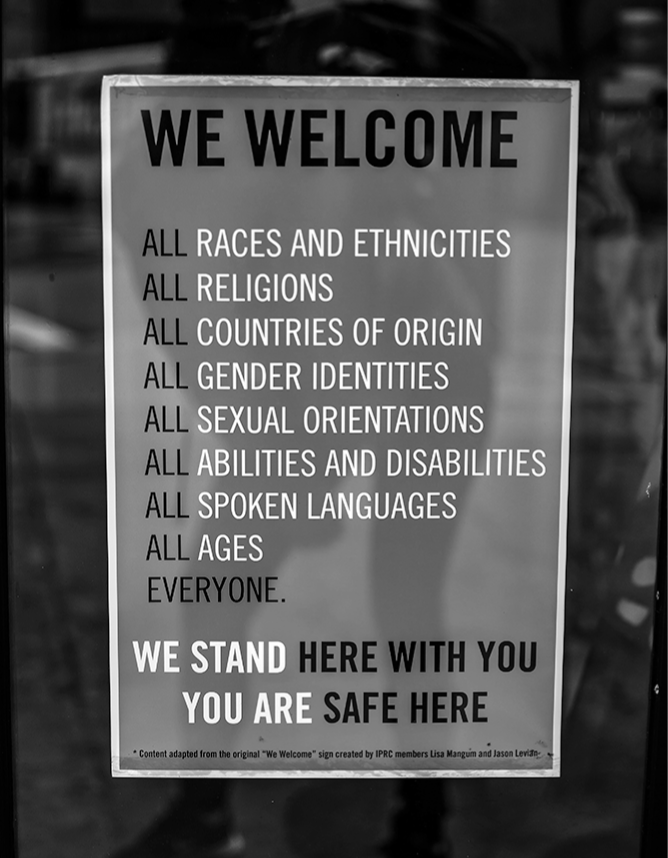
Intersectionality is a useful analytic concept that addresses how identities and inequalities may overlap to create unique forms of privilege and subjugation. In order to grapple with the challenge of teaching the concept of intersectionality to college students, Jeffrey Gardner and Ashleigh McKinzie designed an in-class activity for classroom application. The authors evaluate the activity’s ability to share intersectional perspectives with young adults. Instead of simply hearing the perspectives of others, the activity has students “embody” or “step into” the stories and lived experiences of people with oppressed identities.
The concept of intersectionaltiy was developed to highlight the way people’s various identities combine to create unique social positions and experiences, particularly as they relate to marginalization.
Brittani Burns on Unsplash
Using vignettes from the authors’ ethnographic research, Gardner and McKinzie applied this embodiment workshop in introductory sociology courses over two semesters at two public universities. As a pre-test, students were asked to respond to open-ended and multiple-choice questions about their understanding of intersectionality. Students were given descriptions of people with intersectional and marginalized identities and then asked to pretend to be those people. In the post-test, findings revealed an increase in students’ ability to accurately define intersectionality and share what it means to their peers.
In this case, the activity inspired empathetic discussions, expanded students’ perspectives, and potentially equipped participants “with the tools to dismantle structures of oppression.” This activity is malleable and provides instructors with the space to adapt according to their class while maintaining the core tenets of teaching intersectionality.