




Abstract
A tale of two plantation museums: The Whitney exclusively focuses on the lives of enslaved people, while McLeod is designed to be inclusive of the lives of enslaved and free people, both black and white.
In August of 2019, Colorado congressional candidate Saira Rao tweeted an image of a reviewer’s comment from Louisiana’s Whitney Plantation website. The reviewer expressed disappointment in the tour, and described it as a “lecture on how white people treated slaves.” The reviewer also disavowed their own connection to slavery, stating, “My ancestors were from Sicily, never owned slaves, and my husbands were German, and none of his ever owned slaves.”
Rao’s tweet went viral, and led to the sharing of several other negative reviews of both the Whitney and South Carolina’s McLeod Plantation, just on the outskirts of Charleston. The Whitney, opened in 2014, exclusively focuses on the lives of enslaved people, while McLeod, opened in 2015, is designed to be inclusive of the lives of enslaved and free people, both black and white. Both sites explicitly make this clear in web and brochure advertisements. Though white detractors make up a fraction of total visitors to these plantation sites, coverage of their reactions gives the impression that these reactions are commonplace. Missing, however, was important context.
Whitney and McLeod were not open in 2012 when sociologist Stephen Small categorized plantation museum sites as either explicitly acknowledging slavery, minimizing and distorting it, or ignoring it altogether. They transcend those categories. These sites are developed by interracial coalitions of actors working to make the realities of slavery more accessible at historic sites that still, more often than not, silence those experiences.
Bought and renovated in the early 1990s by a white former trial lawyer John J. Cummings III, the Whitney was opened to the public in 2014 as “America’s First Slavery Museum” to exclusively center the lives of enslaved people. (Although the nearby River Road African American Museum, founded by a black woman, Kathe Hambrick, had been interpreting the lives of enslaved and free people associated with sugar and rice plantations since 1994.)
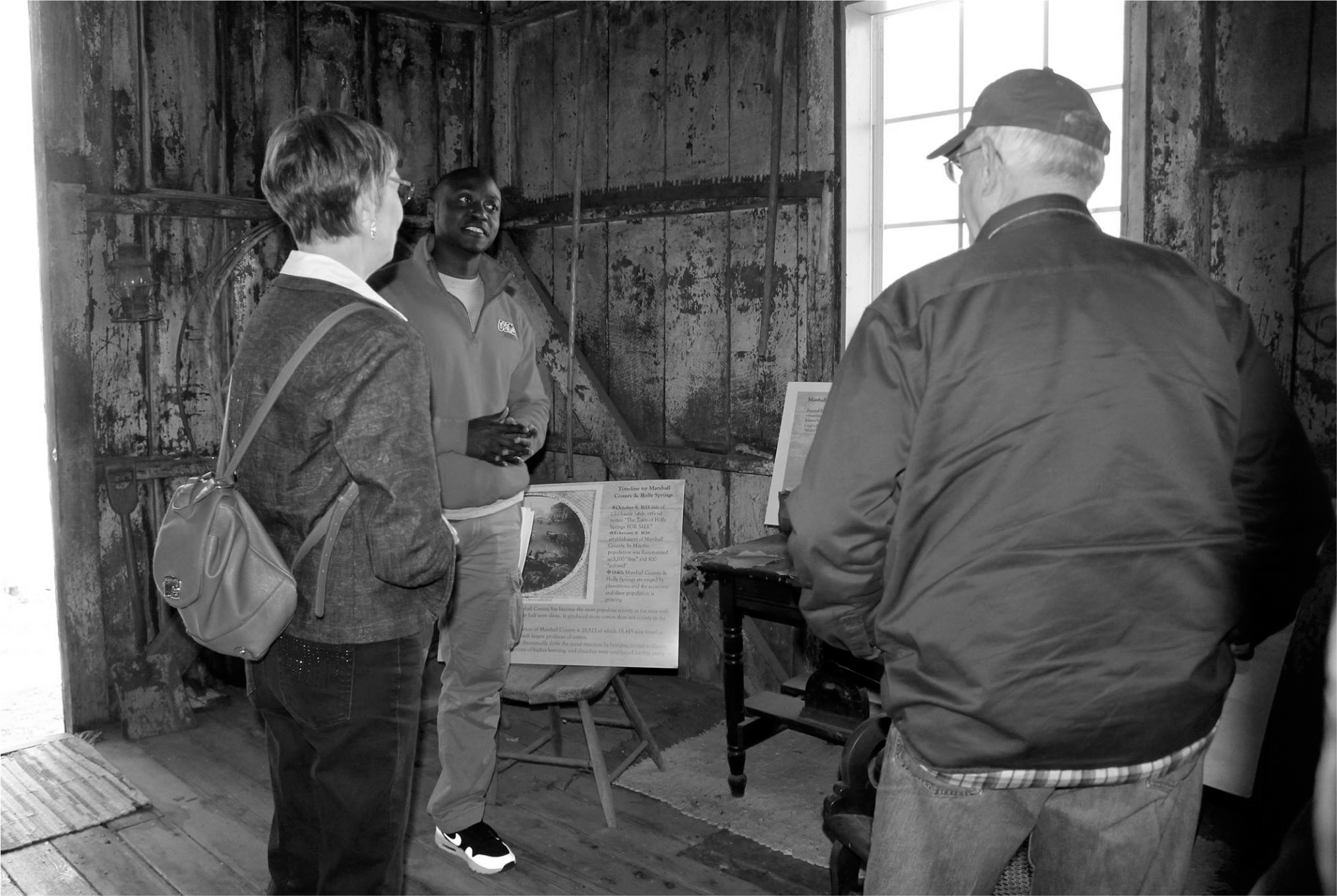
University of Mississippi Student guiding Behind the Big House program tours.
Jodi Skipper
Today the Whitney includes over a dozen historic structures open to the public, and is interpreted entirely from the enslaved perspective. The Whitney also includes several memorials, like a courtyard that lists the names of nearly 2,200 enslaved children who died before their third birthday. According to Cummings, “By providing a meaningful and factually accurate education about slavery, the Whitney Plantation hopes to begin righting some of the wrongs of our history.”
McLeod is a 37-acre former plantation site selected as part of the Gullah Geechee Cultural Heritage Corridor, a federal National Heritage Area. The site, meant to represent what would have been the norm for a plantation in the area, includes a former dairy, kitchen, “big house,” homes built for enslaved laborers, cotton gin house, and tenant home. It also includes a former slave dwelling turned worship house, indicative of the move from slavery to freedom.
“Viral web coverage afforded these reactions an element of sensationalism primarily because of where they occurred—at antebellum plantation sites. Yet the guilt, blame, shame, and rage expressed in written comments are common reactions among whites when confronted with the realities of racism in far more mundane settings.”
As these are among the only plantation sites that center the enslaved’s experiences, the comments from white detractors are odd. Even if visitors overlook or fail to engage the publicly available information on Whitney and McLeod—the former centers the Trans-atlantic Slave Trade in its welcome center—the latter’s tour guides articulate the impending diversity in the site’s narratives. In either case, visitors make a choice about whether to continue to receive that information.
By overemphasizing white detractors’ negative reactions when confronted with the legacies of slavery, the viral web coverage afforded these reactions an element of sensationalism primarily because of where they occurred—at antebellum plantation sites. Yet some scholars have long known that the guilt, blame, shame, and rage expressed in those written comments are common reactions among whites when confronted with the realities of racism in far more mundane settings.
Whites’ Reactions When Confronting the Legacy of Slavery
Museum curator Julia Rose’s book, Interpreting Difficult History at Museums and Historic Sites, asserts that “changing how histories are told and revealing long-forgotten or silenced stories” can make visitors anxious and fearful. In Interpreting Slavery at Museums and Historic Sites, public historian and museum professional, Kristin L. Gallas, and James DeWolf Perry, co-founder of the Tracing Center on Histories and Legacies of Slavery, describe cognitive dissonance as a common defense mechanism to the atypical information received. We argue these reactions are also ubiquitous in everyday interactions between people considered non-white and white Americans not willing or prepared to address the contemporary impacts of slavery and racism.
Interpreting Difficult History proposes methods for museum “visitors to grapple with their resistances.” This responsibility largely falls upon ‘history workers,’ including museum professionals, to ‘respectfully challenge’ and support visitors as they go through this learning process. This work is not easy and is one method of having to respond to individual whites’ fragility, or manage whites’ collective reactions when their dominant status is called into question, even when that status relates to historical ancestors with no biological kinship. Whites may connect to white actors in the historic site narratives through a fictive kinship, while psychologically distancing themselves from them in the present. These responses reflect a failure to understand that regardless of kinship to white enslavers, the white poor, or relatively late immigration to the U.S., white privilege is systemically inherited, and rooted in American slavery.
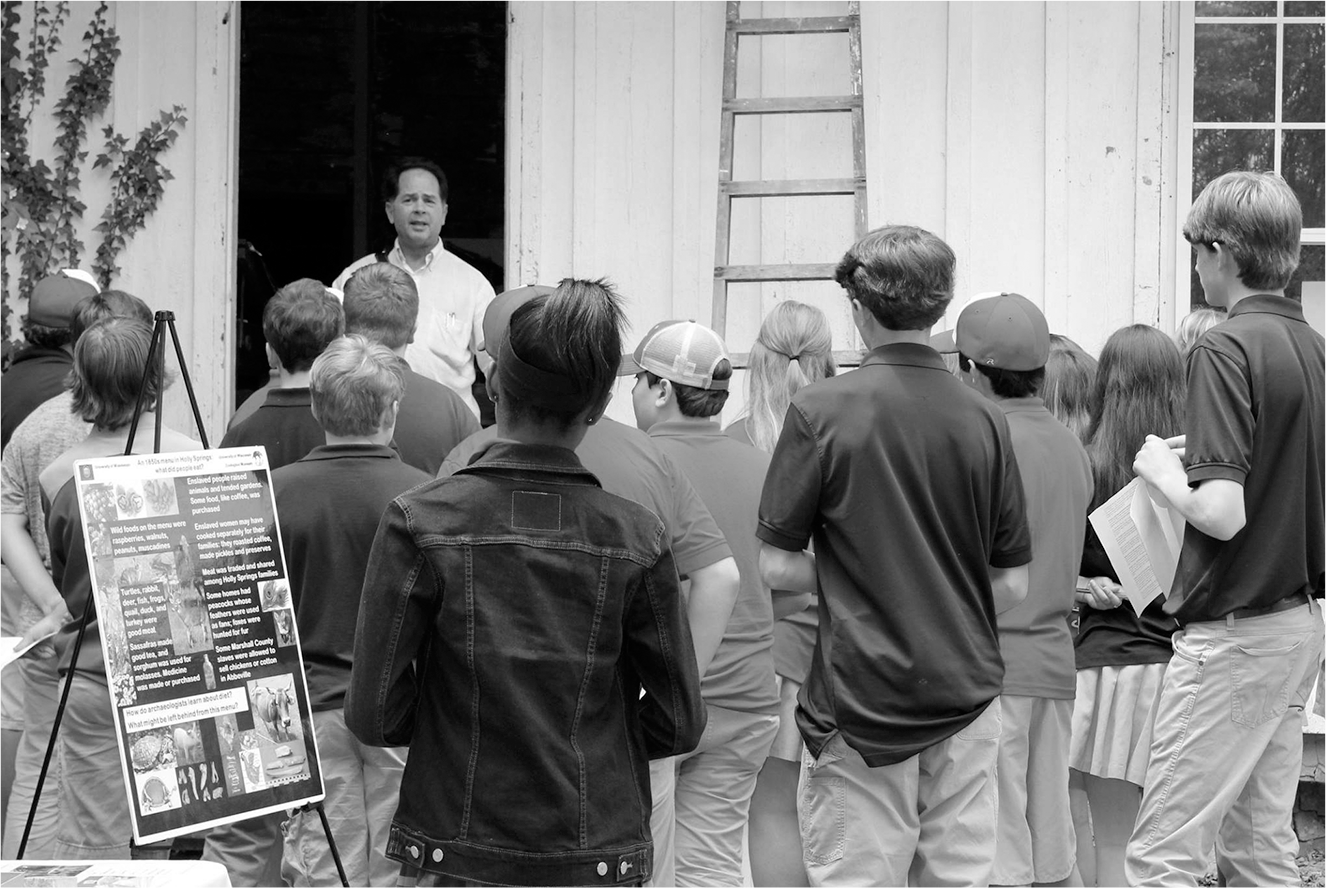
Joseph McGill, Jr. guiding Behind the Big House program tours
Jodi Skipper
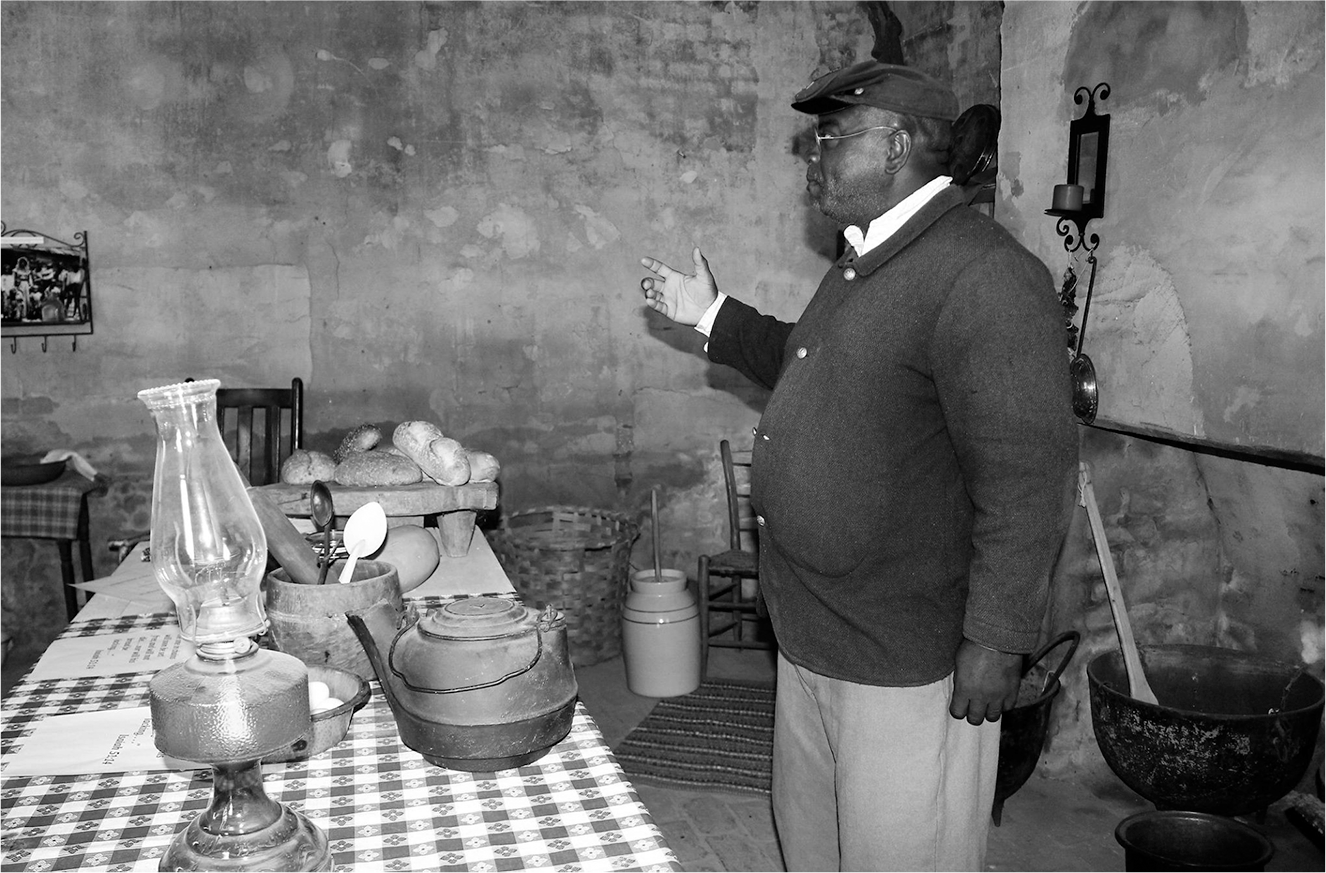
Chelius Carter guiding Behind the Big House program tours
Jodi Skipper
Race in America
What is sociologically interesting about the coverage of white detractors to these sites is that in sensationalizing the reactions, the coverage made them appear routine and typical for plantation sites. The coverage also implied that these reactions would be extraordinary in more ordinary contexts. Yet when confronted with racism’s continued significance in other, less extraordinary spaces, many whites react with the same emotional intensity as displayed in the reviews that went viral. These typical reactions that whites have when called to account for their dominant status is far more illustrative of what we call ‘whiteness-in-crisis’ than the reaction of a few white visitors to plantation sites designed to confront the legacy of white supremacy.
‘Whiteness-in-crisis’ refers to the range of whites’ intense, emotional reactions to large social, cultural, and political shifts that threaten whites’ dominant status. The social scientist Robin DiAngelo describes a similar concept, white fragility, to reveal whites’ sensitivity to racial discomfort. White fragility encompasses the range of physiological responses white people exhibit when made to consider the racial implications of their existence. Yet ‘white fragility’ and ‘whiteness-incrisis’ are not synonymous. White fragility explains individual whites’ emotional reactions to suggestions from non-whites that they occupy a privileged racial position. Whiteness-in-crisis, meanwhile, explains whites’ collective responses— affective as well as cognitive—to perceived threats to their dominant position.
When affordable housing developments are proposed in well-resourced, predominantly white neighborhoods, whites often react with fear of what “those people” will do to their property values. When confronted with racism’s regularity on their campuses, white university administrators express shock, confusion, and even denial. When confronted with popular narratives about the ‘browning’ of America, whites react with anger and fear.
In her book, The Future of Whiteness, the critical race theorist Linda Martín Alcoff writes that while shame, guilt, anxiety, and anger are often debilitating, they are also motivating. Alcoff uses the example of C.P. Ellis, a North Carolina Klansman, who in the 1960s participated alongside militant, black civil rights activists in designing Durham, North Carolina’s school desegregation policy. Ellis hoped to ensure that the policy would be most favorable to working class white children like his own, who would not have the option of moving their children to white segregationist academies. Yet, in working alongside black activists to achieve a school plan that would be fair to all children, Ellis was forced to confront the fact that black children were having a worse time in the schools than his own. Ellis’s anxiety and shame served as the well from which his empathy sprung, and sparked his conversion from a white supremacist to a dedicated community-builder.
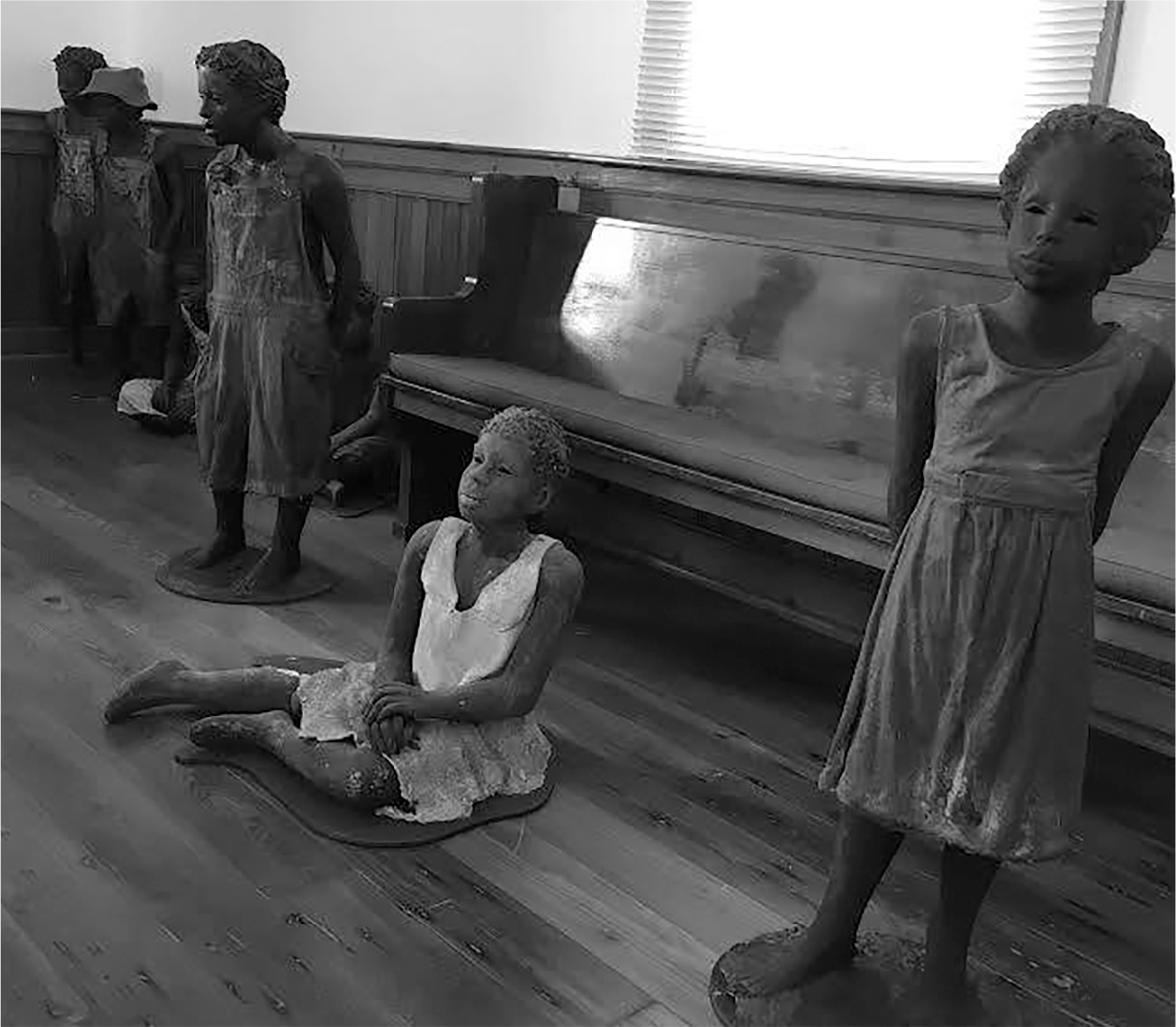
Exhibit in the Antioch Baptist Church, Whitney Plantation.
Jodi Skipper
Speaking Slavery, Interrogating Race
Although there are established frameworks for teaching slavery, attempts to do so are largely voluntary, and can be obstructed by K-12 school administrators, fear of parental reprisals, or a lack of resources to help teachers interested in this implementation. Some schools are taking this leap. Still, museums, historic sites, or private efforts like Joseph McGill Jr.’s Slave Dwelling Project take on this disproportionate burden.
By drawing attention to the missing contexts in media’s coverage of whites’ backlash to the Whitney and McLeod plantation sites, we hope to encourage more media attention toward the efforts of individuals and institutions promoting social justice education around slavery. Media’s sensationalizing of white detractors puts the focus on a few white visitors to even fewer plantation sites. This attention comes at the expense of centering the broader, systemic need for race awareness, beginning with slavery, that some plantation sites are attempting to provide. For example, few Americans have probably heard of Chelius Carter and Jenifer Eggleston. These two white, private homeowners recognized the lack of attention paid toward slavery within antebellum historic site narratives, and started their own slave dwelling interpretation program and tour, Behind the Big House.
While social justice education around slavery will not fix racism in the United States, it can help all Americans better understand the centrality of the enslaved in the making of this nation. A focus on social justice can provide insights into the larger contexts behind whites’ reactions—both positive and negative—to that kind of education.