




Abstract
A series of professional photographs and interviews with women in recovery showcase hope after addiction.
Keywords
For many in recovery from drug abuse, the legacy of their use is visible in their smiles. It is not uncommon for those with chronic drug problems to suffer from oral health problems, including periodontal disease and loss of teeth. These stigmatizing signs of drug use are hard to hide. The stigma associated with poor oral health can be traumatic and have long-lasting consequences on people’s self-concepts and social relations, even long after they have stopped using drugs.
Smiles characterized by poor dental health are often equated with rural poverty and chronic drug use (especially methamphetamine use). For women who have lived for years in active addiction to methamphetamine, cocaine, or heroin, the stigmatized look of a smile that shows dental decay or missing teeth has led many to experience shame and self-doubt. The physical stigma ensures that their past drug use remains visible to themselves and to others. Whether true or not, they believe others identify them immediately as drug users based on their oral health. In this sense, their dental problems become core parts of their identity, and the accompanying self-consciousness shapes daily interactions. Conversely, access to dental health care may aid recovery by strengthening people’s self-worth and minimizing social stigma.
“It’s More Than Skin Deep”
Our appearance is an integral part of our self-concept. As such, feelings of shame, anxiety, and hopelessness are shared among those who experience dental issues brought on by chronic drug use. Indeed, few physical characteristics call forth the stigma of poverty and drug use like poor dental health. In Mary Otto’s book, Teeth: The Story of Beauty, Inequality, and the Struggle for Oral Health in America, she discusses how social inequality is revealed through the cosmetic look of teeth. She explains how the look of one’s teeth shows the social divide in America by stigmatizing those who show markers of the lower classes.
The sociological conversation on stigma highlights the deeply discrediting features in a person that can have significant impacts on their thoughts of self and on their behaviors (including seeking help for drug use). Pioneered by social theorist Erving Goffman, stigma refers to the attributes deemed by society as undesirable and discrediting that negatively differentiate a person from the rest of the population. The concept features prominently in work by medical sociologists Bruce Link and Jo Phelan, who further emphasize the notions of power and discrimination that occur from stigma. Accordingly, those perceived as drug abusers due to the appearance of their teeth are often treated differently by others.
As social scientists, we aim to bring attention to the physical and social stigma of poor oral health associated with chronic drug use, particularly as it leads to poor self-perception, and the implications for recovery. Here we do so with professional photographs and interviews of women in recovery. We focus not on their drug use but on their sense of hope and optimism. Our work shows how access to dental care had a dramatic impact on the recovery process for women living at a recovery program. These women felt the stigma associated with oral health damaged from drug abuse, and it constrained their beliefs and behaviors. Now that these women were receiving health care for their oral problems, they spoke of a newfound sense of empowerment.
Tina (age 52). “I wanna get a little place, you know, my space that I have control over who comes in and out, where I can be by myself. Or go somewhere and work. I’d like to go back working with juveniles or the homeless or homeless women in need. Things like that make me feel good: to help other people out. Meet a nice man maybe.”

Janet (age 39). “When I started my addiction I feel like [people] could tell that I was a junkie, you know what I mean? You can always tell with people’s teeth. Or they think that I’m dirty. … People look at you and your teeth. It kind of tells like a background of you, really. My mom is really excited about me seeing a dentist.”
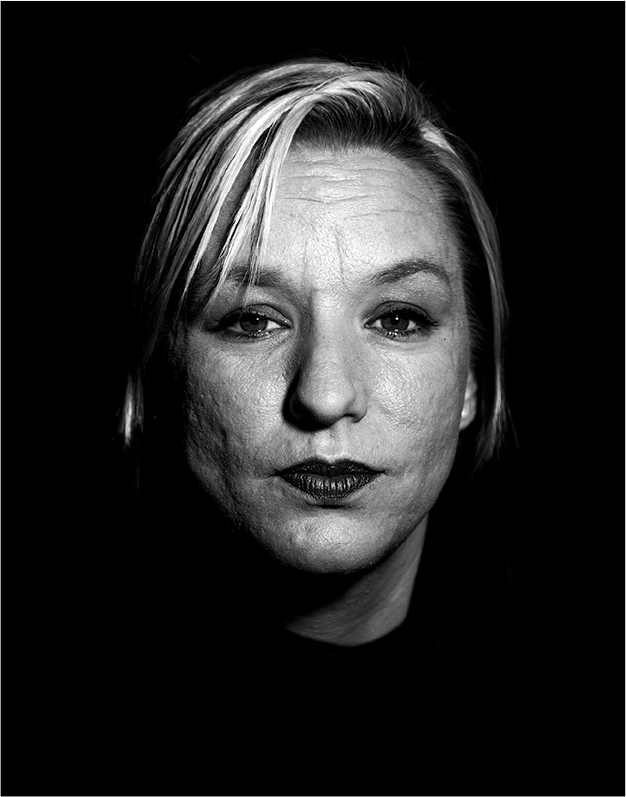
Faces of Strength and Hope
In 2017 we interviewed and photographed 11 women in a one-year long treatment program who had experienced dental issues and subsequent dental work provided at low cost. We sought to understand how such medical help shaped the ways they saw themselves, their recovery, and their futures. To do this, we relied on interviews and portrait photography. The interviews focused on their perceptions of their teeth, and how they believed their new smiles affected their self-confidence and job possibilities. The women spoke proudly of the dramatic impact access to dental care had on them. Accordingly, the photographer made photographs with an eye to emphasize the newfound strength and beauty about which the women spoke. The photographer chose black backgrounds to emphasize the facial expressions of the women and to show these new versions of themselves. The photographs show worth, dignity, and resilience. These photographs stand in contrast to those featured in fear-based media programs (e.g., Faces of Meth and The Meth Project), which show graphic and shocking images that highlight the physical deterioration of users’ bodies, casting them as criminals.
As we asked about transformation in recovery, women spoke of their appearances, and hope for future jobs. They spoke of being less self-conscious about their oral health. They also spoke with pride of their transformations, which was shown in the way they felt about their physical appearance. The women arrived to the interviews purposefully in full makeup, with care to look good. They wanted to abandon their old look and they believed the professional photographs could show their new selves— strong women with hope for the future.
Shay (age 38): “I wanna teach or counsel or both. … I’m going to college in January [smiles] through their scholarship program here.”

Susan’s (age 57): “I want my son to visit me at home. … Just be living without feeling tied or weighed down by needing something. And I want to make my family happy. That’s really all.”

Penny (age 45): “I just want to be confident. I just wanna live a healthy, happy life and not have to worry about people talking about me because my mouth is, you know, messed up.”

The women we interviewed always had their appearance on their mind, and the topic came up frequently. For women in particular, the added social pressure put on them likely affected their preoccupation with appearance. One of the ways these women interpreted their lives as on the road to success was to put on makeup and pose for the camera.
The women we interviewed and photographed experienced numerous problems brought on by poor dental health. They feared being unable to get and maintain jobs, they suffered from the pain when eating and went without the foods they desired, and they endured self-doubt about their looks. Thus, the ability to get treatment for these conditions brought them closer to mental states that facilitated recovery. It gave them a sense of strength in being able to get meaningful work, eat foods they loved, and feel better about themselves enough to smile in public. All mentioned increased confidence in having a future that will be better than their past, even if not their ideal future. Our sense was that they saw these photographs as a way to show the world, and themselves, that the stigma of poor oral health was weakened and had less power over their lives.
Not all of the women received the level of treatment that they wanted, due to lack of financial resources or oral health being too far gone to receive all the necessary restorative treatments. Some still expressed the anxieties present from their smiles. Nevertheless, for the majority of these women, the dental work they were able to get through their recovery program did help restore their teeth. It was a part of their recovery process: As they were inwardly changing and transforming, their outer appearance was also changing. The women spoke of how before their improved oral health, they would avoid interactions with others and cover their mouths when they did speak among strangers.
While the women told us of their histories, including abuse of various kinds, and the hardship of having poor oral health, the photographs arrive at a different presentation of self. They were in recovery now and they were developing new personal identities. The dental work symbolically reflected their new selves: as redeemed people who overcame struggles. The photographs show the strength and resilience of these women. They show women who are hopeful of the future. With these photographs, we can see the beginnings of a new self: one with self-esteem and a sense of agency. Rather than being seen solely as “drug abusers, “meth heads,” or “addicts” we hope readers will see these women as complex people who are proud, beautiful, caring, and confident and who are still struggling with recovery. Such reactions from outsiders will certainly aid recovery and help people in similar situations on their road to self-actualization.
With these photographs, we can see the beginnings of a new self: one with self-esteem and a sense of agency. Rather than being seen solely as “drug abusers, “meth heads,” or “addicts” we hope readers will see these women as complex people who are proud, beautiful, and confident and who are still struggling with recovery.