




Abstract
Robert Vargas interviews Rebecca Sandefur about her work merging the fields of sociology and law.
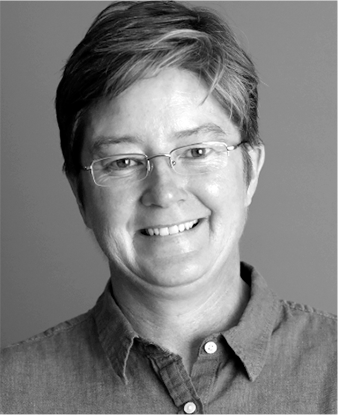
This spring, Robert Vargas, Director of the Violence, Law, and Politics Lab at the University of Chicago, sat down to interview Rebecca Sandefur. Among many other things, Sandefur is a professor at T. Denny Sanford School of Social and Family Dynamics at Arizona State University, and in 2018, she was named a MacArthur Fellow for her work on inequality and access to justice. Her work is focused on how legal services are delivered and consumed, and her research is informing emerging models for more equal access to civil justice. Their conversation centered around Sandefur’s work merging the fields of sociology and law, and how she’s making sociology more accessible to other disciplines through her work. This interview has been edited for length and clarity.
Rebecca Sandefur
Could you start by telling us a little bit about you and your research for people who might not already be familiar with you or your work?
Sure. So I study how people think about, handle, and are affected by problems in their lives that the civil justice system has rules about. This could be things at work, things with something you buy or sell, it could be a problem with your insurance, it could be something about housing. And then I study. Most of that activity doesn’t make it to the justice system, which is probably not always a bad thing, but sometimes it clearly is a bad thing. So I study different kinds of solutions that folks are developing to provide assistance with those problems. Sometimes when they make it to the justice system, and sometimes when things happen out in the world, even when people don’t recognize they have justice problems, which they usually don’t.
One of the great opportunities with this Contexts piece is to just kind of show to readers and other sociologists the process of becoming a public-oriented and public-facing scholar. I wondered if you could say a little bit about how the pathway of being a public scholar unfolded for you. Is it something that you sought out at the beginning or, what were the things that led to it?
I wanted to produce knowledge that other people who did things in the world could use, but it never occurred to me (that) I would be responsible for communicating it to them. You know, I was somewhat naive. Research does absolutely nothing by itself. Zip. And so, what happened was because, I was a sociologist studying an occupation, and that occupation has its own professional associations, it has its own schools that creates its little minions, I started out by sharing sociological insights with lawyers. First, in law schools, because they are fascinated by themselves, right? And then, sort of out from there to different segments of the profession. Because nobody else was working on questions like that in the U.S. at that time, you become the person who at least has some kind of answer to people’s questions even though our answers are still very, if not provisional, then at least very limited.
How have you found ways to make sociology more legible to professions like lawyers? I think there is some untapped potential to inform other types of professions, and I wonder what you have learned from your study of the legal profession that you might be able to share with any number of subfields or to inform other occupations?
So, when I started talking to lawyers, I would talk, and they would stare at me, and then they would leave. I never got any questions, which is not what you’re after. Part of it is that what I was saying was unbelievable to them, and part of it is that I didn’t know how to say it. So you have to have all these failed experiences with communication until you figure out what the entry points are. Whether it’s school principals, police officers, physicians, or whatever the audience is that you’re trying to get to latch on to what you’re trying to say.
It would be so helpful to have some sort of infrastructure for sharing the lessons learned like this. Has your experience been that you just go down the line and pursue something with an audience where you actually resonate and your ideas stick? How have you learned to craft and best articulate your message best?
The issue with sociology is that a lot of it is about structures and explaining why things are the way they are. We have accounts that imply that things have to be this way, so the only way to fix some of these things would be to enact massive reforms, tremendous redistribution of resources. But, the space I work in is that the revolution is not coming before I die and that capitalism may be replaced by something even worse, so that’s where we are, and professions are going to have their edges nibbled at, but we aren’t going to get rid of them. The internet is not going to make doctors obsolete. So, since those things are not going to change in the medium term, what are the things we could change in the medium term without a revolution or getting rid of capitalism? When I started out, I wasn’t thinking that way because I wasn’t as focused on it … I mean, at this point in my life I’m like, I have maybe less than half of it left so I’m much more focused on action than I was when I started down this road.
Now that you’ve received the MacArthur award and are in the position that you are in now, do you see yourself in an inverse position where maybe too many folks are coming to you trying to get you to resolve their problems?
So, the MacArthur is great for bringing attention to the issue, and the issue has been off the radar for 40 or 50 years. To talk and bring attention to the issue is where I’m at right now. I am not teaching this semester, and next year I’m on sabbatical, so I made this deal with myself. Right now, I feel like I’m on tour, which is not what most of us expected to do as college professors. I am also not an extrovert, so it’s not what I saw myself doing—but I think it’s a right response to having the time and the attention for the moment to go around and talk when people want to hear about it.
But I am careful. A couple of weeks ago I published, or really released, a report on legal technologies. A very basic report on what are they, what do they do, and how does that match up with what we know from the other half of my work about what people might want or need when they have justice problems. Because of that report, I get contacted by private companies that say, “You’ve kind of done the outreach for us so wouldn’t you like to take some time to tell us a little bit more about what you’ve learned?” Typically I say no because they can buy expertise if they want to. I also say no because I don’t want to be seen as though I may be endorsing anything.
Part of my value add is that I have no skin in the game—I’m not a lawyer, I’m not a judge, so it doesn’t matter to me if lawyers are important or not, or if they could be replaced by robots or not. That’s part of the value that I have in this space, so I do try to preserve that by staying independent from commercial interests, for example.
How do you deal with this increasing politicization of evidence and science?
The way the things work with evidence is that you are supporting something you already believe. You take your clients’ side and then you bring up the facts that support your clients’ position. The idea that evidence is this thing that you would weigh to try and figure out what is happening is kind of hard for them. It’s not because they are impaired, it’s just because of the way that they [work and] what the nature of their job is.
The question is about the future of public sociology in an anti-science society. What I think is nice about this McArthur [grant] and about Desmond’s McArthur is that they say this is an important problem that you should care about and look! The solutions or answers are coming from the social sciences. So, I think that’s actually a really powerful opportunity.
I think, again, people should live out their understanding of what their work is in a way that makes sense to them, but there is sort of… I can’t believe I’m going to say this… I mean, everything is political but the excessive politicization of certain expressions of sociological insight is maybe not a good thing. Which doesn’t mean that individuals who say those things, are totally entitled as citizens of the world to think those things, but it does not. It is a different lens on sociology than let’s say technocracy. I guess I try to come off as a technocrat, but obviously I study things that I think are bad or else I wouldn’t be investing my time, I mean, I have all kinds of thoughts about the things I study, but I try to present it as: here is how I think the world works. I have some tools for understanding that, here.
Is there anything else you wanted to share or, touch on?
Well, I have a lot of hope for sociology, because we work on the problems and questions that are at the core of every human being’s life. We are deeply relevant. I think we are not always so good about translating those insights out in an accessible way, which is one of those things we could do differently. There’s nothing stopping up from doing that differently other than getting tenure at elite institutions and… so…
I have hope for sociology too. it’s just one of those things where I feel like sociology may never get the credit it fully deserves because other disciplines will come and borrow insights without citing sociological work. I’m thinking about the economists who’ve discovered neighborhood effects. However, there’s seems to be some power that comes with being on the periphery because, like you said, there is danger that if sociology gets taken on as a rigid and dogmatic.
I think in terms of engaging the imaginations of people outside of the discipline. I think of people inside and outside of the discipline like the democratic and republican parties. Economists say, “We will fight hard and play dirty. We know how the world works and we are not going to question that.” We [sociologist] are like democrats, we say, “Well, we shouldn’t be so mean. We should acknowledge that we are borrowing this idea from economics. We should recognize that everything is extremely complex and there are lots of subtleties.”
And you’re right, the way we think about the world is much more ‘accurate’ (laughs), but it is with many audiences less compelling because it’s not simple.
is an Associate Professor in the sociology department at the University of Chicago. His research examines how laws, politics, and bureaucracies shape the conditions of cities, with a particular focus on violence and health care.