




Abstract
Roma catalyzed public discussions about deep-rooted racism against indigenous people, government repression of student movements, and above all, household workers’ lack of rights.
Alfonso Cuarón’s film Roma is a mnemonic exercise based on his youth, that opens the door to a social world in which viewers are responsible for interpreting the signs, spaces, and relations themselves. The film, dedicated to Libo, the Oaxacan domestic worker who cared for him as a child, spilled out of the screening rooms and became a social phenomenon. It catalyzed public discussions about deep-rooted racism against indigenous people, government repression of student movements, and above all, household workers’ lack of rights.
Jared Rodriguez/Truthout, Flickr CC
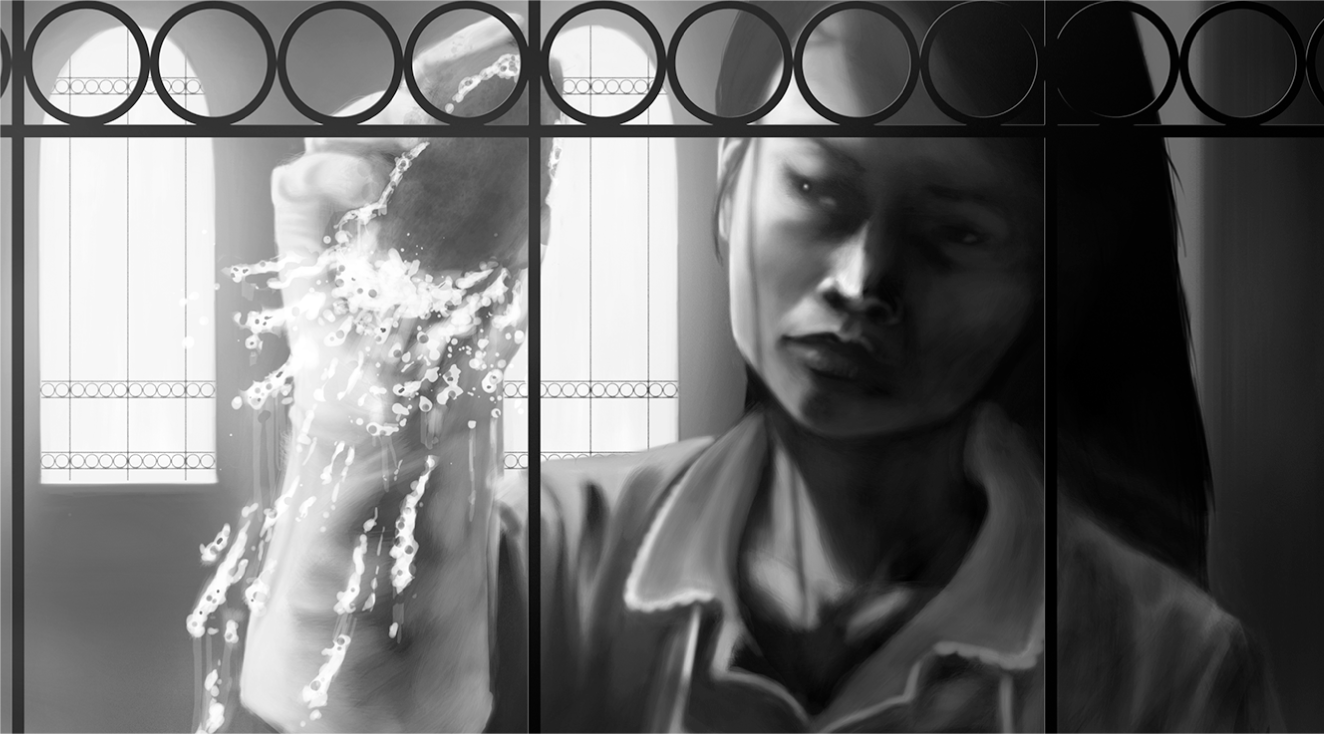
This jump from the screen to the center of Mexico’s cultural and social life was possible thanks to the meticulous reconstruction of places, historical dates, objects, songs, and sounds from the past—details that activated the memories of millions of Mexicans. Roma, for many people, was a vehicle for society to reflect on its present by remembering a collective past. In this reflection, domestic workers appeared. Their role inside families, their stories, and their lack of social recognition—despite their importance for the country’s economy and the homes that employ them—became apparent.
The setting of the film manifested the paradoxes of physical closeness and social distance of the people living there.
The setting of the film manifested the paradoxes of physical closeness and social distance of the people living there. The servants’ quarters, where domestic workers Cleo and Adela live, are separated from the rest of the household. The famous azoteas, or terraces, are architectural but also symbolic borders constructed between the subjects in the movie. The visual details of the azoteas matter: the size (minuscule), the divisions (between inside and outside the home), the location (far from the center of the home, where laundry is hung to dry). These details reveal the material impact of assigning the “other” less value and lower status. The very layout of the home legitimized the spatial division and the rules for how two distinct groups, household workers and family members, were to live together. Not even the emotional bonds formed through domestic work could dislodge this social order dating back to the colonial era.
ILO Asia-Pacific, Flickr CC
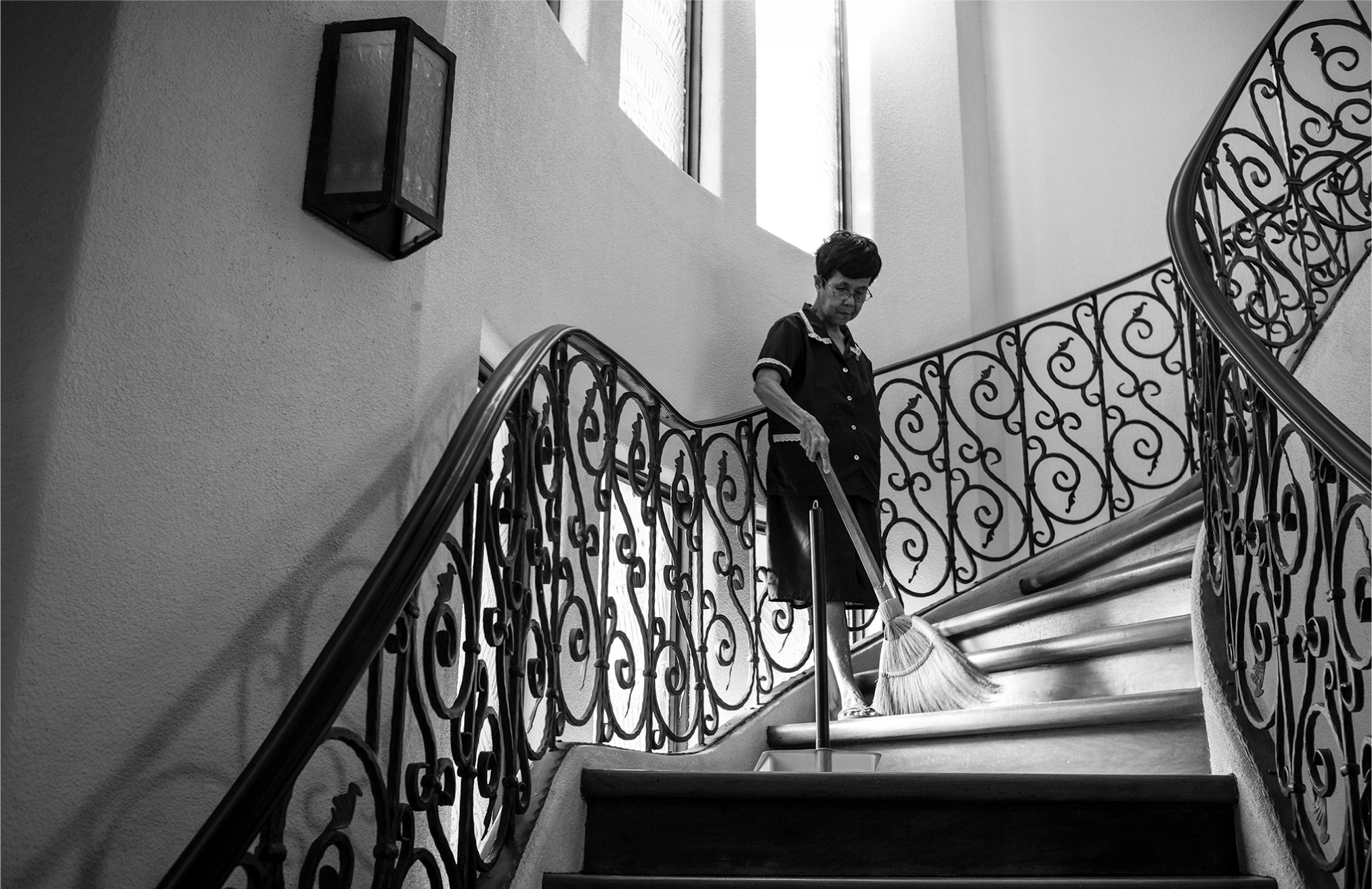
Roma caused controversy in Mexico because, despite using references that we could all recognize (the music, the earthquakes, the social contrasts in the streets and inside homes, the political volatility of the city), it was seen differently according to people’s generational, social, and political positions. What did the film say about household workers?
For some, Roma was critical, making visible the subordinate role and the asymmetries of power between domestic workers and employers, without blurring the complex emotional relationships. For others, Roma romanticized relationships between household members and the household worker. The film generated the same debates among household workers; did Roma fully represent what they had lived or not? In any case, the film unleashed many different readings, and this was its main contribution: generating public discussion about the topic of domestic work.
One reason Roma caused so much discussion is that one out of every ten women workers in Mexico is employed in domestic service. It’s undeniable that household workers have occupied a central place in the history of everyday life, that they are part of the collective memory and imagination of the country. The women who have labored in others’ homes, who have buoyed the emotional well-being of others’ children, have and continue to leave traces in the histories of those they care for, and in the collective imaginaries of Mexico City.
We see this demonstrated in tele-novelas, stories, sayings, and jokes about domestic workers. “Servants,” according to literary scholar Alison Light, “are everywhere and nowhere in history.” Their presence, as literary and cultural studies scholar María Julia Rossi notes, is ubiquitous and at the same time, invisible. Domestic workers often go unperceived while showing up everywhere: sweeping our halls, making our beds, raising our children. In telenovelas, their voices are too often silenced; their agency and the diversity of their experiences overlooked through stereotypes of gender, class, and race.
This silencing has costs for these workers and their families.
In the world of politics, 2018 set a historic precedent in the struggle to defend household workers’ rights. Civil society organizations pushed for the ratification of the International Labor Organization’s Convention 189, and this campaign revealed the openly discriminatory laws for domestic employment. Three presidential candidates in the 2018 election campaigns mentioned for the first time in Mexico’s history the importance of guaranteeing better working conditions for domestic workers. A law was proposed in the Senate to equalize workers’ conditions. The Supreme Court declared it illegal to exclude domestic workers from Social Security. In this sense, culture and politics became interwoven in a specific moment to strengthen efforts to make visible a public problem that has long been treated as a private matter: the relations of power and inequality inside the home.
With the arrival of the new president in 2018, Andrés Manuel López Obrador, new symbolic acts appeared to challenge the previous social order. In his discourse and public performances, economic elites were pushed to the margins and their traditional privileges imperiled, while “the people” [el pueblo], indigenous and poor, were centered. One example of this was the opening of the former presidential home, known as “Los Pinos,” as a public space, which contrasted with the parade of elites that had moved through the estate during previous decades. It was here, in the first massive cultural event announced by the new government, that a free public screening of Roma was held. Seated on the lawn or standing, thousands of citizens could be part of this historic social phenomenon that emerged from childhood memories of the director. In this story, an indigenous household worker didn’t occupy the usual marginal location outside the main plot, but instead the central role.
Roma, for Cuarón, served as a platform to speak to memory—to the political yet intimate lives of household workers. At the same time, it provided workers’ rights organizations the opportunity to use a collective, cultural memory to build renewed demands at national and international levels. Basic demands for dignified living conditions: regulation of the workday, access to health care and legal benefits, an end to abuse. Finally, Roma showed how the cultural sphere can be a site for change, demonstrating the power of stories that humanize “the other,” and the power of memories as places to start imagining social justice reform.