




Abstract
Why are we seeing so many teacher walkouts when traditional collective bargaining for teachers has weakened considerably in recent decades? A key part of the answer involves the social psychology through which teachers develop their professional culture, and how the evolution of accountability has been toxic to that culture.
Keywords

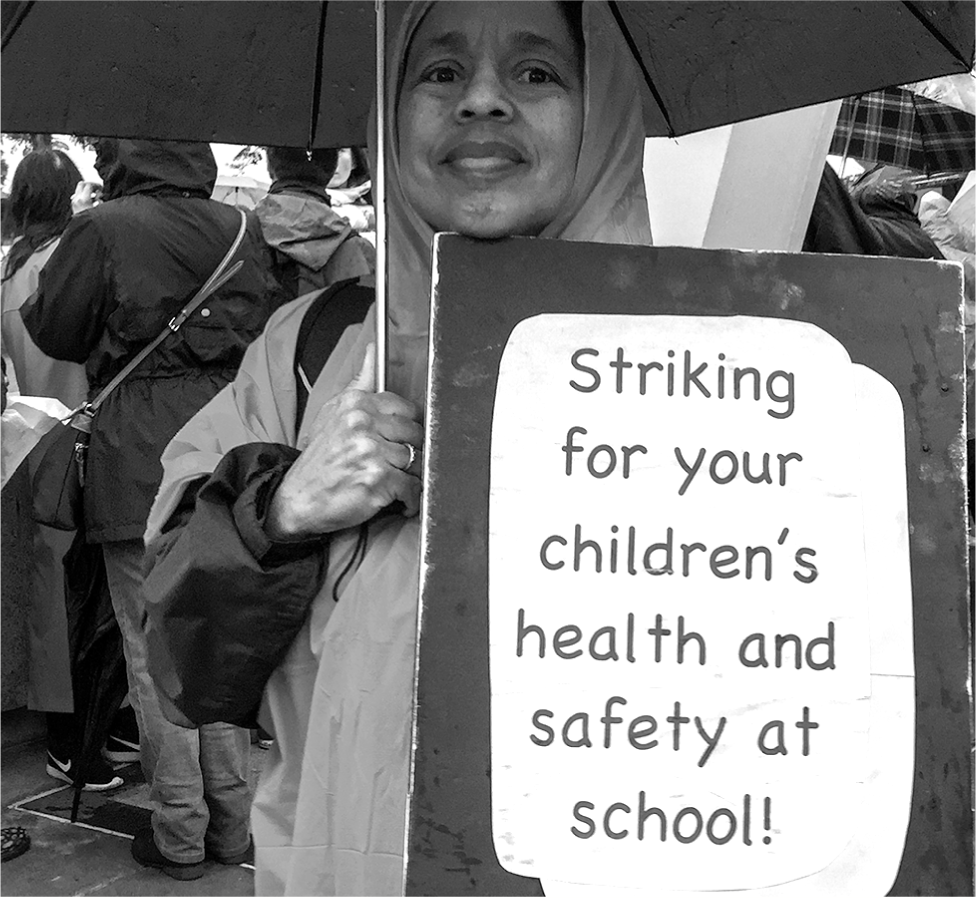
Since 2017, public school teachers have engaged in multiple large-scale strikes—or walkouts—in several states including, West Virginia (twice), Kentucky, Oklahoma, Arizona, California, and Colorado. The Chicago Teachers Union staged an 11-day strike last fall, and the first major strike among charter school teachers also occurred recently in Chicago. The grievances at the heart of these work stoppages have been quite similar across these diverse states: excessively large class sizes, buildings and classrooms in disrepair, lack of adequate instructional resources, shortages in support staff, stagnating salaries, and teacher evaluation policies. Mainstream media coverage of the teacher walkouts has effectively pushed these issues into public conversation.
Perhaps most pointedly, Time magazine ran a series of covers depicting what it is like to be “A Teacher in America,” with images of veteran teachers described as having to work second jobs and sell blood plasma, in addition to their teaching jobs, just to survive financially.
Mainstream media coverage of the teacher walkouts has effectively pushed these issues into public conversation.
In each of these walkout cases, teachers have been successful in securing meaningful gains in their compensation and improvements to their work environments through greater investment in public education at either the state or local level. Nevertheless, the public conversation about these events usually stops there. While teachers unions have certainly been important in organizing these walkouts, membership in unions among teachers continues to decline. In addition, many of these teacher walkouts occurred in predominantly conservative states that have comparatively little public support for collective bargaining overall.
So we are left with a bit of a puzzle: How did we get to a point where teachers are engaging in historically large collective walkouts at a time when traditional collective bargaining opportunities for teachers are seemingly weaker than they used to be?
Based on a review of research on teachers and education policy, I argue that the answer lies in the complicated relationship between accountability policies in education and teacher sentiments about accountability policies. To be sure, problems of pay and resources are key elements of teacher walkouts. The Great Recession was financially devastating to districts across the country, and their inability to recover has contributed to stagnating salaries for teachers, ballooning class sizes, and shortages in school support staff. State budgets have seen consistent cuts to public education over the same period of time.
All of these problems are severe, but it is equally important that they unfolded alongside the growing dissatisfaction among teachers due to the ways accountability policies became increasingly toxic to their professional culture. The evolution of accountability has cut deep gashes in the core beliefs that teachers develop to define the very work of teaching, contributing to rising cognitive distress and anxiety among teachers that has festered for many years. The relevance of these trends has thus far been largely left out of public discussion about teacher walkouts. To better understand the full range of reasons why teachers are so aggrieved, it is important to examine the social psychology through which teachers create and sustain their professional culture.
Wilson Pumpernickel, Flickr CC
The False Assumptions of Accountability and the Turmoil of Early Implementation
The No Child Left Behind Act (NCLB) passed into law with broad bipartisan support in early 2002. The preceding accountability movement across many states also had bipartisan appeal. However, accountability was rooted in several interrelated false assumptions, all of which have plagued its implementation ever since. The first, overarching assumption is that teachers and schools exert sufficient control over student learning, such that if properly compelled, they could produce desired schooling outcomes. Indeed, it is the basic premise of such policies: if we simply hold teachers and schools accountable for their job performance, we can make sure that “no child is left behind” (or “every student succeeds” in more recent policy language).
On the other hand, decades of scientific research shows that social factors—especially family social class status—are some of the most influential factors affecting student performance. Despite this, accountability advocates chose to promote evidence that teachers are the most important “school-based” factor affecting student performance, often de-emphasizing the role of social factors that are just as consequential (if not more so) than teacher instructional performance.
This (largely false) understanding of the nature of working in schools formed the basis for two additional false assumptions about how accountability policies would work once implemented. First was the notion that the use of standardized measures, along with rewards and sanctions, could compel teachers and schools to produce desired outcomes. Specifically, the original goal of NCLB was to bring 100 percent of students in the U.S. to proficient levels in math and literacy by 2014.
Chicago Teachers Union strike, September 10, 2012
Spencer Tweedy, Flickr CC

The second and related assumption was that schools could be compelled to improve performance if they were forced to compete with each other for students and resources. This idea was the school choice component of accountability, made manifest by policies such as support for charter schools and school voucher programs. In addition, because of the assumption that teachers and schools could be compelled to perform better by being held accountable, such policies should require no new funding to achieve their goals. NCLB, therefore, was largely an unfunded federal mandate.
Few of the initial goals of NCLB have been fully realized, and abundant research in the social sciences helped to document how and why.
Earlier in the accountability era, sociologist Richard Ingersoll debunked the notion that teachers exert the level of control over their work environment that accountability policies assumed. Despite the limits of their influence on their work environment and schooling outcomes, a number of studies showed that teachers did work to comply with many of the requirements of accountability in the early years of NCLB. In particular, teachers reported aligning the content of their instruction closely with curriculum standards, even though they continued to maintain their autonomy over how to carry out instruction in their classrooms. (For a resource with multiple studies that speak to the range of these issues, see Assessing Teacher Quality, edited by sociologist Sean Kelly).
However, there were early warning signs that how accountability was implemented mattered a great deal and determined how teachers would react to it. Teachers were willing to challenge the legitimacy of accountability as an effective set of policies. Sociologist Tim Hallett found that when administrators attempted to authoritatively enforce local implementation of accountability policies in ways that forced teachers out of their established instructional routines, turmoil ensued in the school; the whole process was extremely distressing for teachers. Moreover, by the time NCLB was set to be reauthorized by Congress in 2007, a wide array of constituents testified in congressional hearings that the law was not working in schools as intended, and in fact, NCLB was itself actually “leaving some children behind” (see work by Tim Hallett and Emily Meanwell). Indeed, dissatisfaction with, and resistance to, accountability policies simmered alongside compliance with them throughout the early years of implementation.
Teachers’ Adaptations and Ambivalence
In my book on teacher education, Lesson Plans: The Institutional Demands of Becoming a Teacher (Rutgers University Press, 2018), I examine the social psychological processes through which teacher candidates form their own understandings of the competing institutional pressures that structure the work of teaching, accountability among them. Teachers develop the early versions of their own core meanings about the work of teaching and how they should operate within educational institutions throughout their training. Moreover, as my research with Taylor Tefft shows, they carry these core meanings forward with them into teaching and continue elaborating them in ongoing ways as they accumulate work experience. Attention to these core meanings, and how teachers develop them, reveals what matters to teachers and why it matters to them. It also indicates how teachers are likely to react to changes in education policy based on how they have already learned to operate in their school environment.
In my book on teacher education, Lesson Plans: The Institutional Demands of Becoming a Teacher, I examine the social psychological processes through which teacher candidates form their own understandings of the competing institutional pressures that structure the work of teaching, accountability among them.
Two key findings from my book are helpful in understanding the sociological underpinnings of recent teacher walkouts and the growing dissatisfaction that preceded them. First, teacher candidates are trained in, and develop deep commitments to, what I call an “injunction to adapt.” Rooted in instructional philosophies of constructivist pedagogy, teacher candidates are trained that they must engage students as active learners. To do this, they must continuously adapt their instructional methods to the varying abilities, interests, and cognitive capacities of diverse students, diversity that is structured into their classrooms by compulsory education. Moreover, they are trained to draw upon their own backgrounds, personalities, and interests to creatively engage their students and cover the standardized curriculum that is structured into their classrooms by accountability. The ways they are trained invite and reward a diversity of practice among teacher candidates in how they try to creatively adapt to the unique needs and abilities of diverse students.
Second, the ways that teacher candidates collectively come to understand the importance of adaptation create and sustain what I call a “professional culture of ambivalence.” They develop a shared sense that ambiguity, contingency, individuality, and responsiveness are inherent to the work of teaching. From their training experience, they learn a series of possibilities as it relates to the classroom: some techniques will be more engaging for certain students than others; different teachers have different approaches to teaching the same topics; some students just “click” with certain teachers more than others; interruptions could come at any moment without warning; students could have something affecting their capacity to perform the source of which teachers may not know. From this perspective, teachers continually try to adapt as best they can to the needs of different students, but they come to understand that at least a small degree of failure is all but inevitable.
Teacher candidates conclude their training and enter teaching profoundly unsure about the range of possible effects their instruction can have for their students, and they expect a long road of trial-and-error ahead of them. This culture of ambivalence is an interpretive response to their environment, an environment that shoulders them with competing pressures of accountability in a compulsory education system: cater to the unique needs and interests of each student while making sure everyone becomes academically proficient. Teacher candidates become keenly ambivalent that it will work out this way in practice.
The Bitter Toll of Teacher Evaluation and School Choice Policies
When we understand the social psychology behind teachers’ sentiments about their work, and how those social psychological processes are enabled and constrained by public education, we are better positioned to see the source of growing teacher dissatisfaction that has emerged over the last ten years. First, the ability to creatively adapt to diverse students in dynamic interactions requires a degree of autonomy.
Beginning roughly around 2009, policies shifted in focus from holding schools accountable to holding individual teachers accountable, and teachers saw their instructional autonomy erode significantly. Schools and districts began to micromanage instruction in ways they had not before, seeking to impose and coordinate practices across classrooms in the name of standardization and accountability. In addition, the use of value-added models for measuring the influence of individual teachers on student performance became much more widespread. These and other means of evaluating teacher performance became increasingly linked to performance-based pay policies for teachers.
Districts focused resources and attention on identifying high-performing teachers and rewarding them, as well as identifying poor-performing teachers and intervening in their work. These policies, and others like them, were concretely supported by the United States Department of Education. For states to receive grant funding and waivers from sanctions for failing to meet the original 2014 goal of NCLB, they had to adopt teacher evaluation policies. Indeed, author Dana Goldstein identifies this period in the early to mid-2010s as a time of “moral panic” in education policy concerning what to do about “bad teachers” who were supposedly ineffective in the classroom and parasitic to taxpayers.
Such policy trends ran afoul of teacher sentiments about their own work, and teachers responded with growing consternation that manifested in several ways prior to teacher walkouts. Teacher shortages emerged and enrollment in teacher education programs dropped, driven by a number of factors that are well-documented by scholars Desiree Carter-Thomas and Linda Darling-Hammond at the Learning Policy Institute.
A key contributor was the experienced teachers who were leaving the profession. Those who left teaching were vocal about the reasons why. In an open letter entitled, “why I can’t work in public education anymore” that was eventually published in The Washington Post, a veteran teacher wrote candidly about how she felt that current school environments compel teachers to “commit educational malpractice in the name of accountability.” She then writes that she feels “like I live in a Kafka novel,” and proceeds to describe an example of how her school micromanaged instructional practice among teachers. For this teacher and many others, the encroachment on their autonomy was intolerable. Teachers involved in recent walkouts have made similar references. A West Virginia teacher wrote to her state assembly lamenting how state policy heaps “extra rules” on teachers, “dictating minutes and days and forms in triplicate,” and the Chicago Teachers Union explicitly listed “more autonomy over curriculum and grading” among their requests for an improved work environment for striking CTU charter school teachers.
Teachers do not like autonomy for autonomy’s sake. They define it as a necessary ingredient for cultivating their own instructional repertoire that enables them to continually adapt to student needs. A key component of the professional culture of ambivalence that I discuss in my book lies in teachers’ commitment to diversity of practice among teachers, as well as the shared norm that teachers must draw upon their own personalities, interests, and experiences to develop their preferred instructional tools for engaging their students and adapting to their needs. In other words, instruction is personal for teachers. When we understand how important this is to their professional culture, we see that policy efforts to externally monitor, prescribe, and evaluate instructional practices often feel to teachers like personal affronts, not just neutral interventions.
Teachers do not like autonomy for autonomy’s sake.
Rally in downtown on the fourth day of the Chicago Teachers Union strike
firedoglakedotcom, Flickr CC
Moreover, teacher evaluation policies and performance-based pay policies that seek to tightly link student performance to individual teachers undermine their culture of ambivalence. From the teachers’ perspective, not all techniques are effective with all students all the time, and there is a great deal of ambiguity in assessing student performance, especially concerning what motivates students. Value-added models cannot control for affective factors that influence student motivation, something that profoundly affects performance and varies a great deal among students. Evaluation and compensation policies that do not acknowledge the ambiguity in assessing student performance that teachers know is endemic to processes of teaching and learning can feel bitterly unfair.
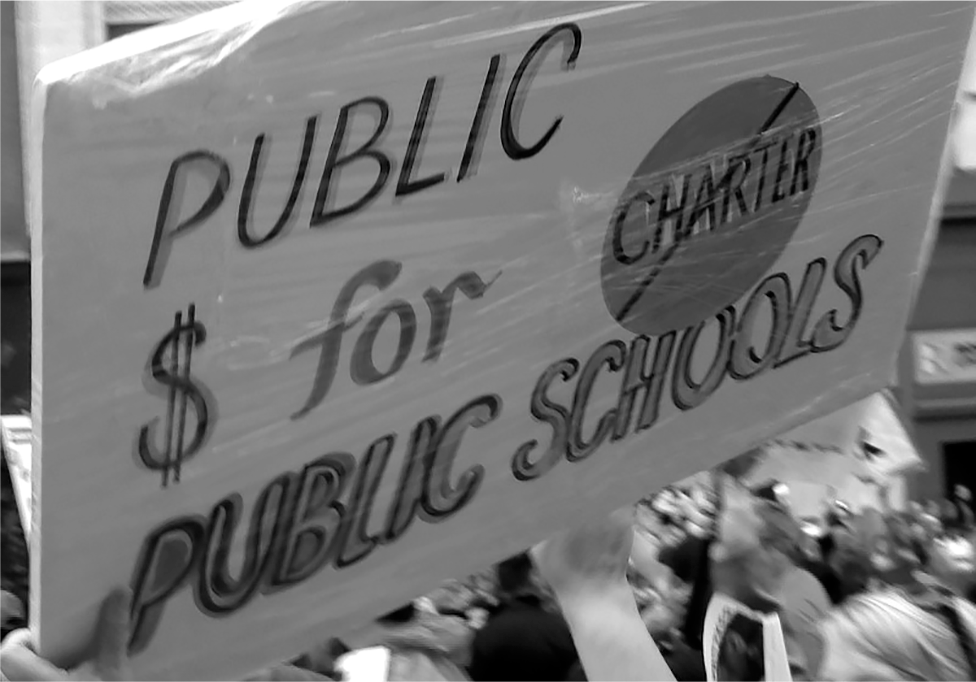
Amid this growing dissatisfaction among teachers, school choice policies also contributed to the problems of resources in public education I discussed above. The proliferation of charter schools in particular—schools that operate with public funds but are privately administered—has siphoned both funding and students away from traditional public schools, and this has aggravated resource-based problems in public education affecting teachers. For teachers who were not already driven away from teaching, the problems of resources in education have been the insults added to the injuries done to teachers’ professional culture, and it is important to see the relationships between the two.
Teachers themselves are emphasizing these linkages in their demands. In walkouts like those in West Virginia, Kentucky, Oklahoma, and most recently in Chicago, salaries were certainly a key issue, but teachers fought for broader investment in public education to benefit their students, not just salary increases. Likewise, though not a strike per se, the 15,000 Indiana teachers who rallied at the Indianapolis statehouse last fall are seeking increased funding for public education and changes to evaluation policies in addition to increased salaries. The walkout in Denver was more centrally about evaluation and performance-based pay policies, issues linked directly to instructional practice and professional culture.
Chicago Teachers Union strike, September 10, 2012
Spencer Tweedy, Flickr CC
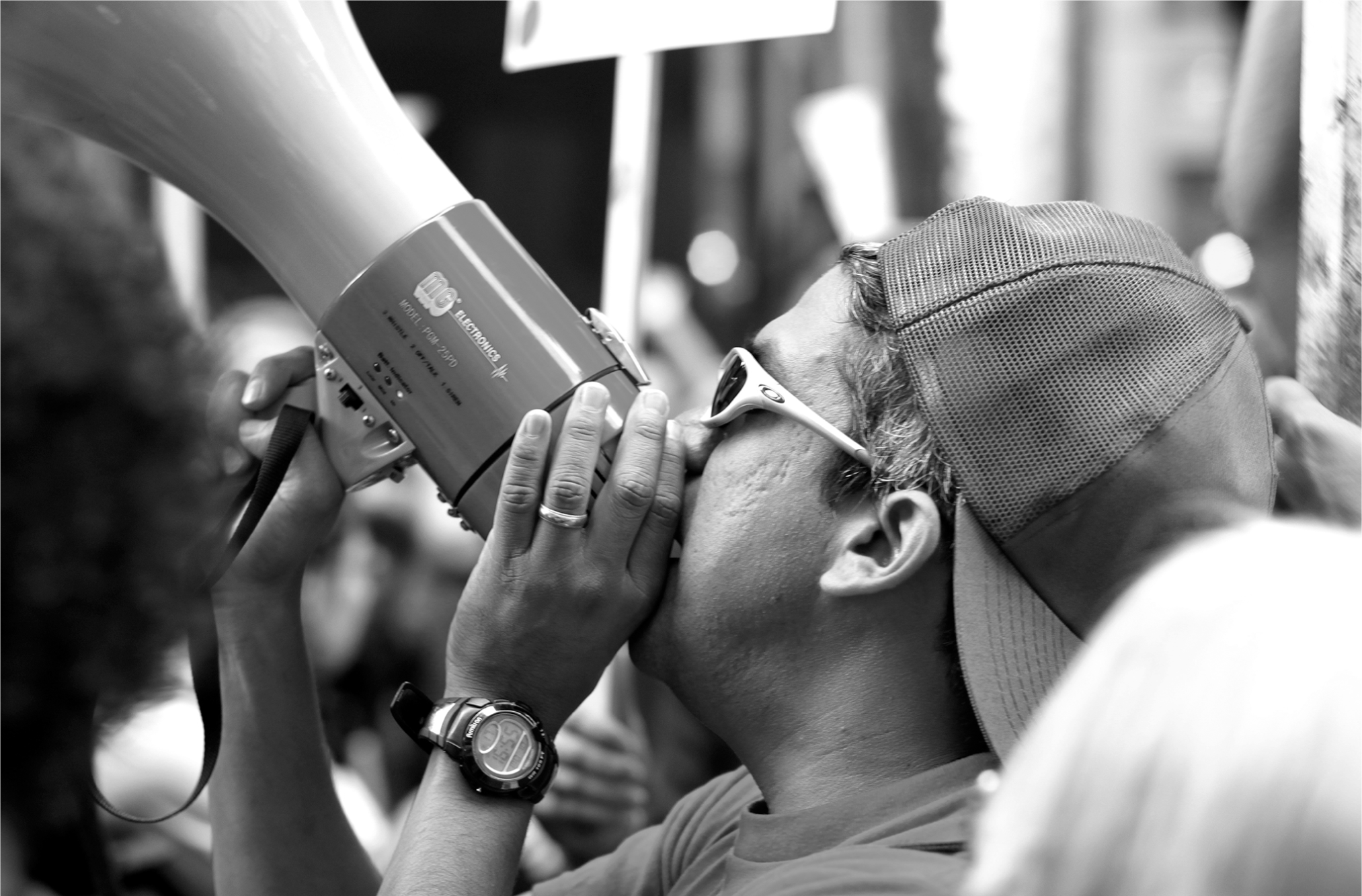
Finally, recent walkouts taken together do not align neatly with traditional political affiliations or ideologies. Teachers in deeply red states were some of the first to engage in walkouts and seek greater investment in public education, and teachers in blue states and cities are directly challenging teacher evaluation policies, charter school policies, and standardized testing policies that were formerly championed by Democratic policymakers. Traditional politics surrounding labor issues are insufficient for explaining the dynamics driving teacher walkouts of the last two years. To mobilize teachers in such a context and create the broad consensus necessary to sustain effective walkouts, teachers have to feel as though something they are deeply committed to is at stake and their professional enterprise as a whole is threatened. Policies that teachers feel undermine their professional culture constitute such a collectively motivating force, and teachers across the country are pushing back.