




Abstract
Different opportunity structures and different perceptions of risk within the global economy shape the ways parents of similar class and ethnic backgrounds strive to prepare their children for the future
Keywords

Janice Chan is a forty-something Taiwanese mother living in Taipei. She was an HR manager and now a full-time homemaker. Speaking about her upbringing, she laments her struggle with rote learning at school and economic shortage at home. Today, she is determined to safeguard a happy childhood for her two sons. Every other year, Janice brings them to attend a summer camp in California as an opportunity to practice their English skills and to increase their cosmopolitan exposure. They stay with her cousin who works in Silicon Valley as an engineer. On a recent trip, Janice was surprised when the cousin’s wife asked her to bring over Taiwanese textbooks on math and physics.
Yet this request was not unusual among immigrant parents there. Many are concerned about the depth of American public education; some also send their teenaged children back to Taiwan during the summer to improve their SAT scores and Mandarin language skills.
Why do wealthy Taiwanese parents seek cultural inspiration and educational opportunities in the United States for their children, while their immigrant counterparts pursue cultural resources in a reverse direction? Despite sharing similar ethnic backgrounds and class positions, why do these two groups of parents identify different sources of risk and insecurity in their children’s future and enact distinct strategies to raise children as global and cosmopolitan citizens?
For my new book from Stanford University Press, Raising Global Families: Parenting, Immigration, and Class in Taiwan and the U.S., I interviewed over a hundred parents, including middle-class and working-class Taiwanese and middle-class and working-class ethnic Chinese immigrants in the Boston area. My research design allowed me to disentangle the intersection of ethnic culture and social class that shapes these parents’ childrearing practices.
Here, I focus on a group I identify as “professional middle-class” families—in this group, at least one parent had a four-year college or postgraduate degree and held a professional position or a job with managerial authority. About half of my informants belong to this group; they work as engineers, lawyers, medical doctors, financial workers, and business managers in Taiwan or Boston.
The academic excellence of Asians and Asian Americans is widely credited to “Confucian heritage cultures” that emphasize hard work, filial piety, and strong family ties. These popular stereotypes reduce ethnic culture to static, unchanging “traditions” and overlook class variations among Asians and Asian Americans. Instead, Jennifer Lee and Min Zhou argue that the emphasis on academic success is actually a “class-based mindset” that highly educated Asian immigrants in the post-1965 stream selectively imported from their home countries and recreated in the United States.
Sociologists have long studied childrearing as a process of delivering social class privilege or disadvantage. Professional middle-class parents raise children in the style of what Annette Lareau calls “concerted cultivation.” Through careful consideration and planning, they arrange a wide variety of enrichment programs and extracurricular activities for children’s holistic development. However, U.S. studies of unequal childhood are generally confined to a single society and overlook the influence of global forces and transnational contexts.
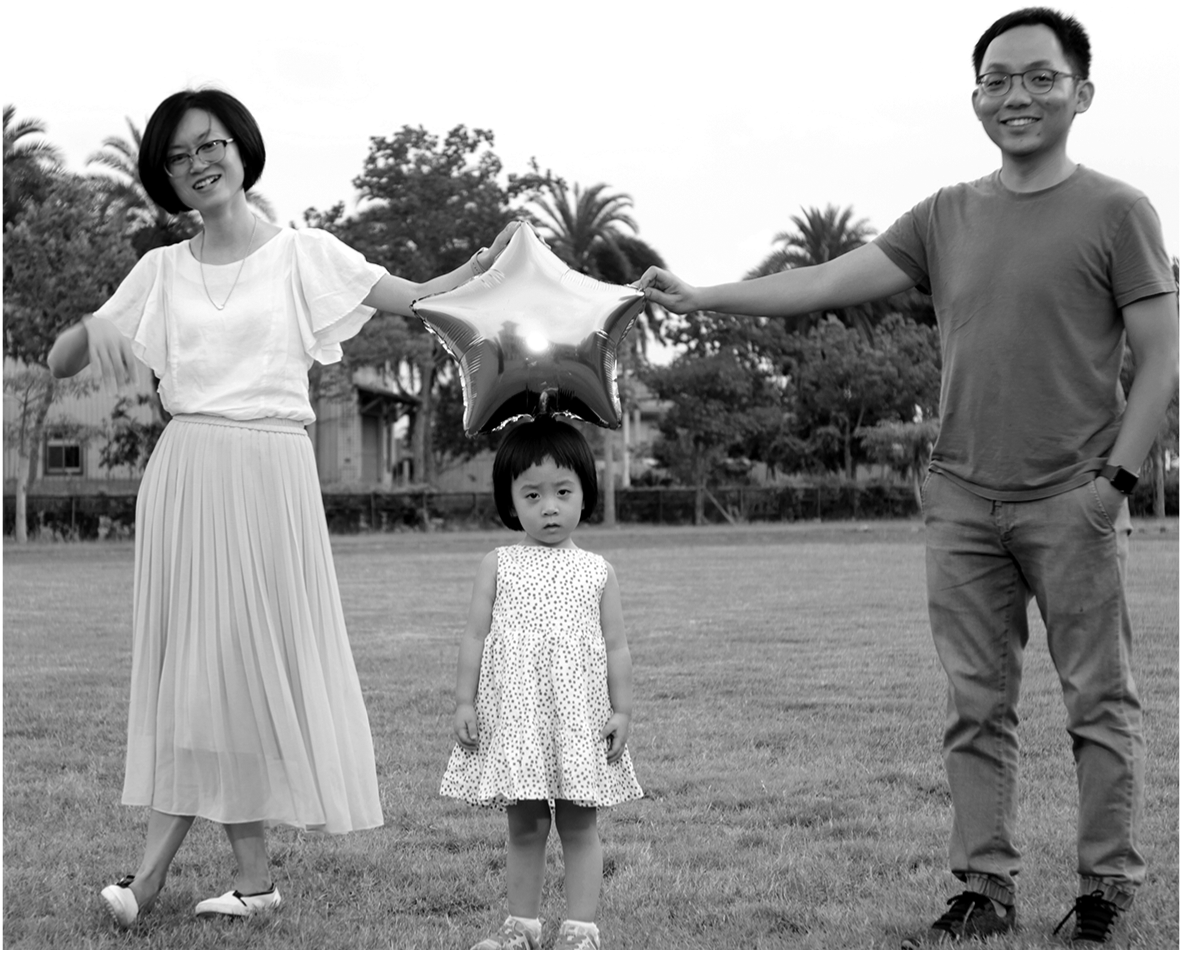
Taiwanese parents who cultivate Western cultural capital often idealize and glorify Western education, overlooking its friction and rupture with local institutions.
© Jerry Lin, used with permission
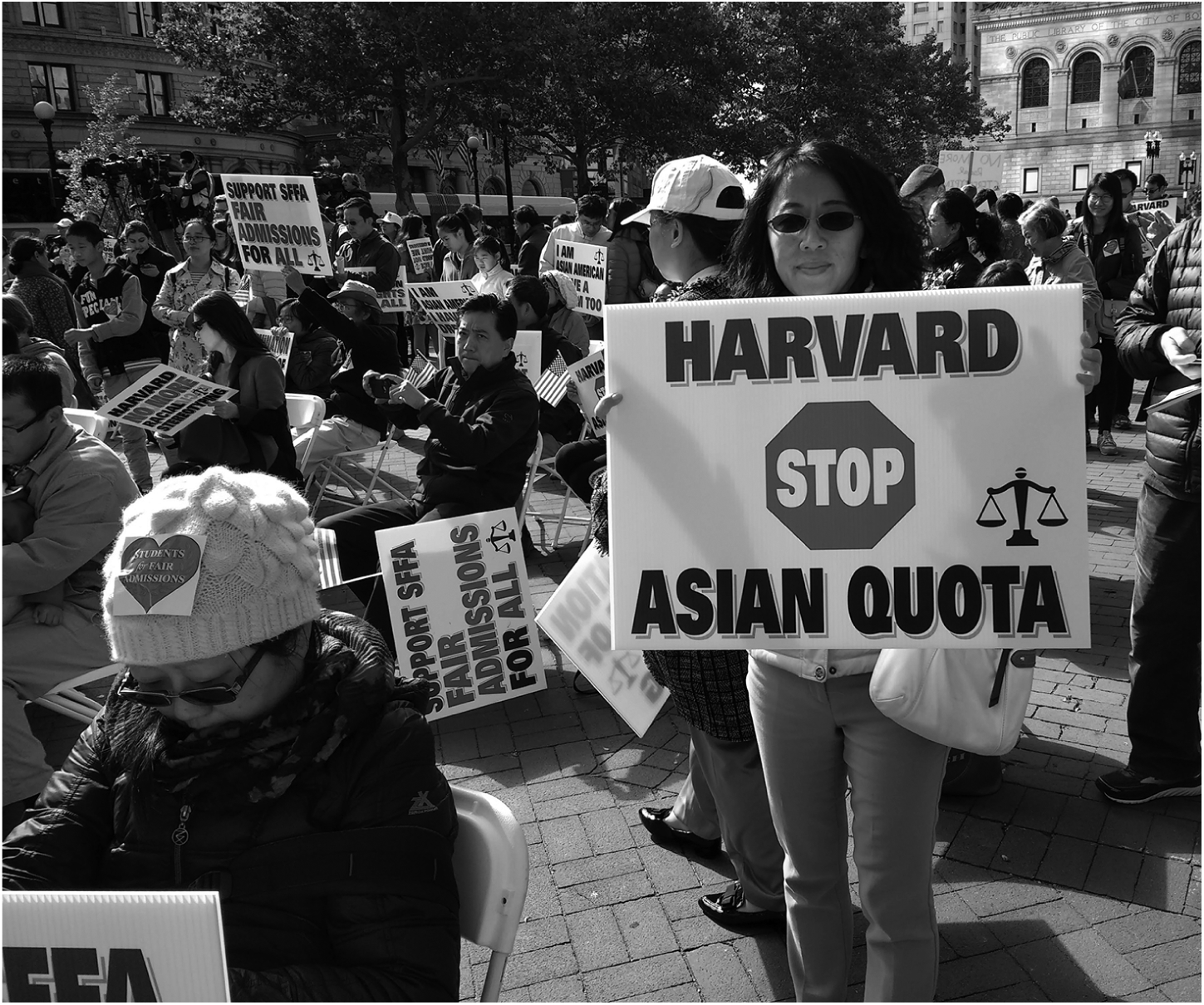
Immigrant parents worry that their children will not be able to surpass the “Asian quota” in college admissions if they only learn from the American curriculum.
Whoisjohngalt, Wikimedia Commons CC
I compare the professional middle class in Taiwan and their immigrant counterparts in the United States to examine how parents enact different childrearing strategies to negotiate cultural boundaries and mobilize educational resources across borders. The cross-Pacific comparison demonstrates distinct strategies of concerted cultivation through which parents try to mitigate their anxieties and perceived risks in both their local societies and the global economy.
Cultivating Western Cultural Capital
Jessica Chang is a 39-year-old full-time homemaker with a master’s degree from an American university. Her husband, Vincent Huang, works as a sales manager in an IT company. Like many Taiwanese professionals and managers, they have acquired overseas degrees and established careers and wealth through Taiwan’s global economy participation. Capital outflows to China and Southeast Asia since the 1990s have increased the cross-border mobility of such people, whether they take an overseas post or fly back and forth frequently.
Vincent and Jessica view globalization, including the booming Chinese market, as a source of both opportunities and risks. In particular, Vincent worries if Taiwanese children, portrayed by the local media in Taiwan as being “sheep-like” for their “mild” personality, can survive against Chinese youngsters who are positioned as having “wolf-like” aggression.
Envisioning the fierce competition their children will face in the future, Vicent and Jessica believe that their children can only develop their edge on the basis of individuality and creativity. They view exposure to Western education and culture as a necessity for cultivating these desired qualities. They hope to instill “Western cultural capital” in their children, which not only refers to Western degrees and credentials, but also involves embodied cultural capital, such as familiarity with upper-middle-class Western ways of thinking and living.
As soon as they knew they were pregnant, Jessica and Vincent began taking steps to prepare their children for a globalized future. Jessica traveled to Los Angeles to give birth to her two children so they could acquire U.S. passports. She also arranged a variety of non-orthodox learning activities during their preschool years, including a “brain-development” class at the age of three and a board-game class at the age of four. The children, now seven and eleven, attend a private elementary school. A British tutor visits them at home twice a week for English conversation and uses Lego bricks to instruct them in physics, math, and engineering. Every summer, Jessica takes the children to summer camps in California.
Many other wealthy Asian families have arranged split family migration to advance their children’s education. These include Taiwan’s “parachute kids,” who came to the United States in the 1990s to study alone or live with a caregiver, and the “goose families” of South Korea, in which mothers accompany children studying overseas while the breadwinner father stays behind. To avoid the sacrifice of family separation, the current generation of Taiwanese parents prefers “studying abroad at home” by acquiring foreign passports so their children can attend international schools in Taiwan. Private bilingual schools with the goal of U.S. college entrance also began to pop up during the last decade.
David Guo and his wife are both corporate lawyers in their forties with U.S. law degrees. English language skills are critical tools in their practice involving foreign partners or clients, and they do not want their children to repeat any shortcomings they might have had early in their careers. David explained why he chose an international school for their only daughter, Monica, “When you do this line of work, your English becomes an instant problem. It was a very painful experience. When I first started at a multinational company, it was like I was on another planet. I couldn’t understand a thing. …If you wait until you’re older [to learn English], the accent will never go away.”
So, to equip their daughter with Western linguistic and cultural capital and to escape exam-centered local schools, David and his wife decided to “buy” a foreign passport before Monica reached school age. Through an immigration consulting company, they invested roughly $40,000 USD in a shopping mall in Burkina Faso in exchange for three passports for the entire family. When I asked David if he had ever been to Burkina Faso, he shrugged and smiled. The immigration consultants, he said, “just showed us a picture of this mall being built. They stopped contacting us after that.” With her foreign passport, Monica is able to enroll in an international school with an annual tuition of $15,000 USD. Half of her classmates are Taiwan-born “fake foreigners” holding second passports from countries in Africa or the Carribean islands.
David is proud of Monica’s crisp British accent and knowledge of European culture and history—when the family traveled in Europe last summer, Monica served as their knowledgeable guide. He is optimistic about a bright future marked by cultural flexibility and global skill circulation: “Many people talk about the ‘brain drain.’ I don’t object to that. …You let [your child] explore the outside world for 10 or 20 years, she will eventually come back. So we think it’s important that [Monica] identifies with the homeland but, with the language skills, she can go wherever she wants. I think the future world will be like that.”
Anthropologist Aihwa Ong coined the term “flexible citizenship” to describe how such upper-class Asian families acquire multiple passports to help the next generation to accumulate capital and social prestige in the global arena. However, among professional middle class parents, who enjoy financial comfort but not extravagant wealth, I found more anxiety than confidence in raising global children. Instead of viewing parents as interest maximizers who pursue childrearing as a calculative action of class reproduction, I saw childrearing as a set of classspecific coping strategies meant to minimize uncertainty and insecurity in the globalized world.
Only a few families in my study could afford the expensive options of overseas study or international school. The for-profit education industry in Taiwan offers less costly ways for children to have access to Western education: parents can enroll children in all-English kindergartens or arrange for them to go abroad for summer camps or stay with relatives abroad for a short period. If parents cannot afford expensive trips to North America or Europe, they send their children to Singapore or the Philippines at half the cost. All-English summer camps in Taiwan provide an even more economical way for children to get a virtual experience of transnational mobility.
Parents who have limited experience abroad and weak English skills often struggle to evaluate whether these global enrichment programs are authentic or effective. Some mothers nervously asked me, “Should I send my child to study in the Philippines? His English is terrible. Will it work?” or “Do we really need to start fostering an international perspective at a young age? Is it too late if we start in elementary school?” Other parents were disappointed to learn that their children frequently speak Chinese at the all-English camps. One perplexed mother said, “I don’t think they learned anything there. Do American children simply play like that?”
Among Taiwan’s professional middle class, I saw child-rearing as a set of coping strategies meant to minimize uncertainty in a globalized world.
In addition, many parents find it challenging to reconcile the cultivation of Western cultural capital with their local institutional contexts. They are concerned about whether their outspoken and opinionated children, who have acquired such habits in Western curriculums, can adjust well to adult life in Taiwanese workplaces that still emphasize loyalty, hard work, and respect for authority.
Even in those families that aim for their children’s future migration, parents worry about the consequence of cultural estrangement. For instance, David feels ambivalent about what Monica may have missed out on by attending an international school: Chinese language skills, local social networks, and knowledge about Taiwan’s history and culture. He can only hope that family ties help to maintain her cultural identity and keep return migration as an ultimate option for his daughter.
Cultivating Ethnic Cultural Capital
Cathy Wu and her husband John are both software engineers in their forties. They have two children, aged 12 and 8. Cathy and John first came to the United States for graduate school and have established a comfortable home in a White-majority suburb north of Boston. Their social lives center on the Taiwanese immigrant community. Every Sunday afternoon, while their children attend Chinese-language class, Cathy and John gather with other parents in the school cafeteria, chatting about their children’s education and recent news from Taiwan. After the school activities end, Cathy’s family likes to join other immigrant families for a heartwarming dinner at an authentic Chinese restaurant.
Cathy and John prefer to keep their interactions with American colleagues professional. Recognizing the structural constraints they face as immigrants, they argue that they earned their career achievement by working “twice as hard” and being “twice as good.” Cathy says of the first generation, “this is just the truth, and I can’t complain about it,” and, of the second generation, born in the United States, it’s “The same. People can’t tell if you are the first or second generation. They only look at your face. [My children] might not have to be twice as good, maybe one and a half times.”
The majority of Chinese immigrants I interviewed felt pessimistic about their children’s entrance into the U.S. racial hierarchy. They believe that their children, despite being born and raised in the United States, will still face a future shadowed by immigrant stigma and institutional racism. Though most of my informants disapprove of the extreme “Tiger Mom” style, many also see their White neighbors as too lax or lenient with their children. They question the value of indulging children with excessive praise. To them, permissive parenting and its uncertain consequences are evidence of White privilege that immigrant families cannot afford.
I use the term “cultivating ethnic cultural capital” to describe how these parents manage to instill the values, language, culture, lifestyle, networks, and resources associated with their immigrant background in their children for the pursuit of success and mobility. It is important to remember that “ethnic cultural capital” does not refer to a parcel of values and customs that newcomers bring directly from their homeland, but a dynamic process of cultural negotiation in which immigrant parents selectively mobilize their cultural heritage, sometimes mixing-and-matching it with values and practices in the new country.
Immigrant parents selectively mobilize their cultural heritage, sometimes mixing-and-matching it with values and practices in the new country.
Immigrant parents selectively draw on Chinese cultural traditions to guide children away from what they perceive as the negative influence of American culture, including consumer materialism, radical individualism, and excessive freedom for children. Lareau describes a “sense of entitlement” as an outcome of American middle-class parenting—children learn to be assertive about their rights and privileges. To Cathy, it is, instead, a cultural force of moral corruption. She explained why she and John stopped throwing birthday parties for their children: “American children are very entitled and they think that everything is supposed to be fun. …Our kids understand that everything costs money. They should not be wasteful. … Working hard is a given, you shouldn’t expect a bonus prize for doing something you are supposed to do.”
Although most immigrant parents appreciate American schools’ emphasis on holistic development, they are also concerned about the light homework load and underdeveloped curriculum, especially in the subjects of math and science. They worry that their children will not be able to surpass the “Asian quota” in college admissions if they only learn from the American curriculum. That is, the “normal” American educational standards might be “alright” for White students, but Asian students must outperform Whites and compete with one other.
Moreover, the decline of the U.S. economy after the 2008 Financial Crisis has shattered these parents’ confidence in the American Dream. The rise of China further stirs their anxieties about the emerging global order. A growing number of Asian Americans are “returning” to their ancestral homelands to grasp opportunities in the rising economies of Asia and to escape racial inequality in American workplace. Professional immigrant parents suspect their children will face broader competition in the global labor market. Some look to the Asian middle class as a reference group in their selection of educational strategies.
For example, Tony’s grandmother, a retired school principal in China, lives with the family in Boston for about six months every year. She gives Tony daily homework to strengthen his Mandarin vocabulary and math skills. Tony complained to me, “It takes 15 minutes for me to finish the homework from American school, but I need to spend one or two hours to finish grandma’s homework!” Tony’s mother told me how she handled his discontent: “We often tell him how diligent Chinese children are, how much more they have learned [than American children}, so he becomes scared of that.”
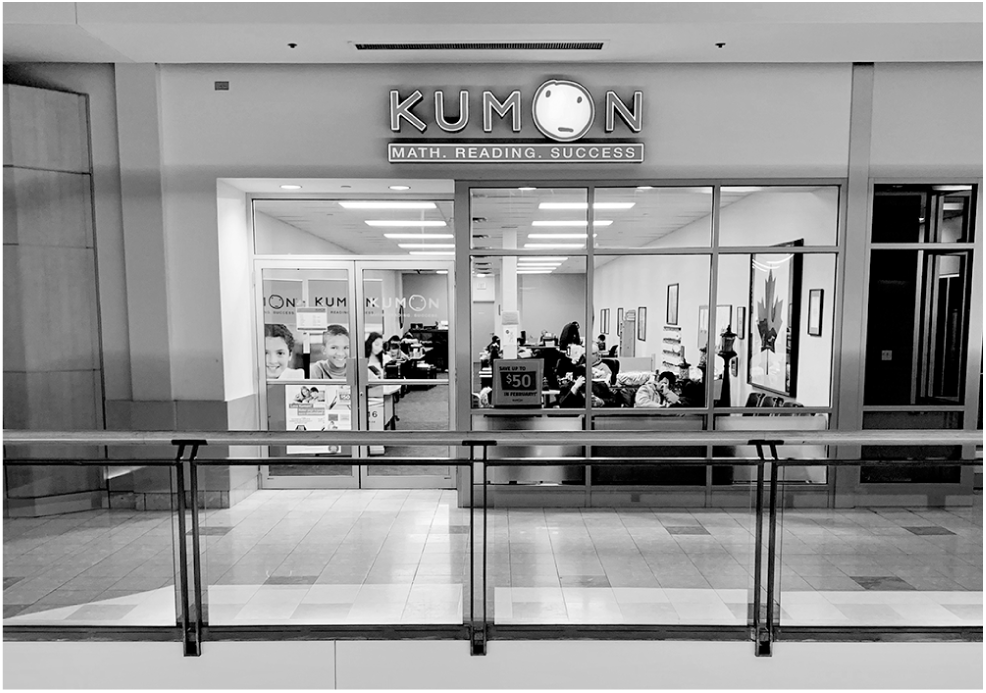
Immigrant parents with similar concerns seek additional education or home tutoring for their children. After-school programs with foreign origins, such as the Japanese program Kumon and the Russian School of Mathematics, are widely popular among Chinese immigrants. Some parents import learning kits for math and science from Taiwan or China, because they prefer the challenge and repetitive practice in the Asian curriculum. If their children cannot read Chinese well, their parents order English-language versions of the materials published in Singapore. When hiring instructors or trainers, parents prefer immigrants—if they cannot find Chinese tutors, they hire Russians or Indians.
Resourceful families also send their children to summer school in Taiwan or China as a more effective way of cultivating ethnic cultural capital. Several institutions in Taiwan offer Chinese-learning summer programs or SAT preparation courses that target second-generation children. Additionally, some parents hope to instill ethnic values such as respecting teachers and parents by sending their children to attend school in their ancestral homeland.
After-school programs with foreign origins, such as the Japanese program Kumon and the Russian School of Mathematics, are widely popular among Chinese immigrant parents in the United States.
Dennis Sparks, Flickr CC
Immigrant parents seek to escape the intensive academic pressure of their home countries, but their concern about the dubious existence of an Asian quota in U.S. college admissions drives them to reproduce the Chinese educational culture. While these parents pressure their children to acquire immigrant toughness as an advantage in the pathway to social mobility, their validation of ethnic traits may lead to the paradox of racial otherization. The focus on selective extracurricular activities, such as the “Asian instruments” of piano and violin, reinforces stereotypes that Chinese children do not pursue personal interests and lack “individuality” or “creativity.” College admission officers are inclined to treat Chinese-language ability as an inherited trait, rather than a “hard-earned” skill, or to reduce the students’ academic excellence to the outcome of tiger parenting.
Anxieties and Strategies
I have compared the professional middle class in Taiwan and their immigrant counterparts in the United States to examine how and why the practice of raising global children unfolds differently across social contexts, despite shared ethnic backgrounds and class positions. My research reveals two major factors that shape parental anxieties and strategies: First, the two groups of ethnic Chinese parents face different opportunity structures in local societies (ethnic majority in Taiwan vs. ethnic minority in the United States). Secondly, they identify different risks in today’s global economy that shadow their children’s future (competition with PRC youngsters vs. the decline of Western economic dominance).
Parents across the Pacific are inclined to seek transnational references—class peers around the globe—to define their meaning of security and to imagine their children’s globalized future. The upwardly mobile Taiwanese project a romanticized image about American immigration and childhood, and they seek membership in the global middle class by consuming childrearing and educational styles they perceive as fitting a Western ideal. Meanwhile, immigrant parents feel largely satisfied with their suburban American lives by comparing this version of a “happy childhood” with pressured middle-class childhood in Asia. Yet, they feel increasingly anxious about the new global order and thus look to the Asian middle class to help set a higher bar for their children’s academic performance.
These strategies for raising global children are not only rising among middle-class families in Asia, but also among North American and European parents who fear the possibility that their children might fall off the class ladder in the new global economy. Popular books pressure ambitious parents to “raise children to be at home in the world” by acquiring new tools and knowledge to discover the wisdom of “parenting without borders.” Children are encouraged to attend bilingual education or spend a “gap year” abroad to acquire “multicultural capital” or “transnational cultural capital.”
While distinct approaches to raising global children aim to open up a cosmopolitan future for the next generation, they may paradoxically reduce culture to essential qualities and create unintended negative consequences. For example, Taiwanese parents who cultivate Western cultural capital often idealize and glorify Western education, overlooking its friction and rupture with local institutions. Other immigrant parents idealize and reify their cultural heritage and create tension and conflict across generations. All parents strive to keep their children safe and successful in an increasingly connected and competitive world. Yet, their strategies intensify anxiety and insecurity not only among themselves but also among less resourceful families.