



Abstract
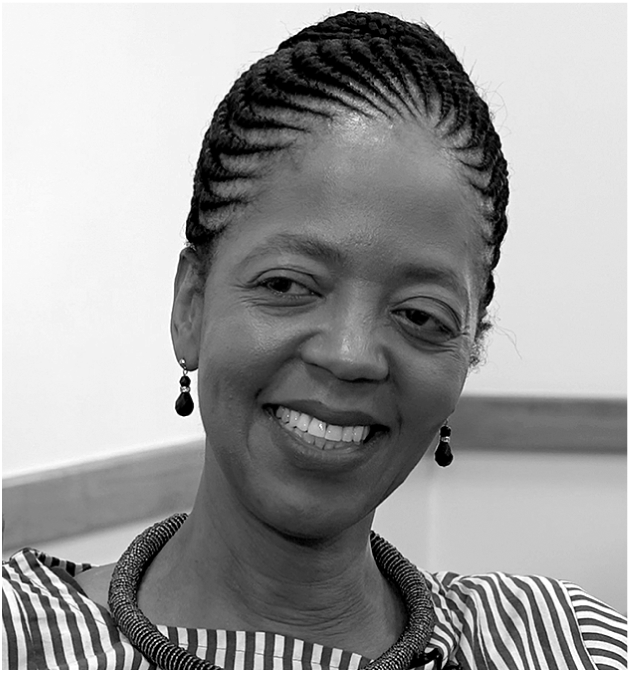
Kris Marsh interviews Judy Dlamini.
Judy Dlamini is the Chancellor of the University of Witwatersrand in South Africa. She holds a Ph.D., M.D., and an MBA. During her recent visit to the United States, we talked about her experiences growing up during Apartheid, dealing with racial and gender discrimination, and overcoming the odds to become one of the one of the wealthiest women in South Africa.
Living During Apartheid
Tell me about your childhood, particularly growing up during Apartheid in South Africa.
It was a challenge. I grew up in a White suburb. So, when I was born it was during that transition where some areas were declared White, and I happened to be in an area that was declared White. The challenge was you could actually see the difference.
Whites had cars, the bus stops… the beautiful bus stops were for Whites. The ones [to] only stand were for Blacks. It was interesting… those Europeans, that’s them, and non-Europeans, that’s us. But, this was in Africa. So, as a child, I was very angry. I was angry because I could see this difference in treatment. We couldn’t go into the same door to our hotel like the White men did. You had to have a back door that was used by people that are cleaners and people who looked like me. Because I was coming from a home where I was told I could be anything I chose to be, where my parents were doing everything to make sure we have a decent life, I saw myself as equal. So, I was angry.
How did you deal with your anger?
I channeled it into positive energy. I was going to excel at school. I was just going to be the best I could be. The only thing I knew growing up was fighting the system. When a White man cut in front of me I would shout at them. I just believed I’m equal to anyone else; just because you’re fair-skinned doesn’t make you better than me.
Do you want to know why my anger dissipated completely? In that queue when I waited to vote. Best day of my life.
“The only thing I knew growing up was fighting the system.”
Judy Dlamini
University of Maryland, BSOS Media Production for Contexts
Gender and Entrepenuership
While racial caste is often highlighted during Apartheid, what is discussed less are the gender dynamics during those times. How did gender operate during Apartheid and what are the lasting gender legacies post-Apartheid?
As a child, I didn’t see gender. I think the other thing is that my parents were working hard, both of them. It’s only when I opened my [medical] practice that the gender thing came, because people didn’t want to be treated by a woman. Actually, at medical school when I started working at King Edward Hospital, [people would say] “You mean I’m going to leave without seeing a doctor?” When I started joining [company] boards, I would say something and they would ignore me. You have to stand your ground. You have to be very clear as to what you stand for. And everyone around the room has to know, this is how we’re going to treat this woman because this is the only way she’ll allow you to treat her.
Sometimes in the United States, people try to disconnect being Black from being a woman. Would you disconnect the two or would you wear those two identities simultaneously?
You present as both. Actually, you present more than that. It’s woman, Black, social class. In my country, a social class is determined partly by your accent. I went to the bantu education schools that were inferior, so my accent is not like from England. For someone who comes with an American accent, or English accent, [it’s different for them].
I started a group, a company consortium where I put women together and we looked at investments and invested. The African National Congress government was very gender sensitive. Look, they could have done better, but they did better than anyone else. For the first time, there was a government that says, we need to empower women.
You own Luminance, which is a South African luxury, multi-brand chain of stores which offers a high-class shopping experience with an African appeal. What has that experience been like for you?
Retail is hard. It’s hard. It’s hard. There are quite a few things you’re not in control of. When we opened Luminance, we were maybe one of two stores that imported luxury brands. It looks very glamorous. You always have to stay ahead of the game. It’s hard work.
You are also the founder and executive chairperson of a company, you’re an entrepreneur, you’re a philanthropist, and you’re an author. What do these titles mean to you and why? Which is most important to you?
Nothing. They mean nothing. I’m just me. Titles are just noise. They open doors for me when I need those doors to be opened, but I’m just Judy.
How do you see the principles of business leadership speaking to social scientists?
For a long time, at business school, it was just about strategy as opposed to people. Business is about people. When you understand people, then you become a better leader. We are human beings. We’re not machines. Your value system has to be congruent [with] the business that you’re to invest in, and the people that you want to invest with. If there is misalignment, it’s not going to work.